The average corrective kitchen remodel — one where a homeowner is paying to undo a previous design decision — costs 20 to 40 percent more than a standard renovation. Most of those mistakes were flagged by designers before the first cabinet was ever ordered. The homeowner overruled them anyway, drawn by an Instagram reel or a showroom display that looked extraordinary in isolation and catastrophic in a real kitchen three years later. Understanding the kitchen features to avoid designers consistently flag is not about following rules — it’s about protecting your renovation budget from decisions that look right in a showroom and wrong in your actual life. The gap between those two realities is where the expensive regret lives, and it’s wider than most homeowners expect when they’re still in the optimistic planning phase.
This isn’t an article about what’s trending or what’s not. Trends are the wrong lens entirely. What you actually need is a framework for understanding which kitchen decisions are expensive to reverse, which ones signal value to future buyers, and which ones will have you calling a contractor before the decade is out. The bills are real. The regret is preventable.
Why Most ‘Avoid These Kitchen Features’ Advice Falls Completely Short
Search “kitchen features to avoid designers” and you’ll find dozens of listicles telling you to skip open shelving, ditch all-white cabinets, and avoid farmhouse sinks. What almost none of them tell you is why those choices fail in practice — or what it actually costs when you have to walk them back.
That’s the gap. Aesthetic advice without financial consequence is just opinion.
The real problem is that most kitchen avoidance content treats design decisions as equally reversible, and they’re not. Choosing an unlacquered brass faucet you later hate costs you $400 and an afternoon. Choosing an architecturally integrated range hood you later hate costs you $6,000 and a structural renovation. Those two decisions require entirely different risk tolerances, and most articles treat them identically.
Aesthetic trends in kitchens cycle every three to five years — faster than almost any other room in the house, because the kitchen has become the primary status-signaling space in residential real estate. That velocity is exactly why trend-based avoidance advice ages so poorly. What a design blogger declares “dated” in 2024 often had a legitimate 18-month window of relevance before that, and the advice itself will be outdated within two years.
Here’s a more durable framework: the National Kitchen and Bath Association estimates the average kitchen remodel costs between $25,000 and $50,000. Corrective remodels — the ones where you’re paying to demolish and redo a prior decision — run 20 to 40 percent above that baseline because you’re paying for demolition, structural rework, and sometimes mechanical rerouting that wouldn’t have been necessary if the first design had held. That premium represents the true cost of ignoring the kitchen features to avoid designers have been warning clients about for years.
Use this article as a decision filter. For every choice below, the question isn’t just “does this look good right now” — it’s “what happens to my wallet if I change my mind in five years?”
Ultra-Trendy Cabinet Hardware That Dates Your Kitchen Within Two Years
Hardware is treated as a finish detail during renovation — the last thing you select, the smallest line item on the budget sheet. That’s a mistake. Hardware is one of the first things a visitor or resale appraiser reads as a timestamp, and certain styles have an 18-to-24-month cultural peak before saturation turns them into a signal of “this kitchen was renovated in that specific year.”
The offenders aren’t random. Right now, ultra-minimal integrated finger pulls, novelty shapes cast in trendy silhouettes, and high-contrast unlacquered brass applied to stark white cabinetry are all cycling through that peak. Unlacquered brass itself isn’t the problem — it has a genuine 50-year design history and works beautifully in the right context. The problem is unlacquered brass chosen because it was on every design account simultaneously for 14 months in 2021 and 2022. That specific context is already dating itself.
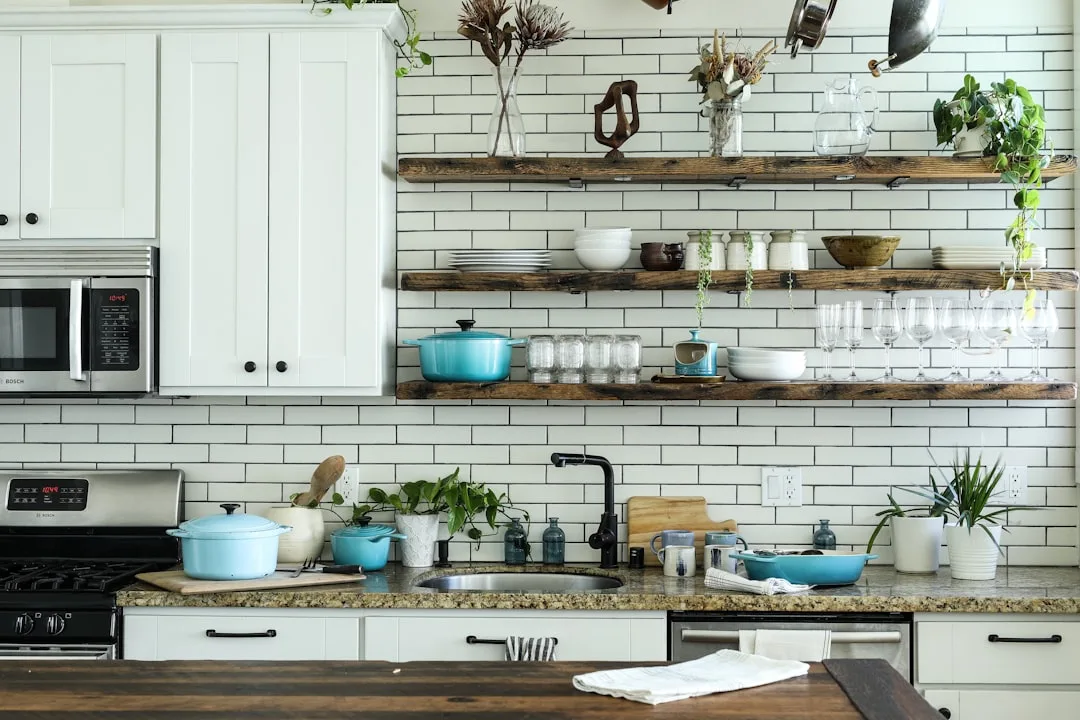
Experienced interior designers consistently recommend hardware tied to a historic style or material with a multi-decade track record: simple cup pulls in satin nickel, bin pulls in oil-rubbed bronze, ceramic knobs with traditional profiles. These aren’t exciting recommendations. That’s the point. They’re not supposed to be exciting — they’re supposed to still look considered in 2031.
The replacement math matters here. When you do the math on a 30-cabinet kitchen:
- Standard pulls or knobs: $15–$80 per piece × 30 cabinets = $450–$2,400 in materials
- Labor for hardware swap if door drilling requires adjustment: $300–$600
- Total reversal cost: $800–$3,000 for a decision that felt inconsequential at selection
The secondary cost is subtler but real: when buyers tour a kitchen and notice the hardware looks like a specific Pinterest era, they reprice their offer downward to account for the refresh they know they’ll want. They may not articulate it that way — they’ll just say the kitchen “feels a little dated.”
Actionable takeaway: Before confirming your hardware selection, pull up images of that exact style from five years ago. If it already looks slightly cringe, you’re looking at a micro-trend. Choose something you’d describe as “classic” even if it feels boring in the showroom.
Open Shelving Done Wrong: The Version Designers Actually Regret (Not the One You Think)
The design world’s complicated relationship with open shelving gets misrepresented constantly. The conversation gets collapsed into “open shelving: yes or no,” which is the wrong question entirely. The real distinction is between open shelving as a display decision versus open shelving as a storage solution — and the version that generates deep, expensive regret is almost always the latter.
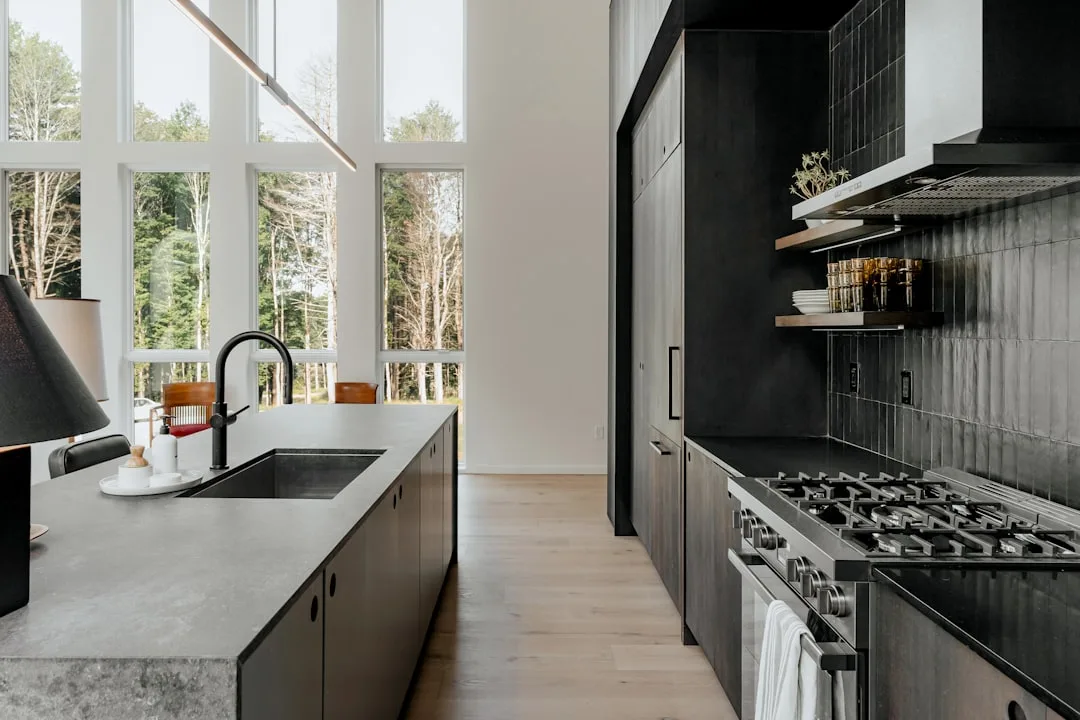
Open shelving as display — three to four shelves holding a curated collection of ceramics, cookbooks, and objects you actually love — is a legitimate design move that’s worked in kitchens for decades. It requires a specific mindset: you’re creating a composition, not storing your everyday dishes.
Open shelving as storage replacement is where the regret lives. This version typically emerges from a budget conversation: upper cabinets are expensive, shelving is cheaper, so the proposal becomes “let’s remove the upper cabinet run on this wall and replace it with floating shelves.” It saves $1,500 to $3,000 in cabinetry. It costs considerably more to reverse.
Here’s what the planning phase doesn’t adequately convey: grease particulates, steam, and cooking residue settle on open shelving at a rate most homeowners dramatically underestimate. Every item on those shelves requires regular cleaning. The dishes you reach for daily accumulate a faint film within weeks in an active cooking kitchen. The ceramics you reach for monthly accumulate a film you’ll eventually find genuinely unpleasant. This is the primary driver behind open shelving reversals — not aesthetics, but the maintenance reality of actually cooking in the space.
The storage replacement version also tends to fail on practical grounds that only reveal themselves after move-in:
- Everyday dishes don’t photograph well — the mismatched reality of actual kitchen storage looks nothing like the styled editorial that inspired the decision
- Ceiling height matters critically — shelves that work in a 10-foot ceiling kitchen feel oppressive and inaccessible installed under an 8-foot ceiling
- Reinstating upper cabinets after removal requires patching drywall, repainting, re-running any electrical that was rerouted, and sourcing cabinets that match your existing run — a reversal cost of $3,500 to $7,000 depending on market and cabinet line
The designers who recommend open shelving without reservation are almost always working on display applications. The ones who’ve watched clients regret it are almost always talking about storage replacement. Knowing which version you’re being sold is the entire decision.
The Kitchen Features to Avoid Designers Flag Most Consistently
Beyond hardware and shelving, experienced kitchen designers return to a consistent set of decisions when asked what they wish clients had listened to. These aren’t opinion — they’re patterns drawn from corrective renovation requests across thousands of completed projects.
The most frequently flagged kitchen features to avoid designers cite in client consultations include:
- Integrated appliances without service access planning — appliances built flush into cabinetry look impeccable and create significant problems when the appliance needs repair or replacement, because the surrounding cabinetry often has to be partially demolished to extract the unit
- Waterfall countertop edges on heavily used islands — the visual is dramatic, the maintenance reality is brutal, and the seam at the corner is a permanent vulnerability that shows wear disproportionately to the rest of the surface
- Under-cabinet lighting hardwired during renovation with a fixed color temperature — most homeowners select a color temperature during the day that reads wrong at night, and correcting hardwired lighting is a full electrician job
- Decorative range hoods with insufficient CFM ratings — the hood was selected for its visual profile and ordered with a blower that can’t adequately ventilate the cooking surface beneath it, a problem that becomes obvious the first time you sear something and the smoke alarm activates
- Single-basin sinks specified for large families — the single basin trend is real and the aesthetic is clean, but a household with children or heavy cooking volume will find the workflow genuinely limiting within six months
Each of these shares the same characteristic: they look correct during the planning phase and reveal their problems only in active daily use.
Frequently Asked Questions
What are the most expensive kitchen mistakes to reverse?
Structural decisions cost the most to undo. Architecturally integrated range hoods, load-bearing wall removals, and cabinetry built around specific appliance dimensions are the three most frequently cited corrective renovation drivers. Each can cost $4,000 to $15,000 to reverse depending on scope. Surface-level decisions — hardware, paint, light fixtures — are comparatively inexpensive to change and carry much lower risk.
Do kitchen designers actually recommend avoiding open shelving entirely?
No — the nuanced recommendation is to avoid open shelving as a storage replacement for upper cabinets. Open shelving as a curated display element, limited to three to four shelves with objects you actively maintain, has a legitimate design history and works well in the right context. The problem is the full-wall storage replacement version, which almost always generates regret within two to three years of daily use.
How do I know if a design trend has peaked before I commit to it?
The most reliable signal is saturation across multiple price points. When a trend appears simultaneously in high-end editorial, mid-range showrooms, and big-box retail displays, it has typically already peaked. The lag between editorial introduction and mass retail adoption is roughly 18 to 24 months — by the time a style is at Home Depot, the design community has usually moved on.
Is it worth paying a kitchen designer to avoid these mistakes?
The math generally supports it. A kitchen designer consultation costs $150 to $500 per hour depending on market and typically requires two to four hours for a full review. That’s $300 to $2,000 upfront. Corrective remodels for a single poor decision routinely cost $3,000 to $15,000. The consultation fee is insurance against decisions that look obvious in hindsight and invisible during the planning phase.
What kitchen features actually hold their value for resale?
Designers consistently point to the same short list: quality cabinet boxes with simple door profiles, stone or stone-look countertops in neutral tones, concealed storage solutions, and professional or professional-adjacent appliances in standard dimensions. These aren’t exciting answers. They’re durable ones — and durability is exactly what resale value rewards.