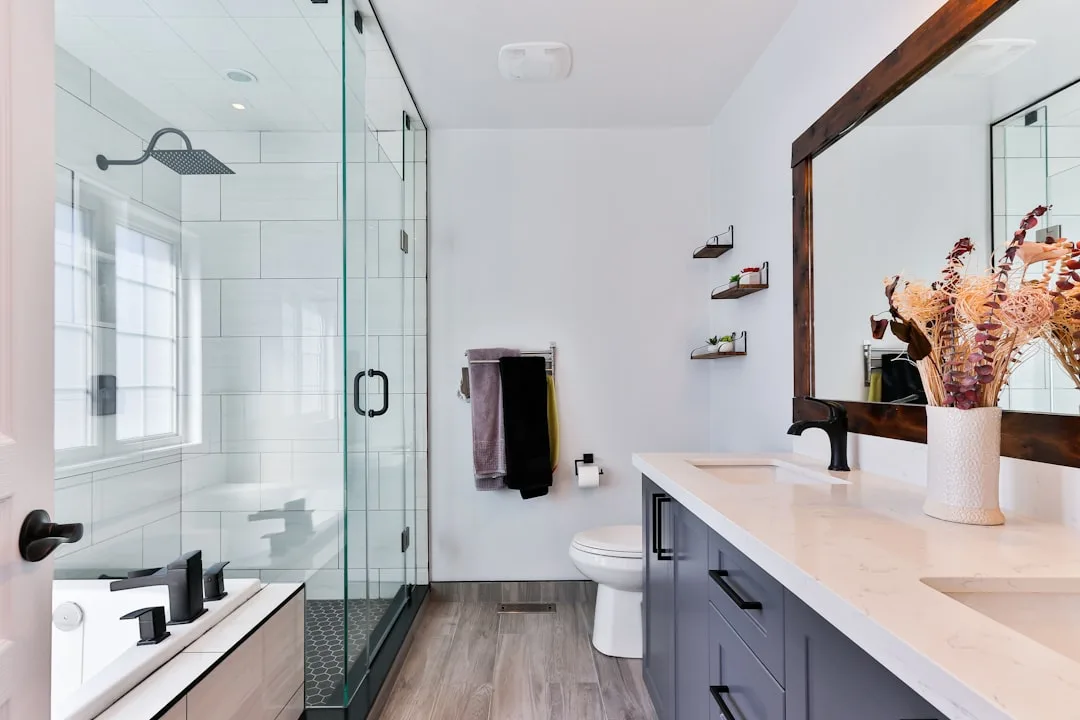
The average bathroom remodel budget you’ll find online is technically accurate — and almost completely useless for planning your actual project.
Here’s the problem: when a home improvement site tells you the “average” bathroom remodel costs $12,000 to $26,000, that number is blending a $4,000 paint-and-fixture refresh in rural Ohio with a $60,000 spa bathroom gut job in San Francisco. The result is a range so wide it tells you almost nothing about what your specific bathroom, in your specific city, at your specific scope of work, will actually cost.
What follows isn’t another round of vague national averages. It’s the framework that lets you calculate your number — before you call a single contractor.
Why Most Bathroom Remodel Budget Estimates Miss the Mark
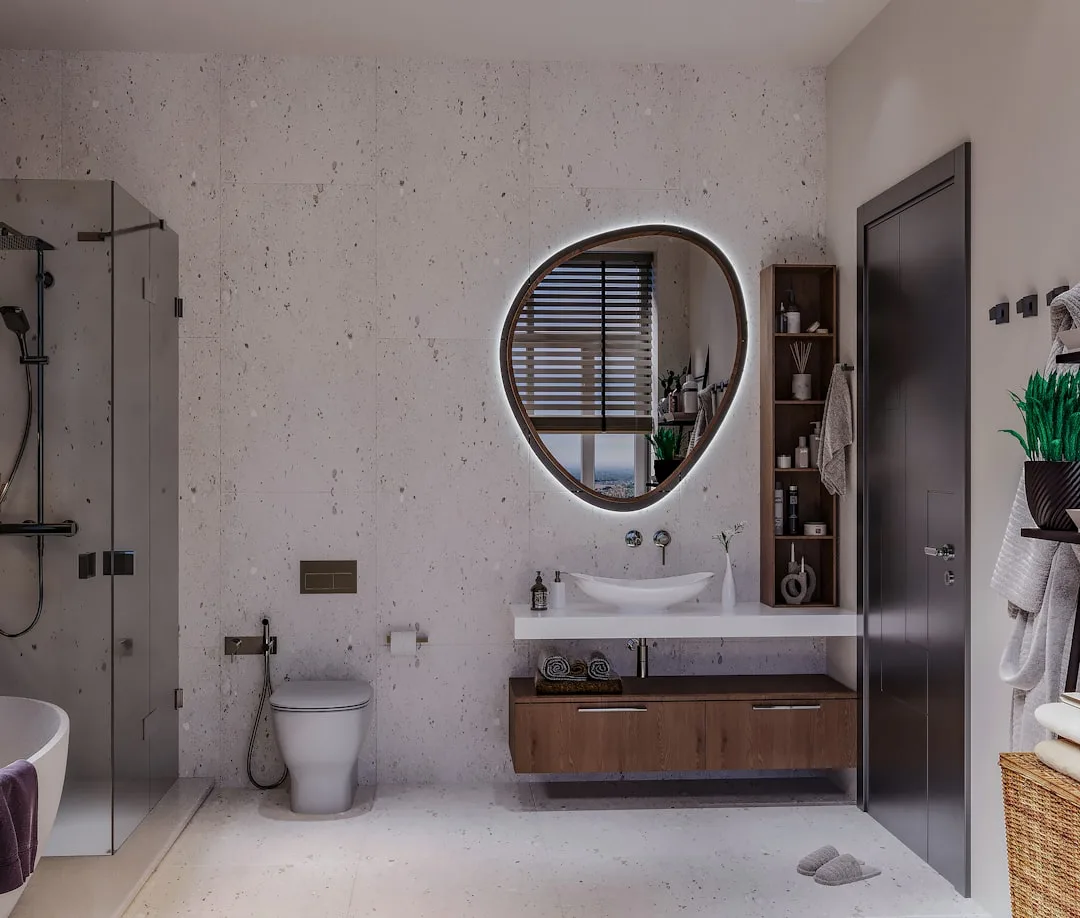
The national average is a statistical artifact, not a planning tool. It exists because aggregating data across millions of projects produces a number — but that number carries none of the context that actually determines cost.
Labor alone accounts for 40–65% of total bathroom remodel costs. That’s the figure most homeowners never hear until they’re staring at their first quote. It means the materials budget most people spend weeks researching — the tile, the vanity, the fixtures — represents less than half of what they’ll actually pay. Plan around materials only and you’ll undershoot your real number by thousands.
Geography makes the distortion worse. Your zip code can swing your total project cost by 40% or more compared to the national median. A standard full bathroom remodel that runs $14,000 in Kansas City runs closer to $22,000 in Seattle and $28,000 in the New York metro area — same scope, same materials, entirely different labor market. National averages erase that variance completely.
Then there are the costs that don’t show up in the headline number at all:
- Permit fees: Required for most remodels involving plumbing, electrical, or structural changes — and frequently excluded from online estimates
- Demolition and debris disposal: Dumpster rental, hauling fees, and contractor disposal charges typically add $300–$800
- Code compliance upgrades: If your bathroom has outdated wiring or non-GFCI outlets near water sources, bringing it up to current code isn’t optional — it’s mandatory and billable
- Temporary bathroom setup: If you’re down to one bathroom, some households rent portable facilities or arrange alternative accommodations
The articles that quote you a tidy range are working from averages compiled before your permits, your contractor’s hourly rate, or your jurisdiction’s code requirements enter the picture.
Actionable takeaway: Before you look at a single product, research permit requirements and average contractor labor rates in your specific city — not your region. Your county building department’s website lists permit fee schedules for free.
The Realistic Budget Breakdown by Bathroom Type and Scope
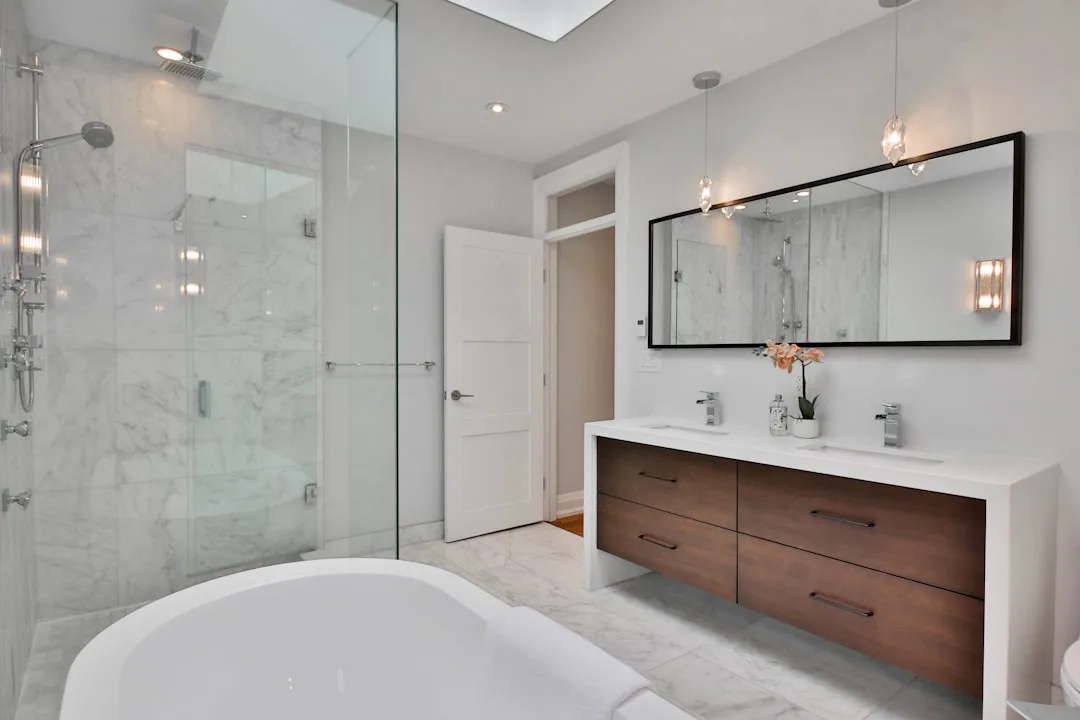
Forget organizing by bathroom size. The more useful framework is scope of work, because a small bathroom with a full gut renovation will cost more than a large bathroom that only gets new fixtures and paint.
Cosmetic Refresh: $1,500–$5,000
This is the most overlooked tier in bathroom remodel coverage, and it’s genuinely transformative when executed well. A cosmetic refresh includes:
- Fresh paint (walls and ceiling)
- New light fixture and vanity hardware
- Toilet seat replacement
- Mirror swap or update
- New shower curtain, rod, and accessories
- Refinishing or reglazing existing tub and tile rather than replacing
Reglazing a bathtub runs $300–$600 professionally done and can extend its functional life by 10–15 years. Replacing that same tub starts at $1,200 before installation. For a bathroom with structurally sound bones, this tier delivers a disproportionate visual return.
Mid-Range Update: $8,000–$15,000
This is where most standard full bathrooms fall when homeowners replace the major components but keep the layout intact. Expect this tier to include:
- New vanity and sink (freestanding or built-in)
- Tile floor replacement
- Tub surround tile or fiberglass surround replacement
- New toilet
- Updated lighting
- New faucets and shower fixtures
Remodeling Magazine’s Cost vs. Value report puts the average resale recoup for a midrange bathroom remodel at approximately 66% — meaning a $12,000 investment returns roughly $7,900 in home value at sale. That’s not a loss; it’s the baseline for understanding what “value-add” actually means in real numbers.
Full Gut Renovation: $20,000–$45,000+
Layout changes, luxury finishes, or both push projects into this tier. Moving a wall, relocating the toilet or shower, installing radiant heat, adding a freestanding soaking tub, or specifying custom cabinetry all escalate costs dramatically. In high cost-of-living markets, high-end gut renovations regularly exceed $60,000.
Actionable takeaway: Identify your tier before your first contractor call. Knowing you’re a mid-range update rather than a gut renovation lets you screen out contractors who specialize in the wrong scope — and stops them from upselling you into one.
How to Set Your Personal Bathroom Remodel Budget Before Calling a Contractor
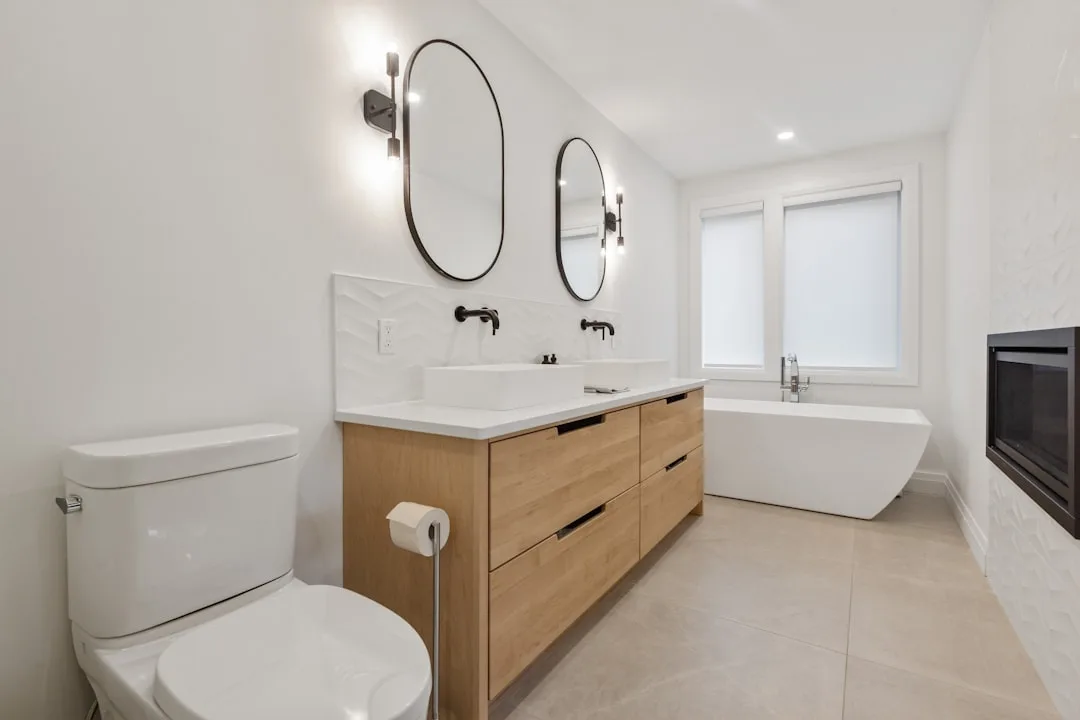
Seventy percent of bathroom remodel projects exceed their original budget — and most cost overruns aren’t caused by contractor dishonesty or bad luck. They’re caused by contingency funds that were underestimated or skipped entirely in the original plan. The fix is a budget framework you build before you make a single call.
Step 1: Anchor to Your Home’s Value
A bathroom remodel should not exceed 5–10% of your total home value if ROI is part of your goal. For a $350,000 home, that means a $17,500–$35,000 ceiling. Spending $50,000 on a bathroom in a neighborhood where homes top out at $400,000 is unlikely to return that investment at resale. This doesn’t mean you can’t spend more — it means you should do so consciously, for your own enjoyment, with clear eyes about what it won’t return.
Step 2: Audit Your Bathroom for Structural Red Flags
Before finalizing any budget, physically assess — or have a contractor assess — the following:
- Subfloor condition: Water damage around the toilet base or tub perimeter is common and adds $500–$2,500 to replace
- Plumbing age: Galvanized pipes or supply lines over 40 years old may require replacement during any significant remodel
- Electrical: Bathrooms require GFCI protection; older homes frequently don’t have it
- Mold or moisture damage: Behind tile in wet areas is the most common hiding spot — and remediation starts at $500 for minor issues and escalates fast
Step 3: Build Your Contingency Into the Budget From Day One
Add 15–20% to your planned spend before you consider it finalized. On a $12,000 remodel, that’s $1,800–$2,400 sitting in reserve. It won’t earn you a better tile, but it will keep you from making panicked decisions when the subfloor comes up and it’s worse than expected.
Actionable takeaway: Run this calculation today — your home’s current market value multiplied by 0.07. That’s your realistic sweet spot for bathroom remodel spending if resale matters to you.
The Real Cost Drivers That Determine Your Actual Number
Two bathrooms with identical square footage and the same material budget can have wildly different final costs. The difference almost always comes down to these specific decisions.
Moving Plumbing
Relocating a toilet or shower drain is the single largest budget multiplier in bathroom remodeling. Moving a toilet even a few feet requires cutting into the subfloor, repositioning the drain stack, and re-routing supply lines — a process that adds $2,000–$7,000 depending on your home’s construction and whether the plumber encounters anything unexpected underneath. If you can achieve your design goals with plumbing in its current location, you should.
Tile Selection and Pattern Complexity
The material price of tile is only part of the equation. Installation labor scales with:
- Tile size: Large-format tiles (24×24 or larger) require more precise substrate prep and skilled installation
- Pattern complexity: A herringbone pattern can cost 15–25% more in labor than straight-set tile of identical material cost
- Grout joint width: Smaller grout joints require more precision and time
Ceramic tile at $2–$4 per square foot installed versus natural stone at $15–$30 per square foot installed represents a real cost swing — but so does asking your $2/sq ft tile to be set in a complicated diagonal pattern.
Custom Vanities and Frameless Glass
These are the two most common upgrades that push mid-range budgets into high-end territory. A stock vanity from IKEA’s GODMORGON line runs $400–$900. A semi-custom vanity from a company like Kohler or James Martin runs $1,500–$4,000. Full custom cabinetry starts at $5,000. Frameless glass shower enclosures add $1,500–$4,500 over a standard shower curtain setup — but they’re among the highest-impact visual upgrades in the space.
Heated Flooring
Radiant floor heating gets added as an afterthought in more bathroom remodels than you’d expect. Electric heated floor systems add $500–$2,000 in materials alone, plus the electrical work to run a dedicated circuit if one doesn’t exist. It’s a legitimate luxury — but budget for it upfront, not as a surprise decision during tile installation.
Actionable takeaway: Make your plumbing position decision before you fall in love with a layout. If your design requires moving drains, add $4,500 to your working budget immediately and see if it still makes sense.
Where Smart Homeowners Save Money Without Sacrificing the Look
The designers who stretch budgets furthest aren’t the ones who shop at discount stores. They’re the ones who understand which elements the eye actually registers — and they spend there first.
Keep Plumbing Where It Is
This isn’t just a cost tip — it’s a design constraint that forces creative problem-solving. Working with your existing layout directs budget toward visible, tactile surfaces: tile, vanity, lighting, and hardware. These are the elements that create the experience of the bathroom. The rough-in plumbing behind the wall creates none of it.
Use Large-Format Tile Strategically
Here’s something counterintuitive: large-format floor tile often costs less to install than small mosaic tile, despite frequently costing more per square foot as a material. Fewer grout lines means less labor time. A 24×24 porcelain tile floor in a standard 5×8 bathroom uses far fewer pieces than a 4×4 ceramic grid — and the result reads as more contemporary and expensive, not less. Companies like MSI and Emser both offer large-format options under $3 per square foot that install beautifully.
Mix Investment and Budget Pieces Deliberately
The design approach that works consistently: pick one or two statements and let everything else support them quietly.
- Spend on the vanity or the freestanding tub — one hero piece
- Use affordable accessories: Kohler’s Memoirs collection offers well-made hardware at $30–$60 per piece
- Swap the mirror for something with character — thrift stores and Facebook Marketplace regularly surface solid-framed mirrors for $40–$150 that would cost $400 new
- Changing the vanity light fixture for $150–$400 is consistently ranked among the highest-impact cosmetic upgrades by interior designers — the scale and warmth of bathroom lighting transforms the entire room’s perceived quality
Refinish Before You Replace
Tub reglazing, tile reglazing, and vanity repainting are legitimate professional services — not band-aids. A professionally reglazed cast iron tub outlasts a replacement acrylic insert by decades.
Actionable takeaway: Write down the three surfaces a visitor’s eye hits first when they walk into your bathroom. Put your discretionary budget there. Spend conservatively on everything else.
How to Get Accurate Quotes and Avoid Contractor Budget Traps
The quoting process is where more bathroom remodel budgets go wrong than anywhere else — not because contractors are dishonest, but because homeowners don’t know what to ask for.
Always Request Itemized Quotes
A lump-sum bid protects the contractor, not you. An itemized quote breaks costs into labor, materials, permits, and subcontractor fees — and lets you compare apples to apples when you receive multiple bids. Without it, you can’t identify whether the price difference between two quotes reflects labor rates, material quality, or something being excluded.
Ask for line items that include:
- Demo and disposal
- Plumbing labor and materials separately
- Electrical labor and materials separately
- Tile materials and tile installation labor separately
- Fixture allowances specified by price per unit
- Permit fees explicitly listed
Get Three Quotes — and Treat the Lowest as a Warning Sign
Three quotes gives you enough data to identify the market rate for your project. The lowest bid is almost never the best deal. Unusually low bids typically mean one or more of the following:
- Permit fees are excluded (and you’ll pay them separately or risk going without)
- Subcontractor costs aren’t reflected
- Material allowances are set unrealistically low
- The contractor is less experienced and will encounter problems they can’t efficiently solve
Clarify Every Allowance
When a quote includes “tile allowance: included,” that phrase is meaningless without a dollar figure. Ask specifically: “What dollar-per-square-foot tile does this allowance cover?” A $3/sq ft allowance and a $12/sq ft allowance produce completely different bathrooms and completely different change-order conversations mid-project.
Permit fees for bathroom remodels range from $150 to $1,500 depending on municipality and project scope — and skipping permits doesn’t just risk a fine. It can void your homeowner’s insurance coverage for remodel-related damage and create disclosure obligations that complicate future home sales.
Actionable takeaway: Before your contractor meetings, build a one-page project brief: scope of work, list of specific fixtures you’ve already selected, your timeline, and your total budget. Handing this to three contractors ensures you’re comparing equivalent quotes.
Financing Your Bathroom Remodel: Options Ranked by True Cost
Monthly payment math is seductive. Total cost math is what actually matters. Before you sign any financing agreement, calculate what the project costs in full — not per month.
Home Equity Loans and HELOCs
These offer the lowest interest rates available for home improvement financing, typically ranging from 7–9% as of current market conditions — significantly below personal loan rates. The risk is real: your home is the collateral. If payments lapse, foreclosure is the consequence. But for homeowners with sufficient equity, a home equity loan at 8% versus a personal loan at 18% represents thousands of dollars in difference on any project over $10,000.
HELOCs work as revolving credit lines, useful if your project is phased or costs are uncertain. Home equity loans deliver a lump sum at a fixed rate, better for projects with a defined scope.
Personal Loans
Faster to approve and available without home equity, personal loans carry higher rates — typically 10–24% APR depending on credit profile. A $15,000 bathroom remodel financed at 18% APR over five years costs approximately $6,800 in interest alone — making your $15,000 bathroom a $21,800 bathroom on paper. For smaller cosmetic remodels under $10,000 with a realistic 12–18 month payoff plan, personal loans are a reasonable tool. For full gut renovations, the interest load becomes significant.
Contractor-Offered Financing
Buy-now-pay-later programs offered through contractors — often powered by lenders like GreenSky or Synchrony — are marketed as “0% interest” promotions. Read carefully. Many carry deferred interest clauses: if the balance isn’t paid in full by the promotional period’s end, interest accrues retroactively from the original purchase date at rates of 26–29%. The monthly payment is affordable; the backstop is not.
Cash
The most underrated option. If your project falls in the cosmetic refresh or low-end mid-range tier, delaying six to twelve months to save the difference eliminates interest entirely and puts you in a stronger negotiating position with contractors — cash customers who don’t require financing coordination are genuinely preferred.
Actionable takeaway: Calculate your full financing cost — not your monthly payment — before signing. Multiply the monthly payment by the number of months in the loan term. Compare that total to your project cost. The difference is what borrowing costs you.
Frequently Asked Questions
What is a realistic budget for a small bathroom remodel?
A small bathroom — typically 35–50 square feet, often a half bath or powder room — can be refreshed cosmetically for $1,500–$4,000 or fully renovated for $8,000–$15,000. The smaller footprint reduces tile and material quantities, but it doesn’t reduce labor costs proportionally. A plumber’s service call costs the same whether the bathroom is 40 square feet or 80. Half baths (toilet and sink, no tub or shower) typically cost 30–40% less than full baths to renovate because plumbing and waterproofing complexity is lower.
How much should I budget for unexpected costs in a bathroom remodel?
Build a 15–20% contingency into your total project budget from the beginning — not as an afterthought. On a $12,000 project, that’s $1,800–$2,400 held in reserve. The most common surprises that consume contingency funds are subfloor water damage ($500–$2,500 to remediate), outdated plumbing or wiring discovered during demo ($800–$3,000 to address), and mold behind tile in wet areas ($500–$4,000+ depending on extent). None of these are exotic problems — they show up in a significant percentage of bathroom remodels, especially in homes over 25 years old.
Is it cheaper to remodel a bathroom yourself or hire a contractor?
DIY can reduce costs by 30–50% on labor — but only for work you’re genuinely qualified to perform. Cosmetic work (painting, hardware swaps, mirror installation, accessory updates) is appropriate for most competent DIYers. Tile installation is learnable with preparation and the right tools. Plumbing and electrical work, however, require permits and inspections in most jurisdictions — and improperly done plumbing or electrical work can void homeowner’s insurance, fail inspection, and cost more to correct than hiring a professional originally would have. A hybrid approach works well: hire licensed tradespeople for plumbing, electrical, and tile; handle demo, painting, and accessory installation yourself.
What bathroom remodel upgrades add the most value to a home?
Based on consistent data from real estate professionals and cost-versus-value analysis, the upgrades that return the most at resale are:
- Updated vanity with a new sink: The first thing buyers see, and a primary driver of bathroom perception
- Clean, modern tile: Neutral large-format tile in good condition reads as quality regardless of price point
- New toilet: A visibly clean, current-model toilet signals that the bathroom is maintained — older elongated models read as dated
- Updated lighting: Warm, well-placed lighting changes the entire feel of the room and costs relatively little to change
- Frameless glass shower enclosure: Consistently cited as a high-impact upgrade in mid-to-upper price point homes
Heated floors, soaking tubs, and high-end custom vanities add comfort and luxury but don’t typically return their full cost at resale — they’re investments in your experience of the home, not the sale price.
Start Here, Today
You don’t need a contractor before you have a number. You need a number before you call a contractor.
Pull up your county building department’s website and look up permit fees for bathroom remodels — it takes ten minutes and tells you immediately what’s required in your jurisdiction. Then calculate 7% of your home’s current market value. That’s your ROI-rational ceiling. Then audit your bathroom for the four structural red flags — subfloor, plumbing age, electrical, and moisture damage — so you know whether you’re working with a straightforward cosmetic project or one with mandatory remediation costs underneath it.
Do those three things before your first contractor call and you’ll walk into every quote conversation knowing what the work should cost, what you can afford to spend, and where the real risks are hiding. That’s the position every contractor assumes you’re not in. Prove them wrong.