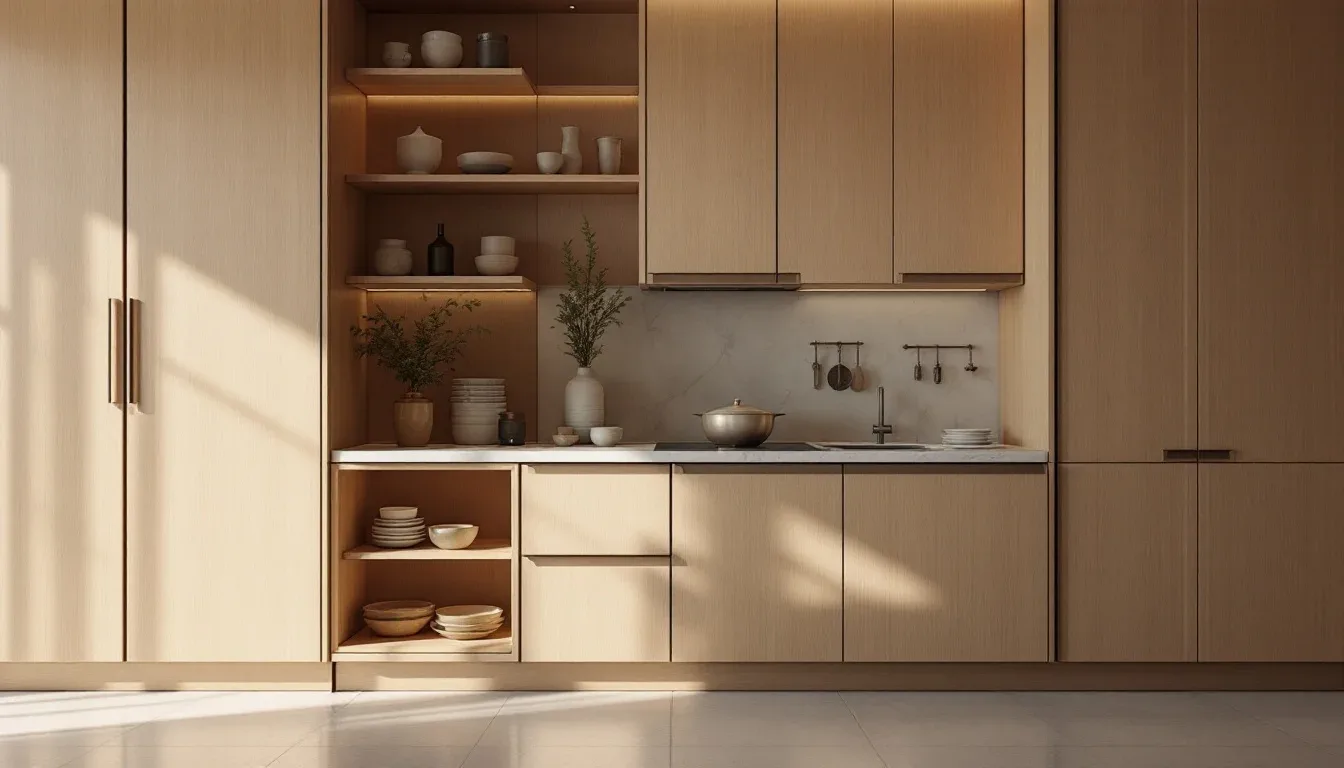
The average person reorganizes their kitchen cabinets three times before the system sticks — and the reason it keeps failing has nothing to do with the containers they buy. If you’ve been searching for kitchen cabinet organization ideas inside your actual cabinets — not just the outside aesthetic — the answer isn’t a new bin. It’s a different way of thinking about placement entirely.
Quick Answer
The average person reorganizes their kitchen cabinets three times before the system sticks — and the reason it keeps failing has nothing to do with the containers they buy.
I watched this happen for over a decade. Clients would spend a weekend with matching bins and a label maker, step back satisfied, and come back to chaos by February. Not because they were disorganized people. Because they organized their cabinets by category — all the spices together, all the baking stuff together — instead of organizing by where they actually use things. It’s a subtle distinction that makes all the difference between a system that lasts and one that disintegrates the moment life gets busy.
This article is about fixing that root problem. The Zone Method won’t sell you a container. It’ll change how you think about your kitchen.
Why Your Cabinet System Keeps Falling Apart (And What Zone-Based Thinking Fixes)
In This Article
- Why Your Cabinet System Keeps Falling Apart (And What Zone-Based Thinking Fixes)
- How to Decide Where to Put Things in Your Kitchen Before Touching a Single Cabinet
- How to Apply the Zone Method Inside Each Cabinet — Shelf by Shelf
- The Items That Belong in Each Zone — A Practical Reference
- Common Zone Method Mistakes (And How to Avoid Them)
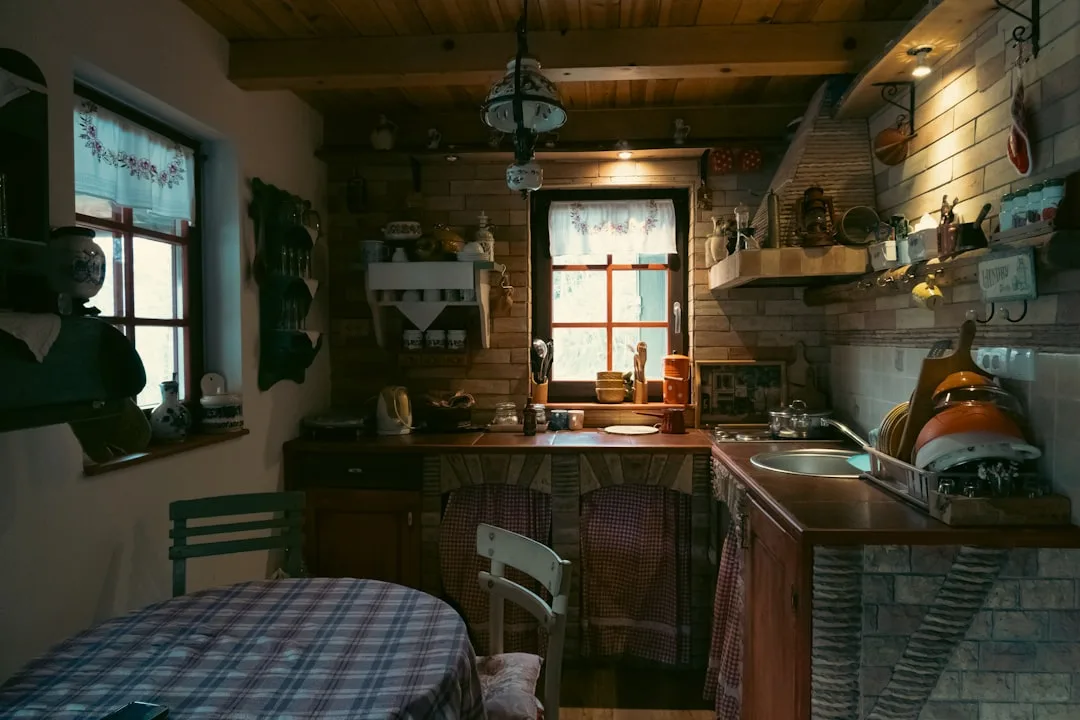
Most kitchen organization advice treats your cabinets like a filing system. Group like with like. Label everything. Buy matching containers. It looks great for about six weeks, then it collapses — and the reason is structural, not motivational.
The real problem is that people organize items by what they are instead of where they use them. Spices are together because they’re spices. But some of those spices live by the stove, some by the prep counter, and honestly two of them probably belong in a cabinet you haven’t opened in eight months. Grouping them all in one place forces you to travel across your kitchen mid-task, which creates friction, which means you stop returning things to their designated spot, which means the system falls apart. I’ve seen this in studio apartments and 3,000 square foot homes. The kitchen size doesn’t matter. The underlying logic does.
The Zone Method fixes this by assigning cabinet space based on physical proximity to the tasks performed there. There are four primary zones most kitchens share:
- Prep Zone — the counter where you chop, mix, and assemble
- Cooking Zone — the area immediately surrounding your stove or range
- Serving Zone — where plated food travels to the table, often near the dining area or island
- Storage Zone — secondary cabinets for items used less than three times a week
Each cabinet gets assigned to the zone it physically sits within. A cabinet above the stove belongs to the Cooking Zone — period. A cabinet above the counter next to the sink belongs to the Prep Zone. You stop asking “where should I put my measuring cups?” and start asking “where do I use my measuring cups?” They’re used at the prep counter. That’s where they live.
This approach also explains why aesthetic-first organizing — the kind where every dry good decants into a matching glass jar — fails so reliably. The aesthetic doesn’t account for whether the jar is where you need it when you’re rushing a weeknight dinner. Beautiful organization that ignores workflow creates visual calm and functional chaos simultaneously.
The Zone Method works regardless of kitchen size. I’ve applied it in a 60-square-foot galley in Wicker Park and in an open-plan kitchen in Park Slope with more cabinet space than one family could reasonably fill. The principle scales.
One data point worth sitting with: the National Association of Productivity and Organizing Professionals has found that people spend roughly 2.5 days per year searching for misplaced items at home — and kitchens generate more of that friction than any other room. That’s not a clutter problem. That’s a placement problem. And zone-based thinking solves placement.
Actionable takeaway: Before touching a single cabinet, walk your kitchen and identify the four zones. Write them down. This is the foundation everything else builds on.
How to Decide Where to Put Things in Your Kitchen Before Touching a Single Cabinet
Here’s the step most guides skip entirely: the pre-work. Every reorganization project I’ve done that actually held up over time started with 20 minutes of observation before a single item moved.
The exercise I called “action mapping” works like this. Stand at your stove. Set a 60-second timer and write down every item you reach for when you start cooking. Not what you eventually need — what you grab in the first minute. Then repeat at your sink. Then at your primary prep surface. You’ll end up with three short lists that tell you, with more honesty than any organizational philosophy can, where your most-used items actually need to live.
Your kitchen has three anchor points — heat source, water source, and prep surface — and every cabinet should be assigned outward from those anchors. Cabinets directly adjacent to the stove serve the heat anchor. Cabinets under and beside the sink serve the water anchor. The counter you use most heavily for chopping and assembling defines the prep anchor. Items that serve multiple anchors go to the one they’re used at most frequently.
The daily-use rule I’ve applied in every kitchen I’ve worked in: anything you reach for more than three times a week earns prime real estate — eye level, front of shelf. Everything else goes to secondary positions. Seasonal baking equipment, the rice cooker you use twice a month, the cocktail strainer — these do not deserve eye-level shelf space in your primary cooking zone, regardless of how often you think you use them.
Multi-cook households complicate this. The pattern I kept seeing was couples who organized for aesthetics instead of for the person who cooked most frequently. Zones must reflect the primary cook’s workflow. If your partner bakes and you cook dinner every night, the lower cabinets adjacent to the stove are yours. The baking section can be adjacent to the oven or at a prep counter — but it shouldn’t displace your daily cooking zone just because baking equipment is prettier.
A study from Cornell University on kitchen ergonomics found that poorly arranged kitchens increase meal prep time by an average of 17 minutes per cooking session — which compounds to roughly 100 hours per year for daily cooks. That’s not abstract. That’s more than two full work weeks.
Run this quick audit before you reorganize:
- Walk through your full morning coffee routine and note every time you cross the kitchen unnecessarily
- Do the same for a simple lunch — sandwich, salad, whatever you actually make
- Walk through a typical dinner and track every trip from one side of the kitchen to the other
- Count how many times you open the same cabinet twice in a single cooking session
- Note every moment you set something on the counter because there was no obvious home for it nearby
The crossings and the counter-dumps are your data. Every unnecessary crossing is a zone error you can fix before you touch a single container. Every item that ends up parked on the counter instead of returned to a cabinet is telling you that its assigned cabinet is too far from where you actually use it.
Actionable takeaway: Do the action mapping exercise before buying anything. Twenty minutes of honest observation will save you more time than any container system ever could.
How to Apply the Zone Method Inside Each Cabinet — Shelf by Shelf
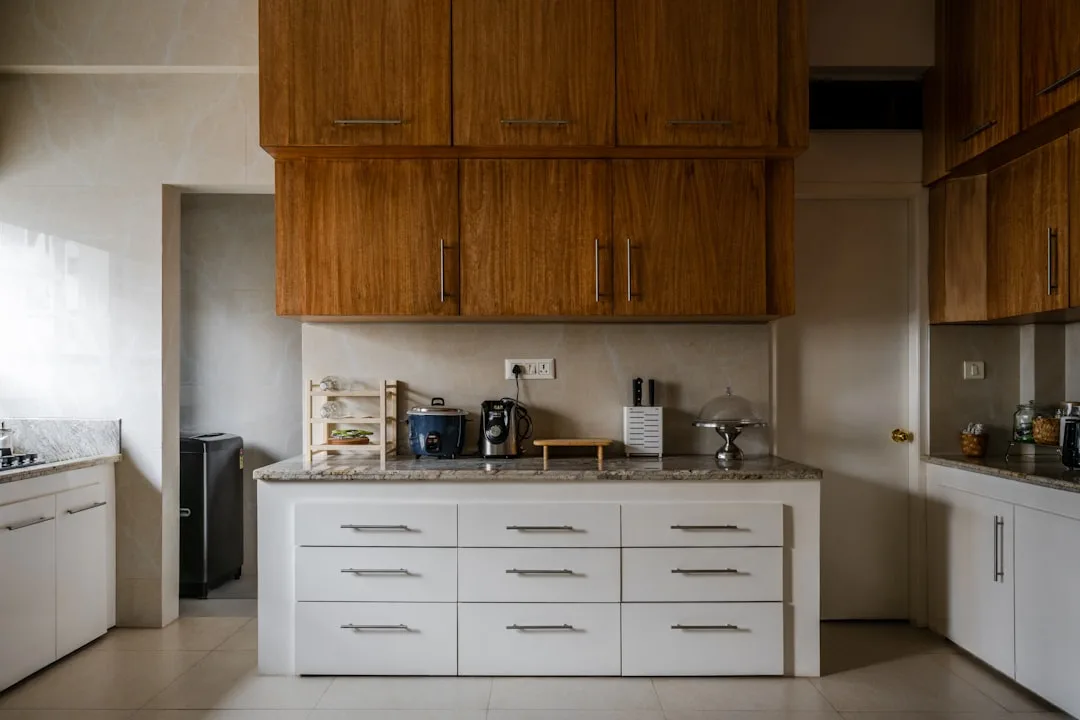
Once you’ve mapped your zones and done the action mapping exercise, the actual reorganization moves quickly. The mistake most people make at this stage is treating each cabinet as a single unit. Cabinets have layers — and those layers should reflect frequency of use, not category groupings.
The shelf hierarchy inside any cabinet works on a simple principle: the shelf your hand naturally falls to without looking is prime real estate. For most standing adults, that’s the second shelf from the top in upper cabinets, and the top shelf in lower cabinets. Everything at eye level and natural reach earns its place by being used constantly. Here’s how to think through each shelf level:
Upper cabinets:
- Top shelf — rarely used items: seasonal entertaining pieces, overflow dry goods, appliance manuals you’re keeping just in case
- Middle shelf (prime real estate) — daily-use items for that zone: everyday glasses near the sink, everyday spices near the stove
- Bottom shelf — frequently used but bulkier items: stacks of bowls, food storage containers with lids attached
Lower cabinets:
- Top shelf (prime real estate) — pots, pans, and tools used multiple times per week, stored so the most-used piece requires zero rearranging to access
- Middle shelf — secondary cookware, specialty pans used weekly but not daily
- Bottom shelf or floor of cabinet — heavy items that benefit from being low (cast iron, large stock pots, small appliances used regularly)
The inside of cabinet doors is underused storage in almost every kitchen I’ve seen. A few applications that actually hold up over time rather than becoming clutter collectors:
- Shallow spice racks mounted inside a door adjacent to the stove — keeps the Cooking Zone spices visible and accessible without occupying shelf space
- A small mounted rack for pot lids, which eliminates the problem of lids sliding around and blocking access to other items
- Measuring cup and measuring spoon hooks inside a Prep Zone cabinet door — they’re always visible, always together, and they don’t get buried behind dry goods
One rule I’ve found non-negotiable for kitchen cabinet organization ideas inside lower cabinets specifically: nothing should require moving another item to access it during active cooking. If you have to lift a pot to reach a pan, the system has already failed. Nested cookware is fine for secondary items. Primary cookware should come out cleanly, one piece at a time.
Actionable takeaway: Reorganize shelf by shelf, not cabinet by cabinet. Assign each shelf level a frequency tier before placing anything on it.
The Items That Belong in Each Zone — A Practical Reference

Zone theory is only useful if you can apply it to the actual objects in your kitchen. Here’s a practical breakdown of what belongs where, based on how most home kitchens are actually used — not how they’re shown in design magazines.
Prep Zone cabinets should contain:
- Cutting boards (stored vertically, ideally in a file-style organizer so they don’t stack)
- Mixing bowls nested by size
- Measuring cups and spoons
- Box grater, vegetable peeler, mandoline
- Prep-specific spices and oils — the ones that go into dishes before they hit heat, not finishing oils
- Food storage containers used for prepped ingredients (not all storage containers — just the ones serving prep workflow)
- Colander and salad spinner if the prep area is near the sink
Cooking Zone cabinets should contain:
- Everyday pots and pans — the ones you use four or more times per week
- Cooking oils and fats used during active cooking
- Cooking spices and seasoning blends used at the stove
- Splatter screens, tongs, spatulas (ideally on the counter in a crock, but the adjacent cabinet if counter space is limited)
- Oven mitts and trivets
- A single designated cabinet or drawer for the foil, parchment, and plastic wrap — these are used during cooking and should be within arm’s reach of the stove
Serving Zone cabinets should contain:
- Everyday plates and bowls
- Everyday glasses and mugs
- Serving platters and bowls used for getting food to the table
- Napkins, placemats, or trivets used at the table
- Anything that moves from kitchen to table regularly
Storage Zone cabinets should contain:
- Appliances used less than once a week (stand mixer, food processor, juicer)
- Seasonal or specialty cookware (holiday baking pans, the wok you use twice a year)
- Bulk dry goods overflow
- Entertaining pieces used only for guests
- Appliance accessories and spare parts
What doesn’t fit neatly into this framework: the junk drawer equivalent — the cabinet that accumulates batteries, takeout menus, rubber bands, and expired coupons. Every kitchen has one. The Zone Method doesn’t eliminate it. It just means you stop letting it expand into cabinets that should be serving an active cooking function.
Actionable takeaway: Print this list. Hold each item in your cabinet against it and ask which zone it serves. If the answer is “storage zone,” it earns secondary placement — not eye level in your primary cooking area.
Common Zone Method Mistakes (And How to Avoid Them)
Even with a clear framework, the same errors come up repeatedly. Knowing them in advance saves a second reorganization pass.
Mistake 1: Treating the zone map as permanent on the first try. The action mapping exercise gives you a starting hypothesis, not a final answer. Plan to live with your first arrangement for two weeks before making any purchases. The friction points that emerge in week two are more useful than any plan you make before you’ve tested it.
Mistake 2: Organizing for the kitchen you wish you cooked in, not the one you actually cook in. If you make coffee and toast six days out of seven and cook a real meal twice a week, your Cooking Zone doesn’t need to be your most optimized space. Your coffee and breakfast station does. Zone weighting should follow actual frequency, not aspirational frequency.
Mistake 3: Applying zones to the wrong unit. Zones apply to cabinets, not to individual shelves within a cabinet. A single cabinet belongs to one zone. If a cabinet straddles two zones physically — directly between the stove and the prep counter, for example — assign it to the zone representing the task you do more frequently near it. Don’t try to split a single cabinet into two zones. That’s how you end up with the exact category confusion you were trying to escape.
Mistake 4: Skipping the purge before the reorganize. The Zone Method requires you to be honest about what you actually use. Reorganizing around items you haven’t touched in two years doesn’t fix anything — it just gives the unused items a more thoughtful address. Before you assign zones, pull everything out and apply a simple test:
- Used in the last 30 days → stays in an active zone
- Used in the last 6 months → goes to Storage Zone
- Not used in over 6 months → donate, gift, or discard unless it’s genuinely seasonal
Mistake 5: Buying containers before testing the system. This is the most expensive mistake and the most common. Containers should fit a working system, not create the illusion of one. Spend two weeks with your reorganized cabinets before you spend a dollar on bins, lazy Susans, or drawer dividers. By then you’ll know exactly which specific problems a container would actually solve — and you’ll buy far fewer of them.
Actionable takeaway: Run the two-week test before purchasing anything. Write down every friction point you notice. Those notes are your shopping list — not a Pinterest board.
Frequently Asked Questions About Kitchen Cabinet Organization Ideas Inside Your Cabinets
Q: Do I need to buy special organizers or containers to make the Zone Method work?
No — and this is intentional. The Zone Method is a placement strategy, not a product system. Most kitchens will function significantly better from reorganization alone, before a single container is purchased. If you do buy organizers after running the two-week test, buy them to solve a specific identified problem: lids sliding around, spices falling over, nested pots blocking access to other pots. Containers that solve a real friction point earn their place. Containers bought because they look cohesive usually just move the clutter around.
Q: What if my kitchen layout makes it impossible to keep things near where I use them?
Small kitchens and awkward layouts are real constraints, but the Zone Method still applies — it just requires more prioritization. When you can’t put everything where it ideally belongs, prioritize by frequency. Your single most-used item in each zone gets the best available position near that zone’s anchor point. Secondary items can travel farther. A galley kitchen with 8 feet of total counter space still has a stove end and a sink end — those two anchor points define your zones even if everything is closer together than ideal.
Q: How do I handle kitchen cabinet organization inside cabinets when I share the kitchen with someone who has completely different cooking habits?
Start by identifying whose workflow each zone primarily serves. In most shared kitchens, one person cooks dinner more frequently and one person manages breakfast or baking. Assign zones based on who uses each anchor point most. Within a shared zone, the primary user’s most-used items get prime placement. It’s not about fairness by square footage — it’s about reducing friction for the person doing the most work in each area. This conversation is easier when you frame it around workflow rather than ownership.
Q: My cabinets are full. How do I implement a new system without making a bigger mess first?
You do have to make a bigger mess first — but you can contain it. Work one zone at a time rather than pulling everything out at once. Clear out the Cooking Zone cabinets completely, apply the zone logic, return only what belongs there, and set aside the rest before moving to the next zone. This takes longer than doing everything at once, but it keeps the kitchen functional throughout the process and prevents the overwhelm that causes people to give up halfway through and shove everything back without thinking.
Q: How long does it take before the Zone Method actually becomes second nature?
Most people notice a functional difference within the first week — the cooking crossings decrease, things get returned to their spots more consistently, and the counters stay clearer because items have a logical home nearby. The system becomes genuinely automatic after about six weeks, which is when the organizational memory switches from conscious effort to habit. The critical window is weeks two through four, when the novelty has worn off but the habit isn’t fully formed yet. If you hit a friction point during that window, fix the placement rather than overriding the system — that’s the difference between a system that lasts and one that doesn’t.