Fitting a kitchen table in small space is one of the most common design problems American homeowners face — and one of the most solvable. The average American kitchen is 161 square feet, and most dining tables are designed for rooms twice that size, which is why so many people assume they simply don’t have room for one. That assumption costs them a dining area they could absolutely have. What they’re actually missing isn’t square footage. It’s a decision framework.
Quick Answer
The average American kitchen is 161 square feet — and most dining tables are designed for rooms twice that size, which is why so many people assume they simply don’t have room for one.
Why Most People Get a Kitchen Table Wrong From the Start
In This Article
Most people shop for a kitchen table the same way they shop for art — they see something they like, they check that it roughly fits, and they buy it. I watched this exact pattern play out with a client in Wicker Park who fell in love with a farmhouse table that measured 36×72 inches. She taped it out on the floor, it fit, and she ordered it. The table arrived and made her kitchen genuinely dangerous — not uncomfortable, dangerous — because every path to the stove or refrigerator required sideways navigation around a chair.
The problem wasn’t the table’s footprint. It was the chair clearance she never measured.
The National Kitchen & Bath Association recommends a minimum 36-inch clearance around all sides of a dining table for comfortable movement. Most small kitchens offer 24 to 30 inches, which isn’t just a slight inconvenience — it changes which tables are viable at all. When you’re working with 24 inches of clearance, you’re not choosing between table styles. You’re choosing between a table that requires chairs and one that doesn’t.
There’s also what I call the “fits on paper” problem. A table can measure within the room’s dimensions and still make a kitchen feel unlivable because the flow of the room has been severed. Kitchens have a logic — a triangle of movement between the sink, stove, and refrigerator — and a table placed without accounting for that triangle doesn’t just take up space, it breaks the room’s function entirely.
Measuring traffic flow matters more than measuring the table footprint itself. Stand in your kitchen and walk your normal routes: from the counter to the sink, from the stove to the plate cabinet, from the back door to the refrigerator. Any table that interrupts more than one of those paths is the wrong table, regardless of what the tape measure says.
Before you look at a single table online, do this: walk your kitchen’s traffic routes and mark where you never actually step. That unmarked zone is where your table goes.
What Shape Kitchen Table Is Best for Small Spaces?
The answer most design sites give you is “round tables are best” — and they’re not wrong, exactly. They’re just about 60% right, which is enough to steer you into a mistake if your room doesn’t match the general advice.
Round tables win specifically in square rooms. No corners jutting into walkways, no sense of directional bias that makes one side of the table feel like the head. There’s also a psychological dimension that doesn’t get enough attention: round tables make small gatherings feel intentional. Four people around a 36-inch round table feel like they’re at dinner. Four people crammed around the end of a rectangular table feel like they’re in a meeting that’s running late.
A 36-inch round table seats four and occupies roughly the same floor area as a 30×48-inch rectangle — but reads as nearly 20% less visually heavy because it has no hard corners that the eye registers as obstacles. That’s not a small thing. In a cramped kitchen, visual weight is almost as important as physical footprint.
Oval tables are the shape most people overlook entirely. They seat more than a round table of equivalent width, their ends tuck closer to walls than rectangular tables do, and they bring a softness to narrow rooms that rectangular tables simply can’t provide. If you’re between a round and a rectangle, the oval is usually the right answer.
Rectangular tables get dismissed too quickly in small-space conversations, but in galley kitchens — narrow rooms with counters running along two parallel walls — a slim rectangular table flush against one wall can outperform a round one. The key word is flush. A 24×48-inch rectangle pushed against a non-appliance wall with seating on three sides is a legitimate solution. A round table in that same narrow corridor is a liability.
Square tables are the sleeper option for two-person households. A 36×36-inch square seats four in a pinch, pushes into a corner cleanly, and pairs naturally with a bench on two sides — freeing up clearance that four individual chairs would destroy.
- Round: Best for square rooms, gatherings of four, rooms where visual softness matters
- Oval: Best when you need to seat five or six but can’t stretch the room’s width
- Rectangular: Best in galley kitchens, against a long wall with seating on three sides
- Square: Best for couples, corner placement, bench seating configurations
- Avoid: Large rounds in narrow rooms — a 48-inch round in a galley kitchen is categorically worse than a 24×48 rectangle, because the round’s diameter claims clearance on both sides simultaneously
Match the table shape to the room shape first. Everything else is secondary.
What Kind of Table Is Best for Small Spaces? The Six Formats That Actually Work
There’s a difference between a table’s shape and its format — and format is where small-space decisions actually get made. Shape is geometry. Format is how the table behaves over time.
Drop-leaf tables are the format most people already know, but they underestimate how often the leaf stays down permanently. The only way a drop-leaf table works long-term is if the leaf-up configuration is one you can actually use — meaning the expanded footprint still clears 36 inches from wall to chair back. If the expanded size violates your clearance, the leaf never goes up, and you’ve just bought a small table that occasionally pretends to be bigger.
Wall-mounted fold-down tables are the most space-efficient format available. When folded, they can reduce the permanent dining footprint to under 6 inches of wall depth — compared to the minimum 48-inch depth a standard table-and-chair arrangement demands. The commitment is real: you’re anchoring hardware into your wall, and if you rent, that requires landlord approval or serious patching on the way out. But for studio apartments and galley kitchens where every square foot is spoken for, no other format comes close.
Extendable tables with internal leaf storage are the format I recommend most often to clients who entertain. The critical detail — and the one that separates a table you’ll actually use from one you’ll curse — is whether the leaf stores inside the base or separately. If it stores separately, the leaf lives in a closet, you forget where it is, and the table never gets extended. Internal storage removes the friction entirely.
Bar-height and counter-height tables deserve more attention than they get in small-space conversations. A counter-height table — typically 34 to 36 inches tall, versus the standard 30-inch dining height — pairs with stools that tuck completely under the surface when not in use. That tuck changes the math significantly. Four stools fully tucked under a counter-height table consume almost no additional floor space beyond the table’s own footprint. Four standard dining chairs pulled back to allow someone to sit add 18 to 20 inches of depth to the table’s footprint on every occupied side. For a kitchen table in small space situations where the chair clearance is the actual bottleneck, switching to counter height and stools is often more effective than switching tables entirely.
Pedestal-base tables — round or square, with a single central column rather than four legs — create a seating flexibility that four-leg tables can’t match. Without corner legs to navigate, you can squeeze a fifth chair between two people without anyone sitting at an angle. In a kitchen table in small space context, that flexibility can mean the difference between a table that seats four and one that comfortably manages six for a holiday meal.
Nook seating with built-in banquettes is the format that delivers the most seating per square foot of any dining configuration. A corner banquette with two bench sides and a small table can seat four people in approximately 36×36 inches of floor space — roughly half what a freestanding table-and-chairs arrangement requires. The tradeoff is installation effort and loss of flexibility; once a banquette is built, it’s built. But in a kitchen where the dining area has a natural corner and no amount of freestanding furniture arrangement has worked, a built-in nook is worth considering seriously.
- Drop-leaf: Best for kitchens where you eat solo most days and entertain occasionally
- Wall-mounted fold-down: Best for studio apartments and kitchens where the table is genuinely only needed at mealtimes
- Extendable with internal leaf: Best for people who entertain four to six times a year and want one table that handles both modes
- Counter-height with stools: Best when chair clearance is your binding constraint, not floor space
- Pedestal base: Best when you need flexibility to seat more people than the table’s stated capacity
- Built-in banquette nook: Best when you have a natural corner and are committed to permanent installation
The Seating Strategy Nobody Talks About
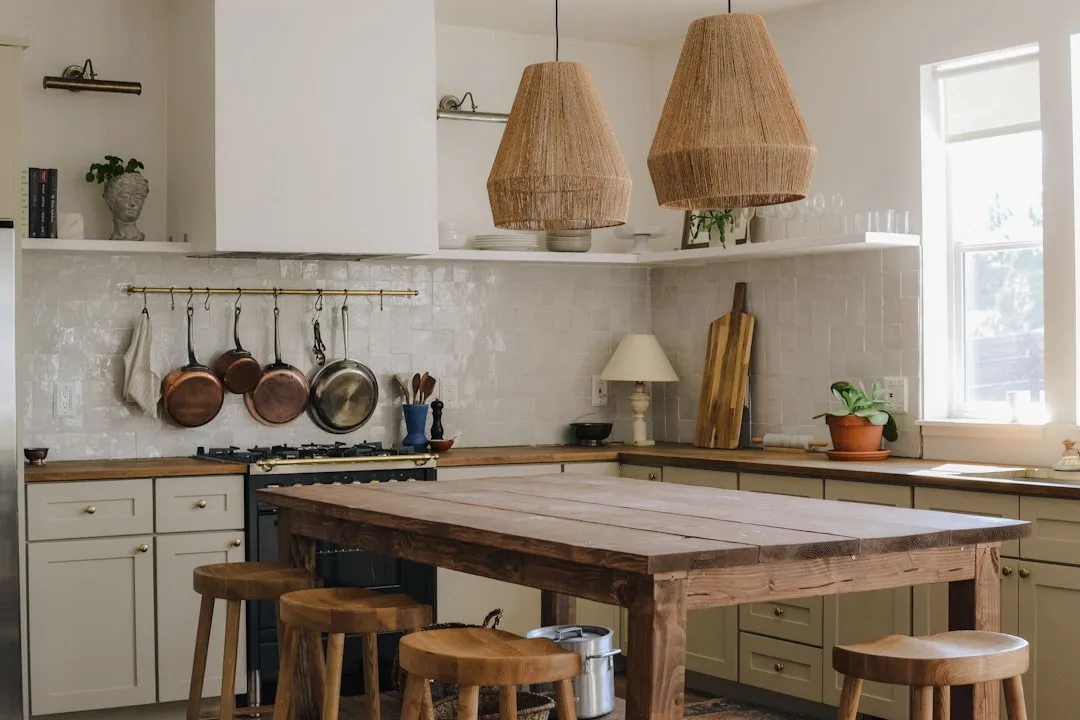
The table format matters, but the seating strategy around it matters just as much — and it gets almost no attention in small-space design coverage.
Benches outperform chairs in nearly every small-space metric. A bench on the wall side of a table eliminates the clearance problem entirely on that side: no chair needs to be pulled out because people slide in. A bench also compresses visually in a way that a row of chairs does not. Three people on a bench read as one piece of furniture. Three chairs read as three obstacles.
The bench-on-one-side, chairs-on-other configuration is the most practical arrangement for a kitchen table in small space settings. It maximizes seating on the constrained wall side while preserving pull-out clearance only on the open side.
Stackable or folding chairs deserve consideration for seats that only get used during larger gatherings. Keeping two permanent chairs at a table and two foldable chairs in a closet or against a wall means the table’s everyday footprint reflects everyday use — not maximum-capacity use.
Chair profile matters more than most people realize. A standard dining chair has a seat depth of 16 to 18 inches and adds roughly 20 inches to the table’s footprint when someone is seated. A slimmer side chair or a stool reduces that to 12 to 14 inches. In a kitchen where clearance is measured in single inches, that 6-inch difference per chair side can determine whether a table is viable at all.
Common Mistakes That Make Small Kitchen Tables Fail
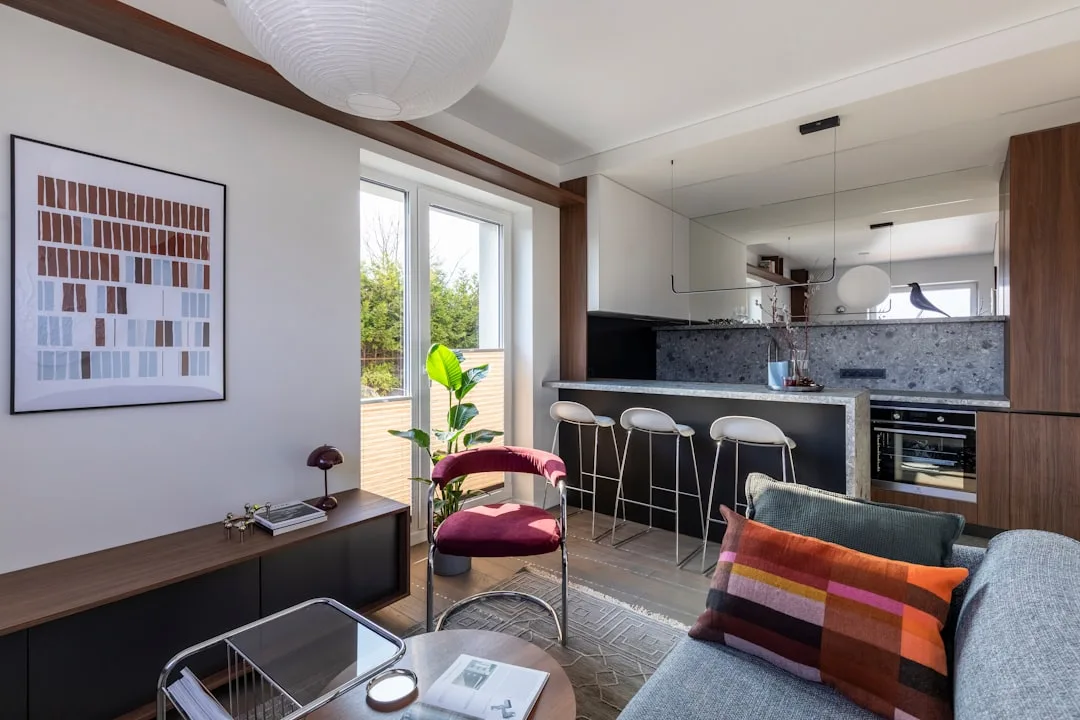
Even with the right table and the right format, these are the errors that reliably produce a kitchen that feels worse after the table arrives than before.
Centering the table in the room. This is the default instinct, and it’s wrong in most small kitchens. A table centered in a small room borrows clearance from every direction equally — which means no direction has enough. Pushing a table toward one wall concentrates the clearance where you need it: on the traffic side.
Choosing a table that matches the room’s maximum dimension. A kitchen that measures 10 feet across is not a kitchen where you should put a 10-foot table. The maximum dimension is the boundary of the room, not the target for the table. The table should occupy the space left over after traffic clearance is accounted for — which in a 10-foot room typically means a table no wider than 6 feet.
Ignoring the visual weight of the base. A heavy pedestal base, a trestle base, or a base with stretchers running between legs all claim visual space beyond the tabletop’s footprint. Glass-top tables with slender bases, tables with open bases, and tables in light finishes all read as physically smaller than their dimensions suggest. In a tight kitchen, a table that reads small is nearly as valuable as one that actually is small.
Buying chairs before confirming clearance. Chair depth varies significantly by style. Buying the table first and then selecting chairs based on clearance math — rather than buying both at once without checking — prevents the most common sizing mistake.
FAQ
What is the smallest kitchen table that seats four?
A 36-inch round table is the smallest configuration that seats four adults comfortably. At 36 inches in diameter, each person gets roughly 28 inches of edge space — adequate, not generous. A 32-inch round can seat four in a pinch but starts to feel crowded. For rectangular tables, 36×48 inches is the practical minimum for four seats, with two people on each long side.
How much space do you need around a kitchen table in a small space?
The NKBA minimum is 36 inches of clearance around all sides of a dining table for a traffic path. For a seated position where no one needs to pass behind the chair, 24 inches is workable. If a side of the table is against a wall with no traffic, that side needs no clearance at all — which is why pushing a table to a wall dramatically changes what’s feasible.
Can you put a kitchen table in a very small kitchen under 100 square feet?
Yes, but the format has to match the constraint. Wall-mounted fold-down tables, counter-height tables with fully tucking stools, and drop-leaf tables in their folded configuration can all work in kitchens under 100 square feet. The test is whether the table’s everyday footprint — not its maximum footprint — fits with 24 inches of clearance on at least one side.
Is it better to use a kitchen island instead of a table in a small kitchen?
Depends on how the kitchen is used. An island provides more counter workspace and can seat two to three people on barstools, but it doesn’t move, can’t expand for guests, and requires more dedicated floor space than a small table to function properly — typically at least 42 inches of clearance on all sides. A small table is more flexible. An island is better if prep space is the primary need and casual seating is secondary.
What materials make a kitchen table look less bulky in a small space?
Glass tops, light wood tones, and tables with open or slender bases all reduce visual weight. Transparent acrylic or glass-top tables on slender metal bases are the most visually recessive option available — they’re physically present but register as background. Solid wood in dark finishes does the opposite: it anchors and enlarges. Finish choice doesn’t change square footage, but it changes perceived density, which affects how livable the kitchen feels on a daily basis.
What is the smallest kitchen table that seats four?
A 36-inch round table is the smallest configuration that seats four adults comfortably. At 36 inches in diameter, each person gets roughly 28 inches of edge space — adequate, not generous. A 32-inch round can seat four in a pinch but starts to feel crowded. For rectangular tables, 36×48 inches is the practical minimum for four seats, with two people on each long side.
How much space do you need around a kitchen table in a small space?
The NKBA minimum is 36 inches of clearance around all sides of a dining table for a traffic path. For a seated position where no one needs to pass behind the chair, 24 inches is workable. If a side of the table is against a wall with no traffic, that side needs no clearance at all — which is why pushing a table to a wall dramatically changes what’s feasible.
Can you put a kitchen table in a very small kitchen under 100 square feet?
Yes, but the format has to match the constraint. Wall-mounted fold-down tables, counter-height tables with fully tucking stools, and drop-leaf tables in their folded configuration can all work in kitchens under 100 square feet. The test is whether the table’s everyday footprint — not its maximum footprint — fits with 24 inches of clearance on at least one side.
Is it better to use a kitchen island instead of a table in a small kitchen?
Depends on how the kitchen is used. An island provides more counter workspace and can seat two to three people on barstools, but it doesn’t move, can’t expand for guests, and requires more dedicated floor space than a small table to function properly — typically at least 42 inches of clearance on all sides. A small table is more flexible. An island is better if prep space is the primary need and casual seating is secondary.
What materials make a kitchen table look less bulky in a small space?
Glass tops, light wood tones, and tables with open or slender bases all reduce visual weight. Transparent acrylic or glass-top tables on slender metal bases are the most visually recessive option available — they’re physically present but register as background. Solid wood in dark finishes does the opposite: it anchors and enlarges. Finish choice doesn’t change square footage, but it changes perceived density, which affects how livable the kitchen feels on a daily basis.