
The average linen closet in a US home contains enough vertical air gap between shelves to fit an entire extra shelf — most homeowners just never measure it. That single unexamined gap is usually worth more square footage than anything you could buy at The Container Store, and yet the organizational content that dominates the internet will send you straight to a product page before you’ve touched a tape measure. This article goes in the opposite direction, and it is written specifically for anyone doing linen closet organization in a small space — where every cubic inch of shelf geometry matters more than any single product you could purchase. You will not find a shopping list here until you’ve done the spatial work first, because buying containers before you understand your actual shelf geometry is — and this point is worth emphasizing — the single most predictable way to waste an afternoon and end up with a closet that looks worse than before you started.
Quick Answer
The average linen closet in a US home contains enough vertical air gap between shelves to fit an entire extra shelf — most homeowners just never measure it.
Why Most Compact Linen Storage Fails Before You Buy a Single Bin
In This Article
- Why Most Compact Linen Storage Fails Before You Buy a Single Bin
- The Zone Mapping Method: Dividing a Tight Space by Use Frequency
- Shelf Gap Analysis: The Measurement Step Everyone Skips
- Folding Geometry: How Your Fold Determines Your Shelf Height Requirements
- The Audit Before the Purchase: A Step-by-Step Process

Most people treat a chaotic linen closet as a shopping problem. They buy a set of matching bins, spend a Saturday afternoon filling them, and feel a brief sense of order that collapses within six weeks. I watched this happen repeatedly over eleven years of working in residential spaces — clients who had spent $200 on labeled canvas bins and still couldn’t find a fitted sheet without pulling half the closet onto the floor.
The actual problem is spatial logic, not inventory management. The math here is fairly blunt: a standard linen closet loses 30 to 45 percent of its usable volume not to clutter, but to inefficient shelf spacing and unexamined vertical dead zones. Shelves installed at factory defaults are spaced for a range of hypothetical items, not your actual towel height or your specific pillow stack. The air between your tallest item on a shelf and the underside of the shelf above it is space you own but cannot use — and it adds up faster than most people expect.
The pattern I kept seeing was that people approached their linen closets with aesthetic logic instead of functional logic. Aesthetic logic asks: does this look tidy? Functional logic asks: can every person in this household retrieve what they need in under ten seconds without disturbing anything else? These are genuinely different design questions, and they produce genuinely different systems. A pretty closet — the kind that photographs well — often has identical containers, uniform labeling, and a color palette. A functional closet has containers sized to the actual items inside them, zones organized by how frequently things get touched, and enough breathing room that putting something back is easier than leaving it on the bathroom counter.
There’s also the container-before-audit trap. Buying bins before measuring your shelves is like ordering a sofa before measuring your doorway. I once watched a client spend $340 on a set of uniform rectangular bins that were, collectively, about two inches too tall for her shelves. Not unusably tall — just tall enough that she had to angle each bin to get it in and out, which meant she stopped using four of the six within a month. The whole system unraveled from that one mismatch.
This failure pattern is especially common in small space linen closet organization scenarios, where the margin for error is essentially zero. A two-inch miscalculation in a large walk-in closet is an inconvenience. In a 24-inch-deep hall closet serving a two-bedroom apartment, it is a complete system failure. The smaller the space, the more precisely spatial logic has to be applied — and the more destructive it is to skip the measurement phase.
NAPO — the National Association of Productivity and Organizing Professionals — has documented that disorganization costs the average person 4.3 hours per week in time lost searching for items, with storage spaces like linen closets among the primary contributors. That’s not a small number. Across a year, it’s equivalent to more than nine full workdays spent hunting for the right pillowcase.
Your starting point before buying anything:
- Empty one shelf completely
- Measure the gap between that shelf and the shelf above it
- Compare that number to the height of the items you actually store there
- If the gap exceeds your tallest item by more than four inches, you have found your first problem
- Mark that gap with a sticky note — it costs nothing to fix except a shelf bracket adjustment or a riser
The Zone Mapping Method: Dividing a Tight Space by Use Frequency

Before you reorganize a single shelf, before you buy a single bin, before you even fold a single towel differently — you need a zone map. This is a concept borrowed from retail planogram design, and it is the single most useful framework I’ve applied to residential closets. The idea is simple: not everything you store deserves the same real estate, and the location of an item on your shelves should be directly determined by how often you reach for it.
Ergonomics research is unambiguous on this point: items stored between roughly 18 and 60 inches from the floor — knee height to eye level — are accessed approximately 70 percent more often than items stored outside that range. Retailers have known this for decades. Your linen closet is a small retail environment that serves one household, and the same principle applies with the same force.
Zone 1 — Eye level to waist (roughly 36 to 60 inches from the floor): This is your prime real estate. Daily-use items live here without exception:
- Hand towels and washcloths used daily
- The sheet set currently on your bed
- Any item you reach for every single day
- Toiletry overflow that gets touched every morning
If a guest towel set you use monthly is occupying this zone, it is displacing something that should be there.
Zone 2 — Above eye level (60 inches and up, below the highest shelf): Weekly-use items belong here:
- Full sheet sets for beds you actually sleep in regularly
- Guest towels you use at least once a week
- Extra pillowcases for beds in active rotation
- Backup washcloths
This zone requires a slight reach but is still accessible without a step stool, which means it stays in rotation.
Zone 3 — Floor level and the highest shelf: Seasonal and rarely-used inventory:
- Spare blankets that only come out in November
- Holiday table linens
- Bulk backup supplies purchased on sale
- Items used fewer than once per month
Here is the practical step that most people skip entirely: before moving anything, mark these zones on your closet walls with painter’s tape. Horizontal strips at 36 inches and 60 inches from the floor. Then stand in front of your closet and look at what you currently have in each zone. The mismatches will be immediately obvious — and you’ll have a reorganization plan before you’ve touched a single item.
Actionable takeaway: Spend fifteen minutes today mapping your closet into three zones with tape, then photograph what currently occupies each one. That photograph is your audit. Everything that does not belong in its zone gets relocated before you buy or build anything else.
This zone mapping approach is particularly transformative for linen closet organization in small spaces because it forces a priority decision that small spaces cannot afford to skip. When you have four linear feet of shelf space instead of eight, the cost of placing a rarely-used item in Zone 1 is immediate and tangible — you feel it every single day.
Shelf Gap Analysis: The Measurement Step Everyone Skips

Get a tape measure. This is non-negotiable. Every organizing mistake I have watched unfold in a linen closet — every container that didn’t fit, every shelf that felt perpetually overstuffed, every system that collapsed in two months — traced back to someone who reorganized by eye instead of by measurement.
Here is what you actually need to measure, and it is not what most people think:
- True usable depth: Measure from the back wall to the front edge of the shelf — not to the door frame, not to where you think the shelf ends. Standard linen closet shelves run 12 to 16 inches deep, but trim, door frames, and shelf lip variations can subtract one to two inches of that in practice.
- True shelf-to-shelf gap: Measure the clear vertical space between the top surface of one shelf and the underside of the shelf directly above it. Not shelf-to-shelf center — the actual open air you have to work with.
- Actual item heights: Stack your towels the way you actually fold them and measure the stack. Do the same for your sheet sets. These numbers are almost always different from what people assume.
- Door clearance: If your closet has a door that opens inward, measure how much the door swing reduces your working access. This affects what containers are practical on the front portion of each shelf.
- Width between side walls: Measure at three heights — floor, mid-point, and near the ceiling. Older homes especially can have walls that are not perfectly parallel, which matters when you are fitting shelf risers or modular organizers.
Once you have these numbers written down — on paper, on your phone, wherever you will actually reference them — the next step is a gap-to-item comparison:
- List each shelf and its measured gap height
- List the items that currently live on each shelf and their measured heights
- Calculate the dead air above each item stack
- Rank your shelves from most wasted vertical space to least
- Start your reorganization with the shelf that has the largest dead air gap
In a typical linen closet, this analysis will surface one or two shelves where the dead air alone equals enough height to add a second tier of storage using a simple shelf riser — a $12 to $18 wire or wood riser that doubles the functional surface of a single shelf without any carpentry. That is the highest return-per-dollar move available in small space linen closet organization, and it requires nothing more than the measurement you just took.
Common gap scenarios and what they mean:
- Gap of 4 inches or less above your items: Your spacing is already efficient. Focus energy elsewhere.
- Gap of 5 to 8 inches: A low-profile shelf riser will recover this space for flat-folded items or small containers.
- Gap of 9 to 14 inches: You have room for a full additional shelf. A bracket-mounted shelf or a freestanding riser will work here.
- Gap of 15 inches or more: This is most likely a shelf that was spaced for pillows or large blankets but is currently storing towels or smaller items. Adjusting the shelf bracket position — if your closet has adjustable standards — is the correct fix, not a container purchase.
Folding Geometry: How Your Fold Determines Your Shelf Height Requirements
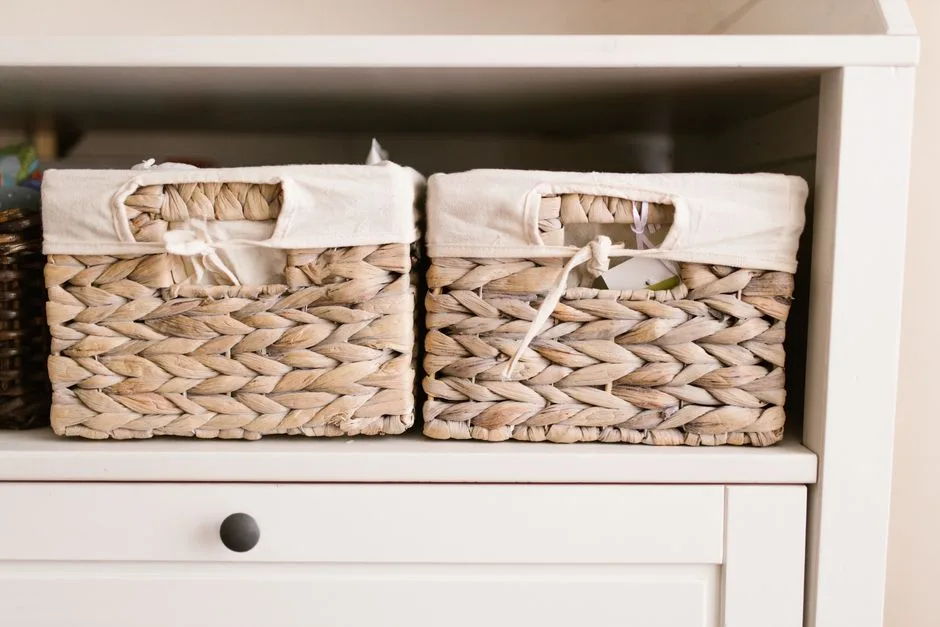
Most organizing advice treats folding as an aesthetic decision. It is actually a spatial decision. The way you fold a bath towel determines how tall your towel stack is, which determines how much vertical clearance you need on that shelf, which determines whether you can fit a second tier of items on the same shelf or whether that space becomes dead air.
The three most common residential towel folds and their approximate stack heights for a set of six bath towels:
- The thirds roll (spa roll): Produces a stack approximately 8 to 10 inches tall when stored upright in a row, or 14 to 16 inches tall when stacked flat. Works well in deep shelves with 10-inch clearance or more.
- The rectangle fold (flat stack): Produces a stack approximately 10 to 12 inches tall for six towels. Requires the most vertical clearance of the standard folds.
- The file fold (KonMari-adjacent): Towels folded into thirds lengthwise then folded to stand upright. Stack height for six towels stored this way is approximately 4 to 6 inches. This fold format recovers the most vertical clearance of any standard approach and is the correct choice when your shelf gaps are tight.
If your current shelf gap above your towel shelf is 10 inches and your towels are folded in rectangles stacking to 12 inches, you do not have a storage space problem. You have a folding problem. Switching to the file fold can drop that stack height to 5 or 6 inches — and suddenly you have 4 to 5 inches of clearance for a second tier of small containers, hand towels, or washcloths.
Sheet set folding produces the same leverage:
- Stuffed-in-the-pillowcase method: Produces a compact bundle approximately 6 to 8 inches in each dimension. Extremely space-efficient, easy to grab as a complete set, and works well in Zone 1 for active sheet sets.
- Flat stack with folded components: Produces a stack that can reach 14 to 18 inches for a full queen set, and is almost impossible to retrieve without disturbing the items stacked above it.
- File-folded sheet sets: Similar to towel file folding — components folded to stand upright. Takes practice to master with fitted sheets but produces a stack height under 8 inches for a complete set.
The principle connecting all of these: your fold is your first spatial decision, and it should be made after you know your shelf gap, not before.
The Audit Before the Purchase: A Step-by-Step Process
For anyone doing linen closet organization in a small space, the audit phase is where systems succeed or fail. Here is the complete sequence, in order:
- Empty the closet entirely. Everything comes out. This is not optional — reorganizing around existing items preserves the spatial errors already built into the system.
- Clean the shelves. Wipe them down. This is also the moment to check for shelf stability and tighten any loose brackets.
- Measure everything. Shelf depths, shelf gaps, wall width, door clearance. Write the numbers down.
- Sort items into three categories as you assess them:
– Active use (touched at least monthly)
– Occasional use (touched a few times per year)
– Storage or backup (rarely touched, but legitimately kept)
- Discard or donate items that do not fit any of those categories. Expired products, linens that no longer fit any bed in the home, duplicates beyond reasonable backup quantity.
- Measure your active-use items. Towel stack heights. Sheet set dimensions. Toiletry heights. Actual numbers, not guesses.
- Map your zones using painter’s tape at 36 and 60 inches.
- Match items to zones based on use frequency before touching a shelf or buying a container.
- Identify gaps between your item heights and your shelf gaps. Flag shelves where a riser or bracket adjustment would recover meaningful space.
- Only now consider containers — and only to address specific problems identified in steps 6 through 9, sized to measurements you have already taken.
This sequence sounds methodical because it is. It takes longer than pulling bins off a shelf at the store and hoping they fit. It also produces a result that holds for years instead of weeks.
FAQ
Q: How do I handle linen closet organization in a small space when I don’t have enough shelves to create separate zones?
The zone model does not require separate shelves for each zone — it requires intentional placement within whatever shelves you have. If you have three shelves, designate the middle shelf as Zone 1 (daily use), the upper shelf as Zone 2 (weekly use), and the lower shelf or floor as Zone 3 (seasonal). Within a single shelf, left-to-right placement can also create micro-zones: daily items on the left at easy reach, less frequent items toward the back right. The zone principle scales down to any configuration.
Q: Is it worth buying adjustable shelving for a rental apartment where I can’t make permanent changes?
Yes, with conditions. Freestanding shelving units — wire shelving towers, modular cube systems, or narrow bookcase-style units — can transform a closet with fixed shelves by adding vertical tiers without any wall modification. Measure your closet floor space and ceiling height carefully before purchasing. Many freestanding units can be placed inside a closet alongside existing shelving to recover otherwise wasted floor-level or high-vertical space. You take them with you when you leave.
Q: My linen closet is a single shelf above a rod in a small hallway. How do I apply these principles to something that minimal?
Single-shelf configurations are actually well-suited to the measurement-first approach because there is so little margin for error. Measure your shelf gap (distance from shelf surface to ceiling or to whatever is above it), then select containers that use at least 80 percent of that height. Over-door organizers attached to the closet door can effectively double your storage surface without touching the shelf itself. If the rod below the shelf is unused for linens, consider adding a second hanging shelf organizer on the rod — a fabric or wire shelf that hangs from the rod and adds two or three tiers below the fixed shelf.
Q: What is the minimum shelf depth that makes a linen closet functional?
Twelve inches is generally considered the workable minimum for bath towels folded using the file method. At 10 inches, you are limited to hand towels, washcloths, and small containers. Shelves below 10 inches deep are better used for toiletries, small baskets, or folded washcloths stored upright. If your closet shelves are shallower than 12 inches, the practical fix is to add a freestanding narrow shelf unit on the closet floor that extends deeper than the fixed shelves, which recovers the depth you need for bulkier items.
Q: How often should I re-audit my linen closet once it’s organized?
Twice a year is the standard recommendation, and tying the audit to a seasonal event makes it easier to maintain as a habit — the start of spring and the start of fall work well. Each audit should check whether zone assignments still reflect actual use frequency (habits change), whether any items have accumulated that don’t belong in the space, and whether your folding method is still working with your current shelf gaps. A closet that was optimized for a household of two may need re-zoning after a new baby, a roommate, or a shift in which bathroom is used most.