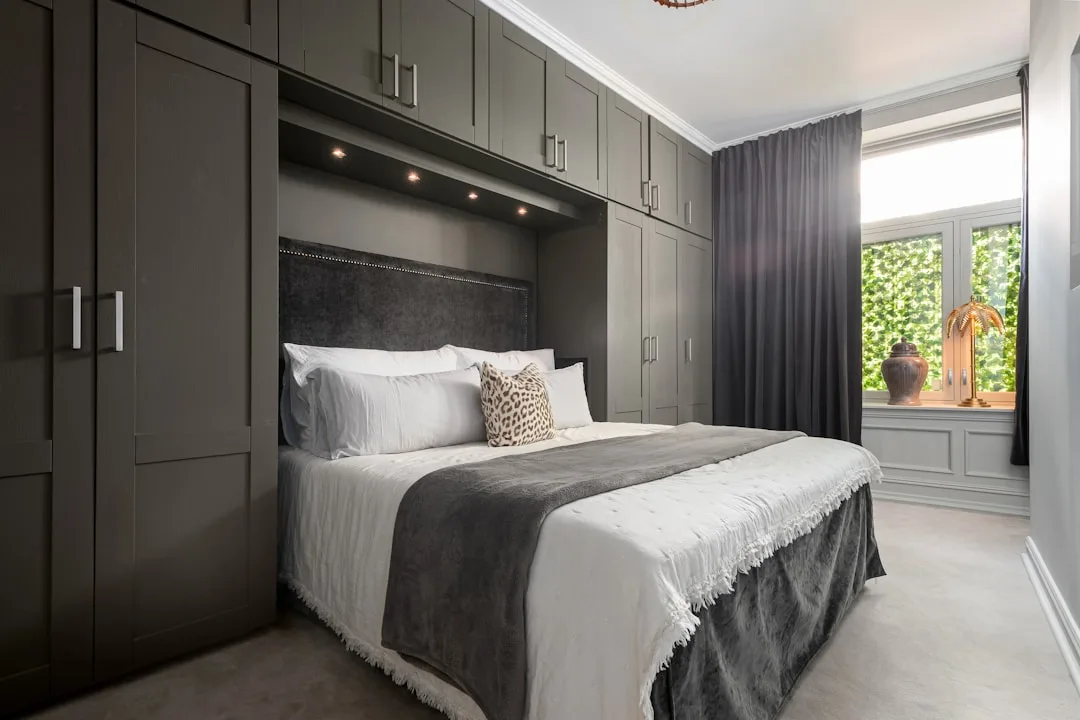
The average murphy bed cabinet occupies less than 18 inches of wall depth — but the 4 to 6 feet of flanking wall space on either side is where most owners either double the room’s function or waste it entirely on blank drywall. That gap between what a wall bed could do and what it actually does in most homes isn’t a taste problem. It’s a planning problem, and it shows up in the same three or four ways almost every single time.
Quick Answer
The average murphy bed cabinet occupies less than 18 inches of wall depth — but the 4 to 6 feet of flanking wall space on either side is where most owners either double the room’s function or waste it entirely on blank drywall.
I spent eleven years doing this work in real apartments — mostly Chicago and New York, mostly small — and the pattern I kept seeing was buyers who had done real research on the bed mechanism itself, picked something good, and then treated the surrounding wall like an afterthought. The result was a room that felt more cramped with the bed closed than it would have with a regular bed on a frame. That’s not a small failure. That’s a fundamental misunderstanding of what a murphy bed with storage shelves is actually supposed to accomplish.
Why Most Wall Beds Feel Cramped Even When They’re Closed
In This Article
- Why Most Wall Beds Feel Cramped Even When They’re Closed
- The Shelf Configurations That Actually Work Around a Fold-Down Bed
- Measuring Your Wall Before You Buy Anything — the Sequence Designers Use
- Matching Shelf Materials to the Way the Room Actually Gets Used
- How Interior Designers Style the Open Shelves So the Room Looks Intentional, Not Makeshift
- When to Buy a Flat-Pack System Versus Hiring a Custom Cabinet Shop
- Four Room Types Where This Setup Earns Its Square Footage Back — and One Where It Doesn’t
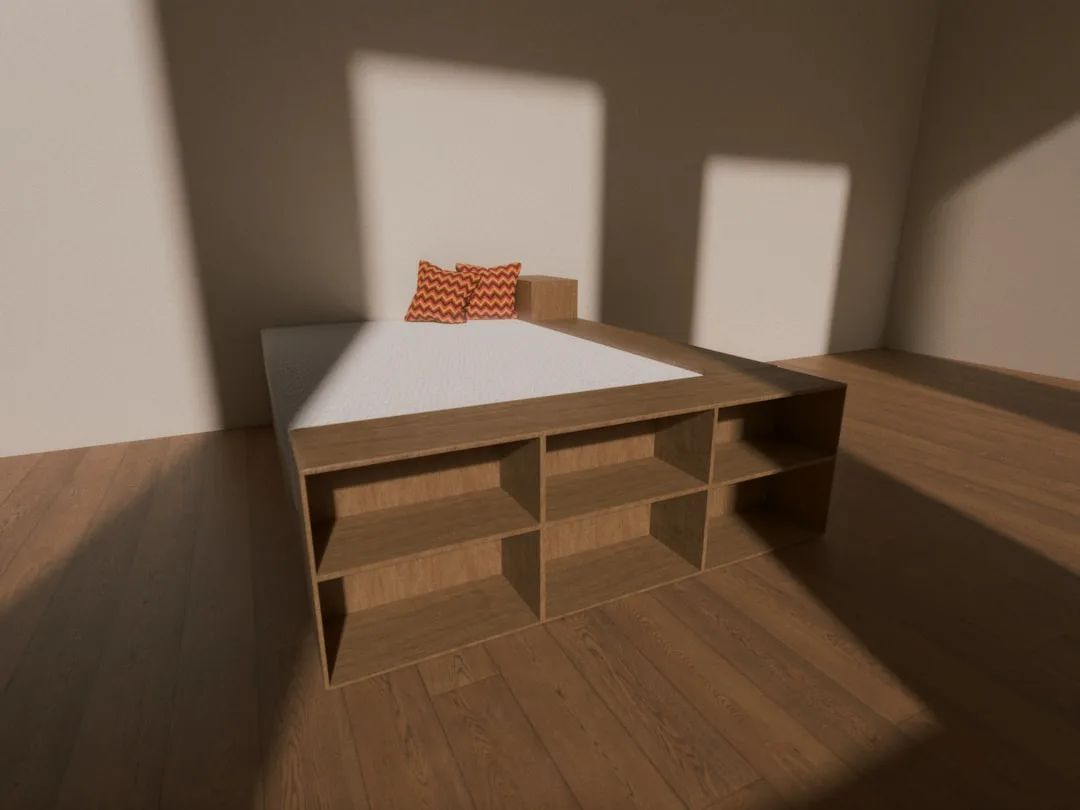
Most people diagnose this wrong. They look at a closed wall bed and think the problem is the cabinet itself — it’s too big, too prominent, too obviously a bed. So they try to disguise it with curtains or push a console table in front of it. Neither works. The real problem is almost always spatial incoherence: the bed cabinet exists as a freestanding object on the wall rather than as part of an integrated system, and the human eye reads that disconnect as clutter even when nothing is technically in the way.
The single biggest difference between a wall bed that makes a room feel larger and one that makes it feel smaller is whether the flanking wall is doing work. A standalone cabinet with blank drywall on either side creates dead zones — visual interruptions that the eye can’t resolve into a coherent layout. Floor-to-ceiling integration, where shelving or cabinetry runs continuously across the entire wall, eliminates those dead zones entirely. The bed disappears into the system. You stop seeing the mechanism and start seeing the wall.
Floating shelves hung arbitrarily around a wall bed make this worse, not better. I’ve watched well-meaning homeowners buy a few Floating oak shelves from a big box store, stagger them at odd heights around their Murphy cabinet, and end up with something that looks like a storage unit at a U-Haul facility. The problem isn’t the shelves — it’s that arbitrary placement creates depth mismatches and height inconsistencies that read as chaotic. Cohesion requires alignment: shelf faces should align with or be intentionally offset from the cabinet door face, not land somewhere in between by accident.
The depth mismatch issue deserves specific attention because it’s the mistake installers mention most often. When flanking shelves are shallower than the bed cabinet — say, 8 inches deep next to a 16-inch cabinet — the transition creates a ledge that catches bedding during deployment and looks, frankly, unresolved. When they’re deeper than the cabinet door face, they physically obstruct the fold-down arc. Neither scenario is acceptable in a designed space.
Multi-functional furniture adoption in home renovations rose significantly between 2020 and 2023, but what the numbers don’t capture is how many of those installations resulted in callbacks — situations where the product worked fine but the spatial planning around it failed completely. Choosing the product is not the same as choosing the system. The buyers who get this right treat the wall as the unit of design, not the cabinet.
Actionable takeaway: Before you look at a single product page, stand in the room and photograph the entire target wall. If the wall doesn’t tell a coherent visual story without the bed, it won’t tell one with it.
The Shelf Configurations That Actually Work Around a Fold-Down Bed
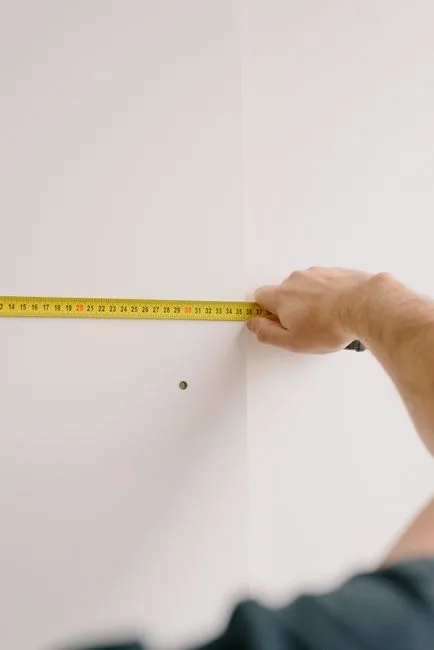
There are four configurations that consistently work. Everything else is a variation of one of them or a compromise that produces the dead-zone problem described above. Understanding which one fits your room is the first real decision — not finish color, not brand, not price tier.
Flanking tower shelves are floor-to-ceiling fixed bookcases on both sides of the bed cabinet, built or installed so the face frames are flush with the cabinet door panel. This is the configuration to use when the bed needs to visually disappear — living-room conversions, studio apartments, any space where you don’t want the room to announce “there’s a bed in here.” The vertical emphasis created by full-height towers draws the eye up and frames the bed cabinet as an architectural element rather than furniture. The towers also provide substantial storage: two 12-inch-deep, 24-inch-wide towers flanking a queen cabinet give you roughly 48 linear feet of shelf space.
Overhead bridge shelves span the full width of the wall unit continuously across the top of the cabinet. This works beautifully for display — art objects, books, plants that can handle occasional low-light periods — without interfering with bed deployment, provided you have sufficient ceiling height. The clearance requirement here is non-negotiable: you need a minimum 84-inch ceiling height to make this work without the bridge shelf cutting into the visual proportion of the cabinet below it. In rooms with 9- or 10-foot ceilings, a bridge shelf with LED underlighting becomes one of the most architectural details in the apartment.
Recessed niche shelves are built into the side panels of the cabinet itself — typically 6 to 8 inches deep, accessible whether the bed is raised or lowered. This is the right configuration for bedside essentials: a water glass, a phone charger, a book. One important note: these niches need to be specified at the point of manufacture or roughed in during cabinet installation. Retrofitting them is possible but rarely clean.
The murphy desk integration — a fold-down desk surface on one flanking panel with fixed shelves above it — is the fastest-growing configuration in search demand right now, and it’s the one I’d most strongly recommend for a dedicated home office that needs occasional guest capacity. The critical design decision is desk height: 28 to 30 inches for working, nothing less. I’ve seen this done at 32 inches to match a surrounding shelf line and it produces a workspace that gives everyone who uses it a backache within an hour.
Wilding Wallbeds’ installation documentation specifies maintaining a minimum 18 inches of unobstructed floor space on each side of the open bed footprint — any shelf that encroaches on this zone creates a trip hazard and voids most manufacturer warranties. That clearance requirement should be your first overlay on any configuration sketch.
Actionable takeaway: Identify your primary room use (living space, office, guest room, studio) before selecting a configuration — the use determines which of these four layouts actually solves your problem.
Measuring Your Wall Before You Buy Anything — the Sequence Designers Use
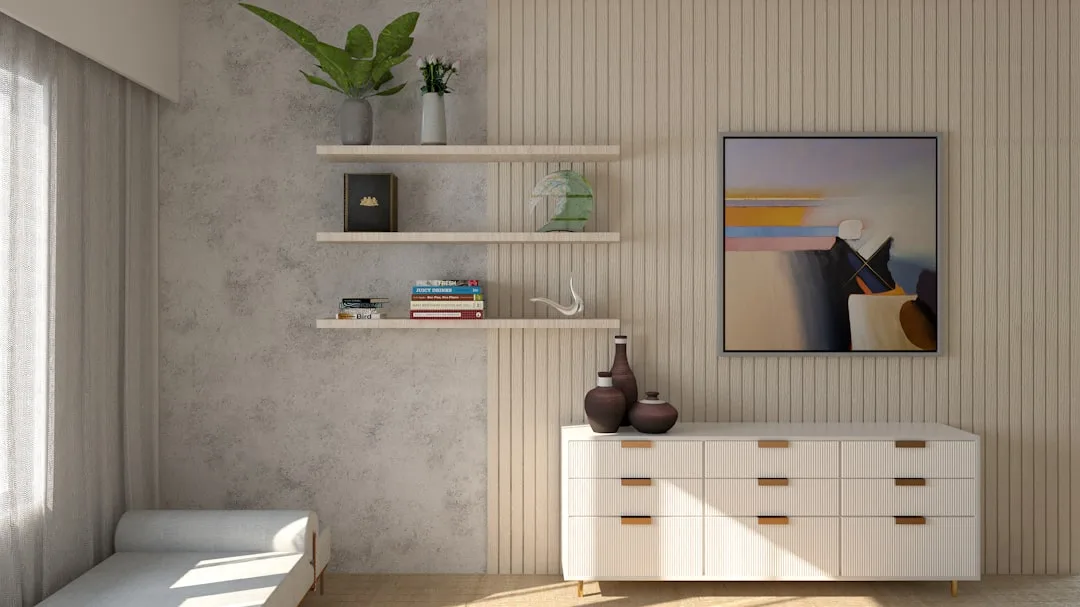
Here is the sequence. Not the sequence I’d recommend — the actual sequence. Skip a step and you will buy something you cannot install, or install something you cannot use. I watched a client spend $800 on a sectional once and have to resell it three months later because she never measured the doorway it had to pass through. The same logic applies here, and the dollar amounts are larger.
Start with the rough opening, not the product dimensions. This sounds obvious until you realize how many people do it backwards — they find a unit they like, look up the dimensions, and then go measure their wall to confirm it fits. That approach means you’re measuring to validate a purchase you’ve already emotionally made, not to understand what your wall can actually accept. Write down wall width, ceiling height to the tallest obstruction (not just the flat ceiling — look for HVAC ducts, soffits, light fixtures), and baseboard projection before you open a single browser tab.
Next, map every obstacle:
- Electrical outlets and light switches — a bed cabinet cannot cover a live outlet; it must be relocated before installation, which means an electrician and a permit in most jurisdictions
- HVAC vents — floor vents on the installation wall rule out floor-to-ceiling towers on that specific zone; ceiling vents affect overhead bridge shelf placement
- Stud positions — use a stud finder to locate and mark every stud on the target wall; wall bed cabinets must anchor to studs, and stud spacing (typically 16 or 24 inches on center) directly affects which cabinet widths are installable without blocking
- Window and door swing arcs — a door that swings into the room may conflict with the open bed footprint even if it doesn’t appear to on a floor plan
Account for the swing arc, not just the open position. Vertical-lift queen beds require approximately 66 inches of ceiling clearance at the midpoint of the arc — the point where the bed is at 45 degrees during deployment — not just at the fully flat position. Low ceilings that clear the open bed can still catch the mattress mid-swing. This is a common installation error that no product photo will warn you about.
The 3-inch rule for shelf depth: any shelf positioned alongside a closed bed cabinet, on the same wall plane, that is deeper than the cabinet door panel face will catch bedding and linens as the bed deploys unless it is offset laterally by at least 3 inches. This is the depth mismatch problem expressed as a clearance rule.
Standard cabinet widths — 54 inches for a full/double, 62 to 66 inches for a queen, 78 to 82 inches for a king — determine exactly how much flanking wall you have left to work with. In a standard 10-foot room, a queen cabinet leaves roughly 9 to 13 inches of flanking wall on each side at the cabinet’s depth. In a 12-foot room, that becomes 15 to 19 inches per side. The difference matters enormously for whether flanking towers are proportionally viable.
Actionable takeaway: Complete your wall map on paper — with every obstacle marked to scale — before requesting a single quote. Any retailer worth working with will ask you for exactly this information anyway.
Matching Shelf Materials to the Way the Room Actually Gets Used
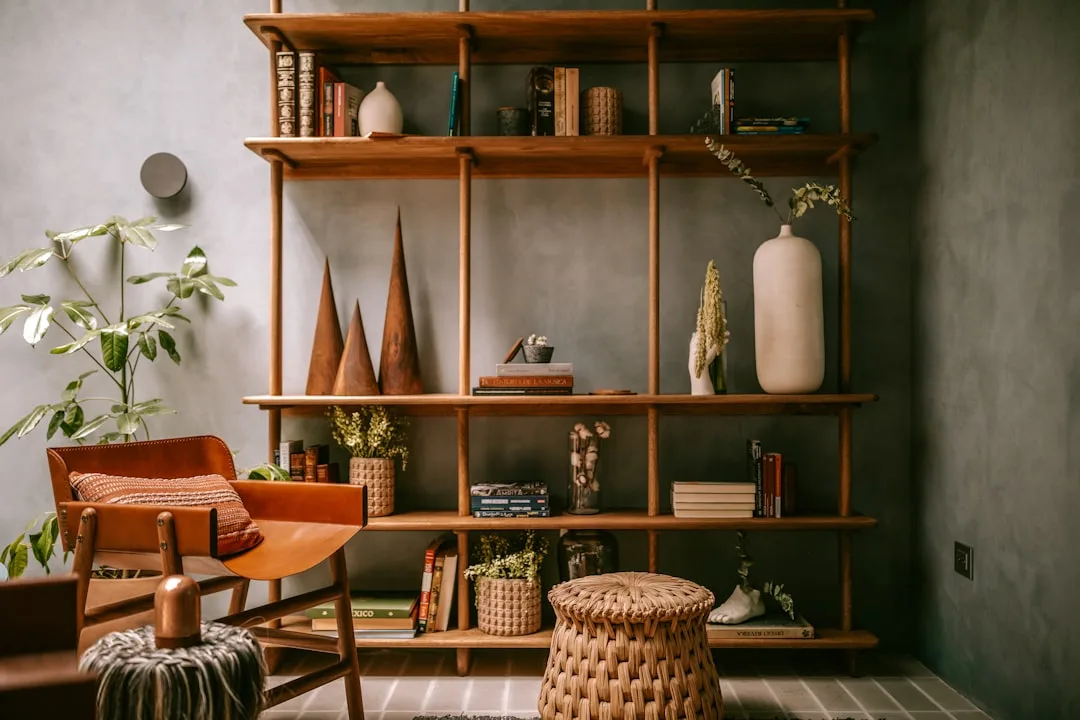
Material selection is where budget decisions compound. Choose wrong and you’re not just looking at something you dislike — you’re watching shelves bow, joint lines separate, and veneer peel in the places the room puts the most stress. The room type matters as much as the budget.
MDF with thermofoil or veneer facing is the most common cabinet-grade material in wall bed systems, and it’s a reasonable choice in dry rooms with stable humidity. Paintable, consistent, relatively cost-effective. The failure mode is moisture: rooms that double as home gyms, spaces near laundry, or basement installations with any humidity variability will show MDF failure at the bottom edges within two or three years. I’ve seen it. It’s not subtle.
Plywood core with hardwood veneer is the material I’d specify for anyone who plans to use flanking towers for books, media equipment, or anything else with meaningful weight. Plywood holds adjustable shelf pins dramatically better than MDF, doesn’t swell with humidity variation the way particleboard does, and adds 15 to 25% to material cost — a premium that almost always pays back over the life of the installation.
Melamine-coated particleboard is what you’re getting in most flat-pack systems, including IKEA’s KALLAX units that people frequently integrate with wall beds. It’s acceptable for light display shelving. It is not acceptable for shelves carrying more than 25 lbs per linear foot, and it does not hold screws well in the face grain — which means shelf pins in melamine particleboard loosen over time with any dynamic load. Know what you’re buying.
Solid wood face frames with plywood cases — the premium joinery approach used by custom cabinet shops — is the right choice for homes where the wall unit needs to match existing millwork. Victorian brownstones, Craftsman bungalows, older apartments with substantial original built-ins: these spaces punish material inconsistency. A flat-pack system that looks fine in a new construction condo reads as cheap in a 1920s apartment with 9-foot plaster ceilings and original oak trim.
The pattern I kept seeing in longer-term projects was that material quality at the outset consistently separated satisfied clients from dissatisfied ones — more reliably than price tier, brand name, or even configuration. Homeowners who chose integrated wall systems over standalone furniture reported higher satisfaction at the two-year mark, with material quality cited as the primary differentiator over price.
Actionable takeaway: Before selecting a material, identify the room’s humidity range and load requirements — then choose the material that handles those conditions, not the one that looks best in a product photo.
How Interior Designers Style the Open Shelves So the Room Looks Intentional, Not Makeshift

The aesthetic anxiety is real. I’ve had clients who understood exactly what they wanted functionally, selected a well-made system, and then stalled for three months before installation because they couldn’t picture what the shelves would actually look like when they were done. The fear is that the wall will always read as a murphy bed dressed up with shelves — a piece of furniture trying to pass as architecture. That fear is valid because it describes exactly what bad styling produces.
The 60/40 fill rule is the single most effective tool against overcrowding. Leave 40% of each shelf’s visual field open — meaning empty space, negative space, room for air. Overcrowded shelves force the eye to work, and the eye, when it has to work, starts noticing the cabinet mechanism rather than the objects on the shelves. Designers I’ve worked alongside use this rule almost instinctively; when I started applying it deliberately, the difference in client reactions was immediate.
Lighting integration is the detail that moves a wall unit from functional to architectural. LED strip lighting recessed into the underside of an overhead bridge shelf, or tucked into the back of a deep niche, changes the entire room reading at night — warm 2700K to 3000K color temperature works best in sleeping spaces, where cooler light actively disrupts sleep cues. This is not expensive to do during installation and is genuinely difficult to retrofit cleanly. It’s worth planning for even if you don’t implement it immediately.
Anchoring with large objects — one per shelf — prevents the Airbnb shelf problem. This is the look where every shelf has four to seven small objects of similar scale, evenly spaced, which signals “someone staged this quickly” rather than “someone lives here.” One oversized ceramic, a horizontal stack of art books, a sculptural object with real presence — something that takes up a third of the shelf’s visual width — anchors the composition before anything else is added.
Amber Lewis of Amber Interiors in Los Angeles has spoken publicly about how she approaches built-in wall beds in her residential projects: the mechanism is never the focal point. The objects on the shelves are. That principle sounds simple and is actually quite hard to execute without experience, because it requires the confidence to treat a wall bed wall exactly like any other bookcase wall — not giving the mechanism special visual deference, not tiptoeing around it aesthetically.
Matching the cabinet finish to the surrounding wall color is the technique that most reliably makes the unit recede. When the cabinet doors are the same color as the drywall — a warm white, a saturated gray-green, whatever the room’s base color is — the whole wall reads as a designed surface. The bed disappears. The shelves, the objects, the lighting: those become the room’s visual content.
Actionable takeaway: Start styling with your one large anchor object per shelf. Everything else around it is editing, not decorating.
The Weight and Load Questions Nobody Warns You About Before Installation
Nobody mentions this clearly before the installation is done, which is why it produces some of the most expensive callbacks I ever saw: shelves that develop visible sag within six months, wall anchors pulling slowly out of drywall, bridge shelf connection joints that squeak every time the bed deploys and retracts. These are not product failures. They are planning failures.
Wall bed cabinets are anchored to studs, not the floor. The cabinet carries its own weight and the weight of the mattress through those stud anchors. It is not a structural element. It cannot be treated as a load-bearing base for heavy shelving attached to it — and many buyers assume that because the cabinet is solid and stable, anything attached to it shares that stability. It does not. Flanking shelf towers must be independently anchored to wall studs, with separate anchor points from the bed cabinet. Minimum two anchor points per tower, into studs or appropriate blocking.
Here’s the weight math the way I walk clients through it: a shelf carrying 80 pounds on two wall anchors placed 12 inches apart creates a point load of 40 pounds per anchor. The IRC Section R301 residential standard requires wall and floor assemblies to support a minimum live load of 40 lbs per square foot, but point loads concentrate force in ways that distributed loads do not. A 1/4-inch drywall anchor not hitting a stud approaches its failure threshold at exactly the load a medium-weight shelf in a functional room will impose on it. This is not a theoretical risk.
Overhead bridge shelves — those spanning continuously across the top of a wall unit from one flanking tower to the other — carry shear stress at the connection joints each time the bed deploys. The door swings down, the air pressure changes, the structure absorbs a small dynamic load. Repeated. Metal brackets rated for dynamic load (not standard static shelf-bracket ratings) are required at those joints. Standard shelf brackets are rated for vertical downward force. Shear is a different load path.
The mattress weight issue is one almost every buyer ignores until they’re told to provide it on an order form:
- Twin memory foam: typically 40–60 lbs
- Full/double memory foam: 50–80 lbs
- Queen memory foam: 80–130 lbs
- King memory foam: 130–180 lbs
Spring or piston tension in the lifting mechanism is calibrated to a specific mattress weight range. Using a mattress significantly heavier than the mechanism’s calibration makes the bed difficult to close and puts excessive stress on the spring assembly. Always specify your mattress weight — not just the size — when ordering.
Actionable takeaway: Before installation day, confirm that every anchor point hits a stud or specified blocking, and request the load rating documentation for any hardware included in a flat-pack system.
When to Buy a Flat-Pack System Versus Hiring a Custom Cabinet Shop
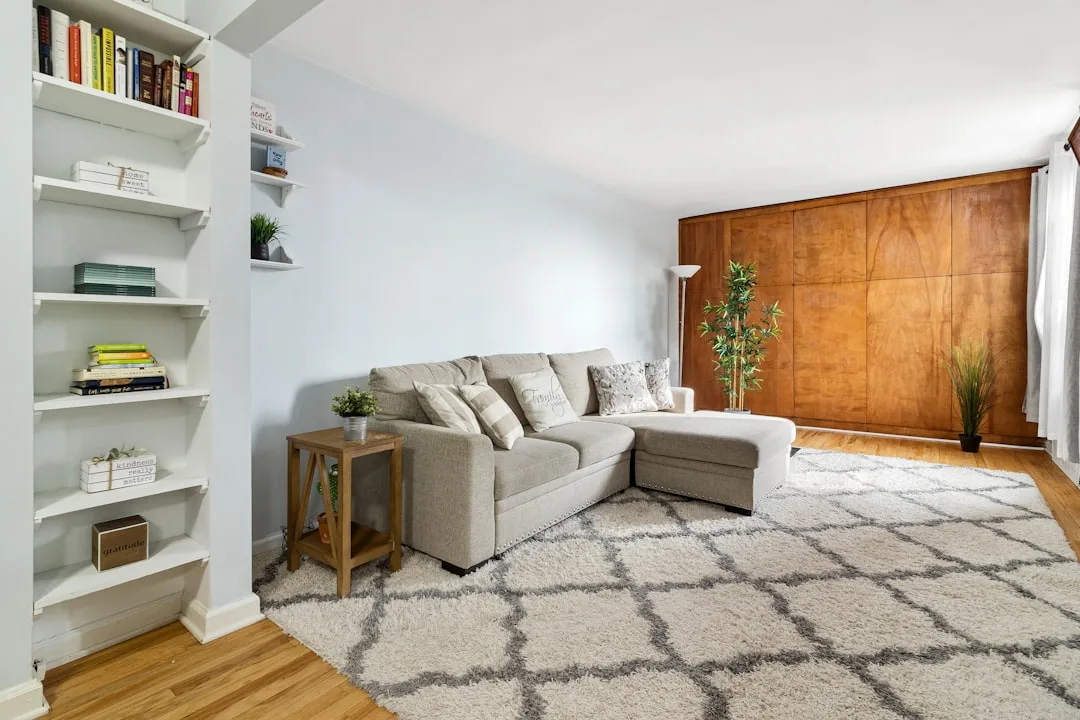
The honest answer is that this decision is almost entirely determined by two variables: how standard your wall is, and how much the finish quality matters in that specific room. Every other factor — brand preference, timeline, aesthetic vision — slots in after those two.
Flat-pack and semi-custom systems from Murphy Bed Depot, Lori Beds, and Expand Furniture are genuinely good products for standard room dimensions. A DIY-comfortable homeowner with a flat, obstacle-free wall, standard ceiling heights, and a budget under $3,000 for the wall bed unit alone can get a functional, durable installation from these sources. The shelf integration requires additional purchasing — IKEA KALLAX units and similar flat-pack shelving are the most common approach — and coordinating them visually takes real effort. More on that below.
Semi-custom through specialty retailers like More Space Place or Inspired Closets represents the middle path: more finish options, installer support, and the ability to specify dimensions that aren’t catalog-standard. Budget $4,000 to $9,000 installed for a queen wall bed with flanking shelf towers. The limitation is that you’re working within that retailer’s available configurations — you can adjust dimensions and finishes, but you cannot redesign the system architecture.
Full custom through a local cabinet shop or millworker is the path for irregular walls, existing built-ins that need matching, or architectural styles — Craftsman, Mid-Century, Victorian — where off-the-shelf cabinetry will look exactly like what it is. Budget $8,000 to $20,000 and up for a complete wall system. That premium is real. S. Houzz & Home Study reported a median spend of $4,200 for guest room renovations involving built-in furniture, with custom cabinetry projects averaging $11,500 — buyers consistently rated the custom premium as worth it for fit and finish quality.
The hidden cost that nobody budgets for in the flat-pack route: coordinating a flat-pack wall bed with separately purchased shelving almost always requires custom filler panels, scribing to account for walls that aren’t perfectly plumb, and paint matching. Budget $500 to $1,500 for finish carpentry even on a DIY-primary project. I’ve never seen this come in at zero, and I’ve seen it come in considerably higher when the walls were badly out of plumb — which, in any building older than 30 years, is more likely than not.
- Under $3,000 budget, standard room, DIY-comfortable: flat-pack system with separate shelf integration
- $4,000–$9,000 budget, want installer support, standard-ish room: semi-custom specialty retailer
- $8,000+ budget, irregular room, or architectural matching required: full custom cabinet shop
- Any budget, obstacle-heavy wall: get a custom quote first — you may spend more on modifications to a flat-pack system than on a semi-custom one
Actionable takeaway: Get one quote from a local custom cabinet shop before ruling it out on price — the number is often closer to the semi-custom tier than buyers expect, and the fit difference is significant.
Four Room Types Where This Setup Earns Its Square Footage Back — and One Where It Doesn’t
This is where the abstract planning becomes concrete, and where the contrarian note matters: a murphy bed with storage shelves is not a universal solution. There is one room type where it creates a genuine problem, and I’d rather you know about it now.
Studio apartments are where this configuration produces the highest return, without question. The U.S. Census Bureau’s 2023 American Housing Survey identified 12.4 million studio and efficiency apartment units in the U.S. housing stock — a population that collectively needs exactly what this system delivers. In a studio, the wall bed with flanking shelves must serve as headboard, nightstand, living room shelving, and room divider simultaneously. Vertical emphasis is non-negotiable: cabinet-to-ceiling height is what separates a studio that feels like a home from one that feels like a hotel room someone’s been living in for three years. Do not stop the towers at 80 inches. Run them to the ceiling.
Dedicated home offices that need guest capacity are the second-best use case. The murphy-desk-plus-bed configuration is purpose-built for this room type — a full working setup that converts to a guest bedroom in under two minutes. The design discipline required is that the desk surface must fold completely clear of the bed footprint when deployed. Any hardware that doesn’t clear fully creates a situation where the desk is slightly damaged every time a guest sleeps over.
Bonus rooms and finished basements are the most dimensionally forgiving spaces — typically more wall width, fewer obstacles, more flexibility in configuration. The constraint is ceiling height. Low ceilings under 8 feet preclude vertical-fold wall beds almost entirely and require horizontal-pivot designs instead. Overhead bridge shelves are also limited in low-ceiling spaces; plan for flanking towers only in these rooms.
Primary bedrooms with walk-in closets can benefit from this configuration as a dresser replacement on the opposite wall — particularly in rooms where the closet handles hanging storage but lacks drawer space. The planning constraint is traffic flow: the open bed footprint cannot block closet access. Map the open bed position before committing to this configuration.
Where it does not work: a room with a single egress window centered on the only viable installation wall. Building codes in most U.S. jurisdictions protect egress windows — minimum 5.7 square feet of net clear opening, minimum 20-inch width, minimum 24-inch height — and a flanking shelf tower positioned incorrectly relative to that window can reduce the usable egress opening below code. This is not a theoretical risk in older buildings where window placement predates current planning assumptions. Check the egress window dimensions and the proposed tower footprint before proceeding. An inspector will catch this. Better that you do first.
Actionable takeaway: Sketch the open bed footprint — to scale, on your floor plan — before choosing your configuration. The open position governs everything.
Frequently Asked Questions
How much wall space do I need on each side of a wall bed to fit shelves?
The minimum functional width for a flanking shelf tower is 12 inches, but 18 to 24 inches produces proportionally balanced results and actually provides usable shelf depth. A 12-inch tower feels visually thin next to a 16-inch-deep bed cabinet unless the tower runs full height, which uses the vertical dimension to compensate. In a standard 10-foot room with a queen cabinet (62 to 66 inches wide), you have roughly 15 to 19 inches of flanking wall on each side at the cabinet’s depth — enough for a functional 12-inch tower with a 3-to-7-inch reveal between the tower face and the wall. In a 12-foot room, that expands to 22 to 26 inches per side, which is comfortable for an 18-inch-deep tower.
Can I attach shelves directly to a murphy bed cabinet, or do they need separate wall anchors?
Separate wall anchors. Always. The wall bed cabinet is anchored to studs to carry its own weight plus the mattress load — that anchor system is calibrated for the cabinet’s specific load, not for additional lateral loads from shelving. Attaching heavy shelves directly to the cabinet’s side panels transfers load to the cabinet’s anchor points and creates a combined load those anchors were not specified for. Flanking towers should be independently anchored to wall studs with a minimum of two anchor points per tower. If the towers and the cabinet happen to share a side panel for aesthetic continuity, that shared panel still needs its own stud anchors — it cannot rely on the cabinet’s anchors for structural support.
What is the maximum weight I should put on shelves integrated into a wall bed system?
This depends on the shelf material and anchor method, not on the wall bed itself. Melamine particleboard shelves — standard in flat-pack systems — should not carry more than 25 lbs per linear foot. Plywood-core shelves with proper stud anchoring can handle 50 lbs per linear foot comfortably, more with additional support. The constraint that most people underestimate is point load: two anchors 12 inches apart carrying 80 lbs creates 40 lbs per anchor point. A 1/4-inch anchor in drywall without hitting a stud approaches failure at that load. The practical rule for any shelf you plan to use for books or equipment: every anchor point must hit a stud or be supported by blocking installed during the rough-in phase. Don’t rely on toggle bolts for load-bearing shelves in a wall bed system.
Do wall beds with built-in shelves work in rooms with 8-foot ceilings?
They work, but with real constraints. An 8-foot ceiling eliminates overhead bridge shelves as a design option — a bridge shelf under an 8-foot ceiling drops the visual clearance below the bed cabinet to a proportion that feels compressed rather than architectural. Flanking towers are still fully viable; floor-to-ceiling towers in an 8-foot room actually work quite well because the 96-inch height is standard for stock cabinetry and cabinet extensions. The bigger constraint is the bed’s swing arc: vertical-lift beds require approximately 66 inches of clearance at the midpoint of the deployment arc, and while 96-inch ceilings technically provide that clearance, any light fixture, ceiling fan, or HVAC duct on the deployment path reduces that margin. Horizontal-pivot (side-tilt) wall beds eliminate the arc clearance problem entirely and are the better specification choice in low-ceiling rooms — they deploy sideways rather than swinging down through the ceiling plane.
Pick one wall in your home — right now, before you close this tab — and photograph it with your phone. Then open a notes app and write down: wall width in inches, ceiling height, and every obstacle (outlets, vents, windows) you can see. That information, collected before you look at a single product, is the thing that will determine whether your wall bed installation ends up as a room that works or a cabinet on a wall surrounded by blank drywall. The planning always precedes the purchase. That’s the part most people skip, and it’s exactly why most wall beds underperform.