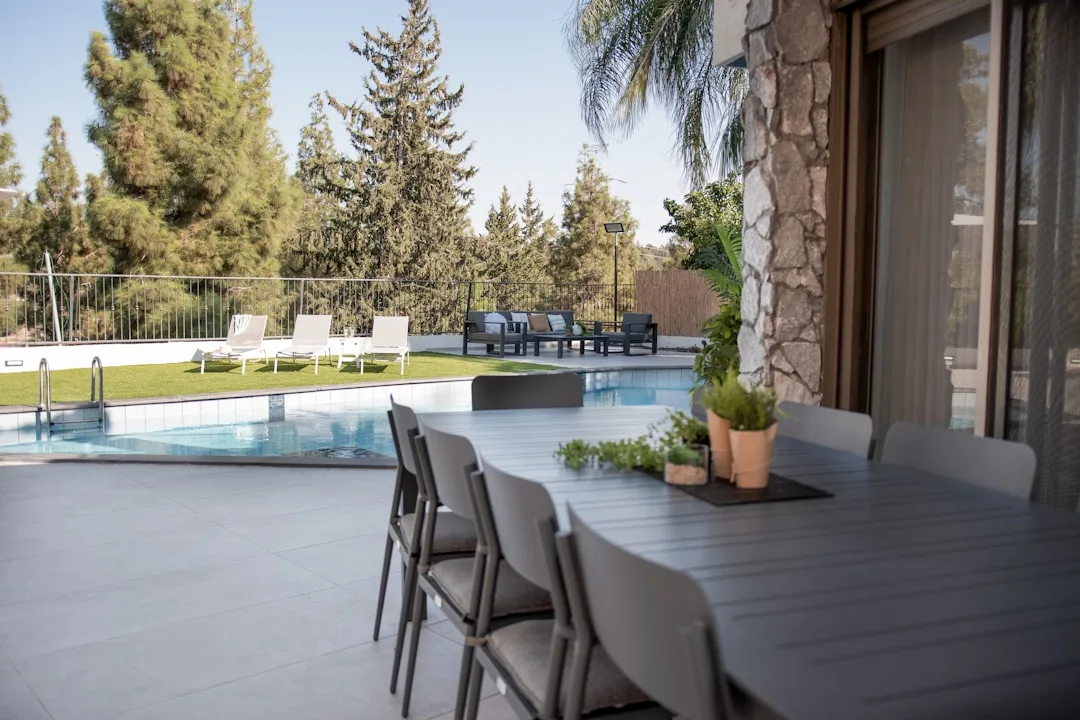
The backyard you designed three years ago is already out of date — not because trends moved fast, but because what homeowners are actually solving for changed completely. If you’ve been paying attention to outdoor living space trends 2026, you already know the goalposts have moved further than most renovation budgets have caught up with.
Quick Answer
The backyard you designed three years ago is already out of date — not because trends moved fast, but because what homeowners are actually solving for changed completely.
Three years ago, people wanted somewhere to grill and somewhere to sit. Now they want somewhere to work, somewhere to decompress, somewhere to host eight people in October, and somewhere that doesn’t flood when it rains for five days straight. That is a completely different design problem. The spaces that were built without accounting for that shift feel thin and frustrating to live in — not ugly, exactly, just insufficient. And “insufficient” is the worst thing an outdoor space can be, because unlike a bad throw pillow, you can’t just swap it out on a Sunday afternoon.
Why Everything You Think You Know About Backyards Is Changing
In This Article
- Why Everything You Think You Know About Backyards Is Changing
- 1. Weatherproofing Is Now the Starting Point, Not the Afterthought
- 2. The Death of the Generic Patio: Micro-Zones Are Replacing Open Slabs
- 3. Outdoor Kitchens Are Getting Serious — and Smaller
- 4. Lighting Design Is Finally Being Treated Like Interior Lighting Design
- 5. Low-Maintenance Planting Is the New Landscaping Ambition
- 6. Sound Management Is an Infrastructure Decision Now
- 7. Outdoor Work-From-Home Spaces Are Becoming Permanent Features
- 8. Sustainable Materials Are Moving From Premium to Standard
- 9. Smart Outdoor Technology Is Maturing Into Invisible Infrastructure
Here’s the framing that most outdoor design content refuses to drop: the backyard as an “extension of the indoor living space.” You see this phrase everywhere. It made sense in 2014, when the goal was simply getting people outside by making outside feel more like inside. But that framing has quietly become a trap.
The backyard is no longer extending the house — it is competing with it. Homeowners are not building outdoor rooms so their interior living room can breathe. They are building outdoor rooms because the outdoor room does things the interior room cannot: it holds more people, absorbs more noise, allows fire and smoke and mess, and delivers something a temperature-controlled interior never can, which is actual contact with the physical world. That is a destination. Not a corridor.
The financial scale of this shift is significant. According to NAHB remodeling data, U.S. homeowners spent over $60 billion on outdoor improvements between 2020 and 2024 — and that spending has continued accelerating into 2026. That is not discretionary decoration spending. That is infrastructure investment. People are treating their outdoor spaces with the same seriousness they used to reserve for kitchen renovations and basement finishes.
Three forces are driving the 2026 version of this shift:
- Climate volatility has made outdoor spaces that only function under ideal conditions feel like failed investments. Homeowners in the South want shade and drainage. Homeowners in the Midwest want heat retention. Nobody is designing for a perfect 72-degree day anymore.
- Social behavior changed permanently after the pandemic years. Gatherings got smaller, more intentional, and more frequent. People stopped waiting for the big summer party to justify their outdoor setup. They started wanting something usable on a Tuesday in March.
- Indoor square footage pressure — rising home prices, multi-generational households, home offices eating up spare bedrooms — has pushed more functional living into the backyard than ever before.
The spaces being built and renovated right now are responses to all three. They’re weatherproofed. They’re zoned. They’re lit, wired, planted with intention, and built from materials that don’t apologize for being outside.
Understanding the full picture of outdoor living space trends 2026 means understanding that these aren’t aesthetic choices — they’re functional ones, driven by how people actually live today.
1. Weatherproofing Is Now the Starting Point, Not the Afterthought
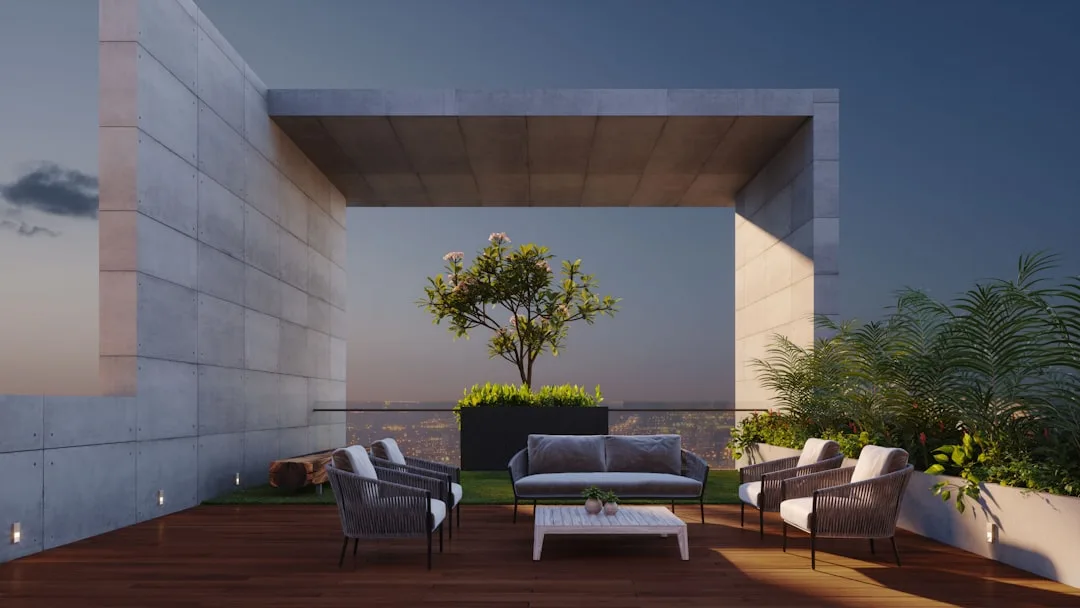
For most of my career, the conversation about weatherproofing happened at the end of a project — as a “nice to have” conversation after the client had already spent most of their budget. A shade sail here, a patio umbrella there, maybe a portable propane heater dragged out in November. The result was always the same: a space that worked for about four months and sat idle the other eight.
That model is collapsing. Motorized louvre pergolas, all-season enclosures, and infrared radiant heating are now baseline planning decisions — not luxury upgrades — for any serious outdoor room build in 2026.
The motorized louvre pergola has become the single clearest signal of how far mainstream expectations have shifted. Google Trends data shows searches for “motorized pergola” rose over 180% between 2022 and 2024 — and that search behavior reflects purchase intent, not just curiosity. These are people in the planning phase of real projects. The appeal is obvious once you understand what the product actually does: aluminum louvres that close completely in rain, open fully for airflow, and adjust in between to manage heat and light. They replace a static structure with a responsive one. The umbrella — always a compromise, always fighting the wind — doesn’t compete.
Below the overhead structure, the conversation has shifted too:
- Radiant outdoor floor heating embedded in concrete or stone substrates extends usability into shoulder seasons and, in temperate climates, can add 4–6 months of comfortable use annually
- Infrared ceiling heaters mounted to pergola beams have replaced portable propane units as the clean, invisible heating solution — they heat bodies, not air, which means they work even when it’s breezy
- Drainage planning — slopes, channel drains, and permeable materials — is now being addressed at the design stage rather than retrofitted after the first hard rain floods a patio
- Exterior-rated insulated curtain panels attached to pergola posts create windbreaks without permanent walls, adding another layer of shoulder-season usability for under $800 in most markets
- GFCI-protected outdoor electrical circuits planned at rough-grade stage — not added as extensions later — are showing up in nearly every serious project spec, because power requirements for outdoor spaces have grown dramatically alongside the technology being used in them
Builders who work in outdoor living are writing specs for outdoor rooms that look increasingly like indoor construction documents: insulation values, drainage calculations, electrical load planning. That is not overbuilding. That is catching up to how people actually want to use these spaces.
Actionable takeaway: Before you spend a dollar on furniture or planting, define your worst-weather scenario and design the structure to handle it. A pergola that fails at the first October rainstorm is not a pergola — it’s a very expensive decoration.
2. The Death of the Generic Patio: Micro-Zones Are Replacing Open Slabs
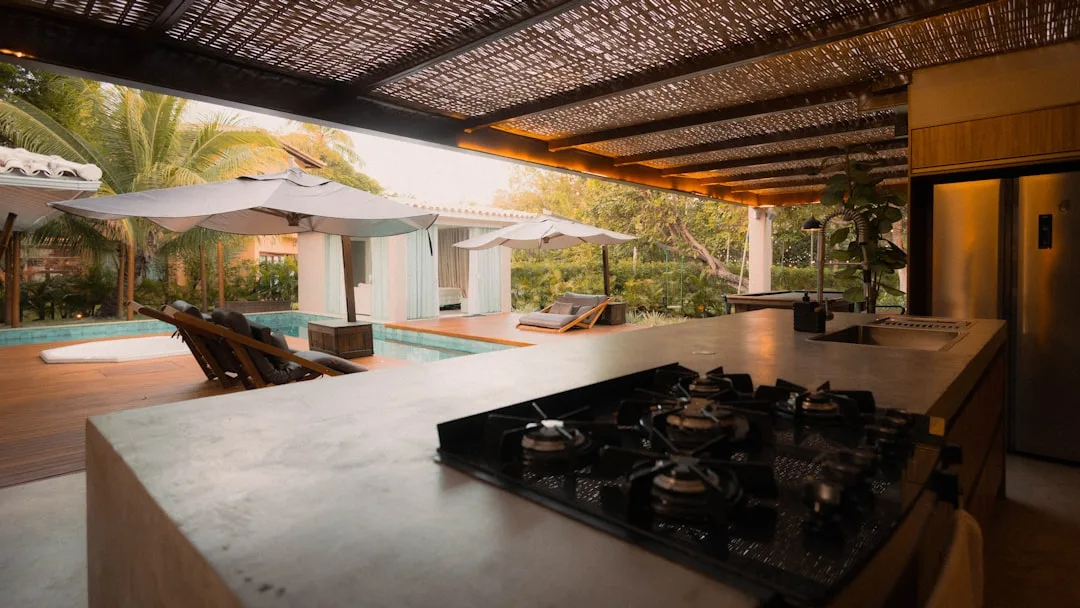
The open concrete slab with a table in the middle and a grill in the corner is not a design. It is a default. And defaults feel like defaults to live in — flat, undefined, and somehow both too much space and not enough at the same time.
I spent years watching homeowners struggle with this problem without being able to name it. They’d say the space felt “empty” even when it was full of furniture. What they were actually experiencing was the absence of psychological enclosure — the sense that you are somewhere specific, not just somewhere outside.
Micro-zoning fixes this. Not by dividing a small space into cramped boxes, but by using physical cues to signal transition and purpose. A level change of even four inches — a sunken seating area, a raised dining deck — creates distinction without a wall. A material shift from concrete to wood decking tells your brain you’ve moved from one room to another, even if no door exists between them. Planting used as a vertical screen performs the same function while adding biological complexity that a fence simply cannot.
The zones showing up consistently in well-designed 2026 projects follow a recognizable pattern:
- A sheltered cooking and prep zone — not just a grill on a shelf, but a dedicated work surface, storage, and a sink if the plumbing allows it. This zone is typically hardscape-dominant and positioned for smoke management.
- A social seating zone anchored by a fire feature, a low table, or both — designed for 4–6 people in close proximity, with acoustics and lighting calibrated for conversation rather than general illumination
- A dining zone that seats the actual number of people the household hosts, not a theoretical guest count, with clearance for chairs to push back and people to move around
- A quiet or solo-use zone — a hammock corner, a reading chair under a tree, a small water feature — that gives the space somewhere to retreat to, not just somewhere to gather
- A transition zone at the threshold between interior and exterior, often just 6–8 feet of deliberate material and lighting design, that makes the move from inside to outside feel intentional rather than incidental
Zoning a small backyard — under 400 square feet — requires more discipline than zoning a large one. The temptation is to keep it open to preserve the sense of space. But openness without definition just reads as unused. Even a 200-square-foot patio can hold two distinct zones if the level change and material palette are handled carefully.
Actionable takeaway: Sketch your backyard in terms of verbs, not nouns. Not “seating area” — where do people sit when they want to talk? Where do they sit when they want to be alone? Not “dining area” — how many people are actually eating there, and can they get out of their chairs without bumping into someone? Zones emerge from answering those questions honestly.
3. Outdoor Kitchens Are Getting Serious — and Smaller
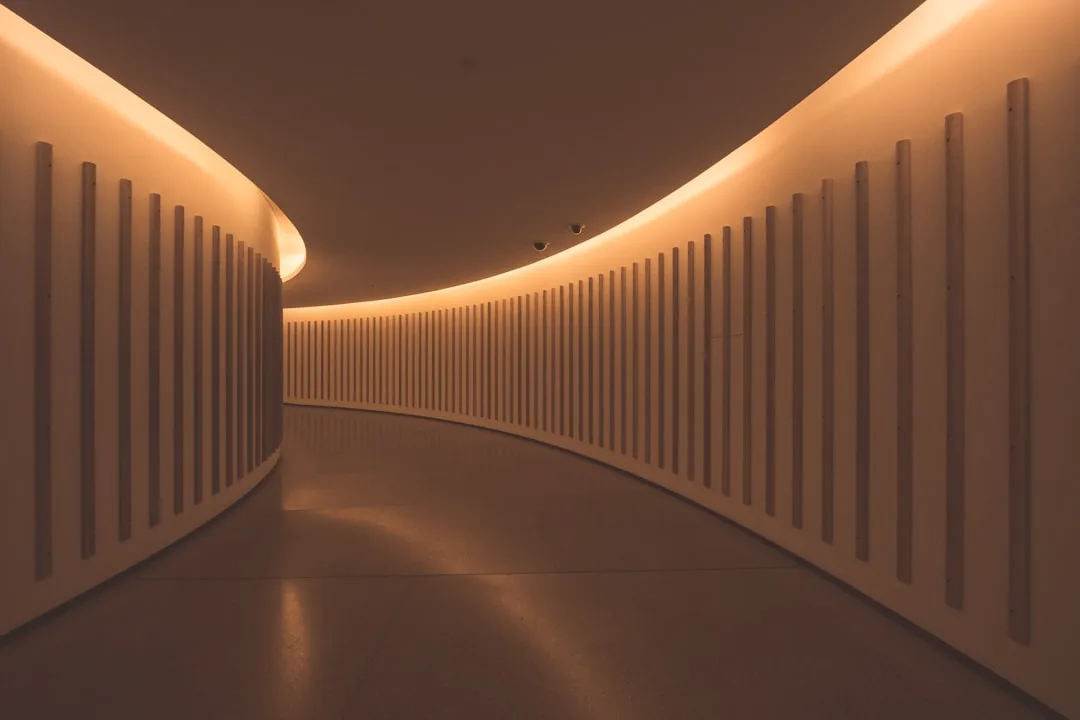
The outdoor kitchen peaked aesthetically around 2019: a long run of stone-clad cabinetry, a built-in grill flanked by two side burners, a kegerator, and a mini-fridge, all under a pergola that cost more than most car purchases. It looked impressive in photographs and sat unused nine months out of the year because it was built for performance, not for the way the family actually cooked.
The 2026 version is more compact, more functional, and significantly more honest about how outdoor cooking actually happens:
- A single high-quality gas or kamado grill rather than a multi-burner configuration that spreads heat management across too many variables
- 12–18 inches of actual work surface on each side of the grill — enough to prep, plate, and rest items without stacking them
- A single deep undermount sink with a pull-out faucet, positioned for utility, not symmetry
- Drawer storage for tools and accessories rather than cabinet doors that stick, warp, and accumulate spider webs
- A compact refrigeration unit rated specifically for outdoor use in the homeowner’s climate zone — not a standard residential unit relocated outdoors
The material conversation has shifted too. Porcelain slab countertops rated for freeze-thaw cycles are replacing granite in cold climates. Marine-grade polymer cabinetry is replacing stone veneer over cement board in humid climates. Both decisions are about longevity over aesthetics — the surfaces that look great in year one and fall apart in year four are getting left behind.
4. Lighting Design Is Finally Being Treated Like Interior Lighting Design
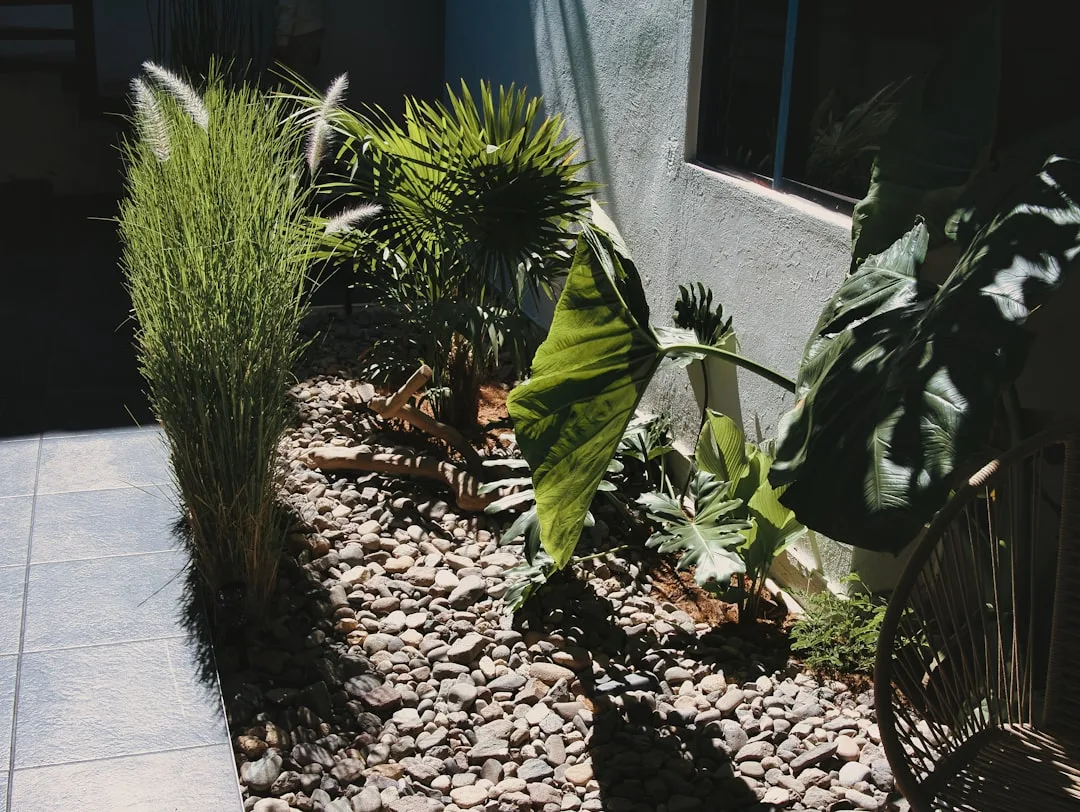
Outdoor lighting in most backyards is still being treated as security infrastructure — bright, wide, pointed at the ground, activated by motion. That approach makes a space feel like a parking lot, not somewhere you want to spend an evening.
The shift happening in 2026 outdoor living space trends is the application of interior lighting logic to exterior spaces:
- Layered light levels — ambient, task, and accent — rather than a single overhead source doing all the work
- Warm color temperatures (2700K–3000K) rather than the cool white that reads as institutional and flattens the warmth of materials and plantings
- In-ground and path lighting positioned to graze surfaces rather than illuminate them directly, which creates depth and texture instead of flatness
- Dimmer-controlled zones that allow the same space to function as a bright dining environment at 7 PM and a relaxed social space at 10 PM without moving any fixtures
- Integrated lighting in pergola beams, planter walls, and steps — embedded rather than surface-mounted, which reads as designed rather than added-on
The budget allocation is changing too. Homeowners who previously spent 5% of a project budget on lighting are now spending 12–18%, because they’ve experienced the difference between a space that looks like a backyard at night and a space that looks like a room.
5. Low-Maintenance Planting Is the New Landscaping Ambition
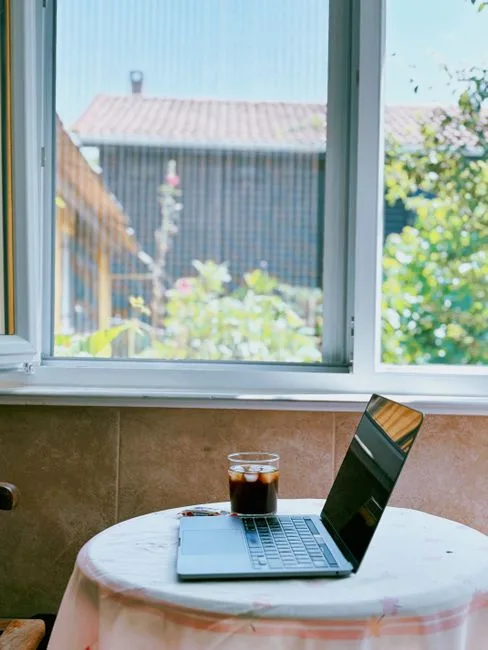
The landscaping conversation used to center on lush and abundant. In 2026, the conversation centers on honest and maintainable. Homeowners have lived through enough seasonal cycles to know what their actual gardening commitment looks like — and it is almost always lower than what they imagined when the beds were freshly planted.
The planting approach taking hold in serious outdoor projects right now:
- Native and climate-adapted species selected for ecological fit, not just visual appeal — plants that need no supplemental irrigation once established, that support local pollinators, and that handle the actual precipitation patterns of the site
- Ornamental grasses and structural perennials as the backbone of beds, providing year-round interest without demanding deadheading, staking, or frequent division
- Fewer, larger planting beds with defined edges that read as intentional rather than the scattered-small-bed approach that creates high maintenance for low visual return
- Ground covers replacing lawn in areas that see low foot traffic — creeping thyme, buffalo grass, clover — which eliminate mowing without eliminating softness
- Trees positioned for functional shade over the outdoor living zone itself, not just aesthetically placed in the yard — a correctly positioned deciduous tree can meaningfully reduce cooling loads on adjacent interior spaces while creating comfortable outdoor conditions
The shift toward low-maintenance planting is not about caring less about the garden. It is about designing a garden that matches the actual life being lived around it.
6. Sound Management Is an Infrastructure Decision Now
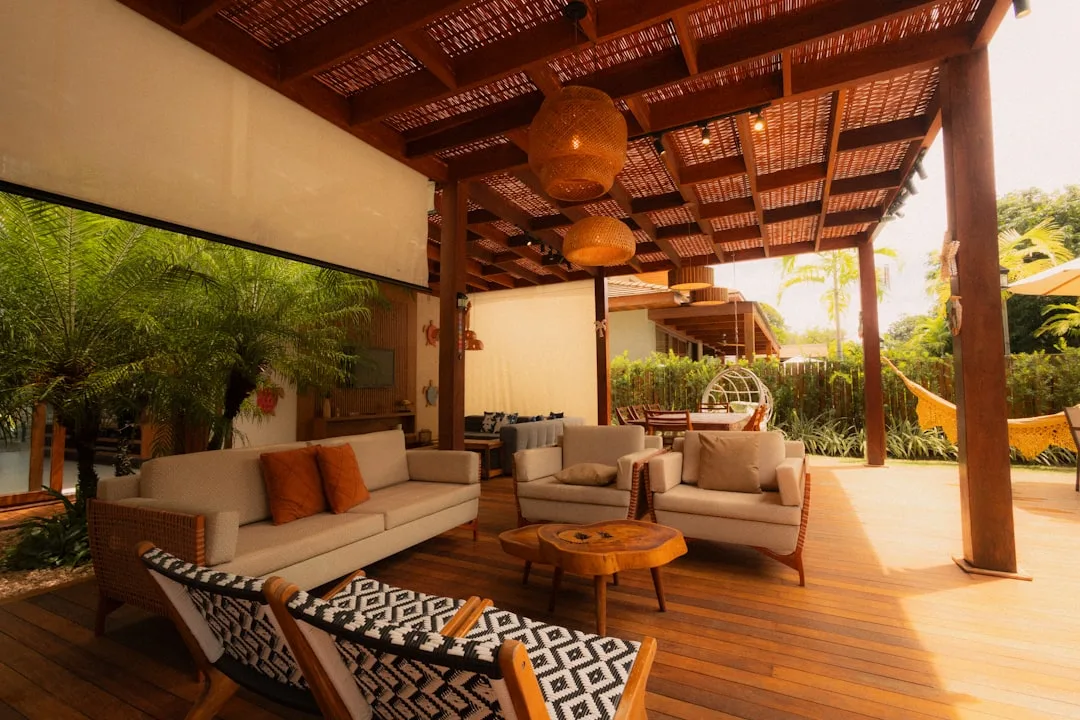
Nobody talks about acoustic design when they’re planning a backyard. Then they finish the project, sit down in their new outdoor room, and realize they can hear every conversation their neighbor is having and every car on the street behind them. Outdoor acoustics were never considered because they were never a problem — people were only outside for an hour at a time.
Now that outdoor spaces function as home offices, entertainment rooms, and all-day social environments, the acoustic environment matters:
- Dense planting buffers — not a single hedge row, but a layered combination of trees, shrubs, and perennials — reduce traffic and neighbor noise measurably, especially when planted at property boundaries and given 2–3 years to fill in
- Water features used deliberately as acoustic masks rather than as decorative elements — a wall-mounted sheet waterfall or a bubbling urn positioned between the outdoor seating zone and the noise source can make the difference between a usable and unusable space
- Solid boundary structures — masonry walls, dense wood fencing — perform significantly better as sound barriers than open or spaced fencing, particularly for mid-frequency noise from traffic and HVAC equipment
- Outdoor audio systems integrated at the design stage, with speakers positioned for near-field listening rather than trying to fill a large zone from a single point source, allow ambient sound management that doesn’t require volume levels that bother neighbors
7. Outdoor Work-From-Home Spaces Are Becoming Permanent Features

The outdoor home office started as a pandemic accommodation — a desperate attempt to put distance between a parent and a child while a Zoom call happened. What emerged from that desperation was a discovery: working outside, when the conditions are right, is significantly better than working indoors for a large percentage of tasks.
The structures being built around this use case in 2026 are no longer temporary:
- Dedicated outbuildings and garden studios with insulation, climate control, and proper electrical service — not garden sheds repurposed, but purpose-built structures designed around ergonomic work requirements
- Covered pergola work zones with outdoor-rated desks, monitor shade screens, and dedicated circuit for equipment — usable from spring through fall in most climates with proper heating
- Cellular signal boosters and outdoor WiFi access points specified and installed during construction rather than retrofitted — the connectivity infrastructure that makes outdoor work actually viable
- Glare management through louvre positioning, shade sails, or strategic planting, because screen visibility is the first functional failure point of any outdoor work environment
8. Sustainable Materials Are Moving From Premium to Standard
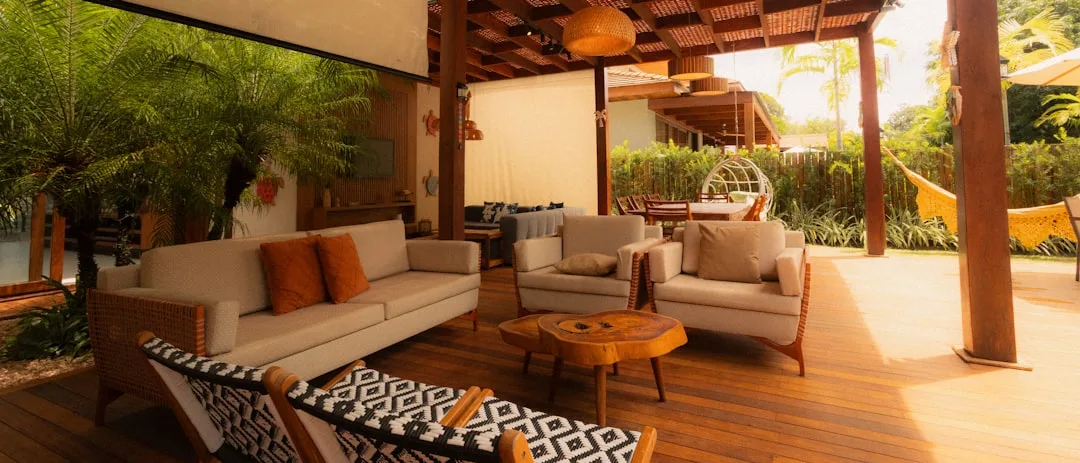
Three years ago, specifying thermally modified wood, recycled composite decking, or permeable pavers felt like a premium sustainability upgrade with a cost premium to match. In 2026, the cost delta has compressed significantly and the performance case has become impossible to ignore.
- Thermally modified ash and pine perform comparably to tropical hardwoods in outdoor conditions — no rot, no splitting, no VOC-heavy sealers required annually — at price points that have come down 20–30% as production has scaled
- Recycled composite decking has crossed a quality threshold where the visual gap between composite and real wood is negligible in most products, while the maintenance gap remains enormous — no sanding, no sealing, no annual refinishing
- Permeable concrete and paver systems are now being required by municipal stormwater codes in many jurisdictions, which means the specification conversation is no longer optional in those markets
- Powder-coated aluminum furniture rated for all-weather use has replaced most wrought iron and untreated steel in the mid-to-premium market — lighter, more durable, fully recyclable, and available in finishes that hold color for a decade or more
9. Smart Outdoor Technology Is Maturing Into Invisible Infrastructure
The first generation of smart outdoor technology was conspicuous — the automation was the point, the novelty was the selling feature, and the result was systems that required more management than the manual alternative.
The 2026 version is quieter and more embedded:
- Weather-responsive louvre and shade systems that read local forecast data and adjust automatically — closing before rain arrives rather than after it has started
- Soil-moisture sensor irrigation systems that eliminate both over-watering and under-watering without requiring the homeowner to monitor or override manually
- Outdoor lighting scenes controlled through the same app as interior lighting, with automated schedules that shift seasonally based on sunset times
- Integrated audio and lighting triggers that respond to occupancy rather than switches — the space activates when you’re in it and goes quiet when you leave
None of these technologies are new in isolation. What’s new is that they’re being integrated at the design and rough-in stage rather than layered on afterward — which means they actually work as a coherent system rather than a collection of competing apps and remotes.
Actionable takeaway: If you’re building or renovating an outdoor space in 2026, run conduit for every technology you might want in the next ten years — even if you don’t install the technology now. Conduit costs almost nothing at rough-in and saves enormous disruption later.
Frequently Asked Questions About Outdoor Living Space Trends 2026
What’s the single highest-ROI outdoor improvement for 2026?
Weatherproofing the structure — specifically, a motorized louvre pergola or all-season enclosure — consistently delivers the highest return because it multiplies the usable hours of every other investment you’ve already made. A beautiful patio set, an outdoor kitchen, and premium planting all perform better under a structure that works in October rain and January sun. Furniture and decoration are visible; a structure that extends usability by four to six months is felt.
How much should a realistic 2026 outdoor room renovation cost?
A functional, well-designed outdoor room — defined as a space with proper structure, lighting, one or two clearly defined zones, and durable surfacing — starts around $25,000–$40,000 for a 300–400 square foot footprint in most U.S. markets. Projects that include an outdoor kitchen, smart technology integration, full drainage work, or a purpose-built garden studio run $60,000–$120,000 and above. The common budget mistake is underfunding the structure and infrastructure while overfunding the furniture and decoration. The order should be reversed.
Are outdoor living space trends 2026 viable for small urban backyards?
Yes — and in some ways the trends apply more cleanly to small spaces than large ones. Micro-zoning was partly developed as a response to small urban lots. Low-maintenance planting is more impactful in a small space because every plant is visible. Acoustic management matters more when neighbors are closer. The main adjustment for small spaces is ruthless prioritization: pick two zones maximum, choose the one weather feature that will be used most, and spend the rest of the budget on quality materials rather than quantity of elements.
How long does it take to see results from native and climate-adapted planting?
Most native planting schemes look sparse in year one, functional in year two, and genuinely good in year three. The landscape industry phrase is “sleep, creep, leap” — the first season the plant is establishing roots, the second it begins to spread, the third it performs as designed. This timeline is honest and unavoidable. The workaround is to install a few fast-growing species — certain ornamental grasses, for example — alongside slower-establishing natives to provide immediate structure while the longer-term planting matures.
What’s the biggest mistake homeowners make when planning an outdoor project in 2026?
Starting with the aesthetic and working backward. Picking a pergola style, then a furniture collection, then wondering why the space still doesn’t drain properly and isn’t usable past 8 PM in October. The projects that succeed — the ones that actually get used year-round, that hold up across climate seasons, that feel genuinely good to live in — start with the worst-case functional requirements and design upward from there. What’s the worst weather this space will face? How many people actually need to sit here? What does this space need to do at 10 PM on a cool November evening? Answer those questions first. The aesthetic emerges from honest answers to functional questions, and it holds together far better than aesthetic decisions that have to be retro-fitted to function later.