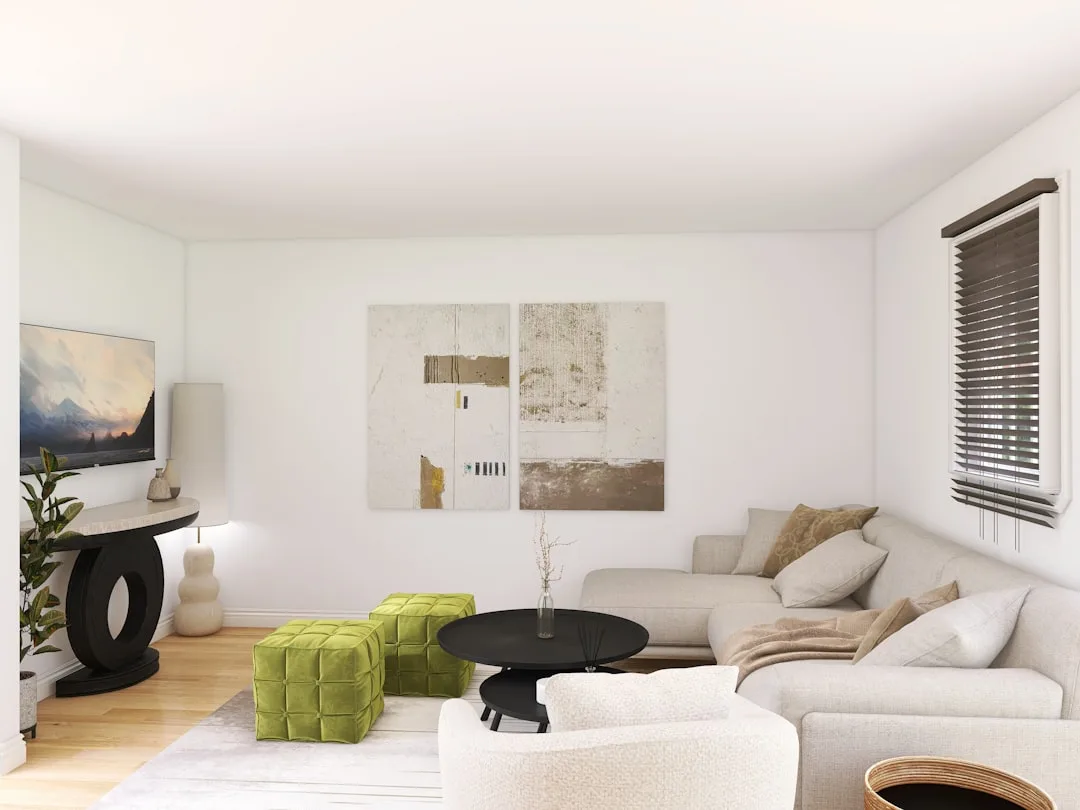
The average living room has 12 to 18 square feet of floor space occupied by furniture that stores absolutely nothing — and the best storage ottoman living room ideas all start with the same uncomfortable truth: a storage ottoman placed wrong adds to that problem instead of solving it. Most people buy the ottoman, push it in front of the sofa, stuff it with things they forget about within a week, and then wonder why the room still feels cluttered and somehow smaller. The ottoman does not fail because it is a bad product. It fails because nobody asked the right questions before they bought it, placed it, or filled it.
Quick Answer
The average living room has 12 to 18 square feet of floor space occupied by furniture that stores absolutely nothing — and a storage ottoman placed wrong adds to that problem instead of solving it.
This is not about finding the most beautiful storage ottoman on the internet. It is about making the piece you choose — or the one you already own — actually work the way the marketing promised it would.
Why Most People Buy the Wrong Piece (And Regret It Instantly)
In This Article
- Why Most People Buy the Wrong Piece (And Regret It Instantly)
- How to Match the Shape to What Your Room Actually Needs
- How to Style a Round Ottoman With Storage So It Doesn’t Look Like a Drum
- What to Actually Store Inside (Because Most People Get This Wrong Too)
- How Placement Changes Everything the Piece Can Do
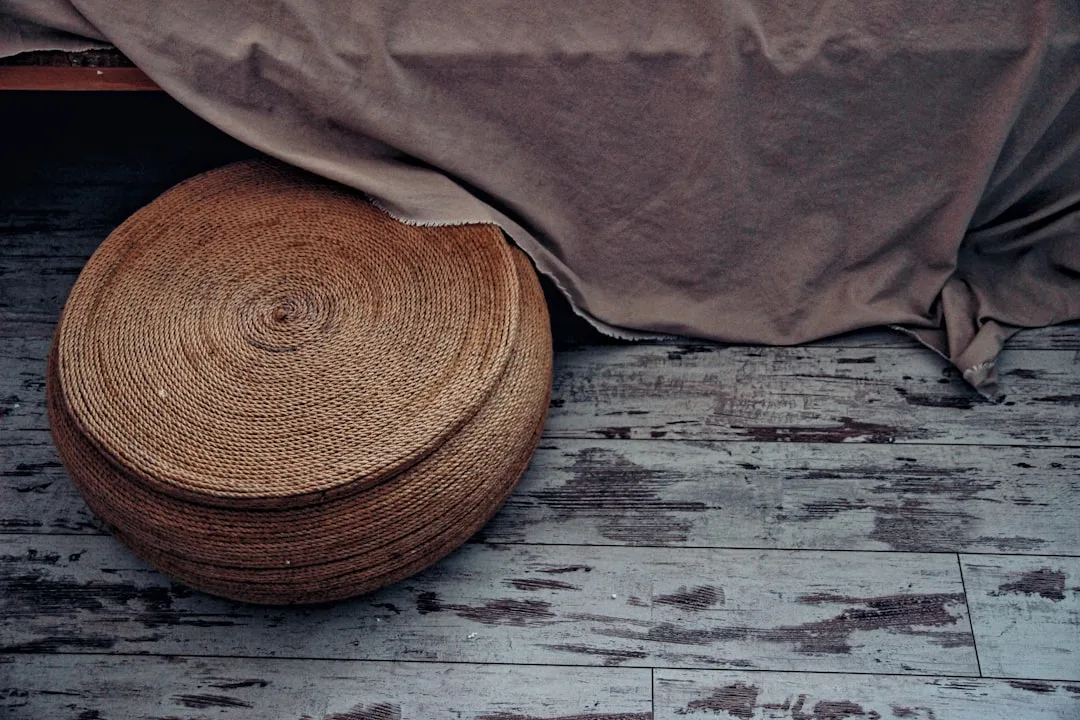
Walk into any furniture store and the ottomans are styled impeccably: a tray with two books and a candle, fabric that photographs beautifully, proportions that somehow look right in a 4,000-square-foot showroom. Then you get it home. It blocks the TV. The lid bangs into the coffee table when you open it. The fabric attracts every dog hair in a five-mile radius. This is not bad luck. It is the predictable result of three specific mismatches that almost nobody talks about.
Scale is the first mismatch. An ottoman that runs more than two-thirds the length of your sofa will dominate the room. One that is too small floats in the space like a misplaced footstool. Most people eyeball this in the store — or worse, buy online without measuring — and spend the next six months rearranging furniture around the mistake.
The second mismatch is the lid mechanism. Some lids lift off completely, which means you need somewhere to put the lid while you access the interior. Some hinge from the back, which requires clearance behind the ottoman. Some split in the middle. None of these are wrong, but every single one of them becomes a daily annoyance if it does not match how you actually move in the room.
Fabric for the use case is the third failure — and the one most likely to cause full regret. A white boucle ottoman looks like a design magazine cover. In a household with a toddler and a golden retriever, it looks like that for approximately eleven days.
Before you purchase anything, ask yourself one question: What will I open this for, and how often? If you cannot answer that specifically — not “storing stuff” but “the throw blankets we use every evening and the remotes we lose constantly” — you are not ready to buy. The piece will look right for a month and feel wrong for years.
Here is a quick reference for matching fabric to actual household conditions:
- Performance velvet or microfiber: Handles pets and kids; wipes clean; holds color well; slightly formal in appearance
- Linen or natural weaves: Beautiful texture; stains easily; best for low-traffic adult households
- Faux leather or vinyl: Easy to clean; cold to the touch; durable in high-use spaces; reads as modern or industrial
- Boucle or bouclé-adjacent fabrics: Exceptional visual softness; magnets for pet hair and lint; reserve for guest rooms or rarely-used corners
- Performance fabric blends (e.g., Crypton, Sunbrella indoor): The most practical choice for most households; resists stains, moisture, and fading
Actionable takeaway: Measure your sofa length, identify the three specific items you want to store, and write them down before you open a single product page.
How to Match the Shape to What Your Room Actually Needs
Shape is not an aesthetic preference dressed up as a design decision. It is a functional question about what the room needs the ottoman to do — anchor a seating group, soften an open floor plan, or give a dead corner something to say.
Square and rectangular ottomans are workhorses. They align with sofa lines, double effectively as coffee table surfaces, and give you the most interior volume for the footprint. A 36-inch square ottoman in front of a three-seat sofa reads as grounded and intentional. It creates a clear center to the seating group. The trade-off is that in a smaller room, the hard geometry adds visual weight that a round shape would not.
Round ottomans with storage are genuinely underused, and I think it is because people dismiss them as decorative rather than functional. They have a softer visual weight that works particularly well in open-plan rooms where you need to break up the linearity of sofas and consoles without adding another hard edge. The lid access is trickier — you are lifting the entire top, usually one-handed, while standing — but if the item you are retrieving is a throw blanket you grab twice a day, that is a two-second inconvenience, not a design flaw.
Bench ottomans are the shape most people forget exists. Placed at the base of a sectional’s chaise end or beneath a window, a storage bench does something the other shapes cannot: it creates a moment rather than just filling space. It says “someone thought about this corner.” I used one in a narrow Chicago apartment — maybe 700 square feet total — where the bay window had been collecting random bags and mail for years. A 48-inch storage bench under that window became a reading seat, a landing zone, and a place for extra linens. The dead space disappeared.
Interior designers consistently recommend leaving at least 18 inches of clearance between a coffee table or ottoman and the sofa for comfortable legroom — a measurement most buyers skip entirely when ordering online. That 18 inches is not a suggestion. Sit on your sofa right now and try to stand up with a surface 10 inches from your shins. You will feel it immediately.
- Square/rectangular: Best for anchoring a sofa grouping; highest storage volume; functions as a surface
- Round: Softer visual weight; works in tight corners and open plans; lid access requires thought
- Bench/rectangular elongated: Underused; excels at window seats, sectional bases, and entryway adjacents
Actionable takeaway: Measure 18 inches from your sofa’s front edge and mark it with tape. The far edge of that tape is where your ottoman’s nearest point should begin.
How to Style a Round Ottoman With Storage So It Doesn’t Look Like a Drum
Here is the honest problem with a round storage ottoman: without intervention, it looks like exactly what it is — a padded cylinder sitting in the middle of your floor. The drum effect is real and it happens because there is nothing on or around the form to give the eye a reason to stop and read it as furniture rather than an obstacle.
The fix starts with a tray. Not because “a tray lets you put drinks on it” — that is the useless advice you find everywhere — but because a tray grounds the circular form and signals that the surface is deliberate. It transforms the top of the ottoman from a lid into a surface with a composition on it. Without the tray, the eye reads the ottoman as unfinished. With it, the eye reads it as a coffee table that happens to be round.
Scale the tray to at least 60 to 70 percent of the ottoman’s diameter. The mistake most people make is centering a 10-inch decorative tray on a 30-inch ottoman — the tray disappears and the problem gets worse, not better. A 20-inch tray on that same ottoman gives the eye something proportional to land on.
Beyond the tray, the objects you place on and around a round ottoman follow different rules than a rectangular coffee table:
- Keep the tray composition odd-numbered: One candle, one stack of two books, one small object. Three items read as deliberate. Two read as forgotten. Four reads as accumulation.
- Use the floor around the ottoman intentionally: A round ottoman with nothing around it floats. A single stack of oversized books beside one leg, or a low plant at a 45-degree angle, pulls the piece into the room’s composition.
- Match the tray material to something already in the room: If your sofa legs are brass, a brass or gold-toned tray creates a visual thread. If your shelving is matte black, a lacquered black tray does the same. The tray should feel chosen, not grabbed.
- Resist the urge to over-accessorize: Three objects on the tray. That is the ceiling. Every additional object after three reads as surface clutter, not styling.
The rug underneath a round ottoman also matters more than most people expect. A round ottoman on a round rug creates a concentric bullseye — technically harmonious but visually static. A round ottoman on a rectangular rug, positioned slightly off-center toward the sofa, reads as more dynamic and intentional. The asymmetry signals that someone made a choice rather than following the obvious path.
Actionable takeaway: Before adding anything to the top of your ottoman, place the tray first and sit across the room. If the tray looks proportionally small from the sofa, go larger before you add a single object.
What to Actually Store Inside (Because Most People Get This Wrong Too)
The interior of a storage ottoman is not a junk drawer with a lid. That is the version most people end up with — and it is why the piece stops feeling useful within a month. The problem is not the ottoman. It is the absence of a system inside it.
The most functional storage ottomans I have seen share one characteristic: the contents are limited to one category of item. Not “living room stuff.” One category. The moment you mix categories, you create a retrieval problem. You open the lid and dig. Digging means the lid stays open longer. The lid staying open means things end up on the floor. Things on the floor mean the ottoman has failed its only job.
Here are categories that actually work well in a living room storage ottoman, ranked by how retrievable they are day-to-day:
- Throw blankets: Highest success rate. You grab one, you use it, you fold it back in. Clean cycle. Works especially well when the ottoman holds only blankets and nothing else.
- Board games and card games: Excellent use of the depth. Flat boxes stack efficiently. The retrieval is intentional — you are not opening the ottoman casually, you are looking for a specific thing.
- Remote controls and charging cables: Works only if you use a small interior organizer or basket to contain them. Loose remotes in a large ottoman become a nightly excavation.
- Children’s toys (specific category only): One type — blocks, or small cars, or art supplies — not a general toy catch-all. The specificity is what makes it retrievable.
- Extra throw pillows: Underused strategy. Swap seasonal pillow covers and store the off-season versions inside. Keeps the sofa looking intentional without requiring additional storage furniture.
What does not work well, despite being common:
- Books and magazines: Too heavy; the ottoman becomes difficult to move and the lid becomes a hazard
- Electronics or anything with cables: Cables tangle and the lid snags them on close
- Seasonal items like holiday decor: Too infrequently accessed; the ottoman will be inaccessible for months at a time, eliminating its daily-use value
Actionable takeaway: Pick one category. Remove everything currently inside your ottoman, choose the single category it will hold going forward, and return only those items. Add a canvas bin or basket inside if the items are small enough to scatter.
How Placement Changes Everything the Piece Can Do
Placement is where most storage ottoman living room ideas either succeed or quietly fail. People treat the position as obvious — in front of the sofa, centered on the rug — and then wonder why the room still feels unresolved. The centered-in-front-of-sofa position is not wrong. It is just not the only option, and for many rooms it is not even the best one.
The standard position — centered in front of the sofa — works best when the ottoman is also doing duty as a coffee table surface. If you have a tray on it, if people are setting drinks on it, if it is functioning as the room’s horizontal work surface, center it. Give it the 18-inch clearance from the sofa. Leave 24 to 30 inches between its far edge and the television console or opposite seating so the room still has breathing room.
The angled sectional position is underused. With an L-shaped sectional, placing a rectangular storage ottoman at the inside corner of the L — angled slightly rather than parallel to either sofa run — creates a visual focal point at the room’s natural center. It reads as more considered than a centered placement, and it often makes the storage more accessible from both sofa sections simultaneously.
The beside-the-sofa position works for bench styles. Rather than centering a storage bench in front of the sofa, try positioning it along one end, perpendicular to the sofa’s length. This works particularly well in rooms where a side table would normally go but where you need more storage. The bench becomes a surface and a seat extension simultaneously.
The room-divider placement is one that few people consider but that solves a specific problem in open-plan layouts. A large rectangular storage ottoman placed with its long axis perpendicular to the sofa, positioned at the sofa’s back, creates a subtle zone between the living area and an adjacent dining or workspace. It defines the living zone without a wall or a bookcase. The storage faces the sofa side for easy access.
Understanding placement is central to making storage ottoman living room ideas work at the room level rather than just the furniture level. The ottoman is not solving a storage problem in isolation. It is participating in the room’s spatial logic — and where it sits determines whether that participation helps or hinders.
- Centered in front of sofa: Best when used as a surface; requires 18-inch clearance minimum
- Angled at sectional corner: Creates visual interest; improves access from multiple seating positions
- Perpendicular to sofa end: Works for bench styles; replaces side table function with added storage
- Back-of-sofa room divider: Defines zones in open plans; storage access faces living area
Actionable takeaway: Before moving your ottoman, stand in the room’s entry point and look at where the piece sits. If your eye lands on it and immediately moves on, it is doing its job. If your eye stops and the piece reads as blocking something, the placement is the problem — not the ottoman.
FAQ
How do I know what size storage ottoman to buy for my living room?
Start with your sofa length and multiply by two-thirds — that is the maximum width the ottoman should be. For depth, work backward from the 18-inch clearance rule: measure from your sofa’s front edge, mark 18 inches out, and the ottoman’s nearest edge should start there. Whatever distance remains between that mark and your television console or opposite wall is your maximum depth. Most people discover they have far less usable space than they assumed, which is why measuring before browsing matters more than measuring before purchasing.
Can a storage ottoman fully replace a coffee table?
Yes, with one condition: you need a tray. Without a tray, the ottoman surface has no visual definition and drinks, remotes, and random objects will migrate to the floor within days. A tray scaled to 60 to 70 percent of the ottoman’s surface area gives the top a defined zone that functions identically to a coffee table surface. The storage ottoman actually outperforms a traditional coffee table in one specific way — it is safer in households with young children because there are no hard corners at shin and head height.
What is the best fabric for a storage ottoman in a high-traffic living room?
Performance fabric blends — brands like Crypton, Sunbrella indoor, or similar — are the most practical choice for living rooms with pets, children, or both. They resist stains, moisture, and fading without sacrificing the visual softness of upholstered furniture. Faux leather is a close second for pure ease of cleaning, though it reads as more casual or industrial in most rooms. Avoid boucle, natural linen, and anything described as “dry clean only” in any room that gets daily use.
How many things should I store inside a storage ottoman?
Less than you think. The most functional approach is to limit the interior to one category of item — throw blankets, board games, or seasonal pillow covers, for example. The moment categories mix, the interior becomes a retrieval problem and you stop using the piece. If the items are small enough to scatter (remotes, cables, small toys), add a canvas bin or divided organizer inside the ottoman rather than placing items loose on the floor of the interior.
My storage ottoman looks out of place in my living room. What is usually the cause?
Scale and proportion solve most cases. The two most common culprits are an ottoman that is too small for the sofa it serves (floating in the space rather than anchoring it) and an ottoman positioned too close to the sofa (cramping the seating experience). Check the two-thirds rule on width and the 18-inch clearance on distance. If both of those are correct and the piece still reads as disconnected, the issue is usually material contrast — the ottoman fabric has nothing in the room to echo. Look for a pillow, a rug tone, or a small accessory that repeats one of the ottoman’s colors or textures, and place it within the same seating zone.