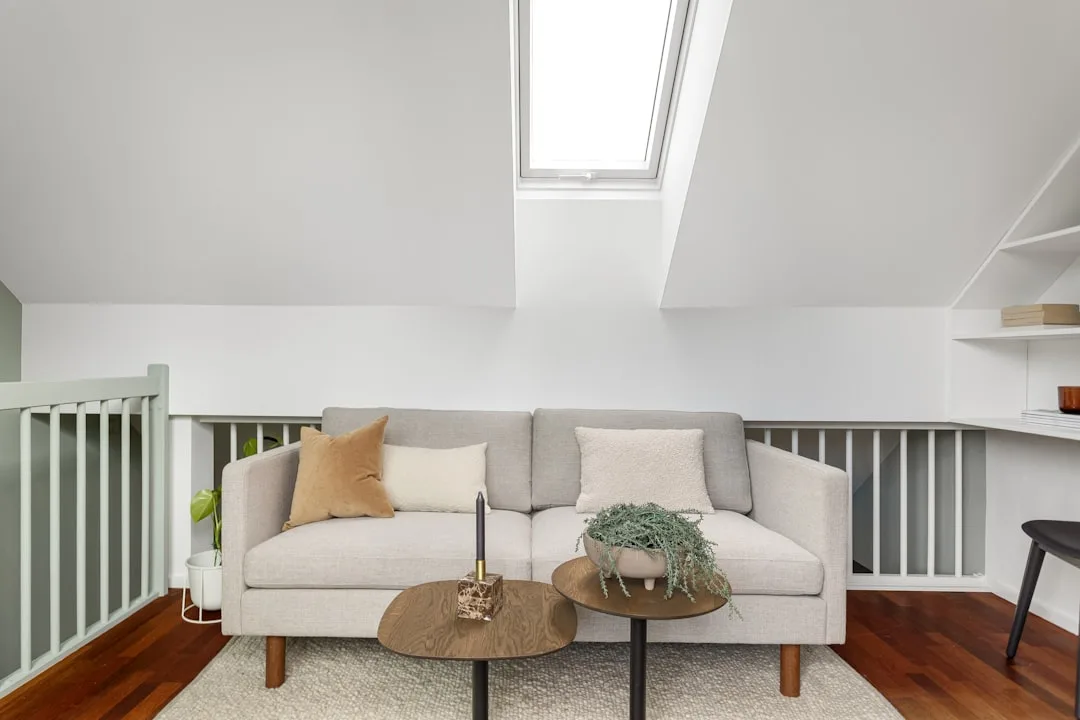
Most homeowners who abandon an attic conversion mid-project don’t run out of money — they run out of information: the permit that wasn’t pulled, the floor joists that couldn’t hold the load, the ceiling that was two inches too short to legally call a bedroom. Understanding the full attic to bedroom conversion cost before you commit — not after the contractor has already opened the ceiling — is what separates projects that get finished from projects that sit half-done for eight months.
Quick Answer
Most homeowners who abandon an attic conversion mid-project don’t run out of money — they run out of information: the permit that wasn’t pulled, the floor joists that couldn’t hold the load, the ceiling that was two inches too short to legally call a bedroom.
I’ve watched this happen. A client in Lincoln Park had already bought the bed frame before anyone looked at her joist span. Six weeks and $4,200 later, she had a structurally reinforced floor and no budget left for walls. The project sat unfinished for eight months. The information gap — not the money — was what stopped her.
This article exists to close that gap before you spend a dollar.
How Expensive Is It to Turn an Attic Into a Bedroom?
In This Article
- How Expensive Is It to Turn an Attic Into a Bedroom?
- What Is the 7 and 7 Rule for Attics — and Why It Can Make or Break Your Budget
- Is It Legal to Turn an Attic Into a Bedroom? What Permits Actually Require
- What Your Attic Type Tells You About Your Conversion Cost
- How to Evaluate a Contractor Quote for an Attic Conversion
Here’s the honest answer: attic to bedroom conversion cost is almost entirely determined by what your specific attic is, not what attics in general cost. The number I see quoted everywhere — $20,000 to $95,000 — is technically accurate and practically useless without context.
Break it down this way. Basic conversions in attics that already have adequate ceiling height, load-bearing floors, and accessible HVAC runs typically land between $8,000 and $30,000. That range covers insulation upgrades, drywall, lighting, flooring, an egress window, and a proper staircase. Labor will eat 40–60% of that total, which means in a high-labor market like Boston or Seattle, you’re hitting the top of that range almost automatically. Projects requiring structural rework — dormers, ridge beam modifications, full joist sistering — regularly climb to $75,000–$95,000, and I’ve seen full-dormer additions push past that in cities where contractors are booked solid and material costs haven’t softened.
Cost by Conversion Tier
Understanding where your attic falls in these tiers before you get a single quote will save you weeks of confusion:
- Tier 1 — Simple conversion ($8,000–$30,000): Attic already has adequate ceiling height, existing joists can handle live load, HVAC can be extended from below, and staircase placement is straightforward. Work is primarily insulation, drywall, flooring, lighting, and an egress window.
- Tier 2 — Moderate structural work ($30,000–$60,000): Joists need sistering, a new staircase must be cut through occupied floor space, HVAC requires new equipment or a mini-split, and one smaller dormer is needed for code-compliant ceiling height.
- Tier 3 — Major structural renovation ($60,000–$95,000+): Full shed dormer addition, ridge beam modification, complete mechanical system installation, and high-finish interior work. Common in cape cod homes where the entire roofline must change.
Three things drive which tier you land in:
- Structural changes — joist reinforcement, dormer additions, ridge beam work. These are the expensive variables.
- Mechanical systems — running HVAC, adding electrical circuits, plumbing if you’re adding a bathroom. Often more expensive than the finish work.
- Cosmetic finishes — flooring, drywall, trim, paint. This is where you have actual control over the budget.
What Each Major Line Item Actually Costs
These ranges reflect real project data, not manufacturer estimates:
- Staircase installation: $3,000–$12,000 depending on whether you’re using a prefab spiral stair, a straight run, or a custom-built switchback
- Egress window (cut and install): $1,200–$4,500 per window, more if the roof slope requires custom flashing
- Joist sistering (full floor): $3,000–$8,000 in materials and labor for a typical 400 sq ft attic floor
- Insulation upgrade (spray foam at roof deck): $1,800–$5,500 depending on depth and attic square footage
- Mini-split HVAC system: $3,500–$8,000 installed, including electrical work
- Drywall, tape, and finish: $2,000–$5,000 for a standard attic room with angled ceilings
- Flooring (LVP or hardwood): $1,500–$6,000 depending on material choice and square footage
- Permit and inspection fees: $500–$3,000 depending on municipality
Before you call a single contractor, go up there with a tape measure and a flashlight. Check your ceiling height at the peak and note where it drops below 7 feet. Look at your floor joists — are they 2x6s or 2x8s? Prod the insulation and look for dark staining or compression, which signals moisture. These three observations will tell you more about your cost tier than any online calculator.
The attic to bedroom conversion cost also shifts considerably based on finish level. A builder-grade conversion with LVP flooring, basic recessed lighting, and standard drywall finish runs significantly less than the same structural scope finished with hardwood, custom built-ins around the knee walls, and a mini-split system for independent climate control. Know which version you’re pricing before you get your first quote, because contractors will assume different things if you don’t specify.
Your Pre-Quote Checklist
Before you contact any contractor, gather this information:
- Peak ceiling height (measure at the absolute highest point)
- Joist size and spacing (crawl under insulation to check — look for a stamp on the wood)
- Current access point (pull-down stair, hatch, or nothing)
- HVAC situation (forced air with accessible trunk lines, or radiant/ductless with no easy extension path)
- Electrical panel capacity (ask your electrician — attic conversions typically need 20–30 additional amps)
- Any visible moisture staining, mold, or compressed insulation
- Approximate square footage of the floor area above 7 feet
Showing up to a contractor meeting with these seven data points puts you in a completely different conversation than someone who just says “I want to convert my attic.”
Takeaway: Your attic’s structural reality determines your budget range. Know what you have before you price what you want.
What Is the 7 and 7 Rule for Attics — and Why It Can Make or Break Your Budget
Most people have never heard of this until they’re mid-project. Then it becomes the most important sentence in their renovation.
The 7 and 7 rule comes from IRC Section R305, which requires that habitable rooms maintain a ceiling height of at least 7 feet across at least 50% of the floor area. Both conditions must be met. Seven feet of height over a narrow strip down the middle doesn’t satisfy the second half of the rule — you need that height over a meaningful portion of usable space.
Why does this matter financially? Because if your attic doesn’t meet both thresholds, you’re no longer doing a simple conversion. You’re either modifying the structure of your roof to create more volume — through a shed dormer, a gable dormer, or a raised ridge — or you’re reclassifying the space as something other than a legal bedroom, which kills resale value and limits your permit path.
Dormer Options and What They Actually Cost
When your attic fails the 7 and 7 rule, these are the solutions on the table:
- Shed dormer: Replaces the entire sloped section of one roof face with a near-vertical wall and a shallow-pitched roof. Creates the most headroom. Cost: $15,000–$35,000 depending on width and roofline complexity.
- Gable dormer: A smaller, house-shaped protrusion from the roof slope. Better for adding light and a small amount of headroom in a specific zone. Cost: $5,000–$20,000 per dormer.
- Raised ridge beam: Lifts the peak of the roof by modifying the structural ridge. Rarely done alone but sometimes combined with other work. Requires a structural engineer and typically costs $8,000–$25,000.
- Knee wall adjustment: In some attics, lowering the floor slightly (by building a new subfloor at a lower plane) can technically increase usable ceiling height without touching the roof. Rarely possible but worth discussing with your contractor when ceiling height is just barely short.
Here’s what I tell anyone standing in their attic with a tape measure: measure the peak height first, then mark 7 feet on the wall and look at how much horizontal floor falls below that line. If more than half your floor is in the zone where the sloped ceiling drops under 7 feet — which is almost every ranch-style or cape-cod attic I’ve ever walked through — you’re looking at dormer work before you’re looking at a bedroom.
One more thing that catches people off guard: the IRC is a baseline, not a ceiling. Some municipalities have amended their local codes to require higher minimums or have specific rules about how the 50% floor area is calculated. Always confirm with your local building department before assuming the IRC standard is the only standard.
Takeaway: Measure your usable ceiling height before anything else. If you’re under 7 feet across more than half your floor area, budget for dormer work and add it to your cost estimate from day one.
Is It Legal to Turn an Attic Into a Bedroom? What Permits Actually Require
Legality is where I’ve seen more post-project disasters than anywhere else. Not because homeowners are trying to cut corners — most aren’t — but because nobody explained the difference between a “bonus room,” a “habitable room,” and a legal “bedroom” before the drywall went up.
The label matters more than the furniture. A room can have a bed in it and still not legally be a bedroom if it doesn’t meet egress, electrical, and HVAC requirements. That distinction affects your permit classification, your property tax assessment, your homeowner’s insurance coverage, and what you can legitimately claim in an MLS listing when you sell. Listing an unpermitted attic as a bedroom and having it flagged during a buyer’s home inspection is one of the cleaner ways to crater a real estate deal.
The Full Legal Checklist for a Bedroom Conversion
Every one of these must be satisfied for a room to be permitted and listed as a legal bedroom:
- Egress window: Minimum 5.7 square feet of clear opening, at least 24 inches of opening height, at least 20 inches of opening width, sill height no more than 44 inches from the floor
- Ceiling height: 7 feet over at least 50% of the floor area (IRC R305)
- Minimum floor area: 70 square feet with no horizontal dimension less than 7 feet (IRC R304)
- Electrical: Dedicated circuits for lighting and outlets; minimum outlet spacing per NEC requirements; AFCI protection required in sleeping rooms per current NEC
- Heating: Room must be capable of maintaining 68°F at 3 feet above the floor (IRC R303.10) — a space heater doesn’t satisfy this
- Natural light: Glazing area of at least 8% of the floor area, unless mechanical ventilation is provided (IRC R303.1)
- Ventilation: Natural ventilation openings of at least 4% of floor area, or mechanical equivalent
- Smoke and CO detectors: Required in every sleeping room and on every level
Missing even one of these turns your bedroom into a “bonus room” in the eyes of your local assessor and every future buyer’s agent.
Egress is usually the first compliance hurdle. Per IRC requirements, an egress window must provide a minimum clear opening of 5.7 square feet, with at least 24 inches of opening height and at least 20 inches of opening width. The sill height can’t exceed 44 inches from the floor. That small porthole window your attic currently has — the decorative one above the roofline — almost certainly doesn’t qualify. Cutting a proper egress opening in a sloped roof requires framing, flashing, a properly sized rough opening, and in many cases a custom window unit built to fit the roof pitch. Budget $1,200 to $4,500 per egress window cut into a sloped roof surface, more if the structural framing between rafters needs modification to achieve the required clear opening dimensions.
The Permit Process: What to Expect
Most homeowners are surprised by how involved the permit process is for an attic to bedroom conversion. Here’s a realistic sequence:
- Pre-application meeting with your local building department (free in most municipalities, takes 30–60 minutes, tells you exactly what your jurisdiction requires)
- Architectural or structural drawings — most jurisdictions require stamped drawings from a licensed professional for any structural work; budget $800–$3,000 for this
- Permit application — submit drawings, pay fees ($500–$3,000 depending on project scope and location)
- Framing inspection — inspector visits after structural work is complete but before insulation and drywall cover it
- Rough mechanical inspection — covers electrical, HVAC rough-in, and any plumbing before walls close
- Insulation inspection — in some jurisdictions, required before drywall
- Final inspection — confirms egress, smoke detectors, HVAC function, and overall code compliance
Skipping permits doesn’t save money in the long run. When you sell, the unpermitted square footage either doesn’t count toward your home’s assessed value and listing, or it triggers a required retroactive permit process that buyers use to negotiate down your price — sometimes aggressively.
Takeaway: Pull the permit. Every time. The cost of doing it right is always less than the cost of undoing it wrong.
What Your Attic Type Tells You About Your Conversion Cost
Not all attics are the same structural animal, and the type you have is one of the fastest predictors of where your attic to bedroom conversion cost will land.
Gable Roof Attic
The most common and usually the most conversion-friendly. A ridge runs the length of the house with two sloped sides meeting at the top. If your house has two full stories and a gable attic, you often have enough peak height to satisfy the 7 and 7 rule down the centerline of the house, with usable knee wall space on each side. Conversion cost tends to land in Tier 1 or low Tier 2.
Hip Roof Attic
All four sides of the roof slope toward the center, which means the usable volume at the top is significantly smaller than a gable attic of the same footprint. Hip roof attics almost always require dormer additions to create a legal bedroom — the sloped walls converge too quickly to leave adequate floor area at 7 feet. Expect Tier 2 or Tier 3 costs.
Cape Cod Attic
The entire second floor is essentially attic space with knee walls. These are the projects I see go most wrong most often, because the house looks from the outside like it should have a full second floor, but the ceiling follows the roof slope and drops below 7 feet within a few feet of the knee wall. Full shed dormers on cape cods are extremely common and often essential. Budget accordingly.
Truss Roof Attic
If your home was built after roughly 1970, there’s a meaningful chance the attic is framed with manufactured trusses rather than conventional rafter framing. This is the most expensive attic type to convert. Trusses cannot be cut or modified without a structural engineer’s involvement, because each truss functions as an integrated unit — cutting one chord to create headroom compromises the entire system. Full truss replacement or a structural collar beam system is required, which adds $15,000–$40,000 to a project before any finish work begins. Check your attic framing type before you get excited about converting it.
How to Evaluate a Contractor Quote for an Attic Conversion
Getting multiple quotes is standard advice. Knowing how to read them is the part that actually protects you.
What a Reliable Quote Should Include
- Itemized line items for each phase of work (structural, mechanical, finish) — not a single lump sum
- Specific materials called out by name, grade, or brand (not just “insulation” or “flooring”)
- A clear list of what is and is not included (permits, dumpster, structural engineering fees)
- Payment schedule tied to project milestones, not calendar dates
- Warranty terms for labor, separate from manufacturer warranties on materials
- Confirmation of who is doing the work — the contractor themselves or subcontractors
Red Flags in an Attic Conversion Quote
- No mention of permits. Some contractors will explicitly say they can “handle it without a permit” to save you money. This is not a savings — it’s a liability transfer to you.
- Vague structural language. “We’ll reinforce the floor as needed” without specifying how is not a plan.
- No structural engineer for truss or ridge work. Anyone proposing to modify roof structure without an engineer’s stamp is either underqualified or underpricing a scope they’ll return to charge you for later.
- Payment schedule front-loaded above 30% before work begins. Standard practice is 10–15% upfront, progress draws at defined milestones, and a retention of 10% held until final inspection passes.
- No written timeline or sequencing. Attic conversions involve multiple inspection holds — projects without a written sequence often drag for months between phases.
Getting three quotes is useful. Getting three itemized quotes from contractors who have walked your specific attic and reviewed your permit requirements is the only version of that advice worth following.
Frequently Asked Questions About Attic to Bedroom Conversion Cost
How long does an attic to bedroom conversion take from permit to completion?
For a straightforward Tier 1 conversion, expect 6–10 weeks from permit approval to final inspection. Tier 2 projects with dormers and structural work typically run 10–18 weeks. Tier 3 full-dormer additions on cape cods or complex rooflines can take 4–6 months, especially in markets where contractors are booked out and inspection scheduling runs slow. Permit approval alone can take 2–8 weeks depending on your municipality — factor that into your timeline before you set a move-in date.
Does converting an attic to a bedroom increase property taxes?
Almost always, yes — if the conversion is properly permitted. Adding a legal bedroom increases your home’s assessed square footage and bedroom count, both of which affect assessed value. The increase varies significantly by location, but in most markets, adding one legal bedroom raises assessed value enough that the annual tax increase runs $200–$900 per year. That said, the resale value added by a legal bedroom almost always outpaces that tax cost over a typical homeownership period.
Can I convert just part of my attic into a bedroom and leave the rest as storage?
Yes, and this is often the smarter approach when your attic doesn’t have enough total volume to create a full bedroom across the entire floor plate. You can partition the space so that one section — the zone with adequate ceiling height — becomes the bedroom, and the lower knee wall areas remain accessible storage. The bedroom portion still needs to meet all IRC minimums for floor area (70 sq ft minimum), ceiling height, egress, and mechanical requirements. The storage areas don’t need to be finished, insulated to the same spec, or permitted as habitable space.
What happens if I sell a house with an unpermitted attic bedroom?
Several things, none of them good. A buyer’s home inspector will typically flag the unpermitted space in their report. The buyer can use this to renegotiate price, request a retroactive permit (which puts the cost and liability on you to bring the work up to current code), or walk away entirely. In some states, sellers are legally required to disclose unpermitted work in the listing — failure to do so creates potential liability after closing. Title companies and lenders also occasionally flag unpermitted square footage, which can complicate financing. The short version: the money saved by skipping permits rarely survives contact with a real estate transaction.
Is a finished attic the same as a converted attic for resale purposes?
Not automatically. A “finished attic” that doesn’t meet bedroom egress and ceiling height requirements will be listed as a bonus room or loft on an MLS listing, not as a bedroom. Bedrooms carry significantly more weight in home valuation — most appraisers and buyer’s agents apply a per-bedroom premium that bonus rooms don’t receive. If your goal includes recouping attic to bedroom conversion cost at resale, the legal bedroom designation matters and is worth building toward from the start, not retrofitting later.
How long does an attic to bedroom conversion take from permit to completion?
For a straightforward Tier 1 conversion, expect 6–10 weeks from permit approval to final inspection. Tier 2 projects with dormers and structural work typically run 10–18 weeks. Tier 3 full-dormer additions on cape cods or complex rooflines can take 4–6 months, especially in markets where contractors are booked out and inspection scheduling runs slow. Permit approval alone can take 2–8 weeks depending on your municipality — factor that into your timeline before you set a move-in date.
Does converting an attic to a bedroom increase property taxes?
Almost always, yes — if the conversion is properly permitted. Adding a legal bedroom increases your home’s assessed square footage and bedroom count, both of which affect assessed value. The increase varies significantly by location, but in most markets, adding one legal bedroom raises assessed value enough that the annual tax increase runs $200–$900 per year. That said, the resale value added by a legal bedroom almost always outpaces that tax cost over a typical homeownership period.
Can I convert just part of my attic into a bedroom and leave the rest as storage?
Yes, and this is often the smarter approach when your attic doesn’t have enough total volume to create a full bedroom across the entire floor plate. You can partition the space so that one section — the zone with adequate ceiling height — becomes the bedroom, and the lower knee wall areas remain accessible storage. The bedroom portion still needs to meet all IRC minimums for floor area (70 sq ft minimum), ceiling height, egress, and mechanical requirements. The storage areas don’t need to be finished, insulated to the same spec, or permitted as habitable space.
What happens if I sell a house with an unpermitted attic bedroom?
Several things, none of them good. A buyer’s home inspector will typically flag the unpermitted space in their report. The buyer can use this to renegotiate price, request a retroactive permit (which puts the cost and liability on you to bring the work up to current code), or walk away entirely. In some states, sellers are legally required to disclose unpermitted work in the listing — failure to do so creates potential liability after closing. Title companies and lenders also occasionally flag unpermitted square footage, which can complicate financing. The short version: the money saved by skipping permits rarely survives contact with a real estate transaction.
Is a finished attic the same as a converted attic for resale purposes?
Not automatically. A “finished attic” that doesn’t meet bedroom egress and ceiling height requirements will be listed as a bonus room or loft on an MLS listing, not as a bedroom. Bedrooms carry significantly more weight in home valuation — most appraisers and buyer’s agents apply a per-bedroom premium that bonus rooms don’t receive. If your goal includes recouping attic to bedroom conversion cost at resale, the legal bedroom designation matters and is worth building toward from the start, not retrofitting later.