Over 30% of homes in the UK and US have bedroom ceilings below 8 feet — yet almost every interior design guide is written as if that ceiling is 9 feet and climbing. If you’ve been searching for bedroom ceiling ideas for low ceiling spaces, you’ve probably noticed that most of what comes up was written for someone else’s house entirely. The average ceiling in pre-1940s UK terraced housing and post-war American ranch homes sits at 7.5 ft (2.28 m), which means the majority of people reading generic design advice are being handed a toolkit built for someone else’s house. This article is written for your house. The one with the ceiling that actually exists.
Quick Answer
Over 30% of homes in the UK and US have bedroom ceilings below 8 feet — yet almost every interior design guide is written as if that ceiling is 9 feet and climbing.
Why Most Low-Ceiling Advice Actually Makes the Problem Worse
In This Article
- Why Most Low-Ceiling Advice Actually Makes the Problem Worse
- How to Style a Bedroom With Low Ceilings: Start With the Floor, Not the Ceiling
- What Are Some Design Ideas for Low Ceilings That Don’t Rely on Paint Color?
- Bedroom Ceiling Ideas for Low Ceiling Spaces: What Actually Works on the Ceiling Itself
Here is the honest version of something I watched happen dozens of times across eleven years of client work: a person reads that they should “paint everything white to make the room feel bigger,” they paint everything white, and then they call me because their bedroom feels like the inside of a shoebox that’s been bleached. White walls, white ceiling, white trim — no contrast, no depth, no reason for the eye to move anywhere except straight up into the oppressive flat plane of the ceiling. The room feels smaller, not larger.
The real issue in a low-ceiling room is never the color. It’s the ratio of vertical to horizontal visual weight. When a room has no contrast between its surfaces, the eye registers the space as a single compressed unit. Every surface reads as the same plane. That is the problem white-on-white creates, not solves.
The curtains-hung-high advice has the same failure mode. Mounting a rod at ceiling height absolutely works — but only if you manage the gap between the top of the window frame and the ceiling line. Skip that step, and the curtain rod at ceiling height with empty wall below it highlights exactly the distance the ceiling has to fall. I’ve seen it happen. It draws attention to the low ceiling instead of dissolving it.
Mirrors are another one. The reflex answer is “mirrors make a room feel bigger,” which is sometimes true. But a large mirror placed on a wall directly opposite a low ceiling reflects the ceiling back at you. You now have two low ceilings. The problem has been doubled, not solved.
Crown molding deserves particular scrutiny here. The thick shadow line of traditional molding — especially the 3.5-inch or wider profiles common in Victorian and Craftsman homes — visually reduces ceiling height by two to four inches. In a 7.5 ft room, that is not decorative. That is structural damage done with paint and plaster.
The pattern I kept seeing across client after client was this: they’d applied every “standard” low-ceiling fix and the room felt worse for it. That’s because those fixes were designed to create the illusion of height in a tall room, not to make a genuinely low-ceilinged room livable and beautiful on its own terms.
Actionable takeaway: Before touching paint, furniture, or curtain hardware, identify one thing in your room that is creating strong horizontal visual weight. That is your first problem to solve — not the ceiling height.
How to Style a Bedroom With Low Ceilings: Start With the Floor, Not the Ceiling
Every instinct in a low-ceiling room pulls you toward looking up — trying to fix the ceiling, trick the ceiling, apologize for the ceiling. The move that actually works pulls in the opposite direction entirely. Start at the floor and work upward, deliberately keeping the visual center of gravity as low as possible.
This is not a new idea. Japanese interior design has operated on this principle for centuries — sleeping platforms, floor-level furniture, the deliberate cultivation of a room that asks you to settle rather than stand. Scandinavian residential design follows a similar logic: low-slung sofas, platform beds, furniture that hugs the ground. Both traditions produce rooms that feel considered and calm, not cramped. In a low-ceiling bedroom, that design lineage becomes a functional strategy.
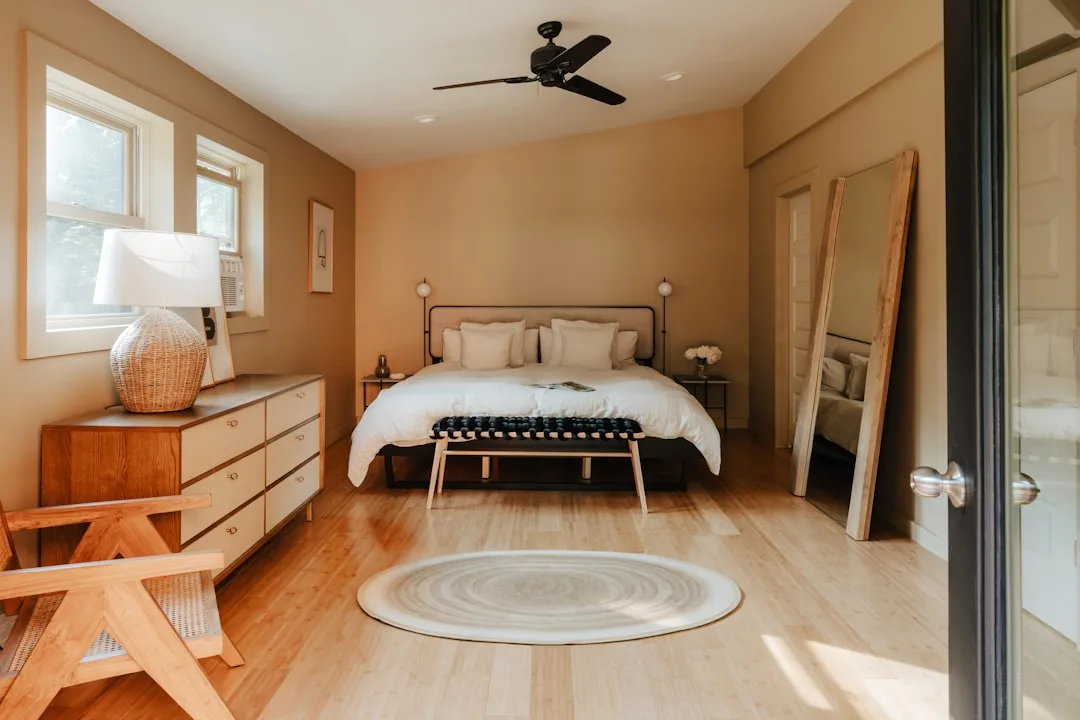
The single highest-impact purchase decision you will make in a low-ceiling room is the bed frame. A platform bed sitting at 14–18 inches from floor to mattress top — compared to a standard 25-inch bed frame — reclaims a visual margin of roughly 9 inches. In a 7.5 ft room, that is nearly 10% of the total ceiling height returned to the visual field above the bed. That is not a small number. That is the difference between a room that reads as compressed and a room that breathes.
Area rugs do specific work in this context that most people don’t consider. A rug with strong horizontal banding — wide stripes running parallel to the longest wall — pulls the eye along the floor plane rather than up toward the ceiling. This sounds like it should make the room feel flatter. It doesn’t. It makes the floor plane feel expansive, which paradoxically creates perceived breathing room above it.
- Platform bed frames: Look for total floor-to-mattress heights between 14–18 inches. The Bed-Stuy frame from Floyd, the Noden from IKEA’s low-profile range, and most Japanese-inspired tatami platforms fall in this zone.
- Low-profile nightstands: Match the nightstand height to within 2–3 inches of the mattress top. Anything taller interrupts the clean horizontal line.
- Avoid at all costs: Canopy frames, four-poster beds, tall armoires, and any freestanding furniture that terminates within 18 inches of the ceiling. That gap reads as a squash — the eye measures it and registers confinement.
- Area rug size: Go larger than you think you need. A rug that stops short of the bed legs creates a floating, fragmented floor plane. Extend it so all four bed legs sit on it.
Actionable takeaway: If you do nothing else this week, measure the total height of your current bed frame from floor to top of mattress. If it’s above 22 inches, a lower-profile alternative is the highest-return change you can make to this room.
What Are Some Design Ideas for Low Ceilings That Don’t Rely on Paint Color?
Paint color is where most low-ceiling conversations begin and end. Which is a shame, because there is a whole category of structural, material, and spatial interventions that produce more lasting results than any can of paint — and none of them require you to debate the philosophical difference between Wimborne White and All White.
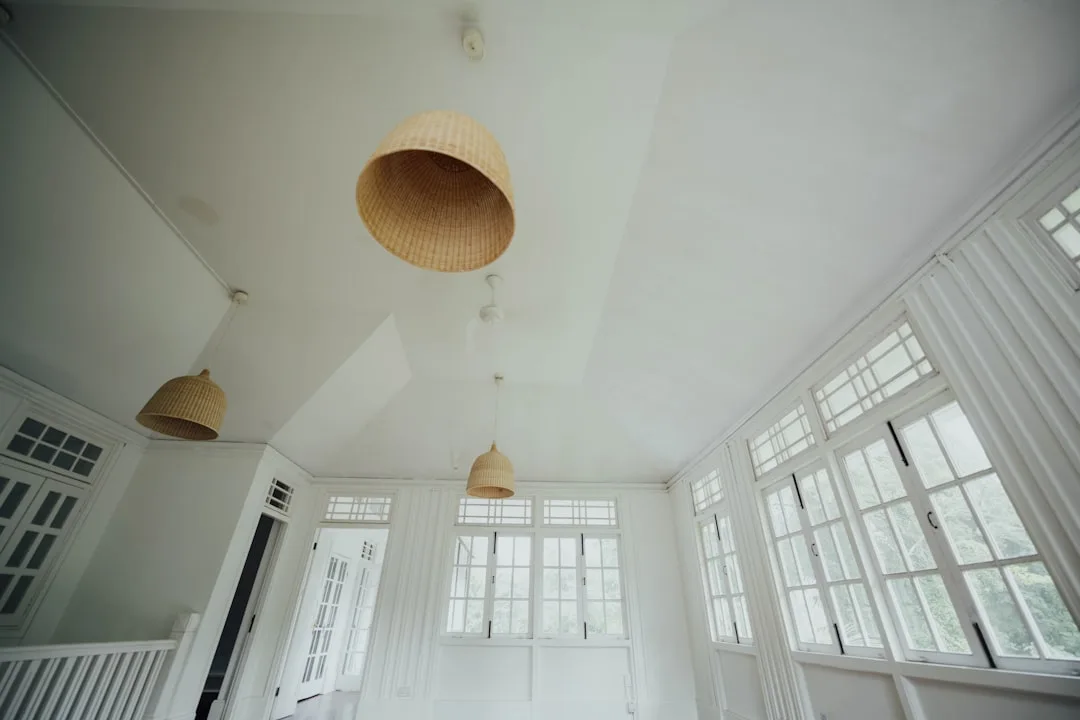
The most underused tool in a low-ceiling room is ceiling-integrated lighting. Recessed LED strips along a perimeter cove — tucked behind a shallow plaster return — wash light upward and dissolve the hard line between wall and ceiling. The ceiling plane appears to float. It is not an illusion exactly; the light is genuinely lifting your perception of where the ceiling begins. Pendant lights, by contrast, do the opposite. In a 7.5 ft room, a pendant requires at least 7 feet of clearance from floor to shade bottom, which means the shade sits a mere 6 inches below the ceiling. That 6-inch gap between shade and ceiling reads as severe compression. I’ve seen this single fixture choice undo every other good decision in a room.
Vertical shiplap or narrow board-and-batten panels are a second structural intervention worth considering. Running panels vertically from baseboard to ceiling — in a matte finish, without a cap rail — unifies the wall and ceiling into a continuous vertical plane. The eye reads upward travel, not horizontal containment. The key is no cap rail. A cap rail at ceiling height creates exactly the kind of hard horizontal line you are trying to avoid.
Built-in storage that runs flush to the ceiling is the third category most people overlook entirely. A wardrobe or shelving unit that terminates 18 inches below the ceiling creates a dead zone — a shelf of compressed air that the eye reads as a ceiling within a ceiling. The same unit built to within two inches of the ceiling plane eliminates that zone and makes the ceiling appear to recede. Custom built-ins are expensive, but IKEA’s PAX system with extension units can reach standard ceiling heights, and the difference in spatial reading is dramatic.
Beyond those structural moves, there are material choices that do quiet but meaningful work:
- Horizontal venetian blinds over vertical drapes — in a window-rich room, venetian blinds in a wood or aluminum slat draw the eye sideways along the window plane rather than dropping it down via vertical fabric.
- Matte ceiling finish — not because matte makes the ceiling look higher (it doesn’t, exactly), but because a glossy ceiling reflects its own compressed surface back into the room. Matte absorbs rather than mirrors.
- Continuous flooring through the room — no threshold strips, no transition pieces, no change in direction. A single unbroken floor plane running from wall to wall reads as expansive. Every interruption in the floor plane signals a boundary, and boundaries in a small room cost you.
Actionable takeaway: Pick one structural intervention from this list before reaching for paint. Cove lighting, vertical paneling, or ceiling-height built-ins will do more lasting work than any color choice — and they remain effective regardless of how many times you repaint.
Bedroom Ceiling Ideas for Low Ceiling Spaces: What Actually Works on the Ceiling Itself
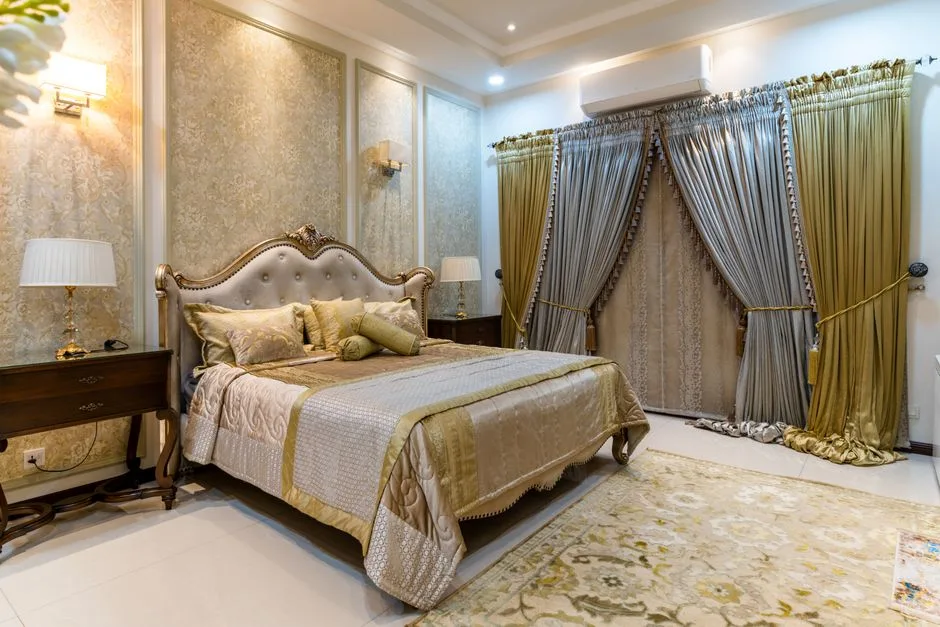
Most of this article has deliberately avoided the ceiling plane — because that’s where most people start, and it’s rarely the right place to start. But once you’ve addressed the floor, the furniture, and the walls, there are bedroom ceiling ideas for low ceiling rooms that are worth considering on their own terms.
Exposed beams, done correctly, are counterintuitive but effective. The instinct is to avoid anything that visually lowers the ceiling further. But a single structural beam — or a pair of false beams in a pale, matte stain — running parallel to the longest wall creates a strong horizontal line that reads as intentional architecture rather than compressed accident. The room looks designed for low ceilings, not defeated by them. The failure mode here is too many beams, too dark, or beams that run perpendicular to the room’s longest axis. One or two pale beams, running with the room’s length: that works. Four dark beams in a grid: that is a cabin ceiling, and it reads accordingly.
Ceiling paint that is one value darker than the wall is an approach that surprises most clients when I suggest it. The conventional advice is always to go lighter on the ceiling. But in a room where the ceiling is already low, painting it slightly darker — a shade or two deeper than the wall color, in the same hue family — does something interesting: it stops the ceiling from dominating the room’s visual field. A bright white ceiling in a room with colored walls pulls the eye upward constantly, because it is the highest-contrast surface in the room. A ceiling in a tone close to the wall color settles into the background. The ceiling becomes less of an event. Rooms where I’ve applied this principle — a dusty sage wall with a slightly deeper sage ceiling, for instance — consistently read as more spacious than the same room with a white ceiling, despite the seemingly counterintuitive logic.
Fabric ceiling treatments are a niche solution but a genuinely good one for certain contexts. Stretched fabric — linen, muslin, or a lightweight canvas — mounted flat to the ceiling in a simple timber frame creates a soft, light-diffusing surface that reads very differently from plaster. It absorbs sound, which helps a low-ceilinged room feel less echoey and therefore less enclosed. In a bedroom context specifically, the warmth of a fabric ceiling plane can make a compressed space feel intentionally cocooning rather than accidentally squished. This is the difference between a room that apologizes for its proportions and one that commits to them.
Actionable takeaway: If you want to address the ceiling directly, choose one approach and commit to it fully. A half-hearted beam installation or a timid paint experiment will read as unfinished. The rooms that work in this category are the ones where the ceiling treatment looks like a deliberate choice, not a workaround.
Frequently Asked Questions
What is the best ceiling color for a low-ceiling bedroom?
Contrary to almost universal advice, pure white is often not the best choice. A white ceiling in a colored room creates the highest-contrast surface in the space, which draws the eye upward constantly and makes the ceiling feel more present, not less. A ceiling painted in the same hue family as the walls — one or two values deeper — tends to recede into the background and reduces the ceiling’s visual dominance. If you do want a light ceiling, choose a warm off-white rather than a bright cool white, and finish it in matte rather than eggshell or semi-gloss.
Do exposed beams make a low ceiling feel lower?
They can, but they don’t have to. The variables that matter are quantity, color, and direction. One or two beams in a pale, matte stain running parallel to the room’s longest wall reads as intentional architecture. Four beams in a dark stain running in a grid reads as a compressed cabin interior. If you’re working with genuinely low ceilings — under 7.5 ft — limit yourself to one or two pale beams maximum, and avoid any beam that runs perpendicular to the long axis of the room.
What type of lighting works best in a bedroom with a low ceiling?
Recessed downlights flush to the ceiling plane and cove lighting hidden behind a perimeter return are the two best options. Both keep the ceiling plane clear and uninterrupted. Wall sconces are a strong secondary choice — they move light sources off the ceiling entirely and create pools of warmth at eye level. Pendant lights are generally a poor fit unless the ceiling is at the upper end of the low range (8 ft or close to it) and the pendant is shallow-profile.
How do I make my low-ceiling bedroom look taller without renovating?
The highest-impact non-renovation changes are: replacing a tall bed frame with a platform bed at 14–18 inches floor to mattress; mounting curtain rods as close to the ceiling line as possible with curtains that reach the floor; removing any furniture that terminates within 18 inches of the ceiling; and switching to wall sconces or recessed lighting to eliminate hanging fixtures. None of these require permits, structural work, or significant expense relative to the difference they make.
Are there bedroom ceiling ideas for low ceiling rooms that add texture without lowering the space further?
Yes. Stretched fabric ceilings — linen or muslin mounted flat in a timber frame — add texture and warmth without adding visual mass the way beams or coffering would. A very subtle tone-on-tone wallpaper applied to the ceiling in the same colorway as the walls adds depth without contrast. And a matte plaster finish with visible hand-applied texture reads as considered materiality rather than a surface trying to look like something it isn’t. In each case, the principle is the same: texture that lies flat and reads as surface rather than structure.
Can dark colors work in a low-ceiling bedroom?
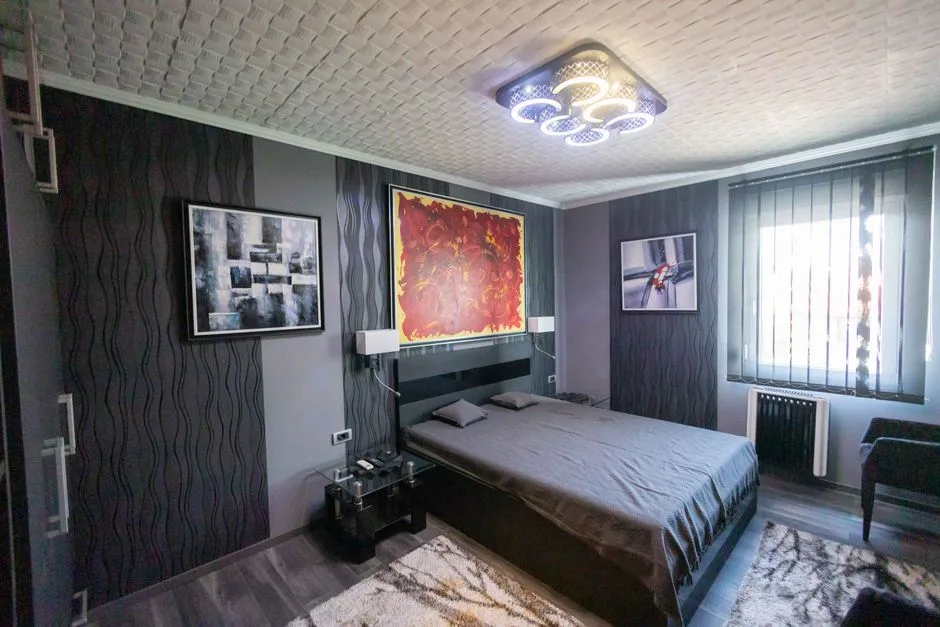
Yes, and often better than people expect. An enveloping dark color — a deep slate, a warm charcoal, a saturated navy — applied to all four walls and the ceiling simultaneously removes the contrast between the wall plane and the ceiling plane. The room reads as a single continuous surface rather than a box with a lid. This works particularly well in bedrooms because the function of the space is restful rather than active. The room stops trying to appear larger and instead commits to feeling intimate. The ceiling doesn’t disappear, but it stops being the problem it was when it was a bright white plane sitting 7.5 feet above a colored room.
What is the best ceiling color for a low-ceiling bedroom?
Contrary to almost universal advice, pure white is often not the best choice. A white ceiling in a colored room creates the highest-contrast surface in the space, which draws the eye upward constantly and makes the ceiling feel more present, not less. A ceiling painted in the same hue family as the walls — one or two values deeper — tends to recede into the background and reduces the ceiling’s visual dominance. If you do want a light ceiling, choose a warm off-white rather than a bright cool white, and finish it in matte rather than eggshell or semi-gloss.
Do exposed beams make a low ceiling feel lower?
They can, but they don’t have to. The variables that matter are quantity, color, and direction. One or two beams in a pale, matte stain running parallel to the room’s longest wall reads as intentional architecture. Four beams in a dark stain running in a grid reads as a compressed cabin interior. If you’re working with genuinely low ceilings — under 7.5 ft — limit yourself to one or two pale beams maximum, and avoid any beam that runs perpendicular to the long axis of the room.
What type of lighting works best in a bedroom with a low ceiling?
Recessed downlights flush to the ceiling plane and cove lighting hidden behind a perimeter return are the two best options. Both keep the ceiling plane clear and uninterrupted. Wall sconces are a strong secondary choice — they move light sources off the ceiling entirely and create pools of warmth at eye level. Pendant lights are generally a poor fit unless the ceiling is at the upper end of the low range (8 ft or close to it) and the pendant is shallow-profile.
How do I make my low-ceiling bedroom look taller without renovating?
The highest-impact non-renovation changes are: replacing a tall bed frame with a platform bed at 14–18 inches floor to mattress; mounting curtain rods as close to the ceiling line as possible with curtains that reach the floor; removing any furniture that terminates within 18 inches of the ceiling; and switching to wall sconces or recessed lighting to eliminate hanging fixtures. None of these require permits, structural work, or significant expense relative to the difference they make.
Are there bedroom ceiling ideas for low ceiling rooms that add texture without lowering the space further?
Yes. Stretched fabric ceilings — linen or muslin mounted flat in a timber frame — add texture and warmth without adding visual mass the way beams or coffering would. A very subtle tone-on-tone wallpaper applied to the ceiling in the same colorway as the walls adds depth without contrast. And a matte plaster finish with visible hand-applied texture reads as considered materiality rather than a surface trying to look like something it isn’t. In each case, the principle is the same: texture that lies flat and reads as surface rather than structure.