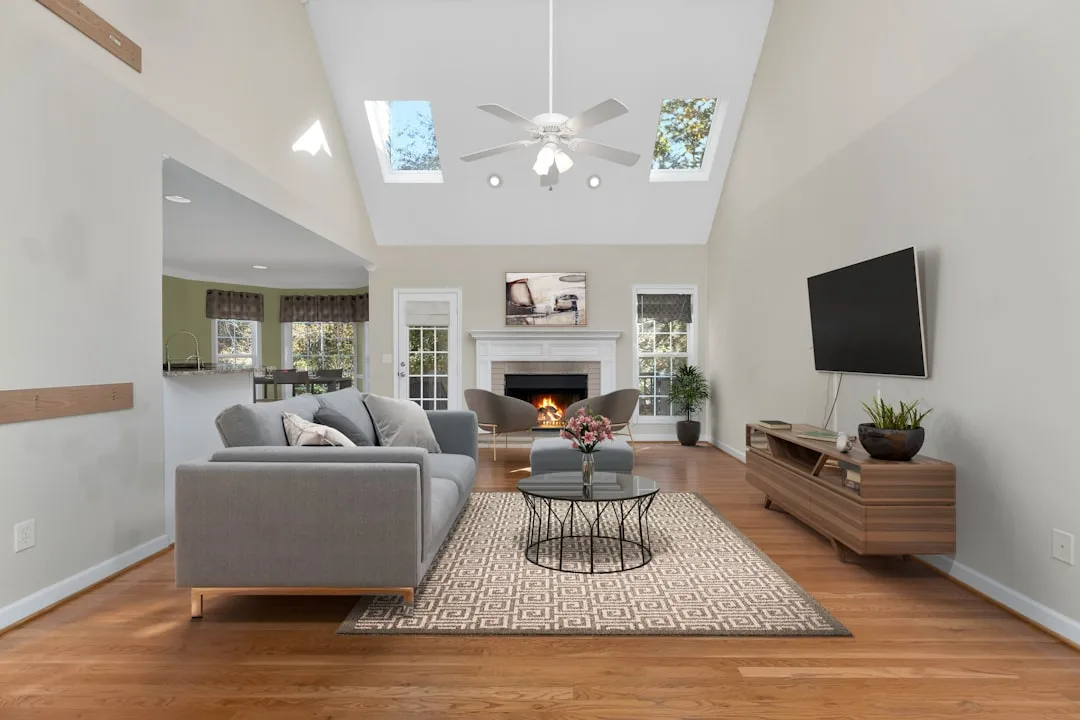
Most neutral living rooms fail for the same invisible reason: they have two neutrals when they need three, and the room never stops feeling unfinished no matter how many throw pillows get added. Getting a neutral color palette for living room spaces right isn’t about picking one beautiful shade — it’s about understanding how three distinct neutrals work together as a system.
Quick Answer
Most neutral living rooms fail for the same invisible reason: they have two neutrals when they need three, and the room never stops feeling unfinished no matter how many throw pillows get added.
I watched this happen for eleven years before I could articulate why. A client in Lincoln Park had repainted her living room twice, switched sofas, changed rugs — and still something was wrong. The space felt like a held breath. What she had was a crisp white wall and a warm greige sectional, and those two things were doing everything they possibly could against each other while the room waited for a third voice that never showed up. Once we added aged walnut furniture and ivory linen curtains as her third neutral, the room resolved itself in under a weekend. Not because we added more stuff — because we gave the eye somewhere to travel between the two anchors.
That’s the principle this entire article is built around.
What Actually Makes a Neutral Color Work in a Living Room
In This Article
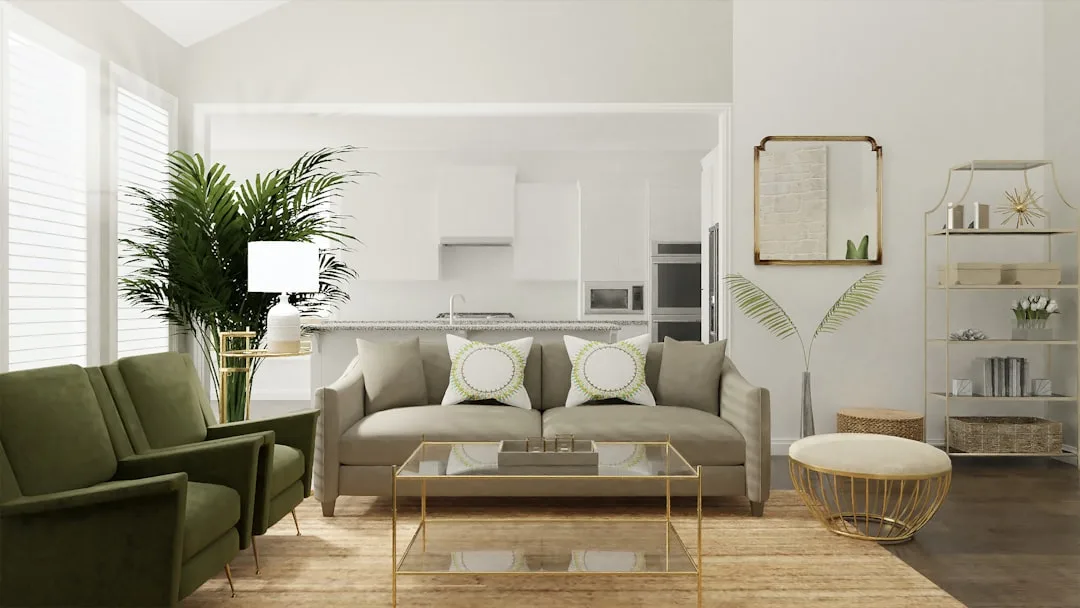
Neutral does not mean colorless. This is the misunderstanding that costs people real money and real time, and it’s the foundation everything else rests on. Every single neutral — white, beige, greige, taupe, grey — carries a dominant undertone that pulls toward pink, green, yellow, or blue, and that undertone behaves differently depending on what light hits it at what hour of the day.
The reason a paint chip looks clean and calm at the hardware store and turns muddy or cold on your actual wall is simple: a swatch is evaluated against artificial white light and neighboring swatches, not against your flooring, your windows, or your 4pm January light. You’re essentially auditioning a performer in a different theater.
Here’s the structural principle worth building around: the 60-30-10 rule applies to neutral palettes just as cleanly as it does to full-color rooms. Your dominant neutral covers 60% of the room — walls, largest surfaces. Your secondary neutral takes 30% — upholstery, large soft furnishings. Your accent neutral fills the remaining 10% — small furniture, accessories, trim details. Most people applying this rule to neutral rooms get the 60 and the 30 right and then abandon the 10%, which is exactly why the room never feels complete.
How the 60-30-10 rule breaks down in practice:
- 60% — Dominant neutral: Walls, ceiling if painted, large area rugs. This is your room’s resting state — the color that sets the overall temperature.
- 30% — Secondary neutral: Sofa, sectional, large upholstered chairs, drapery panels. This neutral should share an undertone with your dominant, but offer enough contrast to read as a distinct layer.
- 10% — Accent neutral: Side tables, throw pillows, decorative objects, trim details, lamp bases. This is the piece most people skip — and the reason so many neutral rooms feel like they’re missing something.
Research on color perception shows that ambient lighting can shift a paint color’s perceived LRV (Light Reflectance Value) by up to 15 points depending on window orientation and bulb temperature. A north-facing room with cool afternoon light can make the same white feel four shades colder than it did in the store. That’s not a small shift — that’s the difference between a room that feels airy and one that feels clinical.
Natural light and artificial light don’t just change how bright a neutral looks. They change its apparent hue. Incandescent and warm LED bulbs amplify yellow and orange undertones, which is why warm beiges look richer at night. Cool daylight does the opposite, pulling toward the blue-grey end and suppressing warmth. A greige that reads beautifully at noon in a south-facing room can look unwashed and sad by 7pm in the same room once you’ve switched on cool overhead lights.
Takeaway: Before buying a single paint pot, tape a 12-inch sample of your candidate neutral to the wall and look at it at three different times of day. Morning, midday, evening. The color you see at midday is not the color you live with most.
The 4 Main Neutral Colors — and the One Rule That Applies to All of Them
White, beige/cream, grey, and brown/taupe. These are the four foundational neutrals, and the useful way to think about them isn’t by color name but by function — what they do structurally in a room, what undertones they carry, and which other neutrals they can coexist with without creating the kind of visual tension most people feel but can’t diagnose.
Each of those four has a sprawling family tree. White alone splinters into alabaster, soft white, bright white, Swiss coffee, and linen. Beige branches into cream, sand, greige, and warm ivory. Grey runs from barely-there silver to deep charcoal. Brown and taupe fold in mushroom, driftwood, raw umber, and warm clay. The category name matters less than where the neutral sits on the warm-cool spectrum and what undertone it shares with its neighbors.
Interior design professionals reference the Munsell Color System when identifying undertones — the system distinguishes over 100 distinct neutrals by hue, value, and chroma. You don’t need to memorize Munsell notation. What’s useful is the underlying logic: every neutral has a measurable bias, and that bias either reinforces or fights whatever is next to it.
The one rule that applies across all four foundational neutrals: every neutral in your living room must share at least one undertone with the others. This is where most mistakes happen — and where most budget advice fails completely, because it tells you what looks good in isolation rather than what works together.
A warm beige sofa against a cool grey wall is the most common example of this failing. Both are technically neutral. Neither is offensive on its own. But together they create a low-grade visual dissonance — the beige pulls toward yellow-orange, the grey pulls toward blue, and the room feels subtly unresolved. Not ugly. Just never quite right. This is the feeling people describe as “something is off and I don’t know what.” Now you know what.
Here’s how to check undertone compatibility with what you already own:
- Hold a white piece of paper next to your flooring, sofa, or existing paint. The white will reflect any color cast back at you — you’ll see green, yellow, pink, or blue in the contrast.
- Take a fabric sample from your sofa or curtains into natural daylight — not inside the room, outside or near an uncovered window — and identify whether it pulls warm or cool.
- When choosing a wall paint, select swatches that share the same warm-or-cool orientation as your flooring and major furniture. You can vary temperature within warm (cream vs. camel) or within cool (silver grey vs. slate), but don’t cross the warm-cool line between major elements.
- If you’re starting from scratch with no fixed elements, decide on your temperature first — warm or cool — and choose all three neutrals from that side of the spectrum before considering anything else.
- When in doubt, pull a thread or snip a small swatch from existing upholstery and bring it physically to the paint store. Trying to match from memory or a phone photo adds a layer of error you don’t need.
Takeaway: Undertone compatibility isn’t a styling preference — it’s the structural reason neutral rooms succeed or fail. Identify your fixed element’s undertone first and build every other neutral decision from there.
What a Nice Neutral for a Living Room Actually Looks Like in Practice
The question “what’s a nice neutral for a living room” is one I got asked constantly — and the answer I gave clients was always the same: it depends on which wall, which hour, and which direction your windows face. A nice neutral isn’t a color. It’s a color in context.
Building a complete neutral color palette for living room spaces means accounting for all three of these variables before you commit to a single swatch. Here’s how that plays out room by room.
Room orientation changes everything. North-facing rooms receive cool, indirect light throughout the day, which means any neutral you choose will skew cooler than it looked in the store.
North-facing rooms:
- Avoid stark whites — they turn icy and unwelcoming
- Lean toward warm whites (Swiss coffee, linen, alabaster) or warm greiges
- Test swatches specifically at midday, when the light is at its most flattering in these rooms
- Introduce warmth through texture — linen, wool, aged wood — rather than fighting the light with paint alone
South-facing rooms:
- Can handle a wider range of neutrals, including cooler whites and pale greys
- Warm neutrals will intensify significantly, especially in afternoon hours — go a shade lighter than you think you need
- Greige tends to perform well here because it shifts in interesting ways across the day
East-facing rooms:
- Warm golden light in the morning, cooler and dimmer by afternoon
- Neutrals with yellow or peachy undertones look stunning at 8am and flat by 3pm
- Balanced greiges and warm mid-toned whites tend to hold up best across both conditions
West-facing rooms:
- The opposite problem: flat light in the morning, intense warm light in the evening
- Cool-leaning neutrals that feel too clinical at noon often come alive beautifully at sunset
- This is one of the few orientations where a pale grey or cool linen can look spectacular
What specific neutrals actually perform well across conditions:
- Benjamin Moore Pale Oak (OC-20): A warm greige that reads differently in almost every light — beige in warm morning light, greige at noon, almost putty in the evening. Consistently well-behaved across orientations.
- Farrow & Ball Elephant’s Breath: A cool-leaning grey-greige that works in south and west-facing rooms. Too cold for north-facing spaces unless you heavily warm the furnishings.
- Sherwin-Williams Accessible Beige (SW 7036): A reliable warm beige with just enough grey to keep it from reading as yellow. Works well in most orientations except very north-facing rooms.
- Benjamin Moore White Dove (OC-17): A soft white with a barely-there warm undertone. One of the most forgiving whites across light conditions, which is why it appears constantly in professionally designed spaces.
- Sherwin-Williams Agreeable Gray (SW 7029): The best-selling neutral in the US for years running, and for a reason — it sits perfectly between warm and cool, which means it plays well with almost any secondary neutral.
Takeaway: There is no universally “nice” neutral. There’s the neutral that performs in your room at your hours. The list above gives you a shortlist of reliably well-behaved options — but always test on your actual wall before committing.
How to Build a Complete Neutral Color Palette for Living Room Spaces
Most people approach a neutral color palette for living room design by starting with what they love and working outward. That’s backwards. Start with what’s fixed — your flooring, any existing large furniture, your windows — and work inward.
Step-by-step process:
- Identify your fixed elements. What can’t you change? Hardwood floor color, tile, built-ins, a sofa you’re keeping. These are your constraints — and constraints are useful.
- Determine the undertone of each fixed element. Use the white paper test described above. Is your floor warm (yellow, red, orange undertones) or cool (grey, green)?
- Choose your dominant neutral (60%) to complement those fixed undertones. You want harmony, not match — similar temperature, not identical color.
- Select your secondary neutral (30%) with contrast in value, not temperature. If your wall is a light warm greige, your sofa can be a medium warm taupe. Same family, different depth.
- Choose your accent neutral (10%) to bridge or punctuate. This is where you can introduce the most interest — a dark walnut, a warm charcoal, an aged brass. The accent neutral doesn’t need to be a pale, quiet shade. It just needs to share the undertone family.
- Test all three together before buying. Pull fabric samples, paint large swatches, bring flooring samples. Look at them together in your room at morning, noon, and evening light.
Common mistakes to avoid at each stage:
- Choosing your wall color before you’ve identified your floor’s undertone
- Selecting furniture in a showroom under flattering warm lighting, then bringing it into a cool north-facing room
- Treating trim as an afterthought — bright white trim against a warm greige wall creates visual noise that disrupts the entire palette
- Using more than one pattern in the accent neutral layer without a unifying texture or tone
- Forgetting that metal finishes (hardware, light fixtures, curtain rods) are also neutrals and need to share the room’s undertone family
FAQ
Why does my neutral living room feel cold even though I chose warm colors?
Warm paint colors don’t guarantee a warm-feeling room. The issue is usually one of three things: cool overhead lighting (switch to warm-toned bulbs, 2700K–3000K), a cool-undertone floor that’s pulling the room’s temperature down regardless of what’s on the walls, or insufficient layering — a room with only one or two neutrals lacks the depth that reads as warmth. Add a third neutral in a darker warm tone and watch the temperature shift.
How many neutrals should a living room have?
Three is the working number for most rooms. One dominant (walls and largest surfaces), one secondary (major upholstery and soft furnishings), one accent (smaller furniture, objects, trim). Fewer than three and the room feels flat. More than four or five distinct neutrals and the room loses coherence. The goal is a palette that reads as unified from the doorway and reveals its layers as you move through the space.
Can I mix warm and cool neutrals in the same room?
Intentionally, yes. By accident, almost always no. The distinction is control — if you deliberately introduce one cool element into a warm room (say, a steel-blue-grey linen cushion against warm greige walls), that contrast reads as a design decision. If your floor is cool-grey oak and your sofa is warm camel and your walls are a green-tinted white, those are three neutral elements that each pull in a different direction, and no amount of accessories will resolve the tension.
What’s the difference between greige and taupe?
Both sit between beige and grey, but their undertones differ. Greige typically carries a grey base with beige warmth layered over it — it reads more neutral and sophisticated, and tends to perform better in modern or transitional spaces. Taupe leans warmer, often with distinct pink, mauve, or brown undertones beneath the grey-beige surface. Taupe can feel richer and more organic but is harder to pair because of those pink undertones. When in doubt, greige is the safer choice for a neutral color palette for living room schemes that need to work across multiple lighting conditions.
Do I need to repaint to fix a flat neutral living room?
Not always. The third-neutral problem is frequently solved through furnishings and objects rather than paint. If your walls and sofa are both functional but the room feels unfinished, adding your third neutral through furniture (a side table, a bookcase), textiles (a rug, curtains), or even a large piece of art can complete the palette without touching the walls. Repaint when the wall color itself is fighting your fixed elements — otherwise, work with what you have and fill in the missing layer.