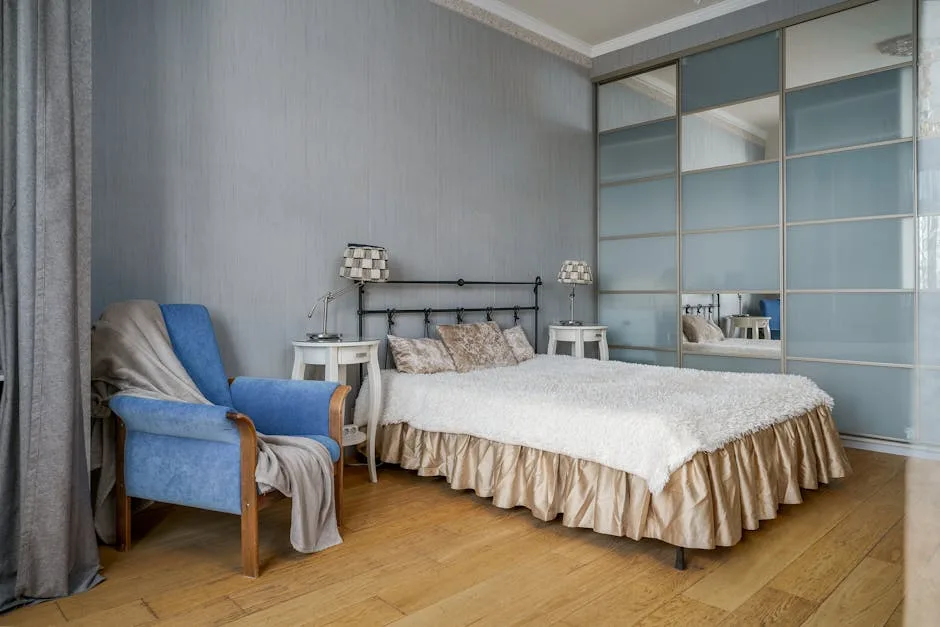
The average small bedroom loses nearly a full square foot of walkable floor space on each side of the bed — not to the bed itself, but to the nightstand sitting next to it. If you’re searching for nightstand alternatives for a small bedroom, that search is already smarter than what most people do, which is shove a standard nightstand in anyway because no one tells them they have other options. Genuinely good ones. This guide covers nine swaps that solve the actual problem — surface area, light source, and storage — without costing you the floor clearance you need to move through your own bedroom without turning sideways.
Quick Answer
The average small bedroom loses nearly a full square foot of walkable floor space on each side of the bed — not to the bed itself, but to the nightstand sitting next to it.
That’s before you account for the lamp cord snaking toward an outlet, the stack of books that never quite fits, and the general visual mass of a boxy cabinet that the room didn’t really have room for in the first place. Most people shove a nightstand in anyway because no one tells them they have other options. Genuinely good ones.
This guide covers nine swaps that don’t look like compromises. Not because they’re trendy, but because they solve the actual problem — surface area, light source, and storage — without costing you the floor clearance you need to move through your own bedroom without turning sideways.
Why Forcing a Traditional Nightstand Into a Tight Space Usually Backfires
In This Article
- Why Forcing a Traditional Nightstand Into a Tight Space Usually Backfires
- The Best Nightstand Alternatives for Small Bedroom Layouts: How to Choose
- 1. Swing-Arm Wall Sconces With a Built-In Shelf: The Designer’s First Move
- 2. Slim Console Tables Turned Bedside: When Proportion Does the Heavy Lifting
- 3. Floating Wall Shelves at Bedside Height: The Zero-Footprint Option
- 4. Drum Stools and Low Side Tables: When You Want Something You Can Move
- 5. Bedside Caddies and Hanging Organizers: The No-Furniture Solution
- 6. Stacked Books or Decorative Crates: When the Surface Is the Storage
- 7. Wall-Mounted Fold-Down Desks Positioned Bedside: The Dual-Use Approach
- 8. Pegboards and Wall Panels: Configurable Storage That Grows With You
- 9. Built-In Headboard Shelving: The Permanent Solution That Pays Off Long-Term
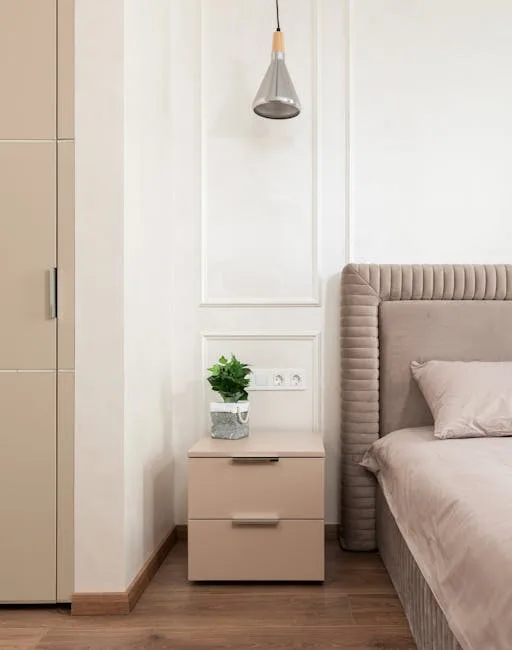
Standard nightstands run 20–24 inches wide. In a bedroom where the builder gave you 28 inches between the side of the bed and the wall, that leaves you with four inches of clearance — which is nothing. It’s the kind of space where you clip your shin on the corner every single morning until you stop noticing, and then you just accept that your bedroom is slightly unpleasant to exist in.
The real issue is that width and visual bulk compound each other. A nightstand that technically fits can still make a room feel closed-in because your eye reads it as a wall of solid material blocking the space between the bed and the baseboard. I watched this happen in a Chicago studio apartment years ago — a client had 26 inches of clearance, purchased a 22-inch nightstand because the math said it would work, and the room immediately felt like a hallway. We pulled it out. The room exhaled.
The National Kitchen and Bath Association recommends at least 24 inches of clearance on each side of a bed for comfortable movement — and a standard nightstand, sitting flush against the mattress edge, eats directly into that margin. Many small bedrooms simply don’t have 24 inches to spare before the furniture arrives. Adding a nightstand can drop that clearance to the low teens.
There’s also a proportional problem that nobody talks about: the height relationship. Most nightstands are designed for beds with thicker box springs, putting the surface at 26–28 inches off the floor. Platform beds — which have taken over a significant share of the market — sit lower, meaning a standard nightstand often ends up weirdly tall beside them, like a side table designed for someone else’s room.
None of this means you live without a bedside surface. It means you stop insisting the solution has to be a nightstand.
Actionable takeaway: Measure your actual clearance — from mattress edge to wall — before doing anything else. If you’re under 24 inches, a traditional nightstand isn’t a suboptimal choice. It’s the wrong category entirely. The nightstand alternatives for small bedroom situations covered below start making sense the moment you run that measurement.
The Best Nightstand Alternatives for Small Bedroom Layouts: How to Choose
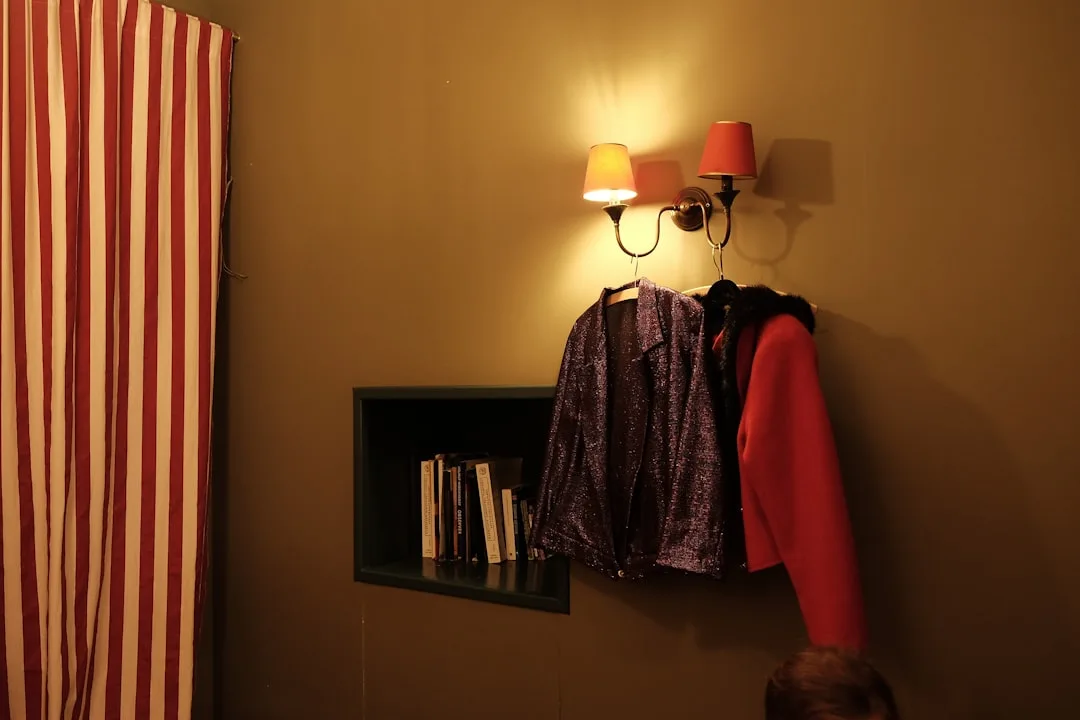
Before running through the specific swaps, it helps to understand what framework you’re actually optimizing for. Every nightstand alternative for a small bedroom succeeds or fails on three variables: floor footprint, visual weight, and functional surface. You need all three to work.
Floor footprint is the obvious one — the square inches your solution occupies on the floor. Wall-mounted options score perfectly here because they occupy zero floor space. Slim-profile tables score well. Anything wider than 14 inches at depth starts working against you in a room under 12 feet wide.
Visual weight is less obvious but arguably more important for how a room feels day-to-day. A glass-topped table with hairpin legs occupies the same floor space as a solid wood cabinet of identical dimensions, but the visual weight is completely different. Open legs, transparent surfaces, and light finishes all reduce visual weight without reducing functional surface area. This is why so many small bedroom solutions that look good in photographs don’t translate in person — they solve the floor footprint problem but ignore what the eye is actually reading.
Functional surface is where people make the biggest compromises. The minimum you actually need bedside: phone charging, a light source, something to set a glass of water on, and optional storage for whatever you’re reading or taking before bed. That’s four functions. Most nightstand alternatives handle the surface and light elegantly. Storage is where the real design problem lives, and the best solutions incorporate vertical storage — a lower shelf, a pocket, a drawer integrated into the wall — rather than ignoring it.
Once you’ve measured your clearance and identified which of the three variables is your biggest constraint, the right swap from the list below becomes much more obvious.
1. Swing-Arm Wall Sconces With a Built-In Shelf: The Designer’s First Move
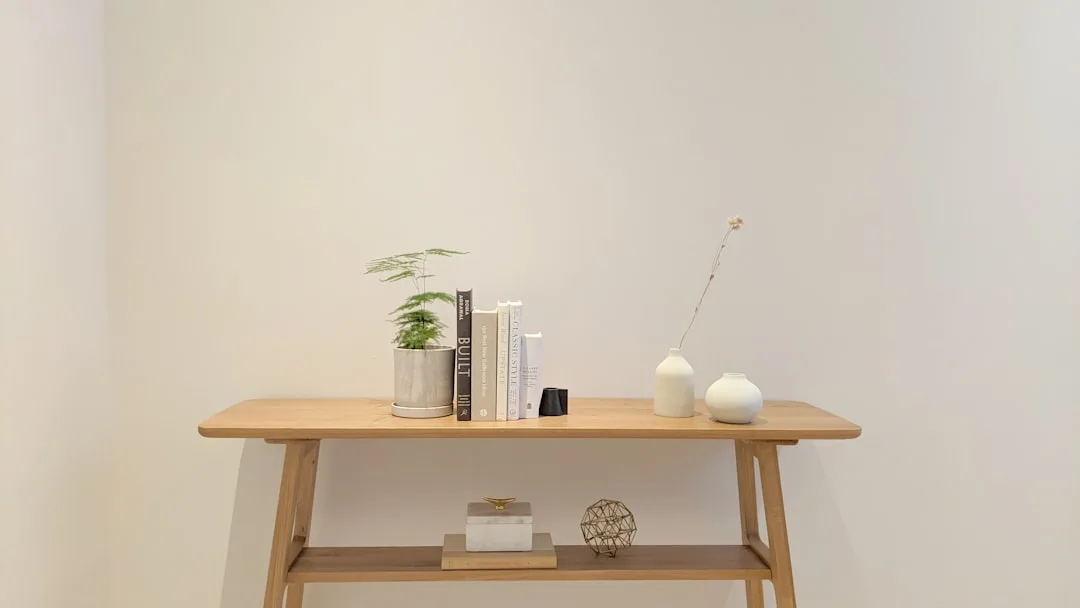
Wall-mounted lighting with an integrated surface is the first place I’d go in any bedroom under 150 square feet, and I say that as someone who used to resist it because I thought it looked too “hotel.” I was wrong. Done right, it looks more intentional than a nightstand — because it is more intentional. It required a decision, a drill, and a stud finder.
The core principle here is dual-purpose design — consolidating two furniture functions (lamp and surface) into a single wall-mounted fixture, which eliminates the need for a table entirely. In rooms under 150 square feet, this isn’t just aesthetically clever. It’s the difference between a bedroom that functions and one that merely exists.
A few specifics that actually matter:
- Shelf height: The shelf face should sit roughly 26–28 inches above your mattress surface. That’s the ergonomic reach zone for most adults — close enough to grab your phone without sitting up fully.
- Finish: Brass and matte black both read as deliberate in photographed rooms, and more importantly, they read as deliberate in person. Brushed nickel works too, but it can flatten in warm lighting.
- Swing arm range: Look for a minimum 15-inch arm extension. A sconce that doesn’t reach over you forces you to tilt toward the wall to read, which defeats the purpose.
- Rental consideration: Wall anchors rated for 20–30 lbs patch cleanly on move-out if you use the right spackle. This is not a solution only for homeowners.
The shelf integrated into a swing-arm sconce doesn’t need to hold much. Phone, a small glass, and whatever you’re reading. That’s the whole job. The lamp is already handled by the fixture itself.
One product category worth knowing: plug-in swing-arm sconces with a built-in USB port in the canopy have become widely available at the $60–$120 price point. They eliminate the need for a separate charging cable entirely, which is one less cord running across your floor.
Actionable takeaway: Search “plug-in swing arm sconce with shelf” — not “wall-mounted nightstand lamp” — to find fixtures where the shelf is structurally integrated rather than added as an afterthought.
2. Slim Console Tables Turned Bedside: When Proportion Does the Heavy Lifting
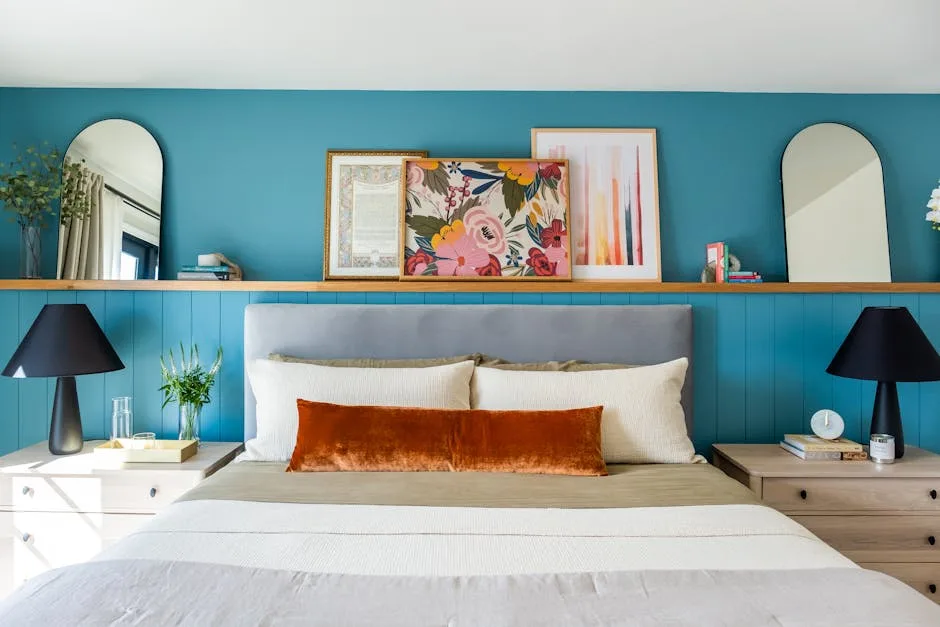
Most people think of console tables as hallway furniture — something you put keys on near the front door and forget about. But a console at 10–12 inches deep placed vertically alongside a bed does something a nightstand almost never does: it uses vertical space instead of lateral space, keeps the floor mostly visible, and creates the kind of proportional contrast that makes a room feel designed rather than furnished.
The math is straightforward. A 10-inch-deep console versus a standard 20-inch nightstand saves nearly a full square foot of floor space per side. In a room where every inch counts, that’s not a small win. It’s the difference between a functional corridor and a pinch point.
What makes this work is proportion, not just dimension. A tall, narrow console — say, 32–36 inches high with a lower display shelf — creates vertical visual interest rather than the horizontal band of bulk that a standard nightstand produces. Pair it with a low-profile platform bed and the height contrast between them reads as deliberate layering. The contrast is doing compositional work that a matching nightstand-and-bed set almost never achieves, because matching sets flatten a room rather than articulating it.
The best material choice here is one with open negative space underneath: a console with slender legs — hairpin, tapered wood, or tubular steel — reads lighter than one with a solid base. Glass or marble tops amplify this effect. A solid-panel console with a closed base saves you nothing visually even if the dimensions are technically slim.
Practical note on stability: A 10-inch-deep table will feel tippy if you’re used to reaching across it. Mount a small adhesive hook on the wall behind it to anchor a thin leather strap across the back legs — it prevents forward rock without any visible hardware from the bed side.
Actionable takeaway: When sourcing, filter for consoles under 12 inches deep and over 30 inches tall. That combination is rare in retail but common in vintage and secondary markets — search “sofa table narrow” or “hallway console 10 inch depth” rather than anything labeled “nightstand.”
3. Floating Wall Shelves at Bedside Height: The Zero-Footprint Option

A single floating shelf at the right height is the most space-efficient nightstand alternative for a small bedroom that exists, because the floor footprint is literally zero. Nothing touches the ground. The space beneath the shelf stays open, which does two things: it makes the room easier to clean and it lets the eye travel through the space rather than stopping at a solid object.
The execution is simple in theory and slightly less simple in practice. A few things that determine whether this looks intentional or improvised:
- Depth: 8–10 inches is the functional minimum for a phone, a glass, and a candle. Go shallower and you’re setting yourself up for things falling off. Go deeper than 12 inches and you’ve recreated the visual bulk of a nightstand without any of the structural support.
- Bracket style: Floating shelves with hidden brackets read cleanest. Exposed metal brackets are fine if they’re part of an intentional industrial or open-shelving look. Plastic or stamped-metal brackets from big-box stores undercut everything else the room is trying to do.
- Height: Install the top face of the shelf at mattress height plus 6–8 inches. For most platform beds, that puts you at 18–22 inches off the floor — which feels low until you’re actually lying in bed, at which point it’s exactly right.
- Weight rating: A shelf holding bedside items needs to support 15–20 lbs reliably. Make sure you’re hitting a stud or using toggle anchors rated appropriately for your wall material.
One underused approach: two shelves staggered vertically, offset by 8 inches of height, rather than one wide shelf. The upper shelf holds the lamp and phone; the lower holds books or a small plant. The staggered arrangement creates more visual interest than a single shelf and distributes weight more evenly across the wall.
Actionable takeaway: Install the shelf before you decide on lighting. The relationship between your light source and the shelf surface determines whether you need a sconce above it, a small table lamp on it, or a clip light on the shelf edge — and that decision is much easier to make when the shelf is already in place.
4. Drum Stools and Low Side Tables: When You Want Something You Can Move
Not every bedroom benefits from a permanent solution. If your room layout changes seasonally, if you have a partner with different sleep-side preferences, or if you’re renting and drilling feels like a commitment you’re not ready for, a drum stool or compact low side table is the most flexible nightstand alternative for small bedroom setups.
The key word is low. Drum stools typically run 16–20 inches tall, which pairs well with platform beds and low-profile mattresses. They’re also naturally compact — most are 14–16 inches in diameter, which puts their footprint roughly 30–40% smaller than a standard nightstand. Because they’re round, they have no corners to catch your shin on in the dark, which is a non-trivial quality-of-life improvement.
What makes a drum stool work better than a random small table:
- The cylindrical form reads as sculptural rather than utilitarian, which means it can do double duty as a decorative element rather than just a functional one
- Upholstered tops add a texture layer that a flat wooden table surface doesn’t
- They’re easy to move when you’re vacuuming or rearranging, which matters more than it sounds in a small room you’re spending a lot of time maintaining
The visual weight consideration here: choose a stool in a fabric or finish that contrasts with your floor. A dark stool on a dark floor disappears visually, which helps with the “open” feeling but hurts with the “intentional” feeling. A lighter stool, or one in a contrasting texture, anchors the bedside area without anchoring the eye the way a solid wood cabinet would.
Actionable takeaway: Look at side tables marketed as “accent tables” or “plant stands” in the 16–20 inch height range — they’re often more slender in profile than tables explicitly sold as nightstand alternatives, and they’re usually cheaper.
5. Bedside Caddies and Hanging Organizers: The No-Furniture Solution
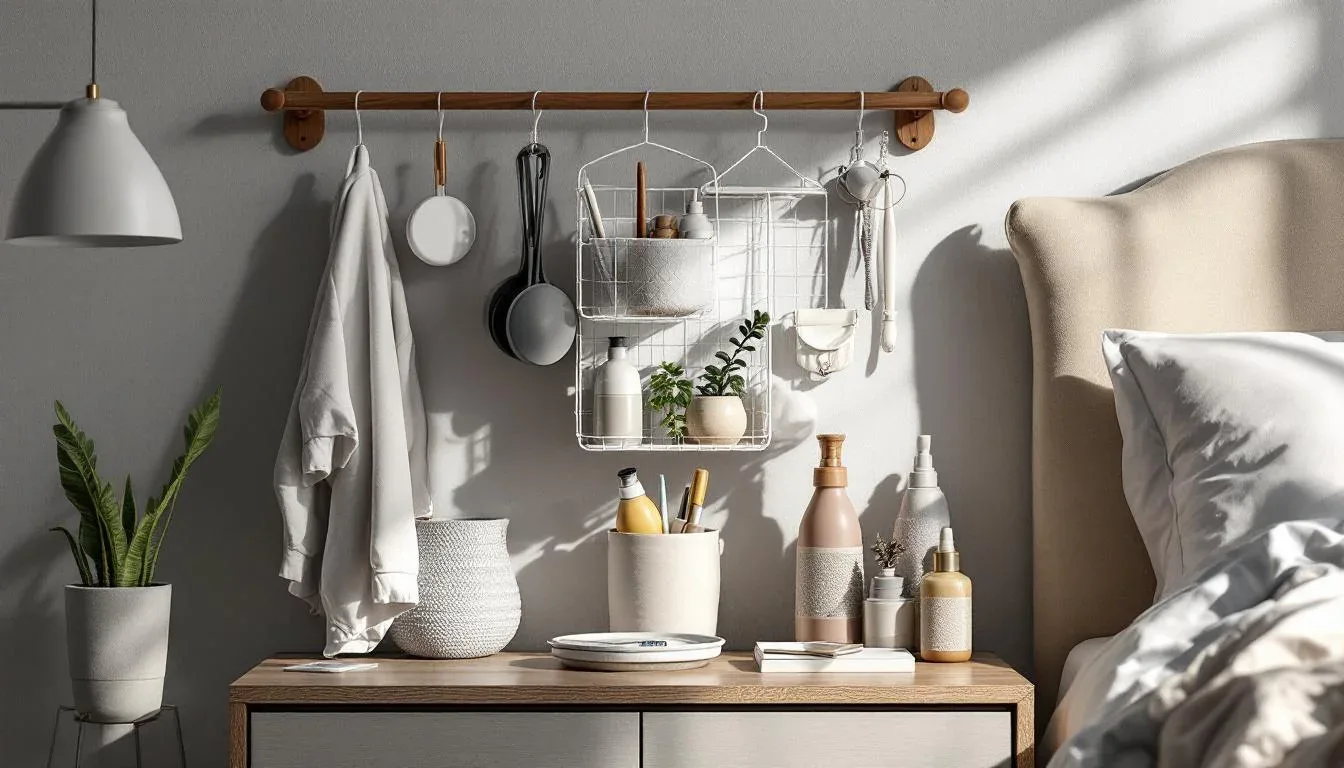
There’s a category of bedside solution that most design articles skip because it feels too utilitarian: the bedside caddy — a fabric organizer that hangs over the side of the mattress or clips to the bed frame. Done well, this isn’t a dorm room hack. It’s a legitimate solution for rooms where even a drum stool is too much.
The situations where this makes the most sense:
- Murphy beds and convertible beds where the bedside space is genuinely empty most of the time
- Bunk beds and loft beds where no surface can physically reach the sleeping level
- Extremely narrow rooms where anything touching the floor creates a hazard
Modern bedside caddies in canvas, leather, or waxed cotton look far more considered than the polyester pockets of ten years ago. The key is buying one with defined compartments rather than a single open pouch — structure signals intention. Leather versions with a wooden top insert essentially create a soft-sided surface that holds a phone and glasses case without any wall mounting or floor space at all.
The limitation to acknowledge honestly: A caddy doesn’t hold a lamp, a glass of water, or anything with real weight. It solves the phone-and-book problem only. For most people, this means pairing it with a plug-in clip light on the headboard rather than treating it as a standalone solution.
Actionable takeaway: Search “bedside caddy leather” or “bed pocket organizer canvas” — the material filter does most of the work of finding versions that look intentional rather than temporary.
6. Stacked Books or Decorative Crates: When the Surface Is the Storage
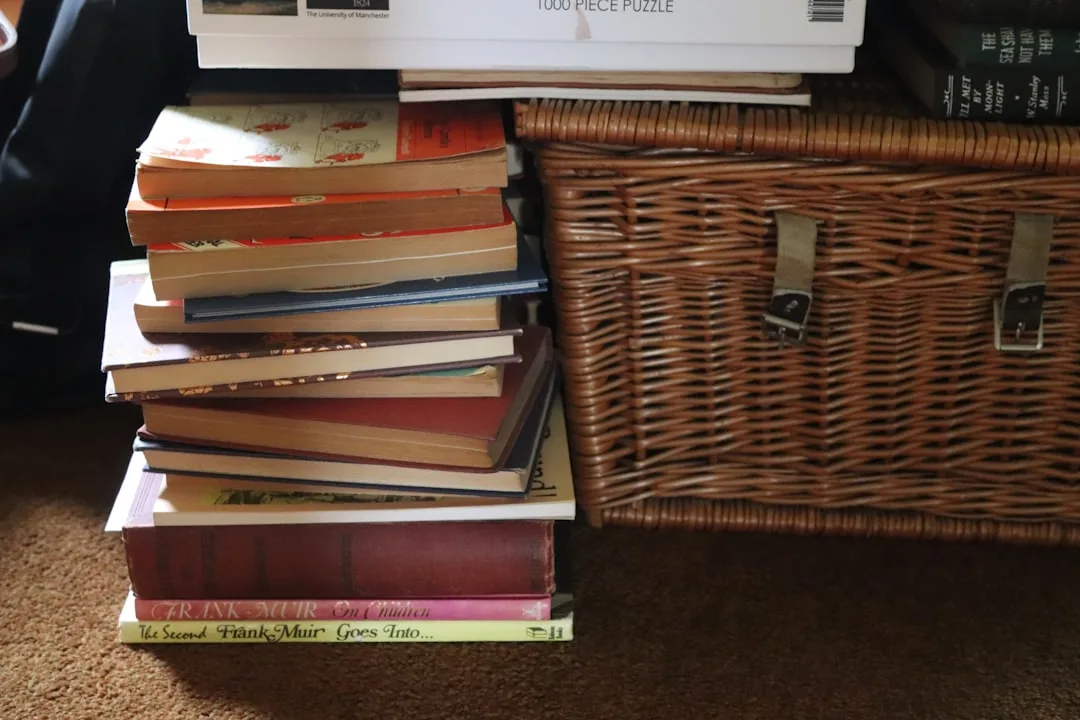
This is the solution that feels like it shouldn’t work until you see it executed well, and then it looks like the most obvious thing in the world. A stack of hardcover books — three to five, spines out, topped with a small tray — creates a bedside surface with zero floor footprint costs beyond the books themselves, and it communicates something about who lives in the room in a way that a piece of furniture never can.
The execution details that separate “messy pile” from “deliberate composition”:
- The tray on top is non-negotiable. It creates a defined surface and prevents everything from sliding off. A small marble tray, a wooden catchall, or even a simple ceramic dish works. Without it, the stack reads as clutter.
- Books should be hardcovers only — paperbacks compress unevenly under weight and look less intentional. Consistent or complementary spine colors help.
- Height: Aim for a stack between 18–24 inches — tall enough to reach from bed, short enough that it doesn’t create an unstable tower.
- Crates as an alternative: A wooden crate turned on its side creates a small shelf and a concealed interior storage space simultaneously. Two crates stacked and zip-tied together give you two levels of storage and a top surface, all for under $30.
This approach works best in rooms with a lot of texture and character already — it can look sparse in a very minimal room where it reads as “I couldn’t afford furniture” rather than “I chose this deliberately.”
Actionable takeaway: The tray is the design move. Buy the tray first, then build the stack to the right height to meet it.
7. Wall-Mounted Fold-Down Desks Positioned Bedside: The Dual-Use Approach
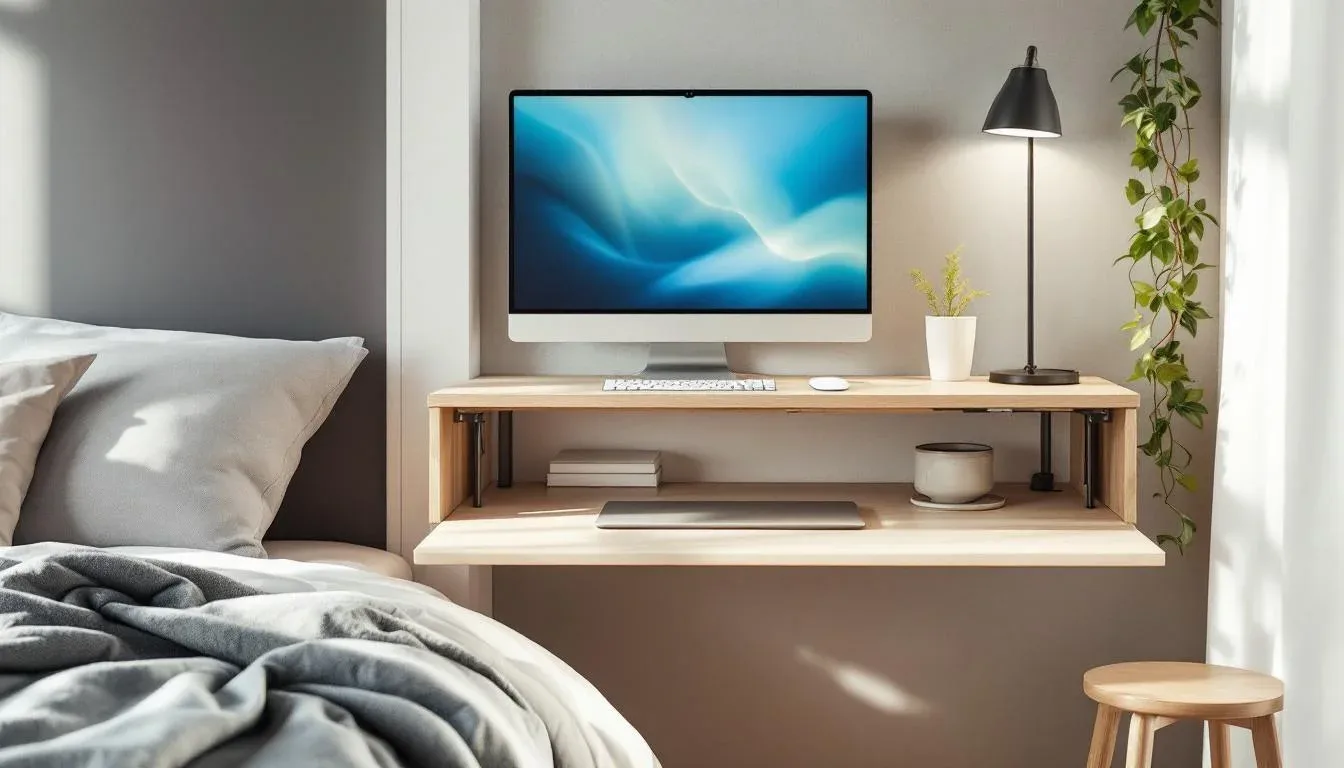
In a very small bedroom that also needs to function as an occasional workspace, a fold-down wall desk positioned at bedside height solves two problems simultaneously. When folded up, it’s a flat panel on the wall — typically 4–6 inches of projection. When folded down, it creates a legitimate work surface that also functions as an oversized nightstand.
The specific configuration that works:
- Mount the fold-down surface so the desk face sits at 26–28 inches when open — consistent with the ergonomic bedside reach zone
- Choose a version with small integrated compartments or a lip edge, so items don’t slide off when the surface is only partially needed
- Keep the wall finish behind the desk panel consistent with the rest of the wall — when folded up, you want it to disappear rather than read as a piece of furniture waiting to happen
The limitation: fold-down desks with legs that deploy to the floor when open partially defeat the footprint savings. Look specifically for wall-bracket designs where the support comes from the wall hardware rather than floor legs.
Actionable takeaway: This solution works best on the non-dominant sleep side — the side of the bed that gets less daily traffic — where the fold-down function gets used for reading or occasional laptop work rather than the primary get-in-and-out side.
8. Pegboards and Wall Panels: Configurable Storage That Grows With You
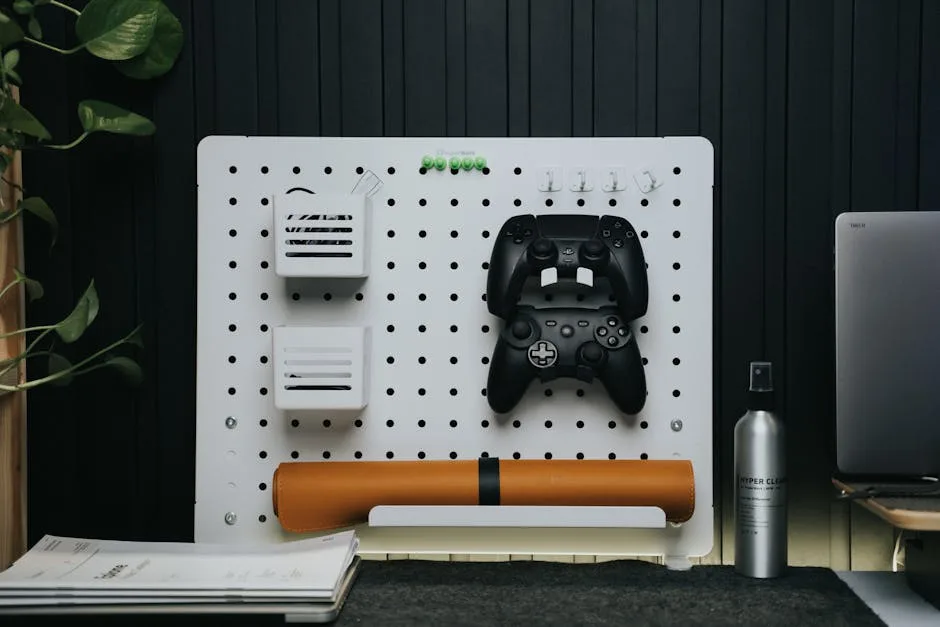
A pegboard section positioned beside the bed — roughly 24 inches wide by 36 inches tall — creates a fully configurable bedside system that can hold a shelf, a small basket, a hook for headphones, and a clip light in whatever arrangement makes sense for how you actually sleep.
This sounds aggressively functional, and in the wrong context it is. But the design language of pegboards has shifted significantly: powder-coated steel panels in black or white, solid hardwood pegboards, and perforated metal panels all read as intentional wall features rather than garage storage transplants.
The configuration advantage matters more than it sounds: most bedside solutions lock you into a fixed arrangement. Pegboard lets you move the shelf two inches higher when you switch mattresses, add a hook for a sleep mask, or remove a component entirely without leaving holes behind — because the holes are already the design.
Cost reality: A basic 24×36 pegboard panel runs $15–$25. The accessories — shelves, hooks, small bins — add another $20–$40. For under $60 total, you have a bedside system that outperforms most $200 nightstands on pure functionality.
Actionable takeaway: Install the panel with a 1-inch standoff from the wall — pegboard needs that gap behind it for hooks to function. Furring strips cut to fit the panel perimeter handle this cleanly.
9. Built-In Headboard Shelving: The Permanent Solution That Pays Off Long-Term
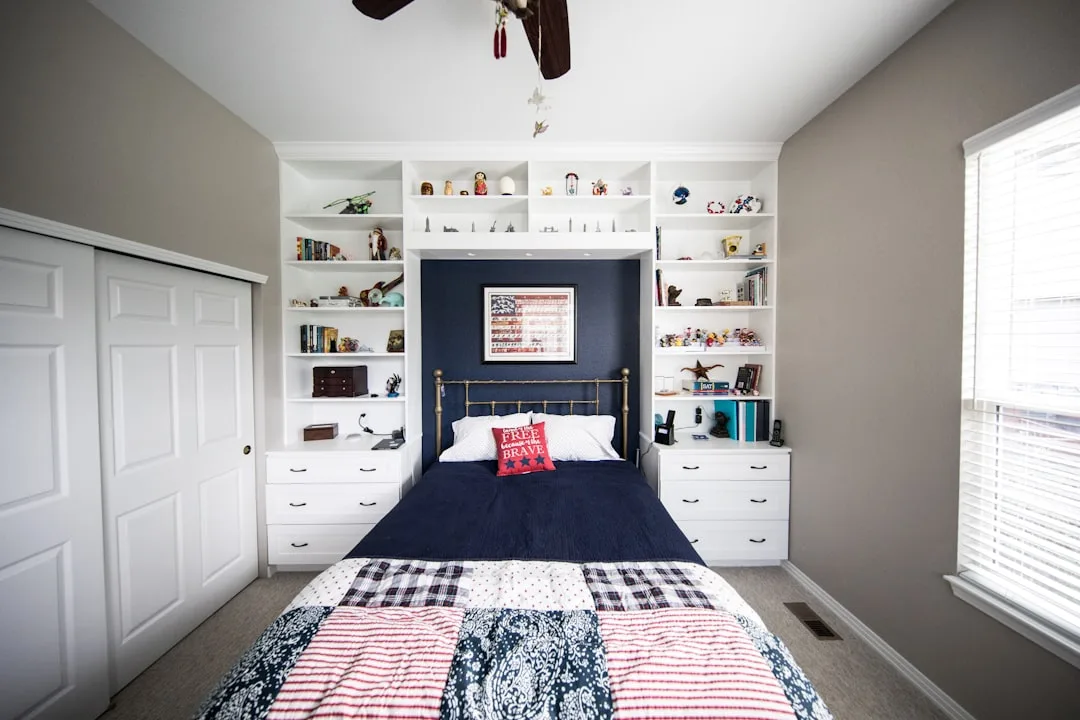
If you own your space or have a landlord who’s open to it, a headboard with integrated shelving built directly into the wall eliminates the bedside furniture problem entirely rather than solving it piece by piece. This is the approach architects reach for in small bedroom designs, because it consolidates the headboard, nightstand, and often overhead lighting into a single wall element that takes up no floor space at all.
The execution ranges from simple to complex:
- Simple: Two floating shelves mounted at headboard height, flanking the bed position, with a panel between them that serves as the headboard surface. Cost: under $200 in materials.
- Intermediate: A built-in unit with upper shelves for display, mid-level shelves at nightstand height with integrated sconce mounting, and a lower shelf or cubby for shoe or linen storage. Cost: $400–$800 in materials depending on wood choice.
- Full built-in: Floor-to-ceiling cabinetry flanking the bed with a bridge overhead, integrated lighting, and closed storage below nightstand height. This is what high-end small apartment renovations look like, and it typically adds more to perceived room quality than anything else you can do to a tight bedroom.
The design principle that makes built-ins work in small rooms specifically: because they’re flush with the wall plane, the eye reads them as an extension of the architecture rather than as furniture sitting in the room. Visual weight drops dramatically even when the physical volume of storage increases.
Actionable takeaway: Even if a full built-in isn’t feasible, the simplified version — two flanking shelves with a painted MDF panel as the headboard — can be executed in a weekend and creates the same architectural effect at a fraction of the cost.
Frequently Asked Questions About Nightstand Alternatives for Small Bedrooms
What is the best nightstand alternative for a very small bedroom where the bed is pushed against a wall?
When one side of the bed is against a wall, the problem is asymmetrical — you only need a solution for one side, which actually gives you more options. A wall-mounted fold-down shelf or a swing-arm sconce with integrated shelf works best here because it uses the wall the bed is already touching. For the open side, any of the floor-based options work. The bigger issue in this layout is usually that the person sleeping on the wall side has no bedside access at all — a pegboard panel mounted on the wall at the head of the bed, within reach from the pillow, solves this directly.
Do nightstand alternatives for small bedrooms actually provide enough storage?
It depends on what you’re storing. If your nightstand currently holds a lamp, phone, water glass, book, and sleep medication, most alternatives handle all of that well — the lamp becomes a sconce or clip light, the phone charges via a USB port built into the fixture or a caddy hook, and a single shelf with a small tray manages everything else. Where alternatives fall short is bulkier storage: extra blankets, multiple books, a full drawer of miscellaneous items. For that, the built-in headboard shelf or a pegboard system with bins is the honest answer. Don’t expect a floating shelf to replace a three-drawer nightstand — it replaces the surface and the lamp, not the drawer.
Can nightstand alternatives work in a rental apartment without damaging walls?
Yes, with caveats. Plug-in swing-arm sconces require only two small wall anchors, which patch invisibly with spackle and a touch of paint. Floating shelves are slightly more involved but still patchable. Pegboard mounted with furring strips leaves clean, small holes. The no-drill options — bedside caddies, drum stools, stacked book surfaces — leave zero wall damage and are genuinely good solutions rather than compromises. The rental constraint doesn’t eliminate most of the options in this guide; it mainly rules out built-in headboard shelving and anything requiring electrical work.
How do I light a small bedroom if I’m not using a traditional table lamp?
Swing-arm wall sconces are the direct replacement for table lamps and are usually an improvement — they direct light exactly where you need it without taking up surface space. Plug-in versions require no wiring, just an outlet within cord distance. Clip lights that attach to a shelf edge or headboard work for reading specifically. Recessed lighting with a dimmer handles ambient light in the room overall. For a fully cordless option, rechargeable LED puck lights have improved significantly — the better ones last weeks on a charge and are touch-dimmable, which makes them legitimately useful rather than just convenient.
What’s the minimum surface area I actually need at the bedside?
Less than most people assume. The functional minimum is roughly 6×8 inches — enough for a phone lying flat and a small glass. A standard shelf at 8–10 inches deep handles this easily. Where people feel like they need more surface is usually a storage problem disguised as a surface problem: they’re stacking things because they don’t have a vertical storage solution for them. Solve the storage with a shelf, a caddy, or pegboard bins, and the surface requirement drops to something a floating shelf handles without any compromise at all.
The right swap depends on your specific constraints — clearance, lease terms, whether you need storage or just a surface — but the common thread across every option here is that they all require a decision rather than a default. That’s why they look intentional. They are.
What is the best nightstand alternative for a very small bedroom where the bed is pushed against a wall?
When one side of the bed is against a wall, the problem is asymmetrical — you only need a solution for one side, which actually gives you more options. A wall-mounted fold-down shelf or a swing-arm sconce with integrated shelf works best here because it uses the wall the bed is already touching. For the open side, any of the floor-based options work. The bigger issue in this layout is usually that the person sleeping on the wall side has no bedside access at all — a pegboard panel mounted on the wall at the head of the bed, within reach from the pillow, solves this directly.
Do nightstand alternatives for small bedrooms actually provide enough storage?
It depends on what you’re storing. If your nightstand currently holds a lamp, phone, water glass, book, and sleep medication, most alternatives handle all of that well — the lamp becomes a sconce or clip light, the phone charges via a USB port built into the fixture or a caddy hook, and a single shelf with a small tray manages everything else. Where alternatives fall short is bulkier storage: extra blankets, multiple books, a full drawer of miscellaneous items. For that, the built-in headboard shelf or a pegboard system with bins is the honest answer. Don’t expect a floating shelf to replace a three-drawer nightstand — it replaces the surface and the lamp, not the drawer.
Can nightstand alternatives work in a rental apartment without damaging walls?
Yes, with caveats. Plug-in swing-arm sconces require only two small wall anchors, which patch invisibly with spackle and a touch of paint. Floating shelves are slightly more involved but still patchable. Pegboard mounted with furring strips leaves clean, small holes. The no-drill options — bedside caddies, drum stools, stacked book surfaces — leave zero wall damage and are genuinely good solutions rather than compromises. The rental constraint doesn’t eliminate most of the options in this guide; it mainly rules out built-in headboard shelving and anything requiring electrical work.
How do I light a small bedroom if I’m not using a traditional table lamp?
Swing-arm wall sconces are the direct replacement for table lamps and are usually an improvement — they direct light exactly where you need it without taking up surface space. Plug-in versions require no wiring, just an outlet within cord distance. Clip lights that attach to a shelf edge or headboard work for reading specifically. Recessed lighting with a dimmer handles ambient light in the room overall. For a fully cordless option, rechargeable LED puck lights have improved significantly — the better ones last weeks on a charge and are touch-dimmable, which makes them legitimately useful rather than just convenient.
What’s the minimum surface area I actually need at the bedside?
Less than most people assume. The functional minimum is roughly 6×8 inches — enough for a phone lying flat and a small glass. A standard shelf at 8–10 inches deep handles this easily. Where people feel like they need more surface is usually a storage problem disguised as a surface problem: they’re stacking things because they don’t have a vertical storage solution for them. Solve the storage with a shelf, a caddy, or pegboard bins, and the surface requirement drops to something a floating shelf handles without any compromise at all.