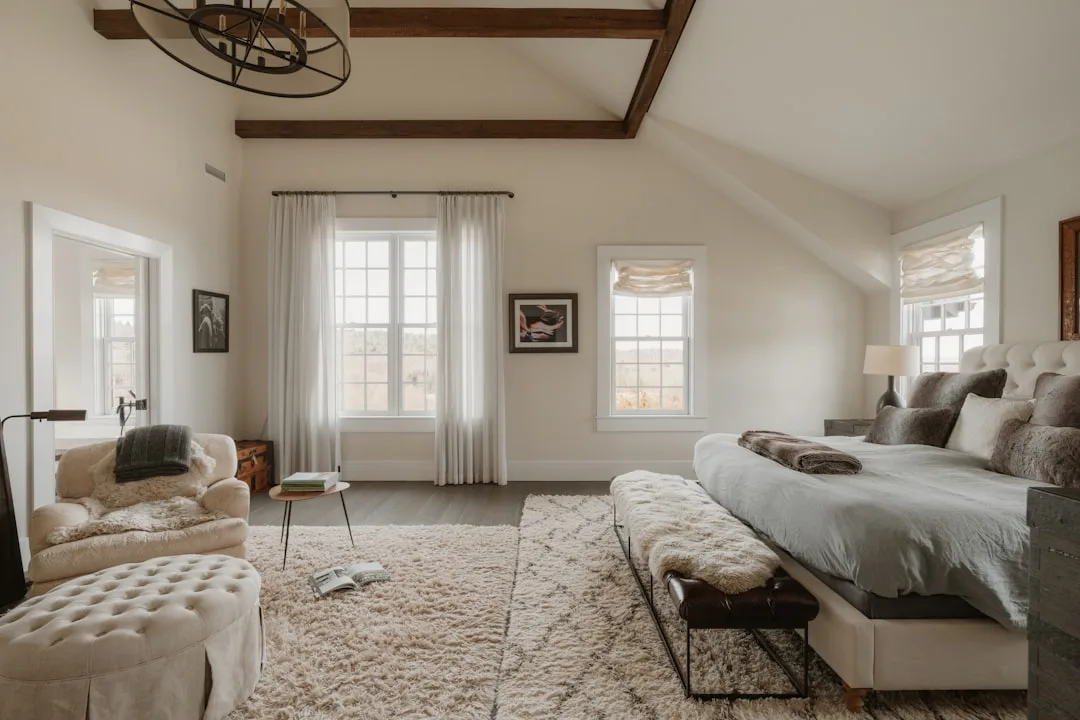
Most people measure their bed and then buy a rug that fits the bed. That’s the wrong unit of measurement entirely. What you’re actually trying to size is the zone — the behavioral territory around the bed where feet land, where you stand while making it, where a partner walks around to their side at 6am without stepping onto cold floor. The rug isn’t a decoration. It’s infrastructure. This bedroom rug size guide exists because that distinction — infrastructure versus decoration — changes every decision that follows.
I spent over a decade placing rugs under beds in real apartments — not staged rooms, not 400-square-foot photo shoots — and the single most consistent problem wasn’t that people bought ugly rugs. It was that they bought rugs sized to look right in a photo and then spent years stepping half-on, half-off a 5×8 they couldn’t return. That specific frustration, stepping onto a corner that flips up because it’s taking the full force of a footfall instead of being weighted down properly — that’s what a bad sizing decision actually feels like to live with.
This guide doesn’t start with a chart. It starts with how rooms actually work.
Why the “2 Feet on Every Side” Rule Keeps Failing People
In This Article
- Why the “2 Feet on Every Side” Rule Keeps Failing People
- Twin Beds: The Room Size Problem Nobody Mentions
- Queen Beds: The Most Complicated Sizing Scenario in Residential Design
- King Beds: When the Rug Has to Work Harder Than the Furniture
- The Placement Variables No Size Chart Accounts For
- How to Actually Measure Your Bedroom Before Buying
- Bedroom Rug Size Guide: Quick Reference by Bed and Room Size
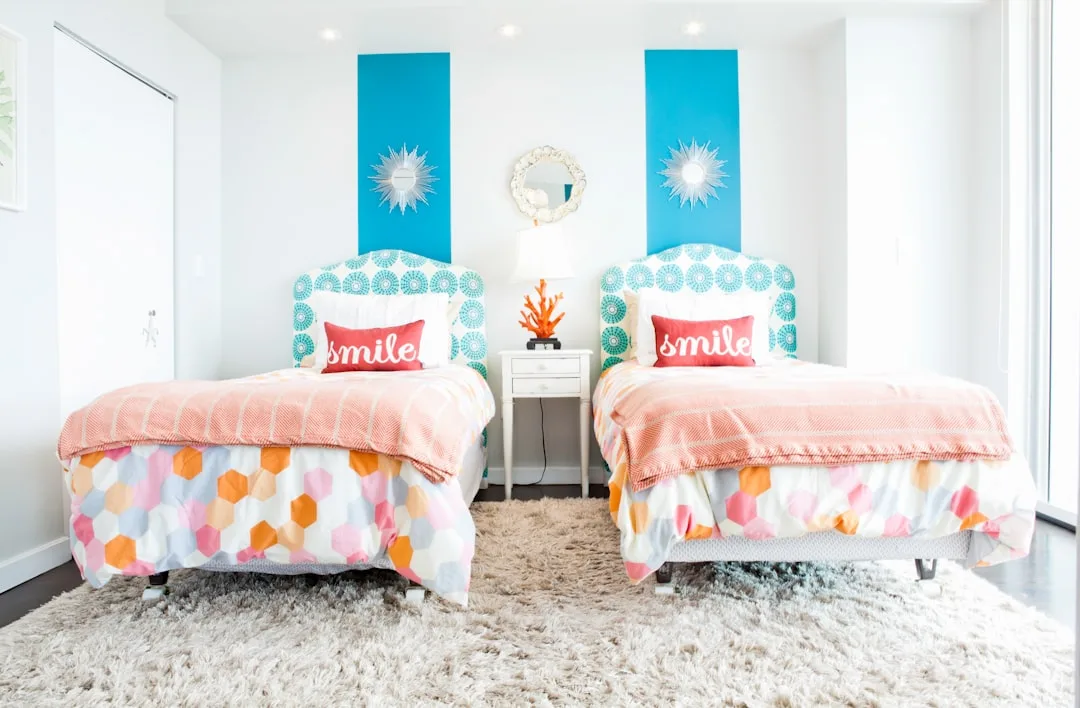
Here’s the advice you’ll find everywhere: leave 18 to 24 inches of rug visible on each side of the bed, plus about the same at the foot. It sounds clean. Measurable. Practical. And it produces decent results when you’re living in a vacuum — meaning a bedroom with no furniture, no architectural features, and unlimited floor space to work with.
Real bedrooms don’t cooperate. I once worked with a client in Wicker Park whose bedroom was 11 feet wide. She had a queen bed centered on the wall, with a nightstand on each side. Following the 24-inch rule would have required an 8×10 rug. The issue? An 8×10 in that room left exactly 14 inches of hardwood exposed on each side between the rug edge and the wall. It looked like the rug was trying to escape through the baseboards.
The 2-foot rule is a starting point, not a conclusion. What it fails to account for:
- The proportional relationship between rug edge and wall — closer than 12-18 inches looks like a mistake, not a choice
- Whether your nightstands sit on or off the rug (each option produces a different visual logic, and you can’t mix them accidentally)
- Whether the room has a doorway that would partially overlap the rug, which changes the sizing math
- The height of your bed frame — higher frames with visible legs read differently than platform beds sitting flush to the floor
The piece of advice nobody gives you: measure the wall-to-wall width of the room first, subtract the minimum acceptable border (18 inches per side, not 24), and that gives you your maximum rug width. Then fit your bed into that. If your wall-to-wall math produces a different number than the standard chart, trust the room.
Actionable takeaway: Before you search for rugs, tape out your maximum rug width on the floor using painter’s tape. Live with it for a day before buying anything.
Twin Beds: The Room Size Problem Nobody Mentions
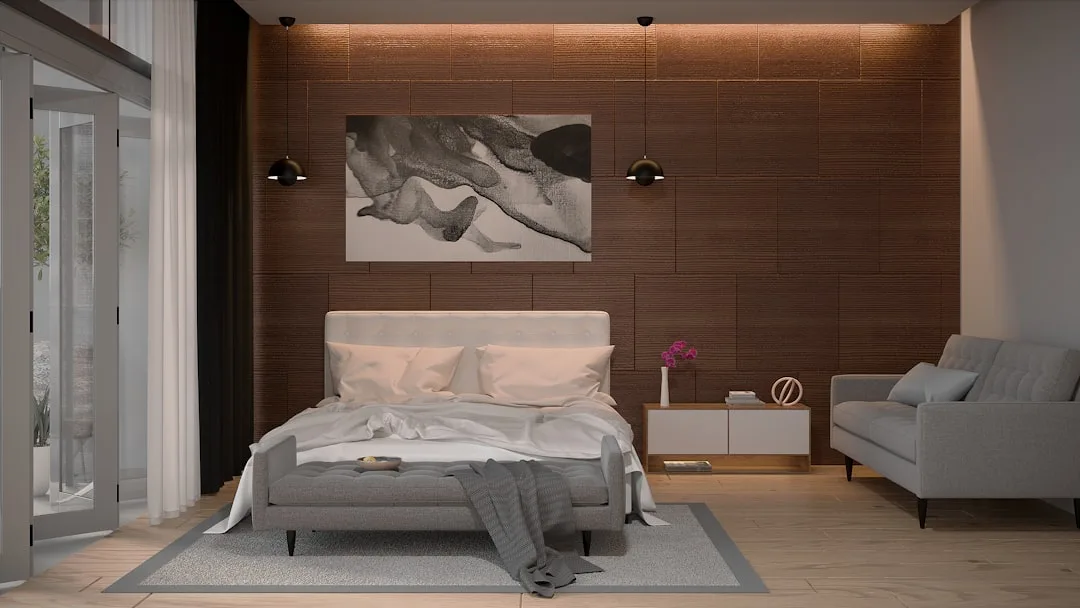
Twin beds create a sizing trap that I don’t see anyone talking about honestly. A standard twin mattress is 38 inches wide by 75 inches long. A twin XL — common in loft apartments and college-style spaces — runs 38 by 80. The bed is narrow. Which means the rug advice almost always goes in the direction of “go bigger,” and that’s roughly right. But bigger relative to what?
The conventional answer is a 5×8. For a twin in a small room — say, a 10×10 or 10×12 — a 5×8 is often the most a room can hold without looking like the rug is fighting the walls for territory. But a 5×8 under a twin means the rug extends only about 17 inches past each long side of the mattress. That’s enough to step onto, but just barely. On cold mornings, “just barely” is the difference between a rug that functions and one that gets ignored.
What actually works better in most twin scenarios, if the room allows it: a 6×9 positioned so the foot of the rug extends well past the bed frame while still having 18 inches of floor showing at the sides. This creates enough visual weight to anchor the bed without making a small room feel carpeted wall-to-wall.
A few positioning decisions that matter more than people realize:
- Placing the rug so it starts 12-18 inches past the headboard wall creates a more intentional look than sliding it all the way to the head of the bed
- In rooms under 120 square feet, a rug that’s too large reads as overwhelm — not coziness
- If there’s a desk in the room, the rug should ideally not extend under the desk chair, or you’ll be living with bunched edges within six months
One thing I learned from a job in Logan Square: twin rooms in older buildings often have radiators along the wall under the window, which is almost always the wall directly opposite or adjacent to the bed. A rug that approaches that zone needs to clear the radiator by at least 3 inches or it becomes a fire and airflow problem. Not aesthetic. Functional.
Twin beds also show up in unexpected contexts — guest rooms that double as offices, basement bedrooms with irregular dimensions, kids’ rooms where the floor plan changes every few years as furniture gets swapped out. In those cases, I’d almost always recommend erring toward a 5×8 with a quality pad rather than a 6×9 on nothing. A rug that stays flat and grips the floor in a multipurpose room does more work than a larger rug that shifts and buckles every time someone rolls a desk chair near it.
One more note on twin sizing that a proper bedroom rug size guide should address directly: if you’re buying for a bunk bed situation, the lower bunk changes the calculus entirely. The rug only needs to serve the lower sleeping zone and the ladder landing. A 4×6 placed at the foot of the lower bunk, centered on where feet hit the floor when descending, is often more functional than a 5×8 that gets kicked and folded under the ladder daily.
Actionable takeaway: In a twin room, measure from the headboard wall outward. Your rug should end with at least 18 inches of floor visible on the two long sides and 12-18 inches at the foot.
Queen Beds: The Most Complicated Sizing Scenario in Residential Design
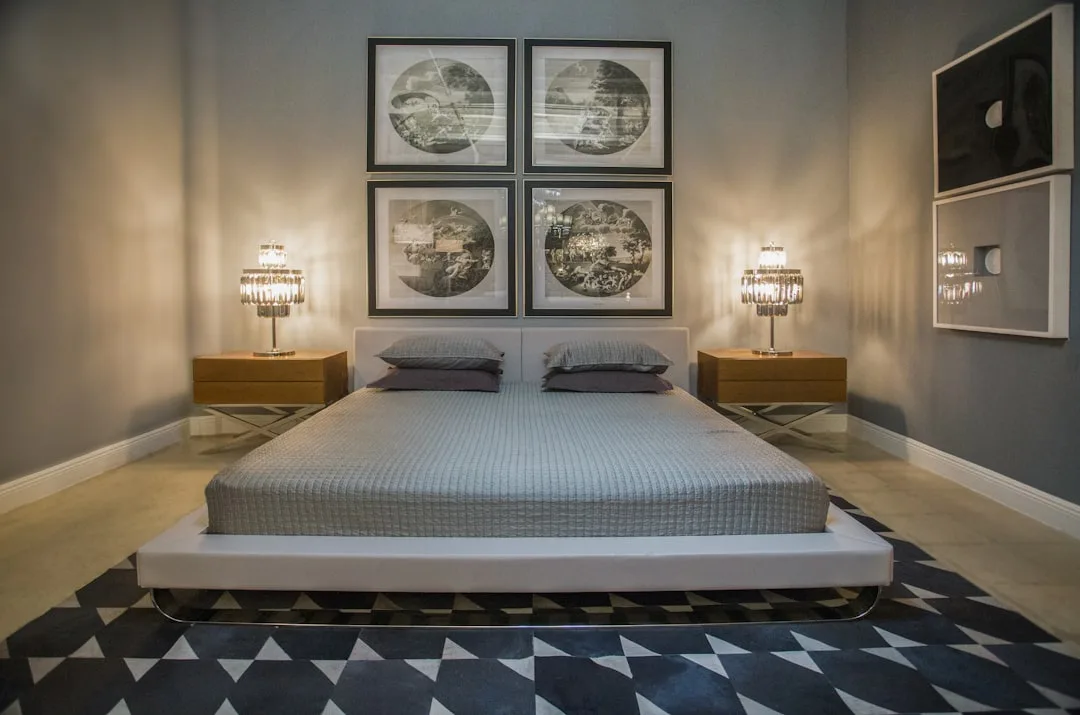
A queen mattress runs 60 inches wide by 80 inches long. That sounds generous until you realize that in a 12×12 bedroom — which is close to the national average size for a primary bedroom in homes built before 1980 — that queen is taking up almost exactly 40 percent of the room’s floor area. There is not much floor left to rug.
This is why 8×10 is the standard queen recommendation and also why it routinely fails in practice. An 8×10 works beautifully in a 13×15 room. In a 12×12, it leaves you with 12 inches of floor on the sides if centered, which is technically within acceptable range but feels like you measured wrong. Which is how most guests will read it.
The pattern I kept seeing in clients’ bedrooms: they’d gone with an 8×10, it looked fine in the purchase photos, and then they’d placed their queen bed on it and realized the nightstands couldn’t sit on the rug without hanging off the edge. So the nightstands ended up half-on, half-off, which looks intentional in a showroom and accidental in your actual house.
Here’s what actually works for queen beds across different room sizes:
- Rooms 12×12 or smaller: Consider a 5×8 or 6×9 placed only under the lower two-thirds of the bed — meaning the rug starts at roughly the midpoint of the mattress and extends past the foot. This is a legitimate styling choice, not a compromise, and it keeps the visual weight where foot traffic actually is.
- Rooms 12×14 to 13×15: An 8×10 works, but position it so the top edge sits 12-18 inches below the headboard wall, not flush against it. This creates breathing room at the head and grounds the bed visually. Nightstands should sit fully on the rug or fully off — pick one and commit.
- Rooms 14×16 and larger: A 9×12 becomes a real option here, and it often produces a better result than an 8×10 in rooms this size. The extra foot of width on each side is the difference between a rug that frames the bed and one that just exists under it.
Something that doesn’t come up enough in queen sizing discussions: the footboard factor. If your queen has a footboard — and a lot of upholstered beds do — the effective length of the bed unit is longer than 80 inches. A footboard can add 4-6 inches of depth. That changes where the foot of the rug needs to land if you want any meaningful traffic zone past the bed. In a bedroom rug size guide built around real furniture rather than bare mattresses, this is essential math: measure your complete bed unit, not just the mattress dimensions listed on the product page.
Wall-to-wall carpet in the adjoining hallway is another variable that shifts queen sizing decisions. When a bedroom opens directly onto carpeted hallway, the visual border at the doorway becomes less important. But if the bedroom has hardwood and opens onto tile — common in apartment layouts — the rug needs to end clearly before the threshold or the eye reads it as an accident rather than a transition. A 5×8 with its edge 8 inches from the door threshold reads intentional. A 9×12 that nearly brushes the threshold looks like the rug belongs in the next room.
Actionable takeaway: For a queen bed in a room under 12×14, place painter’s tape on the floor showing both an 8×10 and a 6×9 footprint before ordering anything. The 6×9 often looks better than the charts suggest it should.
King Beds: When the Rug Has to Work Harder Than the Furniture
A standard king mattress is 76 inches wide by 80 inches long. A California king runs 72 inches wide but stretches to 84 inches. These are not small differences — they affect both rug width and rug length recommendations in ways that the standard “go with a 9×12” advice completely flattens.
For a standard king, the 9×12 recommendation is defensible in rooms that are at least 14×16. In rooms smaller than that, a 9×12 often leaves so little floor border that the room feels blanketed rather than anchored. The rug stops being a zone and starts being a floor covering — which is a different product category entirely.
What I’d actually recommend for king beds by room size:
- Rooms 13×15 or smaller with a standard king: An 8×10 under the lower two-thirds of the bed is preferable to a 9×12 that crowds the walls. Yes, this means the rug doesn’t extend under the headboard zone. That’s fine. The headboard wall isn’t where people walk.
- Rooms 14×16 to 15×18: A 9×12 is correct here. Position it so there’s roughly 14-18 inches of floor at the sides and about 18-24 inches past the foot of the bed. If your nightstands are 24-28 inches wide — which is common for king-scale furniture — they should sit fully on the rug, front legs at minimum.
- Rooms 16×18 and above: A 10×14 is an underused option for king beds in large primary suites. Most people don’t realize this size exists outside custom territory, but several major retailers carry it. In a room that can support it, a 10×14 under a king creates a true room-within-a-room effect that no 9×12 can replicate.
For California kings, the length matters more than people account for. That extra 4 inches of mattress length means your rug needs to extend at least 20-24 inches past the foot of the mattress to have a real traffic zone — which pushes many standard 9×12 rugs to their limit in terms of proportion. If your California king is in a room deeper than 16 feet, a 9×12 will look short. A 9×13 — less common but findable — or a 10×14 is worth considering.
One detail that comes up constantly with king beds: the bed itself is often so wide that it functions almost like a room divider between the two sides. Each sleeper essentially has a distinct behavioral zone. This means a king-sized rug isn’t just serving one side’s morning foot traffic — it’s serving two complete paths, two sets of nightstand approaches, and the foot-of-bed traffic from both angles simultaneously. That’s a lot of functional territory to cover, and it’s why undersizing a king rug reads as such an obvious error in finished rooms. There’s nowhere to hide the mistake.
Actionable takeaway: For a king in a room under 14×16, don’t default to a 9×12. Tape out the footprint first. You may find that an 8×10 positioned under the lower half of the bed does cleaner visual work than a larger rug that eats your wall borders.
The Placement Variables No Size Chart Accounts For

Knowing the right rug size is half the problem. Knowing where to put it is the other half, and the two decisions are connected in ways that most guides treat as separate topics.
The headboard wall gap. This is the space between the top edge of the rug and the wall behind the headboard. Most charts assume the rug slides all the way to the headboard or even slightly under the bed frame at that end. In practice, leaving 12-18 inches of bare floor between the rug’s top edge and the headboard wall creates a more intentional look — it signals that the rug placement was a choice, not a necessity. It also makes it easier to vacuum behind the headboard without wrestling with rug edges.
The nightstand decision. Nightstands either sit fully on the rug, fully off the rug, or front-legs-on. Each produces a different visual effect and a different functional outcome. Fully on: the rug anchors both the bed and the bedside furniture into one unified zone — best for larger rooms where the rug can accommodate the extra width without crowding the walls. Fully off: the nightstands float on hard floor, which works when you want the bedroom furniture to feel lighter and the rug to function specifically as a sleeping zone marker. Front-legs-on: this is the hybrid that looks deliberate in showrooms and accidental in homes. I’d avoid it unless you’re working with a very specific room proportion where the other options genuinely don’t work.
The door swing radius. In bedrooms where the door opens into the room — which is most of them — the door’s swing path may intersect with where a larger rug would land. A door that drags across a rug edge every time it opens will destroy that edge within two years and create an airflow restriction that makes the room feel stuffy. Map your door swing before finalizing rug dimensions, especially in smaller rooms where a 9×12 might technically fit the furniture arrangement but physically conflict with the door.
Ceiling height as a scaling factor. Rooms with 9-foot or higher ceilings can support larger rugs proportionally than rooms with standard 8-foot ceilings, even at identical floor dimensions. Higher ceilings give the eye more vertical space to balance against, which means a rug that would feel overwhelming in a low-ceilinged room feels appropriately scaled in a taller one. If you’re in a 13×15 room with 10-foot ceilings and you’ve been told a 9×12 is too large — it might not be.
Rug pile height and bed frame clearance. High-pile rugs — anything over half an inch — may not slide cleanly under low-profile bed frames, especially platform beds. Before buying a shag or high-pile rug for a bedroom with a platform bed, measure the clearance between the floor and the bottom of the frame. A rug that can’t slide under the frame means the rug edge stops at the frame edge, which changes the visual proportion and creates a rolling-edge problem at the sides of the bed where foot traffic is heaviest.
How to Actually Measure Your Bedroom Before Buying
Every sizing mistake I’ve ever watched a client make started with the same shortcut: they measured the mattress, looked at a chart, and ordered. The room itself never entered the equation until the rug arrived and they were standing in front of it with a rug pad that didn’t fit and return shipping that wasn’t free.
Here’s the measurement sequence that actually works:
Step 1: Measure wall to wall in both directions. Not from furniture to furniture. Wall to wall. Write these numbers down. This is your hard outer boundary.
Step 2: Subtract your border minimums. On each side that’s visible (typically the long sides and the foot of the bed), subtract 18 inches minimum. This gives you your maximum workable rug dimensions. If your room is 12 feet wide (144 inches) and you subtract 18 inches per side, your maximum rug width is 108 inches — which is exactly 9 feet. That tells you a 9×12 would leave minimum acceptable borders, and anything wider is a visual problem.
Step 3: Map your furniture footprints on the floor. Use painter’s tape to mark where the bed sits, where nightstands land, where a dresser or bench at the foot of the bed lives. This takes 20 minutes and saves weeks of regret.
Step 4: Tape your candidate rug sizes. Use a different color tape to mark two or three rug size options within your furniture map. Stand in the doorway and look. Sit on the edge of where the bed would be and look down. Walk from the door to the bed as you would every morning.
Step 5: Check the door swing. Open and close your bedroom door. Note where it travels. Make sure none of your candidate rug sizes land under that arc.
Step 6: Photograph the tape layout. Send it to someone. Fresh eyes on a photo catch proportion problems that familiarity with the room obscures.
This is the process behind any good bedroom rug size guide — not a chart, but a methodology that accounts for the room you actually have rather than the average room the chart was built for.
Bedroom Rug Size Guide: Quick Reference by Bed and Room Size
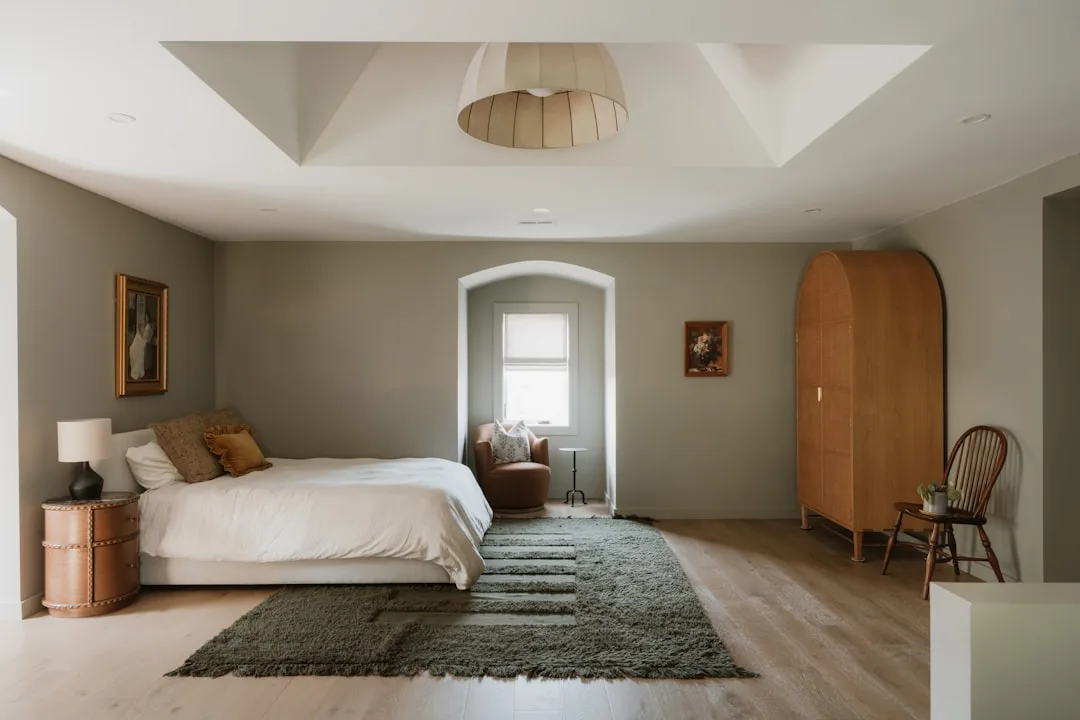
For readers who want the consolidated view after working through the logic above — here it is. These are recommendations built from real room scenarios, not idealized proportions.
| Bed Size | Room Size | Recommended Rug | Placement Notes |
|---|---|---|---|
| Twin | 10×10 to 10×12 | 5×8 | Extend past foot; 18″ floor border on sides |
| Twin | 10×12 to 11×14 | 6×9 | Start 12″ from headboard wall |
| Queen | 11×12 to 12×12 | 5×8 or 6×9 | Under lower two-thirds of bed |
| Queen | 12×14 to 13×15 | 8×10 | 12-18″ from headboard wall; nightstands fully on or fully off |
| Queen | 14×16 and larger | 9×12 | Nightstands fully on rug |
| King (standard) | 13×15 or smaller | 8×10 | Under lower half of bed; skip headboard zone |
| King (standard) | 14×16 to 15×18 | 9×12 | 14-18″ border on sides |
| King (standard) | 16×18 and above | 10×14 | Full room anchor; nightstands fully on |
| California King | 14×16 | 9×12 or 9×13 | Account for 84″ mattress length |
| California King | 16×18 and above | 10×14 | 20-24″ past foot of bed |
Frequently Asked Questions
Should the rug go under the bed or just in front of it?
Both are valid configurations, and the right answer depends on room size and bed height. Positioning the rug so it extends under the lower half or two-thirds of the bed is the most common approach — it keeps the rug anchored by the bed’s weight, which prevents shifting and edge curl. Placing the rug entirely in front of the bed works in very small rooms or when the bed sits low to the ground and there’s genuinely no clearance for rug material to slide underneath. What doesn’t work: a rug that sits entirely behind the headboard plane, which leaves the actual foot-traffic zone on bare floor.
Can I use two smaller rugs instead of one large one for a king bed?
Yes, and this is a more practical solution than people give it credit for. Two 3×5 rugs, one on each side of a king bed, address the functional problem — each sleeper gets a soft landing — without requiring you to find and finance a 9×12 or 10×14. The visual trade-off is that two separate rugs don’t anchor the space the way a single large rug does. If the room also has a bench at the foot of the bed or a seating area, two side rugs can look intentionally layered. In a room with only the bed and nightstands, they tend to look like a workaround.
What’s the minimum rug size that still makes sense under a queen bed?
A 5×8 is the floor, practically speaking. Anything smaller than a 5×8 under a queen stops functioning as a zone and starts functioning as an accent — which is a different product doing a different job. A 5×8 under a queen, positioned under the lower two-thirds of the bed, provides enough surface for both sides of the bed to have a foot landing zone. It doesn’t have the visual anchoring power of an 8×10, but it works. A 4×6 under a queen does not work — it’s narrower than the mattress and creates an immediately apparent visual imbalance.
Does rug material affect sizing decisions?
Indirectly, yes. High-pile or shag rugs read visually larger than their dimensions because the pile catches light and draws the eye. A 6×9 shag in a small room can feel as visually present as an 8×10 flat-weave. This means if you’re considering a high-pile option, you can sometimes size down one increment from what a flat-weave chart would suggest without losing visual weight. The reverse is also true: very thin, flat rugs in muted colors read smaller than their dimensions. If you’re choosing a low-contrast flatweave or a natural fiber rug like jute, the room may absorb it and you’ll want to size up.
How far should the rug extend past the foot of the bed?
At minimum, 18 inches past the end of the bed frame — not the mattress, the frame including any footboard. This gives someone standing at the foot of the bed (making it, getting dressed, looking for something under the bed) a meaningful amount of rug underfoot. Twenty-four inches is better. Anything less than 18 inches past the frame, and the rug functions only for the sides, which is an incomplete solution. If your chosen rug size doesn’t give you 18 inches past the foot, either size up or reposition the rug so more of it extends toward the foot and less slides under the headboard zone.
Should the rug go under the bed or just in front of it?
Both are valid configurations, and the right answer depends on room size and bed height. Positioning the rug so it extends under the lower half or two-thirds of the bed is the most common approach — it keeps the rug anchored by the bed’s weight, which prevents shifting and edge curl. Placing the rug entirely in front of the bed works in very small rooms or when the bed sits low to the ground and there’s genuinely no clearance for rug material to slide underneath. What doesn’t work: a rug that sits entirely behind the headboard plane, which leaves the actual foot-traffic zone on bare floor.
Can I use two smaller rugs instead of one large one for a king bed?
Yes, and this is a more practical solution than people give it credit for. Two 3×5 rugs, one on each side of a king bed, address the functional problem — each sleeper gets a soft landing — without requiring you to find and finance a 9×12 or 10×14. The visual trade-off is that two separate rugs don’t anchor the space the way a single large rug does. If the room also has a bench at the foot of the bed or a seating area, two side rugs can look intentionally layered. In a room with only the bed and nightstands, they tend to look like a workaround.
What’s the minimum rug size that still makes sense under a queen bed?
A 5×8 is the floor, practically speaking. Anything smaller than a 5×8 under a queen stops functioning as a zone and starts functioning as an accent — which is a different product doing a different job. A 5×8 under a queen, positioned under the lower two-thirds of the bed, provides enough surface for both sides of the bed to have a foot landing zone. It doesn’t have the visual anchoring power of an 8×10, but it works. A 4×6 under a queen does not work — it’s narrower than the mattress and creates an immediately apparent visual imbalance.
Does rug material affect sizing decisions?
Indirectly, yes. High-pile or shag rugs read visually larger than their dimensions because the pile catches light and draws the eye. A 6×9 shag in a small room can feel as visually present as an 8×10 flat-weave. This means if you’re considering a high-pile option, you can sometimes size down one increment from what a flat-weave chart would suggest without losing visual weight. The reverse is also true: very thin, flat rugs in muted colors read smaller than their dimensions. If you’re choosing a low-contrast flatweave or a natural fiber rug like jute, the room may absorb it and you’ll want to size up.
How far should the rug extend past the foot of the bed?
At minimum, 18 inches past the end of the bed frame — not the mattress, the frame including any footboard. This gives someone standing at the foot of the bed (making it, getting dressed, looking for something under the bed) a meaningful amount of rug underfoot. Twenty-four inches is better. Anything less than 18 inches past the frame, and the rug functions only for the sides, which is an incomplete solution. If your chosen rug size doesn’t give you 18 inches past the foot, either size up or reposition the rug so more of it extends toward the foot and less slides under the headboard zone.