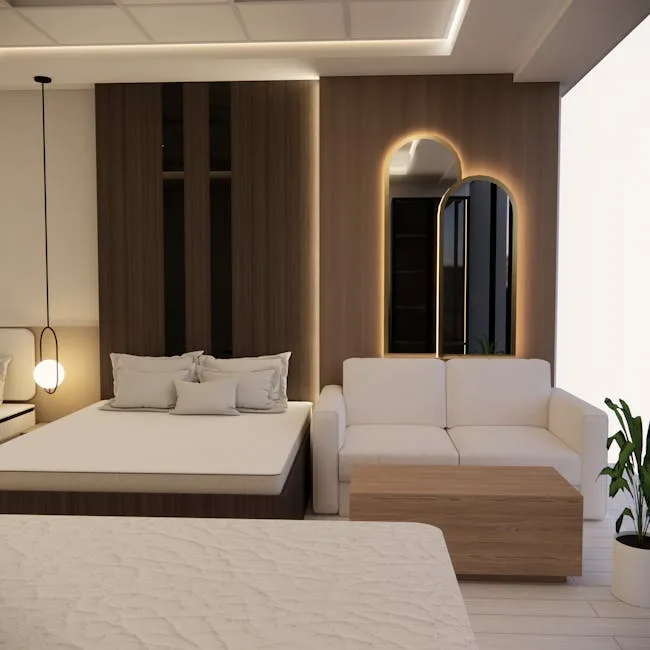
The single most common master bedroom layout mistake has nothing to do with furniture style, paint color, or square footage — it’s that most people place the bed before mapping where the doors swing. I watched this happen in a Wicker Park two-bedroom I was staging years ago: my client had already bought a king, already assembled it, already fell in love with where it sat. Then we measured the en-suite door clearance. The door opened directly into the footboard. She had 14 inches of walking space to get to the bathroom at 2 a.m. The king went back. The lesson stayed.
Quick Answer
The single most common bedroom layout mistake has nothing to do with furniture style, paint color, or square footage — it’s that most people place the bed before mapping where the doors swing.
What follows is not a mood board tutorial. It’s a layout logic system — built from room constraints outward, not from Pinterest inward.
What Is the Best Layout for a Primary Bedroom? (Start Here)
In This Article
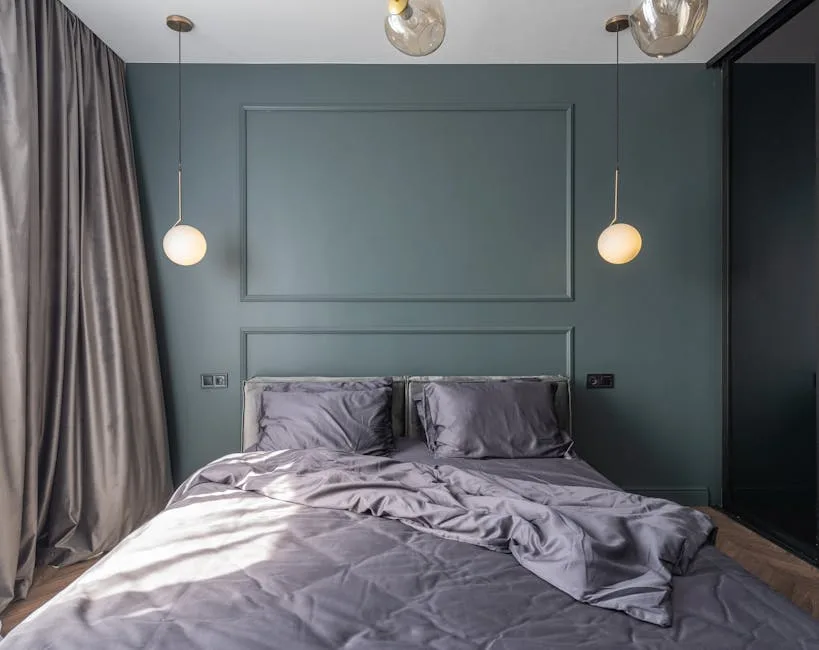
Most layout advice starts with the bed. That’s the wrong starting point. Layout is determined by three fixed constraints: door swing, window placement, and ceiling fixtures — and none of those three things will move because you want a different look. Start with what’s immovable, and furniture placement becomes a narrowing-down process rather than a guessing game.
The average U.S. primary bedroom falls between 200 and 250 square feet. That matters because rooms under 150 square feet operate under entirely different physics than rooms in the 200-plus range. In a 148-square-foot room, you’re making tradeoffs — probably giving up the dresser or the accent chair. In a 220-square-foot room, you have options. Conflating these two realities is why so much generic bedroom advice fails people the moment they apply it.
Room shape matters as much as square footage — often more. A 12×14 room and a 14×14 room have nearly the same square footage. They require completely different furniture strategies. The rectangular room gives you a natural axis; the square room gives you symmetry that can easily tip into institutional blandness if you’re not deliberate about it.
Here’s the sequence that actually works for any master bedroom layout:
- Identify all door swings — entry door, closet doors, bathroom door, and which direction each one opens
- Map window placement — north-facing, south-facing, and how much natural light each brings at what time of day
- Note ceiling fixtures — fan location, light position, and whether they’re centered on the room or off-axis
- Determine aspect ratio — is this room rectangular or square?
- Then, and only then, place the bed
The ceiling fixture issue is one designers rarely mention but homeowners feel constantly. A ceiling fan installed by a builder at the geometric center of the room is not always centered over the sleeping zone — especially in rectangular rooms where the bed occupies one half. If the fan runs overhead while you sleep, great. If it’s spinning over your feet or over empty floor space, the layout and the fixture are in conflict.
Actionable takeaway: Before moving a single piece of furniture, draw your room to scale on graph paper or in a free tool like Roomstyler. Mark every door swing, every window, and every ceiling fixture first. This ten-minute step eliminates the most expensive layout errors.
Where Should a Bed Be Placed in a Primary Bedroom?

Here’s the principle most people get told without the reasoning behind it: place the bed so it faces the doorway. The logic isn’t arbitrary. When you enter a room, your eye moves to the focal point — the thing you see first. In almost every well-designed hotel room in the world, the bed is visible the instant you open the door. That framing creates the sense that the room is organized and intentional. When the bed is tucked sideways against a wall or shoved into a corner, the room reads as an afterthought. Which, spatially, it is.
Never place the bed directly under a window in a northern climate. I learned this one the hard way — not from my own room, but from a client in Lincoln Park who complained she couldn’t sleep past 5:30 a.m. in summer. Her bed sat directly under east-facing windows with no blackout treatment. Sleep researchers at the National Sleep Foundation have noted that light exposure from windows positioned directly above or adjacent to a sleeping position can suppress melatonin production. That’s not an aesthetic problem. It’s a biology problem built into the layout.
Door swing clearance requires a minimum of 24 inches of unobstructed floor space — and this is where en-suite bathrooms create a compounding problem. Most bedrooms with an attached bath have two door swings to account for: the entry door and the bathroom door. Map both arcs before committing to bed placement. I’ve seen bathroom doors that open outward directly into nightstand territory. Nobody thinks about it during the furniture-shopping phase. Everybody feels it at 3 a.m.
Corner placement deserves a direct answer because it keeps coming up. Corner beds — pushed into the room’s corner — only work when both sides remain accessible. A bed where one person climbs over the other every morning isn’t a layout solution. It’s a relationship tax.
The placement hierarchy, in order of priority:
- Faces the doorway — the bed should be visible on entry
- Clears all door swings — entry, closet, bathroom, by at least 24 inches
- Not directly under a window — especially in rooms with eastern or western exposure
- Allows access on both sides — minimum 18 inches on the secondary side, 24–36 on the primary
Actionable takeaway: Stand in your bedroom doorway right now. If you can’t see the headboard clearly from that position, your bed is likely fighting the room’s natural focal wall. That’s worth fixing before you buy another thing.
Room Shape Changes Everything: Rectangular vs. Square Layouts
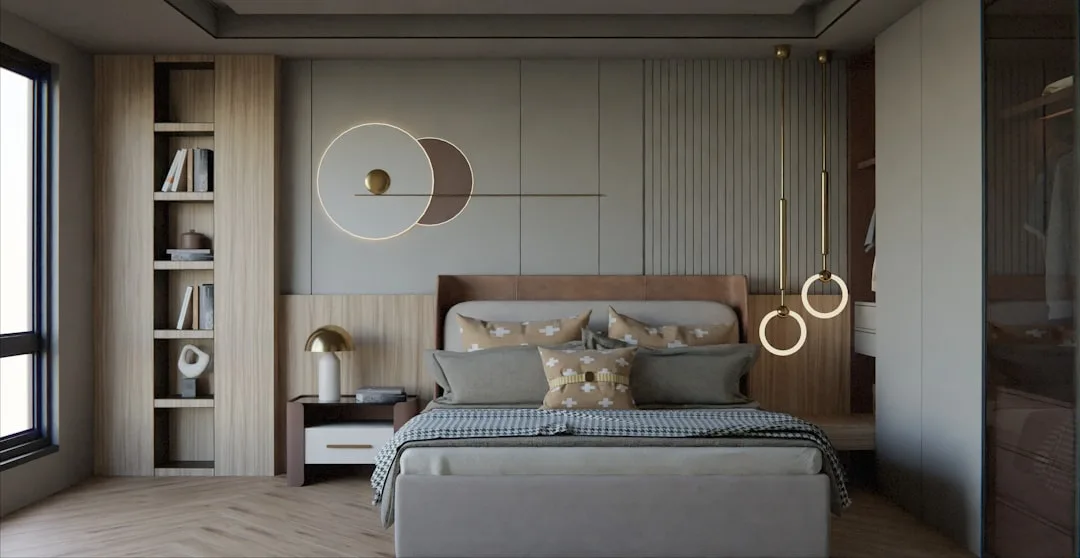
Nobody talks about this enough. The entire body of mainstream bedroom layout advice assumes a rectangular room — specifically, one that’s longer than it is wide by a meaningful margin. The moment you’re working with a square room, that advice becomes actively misleading.
Rectangular rooms (think 11×14, 12×16) have a natural long axis, and the bed should run perpendicular to it. Placing the bed on the short wall creates a natural corridor of space along the sides — room to walk, room to put a chair or a small bench, room to breathe. Placing the bed on the long wall in a rectangular room frees up the short-wall width for a seating zone, which works beautifully in 12×16 or larger rooms but creates a pinched corridor in anything smaller.
Square rooms — 13×13, 14×14 — are genuinely harder. Centering the bed on any wall creates the symmetry you’d see in a mid-range hotel lobby. Fine, but anonymous. The option most designers won’t suggest because it sounds eccentric: diagonal furniture arrangement. A bed placed at a 45-degree angle from the corner, with nightstands flanking it diagonally, creates visual interest that a square room desperately needs. It works because it breaks the rigid geometry of four equal walls and gives the eye somewhere specific to travel.
The diagonal approach isn’t for every square room — it requires a minimum of about 14×14 to avoid the bed eating every walkable inch — but in rooms with that square footage or more, it transforms a layout that would otherwise read as a converted guest room into something that actually looks designed. The tradeoff is floor space behind the headboard, which becomes a triangle of dead zone. Tuck a small plant or a floor lamp there and it reads intentional rather than accidental.
What doesn’t work in square rooms: pushing all the furniture to the perimeter. This is the instinctive move — clear the center, line the walls — and it produces a room that feels like a waiting area. Square rooms need furniture pulled slightly away from walls, with the bed claiming the dominant wall with confidence rather than hugging it flat.
A well-executed master bedroom layout in a square room should create at least one distinct zone beyond the sleeping area. Even in a 13×13, a single armchair with a floor lamp near the window creates a reading zone that signals the room was designed rather than assembled. That distinction is visible immediately on entry and requires no additional square footage — only intentional furniture grouping.
Actionable takeaway: Measure your room before deciding it’s “too small” for a seating zone. Most 13×13 rooms have space for a chair if the dresser moves to the closet or the hallway.
The Furniture Pieces That Wreck Layouts (and What to Do Instead)

Oversized bedroom furniture is the single most preventable layout problem I encounter. People buy dressers that are 60 inches wide for rooms that are 11 feet across. They buy six-drawer chests that stand 54 inches tall and block the only natural light source in the room. They buy platform beds with built-in storage that are so low to the ground the space reads as compressed even in a room with nine-foot ceilings. These are not style errors. They are proportion errors, and proportion is a layout issue before it’s anything else.
The pieces that most frequently destroy a well-planned master bedroom layout, ranked by frequency:
1. The oversized dresser. A dresser wider than 48 inches in a room under 200 square feet will almost always block a door, a window, or a traffic path. The fix isn’t always to buy a smaller dresser — it’s sometimes to move the dresser out entirely. Built-in closet organization systems handle folded clothing more efficiently than a freestanding dresser, and they return the floor space to the room.
2. The bench at the foot of the bed. Foot-of-bed benches are a decorator’s tool that becomes a homeowner’s obstacle. In any room where the distance between the footboard and the opposite wall is under 42 inches, a bench eliminates functional walkway. Pull it out, store it, and notice how much larger the room feels immediately.
3. The matching nightstand set. Matched nightstands sound like a cohesion strategy. In practice, when both nightstands are 28 inches wide, they consume 56 inches of wall space on either side of the bed — space that in smaller rooms is simply not available without compressing the walkway below the 24-inch minimum. The solution is asymmetrical nightstands: a standard table on the primary side, a wall-mounted shelf on the secondary side. It reads as intentional, and it recovers 14–20 inches of floor space.
4. The area rug that’s too small. This is a layout error even though it sounds like a styling error. A rug that only fits under the bed frame — with nothing extending on either side — makes the bed look like it’s floating in an undefined zone rather than anchoring the room. The minimum rug size for a king bed in a well-proportioned room is 9×12. For a queen, 8×10. If you can’t fit those dimensions without the rug running under the dresser or the door swing, go rug-free and use the floor surface itself as the grounding element.
Actionable takeaway: The fastest layout fix in most bedrooms isn’t rearranging furniture — it’s removing one piece entirely. Identify the single item that blocks a door swing, a window, or a walkway, and pull it out for one week. You’ll know within 48 hours whether you miss it.
Frequently Asked Questions
What is the ideal master bedroom layout for a 12×14 room?
In a 12×14 room, the bed should sit on the 12-foot wall, centered, with nightstands on each side. This leaves approximately 6–7 feet of open floor space from the footboard to the opposite wall — enough for a small dresser or a two-drawer chest without blocking the entry door. Avoid placing any furniture taller than 48 inches on the 14-foot walls unless it’s flush against a wall with no door or window proximity. The 12×14 room doesn’t have enough square footage to support a seating zone and a full dresser simultaneously — choose one.
Should the bed face the door in a master bedroom layout?
Yes, with one qualifier. “Facing the door” means the headboard wall is the wall most visible from the doorway — not that the footboard points directly at the door with no clearance. The goal is sightline, not alignment. When you open the bedroom door, you should see the headboard and the bed framed naturally. If the first thing visible is the side of the bed or a nightstand, the layout is working against the room’s natural focal point.
How much space do you need on each side of a bed?
The functional minimum is 18 inches on the secondary side (the side less frequently used for entry and exit) and 24 inches on the primary side. If a bathroom door, closet door, or entry door opens into either of those clearance zones, the walkway measurement takes priority over the 18-inch minimum. In rooms where 18 inches isn’t achievable on both sides, push the bed against the secondary wall entirely — but only if both occupants don’t need independent access.
Can you put a king bed in a 12×12 room?
Technically, yes. Practically, it’s a significant compromise. A standard king is 76 inches wide and 80 inches long. In a 144-square-foot room with 12-foot walls, placing a king leaves 22 inches on one side and 12 inches on the other — below the functional minimum on the secondary side. The room will feel crowded and the layout will require removing the dresser entirely. A California king (72 inches wide, 84 inches long) saves 4 inches in width but adds 4 inches in length, making it a lateral trade rather than an improvement. In most 12×12 rooms, a queen is the correct bed size.
What’s the biggest master bedroom layout mistake people make when moving into a new home?
Placing furniture before measuring door swings. Every other layout error is recoverable — a dresser in the wrong spot, a rug that’s too small, nightstands that don’t match the scale of the bed. But a bed positioned without accounting for door clearance creates a compounding problem: the door can’t open fully, the traffic path is compromised, and moving the bed means rethinking every other piece in the room simultaneously. Measure every door swing, in every direction, before a single piece of furniture comes through the front door.
What is the ideal master bedroom layout for a 12×14 room?
In a 12×14 room, the bed should sit on the 12-foot wall, centered, with nightstands on each side. This leaves approximately 6–7 feet of open floor space from the footboard to the opposite wall — enough for a small dresser or a two-drawer chest without blocking the entry door. Avoid placing any furniture taller than 48 inches on the 14-foot walls unless it’s flush against a wall with no door or window proximity. The 12×14 room doesn’t have enough square footage to support a seating zone and a full dresser simultaneously — choose one.
Should the bed face the door in a master bedroom layout?
Yes, with one qualifier. “Facing the door” means the headboard wall is the wall most visible from the doorway — not that the footboard points directly at the door with no clearance. The goal is sightline, not alignment. When you open the bedroom door, you should see the headboard and the bed framed naturally. If the first thing visible is the side of the bed or a nightstand, the layout is working against the room’s natural focal point.
How much space do you need on each side of a bed?
The functional minimum is 18 inches on the secondary side (the side less frequently used for entry and exit) and 24 inches on the primary side. If a bathroom door, closet door, or entry door opens into either of those clearance zones, the walkway measurement takes priority over the 18-inch minimum. In rooms where 18 inches isn’t achievable on both sides, push the bed against the secondary wall entirely — but only if both occupants don’t need independent access.
Can you put a king bed in a 12×12 room?
Technically, yes. Practically, it’s a significant compromise. A standard king is 76 inches wide and 80 inches long. In a 144-square-foot room with 12-foot walls, placing a king leaves 22 inches on one side and 12 inches on the other — below the functional minimum on the secondary side. The room will feel crowded and the layout will require removing the dresser entirely. A California king (72 inches wide, 84 inches long) saves 4 inches in width but adds 4 inches in length, making it a lateral trade rather than an improvement. In most 12×12 rooms, a queen is the correct bed size.
What’s the biggest master bedroom layout mistake people make when moving into a new home?
Placing furniture before measuring door swings. Every other layout error is recoverable — a dresser in the wrong spot, a rug that’s too small, nightstands that don’t match the scale of the bed. But a bed positioned without accounting for door clearance creates a compounding problem: the door can’t open fully, the traffic path is compromised, and moving the bed means rethinking every other piece in the room simultaneously. Measure every door swing, in every direction, before a single piece of furniture comes through the front door.