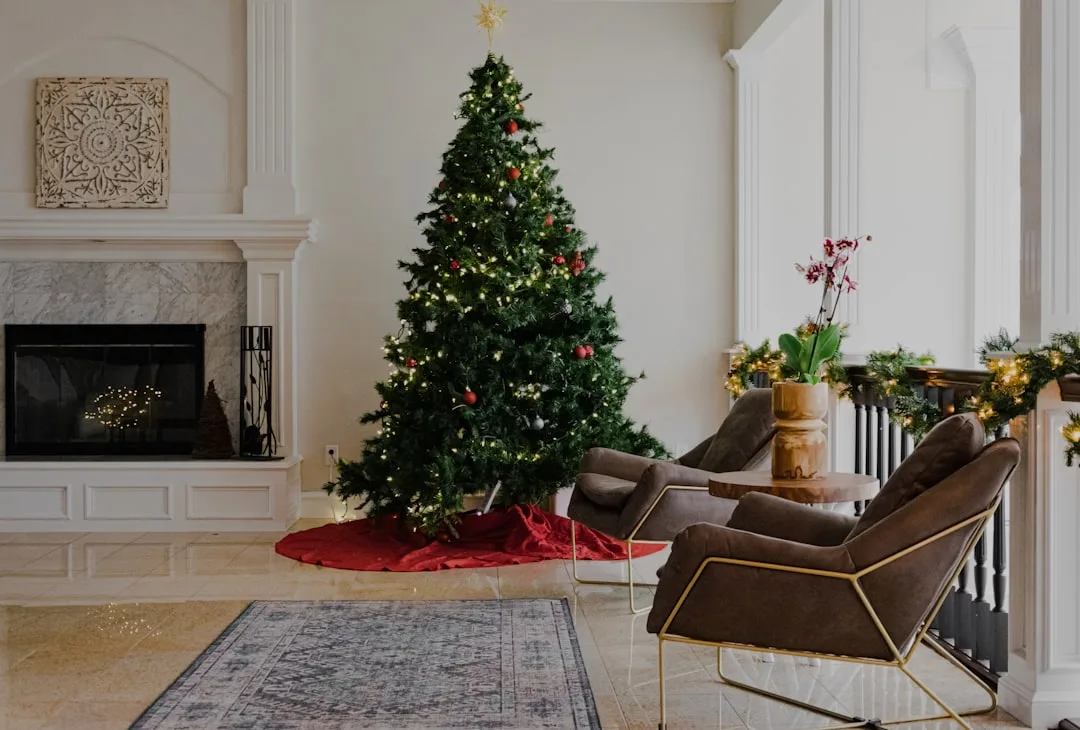
The average home gets 47 new decorations added at Christmas — and most rooms end up looking busier, not better, because of it. Not more magical. Not warmer. Just louder. If you’ve been searching for christmas room decor ideas that actually work — not just look good in a flat-lay photo — the problem is rarely a shortage of ideas. It’s a shortage of structure. I spent eleven years watching this happen in client after client’s home: smart people with good taste making the same fundamental error, which is treating Christmas decorating as an additive exercise rather than a design one. By December 20th, every surface had something on it and the rooms felt vaguely anxious.
Quick Answer
The average home gets 47 new decorations added at Christmas — and most rooms end up looking busier, not better, because of it.
What follows isn’t a list of things to buy. It’s a set of structural moves — decisions about where the eye goes, what does the heavy lifting, and what stays off the shelf entirely. Get these right and you can spend $60 on decorations and feel like you spent $600. Get them wrong and no amount of garland fixes it.
Why Most Festive Rooms Fall Flat (And What to Fix First)
In This Article
- Why Most Festive Rooms Fall Flat (And What to Fix First)
- 1. Choose a Color Direction That Feels Current, Not Dated
- 2. The Focal Point Move: One Statement Piece Per Room
- 3. Light Before Decoration — Always
- 4. Bring in Texture Before You Bring in More Objects
- 5. The Mantel as a Composition, Not a Collection
- 6. The Entryway Sets the Tone for the Whole House
- 7. How to Handle the Christmas Tree Without Losing the Room
- 8. Dining Room: The Table Is the Decoration
- 9. The Rooms Nobody Decorates (And Why They Should)
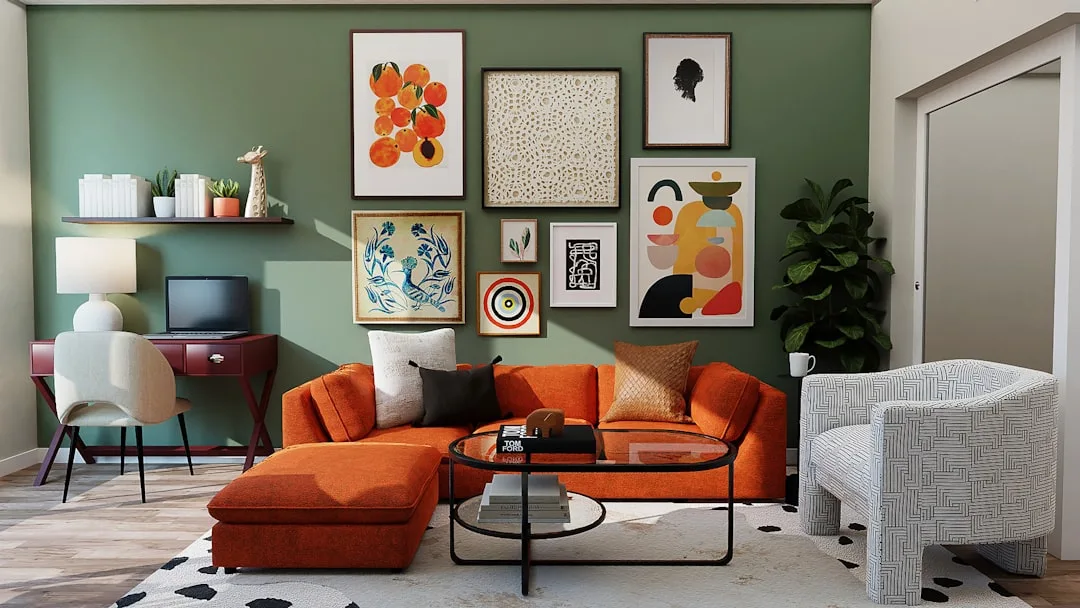
Here’s what I kept seeing, year after year, in apartments across Chicago’s Wicker Park and in Upper West Side co-ops in New York: people would bring out their holiday boxes, put everything on every surface, stand back, and feel vaguely disappointed. The room looked decorated. It did not look designed. The distinction sounds precious until you live with both versions and understand, viscerally, why one feels warm and one feels like a gift shop.
The core mistake is decorating without a visual anchor — a single dominant element that the eye travels to first, that gives everything else permission to exist in relation to it. Without that anchor, every ornament, candle, and sprig of holly competes for attention equally, and the room reads as noise. You don’t feel festive in that room. You feel vaguely overstimulated and slightly stressed, though you might not be able to say why.
Before you touch a single decoration, do this one audit: stand in the doorway of each room and identify what your eye goes to first naturally — before Christmas, with everything neutral. That’s your focal point. In most living rooms it’s a fireplace or a primary sofa wall. In dining rooms, it’s the table. In bedrooms, it’s the bed. Whatever that natural anchor is, that’s where your primary festive investment goes. Everything else — and I mean everything — subordinates to it.
The ‘decorated vs. designed’ gap also shows up in how people think about restraint. Removing non-seasonal items from a shelf before adding holiday pieces is a step most people skip entirely, which means they’re layering Christmas on top of everyday clutter. The result isn’t festive; it’s just more stuff. One honest edit — pulling out the books, the random candles, the framed photos that live on a shelf year-round — does more for a room than adding twelve new ornaments.
One thing worth addressing directly: a pattern in the industry shows that a significant majority of homeowners describe their holiday decor as feeling cluttered rather than intentional, and the consistent diagnosis from professional stagers is the same — no defined focal anchor in the room. That number rings true to everything I witnessed in real client spaces. Clutter isn’t a personality trait. It’s a structural problem with a structural solution.
Actionable takeaway: Before this season’s boxes come out, spend ten minutes in each room removing — not adding. Pull one-third of the everyday objects off shelves and surfaces. What you create is space for seasonal items to breathe, which is the actual condition that makes a room feel intentional.
1. Choose a Color Direction That Feels Current, Not Dated
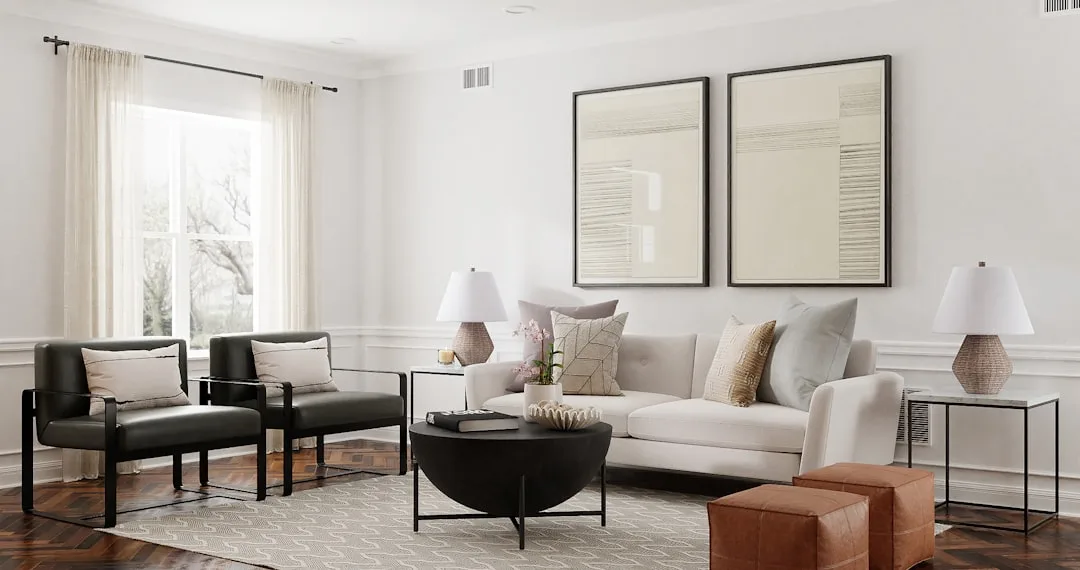
Red and green work. They’ll always work. But “works” and “feels considered” are different things, and if your apartment already has warm wood tones, cream walls, and linen furniture, dropping traditional Christmas red into it tends to fight rather than collaborate with what’s already there.
The broader shift I’ve been watching in design — and that clients started asking about explicitly around 2023 — is toward what gets loosely called “quiet luxury”: palettes that are rich without being loud, seasonal without being costumed. Pantone’s broader directional trend toward earthy, muted tones has been pushing seasonal palettes in the same direction. Think dusty sage, cognac, burnished copper, and antique gold rather than holly red, Kelly green, and shiny silver. Deep plum reads as genuinely festive without triggering the “this looks like a department store” response that primary-color Christmas sometimes produces.
The 60-30-10 rule — a basic interior design principle — translates cleanly to seasonal decorating:
- 60% dominant base: Your existing room colors and neutrals (cream, warm grey, natural linen). These don’t change.
- 30% secondary seasonal tone: The main Christmas accent — a deep plum velvet throw, a cognac-toned garland, dusty sage ribbon threaded through a wreath.
- 10% metallic accent: Antique gold, burnished copper, or oxidized silver in small, concentrated doses — a candle holder, a few ornaments, a picture frame.
The mistake I see constantly is inverting that ratio — drowning a room in Christmas red when the room’s bones are neutral. The seasonal color should feel like a warm layer pulled over the room, not a rebrand.
One practical note: terracotta has moved convincingly into seasonal decorating. A terracotta-and-cream palette with deep green and matte gold hits genuinely festive while looking nothing like every other Christmas room on Pinterest. If your existing decor runs warm — warm wood, amber light, earthy tones — this direction will feel like a natural extension of your space rather than an annual costume.
Actionable takeaway: Pull one item from your existing room — a cushion, a throw, a bowl — that represents the dominant color in your space. Build your seasonal palette to complement that item first, not to match a Christmas aesthetic in the abstract.
2. The Focal Point Move: One Statement Piece Per Room
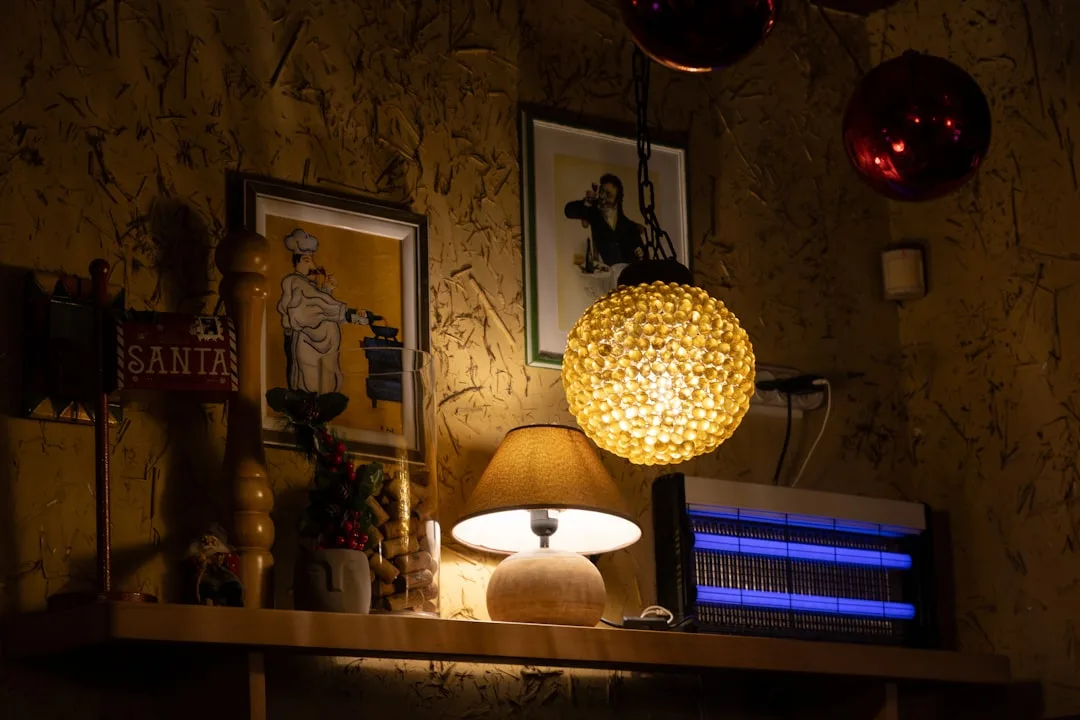
I once watched a client spend $800 on a collection of coordinated decorations for her living room — matching tree skirt, six coordinating throw pillows, three garlands in the same ribbon-and-pine style, a tabletop tree for the console, miniature versions of everything for the side tables — and the room became genuinely unpleasant to sit in. There was nowhere for the eye to rest. Everything announced itself at the same volume and none of it landed.
The principle that actually works is this: one dominant, two supporting. One hero element carries roughly 60% of the room’s visual weight. Two secondary pieces balance it without competing. Everything else recedes into background texture. Interior designers apply this rule year-round, but it becomes critical at Christmas because the instinct to add keeps compounding.
In practice, here’s what this looks like per room:
- Living room: The tree or the fireplace mantel is the hero. Choose one. If you have both, pick which one leads and let the other support. A fully dressed mantel in a room with a decorated tree means you have two heroes competing, and neither wins. If the tree is your statement piece, keep the mantel understated — a few pillar candles, some greenery, nothing that shouts back at the tree. If the mantel is the hero, the tree can be simpler: fewer ornaments, a single ribbon, lights only.
- Dining room: The table is always the hero. A well-set Christmas table — a long runner, a considered centerpiece, candlelight at the right height — does more for a dining room than decorating every surface in the space. Keep the sideboard minimal. A single arrangement, a pair of candles, nothing more.
- Bedroom: The bed is the hero. A seasonal throw in a deep, rich color — forest green velvet, burgundy wool, cognac linen — across the foot of the bed signals the season without turning the room into a display. Resist the urge to add seasonal pillows, a wreath on the mirror, and ornaments on the nightstand. One move, done well, is enough.
The strongest christmas room decor ideas aren’t about more pieces — they’re about understanding which single piece in each room earns the right to be looked at first, and then ruthlessly protecting that piece’s visual authority by keeping everything around it quieter.
3. Light Before Decoration — Always
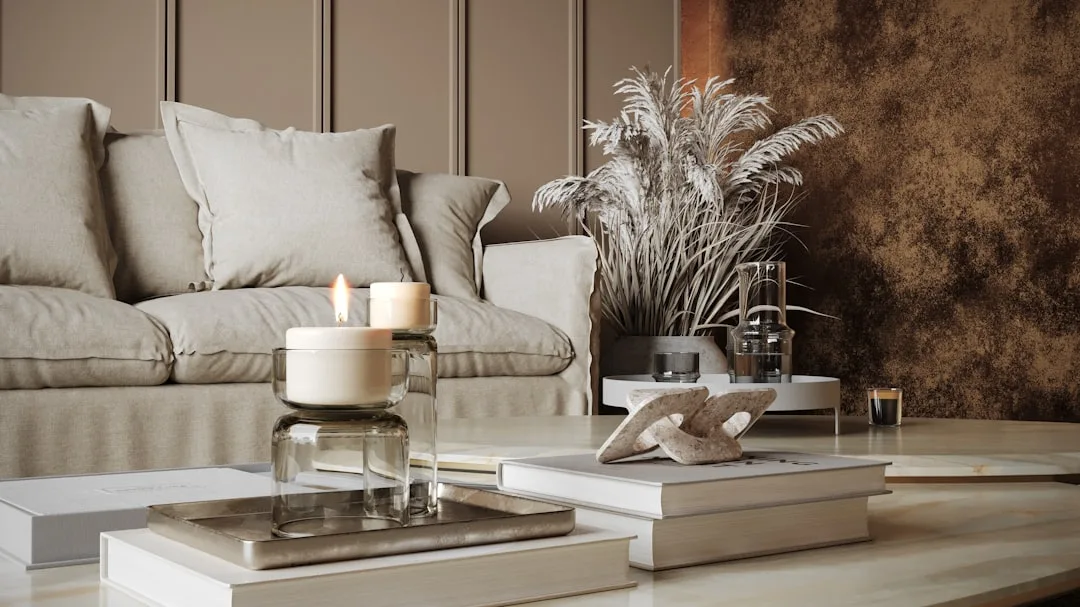
If I had to reduce eleven years of holiday staging advice into one sentence, it would be this: fix the light before you add a single ornament. Decoration placed in bad light looks like decoration. The same piece placed in warm, layered light looks like atmosphere.
The specific problem at Christmas is that most people add string lights and candles to a room that still has its overhead fixtures running at full brightness. The result is that the warm, ambient sources — the ones that create the actual feeling of festivity — get drowned out by the flat, even wash of overhead lighting. The ornaments sparkle less. The greenery looks flat. The candles barely register.
The fix is almost embarrassingly simple: dim the overheads or turn them off entirely once the seasonal lighting is in place. Then assess what you actually have. In most rooms, this single change — swapping overhead dominance for layered, lower-light sources — transforms the feeling more dramatically than any decoration you could add.
Specific sources that work in every room:
- Warm-toned string lights (2700K or lower): The color temperature matters enormously. Cool white string lights read as clinical, not cozy. Warm white or amber-toned lights create the soft glow that reads as festive. If your existing string lights are cool white, this is worth replacing.
- Pillar candles in grouped arrangements: Three candles at varying heights on a styled tray or wooden board read as intentional. One candle in a holder reads as an afterthought. The grouping is the design move.
- A lamp you already own, repositioned: Moving a floor lamp from its usual corner into a position that washes light behind the tree or up a decorated wall costs nothing and changes everything. Backlighting a tree — placing a lamp behind it rather than relying solely on the tree’s own lights — creates depth and dimensionality that front-lit trees never achieve.
One note on candles and safety: battery-operated pillar candles have reached a quality level where, in photographs and at normal sitting distance, they’re genuinely indistinguishable from real ones. For mantels above working fireplaces, high shelves, or rooms with small children, they’re not a compromise — they’re the correct choice.
4. Bring in Texture Before You Bring in More Objects
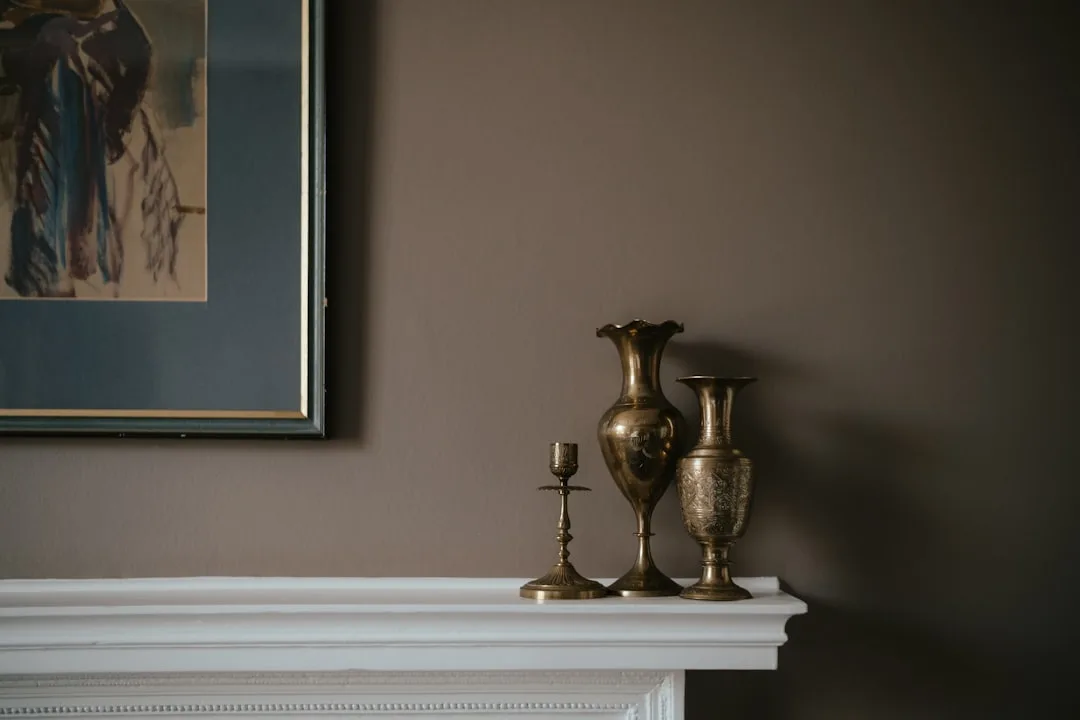
The rooms that photograph well for holiday content and the rooms that feel genuinely warm and festive are the same rooms — and they share one consistent quality that has nothing to do with how many ornaments are in them. They’re layered with texture.
Texture is what converts a decorated room into a lived-in, warm room. Smooth, hard surfaces — lacquered ornaments, glass vases, shiny ribbon — register visually but don’t create the physical sense of warmth and comfort that makes a space feel like a place you want to be in December. Soft, tactile materials — wool throws, velvet cushions, knitted stockings, linen napkins, raw wood, dried botanicals — do the heavy lifting that objects alone cannot.
The practical application in the context of christmas room decor ideas is to audit your decorations by material before you place them:
- Add one soft textile per room before adding any hard decorations. A wool throw over the arm of a sofa. A linen table runner on the dining table. A velvet cushion on a bedroom chair. These set the textural ground that everything else will read against.
- Mix matte and reflective surfaces deliberately. A matte ceramic bowl of pinecones next to a burnished copper candleholder. A rough-hewn wooden tray holding glass ornaments. The contrast is what creates visual interest — not the quantity of objects, but the deliberate alternation between surfaces that absorb light and surfaces that reflect it.
- Include something organic and imperfect. Dried orange slices, eucalyptus branches, cinnamon sticks in a bundle, pinecones gathered on a walk — anything with an irregular, natural surface introduces a visual texture that manufactured decorations cannot replicate. One organic element per vignette changes its quality entirely.
5. The Mantel as a Composition, Not a Collection
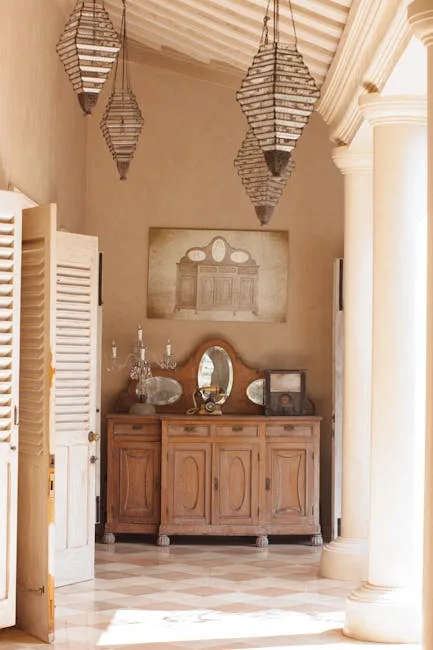
A mantel decorated for Christmas is one of the most common images in holiday design — and one of the most consistently mishandled in real homes. The problem is almost always the same: people treat the mantel as a shelf to fill rather than a surface to compose. They add things until it looks full. Full and composed are opposite conditions.
A composed mantel has a clear structure: one tall element that establishes height, middle-ground elements that transition to the surface, and foreground elements at the mantel’s edge that ground the arrangement. Every piece has a deliberate position in that hierarchy. When you achieve this, the mantel reads as a single unified statement. When you don’t, it reads as a collection of separate things that happen to share the same surface.
Practical guidelines for a composed Christmas mantel:
- Establish height first. A large wreath hung above the mantel, a tall arrangement of branches, a pair of tall candlesticks — something that draws the eye upward and sets the vertical scale of the composition. Without height, a mantel arrangement looks compressed and forgettable.
- Work in odd numbers. Three candles. Five ornaments. One large piece flanked by two smaller ones. Even numbers create symmetry that tends to read as formal and static; odd numbers create visual tension and movement.
- Leave deliberate negative space. This is the step most people skip because it feels like incompleteness. It isn’t. A mantel that’s 70% occupied with one-third of the surface intentionally clear reads as curated. A mantel that’s 100% occupied reads as full.
- Ground the arrangement with something horizontal. A long, low garland along the mantel’s length, a wooden board, a tray — something that runs horizontally anchors the vertical elements and unifies the composition.
One material note: fresh greenery on a mantel above a working fireplace dries quickly and becomes a fire hazard within two weeks. If you want the look of fresh greenery for the full season, either replace it mid-December or use high-quality faux alternatives that photograph and read the same way at room distance.
6. The Entryway Sets the Tone for the Whole House

Every client I worked with who had a genuinely impressive Christmas home shared one quality: their entryway was decorated as seriously as their living room. This is counterintuitive because entryways are transient spaces — people pass through rather than sit in them — which leads most homeowners to deprioritize them in favor of the main living areas.
The problem with that logic is that the entryway is the first room guests experience and the room that establishes their perceptual frame for everything that follows. A beautiful living room that follows an underdressed entryway creates a disconnection — the guest subconsciously adjusts expectations downward before they reach the space you’ve worked hardest on. An entryway that’s genuinely considered, even in a small space, primes the guest to receive everything else as intentional.
For small entryways where space is limited:
- A wreath on the interior side of the door reads differently from outside — it’s the first thing guests see when they enter and creates an immediate sense of enclosure and welcome.
- A single, excellent-smelling element — a cedar and clove candle, a bowl of spiced potpourri, fresh eucalyptus — engages a sensory layer that visual decoration alone cannot. Smell is faster and more emotionally direct than sight. A room that smells right feels festive before the eye has registered the decorations.
- One height element: A tall vase of branches, a floor-standing lantern, a slim Christmas tree — anything that uses vertical space rather than floor space in what’s usually a constrained area.
The entryway logic applies to the transition from exterior to interior as well. A well-chosen doormat, a potted arrangement on a front step, or a wreath on the exterior door extends the decorative intention outward and completes the first impression from the moment a guest approaches.
7. How to Handle the Christmas Tree Without Losing the Room
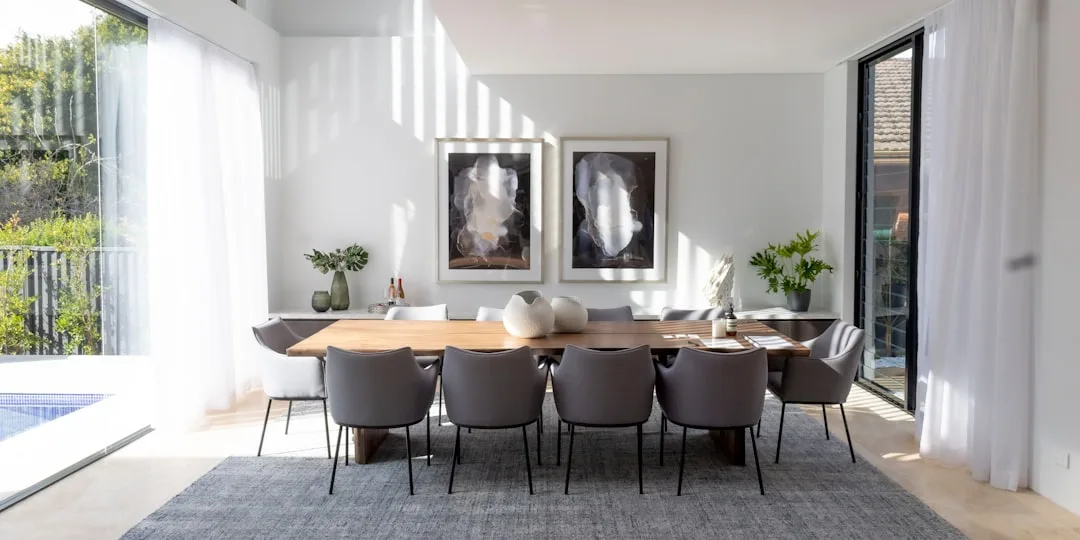
The tree is where most christmas room decor ideas either succeed or unravel the entire space. It’s the single largest decorative element in most homes during December, which means its relationship to the room — its size, its placement, its density, its color palette — determines whether the room holds together or collapses.
The most common tree mistake isn’t bad ornaments. It’s a tree that’s the wrong scale for the room. A tree that’s too small for a high-ceilinged living room looks apologetic. A tree that’s too large for a modest apartment crowds the furniture and creates a spatial anxiety that no amount of beautiful ornaments corrects. The general rule: the tree’s height should reach to within 12 inches of the ceiling in rooms with standard 8-foot ceilings. In rooms with higher ceilings, the tree should feel like it belongs in the space, not like it’s dwarfed by it.
On ornament strategy:
- A single-tone ornament approach — all one color in varying finishes and textures — almost always reads as more sophisticated than a multi-color mix. All matte and shiny gold. All white and silver. All deep green and bronze. The textural variation within a single color family creates visual interest without the visual noise of competing colors.
- Vary the scale of ornaments deliberately. A tree hung only with similarly-sized ornaments reads as flat. Mixing large statement pieces (4–6 inches) with medium ornaments and very small fill pieces creates the sense of depth that makes a tree look professionally dressed.
- The ribbon rule: Ribbon threaded through a tree rather than hung as loops or bows is the single technique that most dramatically separates trees that look designed from trees that look home-decorated. Use wired ribbon and push it deep into the branches, letting it emerge and disappear — it creates movement and connects the ornaments into a unified composition.
8. Dining Room: The Table Is the Decoration
The dining room is the space where christmas room decor ideas have the highest return on investment per dollar and per effort — because one well-considered table transforms the entire room without touching a single wall or surface beyond the table itself.
The centerpiece is where most people start and where most people go wrong — specifically, by choosing arrangements that are too tall. A centerpiece that sits above seated eye level (roughly 12–14 inches for most people at a dining chair) cuts the table in half visually and prevents guests from seeing each other across it. This is such a consistent problem that most professional event designers treat “below 12 inches or above 24 inches” as the only acceptable range — low enough to see over, or tall enough that sightlines pass under the arrangement.
Elements of a Christmas table that consistently work:
- A long, low runner of greenery as the base — either fresh or high-quality faux. Eucalyptus, pine, and rosemary all hold well and smell extraordinary. Lay this first as the foundation, then build everything else on top of it.
- Candlelight at multiple heights. Three taper candles in varying heights at the center. Votive candles or tea lights scattered along the runner’s length. The multiple levels of light create a warmth and dimensionality that a single candelabra cannot achieve.
- One material that elevates the whole: A set of linen napkins. A set of matching napkin rings in a considered material — hammered brass, wooden rings, dried orange slices tied with twine. The napkin treatment is the detail guests notice at close range, and it signals care in a way that large-scale decorations cannot.
9. The Rooms Nobody Decorates (And Why They Should)
The kitchen, the home office, the bathroom — these are the rooms that typically get skipped entirely in holiday decorating, and skipping them creates an inconsistency that undermines the overall effect of everything else. When guests move through a house that’s carefully dressed in the main rooms but completely undecorated in transitional and secondary spaces, the festive feeling doesn’t travel with them. It exists only in the rooms you’ve designated as important.
The solution isn’t full decoration in every room. It’s one intentional gesture per overlooked space:
- Kitchen: A bunch of fresh rosemary and eucalyptus tied with twine and hung from a cabinet knob. A wooden bowl of clementines and cinnamon sticks on the counter. A single pillar candle on the windowsill. None of these require a design plan or significant budget — they require only the decision to include the kitchen at all.
- Bathroom: Fresh greenery on the edge of the sink or over a mirror bracket. A small arrangement of dried botanicals. A seasonal hand soap. The bathroom is a room where guests spend time alone and at close range, which makes thoughtful small details land harder than they would in a larger, more visually busy space.
- Home office or study: A small wreath hung on the back of the door. A single candle on the desk. A seasonal coaster under the coffee cup. The gesture acknowledges the season without interfering with the room’s function.
The through-line in all of these is that the gesture needs to be appropriate to the room’s scale and function. A heavily decorated kitchen looks as wrong as an undecorated one — the decoration competes with function and creates visual stress in a space that’s already busy. One or two small, well-chosen elements that acknowledge the season is exactly the right amount.
The most effective christmas room decor ideas aren’t about the decorations themselves — they’re about the decisions made before and around those decorations. Where the focal point sits. What gets removed to make room for what gets added. How the light is handled before the first ornament goes up. These structural choices determine the quality of the result more than the budget, the number of pieces, or how faithfully you’ve followed any particular aesthetic. Get the structure right and the decorations take care of themselves.