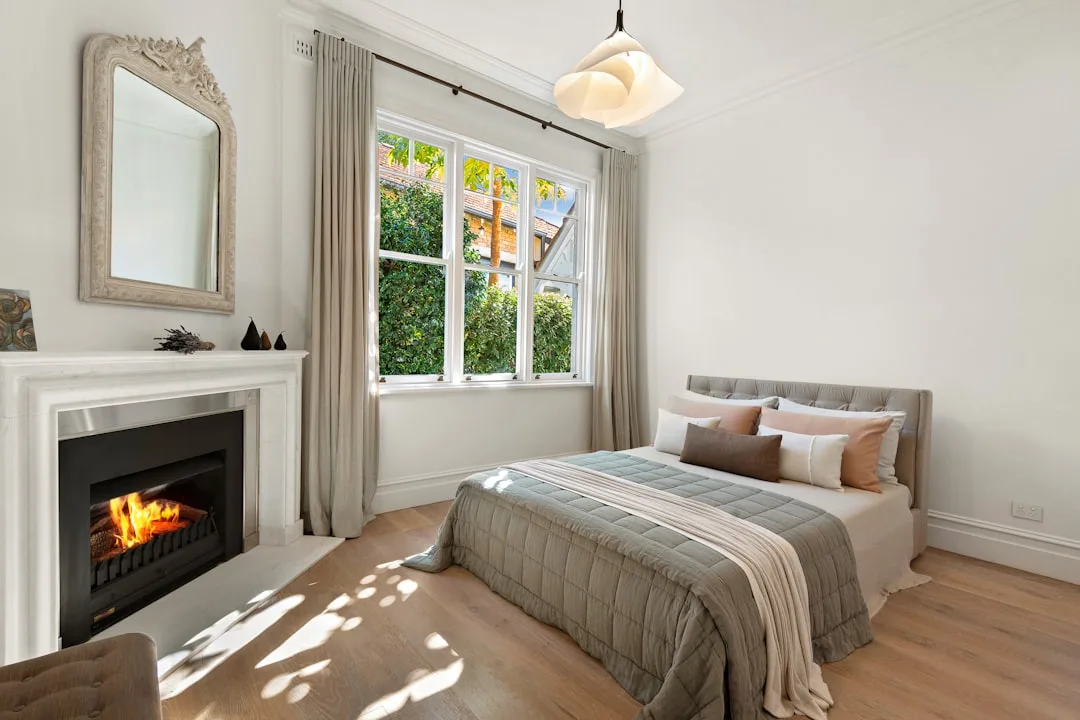
A 10×10 room hands you exactly 100 square feet — less than a standard parking space — and somehow you’re expected to fit a bed, storage, and a welcome-worthy atmosphere inside it. Most guest bedroom decorating ideas for small spaces respond to this challenge by telling you to paint everything white, buy matching nightstands, and add a plant. I spent eleven years watching that advice fail in real apartments, real spare rooms, with real clients who came back six months later wondering why their carefully decorated space still felt wrong. The problem isn’t the room. It’s the framework being applied to it.
Quick Answer
A 10×10 room hands you exactly 100 square feet — less than a standard parking space — and somehow you’re expected to fit a bed, storage, and a welcome-worthy atmosphere inside it.
Why Most Decorating Advice for Small Guest Spaces Actually Backfires
In This Article
- Why Most Decorating Advice for Small Guest Spaces Actually Backfires
- 1. What Colors Actually Work in a Compact Guest Space (Beyond ‘Go Light’)
- 2. The Best Bed Solutions for a Tight Floor Plan — Ranked by Real-World Tradeoffs
- 3. Storage That Doesn’t Eat the Room Alive
- 4. Lighting Layers That Make a Small Room Feel Finished
- 5. Textiles and Layering Without Visual Clutter
- 6. The Dual-Purpose Room Problem: Guest Room Plus Office (or Anything Else)
- 7. The Details That Tell a Guest This Room Was Made for Them
- 8. Quick Wins: Changes You Can Make This Weekend
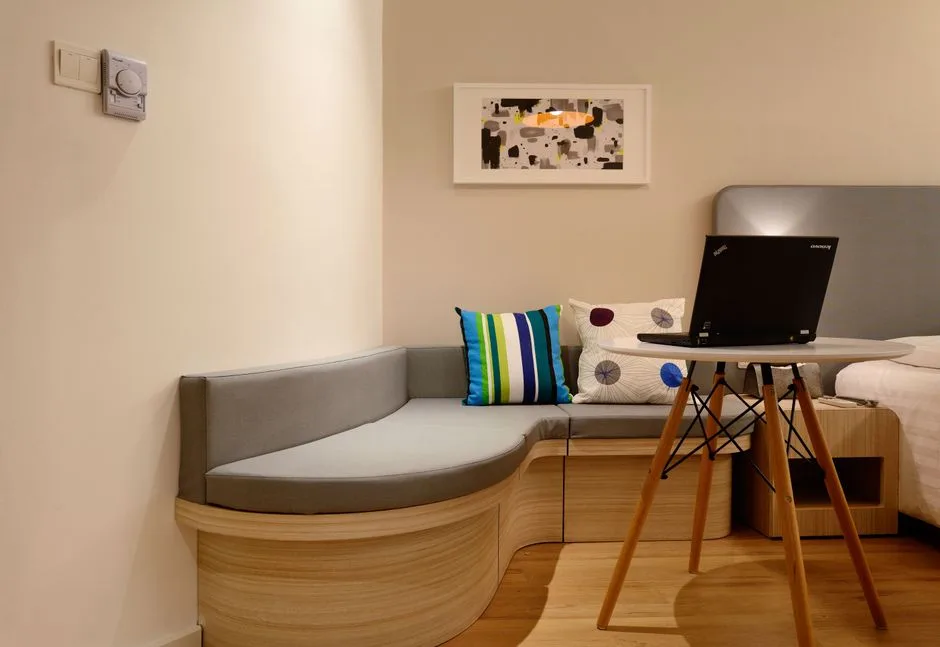
Every piece of small-room content online orbits the same gravitational center: lighten everything, declutter aggressively, buy a mirror. Repeat. What gets lost is any honest reckoning with what a guest room is actually for — which is not to photograph well, but to make another human feel genuinely welcome in your home for 48 hours.
The hotel-room obsession is the first trap. I’ve seen it dozens of times: a homeowner strips out all personality in pursuit of “clean and neutral,” then their guests sleep in what feels like a staging unit waiting for an open house. Sparse isn’t the same as serene. A room with no objects, no texture, no color story doesn’t feel calming — it feels forgotten.
The second trap is the furniture checklist. Most guides hand you a list of items — bed, nightstand, dresser, lamp, rug — without ever discussing the sequence of decisions. Spatial hierarchy matters more than inventory. Where the bed lands dictates everything else. What height the storage reaches determines whether the room breathes or suffocates. Getting the sequence wrong is expensive, and I know that firsthand: I once placed a full-sized dresser opposite a daybed in a client’s 9×11 spare room before working out the door clearance. We couldn’t open the closet more than forty degrees. The dresser moved three weeks later.
The third trap is color advice that treats lightness as a universal virtue without accounting for orientation. A bright cool white in a north-facing room reads cold and institutional. The undertone matters as much as the value.
Takeaway: Before you buy anything or choose a color, identify what your guest room needs to do beyond sleep. That answer changes every decision that follows.
1. What Colors Actually Work in a Compact Guest Space (Beyond ‘Go Light’)
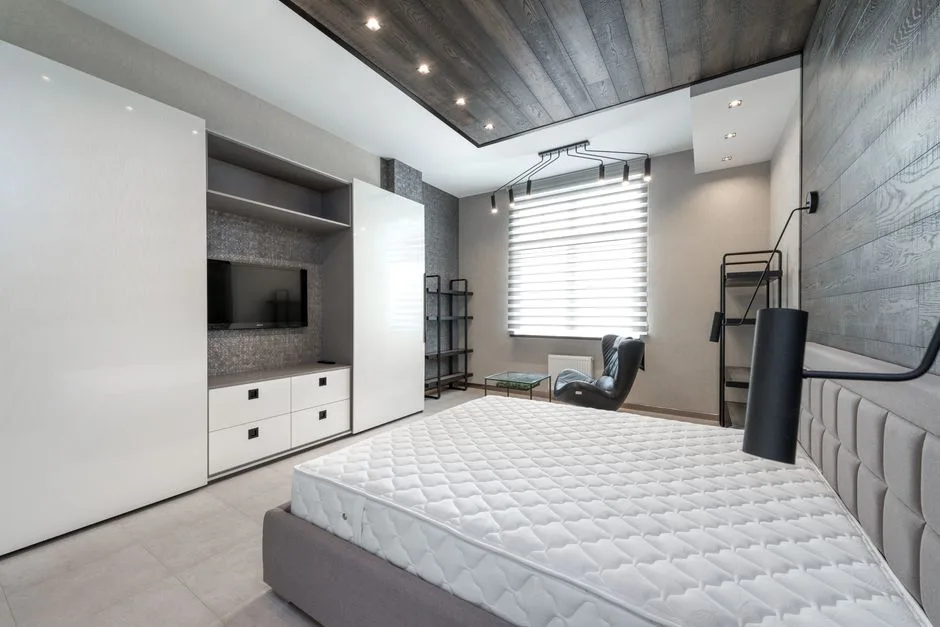
Color advice for small rooms has calcified into something nearly useless: go light, go neutral, go airy. Nobody’s wrong, exactly — but nobody’s right in a way that actually helps you pick a paint chip and commit to it.
Start with orientation. Warm whites and cool whites are not interchangeable. A creamy white with yellow or pink undertones — think Benjamin Moore’s White Dove or Sherwin-Williams Alabaster — reads soft and cozy in a north-facing room that never gets direct sun. Put that same warm white in a south-facing room and it tips into yellow. Cool whites with blue or gray undertones suit south- and east-facing spaces where direct light would otherwise flatten a warmer tone. Most people pick a white they love on a paint chip under fluorescent store lighting and wonder why it reads wrong on the wall.
Beyond white entirely: dusty sage, terracotta, and slate blue all perform surprisingly well in small guest rooms — not despite being saturated, but because of it. A mid-value saturated hue signals intention. Research from paint brand color psychology studies shows that rooms painted in mid-value saturated hues (LRV roughly 40–55) are consistently rated as feeling more “intentionally designed” compared to stark white rooms, which read as “unfinished” in blind perception studies. The room looks like someone made a decision, rather than avoided one.
Contrast zoning is the most underused technique in small rooms. Instead of painting every wall the same color, take the wall behind the bed one to two shades deeper than the remaining walls. This creates a visual anchor — the room suddenly has a headboard wall, a focal point, an architectural identity — without requiring crown molding or built-ins. Long narrow rooms especially benefit from this: a darker short-end wall draws the eye forward and compresses the visual length.
The ceiling move that almost nobody mentions: paint it two shades lighter than your walls. Not white — lighter than your walls. In a room with slate blue walls, a pale blue-gray ceiling pulls the eye upward and adds perceived height without touching a single square foot of floor. I’ve used this in three different clients’ spare rooms and it consistently reads as “did you raise the ceiling?” to people who can’t identify what changed.
Takeaway: Pick your wall color based on room orientation first, saturation level second. Then consider whether the wall behind the bed should be one shade darker to give the room a defining focal point.
2. The Best Bed Solutions for a Tight Floor Plan — Ranked by Real-World Tradeoffs
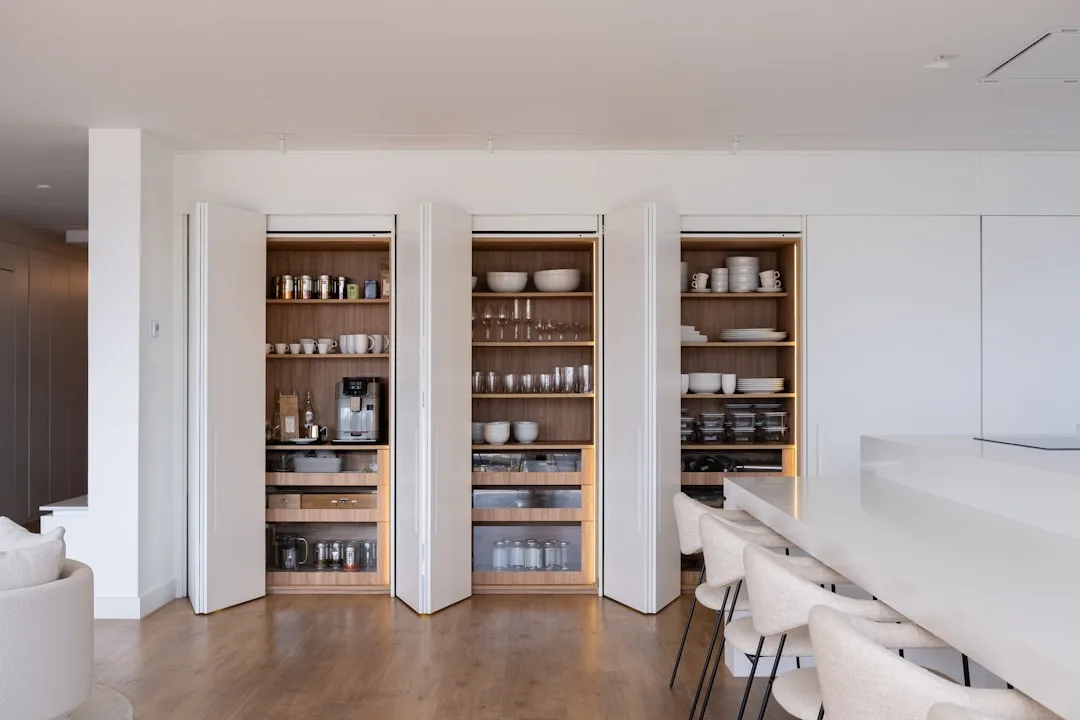
A standard queen bed occupies roughly 33 square feet of floor space. In a 10×10 room, that’s 33% of your total floor plan — committed, immovable, before you’ve placed a single other object. The bed decision is the most consequential spatial choice in the room, and it deserves more than a passing mention of Murphy beds.
Here’s an honest ranking:
1. Daybed with trundle — The most underrated option on the market. Functions as a sofa during the day, sleeps two adults in a pinch, costs $400–$900, requires zero installation, and doesn’t demand a professional contractor. For rooms that double as offices or reading spaces, this is almost always the right answer.
2. Murphy bed (wall bed) — High upfront cost, $1,200–$5,000 installed depending on cabinetry, but reclaims nearly 100% of floor space when folded. Worth the investment only if the room is under 120 square feet or genuinely needs to function as a workspace during the other 340 days a year guests aren’t using it.
3. Ottoman bed with lift storage — Solves two problems simultaneously: the bed frame and the under-bed storage zone. In rooms where sliding bins beneath the frame are the only viable storage strategy, the lift mechanism makes access actually functional rather than theoretical.
4. Floor-level platform bed without a footboard — Eliminating the footboard alone recovers 12–18 inches of visual and physical floor space. This is the cheapest effective upgrade on the list. A low-profile platform at 8–10 inches off the floor also lowers the visual center of gravity, which makes the ceiling feel taller by contrast. Pair it with wall-mounted reading lights instead of table lamps to recover both nightstand surface area and floor footprint simultaneously.
5. Bunk bed or loft bed — Relevant only when the room regularly hosts two guests, especially children. A full-over-full bunk in a room with 8-foot ceilings gives each person about 42 inches of vertical clearance — workable, not luxurious. The loft configuration (one sleeping level high, open space or desk below) makes more sense for a room that doubles as a workspace.
Quick-reference comparison:
| Bed Type | Approx. Cost | Floor Space Reclaimed | Best For |
|---|---|---|---|
| Daybed with trundle | $400–$900 | Significant (dual-use) | Office/guest combos |
| Murphy bed | $1,200–$5,000 | Nearly 100% | Sub-120 sq ft rooms |
| Ottoman bed | $600–$1,400 | Moderate | Storage-scarce rooms |
| Platform, no footboard | $300–$800 | 12–18 inches visual | Budget-first upgrades |
| Loft bed | $500–$1,500 | Full floor beneath | Solo guest + workspace |
Takeaway: The bed type you choose should be determined by how many days per year the room functions as something other than a sleeping space. The higher that number, the more aggressively you should reclaim floor area with a Murphy or daybed configuration.
3. Storage That Doesn’t Eat the Room Alive
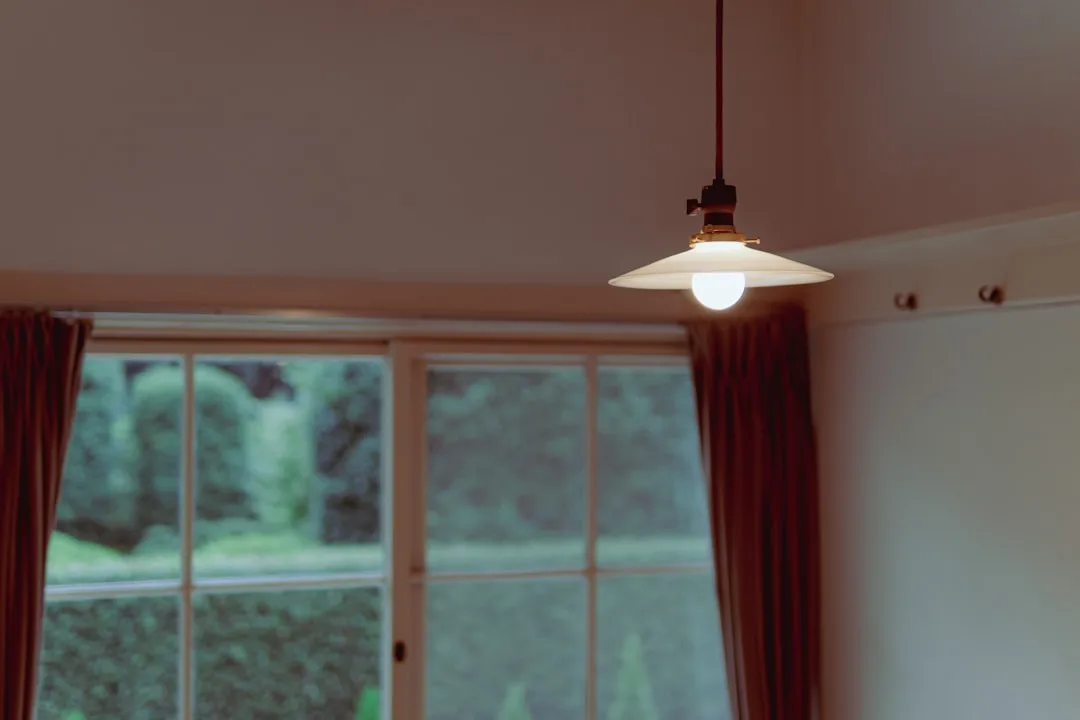
Storage in a small guest room fails in one of two ways: it’s insufficient, so guests live out of their suitcase, or it’s oversized, so the furniture dominates the space and guests live in a warehouse. Neither is comfortable.
The principle that resolves this: store vertically, access horizontally. Tall narrow storage uses dead air space above eye level rather than competing for floor area. A 72-inch open shelving unit with a footprint of 12 inches deep occupies half the floor space of a standard 6-drawer dresser while storing equivalent volume — and open shelving in a guest room has the added advantage of letting guests see and access their items without opening drawers that might stick or squeak.
Storage solutions ranked by space efficiency:
- Floating shelves above the bed — Zero floor footprint, stores books, folded clothes, and small items. Keep the lowest shelf at least 24 inches above pillow height to avoid the ceiling-closing feeling.
- Tall narrow wardrobe (16–18 inches deep) — Half the depth of a standard wardrobe, still fits hanging clothes. IKEA’s PAX system in 19.75-inch depth is the most commonly cited workaround among designers working in compact rooms.
- Under-bed rolling bins — Effective only on platform beds with at least 7 inches of clearance. Label the bins facing outward so guests aren’t pulling all of them out to find what they need.
- Door-back organizers — The closet door back is almost always unused. A over-door organizer with clear pockets handles toiletries, accessories, and small folded items without consuming a single inch of floor or wall space.
- Ottoman at bed foot — Doubles as seating, stores extra blankets, and defines the foot of the bed spatially without the visual bulk of a full footboard.
- Luggage rack instead of floor space — A folding luggage rack costs $30–$80 and gives guests a dedicated spot for their suitcase so it’s not shoved into a corner or left open on the floor.
What to avoid: A full double dresser in any room under 110 square feet. The drawer depth required (typically 18–20 inches) combined with the 30–36 inches of clearance needed to open drawers fully consumes a strip of floor that a small room cannot afford to give up.
Takeaway: Commit to vertical storage first, then fill horizontal space only with pieces that pull double duty — seating that stores, beds that lift, doors that organize.
4. Lighting Layers That Make a Small Room Feel Finished
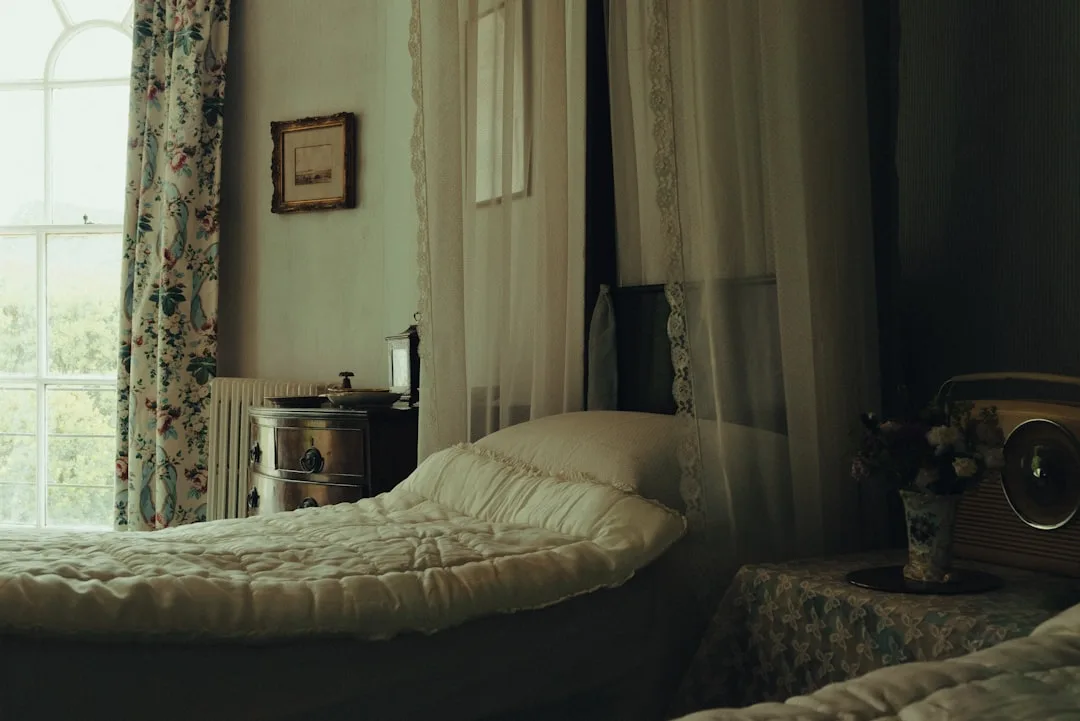
Most small guest rooms have one ceiling fixture doing four jobs badly: ambient light, task light, mood light, and the impression that someone actually thought about this room. One overhead fixture can’t accomplish all of that, and the attempt to make it do so is why so many spare rooms feel like afterthoughts at night even when they look decent during the day.
The fix is layering three light sources, not upgrading one.
Layer one: Ambient — This is your ceiling fixture, and in a small room it should be on a dimmer. A flush-mount LED rated at 2700K (warm white, not the blue-white 5000K that reads like a hospital) at around 600–800 lumens is enough for a 10×10 room. Anything brighter at full power will flatten the other layers.
Layer two: Task — Wall-mounted reading lights flanking the bed are the single most space-efficient upgrade available in a small guest room. They eliminate the nightstand lamp, recover 4–6 inches of nightstand surface area, and free up the outlet. Plug-in sconces — no electrician required — exist in the $40–$120 range and mount with two screws. Position the center of the shade at approximately 28–30 inches above the mattress surface for reading without glare.
Layer three: Accent — This is what separates a finished room from a functional one. Options include:
- A small table lamp on a dresser or shelf (not the nightstand) set on a timer for when guests arrive
- LED strip lighting behind a floating headboard panel
- A floor lamp in the corner on a dimmer, angled toward the ceiling for uplighting
The temperature consistency rule: All bulbs in a small room should be within 200K of each other. A 2700K wall sconce next to a 4000K overhead fixture creates a color conflict that registers as “something feels off” even to people who can’t name why. Buy one brand, one temperature, replace all at once.
Takeaway: Add wall-mounted reading lights before anything else in the lighting category. They’re the highest-impact, lowest-cost upgrade and the one change that most reliably makes a spare room feel like it was designed rather than assembled.
5. Textiles and Layering Without Visual Clutter
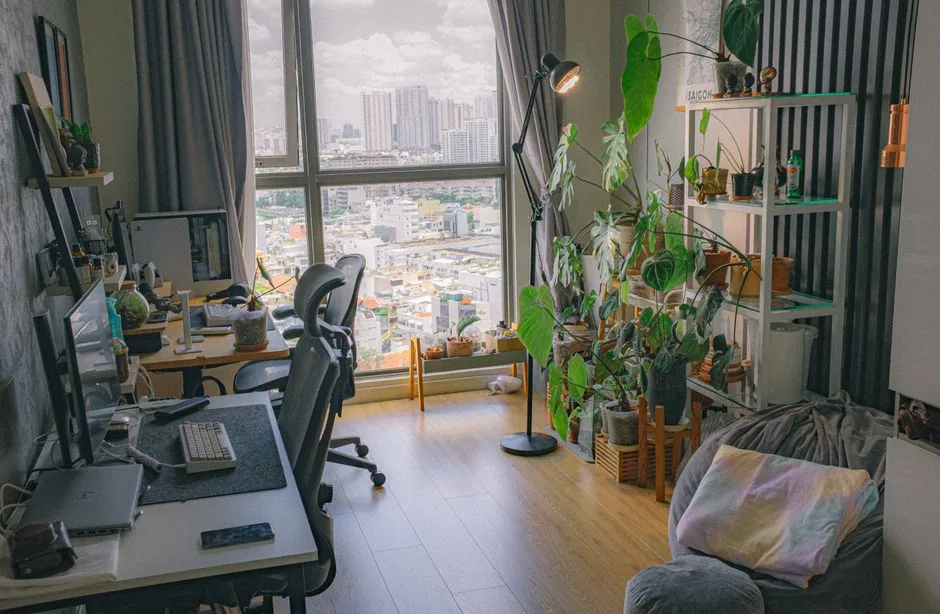
Textiles are where small guest rooms most commonly go wrong in both directions. Under-textiled rooms feel hard and cold — all furniture edges and painted surfaces with nothing to absorb sound or signal comfort. Over-textiled rooms feel chaotic, especially when patterns compete and scale is ignored.
The formula that works reliably: one pattern, two solids, three textures.
One pattern means a single piece with intentional print or weave — typically the duvet, the rug, or the window treatment, never more than one of the three simultaneously. Two solids means the remaining large textile surfaces are plain — if the duvet has pattern, the rug and curtains are solid. Three textures means varying the surface quality across the room: a smooth percale sheet, a nubby throw, a flat-woven rug. Texture variation reads as richness without the visual noise of multiple patterns.
Specific textile choices for small guest rooms:
- Duvet over comforter — A duvet insert with a removable cover is easier to launder between guests than a dry-clean-only comforter. It also reads flatter and less bulky on a smaller bed frame.
- Euro shams instead of decorative pillows — Two Euro shams propped against a wall or headboard accomplish the same layered-bed look as a stack of throw pillows while taking up less visual space and being easier to move when a guest actually wants to sleep.
- Linen curtains rather than blackout panels — Unless the room faces direct morning sun, linen curtains in a guest room add softness and texture while keeping the room from feeling sealed. Clip-on blackout liners are a $20–$40 add-on for guests who need them.
- One substantial throw, not three small ones — A single oversized throw draped over the foot of the bed or the corner of a chair photographs well, stores easily, and does the job of signaling warmth without piling visual weight onto the furniture.
- Rug sizing — In a 10×10 room with a twin or full bed, a 5×7 rug positioned with the top edge under the lower two-thirds of the bed frame is the standard solution. A 4×6 is too small and floats. An 8×10 leaves no breathing room at the walls.
Takeaway: Commit to one pattern source before buying any textile. The rest of the decisions cascade from that anchor in a way that prevents the competing-prints problem that makes small rooms feel smaller.
6. The Dual-Purpose Room Problem: Guest Room Plus Office (or Anything Else)
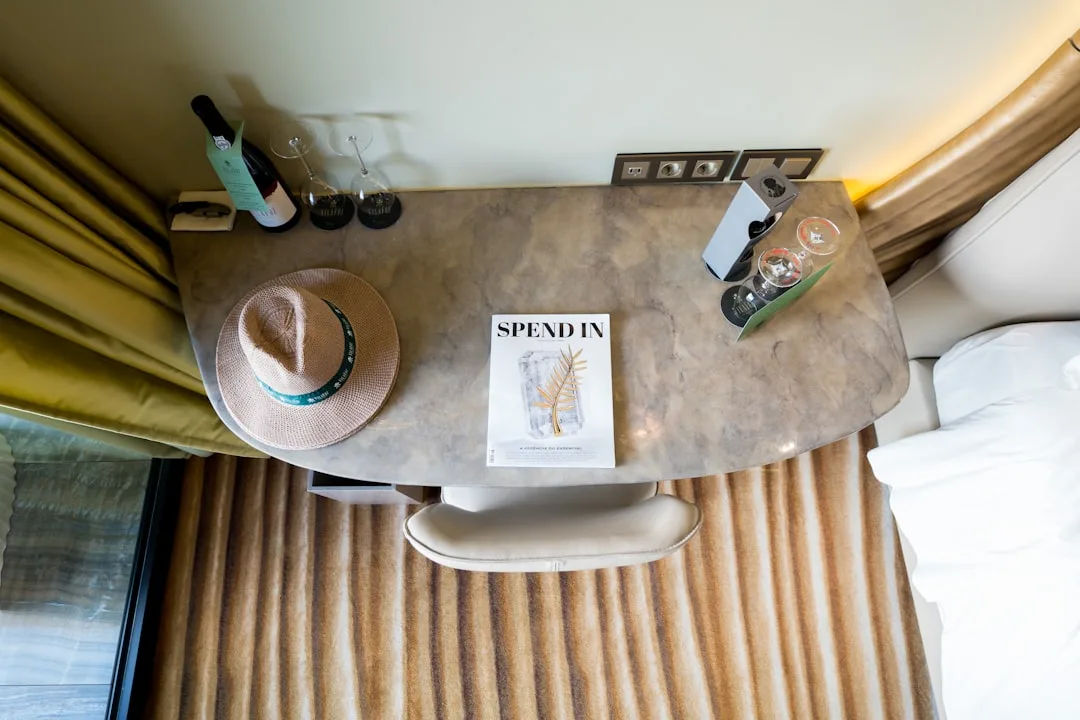
The dual-purpose room requires a different organizational logic: zones over rooms. Instead of trying to make the room feel like one unified space, the goal is to make each zone feel complete when it’s in use and invisible when it isn’t.
Guest room / home office:
The key tension is that a work environment and a sleep environment have opposing psychological requirements — one signals alertness, the other signals rest. The solution isn’t to split the difference but to make the desk area switchable. A Murphy bed flanked by built-in desk wings is the cleanest solution, but it costs $3,000–$6,000. The budget alternative: a wall-mounted fold-down desk ($150–$400) that closes flat against the wall when guests arrive, and a daybed that reads as seating when the desk is in use. When guests come, the desk closes, a throw goes on the daybed, and the room shifts identity.
Guest room / craft or hobby room:
The primary challenge is that hobby spaces accumulate visible clutter — materials, tools, works in progress — that directly undermine the “welcome” atmosphere a guest room needs. Closed storage is non-negotiable here. Floor-to-ceiling cabinets with solid doors, even inexpensive flat-pack ones, hide the working chaos completely. Designate one cabinet exclusively for guest items (extra blankets, hangers, toiletries kit) so there’s no archaeology required when guests arrive.
Guest room / exercise space:
Equipment storage is the central problem. A yoga mat, foam roller, and resistance bands can live in a closed basket or under-bed bin. A stationary bike or treadmill cannot — it defines the room even when guests are present. The most practical solution is a folding bike trainer that stores upright in a closet, or accepting that the exercise equipment becomes part of the room’s identity and guests who visit know this is a shared-purpose space.
Takeaway: In a dual-purpose room, identify which function the room serves more days per year and design the storage and furniture around that primary function. The secondary function gets the fold-away or close-away treatment.
7. The Details That Tell a Guest This Room Was Made for Them
Spatial decisions — bed size, storage volume, color choice — are the bones of a guest room. The details are what make a guest feel like someone thought about them specifically rather than just solved for the general category of “guest.”
These details cost almost nothing and take about two hours to implement:
A small tray on the nightstand containing three to five items a guest might actually need overnight: a glass of water (or an empty glass), a charger cable (or a small power strip), a travel-sized hand lotion, a notepad. The tray itself is the signal — it means someone curated this. A scattered collection of the same items reads as leftovers.
A hook or two on the back of the door. Guests arriving with a travel bag need somewhere to hang tomorrow’s outfit, their towel, and their robe. Without a hook, these items end up on the chair or the floor. Two simple over-door hooks cost under $10 and eliminate an entire category of guest discomfort.
A local detail. A small card with the wifi password, a recommendation for the nearest coffee shop, and a note about the quirks of the shower (turn it on two minutes before you get in, the hot water takes a moment) communicates that you thought about what being a stranger in your home actually feels like. This is the kind of thing that gets mentioned for years in the context of “the most comfortable guest room I’ve ever stayed in.”
Blackout coverage that actually works. More guest room complaints trace back to unexpected light intrusion than nearly any other single factor. If your window treatment doesn’t block light effectively, either add a blackout liner or put a folded sleep mask in the nightstand tray. The latter costs $8 and prevents a groggy 5am experience that colors how the whole visit is remembered.
Temperature control access. If the guest room is on a different zone or doesn’t have easy thermostat access, leave a note explaining how to adjust it, or put a small fan and an extra blanket visibly available. The guest who was too cold all night and didn’t want to ask is a guest who didn’t sleep well.
Takeaway: The difference between a room that photographs well and a room that guests actually remember fondly almost always comes down to these operational details — the ones that only matter when a real human is trying to sleep in your house.
8. Quick Wins: Changes You Can Make This Weekend
Not every guest bedroom decorating idea for small spaces requires a renovation budget or a contractor. Some of the highest-impact changes in compact guest rooms cost under $50 and take an afternoon. Here’s a focused list of weekend-doable upgrades, ordered by impact-to-effort ratio:
High impact, low cost:
- Swap the overhead bulb for a 2700K LED on a dimmer switch. Cost: $15–$25. Impact: the room’s entire nighttime atmosphere changes.
- Add two plug-in wall sconces flanking the bed. Cost: $40–$120 for the pair. Impact: eliminates nightstand lamp clutter, adds task lighting where it’s actually useful.
- Remove the footboard (if the existing bed frame allows). Cost: $0. Impact: recovers 12–18 inches of floor space and visual breathing room.
- Install two over-door hooks on the back of the guest room door. Cost: under $10. Impact: solves one of the most common guest friction points immediately.
- Add a luggage rack in the corner. Cost: $30–$80. Impact: gives guests a designated spot for their bag so it isn’t on the floor or bed.
Medium impact, low cost:
- Replace the duvet cover with a solid or single-pattern option in a mid-value saturated color suited to your room’s orientation. Cost: $40–$120. Impact: changes the room’s visual identity without touching the walls.
- Add a small tray to the nightstand with three to five guest-specific items. Cost: $15–$40 for the tray, minimal for contents. Impact: signals intentionality to every guest who walks in.
- Put a 5×7 rug (if none exists) positioned under the lower two-thirds of the bed. Cost: $60–$150. Impact: anchors the furniture arrangement and adds texture to a hard-floor room.
One-hour organizational upgrades:
- Clear everything off the nightstand that isn’t guest-relevant and replace with the curated tray.
- Move any office or storage overflow behind closed doors or under the bed in labeled bins.
- Test every light switch, drawer, and door in the room from a guest’s perspective. Fix the one that sticks, replace the bulb that’s out, tighten the handle that wobbles.
Takeaway: Pick two items from the high-impact list and do them before your next guest arrives. The cumulative effect of small, specific improvements outperforms one large unfocused renovation almost every time.
Frequently Asked Questions
What’s the minimum room size that can function as a real guest bedroom?
Technically, a room as small as 70–80 square feet can work as a guest space if you use a twin or daybed and wall-mounted storage. The practical floor size that allows a full bed with adequate circulation on at least two sides is about 100 square feet — which is why 10×10 rooms come up so often in this conversation. Below that, a daybed or Murphy bed is genuinely necessary rather than optional.
How do I make a guest room feel welcoming without making it look busy?
The most reliable approach is to limit pattern to one source (usually the bedding), keep surfaces clear except for intentional groupings, and add warmth through texture rather than objects. A nubby linen duvet, a single throw, and a low-pile rug read as layered and considered without competing visually. The “welcoming” signal comes from operational details — the tray on the nightstand, the hook on the door — more than from decorative density.
What’s the best furniture arrangement for a small guest room?
Place the bed against the longest uninterrupted wall, headboard centered if possible. If the room is narrow, pushing the bed into a corner can free a full circulation path on one side. Avoid placing the bed directly opposite the door — it creates a sight line that makes the bed look like it’s blocking the room. Storage should be vertical (shelving, tall narrow wardrobe) rather than horizontal (wide dressers) wherever possible.
How do I handle a guest room that also serves as an office?
The core strategy is switchability: make the work elements fold away or close away when guests arrive. A wall-mounted fold-down desk, closed cabinetry over the desk surface, and a daybed that reads as seating during work hours are the three elements that make the transition feel complete. Avoid a permanent large desk that can’t be disguised — it reads as “this is really an office with a bed in it” rather than a guest room that also functions as a workspace.
Do I need to buy new furniture to improve a small guest room, or can I work with what I have?
Usually what you have is fine, and the sequence of changes matters more than the furniture inventory. Start by removing everything that isn’t earning its place — the extra chair nobody sits in, the decorative items on the dresser, the second set of pillows that guests move to the floor. Then address the lighting (almost always the weakest element in a spare room), then the textiles, then storage. New furniture is the last lever to pull, not the first.
What’s the minimum room size that can function as a real guest bedroom?
Technically, a room as small as 70–80 square feet can work as a guest space if you use a twin or daybed and wall-mounted storage. The practical floor size that allows a full bed with adequate circulation on at least two sides is about 100 square feet — which is why 10×10 rooms come up so often in this conversation. Below that, a daybed or Murphy bed is genuinely necessary rather than optional.
How do I make a guest room feel welcoming without making it look busy?
The most reliable approach is to limit pattern to one source (usually the bedding), keep surfaces clear except for intentional groupings, and add warmth through texture rather than objects. A nubby linen duvet, a single throw, and a low-pile rug read as layered and considered without competing visually. The “welcoming” signal comes from operational details — the tray on the nightstand, the hook on the door — more than from decorative density.
What’s the best furniture arrangement for a small guest room?
Place the bed against the longest uninterrupted wall, headboard centered if possible. If the room is narrow, pushing the bed into a corner can free a full circulation path on one side. Avoid placing the bed directly opposite the door — it creates a sight line that makes the bed look like it’s blocking the room. Storage should be vertical (shelving, tall narrow wardrobe) rather than horizontal (wide dressers) wherever possible.
How do I handle a guest room that also serves as an office?
The core strategy is switchability: make the work elements fold away or close away when guests arrive. A wall-mounted fold-down desk, closed cabinetry over the desk surface, and a daybed that reads as seating during work hours are the three elements that make the transition feel complete. Avoid a permanent large desk that can’t be disguised — it reads as “this is really an office with a bed in it” rather than a guest room that also functions as a workspace.
Do I need to buy new furniture to improve a small guest room, or can I work with what I have?
Usually what you have is fine, and the sequence of changes matters more than the furniture inventory. Start by removing everything that isn’t earning its place — the extra chair nobody sits in, the decorative items on the dresser, the second set of pillows that guests move to the floor. Then address the lighting (almost always the weakest element in a spare room), then the textiles, then storage. New furniture is the last lever to pull, not the first.