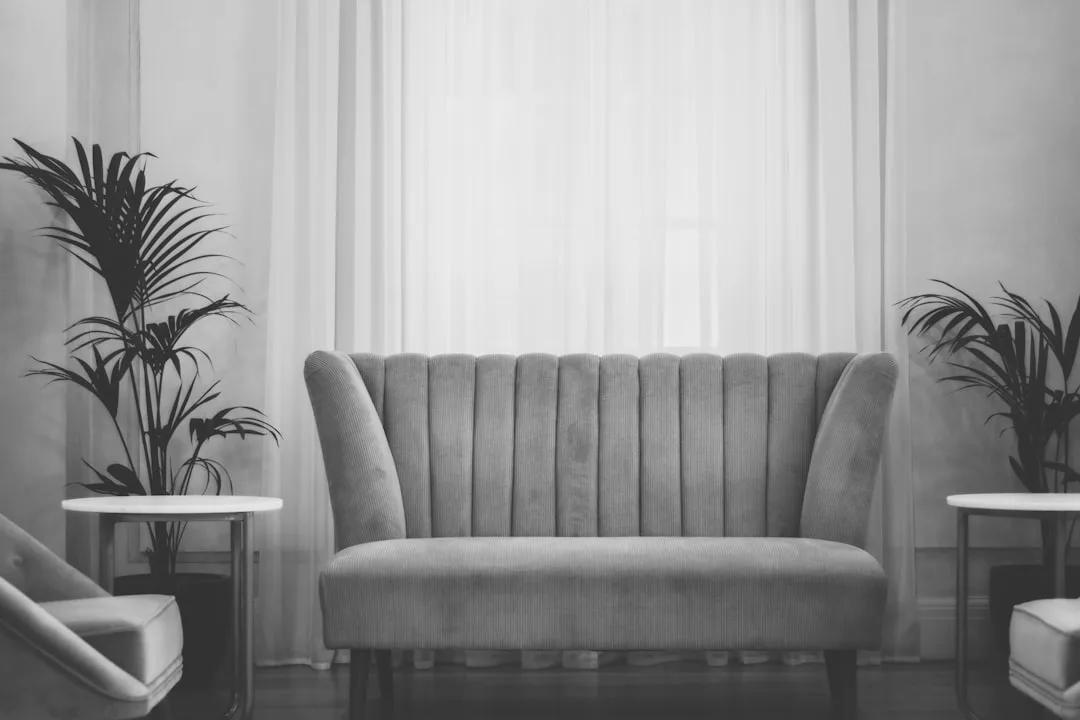
Most living rooms feel off — not because of the furniture you chose, but because of the 8 inches you placed it wrong.
Quick Answer
Most living rooms feel off — not because of the furniture you chose, but because of the 8 inches you placed it wrong.
I spent eleven years moving sofas. Literally. My clients would call me in, describe the vague discomfort they felt in their own living rooms — “it just doesn’t work,” they’d say, or “it feels cramped even though there’s space” — and nine times out of ten, I wasn’t replacing anything. I was sliding the sofa back six inches, pulling the loveseat eighteen inches away from the wall, and rotating the coffee table ninety degrees. That was it. That was the fix. The furniture wasn’t the problem. The placement was.
This article is built around sofa and loveseat arrangement ideas that actually account for how a room functions, not just how it photographs. Big difference.
How to Arrange a Sofa and Loveseat Together Without Making It Look Awkward
In This Article
- How to Arrange a Sofa and Loveseat Together Without Making It Look Awkward
- The 2-2-1 Rule for Sofas Explained (And When to Break It)
- The 2-3 Rule for Sofas: What It Is and Why Most Articles Get It Wrong
- The L-Shape Configuration: When It Works and When It Wastes Space
- Face-to-Face Placement: The Formal Look That Can Feel Surprisingly Casual
- Small Room Arrangements That Don’t Feel Like a Compromise
- The Biggest Mistake in Furniture Placement (It’s Not What You Think)
- Rug Placement Rules That Make Any Sofa-Loveseat Arrangement Look Intentional
- Traffic Flow: The Hidden Grid Every Arrangement Must Respect
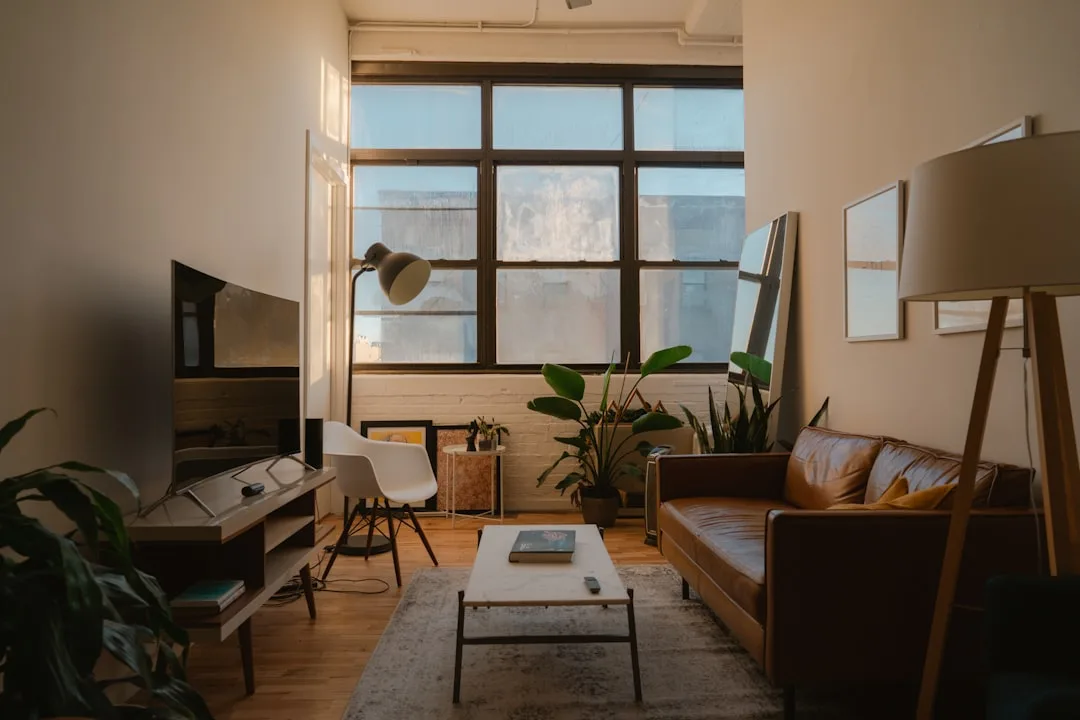
Here’s the diagnosis most people never get: mismatched sightlines, not mismatched sizes, are why sofa-loveseat combos look cluttered. You can put a mid-century sofa next to a rolled-arm loveseat and make it work beautifully — if the sightlines are calibrated. When the back heights differ by more than four inches and neither piece is anchored to a shared horizontal plane (a rug, a coffee table, a shared focal wall), your eye has nowhere to land. It just keeps moving, and the room reads as chaotic.
Before you touch a single piece of furniture, do this: tape the floor.
Painter’s tape costs $4 and will save you from a three-hour mistake. Map out the exact footprint of both pieces on the floor, including a 30–48 inch walkway clearance on all sides where people will pass. Interior designers recommend that minimum clearance range around seating groupings — most homeowners leave fewer than 24 inches, and that tight squeeze is the single most common reason a room feels cramped regardless of how the furniture actually looks. The room isn’t small. The margins are.
The 18-inch rule governs the gap between your seating and your coffee table. Not 12 inches. Not 24. Eighteen inches lets someone reach a drink without leaning dangerously far forward, and it maintains the visual breathing room that makes the grouping feel intentional rather than accidental. I’ve walked into apartments where the coffee table was practically touching the sofa cushions — the homeowner thought pulling everything close would make the space cozier. It made it feel like a waiting room.
Your sofa and loveseat do not need to match. They need to agree on scale. A sofa with a 36-inch seat depth has no business next to a petite loveseat with a 28-inch depth — not because they’re different styles, but because one visually dominates and the other looks like it’s apologizing for being there.
Actionable takeaway: Before rearranging anything, lay painter’s tape on your floor and verify you have 30 inches of clearance on your primary walking paths. That single step eliminates 80% of the layout errors I ever corrected professionally.
The 2-2-1 Rule for Sofas Explained (And When to Break It)
This rule gets misquoted constantly. Let me be direct about what it actually means.
The 2-2-1 rule calls for two sofas (or a sofa and loveseat), two accent chairs, and one statement piece — usually a coffee table, a large pendant, or an anchor rug. The loveseat fulfills the second sofa role comfortably. The logic is spatial and psychological: two large seating pieces establish conversational zones, two accent chairs fill in the triangle geometry on the flanks, and one dominant statement piece pulls the eye intentionally instead of letting it drift.
It originates from commercial hospitality design, where seating groupings are engineered for conversation distances of 8 feet or less — that’s the sweet spot for comfortable eye contact and natural audibility without raising your voice. Hotel lobbies and restaurant lounge areas have been using this formula for decades, and residential designers imported it because it works for the same neurological reason it works in public spaces: people feel at ease when the space signals that conversation was anticipated.
Here’s where it breaks down. Rooms under 200 square feet get overwhelmed by a full 2-2-1 setup. I once watched a client cram two accent chairs into a 180-square-foot apartment living room alongside her sofa-loveseat pairing because an article told her the rule required it. The chairs blocked the entry entirely.
When you only have a sofa and loveseat — no accent chairs — you have better substitutes than most people use:
- A bench at the foot of the coffee table adds seating weight without eating square footage
- An oversized ottoman doubles as a third seat and a surface, satisfying the “second accent” slot
- A chaise lounge positioned perpendicular to the loveseat completes the triangle without crowding
- A low floor pouf reads as accent seating to the eye but barely registers in the footprint
The 2-2-1 rule isn’t a law. It’s a framework for visual balance. Use it as a diagnostic checklist.
Actionable takeaway: Stand in your doorway and count the distinct seating surfaces. If you have two large pieces and nothing else, add one grounded accent — a bench, a pouf, a chaise — before considering a second chair.
The 2-3 Rule for Sofas: What It Is and Why Most Articles Get It Wrong
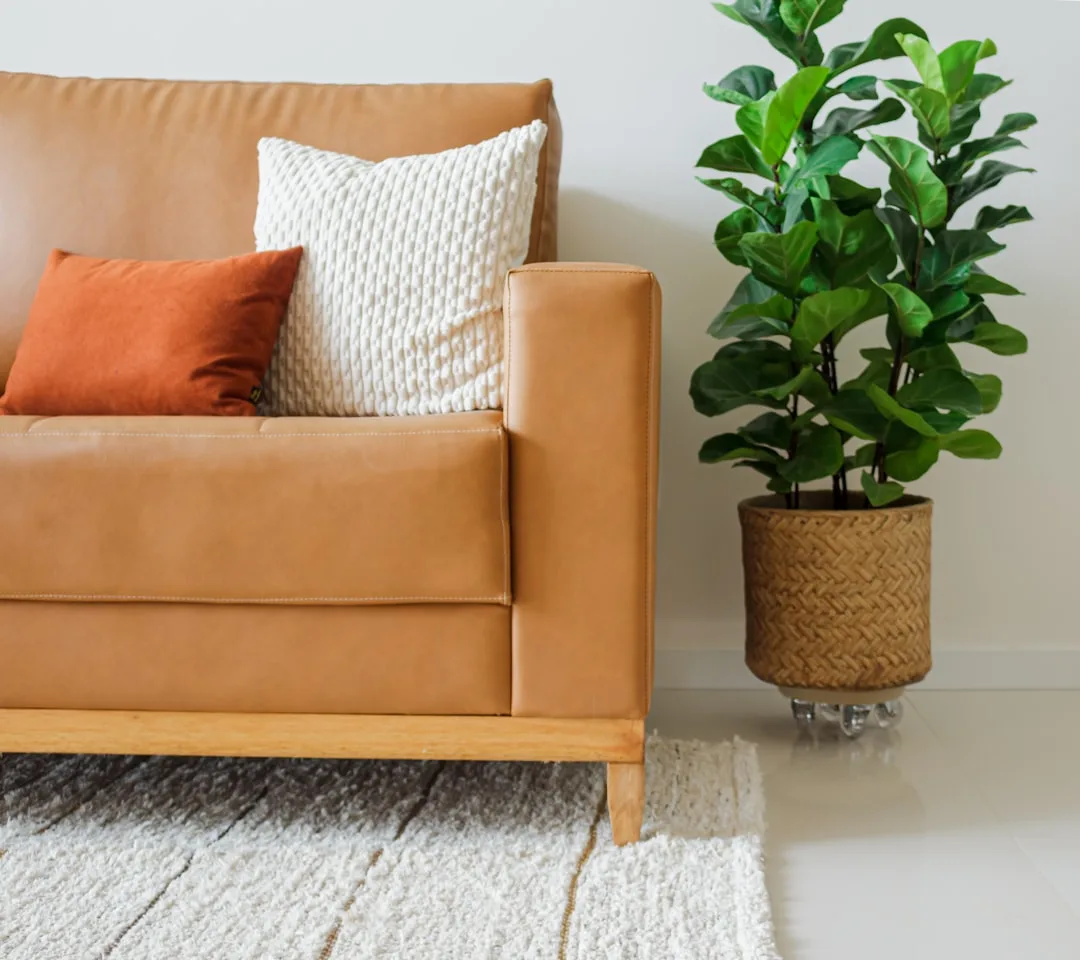
Most articles conflate the 2-3 rule with the 2-2-1 rule, treat them as interchangeable, or describe the 2-3 rule so vaguely that it’s useless. They are not the same rule. They don’t govern the same thing.
The 2-2-1 rule governs seating configuration. The 2-3 rule governs room composition.
The 2-3 rule says: two larger anchor pieces (your sofa and loveseat) should be balanced by three smaller compositional elements — side tables, lamps, rugs that define zones, art groupings, plants with physical presence. Three, not two, not four. The asymmetry is the point. Research on room satisfaction consistently shows that odd-number accessory groupings read as more complete and more calming to the human eye than even-number groupings — the asymmetrical balance principle that artists and designers have been exploiting for centuries. The 2-3 rule formalizes this for furniture arrangements specifically.
Here’s the mistake I see everywhere: homeowners buy a sofa-loveseat pairing, add a coffee table, add a rug, and stop. They have two large pieces and two accessories. The room feels almost right but not quite. Adding one more element — a floor lamp, a third table, a sculptural object on the console — tips the composition from “almost done” into “finished.”
Run this checklist on your room before rearranging anything:
- Do you have two dominant anchor pieces? (sofa + loveseat counts)
- Can you identify three smaller elements that belong to the seating grouping — not just the room?
- Does one of those three elements hit the floor (rug, lamp base, plant)?
- Is at least one of the three at eye level when seated?
- Does any element break the strictly rectangular geometry of the arrangement?
If you’re missing the third small element, the fix doesn’t require new furniture. Poufs count. Window seats count. A built-in bench at the entry of the room, if it’s visible from the seating zone, counts.
Actionable takeaway: Run the five-question checklist above on your current room tonight. If you’re short one element, identify what you already own that could fill the role before buying anything new.
The L-Shape Configuration: When It Works and When It Wastes Space
L-shape is the most searched furniture layout globally — Pinterest trend data has confirmed this for several years running — yet it also has among the highest rates of abandoned redesigns. Homeowners frequently switch away from L-shaped sofa-loveseat arrangements within 18 months. That’s not because the layout is flawed. It’s because most people execute it wrong from the start and then blame the configuration.
The anatomy is simple: sofa on the longer wall, loveseat perpendicular, inside corner creating the L. But the directional error that kills most L-shape setups is pointing the loveseat toward the room’s entry instead of toward the seating center. The loveseat becomes a visual barrier. Anyone entering the room reads it as a wall, not an invitation. Rotate the loveseat so it’s oriented toward the interior of the grouping — toward the coffee table, toward conversation — and the room opens up.
The inside corner of an L-shape is the arrangement’s most neglected zone. That corner needs a visual anchor or the whole configuration looks like furniture that got shoved together rather than placed with intention. A tall floor lamp works. A substantial plant — and I mean a real one in a pot that has actual weight, not a trailing vine that apologizes for its size — works. A floor sculpture or a decorative ladder lean works. Empty inside corners on L-shaped arrangements are the single most reliable signal that a room was assembled without a plan.
L-shape earns its place in open-plan spaces specifically because the back of the sofa can serve as a room divider between the living and dining zones. That’s a function most other configurations can’t replicate. For this to work, the sofa’s back needs to be finished — most standard sofas are — and positioned at the natural break between the two zones, not pushed awkwardly to one side.
Room dimensions that genuinely support an L-shape: 12×15 feet or larger, with at least one unobstructed wall running the longer dimension. Anything smaller and the L starts eating the room.
Actionable takeaway: If you’re in an L-shape setup, walk to your room’s entry and look at the loveseat. If you’re seeing the back or the side of it instead of the front, it’s oriented wrong — and that’s fixable in ten minutes.
Face-to-Face Placement: The Formal Look That Can Feel Surprisingly Casual
Every competitor article on this topic labels face-to-face placement as “formal” and moves on. That framing is both lazy and limiting. Face-to-face works beautifully in casual, high-use family rooms — and I’d argue it’s actually the most functional layout for households that actually gather and talk, rather than households that arrange furniture around a television and hope connection happens by accident.
The mechanics: sofa and loveseat facing each other across a shared coffee table, aligned on a central axis. The coffee table distance formula I used with every client is simple — measure the height of your sofa’s seat from the floor, multiply by half, and that’s your minimum clearance from the sofa’s front edge to the table’s closest edge. For most sofas, that’s roughly 8–9 inches. Total gap between opposite sofa fronts should land in the 6–9 foot range. Ergonomic research on social seating confirms that face-to-face configurations at 6–9 feet are optimal for group conversation — beyond 10 feet, people unconsciously raise their voices and the intimacy of the grouping dissolves.
The mistake that makes face-to-face feel clinical — like a waiting room or a therapist’s office — is threefold: identical furniture, no layering, and no rug to unify the grouping. All three have to fail simultaneously for the effect to be this bad, but they usually do. A sofa and loveseat that don’t share an exact match in upholstery, that have varied throw textures, and that sit on a rug large enough to hold both pieces feel warm immediately.
Adding a TV to a face-to-face layout is the question I got most often with this configuration. The answer is an angled wall-mount or a console placed at the room’s edge — perpendicular to the seating axis — so that neither seating piece is directly opposite the screen. You lose the “optimal viewing angle” slightly. You gain a room that can be used for both conversation and watching, which is what most living rooms actually need to do. Some rooms should skip the TV wall entirely. I’ve seen this work better than any arrangement trick I know.
Actionable takeaway: Measure your current face-to-face gap if you’re using this setup. If it’s over 10 feet, pull both pieces 12 inches closer to the center and feel how the room changes immediately.
Small Room Arrangements That Don’t Feel Like a Compromise
The average new living room in the U.S. measures approximately 330 square feet. Apartment living rooms average closer to 180–220 square feet. That means most small-space advice applies to most renters and condo owners — not some niche edge case. And most of that advice is wrong.
Pushing everything against the wall is the most persistent myth in small-room furniture arrangement. It feels logical — more wall means more floor means more room. Except the opposite is true. When furniture is pressed against every wall, the open center becomes a dead zone that the eye reads as empty, not spacious. The room shrinks psychologically because there’s nothing drawing you into it.
Floating the furniture — pulling both pieces several inches off the walls and grouping them around a central point — creates a defined zone within the room. That zone reads as purposeful. The space around it reads as circulation, not waste.
In rooms under 180 square feet, consider inverting the typical hierarchy: let the loveseat become the focal-point piece and let the sofa play a supporting role. Position the loveseat on the room’s dominant wall, facing the entry, and tuck the sofa along a side wall in a partial L. This shifts the visual weight toward the shorter, more manageable piece and prevents the room from feeling consumed by furniture.
For corner-heavy rooms — the ones where two walls angle awkwardly or doors interrupt every potential placement — a 45-degree angle arrangement for the loveseat can open sightlines dramatically. This is counterintuitive because the angled piece takes up more visual space, but it breaks the boxy repetition of parallel walls and makes the room feel less like a container.
Scale is non-negotiable in small rooms. The maximum sofa depth for a room under 200 square feet is generally 32 inches — apartment-depth sofas are built to this spec intentionally. A 38-inch-deep sectional or sofa in a 180-square-foot room isn’t a style issue. It’s a function issue.
Actionable takeaway: Pull every piece of furniture six inches away from its nearest wall and live with it for 48 hours. Most people who try this never push it back.
The Biggest Mistake in Furniture Placement (It’s Not What You Think)
Here is the answer most articles get wrong: the biggest mistake in furniture placement is not scale, not crowding, not mismatched styles. Those are symptoms.
The actual mistake is scaling furniture to a room’s square footage instead of to the room’s ceiling height. A room with 10-foot ceilings can absorb a much larger furniture footprint than a room with 8-foot ceilings — and the reverse is equally true. I’ve watched clients drop a perfectly proportioned sofa into a room, measure the square footage carefully, confirm “the numbers work,” and still end up with a space that felt oppressive. Low ceilings combined with large upholstered pieces create a compression effect that no arrangement trick can fully fix. The furniture needs to be shorter, slimmer, less visually heavy — regardless of whether the square footage technically accommodates it.
In a survey of professional interior designers, 74% cited “furniture scaled incorrectly for the room’s volume” as the most common mistake they correct in client homes — outranking wrong colors, poor lighting, and clutter combined. Volume, not area.
Runner-up mistake: placing the sofa with its back to the room’s entry point. I call it the psychologist’s couch problem — you walk into the space and immediately see the back of someone’s furniture. The room feels closed off. Unconsciously, most people feel vaguely unwelcome in rooms arranged this way, and they can’t explain why.
The rug sizing error compounds any arrangement mistake. A rug too small to anchor the seating grouping makes even a well-arranged room look provisional — like the furniture is visiting but hasn’t moved in yet. I’ve seen $3,000 sofas look like they were from a thrift store because they sat on a 5×8 rug in a room that needed a 9×12.
The 60-second arrangement audit: stand in the room’s doorway. Note the first thing your eye lands on. If it’s a wall, the back of a sofa, or a stretch of empty floor — the arrangement is fighting you.
Actionable takeaway: Before anything else, measure your ceiling height. Then look at your furniture. If your pieces are over 36 inches tall and your ceilings are under 8 feet, that’s your problem — and it’s not solvable with rearrangement alone.
Rug Placement Rules That Make Any Sofa-Loveseat Arrangement Look Intentional
The most commonly purchased rug size in the U.S. is 5×8 feet. Most interior designers call 8×10 the minimum for a full living room seating grouping. That gap explains a lot about why so many well-arranged rooms still look unfinished.
There are exactly three rug configurations for a sofa-loveseat setup, and they’re not interchangeable:
- All legs on — all four legs of both pieces sit on the rug. Requires a large rug (9×12 at minimum for standard furniture). Looks deliberate, cohesive, and finished. Best for open-plan rooms where you need the seating zone to read as a distinct area.
- Front legs only — only the front two legs of each piece rest on the rug. Works with an 8×10 in standard rooms. Creates the visual anchor without the full investment. This is the most flexible option and what I defaulted to in apartments.
- No legs on — the rug sits fully beneath the coffee table, touching nothing else. Only works in small rooms where a floating rug defines the center zone without needing to pull the furniture into it. Risky in larger rooms, where it reads as a floor decoration rather than an arrangement anchor.
The rug’s orientation locks in the seating arrangement — which means if you’re undecided about layout, choosing the rug first can simplify every subsequent decision. The rug defines the zone. The furniture fills the zone. Running the rug parallel to the sofa’s longer edge — its lengthwise axis — visually widens the room. This is a small trick. It works reliably.
Minimum rug sizes to commit to memory: 8×10 for standard living rooms, 9×12 for open-plan spaces. If you’re in a room under 180 square feet, a 6×9 can work with the front-legs-only approach — but only if the room is genuinely small, not just the rug.
Actionable takeaway: Measure the distance between your sofa and loveseat at their widest points. Add 24 inches on each outer edge. That’s the minimum rug width you need to make the grouping look intentional rather than accidental.
Traffic Flow: The Hidden Grid Every Arrangement Must Respect
Every room has desire lines — the natural diagonal paths people walk through a space by instinct, usually cutting from entry to destination rather than following the walls. When a loveseat gets dropped into a room as an afterthought, positioned wherever the square footage happens to permit it, it almost always blocks a desire line. And then the room feels wrong in a way nobody can articulate because nobody is thinking about invisible paths.
Map your room’s traffic corridors before you arrange anything:
- Stand at every entry point and identify where you naturally want to walk
- Mark the high-frequency paths: entry to seating, seating to kitchen, hallway to bedroom
- Note which paths cross the center of the room and which hug the perimeter
The 36-inch minimum clearance rule applies to primary walkways — the paths people use every time they move through the room. Building codes for commercial spaces require 36-inch clearance minimums for primary circulation, and residential design professionals apply the same standard for households with multiple people moving through regularly. Secondary passages — the path someone takes to reach a specific chair, for example — can work at 18 inches.
Test this with a tape measure before you move anything heavy. Run the tape from the front of your loveseat to the nearest opposing surface. Do the same for the sofa. If either primary path falls below 30 inches, you have a functional problem that will grind on you every single day — not an aesthetic one.
The 60-second version of this test: walk through your room normally, the way you’d move through it at 7 a.m. half-awake. If you adjust your path to avoid a piece of furniture, or if you turn sideways to pass through any section, the clearance is wrong.
What most people don’t consider: the coffee table is often the actual traffic problem, not the sofa or loveseat. A coffee table placed six inches too close to a loveseat creates a pinch point right in the room’s center — exactly where you don’t want friction.
Actionable takeaway: Do the sleepy-morning walk test through your room today. One adjustment to your coffee table placement often resolves more traffic issues than rearranging either large piece.
Frequently Asked Questions
How do you arrange a sofa and loveseat together?
Start with function before aesthetics. Identify where your room’s natural focal point is — a fireplace, a window with a view, a TV wall — and position your sofa facing it directly. The loveseat takes the secondary position: perpendicular to the sofa in an L-shape, facing the sofa across a coffee table, or at an angle if the room’s geometry requires it.
The non-negotiables: 30–48 inches of walkway clearance around the seating grouping, 18 inches of space between the front of each piece and the coffee table, and a rug large enough (minimum 8×10 for standard rooms) to anchor both pieces visually. The sofa and loveseat don’t need to match in style or even upholstery — but they need to agree on scale. A deep, oversized sofa paired with a slim, petite loveseat will make the loveseat look like an afterthought regardless of how well they’re placed.
Use painter’s tape to map out your intended layout on the floor before moving anything. Every experienced designer does this. It saves hours of heavy lifting.
What is the 2-2-1 rule for sofas?
The 2-2-1 rule is a seating configuration framework that calls for two large seating pieces (typically a sofa and a loveseat, or two sofas), two accent chairs, and one statement anchor piece — usually a substantial coffee table, a dominant rug, or a significant lighting fixture.
Its origin is commercial hospitality design, where seating groupings are built for conversation at distances of 8 feet or less. That range is close enough for natural eye contact and comfortable audibility — and the rule replicates those conditions in residential spaces.
The rule works well in rooms over 200 square feet with adequate ceiling height. It struggles in smaller spaces: two accent chairs in a 180-square-foot apartment living room will block traffic and eat the room. In compact spaces, substitute accent chairs with a bench, oversized ottoman, floor pouf, or chaise. The intent of the rule — balanced visual weight in a conversational triangle — can be achieved with smaller footprint pieces.
What is the 2-3 rule for sofas?
The 2-3 rule is a room composition rule, not a seating rule. It governs the full arrangement. Two large anchor pieces — your sofa and loveseat — should be balanced by three smaller compositional elements within the seating grouping. Those smaller elements might be side tables, floor lamps, a rug defining the zone, a plant with real physical presence, or an art piece anchored to the arrangement rather than floating on the wall.
The reason it specifies three rather than two or four comes down to how the human eye processes odd-number groupings: they consistently read as more complete and more visually settled than even-number groupings. Asymmetrical balance feels resolved in a way that symmetry sometimes doesn’t.
Common mistake: homeowners finish with two large pieces and two accessories, stop, and can’t figure out why the room feels almost-but-not-quite done. Adding a single third element to the composition — even a floor pouf or a second lamp — frequently resolves the feeling immediately.
What is the biggest mistake in furniture placement?
Most people guess clutter, or wrong proportions, or too much furniture. The actual answer, based on what professional designers consistently correct in client homes, is furniture scaled to the room’s square footage rather than to its ceiling height.
A room’s volume — length times width times height — determines how much visual weight a space can absorb. Low ceilings dramatically reduce that capacity. A sofa that would look proportional in a loft with 12-foot ceilings will overpower a room with 7.5-foot ceilings even if the square footage is identical. Selecting furniture requires accounting for the vertical dimension, not just the floor plan.
Close runner-up: placing the sofa with its back to the room’s entry point. It creates unconscious unease in anyone who walks in — the room reads as closed rather than welcoming — and it’s one of the most common errors in small apartments where the sofa ends up wherever it fits rather than where it functions.
Third place goes to rug sizing. The most commonly purchased rug in the U.S. is 5×8 feet. Most living rooms need 8×10 at minimum. An undersized rug makes every piece of furniture look like it’s floating, and it undermines even a thoughtfully arranged room.
Take one action right now: go stand in your living room doorway. Don’t rearrange anything yet. Just look. What does your eye land on first? If the answer is a wall, the back of your sofa, or empty floor — you now know exactly what to fix and where to start.