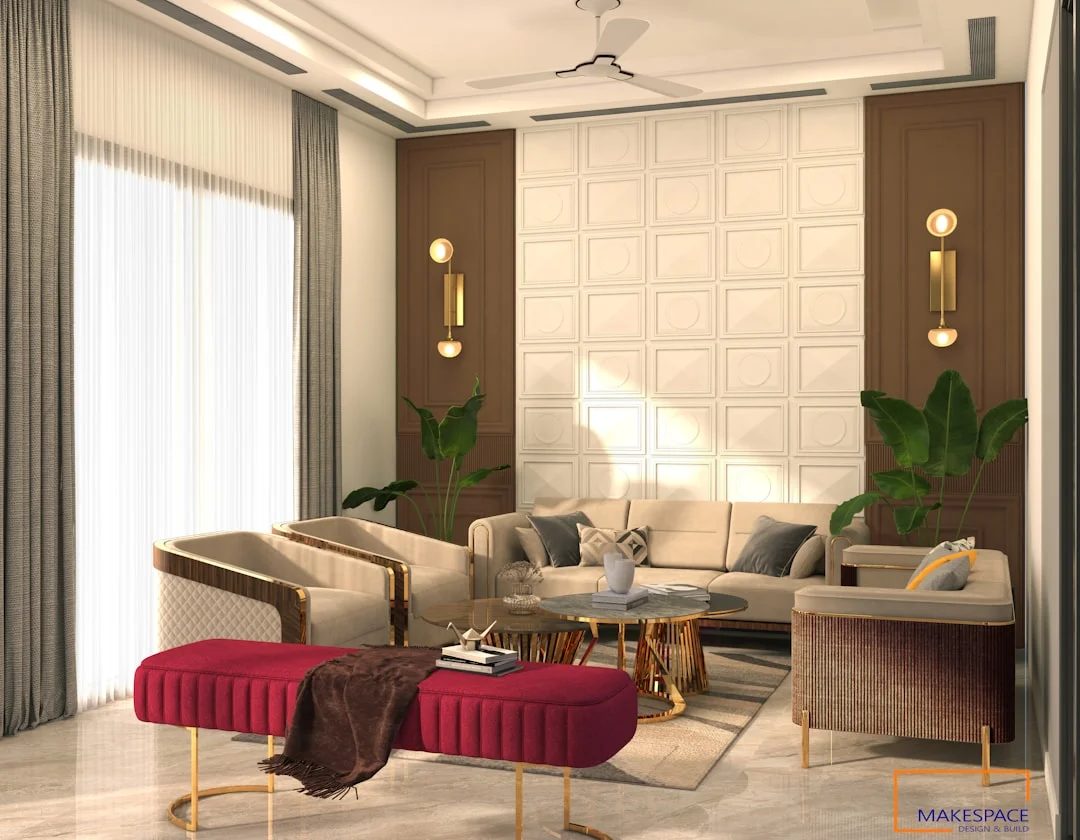
Boucle is already dead. The designers who were selling it to you two years ago are now quietly apologizing with their next collection, and the sofa trends living room 2026 is bringing in are a complete repudiation of everything that felt safe and Scandinavian and beige.
That matters because most people buy a sofa once every seven to ten years. You’re not making a seasonal purchase. You’re making a decade-long commitment. Get it wrong and you’ll spend the next several years flinching every time you walk into your own living room.
Here’s what the competition won’t tell you: the dominant forces shaping sofas right now aren’t just aesthetic. They’re economic, behavioral, and in one surprising case, architectural. Import tariffs on upholstered furniture hit an average of 31% in early 2025, which reshuffled the entire mid-market. Brands that survived pivoted toward domestic production, customization, and premium natural materials — and that pivot is now showing up in what’s actually available and what’s genuinely worth buying. Understanding why these trends are rising makes you a better buyer than understanding what they are.
So: nine trends, ranked by staying power, with one dark horse that nobody is talking about yet but every serious designer I’ve spoken with is specifying quietly. Let’s start.
Modular Sofas Are No Longer a “Future” Trend — They’ve Won
Stop waiting for modular to peak. It already peaked, held the peak, and is now the new normal. Modular sofas — systems built from individual seat and back units that reconfigure freely — now account for a majority of new sofa sales in the $2,000–$6,000 segment. That’s not a style preference. That’s a category shift.
Why are they winning? Because the American living room is shrinking relative to household size, and people are moving more often. The average American moves 11.7 times in their lifetime. A modular sofa moves with you. A fixed three-seater from a big-box store does not survive a second apartment. A well-built modular adapts — it splits into two pieces for a smaller den, reassembles as an L-shape when you finally get the bigger place, and adds a chaise when you stop caring what anyone thinks.
The non-obvious caveat here: not all modulars are built equally, and the connectors are the weak point almost every buying guide ignores. Cheap modular systems use plastic clips or velcro strips between sections. After 18 months of actual use, those sections migrate. You’re constantly pushing them back together. The modulars worth buying — from brands like Burrow, BenchMade Modern, or Ligne Roset’s more accessible lines — use metal pin-and-bracket systems that hold under load. Before you buy any modular, ask specifically about the connection mechanism. If the salesperson doesn’t know, walk.
Curved and Organic Shapes, But Not the Way Instagram Sold Them to You

Here is what most guides get wrong about the curve trend: they show you those perfect kidney-shaped conversation sofas and imply that’s what you’re buying into. You’re not. The real version of this trend is much more subtle and much more liveable.
The dominant silhouette in 2026 is a gently curved front rail — a sofa that reads as mostly rectangular from across the room but reveals its softness when you’re close. Think of it as a straight sofa that’s been breathing. The extreme banana sofas and the theatrical conversation pits work in showrooms and Instagram carousels. They fail in actual 1,200-square-foot apartments where you need to push the sofa against a wall half the time and fit a coffee table in front of it without the geometry becoming a puzzle.
The reason curves matter isn’t aesthetic, though. It’s spatial psychology. Sharp 90-degree furniture in a room creates a subconscious tension — your brain registers the angularity as formal, as corporate, as “do not get comfortable here.” A slightly curved form sends the opposite signal. It’s the reason boutique hotels have been using curved seating in their lobbies for years: they want you to slow down. You can borrow the same trick for your living room without committing to a sofa that looks like it belongs in a Kubrick film. And if you’re exploring how this connects to the broader shift in living room design trends this year, the throughline is clear: softness is the dominant visual language of 2026.
The Fabric Renaissance: Velvet Is Back, But This Time It’s Doing More Work

Bouclé is out. That’s the news, and I’ll stand behind it. The pilled, loopy, oatmeal-colored upholstery that dominated 2022 through 2024 has crossed the threshold from trendy to dated. You’ll find it heavily discounted at every major retailer right now, which tells you everything.
What replaced it isn’t one fabric — it’s a hierarchy. At the top: performance velvet. Not the cheap velvet that crushes into permanent marks and hemorrhages dye onto pale clothing. The new performance velvets are solution-dyed, meaning the color runs through the fiber rather than coating the surface. They resist fading from UV exposure, clean with water and mild soap, and have a crush-recovery rate that makes them genuinely practical for families. A quality performance velvet can handle 100,000 double rubs — the industry durability benchmark — while still reading as luxurious in the room.
Below velvet in the hierarchy: linen-cotton blends and heavyweight wovens with subtle texture. These are the workhorses. They feel natural, age with character rather than against it, and photograph beautifully in morning light. The direction is tactile richness over visual complexity. Patterns aren’t gone — we’ll address them — but the primary play in 2026 is surfaces that reward touch. Run your hand across a well-upholstered sofa and it should feel intentional. That’s the standard.
Color Is Getting Braver, But the Winning Moves Are More Specific Than “Go Bold”
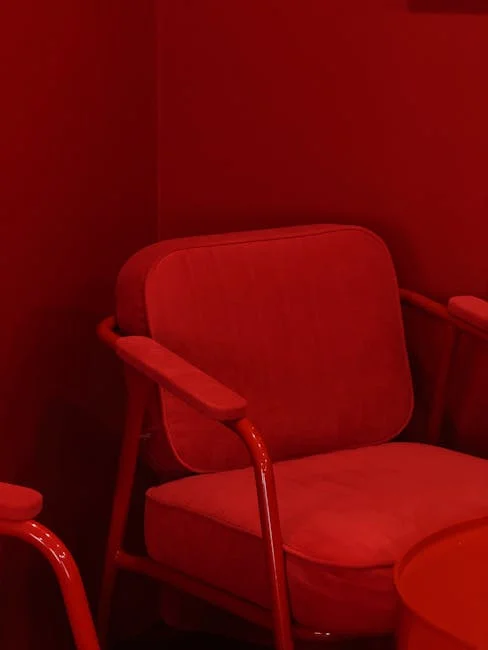
The color story for sofa trends living room 2026 can be summarized in one sentence: warm depth over cool neutrality. But that sentence is useless without specifics, so here are the specifics.
The dominant sofa colors this year fall into three camps. First: terracottas and clay reds that lean warm without going orange — think the color of old Roman brick, not a pumpkin. Second: forest greens and deep olives that work as a neutral, meaning they don’t demand color-coordination the way a bright sofa does. Third: deep caramel and cognac leathers, which have made a significant comeback as genuine leather (not bonded, not PU) becomes a sustainability story unto itself — one well-made leather sofa outlasts four fabric ones.
The color to avoid right now? Greige. The gray-beige spectrum that has dominated living rooms for fifteen years is reaching exhaustion. It photographs flat, it reads as indecisive, and every competitor piece of content telling you to “play it safe with a neutral” is steering you toward a sofa that will feel apologetic in three years. Play it safe with proportion. Play it safe with construction. Don’t play it safe with color. A deep forest green sofa in a room with warm oak floors and cream walls isn’t bold — it’s correct. For a deeper look at how these color choices interact with your walls and flooring, living room color schemes that actually work breaks down the combinations worth committing to.
Oversized and Deep-Seated: The Comfort Standard Has Been Permanently Raised
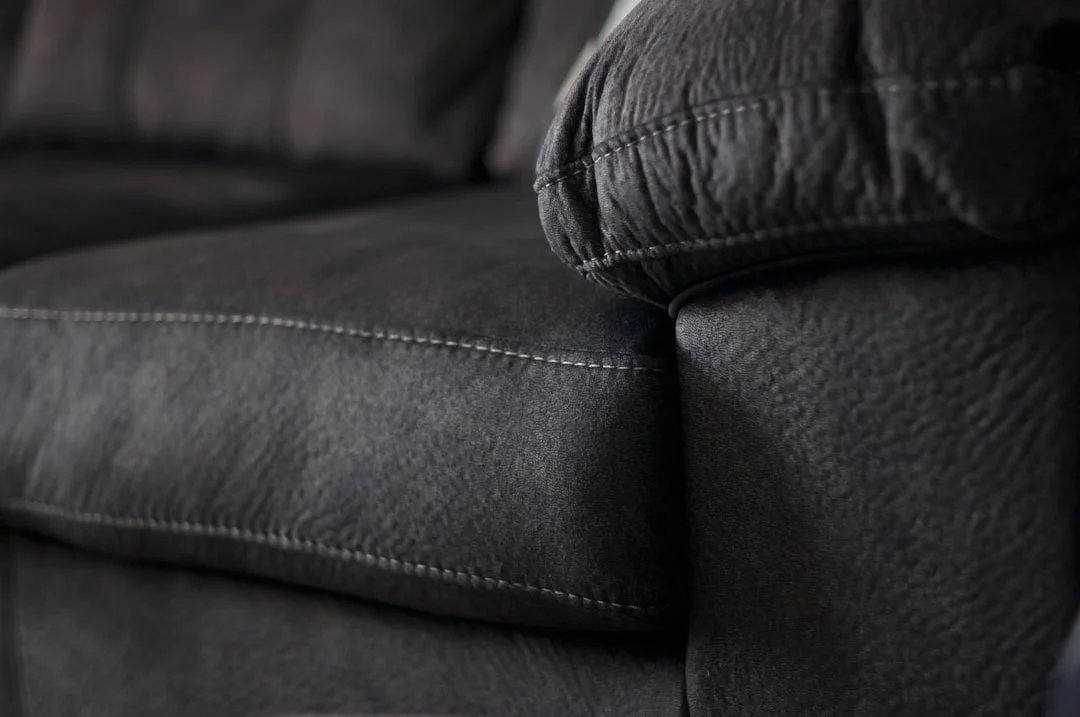
The pandemic reset comfort expectations in American homes and those expectations are not reverting. People discovered that their sofas were, in fact, inadequate. They were too shallow, too firm, too designed-to-be-seen rather than designed-to-be-used. The response — deep-seated, generously scaled sofas — is now a permanent category, not a moment.
“Deep-seated” means a seat depth of 40 inches or more. Standard sofas run 32–38 inches deep. The difference sounds small. It isn’t. At 40-plus inches, you sit cross-legged comfortably. You can lie diagonally without your feet hanging off. The sofa becomes a room within the room. The reason this matters isn’t just comfort — it’s usage. A sofa you actually want to sit in gets used differently than one you perch on. Your relationship with the space changes.
The practical trade-off, which no one tells you directly: oversized sofas need proportional rooms. A deep-seated sofa in a narrow room creates a tunnel. The rule of thumb — I can’t cite a formal study but every space planner I’ve spoken with uses it — is that your sofa should occupy no more than two-thirds of the wall it faces. In a 10-foot-wide room, that means your sofa tops out at roughly 80 inches wide. Go bigger and the room starts working against you.
Here’s What Everyone Gets Wrong About Sustainable Sofas
The sustainability conversation in furniture is almost entirely focused on materials: FSC-certified wood frames, recycled fill, organic cotton. That focus is correct but incomplete in a way that leads to bad buying decisions. The most sustainable sofa is the one you keep for 20 years. Full stop.
A sofa made with all the right eco-certifications but poor joinery fails in six years. The kiln-dried hardwood frame becomes firewood. The organic linen cover gets thrown away. You buy again. The carbon math on that cycle is devastating compared to a conventionally made sofa — one with steel-corner-blocked joints, eight-way hand-tied springs, and high-density foam — that simply doesn’t break.
So the counter-intuitive recommendation: buy for construction first, materials second. Look for hardwood frames (kiln-dried, not green wood that will warp), sinuous springs or eight-way hand-tied systems, and foam density of 1.8 pounds per cubic foot or higher. If the brand can’t tell you the foam density, they’re hiding something. These specs aren’t exciting. They don’t make good marketing copy. But they’re the difference between a sofa that goes to a landfill in 2031 and one your kids argue over when you move.
The Dark Horse: The Low-Slung, High-Drama “Platform Sofa”
Nobody is leading with this one, and I don’t fully understand why. The platform sofa — extremely low to the ground, typically 12–15 inches of seat height versus the standard 18 — is the trend with the longest runway and the least current noise around it. It’s the dark horse.
The aesthetic case is easy: low sofas make ceilings feel taller, rooms feel larger, and spaces feel more deliberate. They pull from mid-century Japanese and Italian design traditions simultaneously and land somewhere that feels genuinely new. In a room with 8-foot ceilings — most American rooms — a platform sofa adds a perceived foot of height. That’s significant.
The practical case is less discussed: low sofas force a particular kind of use. You sink into them. You don’t perch. They’re incompatible with “I’ll just sit here for a minute” energy, which means anyone who sits in your living room is actually committing to being there. There’s a hospitality logic to that. The rooms designers are most excited about right now lean on this principle.
The caveat — and I want to be honest about this — is that platform sofas are not accessible for everyone. For anyone with knee or hip issues, a 13-inch seat height is a genuine obstacle. If that applies to anyone in your household or regular guest list, you need at least 17–18 inches. Don’t let a trend override practical reality.
Slipcovered and “Intentionally Imperfect” Sofas Are More Serious Than They Look
The so-called “granny sofa” revival is real and it’s not ironic. Slipcovered sofas — upholstered in removable, washable covers that pool slightly at the base and wrinkle at the arms — have moved from the farmhouse-style corner of Pinterest into genuinely high-end interior projects. Designers like Bunny Williams have specified them for decades. They’re newly fashionable to people who dismissed them, and they deserve reconsideration on pure merit.
The case for slipcovered sofas: washability. You can pull the cover off and run it through a commercial washing machine. For households with children, pets, or humans who eat dinner on the couch (so: all households), this is a massive practical advantage. The visual softness — the casual drape, the slight gathering — reads as relaxed confidence rather than sloppiness in the right context. It works with high ceilings, layered rugs, and rooms that have enough visual weight elsewhere. The maximalist interior design revival happening in parallel makes slipcovered sofas a natural ally.
The thing to get right: the fit matters more than you think. A slipcover that’s too loose looks genuinely sloppy. The best versions are tailored to within about two inches, with a subtle pooling intentional at the base. If you can grab a fistful of fabric at the side, it’s too loose. Ask about the cover’s hem allowance before buying.
Performance Fabrics Are Smarter Than You Think — And the Best Ones Are Invisible
The last major force shaping sofa trends living room 2026 is the quietest: performance fabric technology has quietly become indistinguishable from natural fabric to the eye and increasingly close in hand. Three years ago, performance fabrics felt like performance fabrics — slightly waxy, slightly synthetic, obviously functional rather than beautiful. That’s no longer true at the upper tier.
The best current performance textiles — Crypton, Sunbrella’s indoor line, and several proprietary weaves from direct-to-consumer brands — are solution-dyed and solution-treated, meaning stain resistance is a property of the fiber, not a topical coating that wears off after two years of cleaning. A glass of red wine on a quality performance velvet wipes off in 30 seconds with a damp cloth. I’ve seen this demonstrated enough times to believe it. The stain resistance on premium performance fabrics typically carries a 10-year warranty, which is worth taking seriously.
The reason this matters as a trend, not just a feature: it removes the last practical objection to buying a beautiful, non-neutral sofa. If you’ve been avoiding deep green or cognac leather or rich terracotta because you’re afraid of maintenance, performance fabrics are the answer. Buy the color you actually want. The technology will protect it.
Questions We Get Every Day
Is boucle really over?
Yes, in the sense that its cultural moment has passed. Boucle as a texture still works in specific contexts — a small accent chair, a bedroom reading nook — but as a primary sofa upholstery choice in 2026, it reads dated. The retailers discounting it 30–40% right now are the tell.
How much should I spend on a sofa in 2026?
The honest floor for a sofa worth buying is $1,800–$2,200 for a quality three-seater from a reputable domestic brand. Below that, you’re typically getting particleboard frames, low-density foam under 1.5 lbs/cubic foot, and sinuous springs that fatigue within four years. The sweet spot for durability-to-cost is $2,500–$4,500. Above $6,000, you’re paying for brand and aesthetics more than construction quality, though there are exceptions at the true high end.
Are curved sofas hard to place in a room?
Only the extreme versions. Gently curved front-rail sofas place exactly like a rectangular sofa — against a wall, floating with a rug, or anchoring a sectional arrangement. The architectural banana and conversation-pit styles are genuinely challenging in standard rooms and should only be bought with a specific space plan already confirmed.
Will modular sofas still look relevant in five years?
Yes. Modularity is a function, not a look. The specific aesthetic of any given modular will date, but the format — the ability to reconfigure — has too many practical advantages to fade. Buy a modular with a classic, simple profile in a durable natural color, and it’ll work through multiple trend cycles.
What size sofa works in a small living room?
A small living room (under 180 square feet) generally wants a sofa no wider than 72 inches and no deeper than 36 inches. The bigger mistake isn’t buying too large — it’s buying too small. An undersized sofa in a small room makes the room feel nervous and unresolved. Go as large as your traffic flow allows; the room will feel more grounded for it.
What’s the question nobody asks but should?
What’s the frame made of. Seriously. Most people ask about fabric, color, size, and price. Almost no one asks what’s inside. Kiln-dried hardwood — maple, ash, beech — is the standard for quality construction. Anything described as “engineered wood” or “wood composites” in the frame is a red flag. Ask before you buy.
Should I be worried about tariffs affecting 2026 sofa prices?
If you’re buying from brands that manufacture in Vietnam, Malaysia, or China, yes — the price increases are real and ongoing. Domestically made sofas have become comparatively better value than they were two years ago. Brands like BenchMade Modern, American Leather, and Mitchell Gold + Bob Williams manufacture primarily in the US. You’ll pay more upfront but the tariff math no longer favors the import-dependent players at mid-price.
The Sofa Decision You’ll Never Regret
The cleanest frame I can give you for navigating sofa trends living room 2026: buy the construction first, then the format (modular if your life is in flux; traditional if it’s settled), then the color (warmer and braver than your instinct), then the fabric (performance if you have kids, pets, or anxiety; natural velvet or linen if you live carefully and want beauty above everything).
The trend you’ll regret following is whichever one you picked for pure aesthetics without checking the foam density and frame material. The trend you’ll be grateful for is whichever one pushed you toward a color you actually love, in a sofa built to survive the decade you’re about to put it through.
One more thing. The single best sofa for your living room is the one you’d buy again today if it wore out tomorrow. Use that test in the showroom. Sit in it. Take off your shoes and sit in it for fifteen minutes. The right sofa will make that question easy to answer.