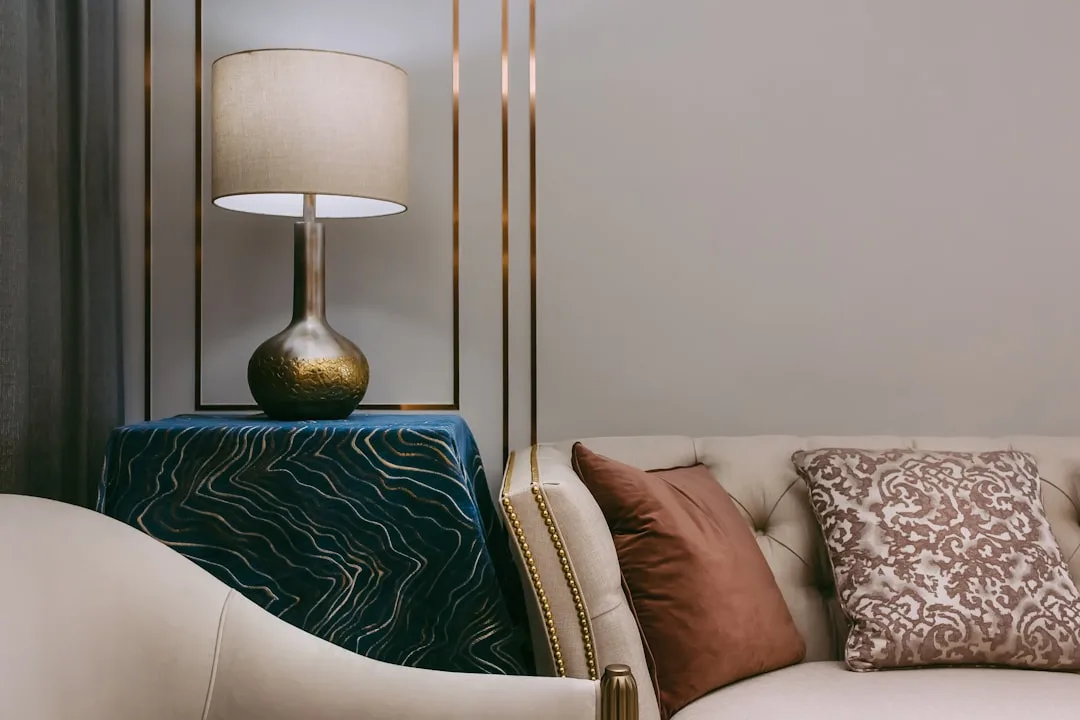
The lamp next to your sofa is almost certainly the wrong height — and if you’ve ever tried to follow table lamp height rules sofa guides recommend, you already know the frustration: you did everything right and the light still feels off. That’s not a coincidence. The rule everyone quotes was designed for a sofa you probably don’t own.
Quick Answer
The lamp next to your sofa is almost certainly the wrong height — not because you made a careless choice, but because the rule everyone quotes was designed for a sofa you probably don’t own.
I spent eleven years placing lamps next to sofas in real apartments, and the pattern I kept seeing wasn’t ignorance — it was misapplication. Homeowners followed the advice correctly and still ended up with a reading lamp that felt like a dentist’s office light or an ambient fixture so dim it might as well be decorative. The problem isn’t effort. The problem is that every popular guide hands you a single number without telling you what assumptions are baked into it.
This is the version of that conversation that doesn’t skip the math.
Why Table Lamp Height Next to a Sofa Matters More Than Aesthetics
In This Article
- Why Table Lamp Height Next to a Sofa Matters More Than Aesthetics
- The Actual Measurement Framework: What the 58–64 Inch Rule Gets Wrong
- Table Lamp Height Rules Change by Sofa Type — A Breakdown
- The Side Table Variable Nobody Accounts For
- Shade Size and Shape: The Height Calculation You’re Missing
- When Two Lamps Flank the Same Sofa
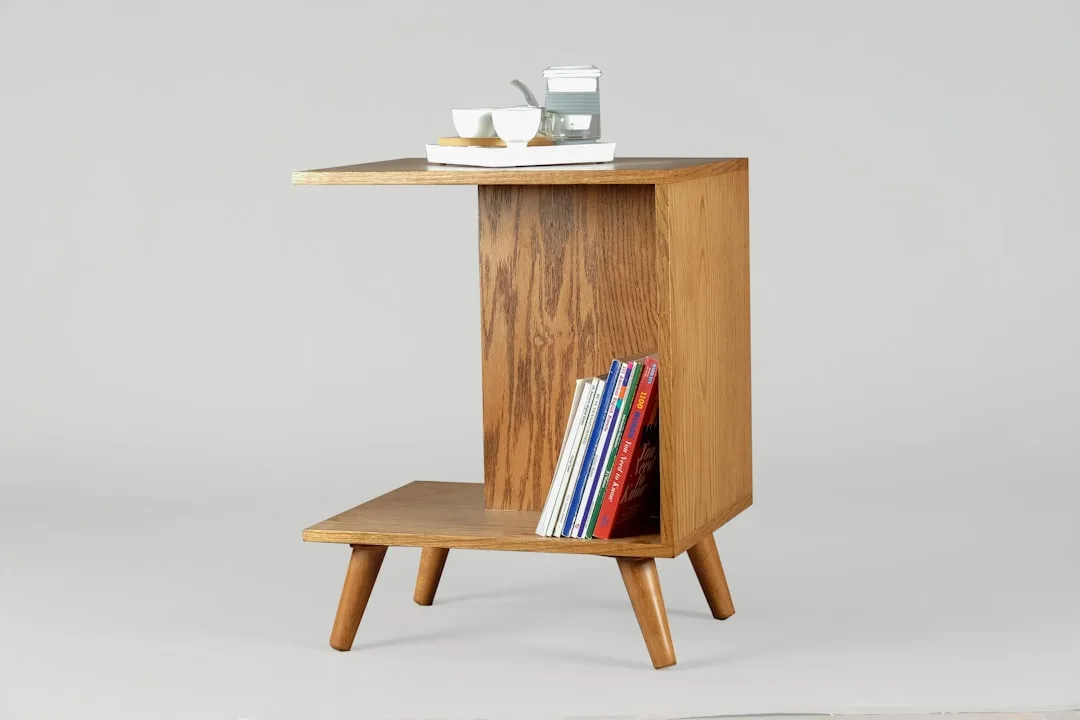
Most people treat lamp height as a styling decision. It isn’t — or at least, it isn’t only that. Getting it wrong has real, physical consequences that have nothing to do with whether the room photographs well.
A lamp positioned too high places the light source directly at seated eye level, which is a biological discomfort trigger. Human eye level when seated averages 38–42 inches from the floor. When a bare bulb or the lower edge of a translucent shade sits within that zone, you’re not just looking at an awkward lamp — your visual system is registering glare the same way it would from oncoming headlights. You compensate without realizing it, angling your head slightly away or sitting forward. After thirty minutes, your neck knows something is wrong even if your design brain doesn’t.
A lamp positioned too low does the opposite. It pulls light downward into a tight pool, creating what I started calling the “cave effect” — the seating zone feels compressed and isolated from the rest of the room rather than anchored within it. I saw this constantly in smaller apartments where clients had bought petite table lamps thinking they were being proportionally careful.
The right height accomplishes something genuinely functional: it creates a light pool that anchors the sofa visually and separates the seating zone from surrounding floor space without hard edges or furniture rearrangement. This is why a single well-positioned lamp can make a floating sectional feel intentional while a mismatched one makes the same sofa look like it was dropped in the room without a plan.
Shade bottom position is the variable that controls all of this — not the total height of the lamp, not the wattage, not the shade material. Get that one measurement right, and almost everything else adjusts around it.
The most common height mistakes I saw repeatedly in real living rooms:
- Lamp base too tall for a low-profile sofa, placing the shade bottom 6–8 inches above seated eye level
- Side table too short, pushing an otherwise correct lamp down into the cave zone
- Drum shade chosen for aesthetics with a translucent material that turns the entire shade into a glare source at eye level
- Finial-to-floor measurement used as the reference point instead of shade-bottom-to-floor, throwing calculations off by the full shade height
- Matching lamp pairs bought without accounting for the fact that one end of the sofa gets a different seated posture than the other
- Lamp height calculated correctly for standing position rather than actual seated position
Actionable takeaway: Before changing anything else, sit on your sofa naturally and have someone hold a finger at your eye level. If the lamp shade’s bottom edge is above that point by more than four inches, or below it at all, your height is off.
The Actual Measurement Framework: What the 58–64 Inch Rule Gets Wrong
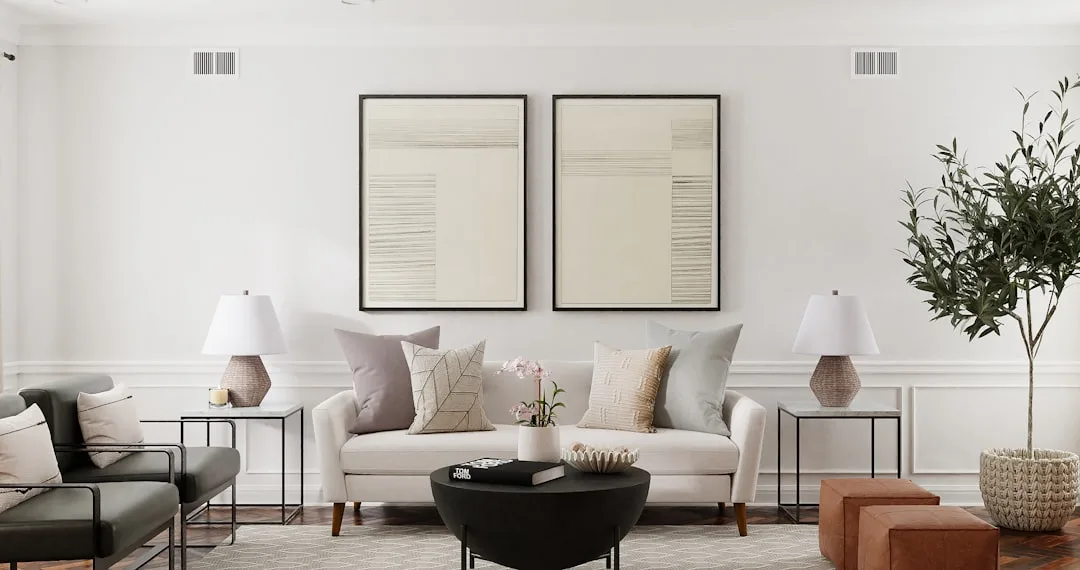
Every major decorating publication quotes the same number: keep your table lamp between 58 and 64 inches from floor to shade top. Some say floor to finial. Some say floor to shade bottom. The inconsistency alone should make you suspicious — but the bigger problem is what the rule was built on.
That 58–64 inch range was calibrated for a sofa with a seat height of 17–18 inches. That’s a traditional rolled-arm sofa, a Chesterfield, a standard three-seat with tight cushioning. It is not a low-profile sectional. It is not a modular piece. It is not the majority of sofas sold in the last decade, which tend to sit lower, wider, and softer.
Standard sofa seat heights range from 14 to 20 inches depending on style — and that 6-inch spread matters enormously. A low-slung sectional at 14 inches puts your seated eye level roughly 4 inches lower than a traditional sofa would. Apply the 58–64 inch rule anyway, and your shade bottom ends up nearly six inches above your eye level. You’ve built a glare machine and followed the rules perfectly.
The real variable isn’t the absolute floor measurement. It’s the delta — the gap between your seated eye level and the shade bottom. That target should be zero to slightly positive, meaning the shade bottom lands at or just above your eye level by an inch or two. No more.
Here’s the field method I gave every client before I’d let them buy anything:
- Sit on your sofa in your normal position. Not perched on the edge. The way you actually sit.
- Have someone hold a piece of painter’s tape horizontally at the height of your eye line.
- Measure from the floor to that tape. Write it down.
- That number is your shade-bottom target.
- Measure your side table height and write that down separately.
- Subtract your side table height from your shade-bottom target — this gives you the maximum distance from tabletop to shade bottom.
- Look at the lamp you’re considering and find its listed shade bottom height, or measure from base to shade bottom yourself in-store.
- If the lamp base plus that distance exceeds your calculation, the base is too tall.
Then work backward. Subtract your side table height. Subtract your shade height. What’s left is the maximum base height you should be shopping for. Most people discover they’ve been buying bases two to four inches too tall — which, on a lamp that cost $180, is a frustrating thing to learn after the fact.
Why the rule persists anyway: The 58–64 inch guideline isn’t wrong — it’s incomplete. It was accurate when American living rooms were furnished almost exclusively with traditional sofas and standard 26–28 inch side tables. It got codified into decorating canon before low-profile seating became the dominant style, and now it circulates endlessly because it sounds authoritative and nobody includes the asterisk.
Actionable takeaway: Measure your own seated eye level before you shop for anything. The table lamp height rules sofa guides standardize around were built for one sofa type — a 17–18 inch seat height — and do not transfer automatically to anything else.
Table Lamp Height Rules Change by Sofa Type — A Breakdown
There is no single correct lamp height. There are correct lamp heights — plural — and they vary by what you’re sitting on. After enough client living rooms, I stopped quoting numbers from memory and started asking one question first: What’s your sofa seat height?
Most people don’t know. The answer is usually printed on the spec sheet or available on the manufacturer’s site, and it’s worth looking up before you spend anything.
Low-profile and sectional sofas (seat height 14–16 inches)
These are the sofas that break the standard rule hardest. Seated eye level on a 15-inch sofa typically falls around 35–38 inches from the floor. That means you need your shade bottom in that same zone — which means your total lamp-plus-table system needs to reach only about 36–40 inches to the shade bottom, not the 58-inch floor-to-shade-top the classic rule implies.
What this looks like in practice:
- Side table at 20–22 inches (intentionally shorter than standard to compensate)
- Lamp base of 16–20 inches
- Shade height of 10–12 inches
- Total system height: approximately 48–54 inches floor to finial, with shade bottom landing near 36–38 inches
A lamp base of 24–28 inches total height is often entirely appropriate here. This is where the table lamp height rules sofa manufacturers and decorating guides publish most reliably lead people astray — the numbers were never meant for low-profile seating, and applying them produces lamps that are consistently too tall.
Common mistakes specific to low-profile sofas:
- Using a standard 27-inch side table, which raises even a modestly-sized lamp too high
- Buying a “petite” lamp but keeping the standard-height table — the petite base almost cancels out the taller table
- Choosing a large drum shade that drops the perceived shade bottom even further into the glare zone
Standard sofas (seat height 17–18 inches)
This is where the 58–64 inch floor-to-shade-top rule was actually designed to work. If you own a traditional sofa, a mid-century three-seater, or most design-store staples, the classic guidance applies — but only here, and only when paired with a standard 25–27 inch side table.
What this looks like in practice:
- Side table at 25–27 inches (matching or slightly lower than sofa arm height)
- Lamp base of 24–28 inches
- Shade height of 11–13 inches
- Total system height: 60–65 inches floor to finial, with shade bottom landing near 42–45 inches — just at or above seated eye level
Common mistakes specific to standard sofas:
- Pairing with an oversized side table (28–30 inches), which pushes even a correctly-sized lamp too high
- Choosing a very tall, narrow base for visual drama without accounting for how it shifts shade position
- Forgetting that a loose-cushion sofa compresses when seated, dropping eye level by 1–2 inches compared to a firm-cushion version
High-back and formal sofas (seat height 18–20 inches)
Formal sofas and high-backed pieces often have firmer cushioning and taller seat heights. Eye level when seated tends to land at 42–46 inches from the floor. The classic 58–64 inch rule still applies, but you’re working at the upper end of that range — and you have more tolerance for a slightly taller base than you would with any lower sofa.
What this looks like in practice:
- Side table at 27–29 inches (can be at or slightly above sofa arm height)
- Lamp base of 26–30 inches
- Shade height of 12–14 inches
- Total system height: 62–68 inches floor to finial, with shade bottom near 44–46 inches
Reclining sofas and sectionals with chaise components
These require a different approach entirely, because the seated eye level changes depending on the position of the piece. For upright sitting, treat it like a standard or low-profile sofa based on measured seat height. For reclined positions, the lamp’s primary function shifts from task/ambient to purely ambient — meaning glare control becomes less critical and you have more flexibility with height. Position for the upright use case first, then verify that the reclined position doesn’t create direct line-of-sight into the bulb.
The Side Table Variable Nobody Accounts For
Most table lamp height rules sofa guides skip this entirely, which is why so many people get the right lamp and still end up with the wrong result. The lamp doesn’t sit on the floor — it sits on a table. And the height of that table is doing as much work as the lamp base itself.
Standard side table heights run 24–28 inches, which is a 4-inch range that can swing your shade bottom by the same amount. If you’ve carefully calculated that you need a shade bottom at 40 inches and you place a correctly-sized lamp on a 28-inch table instead of a 24-inch table, you’ve lost that precision entirely.
The sofa arm relationship matters here too. A traditional guideline says your side table should be within 2 inches of your sofa arm height — close enough to set a drink down without reaching or bending. That guidance is good for ergonomics but doesn’t always serve lamp height. When those two requirements conflict, lamp height wins. A drink can adapt. Your eye level cannot.
Side table height adjustments by sofa type:
- Low-profile sofa (14–16 inch seat): target side table at 18–22 inches
- Standard sofa (17–18 inch seat): target side table at 24–27 inches
- High-back formal sofa (18–20 inch seat): target side table at 26–29 inches
- Deep-seat sectional with wide arms: measure arm height directly and use that as your ceiling for table height
If you already own both the sofa and the side table and they don’t coordinate well for lamp placement, a table riser or a lamp with an adjustable base is a significantly cheaper solution than replacing either piece.
Shade Size and Shape: The Height Calculation You’re Missing
Most people calculate lamp height using total base height and forget that the shade is also a variable. A shade that’s 8 inches tall positions the shade bottom very differently than a shade that’s 14 inches tall — even on the same base, even on the same table.
The shade-bottom position is always what matters, and shade height directly controls it.
For a lamp sitting on a 26-inch table with a 26-inch base:
- An 8-inch shade puts the shade bottom at 52 inches from the floor
- A 14-inch shade on the same lamp puts the shade bottom at 46 inches from the floor
That’s a 6-inch difference from a shade swap alone. If your lamp feels too bright or too high and you don’t want to buy a new base, a taller shade is often the cheapest and fastest fix.
Shade shape affects perceived height as well:
- Empire shades (wider at bottom than top) direct light downward and make a lamp feel lower and warmer, even at the same measured height
- Drum shades distribute light more evenly but make translucent materials a glare risk at eye level — use opaque drum shades if the bottom edge will land near seated eye height
- Bell shades split the difference, directing light primarily downward while allowing some ambient diffusion upward
- Coolie shades (very wide base, narrow top) produce strong downward light and work well for task reading but can feel harsh in ambient settings
Actionable takeaway: If your lamp is close but not quite right in height, try a shade swap before replacing the base. Going from a 10-inch shade to a 13-inch shade on the same lamp drops the shade bottom by 3 inches — often enough to correct the problem entirely.
When Two Lamps Flank the Same Sofa
Matching flanking lamps are one of the most common living room configurations — and one of the trickiest to execute correctly when the sofa is longer than a standard three-seat.
The seated eye level problem multiplies with sofa length. On a 90-inch sofa, the person sitting at the left end and the person sitting at the right end are both well-served by their respective lamps at the same height. But on a 120-inch sectional, the second lamp may be placed so far from the primary seating position that it functions as ambient room light rather than seated-companion light. In that case, it doesn’t need to follow the same shade-bottom rule — it needs to follow ambient lighting logic instead, which typically means a slightly taller lamp that throws light into the upper half of the room rather than at seated eye level.
Matching vs. coordinating: Identical lamps on both ends of a sofa look intentional and balanced. But if your side tables are different heights — which happens frequently when one end of a sectional meets a console or a built-in — identical lamp bases will place their shade bottoms at different heights, making the room feel visually uneven. In this case, adjust base heights so that shade bottoms match, not base heights.
A practical checklist for flanking lamps:
- Measure both side tables separately — confirm they’re the same height before assuming
- Calculate shade-bottom position for each lamp independently
- If tables differ by more than 2 inches, select different base heights to compensate
- Verify that both shade bottoms land within 1 inch of each other when measured from the floor
- Test both lamp positions with someone seated at each end of the sofa, not just one position
Frequently Asked Questions
Q: What is the correct table lamp height for a sofa, by the numbers?
The most-quoted rule — 58 to 64 inches from floor to shade top — applies specifically to sofas with a 17–18 inch seat height paired with a 25–27 inch side table. For lower sofas, you need a lower shade-bottom position, which often means a shorter lamp, a shorter table, or both. The only truly reliable number is your own seated eye level measured on your actual sofa. Shade bottom should land at that height or up to 2 inches above it.
Q: My lamp is the right height but the light still feels harsh. What’s wrong?
Shade material is usually the culprit. A translucent shade with the shade bottom at eye level is nearly as bad as a bare bulb — your eye catches the hot spot through the fabric. Switch to an opaque shade or a darker-lined shade that directs light up and down rather than outward. Also check your bulb: an exposed-filament LED in a translucent shade compounds the problem significantly.
Q: Can my side table be taller than my sofa arm?
Technically yes, but it creates ergonomic awkwardness for anything you want to place on the table while seated. More relevantly for lamp height, a taller table pushes the lamp higher, which can move the shade bottom above your eye level. If your table is already taller than your sofa arm and your lamp feels too high, the table is likely contributing to the problem. Consider a lower table before adjusting the lamp base.
Q: What if I’m using a torchiere or floor lamp instead of a table lamp?
Floor lamps behind or beside the sofa don’t follow the same shade-bottom rules because they’re not positioned at seated companion height — they’re positioned as room fixtures that happen to be near the seating zone. The relevant measurement shifts to the angle and diffusion of light reaching the seated eye, not the shade bottom height. A torchiere should direct light upward toward the ceiling; a floor lamp with a downward shade should be positioned so the shade bottom clears seated eye level by at least 8–10 inches to avoid direct glare.
Q: Do table lamp height rules change for reading lamps specifically?
Yes, and significantly. A lamp used primarily for reading needs to direct light onto the page, which means you want the shade bottom slightly behind and above your shoulder — typically 6–10 inches above and 15–20 inches to the side of your reading position. This often means a taller lamp than ambient use would require. Many people solve this with an adjustable arc lamp or a swing-arm table lamp rather than a standard fixed-base lamp, because the directional control matters more than the fixed height.
Q: What if I can’t find a lamp in the exact height I need?
This is more common than the decorating guides admit. Your options, in order of cost: swap the shade for a taller one (drops shade bottom without changing the base), add a book or decorative riser under the lamp (raises the whole system, useful if you’re too low), replace the side table with one at a different height (moderate cost, affects the whole table’s function), or buy a lamp with an adjustable telescoping base (available from several lighting brands, often overlooked as an option). The base-only swap — buying a different base and moving your existing shade — is also worth considering if the shade is the expensive component.
Q: What is the correct table lamp height for a sofa, by the numbers?
The most-quoted rule — 58 to 64 inches from floor to shade top — applies specifically to sofas with a 17–18 inch seat height paired with a 25–27 inch side table. For lower sofas, you need a lower shade-bottom position, which often means a shorter lamp, a shorter table, or both. The only truly reliable number is your own seated eye level measured on your actual sofa. Shade bottom should land at that height or up to 2 inches above it.
Q: My lamp is the right height but the light still feels harsh. What’s wrong?
Shade material is usually the culprit. A translucent shade with the shade bottom at eye level is nearly as bad as a bare bulb — your eye catches the hot spot through the fabric. Switch to an opaque shade or a darker-lined shade that directs light up and down rather than outward. Also check your bulb: an exposed-filament LED in a translucent shade compounds the problem significantly.
Q: Can my side table be taller than my sofa arm?
Technically yes, but it creates ergonomic awkwardness for anything you want to place on the table while seated. More relevantly for lamp height, a taller table pushes the lamp higher, which can move the shade bottom above your eye level. If your table is already taller than your sofa arm and your lamp feels too high, the table is likely contributing to the problem. Consider a lower table before adjusting the lamp base.
Q: What if I’m using a torchiere or floor lamp instead of a table lamp?
Floor lamps behind or beside the sofa don’t follow the same shade-bottom rules because they’re not positioned at seated companion height — they’re positioned as room fixtures that happen to be near the seating zone. The relevant measurement shifts to the angle and diffusion of light reaching the seated eye, not the shade bottom height. A torchiere should direct light upward toward the ceiling; a floor lamp with a downward shade should be positioned so the shade bottom clears seated eye level by at least 8–10 inches to avoid direct glare.
Q: Do table lamp height rules change for reading lamps specifically?
Yes, and significantly. A lamp used primarily for reading needs to direct light onto the page, which means you want the shade bottom slightly behind and above your shoulder — typically 6–10 inches above and 15–20 inches to the side of your reading position. This often means a taller lamp than ambient use would require. Many people solve this with an adjustable arc lamp or a swing-arm table lamp rather than a standard fixed-base lamp, because the directional control matters more than the fixed height.