The most expensive arc floor lamp in the room can make your living space look worse than no lamp at all — and the only variable is where the base is sitting.
Quick Answer
The most expensive arc floor lamp in the room can make your living space look worse than no lamp at all — and the only variable is where the base is sitting.
I learned this the hard way with a client in Wicker Park, Chicago — a 340-square-foot studio where I’d specced a gorgeous Arco-style brass lamp that cost more than her dining table. We placed it last, after everything else was settled, and it completely collapsed the room. The arc swept over dead floor space between the sofa and the TV wall, the base sat in the foot traffic path, and the whole thing looked like a construction site light someone forgot to move. We spent two hours repositioning it before it finally worked. Two hours that would have been twenty minutes if we’d placed the lamp first, before the furniture.
That’s the fundamental problem with how most people think about arc floor lamps. They think about the lamp. The design, the finish, the shade material, the price. And then they shove it somewhere after everything else is already committed. Placement is treated as a logistical afterthought — but the lamp’s position is doing more work than the lamp itself.
Why Arc Floor Lamp Positioning Matters More Than the Lamp Itself
In This Article
- Why Arc Floor Lamp Positioning Matters More Than the Lamp Itself
- The Arc Lamp Triangle: Base, Canopy, and Conversation Zone
- Behind the Sofa: When It Works and When It’s a Cliché
- The Side-Angle Position Most Decorators Overlook
- Corner Placement: The Rules That Separate Good from Bad
- Arc Lamp Placement by Living Room Shape: Not All Rooms Work the Same Way
- Height, Bulb Type, and Shade Angle: The Three Variables That Change Everything After You’ve Placed It
- The Four Placement Mistakes Killing Your Living Room’s Atmosphere
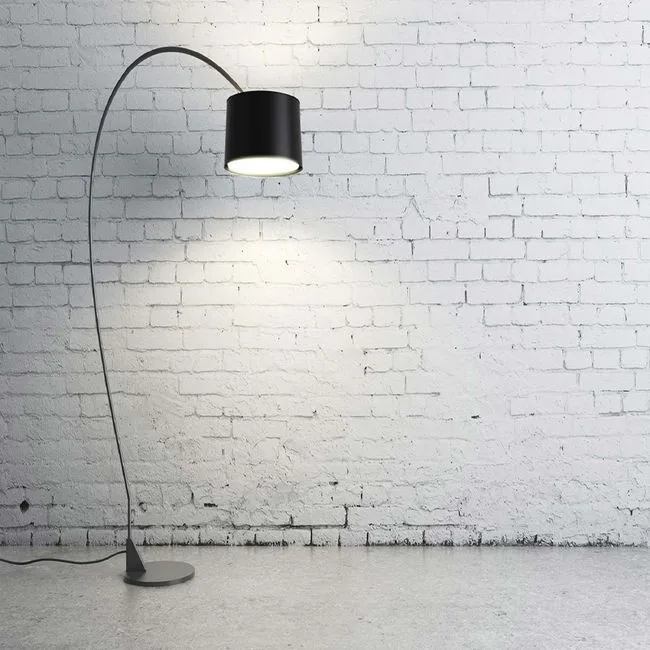
Arc lamps aren’t chandeliers. They aren’t overhead fixtures that throw light in every direction and disappear into the ceiling. They’re directional, asymmetrical objects with a base in one location and a light source hovering somewhere completely different — and that physical disconnect is the entire design problem you’re solving when you place one.
Standard arc floor lamps span 58 to 72 inches in height, with canopy arcs extending 40 to 60 inches horizontally. That means the light source can hover 4 to 5 feet away from the base. That’s not an aesthetic quirk — it’s a physics constraint that determines your placement options before you’ve thought about a single design consideration. The base can be behind the sofa, but the light will land on the coffee table. The base can sit in the corner, but the canopy swings over the chair. Understanding this spatial math first is what separates rooms that look designed from rooms that look decorated.
What most people miss is that the arc’s sweep direction is never neutral. It either pulls the eye toward the room‘s focal point — the fireplace, the primary seating group, the architectural moment — or it fractures the eye’s natural path through the space. A canopy angled toward the TV wall reads as an arrow pointing at screens. A canopy angled toward the sofa reads as an invitation to sit down. These aren’t subtle differences. Guests feel them immediately without being able to articulate why.
The pattern I kept seeing across project after project was this: clients chose their lamp position last, after all the furniture was already placed and committed. By that point, the good placement options were gone. The sofa was against the wall. The corner was occupied by an accent table. The only remaining floor space was the traffic path between the sofa and the entry. So that’s where the lamp went — into the one zone where it would do the least possible good.
Plan arc lamp position during furniture layout, not after it. Mark the base location on your floor plan in pencil before you’ve committed anything else. The lamp’s position should influence where the sofa floats, not accommodate where it already landed.
Actionable takeaway: Before you move a single piece of furniture, sketch your room’s dimensions and mark three candidate base positions for the arc lamp — then build your furniture arrangement around the best one.
The Arc Lamp Triangle: Base, Canopy, and Conversation Zone
Here’s a spatial framework I developed after enough failed placements to care about having one: the Arc Lamp Triangle. Three points, three rules, and if all three are satisfied, the lamp works. If any one of them fails, the room suffers — even if everything else is perfect.
Point One: The Base must anchor to a hard zone. Behind seating, flush beside an accent table, or tucked into a wall niche. Never floating in open floor space. A base in open floor space is a trip hazard, a visual interruption, and a signal that the lamp was placed without a plan. The base needs a neighbor — something that makes it look like it belongs in that exact spot rather than wandered there.
Point Two: The Canopy must hover over an active surface. A seat that someone actually sits in. A side table where a drink gets set down. A reading chair that sees daily use. Not the path between the sofa and the TV. Not the stretch of floor beside a bookcase that nobody stands at. Arc lamps are intimate fixtures — their entire design logic is built around the idea that the light source is close to a person. When the canopy hangs over empty space, the lamp loses its entire argument for existing.
Point Three: The placement must serve the conversation zone. This is the area within roughly 6 feet where people sit and interact — the genuine social heart of a living room. An arc lamp placed outside this zone is a visual element only, contributing zero to how the room actually feels to occupy. I’ve seen beautifully styled living rooms where the arc lamp was technically perfect for photographs and utterly useless for the people living there.
Lighting designers recommend a minimum floor-to-ceiling clearance of 7 feet for a standard arc lamp to clear seated furniture without the canopy appearing oppressive. Below that height, even a well-placed arc lamp starts to feel like a ceiling that’s too low. Worth measuring before you commit.
To sketch the triangle: draw your room on grid paper, mark your sofa position, mark the arc lamp base, then draw a line from base to canopy hover point to the center of the conversation zone. All three points should form a tight, intentional cluster — not a sprawling triangle that covers half the room.
Actionable takeaway: Map your three triangle points on a floor plan before positioning the lamp. If the triangle is larger than 6 feet on any side, you’re outside the lamp’s effective zone.
Behind the Sofa: When It Works and When It’s a Cliché
Behind the sofa has become the default recommendation for arc floor lamp placement — and like most defaults, it’s right often enough to keep getting repeated and wrong often enough to cause real damage.
The truth is that behind-the-sofa placement works only under a specific set of conditions, and most living rooms don’t meet all of them. The first condition is that the sofa must float — meaning there’s real distance between the sofa back and the wall behind it. At minimum, 8 to 12 inches of clearance is required for the base to sit without tipping, without visually crowding the sofa back, and without forcing the arc sideways off-center. In apartments and smaller urban homes, sofas are almost universally pushed against walls to preserve floor space. Behind-the-sofa placement in those rooms is geometrically impossible to execute cleanly.
The second condition is that the base remains invisible from the primary seating angle. If someone sitting on the sofa can see the base over their shoulder, the lamp reads as clutter. The whole elegance of the behind-the-sofa position is that the base disappears and only the arc and canopy register visually.
When behind-the-sofa fails, it fails in predictable ways. The base gets pushed to the sofa’s side instead of behind it, which torques the arc off-center and points the canopy somewhere nobody is sitting. Or the base sits in the wall-to-sofa gap at an angle, and the whole lamp leans slightly — which looks fine in photos and wrong in person. I’ve seen this exact mistake in probably a third of the living rooms I’ve assessed. The client saw it in a magazine, attempted it, and lived with the slightly-wrong version because they couldn’t articulate what was bothering them.
Sectionals are a specific problem here. A sectional longer than 110 inches creates a dead zone on one end where a single arc lamp’s light simply cannot reach the opposite seat — no repositioning solves this without adding a second light source entirely. One arc lamp behind a 130-inch sectional will illuminate the two seats near the lamp and leave the far seats in relative darkness, which is worse than even lighting because it highlights the imbalance.
Behind-the-sofa also fails in open-plan rooms where the sofa back faces a dining area — the arc lamp ends up pointing light at the table rather than the seating group, and the base is visible from the dining zone, making the whole arrangement look unsettled from two directions at once.
Actionable takeaway: Before placing behind the sofa, measure the gap between sofa back and wall. Under 8 inches? This placement won’t work — move to the side-angle position instead.
The Side-Angle Position Most Decorators Overlook
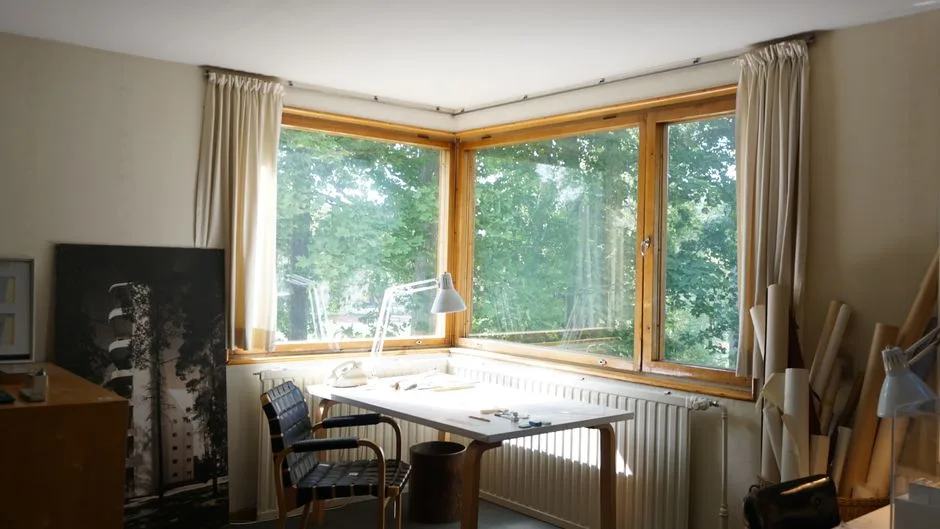
The placement that consistently produces the best results in real rooms — not staged rooms, actual inhabited ones — is the 45-degree side angle. Position the base at the rear corner of a lounge chair or accent chair, angle the canopy inward over the seat, and something clicks into place that the behind-the-sofa position almost never achieves. It feels deliberate. Specific. Like someone designed a reading moment rather than just placed a lamp.
The side-angle position creates intimate task lighting without the overhead flatness that ceiling fixtures produce. This matters more than most people realize — ceiling light flattens faces, kills shadow and depth, and makes a room feel like a waiting area. Arc light coming in at a 45-degree angle from beside and slightly behind a seated person mimics the quality of natural light from a window, which is why this position feels so instinctively right even to people who can’t explain why.
The base-to-seat relationship is precise: the base should sit within 6 to 10 inches of the chair’s back leg. Not beside the armrest, not in front of the seat — behind and beside it, at the rear corner. Forward of the armrest and the base enters peripheral vision and reads as clutter. Too far behind and the canopy’s angle flattens out and the lamp loses its intimacy.
Lighting designers working in residential interiors frequently reference the 30-60-10 rule — 30% ambient light, 60% task light, 10% accent light — and an arc lamp in the side-angle position genuinely serves dual roles. It’s task light for the person in the chair and ambient light for the broader seating zone simultaneously. This is what professionals mean when they talk about layered light. Not buying multiple fixtures, but making each fixture do more than one job.
The side-angle position also reads as more intentional to anyone entering the room, because the relationship between the lamp and the chair is legible. The lamp is obviously for the chair. That clarity of purpose is what separates rooms that feel designed from rooms that feel furnished.
Actionable takeaway: If you have a reading chair or accent chair in your living room, try the rear-corner 45-degree position before any other placement. The result will almost certainly outperform what you’re currently doing.
Corner Placement: The Rules That Separate Good from Bad
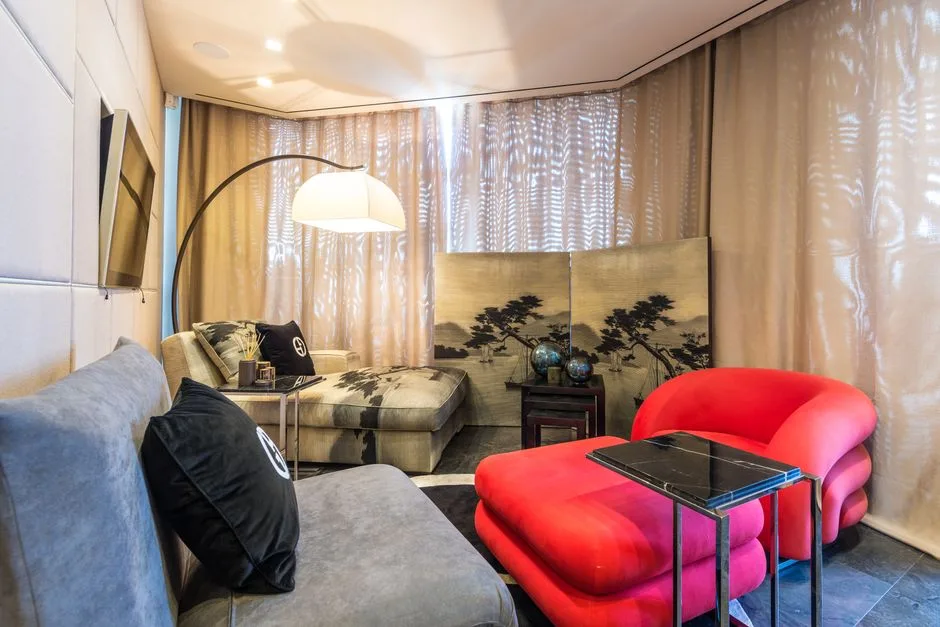
Corners can work. They can also eat floor space, illuminate walls instead of people, and make an expensive lamp look like it got pushed there to get it out of the way. The difference comes down to specific conditions — not a general endorsement or a general warning.
Corner placement succeeds when the corner is genuinely dead space. No foot traffic cutting through it. No built-in shelving competing visually. No window nearby creating glare conflict during daylight hours. A dead corner — one that would otherwise collect nothing but a plant or some anxiety about what to do with it — becomes an excellent base location because the lamp resolves the visual problem the corner was already creating.
The critical mistake I see consistently in corner placements is the arc pointing back into the corner rather than inward toward the room. This illuminates drywall. Expensive drywall, in some cases, but still. The canopy must swing inward, toward the seating zone, at an angle that puts the light source over active space. A lamp pointed into a corner is a night light for spiders.
Corner placement in rooms over 200 square feet reads as an anchor — the lamp becomes a zone-defining element that helps organize the room visually. In rooms under 150 square feet, the math changes. A standard arc lamp base and its required clearance zone consumes roughly 8 to 12 percent of total floor space in a sub-150-square-foot room. That’s a real trade-off, and in a small urban living room it’s worth calculating against the alternatives before committing.
The worst corner for an arc lamp — and I’ve seen this confidently executed multiple times — is the corner directly behind the TV. The lamp’s light creates glare on the screen, the arc draws the eye away from the focal wall during viewing, and when the TV is on, the lamp’s warm glow fights with the screen’s blue-white light in a way that’s visually unsettling without being obviously diagnosable. Move it to literally any other corner.
Actionable takeaway: Stand in the candidate corner and look toward the room’s seating center. If the arc can swing inward toward that seating center without crossing a traffic path or glaring against any screen, the corner is viable.
Arc Lamp Placement by Living Room Shape: Not All Rooms Work the Same Way
The behind-the-sofa default gets repeated regardless of room shape because it’s easier to write one rule than four. But room shape changes the physics of light distribution, the available placement zones, and which position will make the space feel larger versus more compressed.
Square rooms under 12×12 are the most placement-sensitive. In a square room, the primary visual problem is already a lack of perceived depth — the room reads as boxy, contained, without directionality. Placing the arc lamp behind the sofa in a square room worsens this by pushing the visual center backward and making the room feel shallower. The arc lamp belongs at the sofa’s end — beside it rather than behind it — where the horizontal sweep of the arc introduces diagonal movement that the eye reads as depth.
Rectangular rooms 12×16 and larger have two short-wall anchor points, and the arc lamp belongs at one of them. Either behind the primary seating float, where the sofa sits perpendicular to the long axis, or beside the reading chair at the far end from the TV wall. The long axis of a rectangular room is already doing the depth work — the arc lamp’s job is to mark one end of that axis as inhabited and warm.
L-shaped and open-plan rooms are where placement becomes genuinely critical rather than just preferential. Open-plan living areas now represent the dominant layout in new residential construction, which means zone-defining with furniture and light is a core skill that didn’t matter nearly as much when walls did the defining automatically. In an L-shaped or open-plan space, the arc lamp should sit at the interior corner of the seating arrangement — the concave point of the L — where it signals the boundary of the living zone and separates it from the dining or kitchen area. This is not a lighting decision. It’s a spatial decision that lighting executes.
Rooms with a fireplace have a focal point problem. The fireplace is already the room’s anchor, and an arc lamp placed beside or flanking it creates two competing focal points — which means neither wins and the room feels visually unsettled. Position the arc on the wall perpendicular or opposite to the fireplace, where it complements the focal wall rather than contesting it.
Actionable takeaway: Identify your room’s shape first, then select the placement framework above that matches it — don’t apply the same rule to every room and wonder why results vary.
Height, Bulb Type, and Shade Angle: The Three Variables That Change Everything After You’ve Placed It
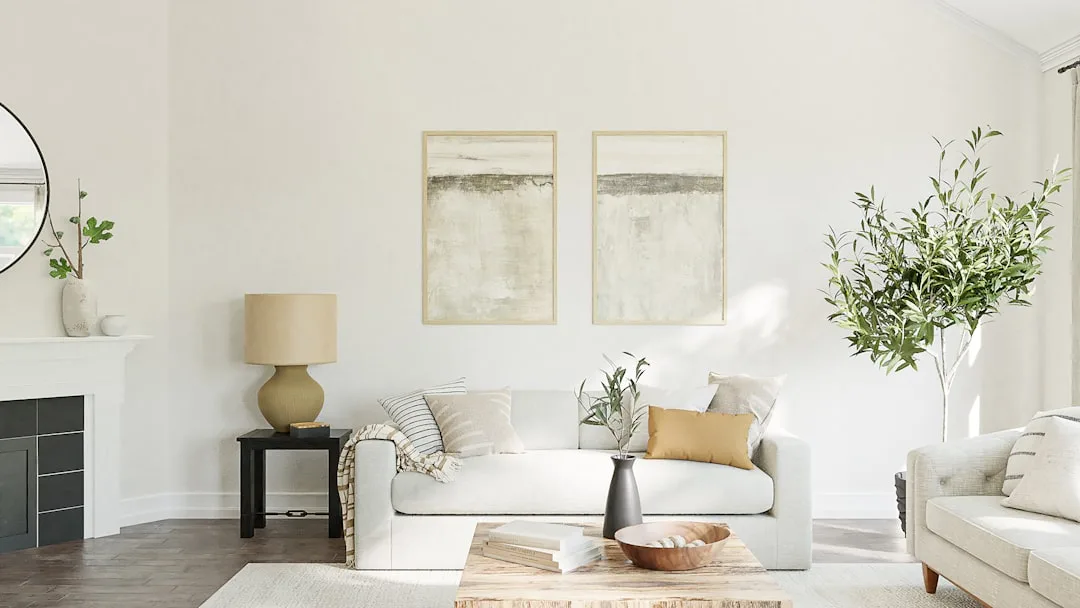
Placement is the foundation. But once the lamp is positioned, three variables determine whether it actually performs — and most people never adjust any of them after the lamp arrives from the box.
Shade height is the first variable. The bottom of the arc shade should sit between 5.5 and 6.5 feet from the floor when hovering over a seating area. Lower than 5.5 feet and the shade edge enters seated eye-line, creating glare that’s genuinely uncomfortable and makes guests unconsciously avoid the chair beneath it. Higher than 6.5 feet and the lamp loses its focused quality — the light diffuses upward and the arc reads as ambient-only rather than purposeful and directed.
Bulb temperature is where I see the most consistent, correctable mistakes. A 2700K bulb — warm white, in the same color temperature range as candlelight — enhances everything the arc lamp is trying to do. It reinforces intimacy, makes the lamp’s light feel intentional and layered, and cooperates with the room’s warm materials. A daylight bulb at 5000K or above fights the lamp’s natural quality and makes it read like a task light that somehow ended up in the living room. Match the bulb to the atmosphere, not the lumen output. A dimmer does more for output control than bulb wattage ever will.
Shade angle on adjustable-head lamps is the most overlooked variable of the three. Straight down is the wrong angle — straight-down casting creates a spotlight effect that’s harsh and unflattering and makes the lamp read like it’s interrogating the furniture beneath it. Angle the shade 10 to 15 degrees toward the seated area instead, so the light pool casts slightly forward and reads as ambient rather than forensic. This single adjustment takes thirty seconds and visually elevates the lamp’s contribution to the room immediately.
Dimmer compatibility isn’t optional for a living room arc lamp — it’s the mechanism by which the lamp’s value actually changes across different times of day. At 100%, it serves reading and task needs. At 30%, it becomes the room’s entire evening atmosphere. Without a dimmer, you’re using one setting for every context, which means the lamp is either too much or too little, constantly.
Actionable takeaway: Check your arc lamp’s current bulb temperature — if it’s above 3000K, replace it with a 2700K equivalent. The room will feel different within the hour.
The Four Placement Mistakes Killing Your Living Room’s Atmosphere
These aren’t hypothetical errors. I’ve seen every single one of them in real rooms, with real clients, who couldn’t figure out why their living room felt off despite genuinely good furniture and real effort.
Mistake 1: Placing the arc lamp in direct traffic flow. The base sits somewhere between the sofa and the entry, or between the sofa and the TV stand, because that was the only open floor space left after everything else was committed. The result is a room that never feels settled — guests unconsciously navigate around the base, the lamp gets bumped and repositioned over time, and the base gradually drifts further and further into the wrong place. Fix: map your foot traffic paths before finalizing position. The base location must never intersect the room’s primary movement corridor.
Mistake 2: Matching the arc lamp’s height to ceiling fixtures. When arc lamp light and overhead light operate at roughly the same height in the room, the arc lamp visually disappears — its light source merges with the overhead layer and the lamp loses its layered quality entirely. Arc lamps are designed to exist below overhead light, not replicate it. The distinctiveness of the arc lamp comes from the contrast between its intimate, angled light and the broader ambient light from above.
Mistake 3: Pointing the canopy toward a window. During the day, natural light overpowers the lamp and the arc reads as purposeless — just a sculpture with a turned-off shade. At night, the window becomes a dark mirror that reflects the lamp awkwardly, creating a doubled visual that reads as clutter. Arc lamps should face inward, toward the seating zone, away from window walls.
Mistake 4: Isolating the arc lamp from all furniture. A lamp in an empty corner with no seating nearby, no side table in relationship to it, no chair it’s obviously serving — this reads as an afterthought. The lamp must have a clear visual relationship with at least one piece of seating to justify its presence in the room. Every design element needs a visual partner. The pattern I kept seeing in post-move-in redesigns was that lighting placement was the most frequently corrected element — more often adjusted than furniture arrangement, rug sizing, or wall color. The arc lamp’s position is almost always the culprit.
Actionable takeaway: Walk through your living room right now and check whether your arc lamp base sits in a traffic path, competes with overhead light, faces a window, or has no furniture relationship. If any one of these is true, reposition before the weekend.
Frequently Asked Questions
How far should an arc floor lamp be from the sofa?
This depends on the position you’re using, but there’s a useful general answer: the canopy should hover within 12 to 18 inches horizontally of the seating it’s meant to serve. For behind-the-sofa placement, the base sits in the gap behind the sofa (minimum 8 inches clearance from the sofa back), with the arc extending over the sofa’s center or primary seating position. For side-angle placement beside a chair, the base should be within 6 to 10 inches of the chair’s rear leg. What you’re calibrating isn’t the base-to-sofa distance specifically — it’s the canopy-to-seat relationship, because that’s where the light lands.
Can you put an arc floor lamp in a small living room?
Yes, but with conditions. In a room under 150 square feet, the base and its clearance zone will consume real floor space — roughly 8 to 12 percent of total square footage — so you need to make sure that trade-off is worth it before committing. In small rooms, the side-angle position beside a single accent chair is almost always more effective than the behind-the-sofa position, because it requires less clearance and serves the space more precisely. Avoid corner placement in small rooms unless the corner is a genuine dead zone and the room has at least 8-foot ceilings — lower ceilings make standard arc lamps feel oppressive in confined spaces.
Should an arc lamp face inward or outward toward the room?
Inward. Always. The canopy should arc toward the room’s active seating zone, not toward a wall, window, or the room’s perimeter. A lamp facing outward illuminates the room’s edges — walls, window treatments, decorative objects on shelves — rather than the people and surfaces at the room’s center. The inward orientation is also what makes the arc lamp readable as a deliberate design decision rather than a piece of furniture that got pushed aside. When a lamp faces inward over a conversation zone, every guest who walks in understands immediately that this is a considered placement. When it faces outward, the room just looks like a lamp storage area with furniture in it.
What is the best bulb color temperature for an arc floor lamp in a living room?
2700K is the standard answer, and it’s correct. This warm white range matches early incandescent light and candlelight — the warmth that makes a living room feel like a place to stay rather than a place to pass through. Avoid anything above 3000K for a living room arc lamp. Bulbs in the 4000K to 5000K range create a cooler, bluer light that signals productivity and focus rather than relaxation, which works against the arc lamp’s fundamental design purpose in a residential living space. If you want flexibility, a smart bulb with adjustable color temperature (tunable from 2700K to 4000K) lets you shift warmer for evening and slightly cooler for reading without changing hardware.
Right now — before you close this tab — go look at where your arc lamp base is sitting. Not where the canopy is, where the base is. Is it in a traffic path? Is the canopy over dead space? Is it pointing at a window? Most placement problems are visible in thirty seconds once you’re looking for them. Move the lamp to the rear corner of your most-used chair, angle the canopy 10 to 15 degrees inward, and see if the room doesn’t immediately start making more sense. It will. It almost always does.