The most expensive bathroom mistake isn’t choosing the wrong tiles — it’s choosing between a wet room and a walk-in shower without understanding that the real difference has nothing to do with aesthetics and everything to do with what’s hidden inside your walls and floor.
Quick Answer
The most expensive bathroom mistake isn’t choosing the wrong tiles — it’s choosing between a wet room and a walk-in shower without understanding that the real difference has nothing to do with aesthetics and everything to do with what’s hidden inside your walls and floor.
Most homeowners start this decision by looking at photos on Pinterest. That’s the wrong starting point. The choice that actually shapes your budget, your build timeline, and whether you’re dealing with water damage in five years is made before a single tile goes up — it’s made when you decide how your floor will be waterproofed, where your drain sits, and what your floor structure can physically support. Get those answers first. Everything else follows.
What Actually Separates a Wet Room from a Walk-In Shower?
In This Article
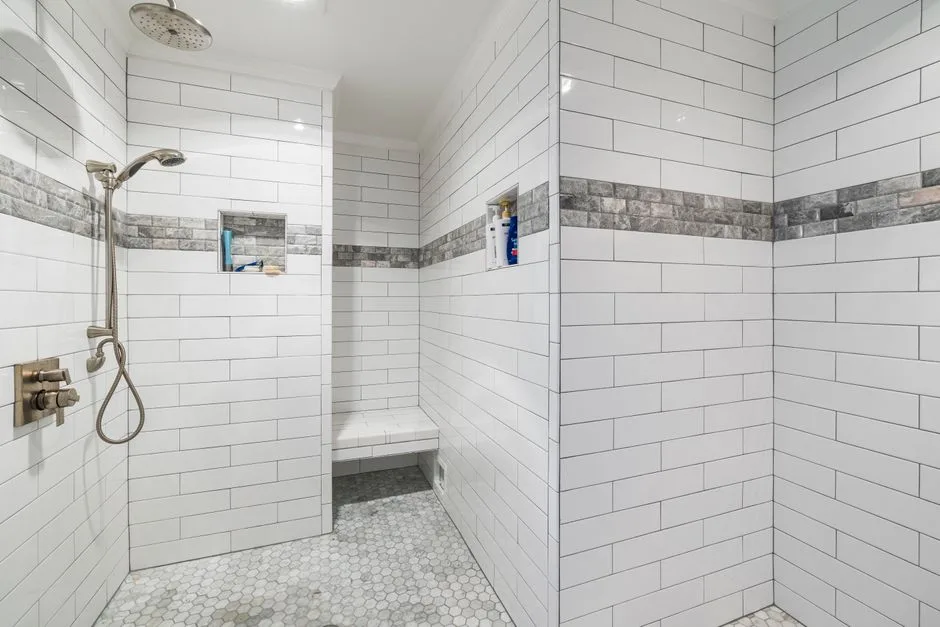
Here’s the version no one tells you clearly enough: a walk-in shower is a contained unit. It has defined walls, either a tray or a threshold, and a designated shower zone — even if there’s no door. The water lands in a specific place and leaves through a specific drain. The rest of the bathroom stays dry. Simple. Predictable. Forgiving of imperfect waterproofing.
A wet room is different in a way that changes the entire build process. There are no physical boundaries to the shower zone. The whole floor drains. The water can — and will — travel, which means every surface that water could reach must be sealed against it. That sealing process is called tanking, and it’s what separates a functional wet room from a very expensive leak.
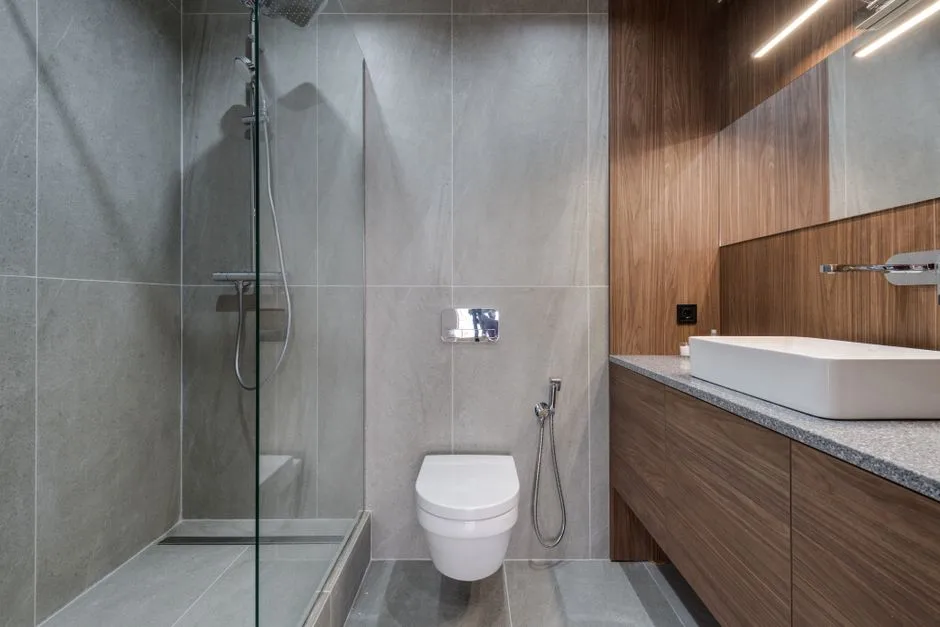
Imagine removing the tray and any glass panel from a walk-in shower. What remains — an open floor, tiled walls, a drain somewhere near the centre or edge — is essentially what a wet room layout looks like. The visual difference can be almost nothing. The construction difference is significant.
Tanking is the defining line. Wet rooms require a full membrane system applied across all floor and wall surfaces, a process that typically adds one to two days to installation time compared to a standard walk-in shower enclosure. That’s not a small variable when you’re coordinating trades.
Neither option is inherently better. The right choice emerges from four practical factors: your room size, your existing plumbing layout, who uses the bathroom daily, and your honest budget — including the contingency you’ll almost certainly need.
When comparing a wet room vs walk-in shower at this structural level, the conversation almost always comes back to the same question: what can your floor actually support, and how much are you willing to spend making it watertight?
Key structural differences at a glance:
- Floor preparation: Walk-in showers sit on a pre-formed tray or screeded base; wet rooms require the entire floor to be graded toward a drain at a minimum 1:80 fall
- Waterproofing scope: Walk-in showers need tanking inside the enclosure only; wet rooms require tanking across every floor and wall surface in the room
- Drain placement: Walk-in shower drains are fixed by the tray design; wet room drains can be positioned centrally, linearly along one wall, or in a corner — but this must be planned before floor screed is laid
- Substrate requirements: Timber joist floors need additional reinforcement or replacement with concrete board before a wet room can be installed; walk-in shower trays are more forgiving of standard timber subfloors
- Trade coordination: Wet rooms typically require a waterproofing specialist separate from your tiler; walk-in shower installations are more commonly handled by a single bathroom fitter
Actionable takeaway: Before you look at a single tile catalogue, find out what your floor is made of. Concrete or timber joists — that single fact will shape everything that follows.
Is a Wet Room Better Than a Walk-In Shower?

Stop searching for the objectively correct answer. It doesn’t exist. What does exist is a set of four factors — room size, plumbing layout, household needs, and resale strategy — that, when mapped to your specific situation, make the right answer fairly obvious.
Wet rooms tend to win when:
- The bathroom is small and you want to visually expand the space without building an extension
- Someone in the household has mobility limitations or you’re designing for long-term accessibility
- You’re doing a high-specification renovation and an uninterrupted, open aesthetic genuinely matters to the project
- The floor is already concrete and can accommodate the necessary drainage fall without significant structural work
- You have consistent, high-quality trade contacts and aren’t relying on a single generalist fitter
Walk-in showers tend to win when:
- You have young children and containment is a daily practical need
- Your budget sits under £4,000 total and you don’t want to compromise on waterproofing quality
- You’re a landlord or anticipate selling within a few years and need a finish that appeals broadly
- Your bathroom has a timber joist floor and the cost of structural upgrading isn’t justified by the project budget
- You want a shorter installation timeline — a walk-in shower can typically be completed two to three days faster than a wet room of equivalent size
The assumption that wet rooms automatically look more luxurious is, bluntly, a design myth I’ve watched cause expensive decisions. A well-specified walk-in shower with frameless glass, a quality drain cover, and decent wall tile can achieve the same visual openness as a wet room — often for several thousand pounds less. The gap in visual outcome has narrowed considerably as frameless glass technology has improved.
On resale: both formats add value, but execution matters more than format. A poorly waterproofed wet room that shows signs of water ingress behind the tiles will actively deter buyers. Estate agents I’ve spoken with across the UK market consistently flag this — a botched wet room is worse for resale than a solid, well-maintained standard shower tray.
This is the part of the wet room vs walk-in shower debate that comparison guides consistently underplay: long-term satisfaction is less about which format you chose and more about whether the waterproofing was done properly at the outset.
Actionable takeaway: Write down who uses your bathroom daily and what their actual needs are. Not their aesthetic preferences — their needs. That list will tell you more than any comparison article.
What Are the Disadvantages of a Wet Room?
Every article covering this topic mentions disadvantages as a brief afterthought after several paragraphs of selling you on how beautiful wet rooms look. That imbalance is worth correcting, because the disadvantages are specific and, in some cases, expensive.
Waterproofing failure is the single biggest risk — and the reason it’s so damaging is that it’s invisible until water appears in the ceiling of the room below or starts warping the timber of your floor joists. A 2023 survey by the Bathroom Manufacturers Association found that water ingress was cited in 34% of wet room complaint cases, with the majority linked to DIY or under-specified tanking systems. That’s not a fringe issue. That’s a structural risk that appears in a third of reported problems.
Cold floors are a consistent complaint that most buyers don’t anticipate. Because the entire floor is tiled and regularly wet, the room ambient temperature drops — especially in older properties with poor insulation. Underfloor heating becomes near-essential rather than a luxury, which adds between £500 and £1,500 to your project depending on floor area and system type.
Humidity doesn’t stay in the shower zone. It spreads across the whole room. Toilet paper, towels folded on open shelves, toiletries without sealed lids — all of it absorbs moisture if your ventilation isn’t doing its job. Poor ventilation in a wet room creates a mould problem faster than almost any other bathroom configuration.
The full list of disadvantages worth planning around:
- Retrofitting is expensive if your floor can’t be dropped for a gravity-fed drain — raising the floor instead to create the necessary fall adds height to the room and can create a step at the door threshold, which defeats the accessibility argument entirely
- Grout and tile maintenance is higher because the entire floor is in the splash zone — not just the shower base; expect to reseal grout across the full floor area every 12 to 18 months rather than just inside a tray
- Heating costs increase because the room takes longer to warm and loses heat faster through the constantly wet tile surface; this is a running cost, not a one-off
- Storage options shrink because open shelving in a humid, splashing environment is impractical; closed cabinetry rated for wet environments costs more than standard bathroom furniture
- Cleaning time increases because every floor tile and every grout line in the room accumulates soap scum and mineral deposits, not just the shower zone
- Insurance implications are worth checking; some home insurers treat wet rooms differently for water damage claims, particularly in flats where a leak could affect the property below
None of these disadvantages make a wet room the wrong choice. But going in with clear eyes about what you’re managing long-term is a different decision than being surprised by it two years post-installation.
Actionable takeaway: Get a ventilation specification from your bathroom designer before you finalise your wet room plans. An extractor fan rated for a standard bathroom is almost always undersized for a wet room. The minimum recommended air change rate is 15 litres per second — check the spec, not just the price.
Wet Room vs Walk-In Shower: What Does Each Actually Cost?
Cost comparisons in this category are almost universally misleading because they compare entry-level versions of one option against premium versions of the other. Here’s a more honest breakdown based on mid-specification UK installations in 2024.
Walk-in shower (mid-specification, standard bathroom):
- Shower tray and waste: £150–£400
- Frameless glass panel or enclosure: £400–£900
- Wall tiling (inside enclosure): £300–£600 labour, materials separate
- Shower valve, head, and fittings: £200–£600
- Installation labour: £500–£900
- Total range: £1,550–£3,400 excluding tiles
Wet room (mid-specification, same footprint):
- Tanking membrane and application: £400–£800
- Linear or centre drain with trap: £150–£350
- Floor screed with drainage fall: £200–£500
- Full room tiling (floor and walls): £700–£1,400 labour, materials separate
- Glass screen or divider panel: £300–£700
- Shower valve, head, and fittings: £200–£600
- Underfloor heating (near-essential): £500–£1,200
- Installation labour: £800–£1,500
- Total range: £3,250–£7,050 excluding tiles
The gap is real and consistent. A wet room costs more upfront, takes longer to install, and carries higher ongoing maintenance costs. That’s not a reason to avoid one — it’s a reason to budget correctly for one.
Where people routinely underbudget on wet rooms:
- Structural floor preparation, particularly on timber joist floors
- Upgraded ventilation systems
- Wet-rated closed storage to replace open shelving
- Underfloor heating — often treated as optional when it’s practically necessary
- Contingency for waterproofing remediation if the first application fails inspection
Actionable takeaway: Add 20% contingency to any wet room quote. Not 10%. The category has a higher rate of mid-project surprises than almost any other bathroom format.
Frequently Asked Questions
Can I convert my existing walk-in shower into a wet room?
Yes, but it’s rarely as simple as removing the tray. Converting a walk-in shower to a wet room typically requires re-laying the floor to create the correct drainage fall, applying full-room tanking, and often upgrading the floor substrate if it’s timber. If the rest of your bathroom tiling is staying in place, achieving a seamless floor finish from the existing tiles to the new wet room floor is difficult without retiling the entire room. Budget for a partial or full bathroom refurbishment rather than a like-for-like swap.
Do wet rooms always need a glass screen?
No — but without any screen, water spray travels further than most people expect. A fully open wet room with no screen at all works best in larger bathrooms where the toilet, vanity, and other fittings are set well back from the shower head. In bathrooms under roughly 5 square metres, some form of screen — even a fixed half-panel — is worth including to protect the rest of the room from direct spray. The screen doesn’t have to be full height to be effective.
Which is better for a small bathroom: wet room or walk-in shower?
For bathrooms under 4 square metres, a wet room is often the stronger layout choice purely from a space management perspective — removing the tray and threshold means no visual interruption on the floor plane, which makes small rooms read as larger. However, the structural work required is the same regardless of room size, so the cost-per-square-metre is higher in a small space. A frameless walk-in shower with a low-profile tray achieves a similar visual effect for less money and with less structural risk.
How long does a wet room last compared to a walk-in shower?
A properly installed wet room with quality tanking should last 20 to 25 years before any significant remediation is needed. A walk-in shower tray typically lasts 10 to 15 years before cracking or seal failure becomes an issue, though the enclosure and tiling can outlast the tray. In practice, the wet room vs walk-in shower longevity debate is less about format and more about installation quality — a poorly tanked wet room may fail within three to five years, while a well-installed walk-in shower with a solid resin tray can easily reach 20 years without problems.
Is a wet room more hygienic than a walk-in shower?
Neither format is inherently more hygienic. The determining factor is grout density and surface texture. Wet rooms typically have more grouted surface area exposed to water, which creates more opportunity for mould and mildew if cleaning is inconsistent. Walk-in showers concentrate the wet surface area in a smaller zone, which is easier to clean thoroughly. If hygiene is a genuine priority, specifying large-format tiles with minimal grout lines — possible in both formats — reduces the surface area where bacteria and mould can establish. Anti-microbial grout is worth specifying in either case.
Can I convert my existing walk-in shower into a wet room?
Yes, but it’s rarely as simple as removing the tray. Converting a walk-in shower to a wet room typically requires re-laying the floor to create the correct drainage fall, applying full-room tanking, and often upgrading the floor substrate if it’s timber. If the rest of your bathroom tiling is staying in place, achieving a seamless floor finish from the existing tiles to the new wet room floor is difficult without retiling the entire room. Budget for a partial or full bathroom refurbishment rather than a like-for-like swap.
Do wet rooms always need a glass screen?
No — but without any screen, water spray travels further than most people expect. A fully open wet room with no screen at all works best in larger bathrooms where the toilet, vanity, and other fittings are set well back from the shower head. In bathrooms under roughly 5 square metres, some form of screen — even a fixed half-panel — is worth including to protect the rest of the room from direct spray. The screen doesn’t have to be full height to be effective.
Which is better for a small bathroom: wet room or walk-in shower?
For bathrooms under 4 square metres, a wet room is often the stronger layout choice purely from a space management perspective — removing the tray and threshold means no visual interruption on the floor plane, which makes small rooms read as larger. However, the structural work required is the same regardless of room size, so the cost-per-square-metre is higher in a small space. A frameless walk-in shower with a low-profile tray achieves a similar visual effect for less money and with less structural risk.
How long does a wet room last compared to a walk-in shower?
A properly installed wet room with quality tanking should last 20 to 25 years before any significant remediation is needed. A walk-in shower tray typically lasts 10 to 15 years before cracking or seal failure becomes an issue, though the enclosure and tiling can outlast the tray. In practice, the wet room vs walk-in shower longevity debate is less about format and more about installation quality — a poorly tanked wet room may fail within three to five years, while a well-installed walk-in shower with a solid resin tray can easily reach 20 years without problems.
Is a wet room more hygienic than a walk-in shower?
Neither format is inherently more hygienic. The determining factor is grout density and surface texture. Wet rooms typically have more grouted surface area exposed to water, which creates more opportunity for mould and mildew if cleaning is inconsistent. Walk-in showers concentrate the wet surface area in a smaller zone, which is easier to clean thoroughly. If hygiene is a genuine priority, specifying large-format tiles with minimal grout lines — possible in both formats — reduces the surface area where bacteria and mould can establish. Anti-microbial grout is worth specifying in either case.