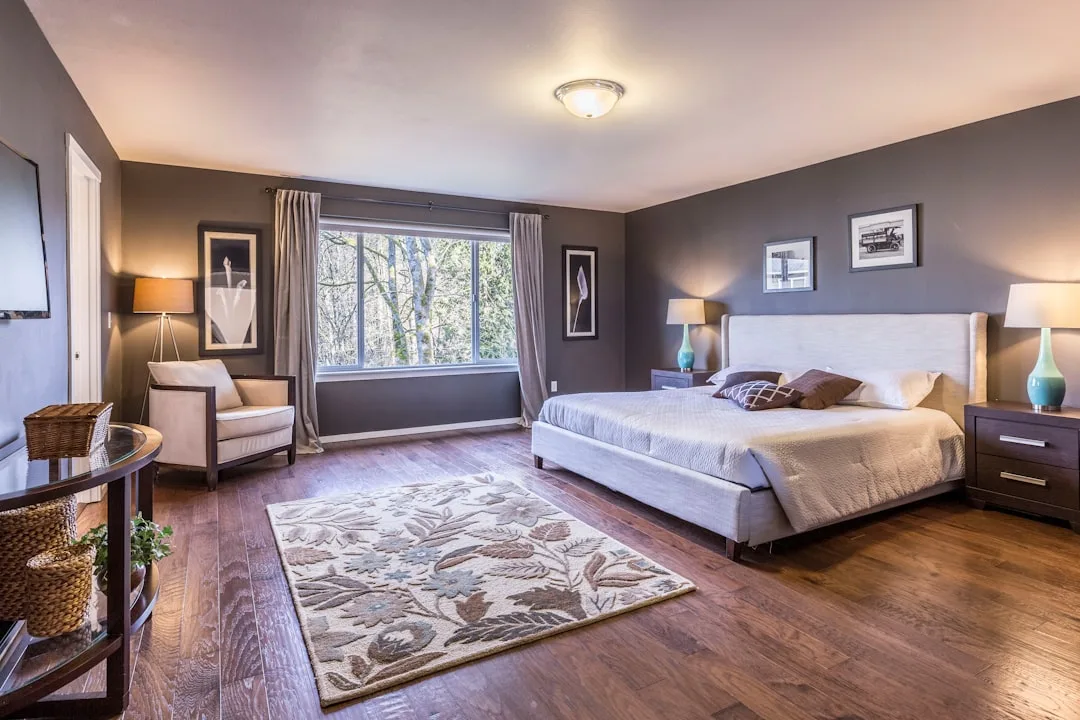
Your bedroom is probably lit wrong right now. Not dramatically wrong — you’re not reading by a searchlight — but subtly, persistently wrong in a way that affects how tired you feel at night, how groggy you wake up in the morning, and how good the room looks in photos versus how it actually feels to be in it.
The fix isn’t expensive. A set of bulbs costs $12–$30. But you need to know what you’re actually buying before you walk into a hardware store and stand there squinting at packaging covered in numbers you don’t fully understand.
Here’s what the packaging doesn’t explain well: color temperature (measured in Kelvin) and brightness (measured in lumens) are two completely separate decisions. Most people only pay attention to one. Getting both right is the difference between a bedroom that feels like a retreat and one that just feels like a room.
Why Your Current Bedroom Bulbs Might Be Hurting Your Sleep

This isn’t about aesthetics first — it’s about biology. Your body uses light to regulate melatonin, the hormone that signals it’s time to sleep. Blue-spectrum light (5000K–6500K) suppresses melatonin production by up to 50% compared to warmer light sources, according to research published by Harvard Medical School’s sleep division. That’s not a small effect. That’s the difference between falling asleep in 20 minutes versus lying awake for an hour.
Most rental apartments and builder-grade homes come installed with whatever bulb was cheapest during construction. That’s usually a 4000K–5000K “cool white” or “daylight” bulb — fine for a warehouse, genuinely counterproductive in a space where you’re trying to wind down.
Here’s the specific problem:
- 5000K–6500K daylight bulbs mimic midday sun. Your brain reads them as “stay awake.”
- 3500K–4000K neutral white bulbs look clean and bright. Still too stimulating for pre-sleep hours.
- 2700K–3000K warm white bulbs match the tone of incandescent bulbs your body has adapted to over decades. These are your bedroom default.
- 1800K–2400K “amber” or “candle” bulbs go even warmer — genuinely dim and orange-toned, ideal for nightstand lamps or any fixture you use in the hour before sleep.
The actionable takeaway: if you only make one change today, swap any 4000K+ bulbs in your bedroom for 2700K warm white. You’ll notice a difference within a few nights.
Understanding Kelvin vs. Lumens (The Distinction That Actually Matters)
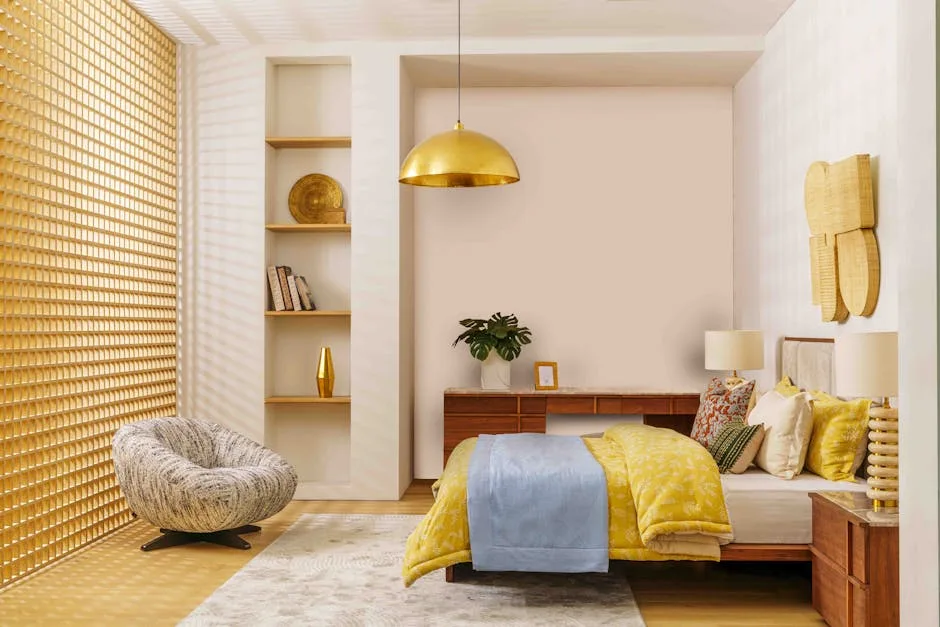
Everyone explains Kelvin. Almost nobody explains why lumens matter just as much in a bedroom — and how getting them wrong makes an otherwise perfect color temperature useless.
Kelvin measures color tone. Lumens measure brightness. They’re completely independent variables. A 2700K bulb can come in 450 lumens (dim, romantic, nightstand territory) or 1600 lumens (bright as a floodlight, inappropriate for most bedroom uses). Same warm color, completely different effect in the room.
Here’s a practical reference for bedroom applications:
- Overhead ceiling fixture (8–10 ft ceiling, 150–200 sq ft room): 800–1100 lumens total, 2700K
- Bedside reading lamp: 450–800 lumens, 2700K–3000K with a directional shade
- Accent lamp or decorative fixture: 200–450 lumens, 2700K or warmer
- Pre-sleep wind-down bulb (nightstand, 1 hour before bed): Under 200 lumens, 1800K–2200K
The CRI (Color Rendering Index) number is the third variable most people ignore entirely. CRI measures how accurately a bulb renders the actual colors of objects in the room, on a scale of 0–100. A CRI of 80 is standard. A CRI of 90+ is noticeably better — fabric colors look richer, wood grain looks more natural, skin tones look warmer and more accurate. For a bedroom where you’re choosing outfits and want the space to look genuinely beautiful, aim for CRI 90+ even if it costs a few dollars more per bulb.
Brands like Soraa, Cree’s high-CRI line, and GE’s Reveal series offer 90+ CRI at reasonable prices. A 4-pack of GE Reveal A19 bulbs (2700K, 800 lumens, CRI 90) runs about $14–$18 at most hardware stores.
Actionable takeaway: check the lumens and the CRI on the packaging, not just the Kelvin number. You want 2700K + 90+ CRI as your baseline bedroom combination.
The Best Color Temperature for Different Bedroom Scenarios
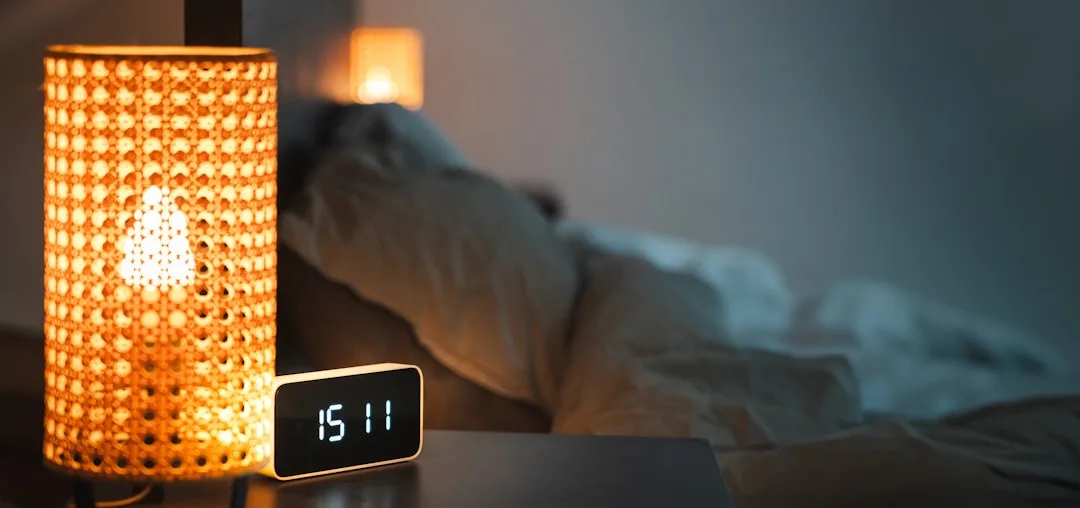
One color temperature doesn’t serve every moment in a bedroom. You read, you dress, you relax, you sleep — these activities genuinely need different light. The smartest bedroom lighting setups account for all of them without requiring you to rewire anything.
The layered lighting approach is how professional interior designers handle this. Rather than one overhead fixture doing all the work, you’re building a system:
Ambient layer (overhead, sets the room’s base light):
- 2700K, 800–1000 lumens total
- Dimmer switch required — this is non-negotiable for a bedroom
- A standard Lutron Caseta dimmer runs $25–$40 and installs in 20 minutes
Task layer (reading, getting dressed):
- 3000K, 450–800 lumens, directional
- Swing-arm wall sconces positioned 15–18 inches above eye level when seated are ideal for reading without neck strain
- Plug-in sconces like the BenQ e-Reading Lamp avoid the need for new wiring
Accent layer (atmosphere, mood, pre-sleep):
- 1800K–2400K, under 300 lumens
- These are your nightstand lamps, floor lamps in corners, or LED strip lights tucked behind a headboard
- LIFX and Philips Hue both offer tunable bulbs that shift across this full range via app
The scenario-specific breakdown:
- Getting dressed: 3000K task light near the closet or mirror, full brightness
- Evening relaxing: Overhead dimmed to 40–50%, 2700K
- Reading in bed: 3000K task lamp on the nightstand, aimed at the page not the ceiling
- Last 30–60 minutes before sleep: Switch to amber nightstand lamp only, 1800K–2200K, under 150 lumens
Actionable takeaway: you don’t need smart bulbs to achieve layered lighting. Two lamps with different bulb temperatures, plus a dimmer on your overhead fixture, gets you 80% of the way there.
Smart Bulbs vs. Traditional Bulbs for Bedrooms
Smart bulbs are genuinely useful in bedrooms in a way they aren’t in most other rooms. The reason is schedule. A bedroom is the only room in the house where you want your lighting to automatically shift warmer and dimmer at a specific time each night — because doing it manually requires you to remember, and you won’t always remember.
Philips Hue White Ambiance bulbs ($25–$35 each) let you program a “wind-down” schedule where the light gradually transitions from 2700K at 8pm to 2200K at 9pm to 1800K at 10pm, all without touching your phone. The Hue app also has a “Go to sleep” routine that handles this automatically once you set your target bedtime.
LIFX bulbs don’t require a hub (Hue does, at $60–$80 for the bridge), making them cheaper to start with if you only want a few bulbs. The LIFX Mini White bulbs run $18–$22 each and connect directly to WiFi.
For the genuinely budget-conscious, non-smart alternatives work fine:
- Philips SceneSwitch bulbs ($8–$12 each) cycle between two color temperatures with successive switch flips — no app, no hub, no setup
- Sylvania Smart+ Zigbee bulbs ($15–$20 each) require the Zigbee protocol but work with Alexa and Google Home without a dedicated hub
- Simple plug-in dimmer adapters ($8–$15) let you add dimming to any lamp without replacing the bulb
The honest case against smart bulbs: if you don’t use the scheduling features, you’re just paying extra for a slightly inconvenient way to change brightness. Buy them for the automation, not the novelty.
Actionable takeaway: if you’ll actually set up the schedule, Philips Hue White Ambiance with a dimming routine is worth every penny. If you won’t, a Lutron dimmer and a good 2700K bulb achieves 70% of the sleep benefit at 10% of the cost.
How Bulb Shape and Fixture Type Change Everything
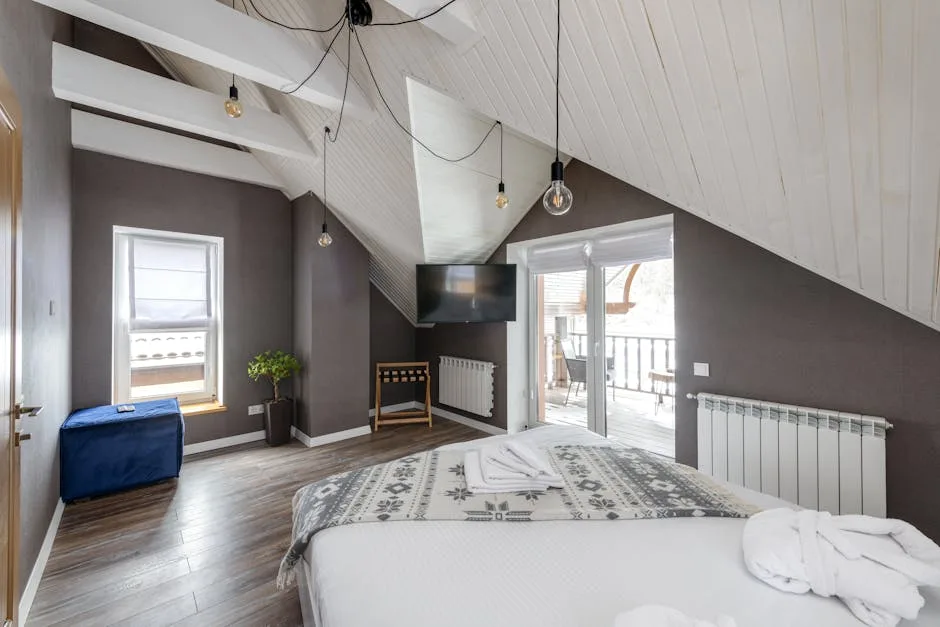
The color temperature printed on the box assumes the bulb is in open air. Put that same bulb inside an opaque shade, a deeply recessed can light, or a frosted globe fixture, and the light you actually experience in the room is warmer, dimmer, and more diffused than what the packaging promised.
This is why fixture type has to be part of the bulb decision, not an afterthought.
Recessed can lights (downlights): These concentrate light in a narrow cone and tend to create harsh shadows. Choose a flood-type bulb (BR30 or PAR30 shape) at 2700K and use them on a dimmer. At full brightness, even a 2700K recessed light reads as clinical. Dimmed to 60–70%, it becomes genuinely warm.
Table lamps with fabric shades: The shade absorbs and diffuses light, warming the apparent temperature by roughly 200–300K. A 2700K bulb through a cream or amber shade will look closer to 2400K in practice. Don’t compensate by going to a higher Kelvin bulb — embrace it.
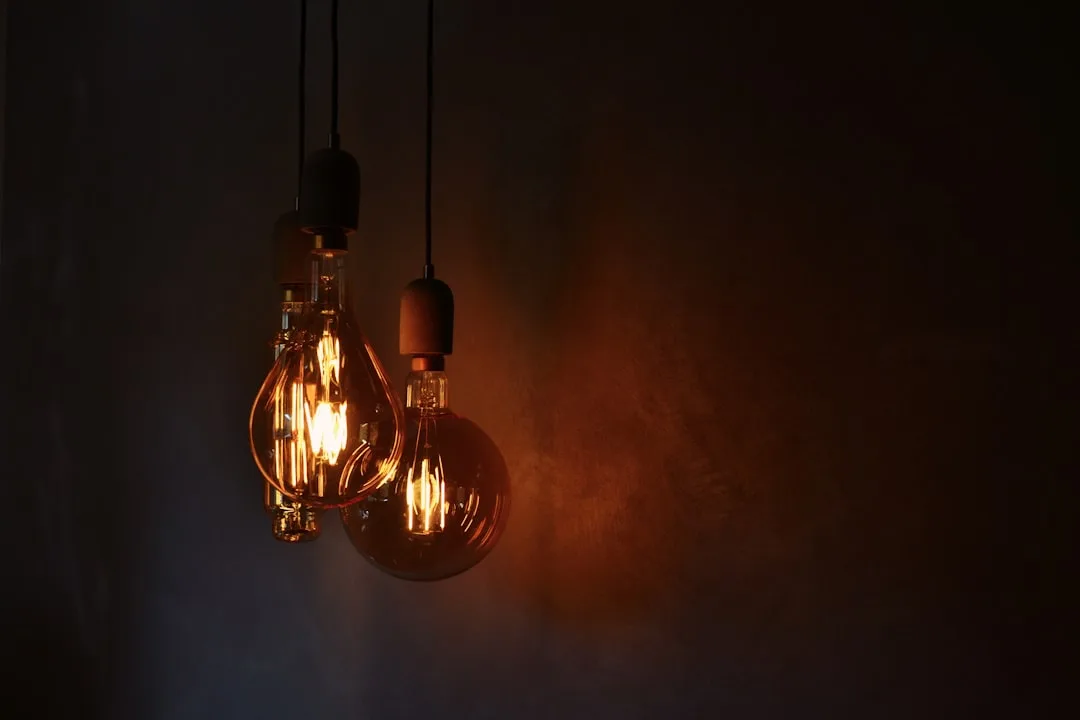
Pendant lights and exposed-bulb fixtures: These are where bulb aesthetics actually matter. Edison-style filament bulbs (typically 2200K–2400K) look beautiful exposed and produce genuinely warm, flattering light. A 4-pack of Feit Electric vintage LED Edison bulbs runs $12–$16 and draws only 4–5 watts each. The caveat: they max out around 300–400 lumens, so they can’t be your only light source.
Ceiling flush-mount or semi-flush fixtures: Check whether the bulb is visible through frosted glass (most are). A globe-shaped G25 bulb looks more intentional and produces better light diffusion than a standard A19 in these fixtures. Sylvania’s Ultra LED G25 at 2700K is a solid, inexpensive option.
Actionable takeaway: before buying bulbs, photograph your fixtures and note whether the bulb is exposed, covered, recessed, or shaded. Each situation calls for a slightly different approach.
What Bedroom Size and Ceiling Height Mean for Your Bulb Choice
Square footage and ceiling height directly change how much light you need — and therefore which bulb you reach for.
The standard formula: multiply your room’s square footage by 10–20 lumens per square foot for general bedroom ambient light. A 12×14 bedroom (168 sq ft) needs roughly 1,680–3,360 lumens total for full ambient illumination. At the lower end of that range (1,680 lumens), you’re in comfortable bedroom territory.
But ceiling height complicates this significantly. Every additional foot of ceiling height above 8 feet reduces the effective illumination at floor level by roughly 15–20%, because light disperses over a larger volume of space before reaching your eyes and surfaces.
Practical adjustments:
- 8 ft ceiling, 150–175 sq ft room: One 800-lumen A19 bulb overhead + two 450-lumen lamps
- 9 ft ceiling, 175–200 sq ft room: One 1100-lumen overhead + two 450-lumen lamps, or three-bulb overhead fixture
- 10+ ft ceiling, 200+ sq ft room: Multiple overhead sources (track lighting or multi-bulb chandelier) at 2700K, minimum 1600 lumens overhead total
Wall color also affects perceived brightness. A room with white or light-colored walls reflects significantly more light than one with dark paint, sometimes by as much as 50–70%. If you’ve recently repainted your bedroom in a deep color — navy, charcoal, forest green — and the room suddenly feels underlit, the paint absorbed the lumens. You need more, not warmer.
Actionable takeaway: measure your room before buying bulbs. A 10×12 room and a 14×16 room are not the same problem, and treating them identically is why so many bedrooms end up either cavernous and dim or unpleasantly bright.
The Case for Warm Amber Light in the Hour Before Sleep

The circadian science on this has become significantly clearer over the last decade. It’s not just about avoiding blue light — it’s about actively using warm amber light as a physiological signal to your body.
Light below 2200K and below 10 lux (roughly equivalent to a single candle from across the room) produces what sleep researchers call minimal circadian disruption. Your melatonin production stays largely intact. Your core body temperature begins its pre-sleep decline on schedule. You fall asleep faster and spend more time in deep sleep stages.
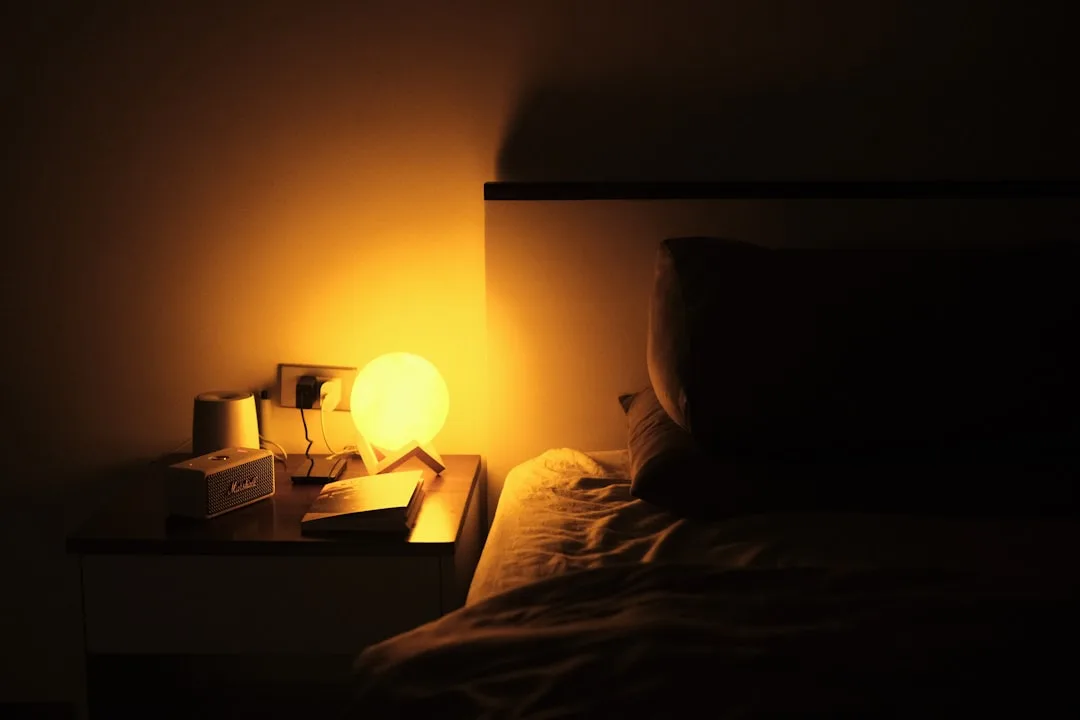
Ten lux sounds impossibly dim, but in practice, a single 40-watt-equivalent Edison bulb on a nightstand lamp achieves approximately 15–30 lux at face level from 3 feet away. That’s enough to read by, have a conversation, or scroll your phone (though the phone screen itself is a separate problem). It’s not enough to feel like a properly lit room — but that’s the point.
Specific products that achieve this well:
- Casper Glow Light ($129): Specifically designed for sleep, with a warm amber glow that dims gradually over 45 minutes. Pairs with an app for scheduling.
- Verilux HappyLight (for mornings): Full-spectrum 10,000 lux light therapy lamp for morning use — the other side of the circadian equation
- Standard solution: Any 25-watt-equivalent LED at 2200K or lower on your nightstand, around $6–$10 per bulb from brands like GE or Feit
A practical habit: at 9pm (or 1 hour before your target sleep time), switch off the overhead light entirely and use only your nightstand lamp. This single change, done consistently for two weeks, noticeably improves sleep quality for most people.
Actionable takeaway: buy one amber bulb under 2200K for your nightstand lamp. Use it as your only light source for the last hour before bed for two weeks. You’ll either notice a difference — or you’ll have spent $8 on a failed experiment. Those are good odds.
Frequently Asked Questions
What color light bulb is best for sleeping in the bedroom?
Warm amber bulbs in the 1800K–2200K range are best for the hours leading up to sleep. For general bedroom use throughout the evening, 2700K warm white is the standard recommendation. The key is keeping bulbs below 3000K — anything above that temperature contains enough blue spectrum light to interfere with melatonin production and push your sleep onset later than your body naturally wants.
Is warm white or cool white better for a bedroom?
Warm white (2700K–3000K) is consistently better for bedrooms. Cool white (4000K+) is designed for task environments — kitchens, offices, workshops — where alertness and color accuracy matter more than comfort. In a bedroom, cool white reads as clinical, ages skin tones unfavorably in mirrors, and tells your brain to stay alert. Warm white does the opposite on all three counts.
Can the wrong light bulb actually affect my sleep quality?
Yes, concretely. Blue-rich light in the 5000K–6500K range suppresses melatonin production measurably — Harvard Medical School research has documented up to 50% suppression compared to dim warm light exposure. This delays sleep onset (how long it takes to fall asleep), reduces time in slow-wave deep sleep, and can push your internal clock later over time. Changing your bedroom bulbs to 2700K or below is one of the cheapest, most effective sleep interventions available.
How many lumens do I need for a bedroom light bulb?
For a typical 12×14 bedroom (168 sq ft), aim for a total of 1,200–1,800 lumens across all light sources combined — not from a single bulb. An overhead fixture at 800–1000 lumens plus two lamps at 400–500 lumens each covers most bedrooms comfortably. If you use a dimmer (which you should), you can start bright and dial down as the evening progresses, which is more flexible than choosing a fixed low-lumen bulb.
Are smart bulbs worth it for bedroom lighting?
Smart bulbs earn their price in bedrooms specifically when you use the scheduling features. A Philips Hue White Ambiance bulb programmed to shift from 2700K in the early evening to 1800K an hour before bed, then power off at your target sleep time, is genuinely more effective than remembering to change bulbs manually. If you won’t set up and use the scheduling, a standard 2700K bulb plus a $25 Lutron dimmer achieves nearly the same biological benefit at a fraction of the cost.
Your Next Step
Pick up your phone, go to your bedroom, and turn the light on. If it looks stark, blue-white, or clinical — the kind of light you’d find in a pharmacy — that bulb is working against you every night.
The fix is a $14 investment: a 4-pack of 2700K, 800-lumen, 90+ CRI bulbs (GE Reveal or Cree’s equivalent). Add a $25 Lutron dimmer if your bedroom overhead doesn’t already have one. For your nightstand, grab a single amber bulb in the 2000K–2200K range and use it as your wind-down light for the last hour before sleep.
That’s three products, under $60 total, and you’ll feel the difference within a week.