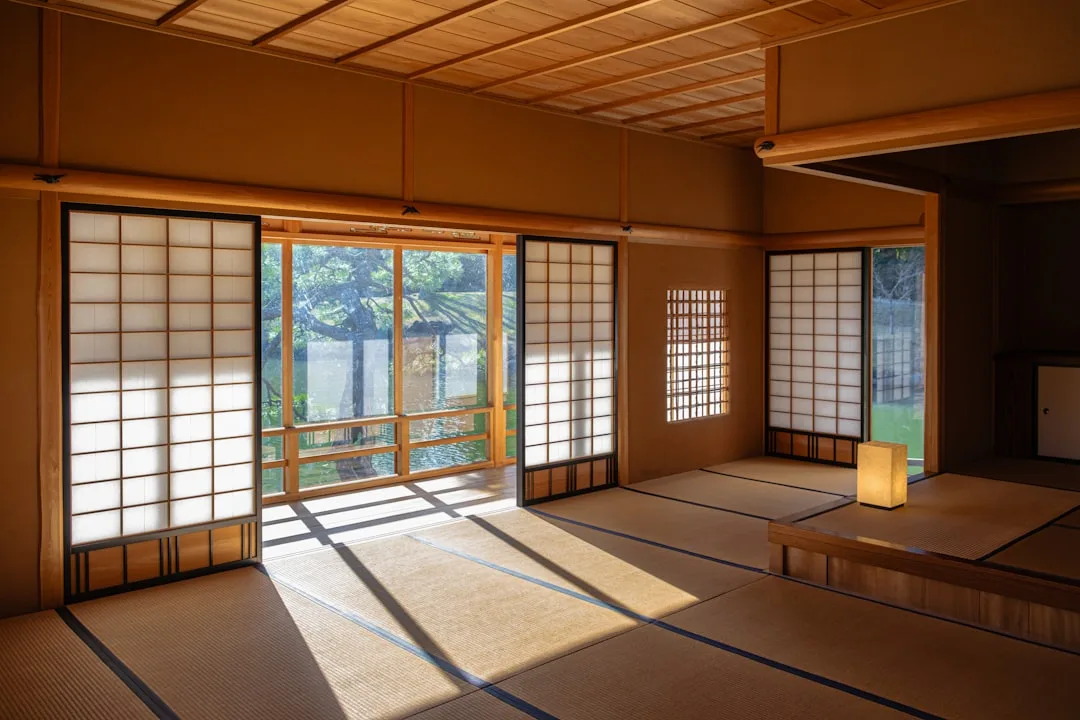
Most people searching for “Japandi style” already own half the furniture they need — the problem is they have too much of it.
That single insight separates genuine Japandi from the imitation version flooding Pinterest boards and interiors accounts. The aesthetic you’re chasing isn’t assembled by buying the right objects. It’s revealed by removing the wrong ones. And the reason most guides get this backwards is because they treat Japandi as a visual style rather than what it actually is: a philosophy about consumption that happens to produce a beautiful home.
Google Trends data shows “Japandi” searches increased over 400% between 2019 and 2023. Despite that explosion of interest, most people who find the term still report confusion about what separates it from generic minimalism. This article answers that clearly — including the parts most guides quietly skip.
The Honest Definition of a Japandi Style Home (Beyond the Buzzword)
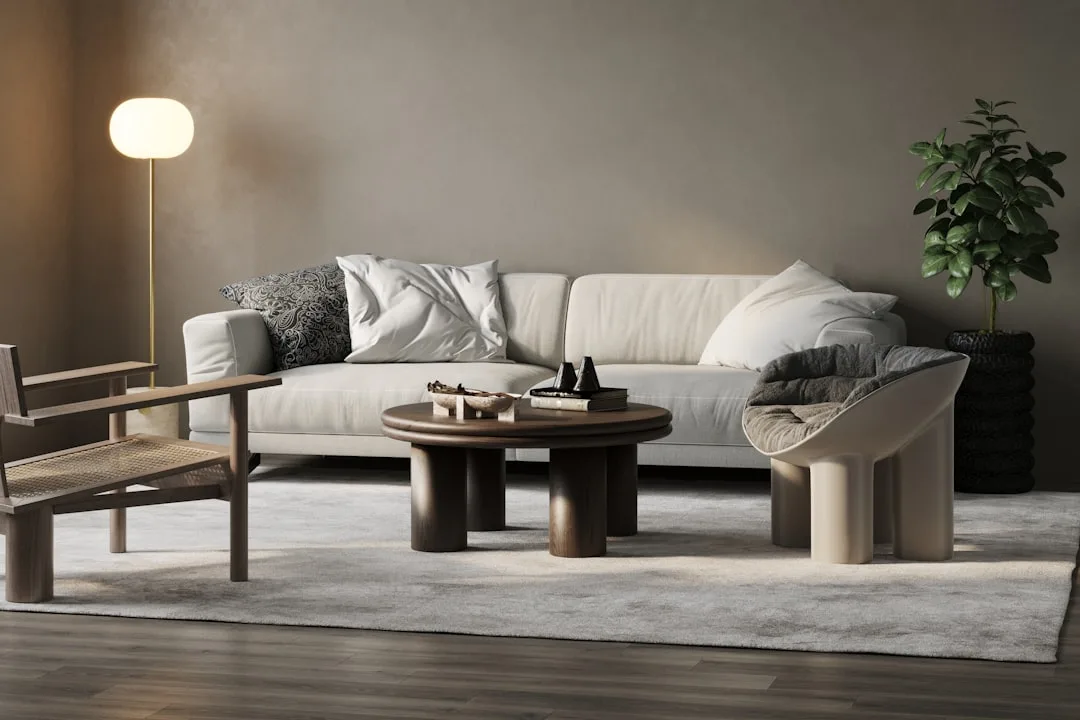
Here’s the definition you won’t find in most guides: Japandi is what happens when two independent cultures, separated by 9,000 kilometers, arrive at the exact same conclusion about how to live well.
Japanese design tradition, shaped by centuries of Buddhist philosophy and limited physical space, developed a deep suspicion of excess. Scandinavian design, forged by long dark winters and a cultural emphasis on practical functionality, arrived at the same place through completely different terrain. Neither culture was copying the other. Both independently decided that intentional restraint — not minimalism as a style choice, but restraint as a moral stance toward ownership — was the foundation of a well-designed life.
That convergence is why Japandi works as a fusion. It’s not two random aesthetics stitched together because they share neutral color palettes. The philosophical roots are genuinely compatible in a way that, say, maximalism and mid-century modern are not.
What this means practically:
- Japandi is a lived-in philosophy first, an aesthetic second
- Rooms are designed around how people actually move, rest, and think — not around how they photograph
- Every object earns its place through use, beauty, or both — not through trend or impulse purchase
- The home should feel noticeably different to inhabit than it looks in a photograph — calmer, quieter, more settled
- Acquisitions slow down rather than accelerate once you commit to this approach
The distinction that matters most: understanding what is a Japandi style home goes well beyond mixing IKEA furniture with shoji screens. A room achieves Japandi coherence when its materials, light quality, and spatial intention align across every surface. You can’t Japandi one corner of a room and ignore the rest. It requires a whole-room — and ideally whole-home — commitment to the same set of values.
Actionable takeaway: Before buying a single new item, walk through your home and identify every object you own that exists purely out of habit or default. Those are your first removals.
The Two Philosophies That Actually Power a Japandi Style Home
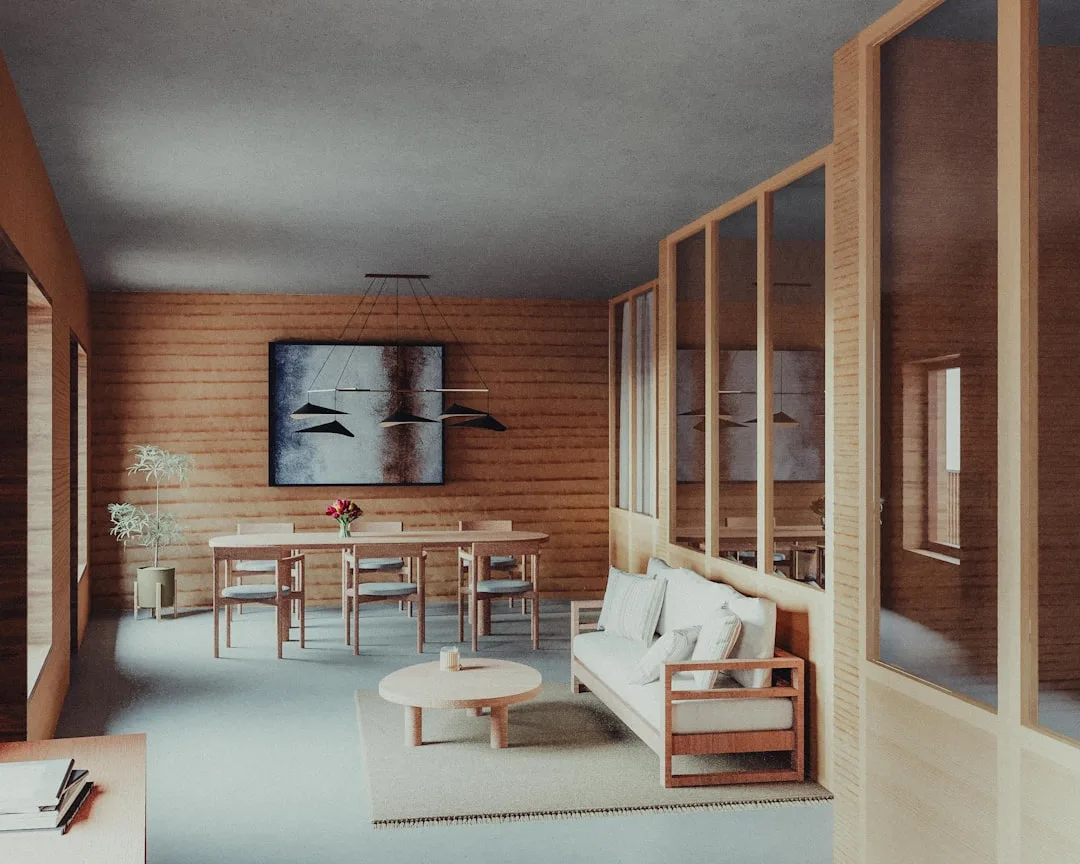
Strip away the furniture and the color palette, and you’re left with two ideas that do all the real work: Hygge and Wabi-Sabi. Most guides define both in a paragraph and move on. That’s the mistake. Understanding how they negotiate with each other inside a single room is where Japandi actually lives.
Hygge (pronounced roughly “hoo-gah”) is a Danish and Norwegian concept that translates loosely as coziness, but that translation loses about 70% of the meaning. Hygge is really about the feeling of safe warmth in the presence of people you love — candlelight, gathered bodies, soft textures, the particular comfort of being sheltered from cold. It tolerates a candle collection. It welcomes layered throws and a slightly lived-in feel. A Hygge space should feel inhabited, not staged.
Wabi-Sabi traces directly to 15th-century Japanese tea ceremonies, where tea masters like Sen no Rikyū deliberately preferred rough, imperfect, rustic ceramic vessels over flawless imported Chinese porcelain. This was a conscious rejection of status-driven aesthetics — a declaration that impermanence and imperfection were not flaws to be corrected but qualities to be honored. A cracked ceramic bowl. An uneven handmade table. Aged linen that has lost its factory crispness. Wabi-Sabi finds beauty in exactly the places polished contemporary design tries to hide.
In a Japandi home, these two philosophies don’t simply coexist — they hold each other in check:
- Hygge prevents the space from feeling cold, ascetic, or inhospitable
- Wabi-Sabi prevents it from becoming over-curated, performative, or precious
- The productive tension between them is the entire point
- Hygge pulls toward softness and gathering; Wabi-Sabi pulls toward stillness and restraint
- Neither wins — the ongoing negotiation between them is what gives the style its particular emotional register
A room that leans too far into Hygge becomes cluttered and cozy-for-the-sake-of-it. A room that leans too far into Wabi-Sabi becomes a museum of deliberate imperfection. The sweet spot — warm but spare, inhabited but intentional — is what people recognize as Japandi when they see it and struggle to name.
Actionable takeaway: Look at your living room and ask two questions: Does it feel genuinely warm enough that you’d want to spend a winter evening there? And does it contain anything that exists purely to look designed? The first answer tells you if Hygge is present. The second tells you if Wabi-Sabi is doing its job.
Core Visual Elements of a Japandi Style Home — And How to Actually Use Them
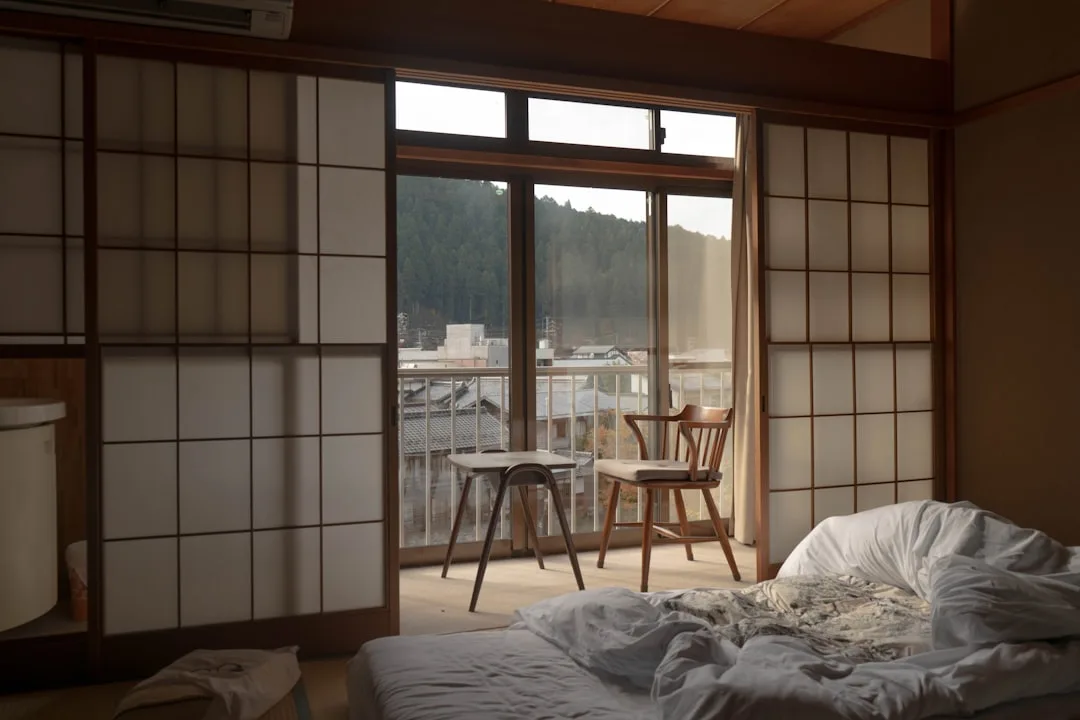
The visual language of Japandi isn’t a mood board — it’s a set of principles with specific implementation rules. Here’s how each element actually functions.
Palette
Japandi uses a warm neutral base: warm whites, muted beiges, clay, terracotta undertones, soft charcoal. What it explicitly avoids is the cool gray dominant in generic Scandinavian interiors and the stark brilliant white of contemporary minimalism. Warmth is non-negotiable. If your room reads “cold” in photographs and in person, you’ve drifted into a different aesthetic entirely.
A working Japandi palette typically operates in three layers:
- Base layer: A warm light neutral for walls and large upholstery — think linen white, oat, or pale sand rather than optical white
- Mid layer: An earth-tone for furniture and secondary textiles — warm taupe, weathered oak, muted sage, or dusty terracotta
- Accent layer: One deep, grounding tone used sparingly — forest green, ink black, burnt umber, or aged indigo — appearing in a single piece of furniture, a ceramic, or a grouping of plants
The palette works because every layer is warm-toned. Introducing a single cool-toned element — a blue-gray, a bright white, a chrome fixture — breaks the coherence immediately.
Material Hierarchy
Raw or lightly finished wood takes priority over manufactured, painted, or laminate surfaces. Oak and walnut are the workhorses of Japandi furniture — both offer visible grain that rewards close attention. Bamboo works well as an accent material rather than a primary one.
The material hierarchy, in order of priority:
- Natural wood — unfinished, oiled, or lightly waxed; never lacquered or painted
- Natural textiles — linen, cotton, wool, jute; nothing synthetic unless completely unavoidable
- Handmade ceramics — particularly those with visible irregularities, thumb marks, or glaze variation
- Stone and concrete — used sparingly, typically for a single surface like a countertop or a tray
- Metal — matte brass or blackened steel only; polished chrome and brushed nickel belong to a different aesthetic entirely
The rule: the material should tell its own story. If the grain and texture of a surface aren’t visible and intentional, it’s the wrong material for this aesthetic.
Furniture Profile
Low-to-ground silhouettes are borrowed directly from Japanese interior tradition. Platform beds sitting 8–10 inches off the floor. Floor cushions in place of secondary seating. Low dining tables at 24–26 inches rather than the standard American 30-inch height. This isn’t just visual preference — lower furniture changes the experience of a room at a physical level. Rooms feel taller. Sight lines open up. The ceiling becomes part of the spatial composition rather than something you stop noticing.
Key furniture rules for what is a Japandi style home:
- Legs matter: Furniture with exposed legs in natural wood always reads as more Japandi than furniture that sits flush to the floor on a solid base — with the exception of the platform bed, which is a deliberate design choice
- Scale down: Most Western furniture is oversized for Japandi proportions. A sofa that seats four people comfortably seats three people better in this aesthetic
- No matched sets: Japandi rooms rarely use complete matching furniture collections. A walnut dining table with oak chairs in a slightly different finish reads as more authentic than a perfectly matched suite
- Function before form: Every piece of furniture should have a clear and regular use. Decorative furniture — console tables that hold only objects, chairs that no one sits in — violates the foundational logic of the style
Lighting
Natural light is treated as a primary design material, not a supplement to artificial lighting. In a Japandi style home, the quality of light at different times of day is considered during the design phase, not after. North-facing rooms are handled differently than south-facing ones. Shoji screens — or modern equivalents in rice paper or frosted glass — diffuse harsh direct light into the soft, even glow that both Japanese and Scandinavian design traditions prize.
For artificial lighting:
- Warm-toned bulbs only — 2700K to 3000K; anything cooler disrupts the palette
- Multiple low-level light sources rather than single overhead fixtures — floor lamps, table lamps, and candlelight at sitting height create the layered warmth Hygge requires
- Handcrafted or organic fixture forms — woven rattan pendants, raw ceramic bases, hand-blown glass globes; no industrial or high-tech fixtures
- Dimmer switches throughout — the ability to drop light levels by early evening is not optional; it’s how the warmth transitions from afternoon to night
Negative Space as Active Element
Most Western interiors treat empty wall space as a problem to be solved with art, shelving, or wallpaper. Japandi treats empty space — ma in Japanese — as an active design element with its own weight and function. A bare wall is not an unfinished wall. It’s breathing room. It gives the objects that do occupy the room room enough to be seen clearly.
Practical applications of negative space in Japandi rooms:
- Leave at least one full wall in every room completely bare
- Resist the temptation to fill visible shelving to capacity — shelves at 60–70% capacity read as intentional; shelves at 100% read as storage
- Keep floor areas clear, particularly in circulation paths; a clear floor makes a room feel significantly larger than additional square footage does
- Group objects in odd numbers (three, five) with deliberate space between them rather than arranging in dense clusters
What a Japandi Style Home Is Not
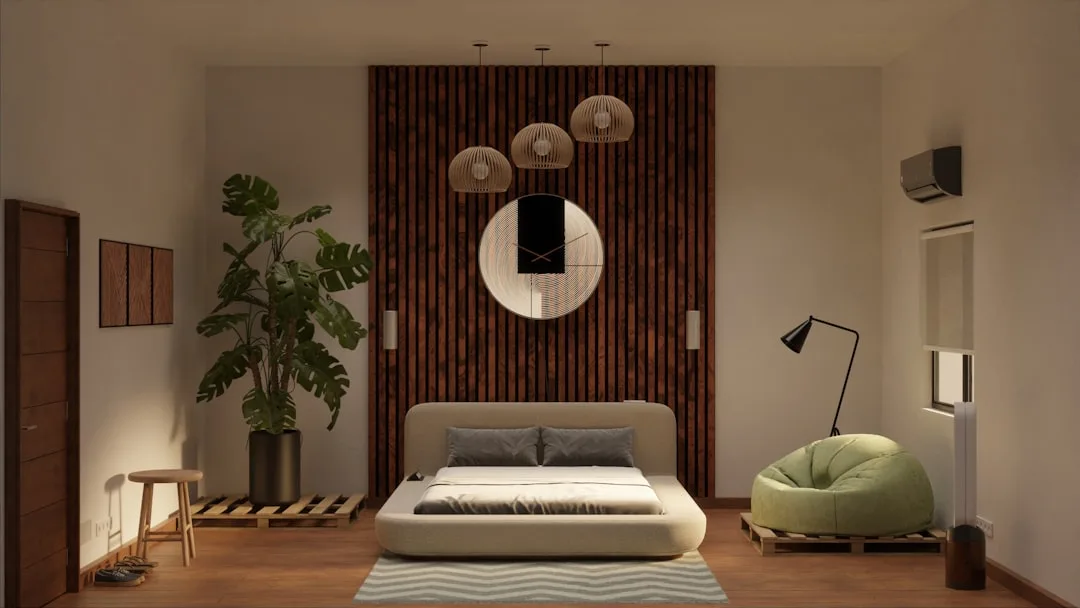
Understanding what is a Japandi style home is easier when you know what consistently gets mislabeled as the style.
It is not generic minimalism. Minimalism as a design movement often pursues visual simplicity as an end in itself — rooms that look clean in photographs regardless of how they feel to inhabit. Japandi is warm and sensory. A cold, white, almost-empty room is not Japandi. It is a minimalist room with good photography.
It is not “Scandi with chopsticks.” This dismissive shorthand describes the most superficial version of the trend — a Scandinavian interior with a few Japanese objects placed on top. Real Japandi integration happens at the level of philosophy and spatial decision-making, not at the level of accessory sourcing.
It is not achieved by a shopping list. No specific set of objects makes a Japandi home. The aesthetic emerges from editing decisions, material choices, and spatial relationships — not from purchasing a particular bed frame or a specific brand of linen.
Common misidentifications that are not Japandi:
- All-white interiors with a single wooden bowl — that’s just minimalism
- Scandinavian kitchens with a bonsai tree on the counter — that’s cultural prop-styling
- Dark moody interiors with Japanese-inspired art — that’s maximalism with an Asian influence
- Rooms that look perfect in a photograph but feel sterile to sit in — that’s set design, not interior philosophy
Room-by-Room: Applying Japandi Principles
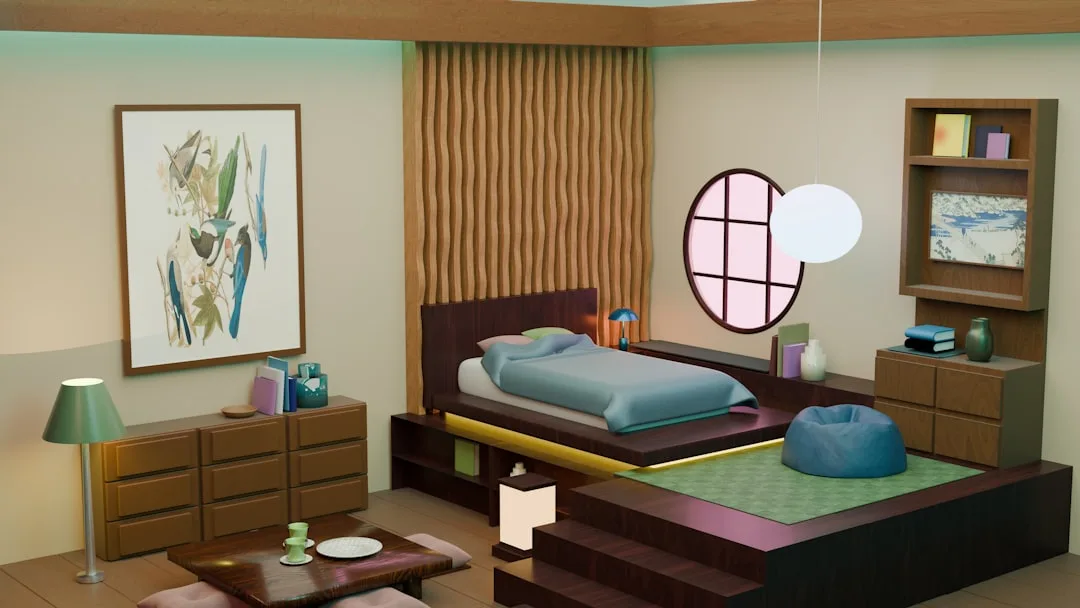
The philosophy translates differently depending on how each room is actually used.
Living Room
The living room carries the heaviest Hygge requirement of any space in the home. It needs to feel genuinely comfortable for hours of unstructured time — reading, conversation, doing nothing in particular. The following checklist covers the essentials:
- Low sofa with clean lines and natural upholstery (linen, boucle, or wool blend in a warm neutral)
- A single low coffee table in natural wood or stone — not a matching set of side tables
- At least two floor-level light sources in addition to any overhead fixture
- A natural fiber rug that defines the seating area without covering the full floor
- One living plant — a single statement plant rather than a collection
- No more than three decorative objects visible at any one time
- A basket or lidded storage piece for items that accumulate (remotes, books, blankets) — Japandi doesn’t require that life be hidden, only that it be contained
Bedroom
The bedroom in a Japandi style home prioritizes sleep function and sensory calm above everything else. This means:
- Platform bed with a simple wooden headboard or no headboard at all
- Bedding in natural linen or cotton in warm white or oatmeal — no patterns
- Bedside storage at floor level rather than elevated nightstands where possible
- No television, no desk, no exercise equipment — the room is for sleep and rest exclusively
- Window treatments that diffuse light rather than block it entirely — shoji-inspired panels or linen sheers
- One textile element at floor level: a sheepskin, a woven mat, or a folded wool throw beside the bed
Kitchen
The kitchen is where Japandi philosophy faces its hardest test, because kitchens accumulate objects and appliances by necessity. The approach:
- Keep countertops clear of everything except daily-use items — coffee maker, cutting board, one ceramic crock with utensils
- Store appliances used fewer than three times per week completely out of sight
- Use open shelving only if you’re willing to maintain it at 60% capacity — otherwise use closed cabinet storage
- Replace plastic containers with ceramic, glass, or natural wood alternatives progressively
- Display a small number of handmade ceramics as working dishware rather than decorative objects
How to Transition to Japandi Without Starting Over
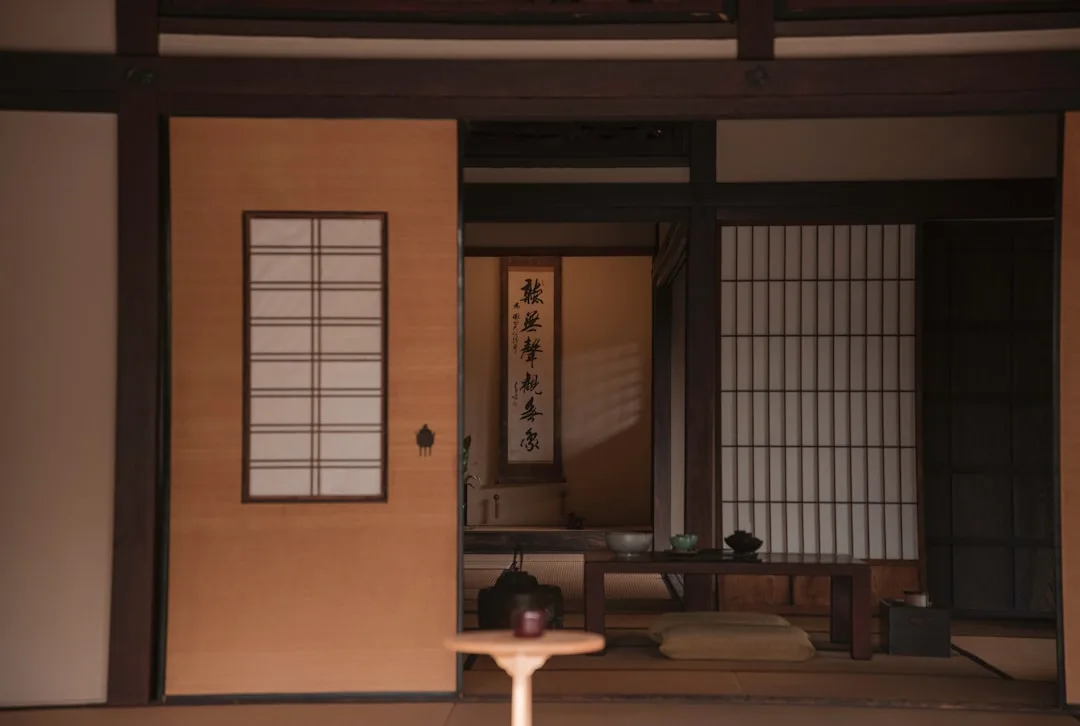
Most people asking what is a Japandi style home are not starting from an empty room. They have existing furniture, existing paint colors, and existing habits. The transition doesn’t require replacement — it requires a specific sequence.
Phase 1: Remove before you add
The single most common mistake is buying Japandi-appropriate objects and placing them in a room that already has too much in it. The result looks layered rather than calm. Before purchasing anything, remove:
- All objects that exist purely as decoration with no function
- Any furniture piece that no one uses regularly
- Textiles in synthetic materials or cool-toned colors
- Anything stored on countertops or open surfaces that could be stored behind a door instead
Phase 2: Address the palette
Repainting is often unnecessary if existing wall colors are warm neutrals. What usually needs addressing first:
- Replace cool-gray textiles with warm equivalents
- Swap chrome or nickel hardware for matte brass or blackened steel
- Remove or replace synthetic rugs with natural fiber versions
Phase 3: Introduce materials deliberately
Once the room is edited and the palette is warm, introduce Japandi-appropriate objects in this order:
- One handmade ceramic piece — a bowl, a vase, a mug used daily
- One living plant in a simple clay or ceramic pot
- One natural textile upgrade — a linen throw, a wool rug, a jute basket
- Lighting adjustments — warmer bulbs, added floor lamp, dimmer on the overhead fixture
Phase 4: Live with it before adding more
This is the step almost everyone skips. After each phase, stop for at least two weeks before adding anything else. Japandi rooms reveal their own needs given enough time. What feels missing after two weeks of living is genuinely missing. What you thought you needed on day three often turns out to be habit rather than necessity.
FAQ: What Is a Japandi Style Home?
Is Japandi just minimalism with warmer colors?
No, and the distinction matters. Minimalism as a design philosophy pursues reduction as an aesthetic end — the goal is visual simplicity. Japandi pursues reduction as a practical philosophy — the goal is a home that supports calm, intentional living. The visual result can look similar, but the logic behind every decision is different. A Japandi room will always prioritize how it feels to inhabit over how it looks in a photograph. Many minimalist rooms are the reverse.
Do I need to buy Japanese or Scandinavian furniture specifically?
No. The sourcing of objects matters far less than the qualities those objects carry. A handmade ceramic bowl from a local studio can be more genuinely Japandi than an expensive Japanese import that happens to be mass-produced. What you’re looking for in any object: natural materials, visible craft, functional purpose, and imperfection that speaks to how it was made rather than how it was marketed.
Can a Japandi home have color?
Yes, within specific constraints. The palette is warm-toned and muted, not colorless. Forest green, dusty terracotta, aged indigo, and deep charcoal all appear in authentic Japandi interiors. What the style avoids is bright, saturated color — anything that draws attention to itself rather than receding into the whole. A single deep-toned accent in each room is not only acceptable but often necessary to prevent the space from reading as washed-out.
How is Japandi different from a regular Scandinavian interior?
The most visible differences are warmth, texture, and height. Scandinavian interiors frequently use cool grays, bright whites, and furniture at standard Western heights. Japandi shifts all three: warmer palette, more tactile natural materials, and lower furniture profiles borrowed from Japanese tradition. The deeper difference is that Japandi introduces Wabi-Sabi as a counterweight to Scandinavian design’s tendency toward clean, polished surfaces — Japandi rooms deliberately include imperfect, aged, and handmade elements that a pure Scandinavian interior might edit out.
How long does it actually take to achieve a Japandi-feeling home?
Longer than a weekend project, shorter than a renovation. Most people see meaningful results in four to eight weeks if they follow the remove-first sequence described above. The rooms that transition fastest are those where the existing furniture is already low-profile and warm-toned. The rooms that take longest are those with cool-gray palettes and high, heavy furniture — both require physical changes rather than just editing. The honest answer is that Japandi is not a one-time project. It’s an ongoing editing practice. Rooms that feel right after six months of living in them will feel more right after two years.
What’s the single highest-impact change most people can make immediately?
Remove half the objects from every visible surface in your home. Not permanently — just temporarily. Put them in a box, live with the reduced version for a week, and pay attention to which specific absences you notice and which you don’t. What you genuinely miss goes back. What you stopped noticing stays out. This single exercise teaches you more about your own version of Japandi than any shopping guide can.