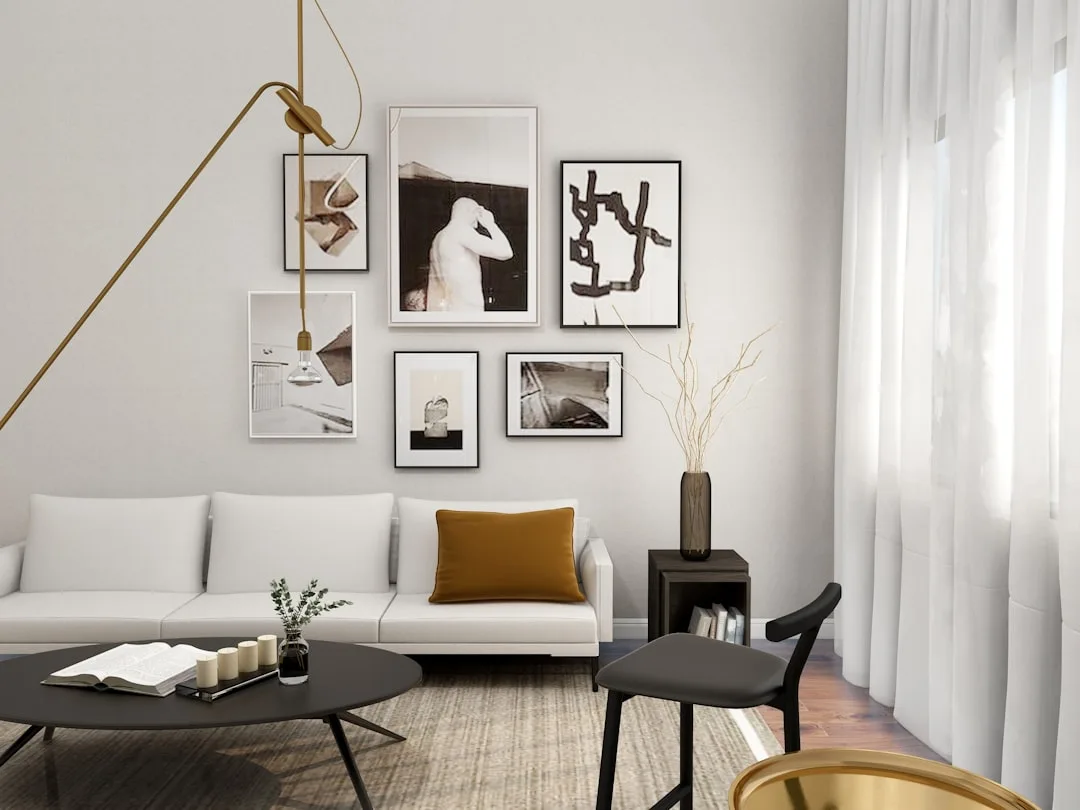
The wall art trend lists filling your search results right now were written based on what sold well in 2022 — here’s what’s actually moving in homes, studios, and design showrooms in 2025.
If you’ve already read three articles that told you “bold abstract art and botanical prints are having a moment,” you already know the problem. Those lists are describing what shipped well three years ago. The rooms that look genuinely current right now don’t look anything like that.
Why Most ‘Wall Art Trends’ Articles Are Already Outdated
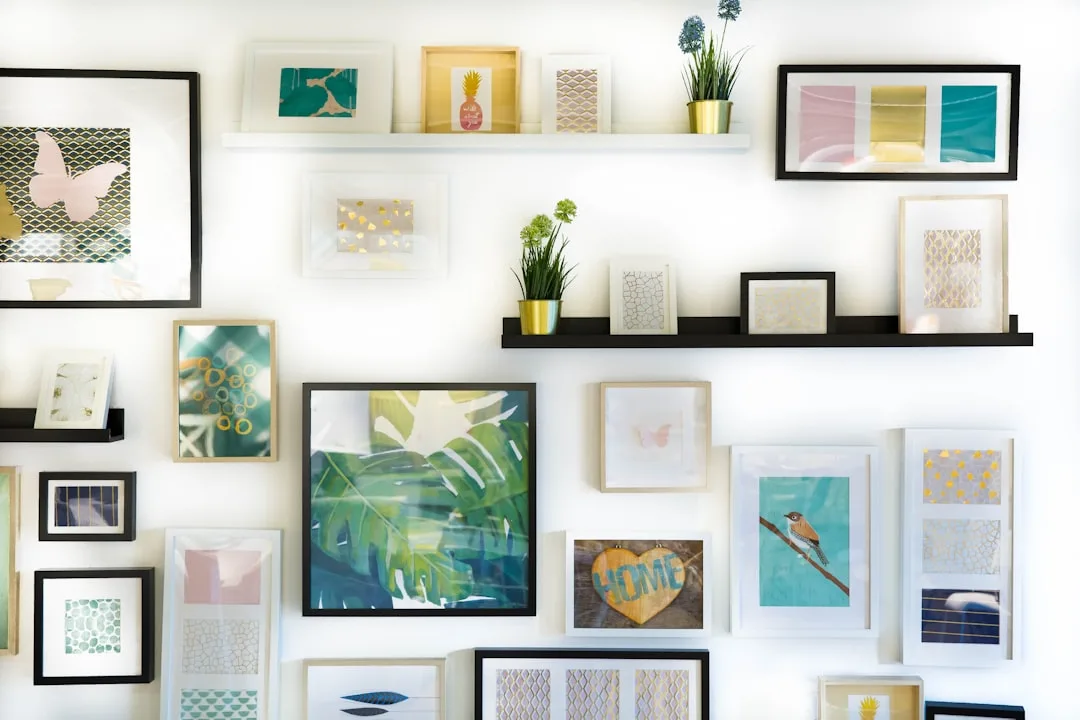
Here’s the uncomfortable truth about trend content: most of it is reverse-engineered from bestseller lists, not forward-looking at all. A writer sees what sold well on Wayfair or what got pinned a lot in 2023, packages it as a “2025 trend,” and calls it done. You end up with the same eight styles reshuffled across every home decor site.
The core problem is that editorial roundups and real market behavior have completely diverged. Google Trends data tells a clear story: searches for “abstract wall art” — the darling of every trend list published in the last three years — plateaued in late 2023 and have flatlined since. Meanwhile, searches for “vintage map prints” and “wabi-sabi wall decor” have climbed steadily into 2025. Those aren’t the terms you’re reading about in most roundups.
The recycled-list problem also ignores something obvious: trending wall art isn’t one-size-fits-all. What belongs in a minimalist Scandinavian bedroom is completely different from what works in an eclectic Brooklyn brownstone living room. Budget matters. Design era matters. The north-facing wall in your rental apartment has different needs than the vaulted entryway in a renovated Victorian.
Here’s what the saturated competitor content almost never acknowledges:
- Most “trend” articles are written by generalist content teams, not people who attend trade shows or follow design directors
- Retail data (what’s selling) lags behind cultural data (what designers are actually specifying) by 12–18 months
- The trends that matter to design-forward buyers aren’t the ones appearing in the Target seasonal aisle — those signal a trend’s peak, not its beginning
The only way to know what’s actually trending is to cross-reference trade show debuts, independent retail data, social platform trend reports, and search behavior simultaneously. That’s what this article does.
Takeaway: Before you trust a trend list, check when the source data was collected — not when the article was published.
What Wall Art Is Actually Trending Right Now in 2025
The styles gaining real traction in 2025 share a common thread: they prioritize authenticity over novelty, material presence over digital-print polish, and restraint over maximalist impact. That doesn’t mean everything is quiet and minimal — it means the work on the wall has to earn its place.
Etsy reported a 67% year-over-year increase in combined searches for “woven wall hanging” and “ceramic wall art” in its 2024 trend report. That single data point tells you more about where home decor is heading than most editorial lists. Apartment Therapy’s 2025 decor forecast named “quiet luxury home” its number-one macro trend, and that designation is already visible in what’s being specified in high-end residential projects.
Here’s what’s genuinely moving right now:
1. Quiet Luxury Art
Understated, monochromatic works — think a single ink drawing on cream linen, or a muted charcoal study mounted in a raw oak frame. These are replacing the densely packed gallery wall as the aspirational living room statement. The Jenni Kayne aesthetic made this mainstream, but it’s now filtering into mid-market design.
2. Artisanal Textile Wall Hangings
Not the boho macramé of 2019 — we’re talking tightly woven fiber art, tapestries using natural dyes, and abstract textile pieces by independent makers. These bring texture and warmth that a canvas print physically cannot.
3. Architectural Photography Prints
Black-and-white structural images — a Brutalist staircase, a concrete cathedral interior, the geometry of a mid-century window grid. These are replacing generic cityscapes (the Brooklyn Bridge at dusk is officially retired). Photographers like Simon Watson and Julius Shulman’s estate prints are the reference points here.
4. AI-Assisted Custom Portraiture
Personalized fine-art-style portraits generated and printed on demand are gaining serious traction. When executed well — on archival paper, in a considered frame — they read as bespoke, not gimmicky. This category is growing fast among buyers who want something personal but don’t commission original paintings.
5. Wabi-Sabi Ceramics and Clay Wall Panels
Three-dimensional organic forms mounted directly on walls — textured clay discs, sculpted panels with intentional imperfection, raw-edge ceramic pieces. These blur the line between art and object and photograph extraordinarily well, which is partly why they’re climbing.
6. Vintage Cartographic and Scientific Illustration Prints
Antique maps, botanical diagrams, anatomical sketches, and astronomical charts. These work in almost every room because they carry intellectual weight without trying too hard. An 18th-century geological survey print in a simple wood frame reads as genuinely considered, not decorator-by-numbers.
7. Maximalist Pattern Collision (Done Intentionally)
On the opposite end of the spectrum, there’s a confident return to maximalism — but it’s curated clashing, not chaotic accumulation. Think three wildly different prints hung together with a deliberate tension between them, where the contrast is the point.
Takeaway: If you’re buying art right now, prioritize material presence — textile, ceramic, or archival print — over mass-produced canvas reproductions.
Which 2024 Trends Are Already Fading (So You Don’t Waste Money)
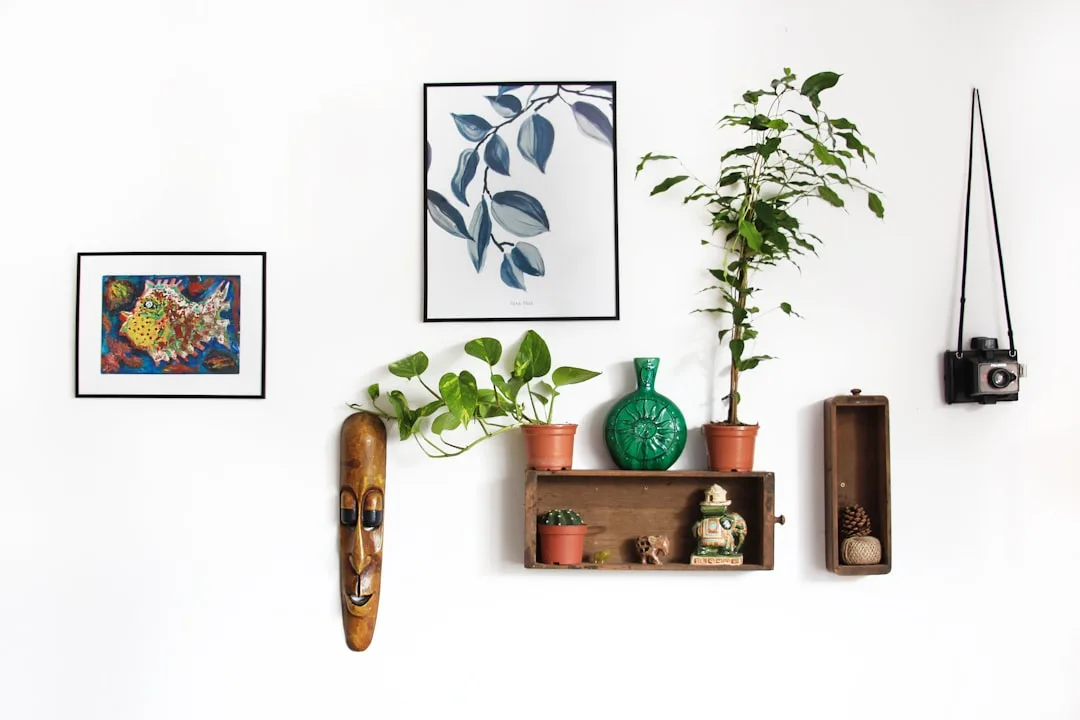
Knowing what’s on the way out is just as useful as knowing what’s in — arguably more so if you’re about to spend money. Some of these styles aren’t bad; they’ve just been so thoroughly absorbed by mass retail that they no longer signal any design awareness.
Pinterest’s 2025 Predicts report found that “neon decor” declined 34% in saves year-over-year, while “organic texture decor” rose 112% in the same period. That’s not a small shift — that’s a complete reversal of momentum.
Here’s what’s fading, and why:
- Neon sign wall art. The “But First, Coffee” LED sign was everywhere in 2019–2021, showed up in every rental listing by 2022, and now reads as a timestamp rather than a design choice. Custom neon has held up slightly better in commercial spaces, but in residential rooms it’s over.
- Generic inspirational quote prints. “She believed she could so she did” on a blush background was a real trend. The problem is mass-market saturation — when the exact same print appears in a Walmart, a dentist’s waiting room, and a blogger’s “bedroom refresh,” it stops communicating anything about the homeowner’s taste.
- Boho macramé in its original 2018 form. The large-format knotted wall hangings with fringe are still available in every chain home goods store, which is precisely the problem. When a trend goes from independent Etsy makers to HomeGoods endcap in under four years, it’s peaked. Refined fiber art is still ascending — but this specific format has run its course.
- Ultra-bold abstract color blocking in primary hues. The high-contrast red-yellow-blue abstract canvas had a real moment in 2022, partly driven by the Pantone Very Peri wave. It’s being replaced by softer, more complex palettes — terracotta and ochre giving way to slate and warm putty, hard geometric edges softening into organic forms.
The pattern here is consistent: when a trend crosses from curated retail into mass-market homogenization, it’s already at its ceiling. The piece that looked fresh in a design studio looks exhausted in a Spirit Halloween storefront.
Takeaway: If you’ve seen the art style you’re considering at Target, HomeGoods, or in a Vrbo listing recently, factor that into your decision — you’re buying at the peak, not the beginning.
How to Match Trending Wall Art to Your Specific Room
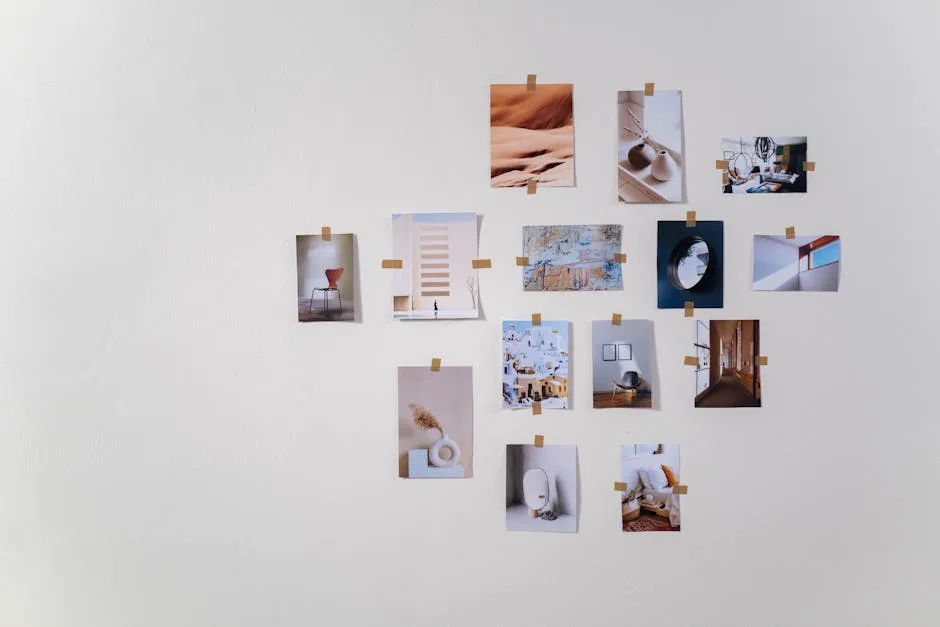
Knowing a trend exists and knowing how to deploy it are two different skills. The most common mistake is buying the right art for the wrong space — a piece that would be extraordinary in a bedroom feels wrong in an entryway, not because the art is bad but because the context undermines it.
Here’s how to think about it room by room:
Living Room
Oversized single-statement pieces in muted palettes are outperforming gallery walls in 2025 open-plan layouts. When your living room flows into the kitchen and dining area, a gallery wall can make the combined space feel visually cluttered. One well-chosen 40-by-60-inch piece in a considered frame does more work. Look for something with enough visual weight to hold a full wall.
Bedroom
Textile art and soft ceramic panels are replacing canvas prints here specifically because of the sensory dimension they add. A bedroom is a tactile space — linen, wool, soft lighting — and a cold stretched canvas print fights that register. A hand-woven textile or a rough-edged ceramic wall piece belongs there in a way a photographic print on canvas doesn’t.
Home Office
Architectural photography and vintage scientific illustration prints add credibility and visual intelligence without feeling corporate. An 18th-century botanical diagram or a Julius Shulman-era architectural photograph says “this person has taste and substance” without being decorative for decoration’s sake.
Kitchen and Dining
Vintage food illustration prints and handmade ceramic tile art are replacing the farmhouse “EAT” sign era. A framed 19th-century illustration from a French culinary encyclopedia, or a small collection of handmade ceramic wall tiles in earthy glazes, brings warmth and character that mass-produced kitchen art never achieves.
Entryway
A single bold sculptural piece or a large framed antique map creates a stronger first impression than clustered frames. The entryway is high-impact, low-lingering — people spend seconds there, not minutes. One strong moment beats a composed arrangement every time.
Takeaway: Match the sensory register of the art to the room — tactile and warm for bedrooms, graphic and structured for offices, generous and grounding for living spaces.
How to Tell If a Wall Art Trend Will Last or Disappear in Six Months
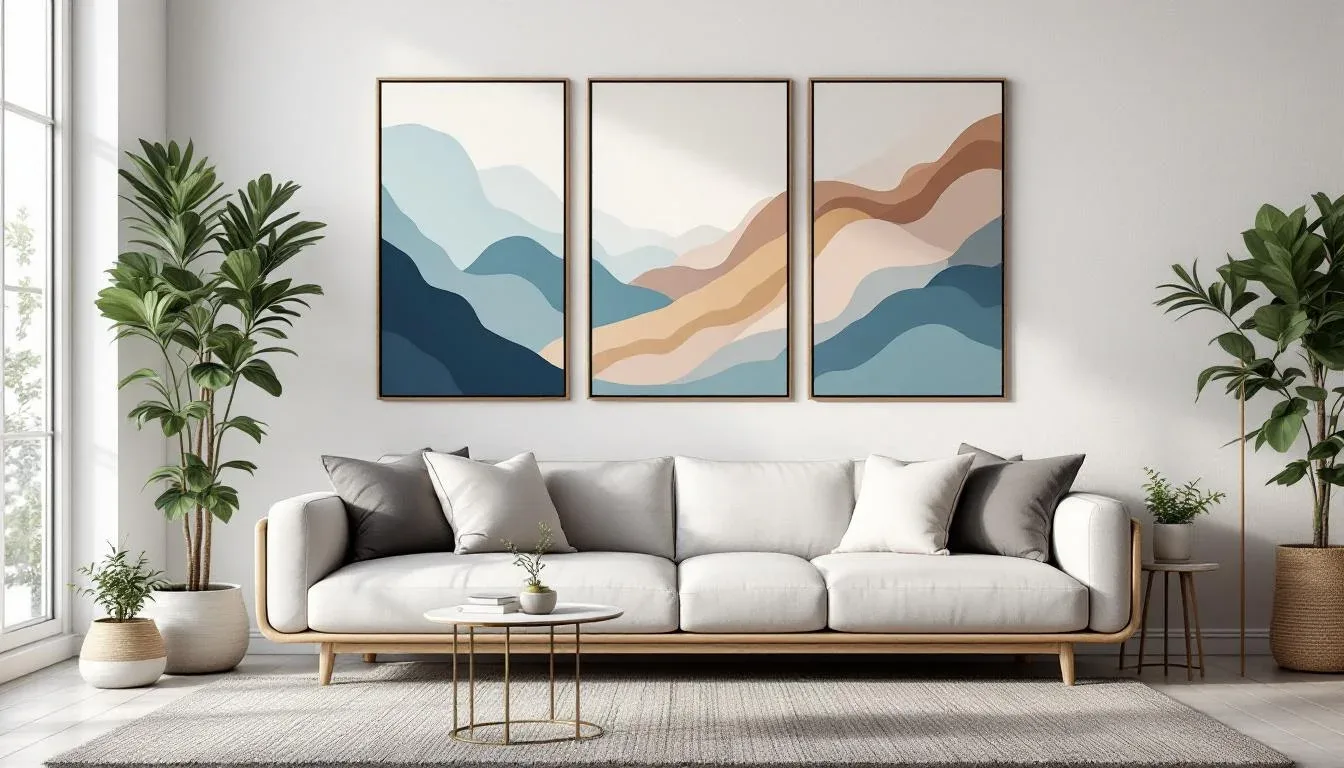
This is the framework most trend articles skip entirely, possibly because it teaches you to need them less. But a repeatable decision-making process is more valuable than any single list.
Design forecasting agency WGSN publishes macro color and material trends 18–24 months in advance of mainstream adoption. Their 2025 interiors forecast specifically highlighted “imperfect craft” and “archive aesthetics” as long-cycle movements — not micro-trends that burn out in a season but multi-year shifts in what people want from their spaces. That’s a meaningful distinction.
Here’s how to assess any trend before you buy:
1. Check where it’s appearing.
If a style is already in mass-market stores like Target, H&M Home, or the seasonal section of Bed Bath & Beyond’s successor brands, it’s at or past its peak. Trends that are still ascending appear in independent boutiques, artist-direct sales, and specialty design retailers — not in aisle 7 of a big-box store.
2. Look at what’s debuting at international trade shows.
Maison&Objet in Paris and Salone del Mobile in Milan are the real leading indicators. What debuts there takes 12–18 months to reach mainstream American consumers. If you want to be genuinely ahead, pay attention to trade show coverage in publications like Dezeen and Wallpaper* — not consumer home decor sites.
3. Look for craftsmanship signals.
Handmade, limited-edition, and artist-direct pieces hold their cultural value significantly longer than printed reproductions. A ceramic wall panel made by a single maker in a Portland studio will not end up in a Spirit Halloween prop sale in three years. A mass-produced canvas print of a trendy abstract composition might.
4. Cross-reference fashion and architecture.
Wall art almost always mirrors what’s happening in adjacent creative industries with roughly a six-month lag. When fashion runways moved toward quiet luxury in 2022–2023, home decor followed with muted palettes and understated materials right on schedule. When fashion shifted toward archive and vintage references in 2024, “archive aesthetics” started showing up in residential design. Watch those industries and you’ll see home trends before they fully arrive.
5. Ask whether the appeal is conceptual or purely visual.
Trends with an intellectual or narrative dimension — vintage maps, scientific illustration, architectural photography — tend to sustain interest longer because the piece rewards repeated looking. A trend that’s purely a color or pattern play tends to exhaust itself faster.
Takeaway: Before buying, check the trend’s current retail footprint — independent boutique means it’s still ascending; mass-market chain means it’s already at the top.
Where to Actually Buy Trending Wall Art Right Now (by Budget)
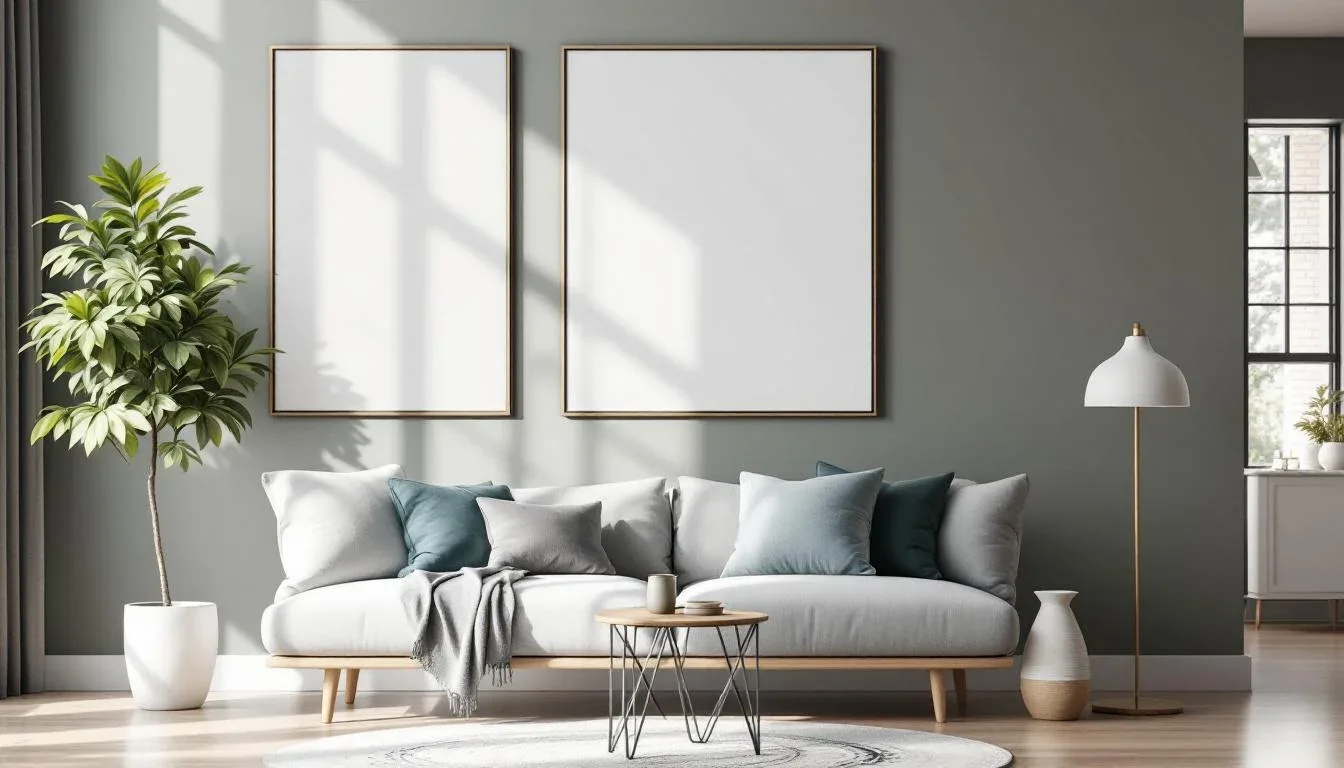
The global online art market reached $11.8 billion in 2023 according to the Art Basel and UBS Art Market Report, with buyers under 40 now representing the fastest-growing purchasing segment. That growth has created a genuinely diverse marketplace — which means the options for every budget are better than they’ve ever been.
Here’s where to actually shop, organized by what you’ll realistically spend:
Under $50
- Etsy independent sellers for vintage map prints, small textile pieces, and handmade ceramic wall objects. Search specifically for “antique botanical print original” rather than “botanical print” to filter toward genuine vintage rather than reproductions of reproductions.
- Society6 for artist-direct prints — the difference here from a generic print retailer is that the work comes directly from individual artists who’ve uploaded their own designs.
$50–$200
- Desenio for architectural photography and structural abstract prints — their curation skews toward exactly the kind of black-and-white graphic work that’s trending in home offices and living rooms.
- Minted for artist-curated original-style prints with customizable framing options. The frame selection is genuinely useful; unlacquered brass and natural wood options are available.
$200–$500
- Artfully Walls for semi-original works and curated artist prints with better production quality than the under-$200 tier.
- Saatchi Art open editions — original artist work made accessible through limited open-edition prints. The originals are well out of budget, but the open editions carry the same visual intelligence.
- Local art fairs — this is the most underused option at this price point. A regional art fair will have original work by emerging artists that genuinely won’t appear in anyone else’s home.
$500 and above
- Instagram is legitimately one of the best discovery tools for emerging artists selling directly. Many artists selling through galleries also sell direct via DMs at lower prices.
- Artsy for gallery-represented emerging artists — search by medium, not by name, if you don’t have a specific artist in mind.
- Gallery open studios — most galleries hold open studio events quarterly. Buying directly from an artist at one of these events is the only category virtually guaranteed not to appear in your neighbor’s home.
Takeaway: At any budget, prioritize artist-direct or small-batch sources over mass-retail platforms — the art will be more interesting and the purchase will actually support a maker.
How to Style Trending Wall Art So It Doesn’t Look Like a Showroom
Buying the right art is half the problem. The other half is the moment you hang it and it somehow looks like a hotel lobby rather than a considered home. This is more common than most people admit.
A 2024 survey by Décor Aid found that 71% of homeowners reported feeling “unsure about placement” as their biggest barrier to buying new wall art — outranking budget concerns. That’s a striking finding, and it explains why even well-furnished rooms often have blank walls. People are more afraid of doing it wrong than of spending the money.
Here’s how to do it right:
Apply the 60-30-10 color rule to your art selection.
Your wall art should echo one of the three tones already in the room — the dominant color (60%), the secondary color (30%), or the accent (10%). It shouldn’t introduce a fourth tone. A piece that picks up the warm ochre of your throw cushions will feel intentional; a piece that introduces a new color will feel like it arrived from a different apartment.
The frame matters as much as the art.
Unlacquered brass and raw wood frames are the 2025 equivalent of the black frame moment that dominated 2018–2022. Black frames haven’t expired entirely, but they’ve lost the specificity they once had. A raw oak float frame or an unlacquered brass thin-profile frame adds material warmth that reads as current without being aggressively trendy.
Hang at the right height — always.
The standard is 57–60 inches from the floor to the center of the piece, which corresponds to average standing eye level. This is the single most common installation mistake. Art hung too high (which is what most people default to, especially above furniture) looks disconnected from the room. Art centered at 57–60 inches feels anchored.
Negative space is the real trend.
Resist the impulse to fill every available wall. One well-placed piece in a room with breathing room around it signals far more design confidence than a packed gallery wall. The gallery wall had its moment, and it was a good one — but the rooms that feel most considered right now are the ones where someone clearly had the restraint to choose less.
Takeaway: Today, take one piece of art you already own and rehang it at 57–60 inches to center — that single adjustment will immediately change how the room reads.
Frequently Asked Questions
What type of wall art is most popular right now?
The styles with the most genuine upward momentum in 2025 are wabi-sabi ceramics and clay wall panels, artisanal textile hangings, and vintage cartographic and scientific illustration prints. These share a material authenticity that printed canvas reproductions can’t replicate. Quiet luxury art — monochromatic, understated, linen-mounted — is the broader aesthetic category absorbing most of these specific styles. If you want a single answer: handmade, three-dimensional, or archival-quality work with a historical or craft dimension is what’s landing in the rooms that look most current right now.
Is gallery wall still trendy in 2025?
Gallery walls haven’t disappeared, but the format has shifted significantly. The tightly composed grid of matching black frames filled with botanical prints and inspirational quotes is genuinely fading. What’s replaced it is either the opposite — a single oversized statement piece with plenty of negative space — or a looser, more eclectic arrangement where the individual pieces have enough visual weight to hold their own rather than working as a collective pattern. If you want to do a gallery wall in 2025, make sure each piece would work alone, and vary the frame materials rather than matching them throughout.
What size wall art is trending for living rooms?
Larger is more current. The trend is moving toward oversized single pieces — 40 by 50 inches or larger — rather than collections of smaller works. In open-plan living rooms especially, a single large-format piece anchors the space in a way that a cluster of smaller frames can’t. The shift toward larger scale is also practical: when a room has high ceilings or flows into adjacent spaces, small or medium art simply gets visually lost. If your wall is 8 to 10 feet wide, you need a piece that’s at least 36 inches wide to read as intentional rather than undersized.
What wall art styles are going out of style?
The clearest exits right now are neon sign art, generic inspirational quote prints, mass-produced boho macramé (the specific large-fringe format that peaked around 2019), and ultra-bold primary-color abstract blocking. The common thread isn’t that these styles are ugly — it’s that they’ve been so thoroughly absorbed by mass retail and rental property staging that they no longer communicate any individual taste. Alongside these, the tightly matching gallery wall with uniform black frames and a single color story is fading in favor of either bold minimalism or genuinely eclectic maximalism. If a style is being used to flip Airbnb units, it’s past its design moment.