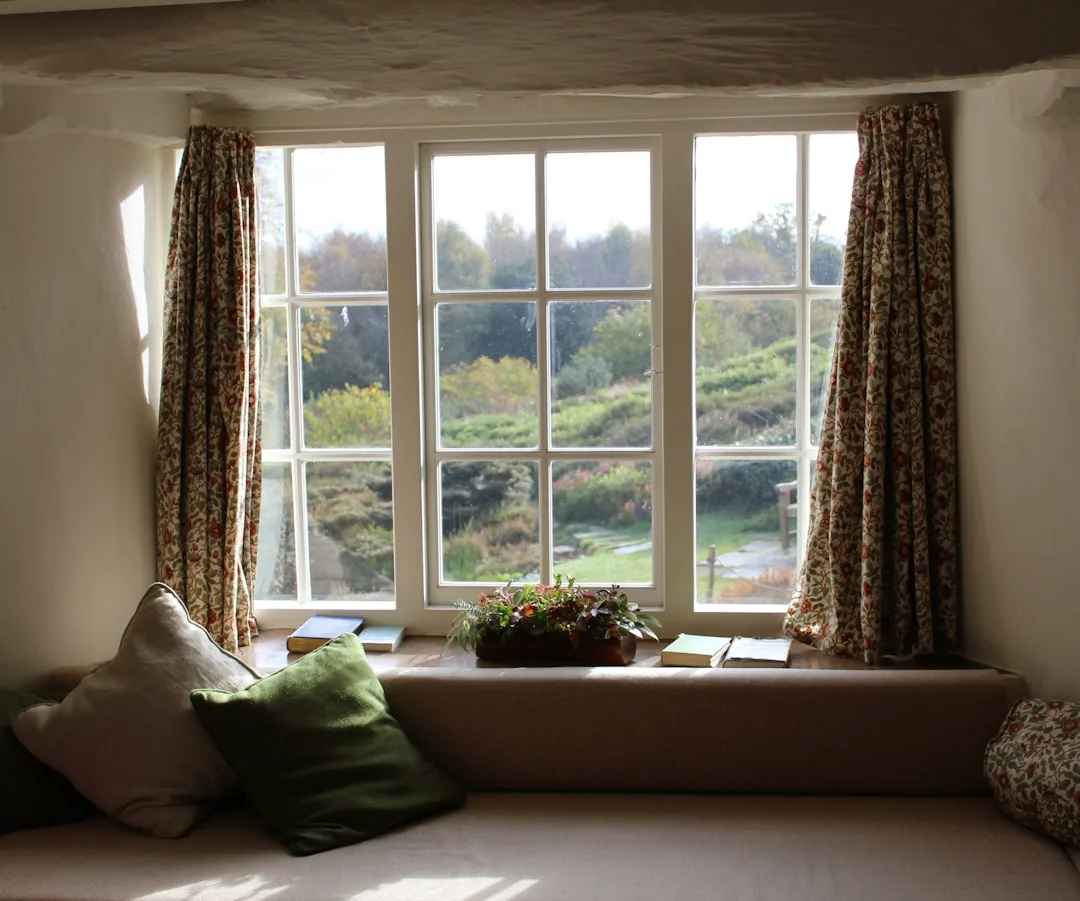
The average homeowner spends thousands on furniture, paint, and lighting — then hangs curtains at the wrong height and undoes half the work without realizing it. Windows are doing one of two things in any room: they’re actively contributing to how the space feels, or they’re quietly working against everything else you’ve done. There is almost no neutral ground. Getting window decor & designs right is the single most overlooked lever in residential interiors — and after eleven years of walking into apartments and houses across Chicago and New York — often before a client had made a single purchase, sometimes after they’d already made expensive ones — I can say with complete confidence that window treatment mistakes are the most consistent design problem I’ve encountered. Not color choices. Not furniture scale. Windows.
Quick Answer
The average homeowner spends thousands on furniture, paint, and lighting — then hangs curtains at the wrong height and undoes half the work without realizing it.
This article isn’t about showing you a mood board. It’s about giving you actual decisions you can make, starting today.
What Creative Window Decorating Ideas Actually Work in Real Homes
In This Article
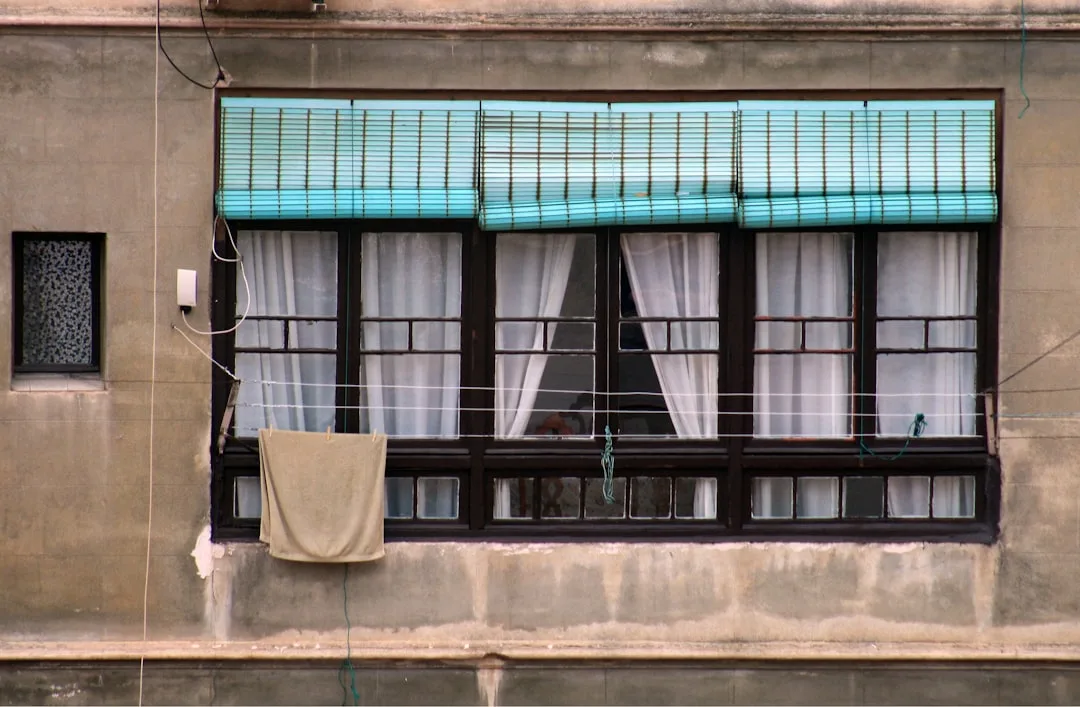
Most window treatment content gives you a product category and calls it advice. “Try plantation shutters.” “Consider roman shades.” This is the design equivalent of a doctor saying “consider medicine.” It doesn’t help you understand what the treatment is actually doing to your space, and it definitely doesn’t help you avoid the specific failure modes I watched repeat themselves across hundreds of real apartments.
Here is what actually works — and why.
Layering sheer panels behind heavier drapes is the single most versatile technique available at any budget. The sheer layer diffuses light during the day while the outer panel gives you privacy and visual weight at night. You get two completely different rooms from one window, morning versus evening, without touching a single switch. I’ve installed this combination in studios and 4,000-square-foot brownstones — the principle holds everywhere.
A few other approaches worth serious consideration:
- Window seats with built-in storage — these function as furniture, seating, and window treatment all at once, and in rooms where square footage is limited, that triple function is worth more than almost any standalone piece
- Stained or frosted window film — particularly relevant for renters who can’t drill or permanently alter frames; quality film from brands like Artscape or Rabbitgoo runs $20–$40 per window and removes cleanly
- Arched valances and fabric cornices — underused in contemporary interiors, but in neutral rooms with flat furniture, a shaped fabric cornice above a window creates architectural interest without touching the walls
- Oversized decorative rods — a chunky 1.5-inch matte black or unlacquered brass rod mounted ceiling-high does as much visual work as the fabric hanging from it
The one move I’d push back on: matching your curtains to your walls as a “safe” choice. I’ve seen this kill more rooms than bad color selection ever did. When the treatment disappears into the wall, you lose the vertical anchor the window was supposed to provide.
Actionable takeaway: Before buying anything, stand at the far end of the room and look at your window. If the rod is within 12 inches of the frame, that’s your first problem to solve — and it costs you only the price of new brackets.
How to Dress a Boring Window When There Is Nothing Architectural to Work With
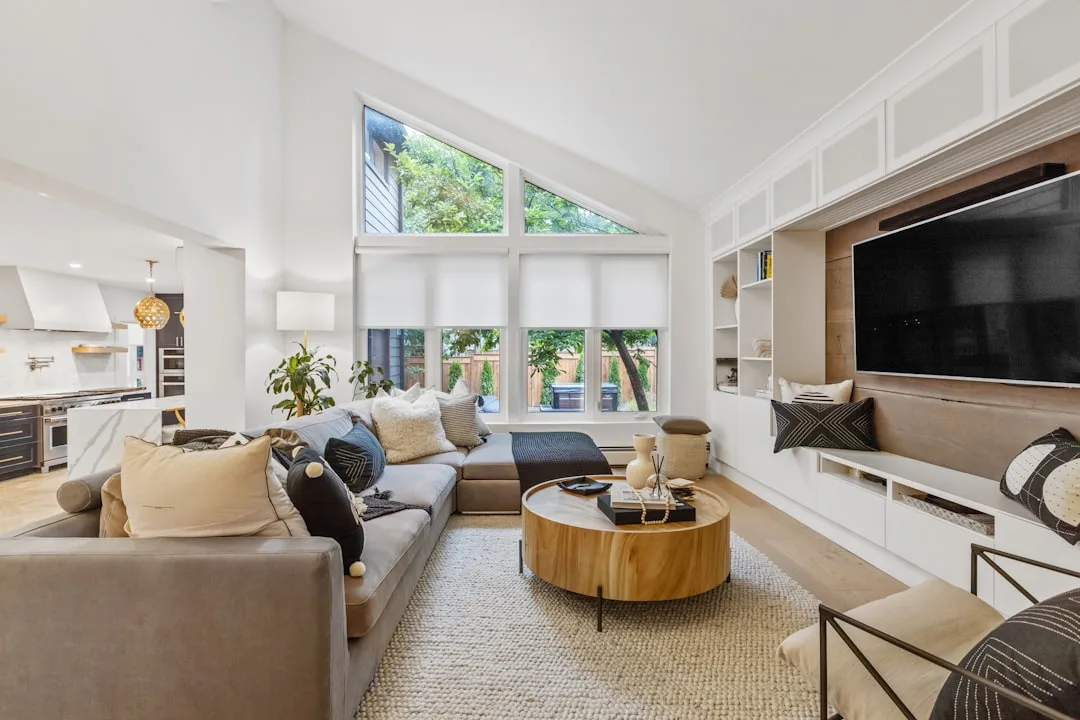
Builder-grade windows are a specific kind of design problem. They’re flat. They sit flush with drywall. They have no casing worth mentioning, no depth, no proportion that asks to be celebrated. I had a client in a 2019-construction condo in Wicker Park whose windows looked like someone had cut rectangles into the wall and forgotten to finish them. She’d been trying to “style” them for two years and nothing worked — because she kept treating symptoms instead of the actual condition.
The actual condition was: there was nothing structural to work with. So you build the structure yourself.
Installing a decorative casing or trim upgrade is the most permanent and highest-return option. Standard builder casing is usually 2.25 inches wide and has no profile. Replacing it with 3.5-inch craftsman-style or fluted casing — a project most competent DIYers can complete in an afternoon — transforms the window from a hole in the wall into a deliberate architectural feature. The lumber cost is typically under $50 per window.
Interior designers consistently note that hanging curtains 4 to 6 inches above the window frame — rather than at frame height — makes the average window appear up to 20% taller in perceived proportion. But for a truly boring window, that height trick alone isn’t enough. You need something at the top of the window to justify the height. A wooden pelmet, an upholstered cornice box, or even a simple painted MDF box wrapped in fabric creates the impression that the window was always meant to be important.
Other approaches that have worked in real, architecturally bland spaces:
- Bold contrast curtains against a light wall — a deep charcoal, navy, or forest green panel on a white wall gives the window a focal-point role it didn’t earn architecturally; the eye goes there anyway
- Roman shades layered under curtain panels — the shade handles function, the panel adds height and softness; together they create enough visual complexity to disguise the fact that the window itself is unremarkable
- A mirror directly opposite the window — this doesn’t dress the window itself, but it makes the window feel larger and more intentional by doubling its apparent light output; in dark rooms this is one of the more reliable tricks available to you
- Plants on the sill or in hanging planters inside the frame — I’m saying this despite my impatience with vague “add greenery” advice, because here the placement is specific: inside the frame, not beside it, so the plant becomes part of the window’s composition rather than a separate decorating gesture
What doesn’t work: trying to hide a bad window entirely. Heavy treatments that block a boring window don’t solve the problem. They announce it.
Actionable takeaway: If your window has no architectural character, spend $40 on wider casing before you spend $200 on curtain fabric. The casing gives the treatment something to work with.
Window Treatment Trends That Are Going Out of Style in 2026
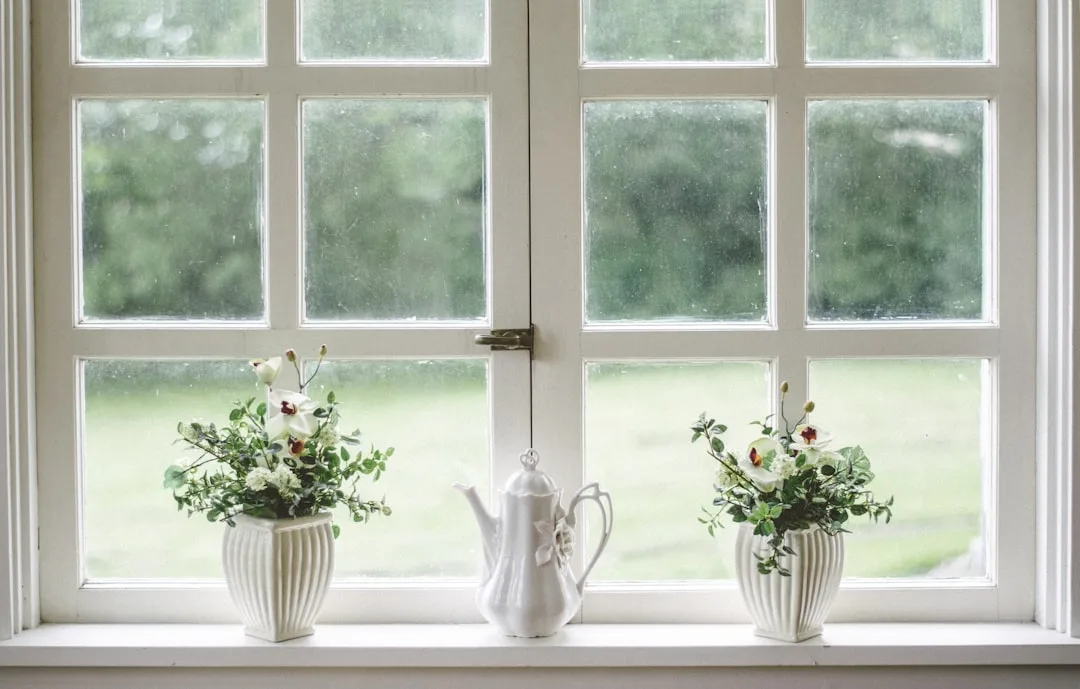
Trend content is useful only when it helps you make a real decision — either about what to stop defending or what to stop avoiding. So here is a straightforward account of what’s fading in window decor & designs, and what’s replacing it.
Farmhouse-style curtain panels with grommets had a long run. The problem is that the grommet top creates a very specific ripple pattern — uniform, slightly industrial — that now reads as a category signal rather than a design choice. What’s replacing it: back-tab or pinch-pleat panels in linen or linen-blend fabrics, which hang with more variation and look considerably less catalog-specific.
Chevron and geometric patterned roman shades are leaving alongside the broader chevron trend that peaked around 2017. The geometry that felt fresh then now competes awkwardly with the quieter, more organic patterns that have taken over upholstery and rugs. Replacement direction: woven textures and subtle stripes, particularly in warm neutrals.
White sheer curtains as the only layer — this was positioned as a clean, minimalist choice, but it reads increasingly unfinished, particularly in rooms with stronger furniture. A single sheer layer provides almost no privacy after dark and very little light control. The move now is to use sheers as a first layer, not the only layer.
Matching curtain and wall color as a monochromatic strategy — this keeps coming up despite consistent evidence that it flattens a room. The window loses its role as an anchor point, the vertical line disappears, and the whole effect reads as indecision rather than intention.
What’s holding and worth investing in: natural woven shades (bamboo, jute, seagrass) as a base layer, heavier linen panels in contrast colors, hardware in aged brass or matte black rather than brushed nickel, and ceiling-mounted tracks for a cleaner line than traditional rods.
Actionable takeaway: If you’re replacing anything in the next six months, prioritize hardware first. A quality rod and bracket set in the right finish will outlast two or three rounds of fabric changes and does more to anchor the window than most people expect.
The Window Decor & Designs Mistakes That Are Costing You the Most
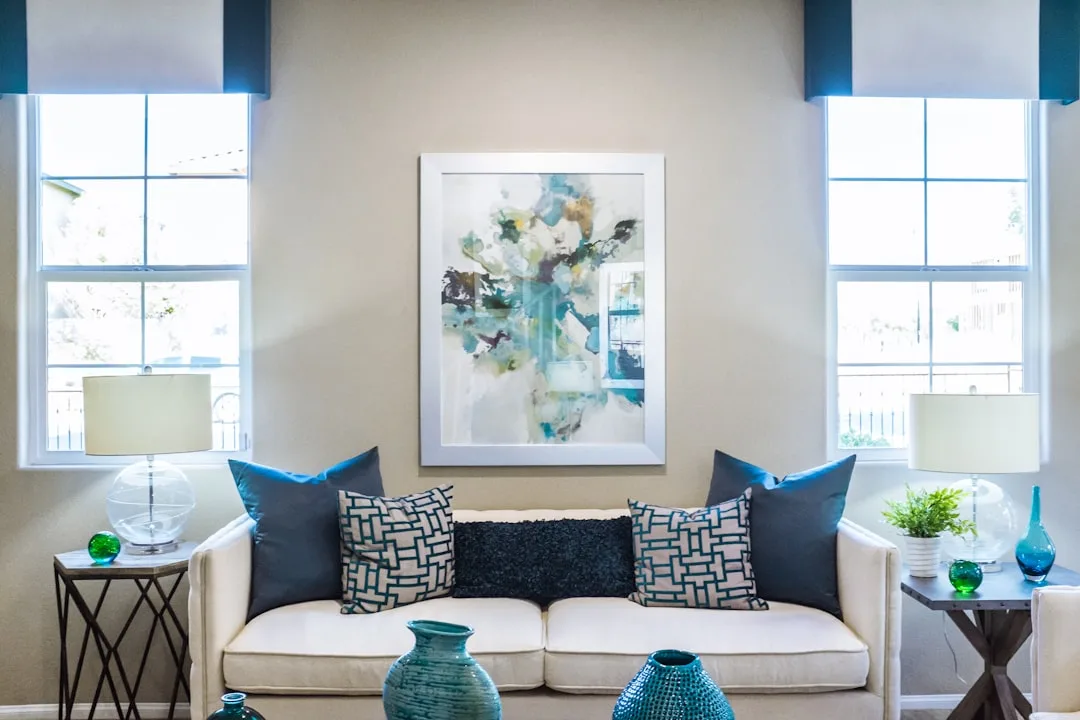
A focused look at the specific errors — not categories of errors, but the actual, granular decisions — that consistently undermine otherwise well-designed rooms.
Buying curtain panels that are too short. Standard panels come in 84-inch and 96-inch lengths. In rooms with 9-foot ceilings and ceiling-mounted rods, 84 inches almost never reaches the floor properly. The panel either hovers awkwardly above the floor or, worse, the homeowner compensates by dropping the rod to frame height — which eliminates the height benefit entirely. Measure from where your rod will actually be mounted to the floor before purchasing. In most cases you want 96-inch or 108-inch panels, or custom length.
Using a rod that’s too short. The rod should extend 6 to 12 inches beyond the window frame on each side. This allows the panels to stack off the glass when open, keeping the full window exposed rather than blocking several inches of it. A rod that ends at the frame forces the panels to cover part of the window even when “open” — which both reduces light and shrinks the apparent window size.
Neglecting blackout lining in bedrooms to save money. Unlined curtains in bedrooms look the same as lined ones during the day. At 5:30 a.m. in summer, they are completely different products. Blackout lining costs $1–$3 per panel to add if you’re sewing, or a modest premium if ordering. The sleep quality return on that investment is difficult to overstate.
Ignoring the hardware-to-room ratio. A delicate 0.75-inch rod in a room with heavy furniture and high ceilings reads as an afterthought. A 1.25-inch or 1.5-inch rod in the same room reads as a deliberate design choice. The rod diameter should scale with the visual weight of the room, not just the weight of the fabric it’s carrying.
Choosing treatments for appearance without accounting for the window’s specific light exposure. South-facing windows need UV-filtering capacity — both for occupant comfort and to protect furniture and flooring from fading. East-facing windows flood with early morning light; if that’s a bedroom or a room where glare is an issue, you need real light control, not decoration. West-facing windows create late afternoon heat gain that no amount of styling resolves without cellular shades or solar shades underneath decorative panels.
Actionable takeaway: Before making any purchase, answer three questions: Where will the rod actually mount? How long does the panel need to be from that point? What does this window need to do besides look good? The answers eliminate most of the expensive mistakes before they happen.
FAQ: Window Decor & Designs
Q: What’s the most cost-effective window decor upgrade for a rental apartment?
Tension rods and no-drill brackets have improved significantly — brands like IKEA, Umbra, and Kwik-Hang now offer bracket systems that fit over the frame without drilling and hold heavier panels than they once did. Combined with a quality sheer-and-panel layered approach, you can achieve most of the visual effect of a permanently installed setup for under $100 per window. Frosted window film is the other high-return rental option, particularly for windows that face neighboring buildings or lack privacy without curtains.
Q: How do I choose between curtains and blinds when I need both light control and style?
You don’t have to choose — the most functional window decor & designs approach in most rooms combines both. Use a roller shade or cellular shade mounted inside the frame for precise light and privacy control, then layer curtain panels outside the frame for softness and visual height. The shade does the work; the panels do the design. This is more cost-effective than custom curtains with blackout lining and gives you more flexibility as your design preferences change.
Q: My windows are different sizes in the same room. How do I make them look cohesive?
Standardize at the rod level, not the window level. Mount all rods at the same height — ideally the same distance from the ceiling — regardless of where the individual window frames sit. Use the same fabric, the same panel width, and the same hardware throughout. When the tops of all your curtains align, size differences in the actual windows become much less visually disruptive. This is a technique used consistently in older homes where original windows have been replaced at different times and no longer match.
Q: Are motorized shades worth the cost for a primary residence?
For south- or west-facing rooms where you’re adjusting shades multiple times a day, yes — the convenience compounds in a way that’s hard to appreciate until you have it. For rooms where you set the shade once and leave it, probably not. The price point has dropped considerably; Lutron’s Serena line and IKEA’s FYRTUR offer motorized cellular and roller options in the $150–$300 per window range that integrate with most smart home systems. The installation is straightforward and doesn’t require an electrician if you go with battery-operated motors.
Q: What window treatments work best in rooms with very little natural light?
The priority in a low-light room is maximizing what light exists. That means avoiding dark or heavy fabrics that absorb rather than reflect, keeping panels stacked as far off the glass as possible when open, and using sheer panels rather than opaque ones wherever privacy allows. Mirrors opposite or adjacent to the window multiply the light that does enter. If you need privacy but not light control, sheer roman shades or woven wood shades with an open weave give you coverage without blocking the light entirely. The worst choice for a dark room is a lined curtain panel that covers part of the glass even when “open” — which, as noted above, is what happens when the rod is too short.
Q: What’s the most cost-effective window decor upgrade for a rental apartment?
Tension rods and no-drill brackets have improved significantly — brands like IKEA, Umbra, and Kwik-Hang now offer bracket systems that fit over the frame without drilling and hold heavier panels than they once did. Combined with a quality sheer-and-panel layered approach, you can achieve most of the visual effect of a permanently installed setup for under $100 per window. Frosted window film is the other high-return rental option, particularly for windows that face neighboring buildings or lack privacy without curtains.
Q: How do I choose between curtains and blinds when I need both light control and style?
You don’t have to choose — the most functional window decor & designs approach in most rooms combines both. Use a roller shade or cellular shade mounted inside the frame for precise light and privacy control, then layer curtain panels outside the frame for softness and visual height. The shade does the work; the panels do the design. This is more cost-effective than custom curtains with blackout lining and gives you more flexibility as your design preferences change.
Q: My windows are different sizes in the same room. How do I make them look cohesive?
Standardize at the rod level, not the window level. Mount all rods at the same height — ideally the same distance from the ceiling — regardless of where the individual window frames sit. Use the same fabric, the same panel width, and the same hardware throughout. When the tops of all your curtains align, size differences in the actual windows become much less visually disruptive. This is a technique used consistently in older homes where original windows have been replaced at different times and no longer match.
Q: Are motorized shades worth the cost for a primary residence?
For south- or west-facing rooms where you’re adjusting shades multiple times a day, yes — the convenience compounds in a way that’s hard to appreciate until you have it. For rooms where you set the shade once and leave it, probably not. The price point has dropped considerably; Lutron’s Serena line and IKEA’s FYRTUR offer motorized cellular and roller options in the $150–$300 per window range that integrate with most smart home systems. The installation is straightforward and doesn’t require an electrician if you go with battery-operated motors.
Q: What window treatments work best in rooms with very little natural light?
The priority in a low-light room is maximizing what light exists. That means avoiding dark or heavy fabrics that absorb rather than reflect, keeping panels stacked as far off the glass as possible when open, and using sheer panels rather than opaque ones wherever privacy allows. Mirrors opposite or adjacent to the window multiply the light that does enter. If you need privacy but not light control, sheer roman shades or woven wood shades with an open weave give you coverage without blocking the light entirely. The worst choice for a dark room is a lined curtain panel that covers part of the glass even when “open” — which, as noted above, is what happens when the rod is too short.