Category: Building Design

Building Design

  • Iceberg-Inspired Dwellings Overlooking The Waterfront of Aarhus, Denmark

    Iceberg-Inspired Dwellings Overlooking The Waterfront of Aarhus, Denmark

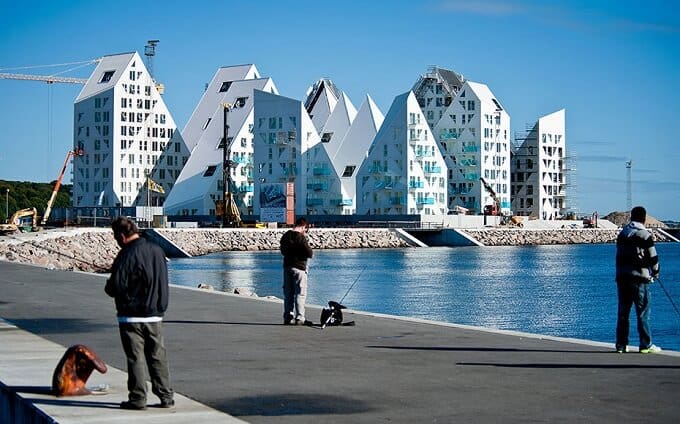
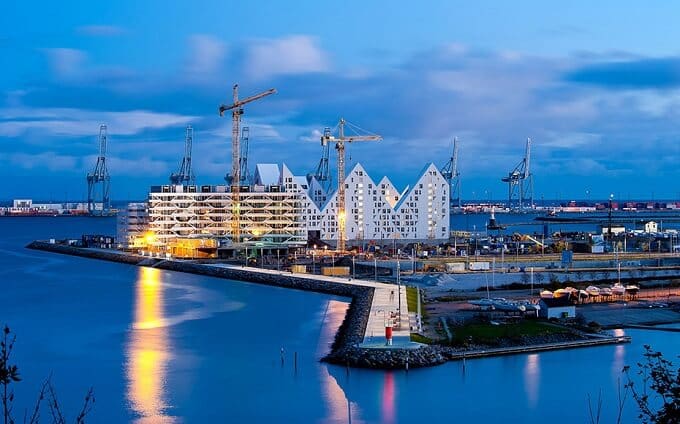
    Scheduled for completion in 2013, these unique architectural buildings inspired by floating icebergs will have a considerable contribution to the development of Aarhus, the second largest city in Denmark, transforming the old façade of it into a living city with many cultural and social activities, large amount of workplaces and various array of housing types.

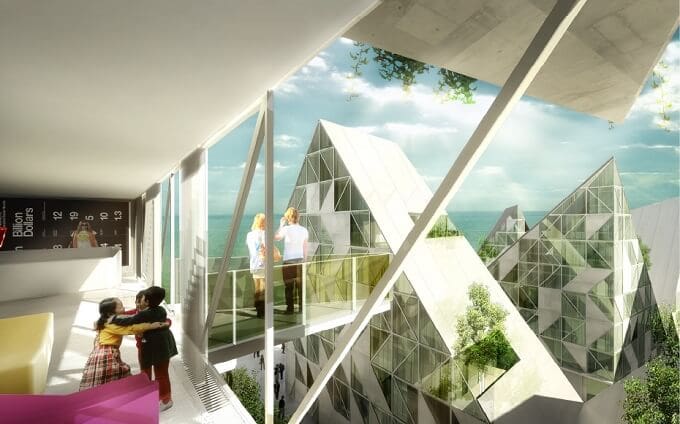
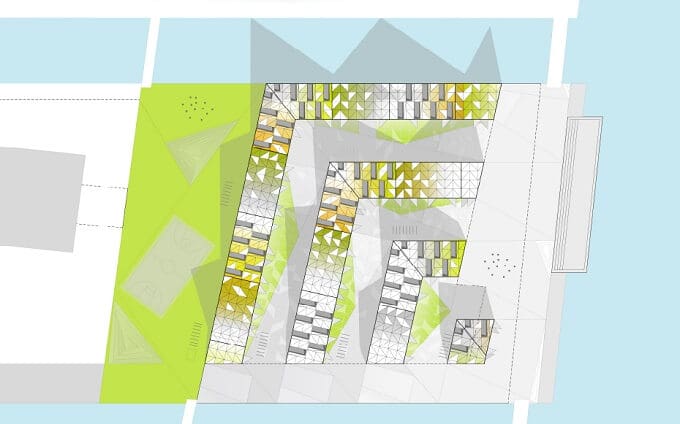
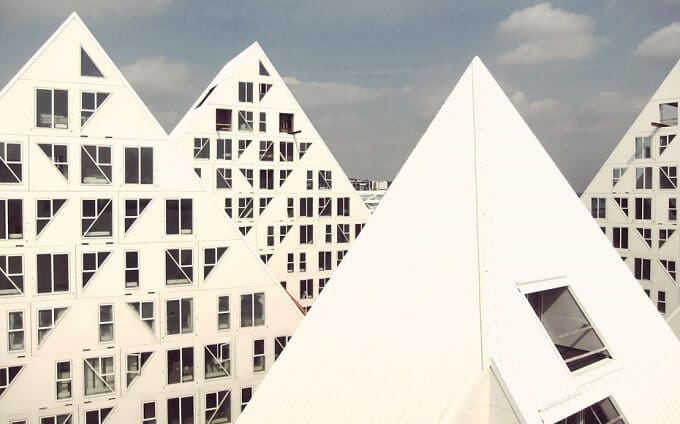
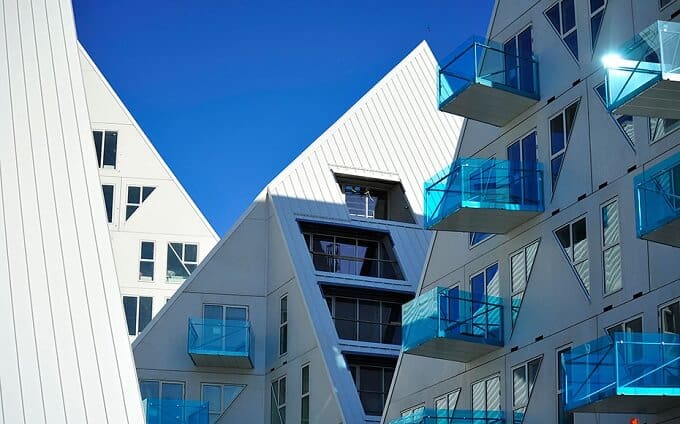
    Amsterdam based architecture and urban design bureau SeARCH in collaboration with JDS, Louis Paillard and CEBRA envisioned this ambitious project, very suggestive entitled “Iceberg”, which is located on a splendid site on the waterfront of Aarhus and encompasses four L-shaped wings spread over 21,500 m2 that houses a series of different apartment types range greatly in size. This residential dwellings rang high in originality, its strengh consisting both in appearance and functionality: amazing “peaks” and “canyons” forms featuring balconies with glass that changes its color from deep blue to transparent to suit the color of the iceberg. The building’s orientation ensures plenty of natural lighting for those over 200 apartments and stunning water and city views.

    Iceberg-concept

    Iceberg-development-plans

    Iceberg-urban-development

    Iceberg-apartments

    Residential-area-in-Denmark

    Iceberg-urban-development-01

    Photos © Mikkel Frost


    Project details:

    Client: Pension Denmark, Braband Boligforening
    Collaborators: CEBRA, JDS, Louis Paillard
    Location: Aarhus, Denmark
    Project: Residential; Urban planning, housing
    Year: 2008-present
    Budget: 32.600.000 EUR
    Size: 21.600 m2
    Status: Ongoing


  • All White Magnificent House on the Cliff in Calpe, Spain

    All White Magnificent House on the Cliff in Calpe, Spain

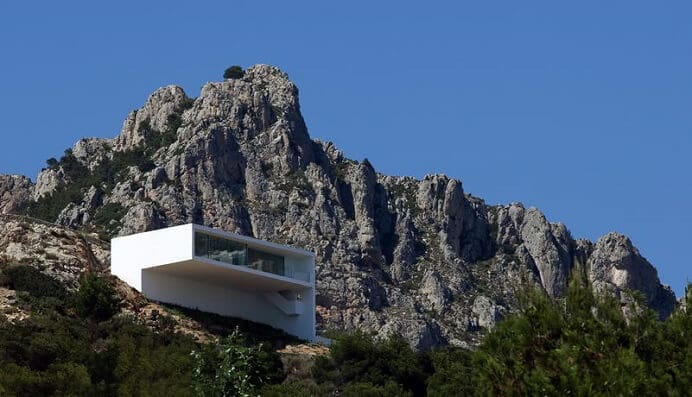
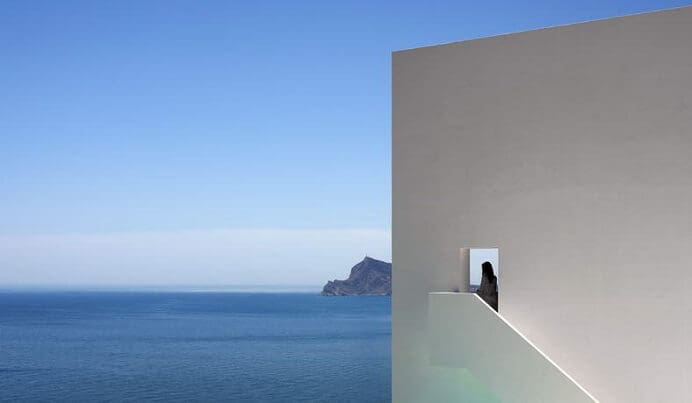
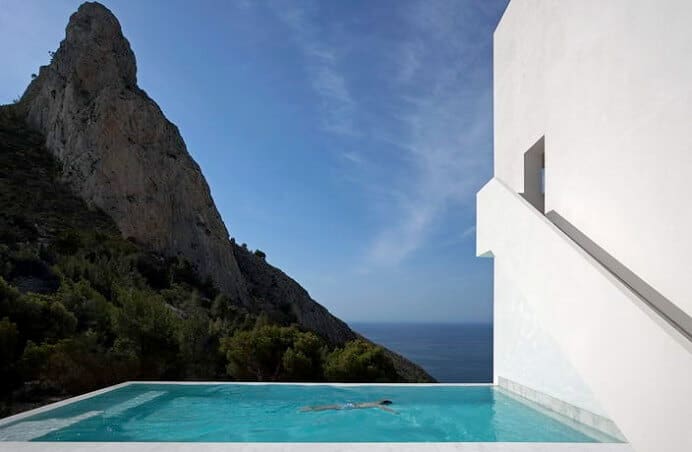
    Just as its name suggests, the “House on the cliff” is a stunning modern residence designed by Valencia-based architecture firm Fran Silvestre Architects on a steep terrain in the known area of Calpe, Alicante, Spain, a unique resort, a place for tourism and recreation worthy of visiting. Surrounded by a staggering landscape, a backdrop of  rocky mountains and spectacular Mediterranean Sea views on the opposite, the house  is a charming secluded place for its inhabitants: they can enjoy fresh air,  take long walks, admire the sunset and the panoramic views, walking poles and disconnect from the busy city life.

    House-design-by-Fran-Silvestre-Arquitectos

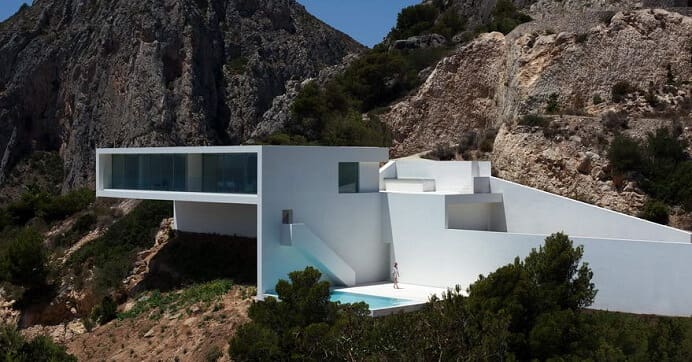
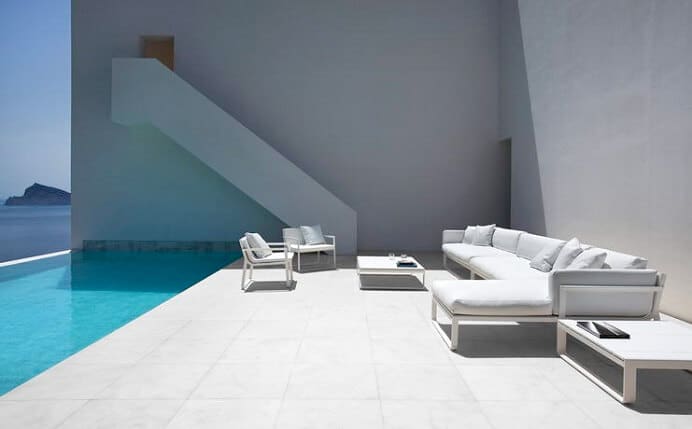
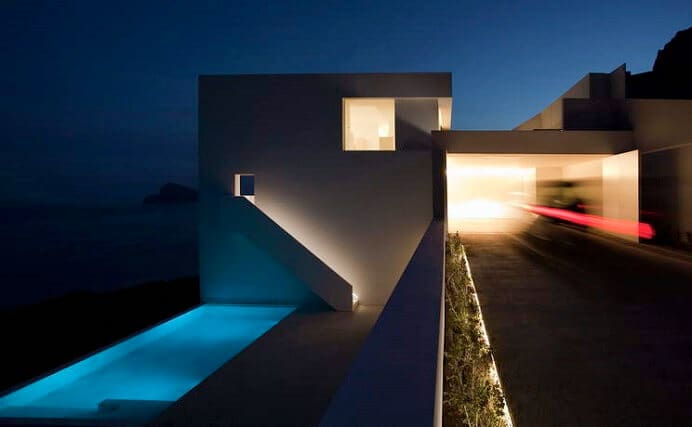
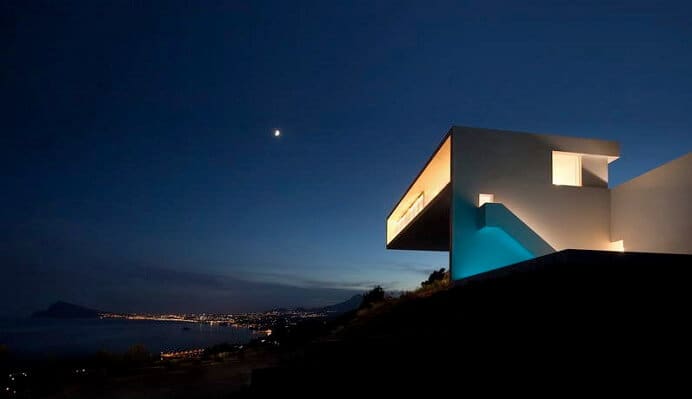
    Standing on the plot of  962,84 square metres,  the “House on the cliff” was cleverly adapted to the uneven terrain, its white monolithic concrete structure respecting the natural contours of the site. To minimize adjustments to the topography, architects designed the living spaces of the house spreaded over four floors. An infinity pool and a leisure large terrace are on the lowest level, while the upper volume accommodates the generously-sized bedrooms, living room, dining room and the kitchen. An interesting architectural detail is a functional outdoor stair, which not only allows the lucky residents to change levels, but also gives them the possibility contemplating the outstanding scenery.

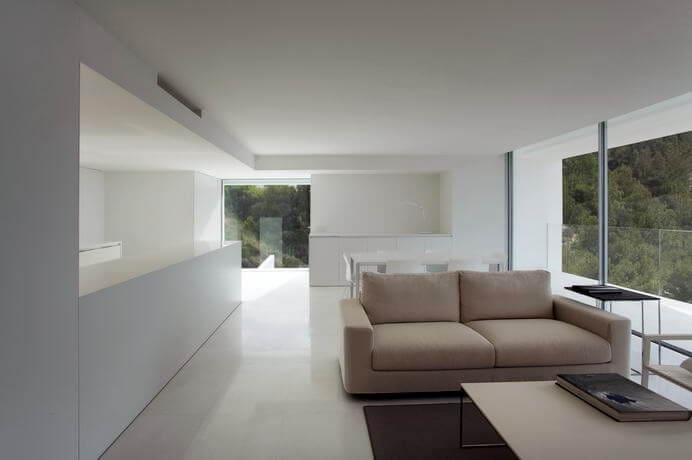
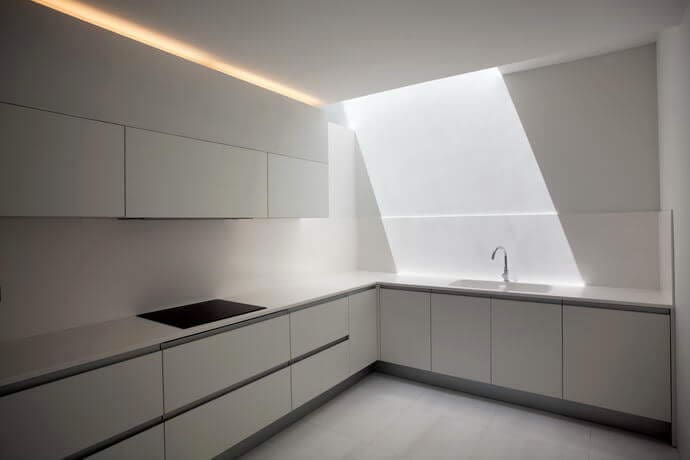
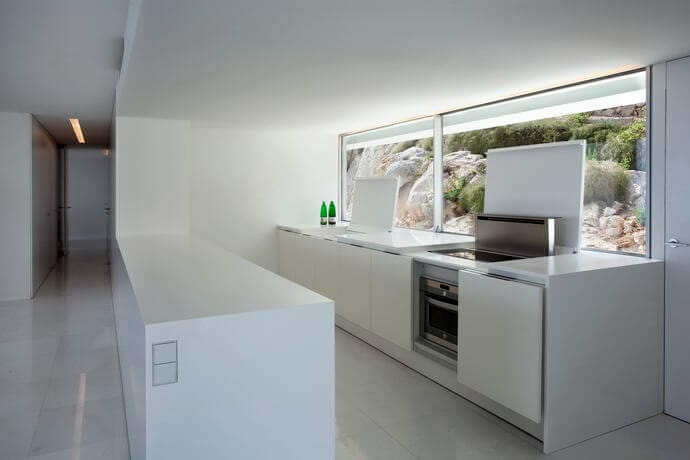
    The interior of the residence is very much connected to the exterior through floor to ceiling windows that offer extensive forest views in the living and dining areas. The passageway leading to the main entrance is carved within a space between the home and cliff enabling the rocky landscape to double as a backdrop to the bathroom and kitchen. Minimalist neutral furnishings embellish the sleek, modern interior, making it comfortable and inviting, while the use of this color palette inspires tranquility and harmony. A perfect place for a holiday retreat too. What do you think?

    House-design-by-Fran-Silvestre-Arquitectos-01

    House-design-by-Fran-Silvestre-Arquitectos-02

    Water-front-property-in-Spain
    Infinity-swimming-pool

    Infinity-swimming-pool-01

    Modern-minimalist-living-room

    Minimalist-kitchen-furniture

    Minimalist-white-kitchen

    Modern-bathroom-sink
    Swimming-pool-at-night
    White-House-at-night

    Photos © Fran Silvestre Arquitectos; Diego Opazo


    Project details:

    Project name: House on the cliff
    Location: Calpe. Alicante, Spain
    Architects: Fran Silvestre Arquitectos
    Project team: Fran Silvestre (principal in charge), María José Sáez (principal in charge), Maria Masià (collaborator architect), Adrián Mora (collaborator architect), Jordi Martínez (collaborator architect), José V. Miguel (collaborator architect)
    Contractor: Construcciones Alabort
    Site area: 962,84 m2
    Built area: 242,00 m2
    Cost (p.e.m.): 650.000 EUR

  • Unique Purse-Shaped Building – Simone Handbag Museum in Seoul, South Korea

    Unique Purse-Shaped Building – Simone Handbag Museum in Seoul, South Korea

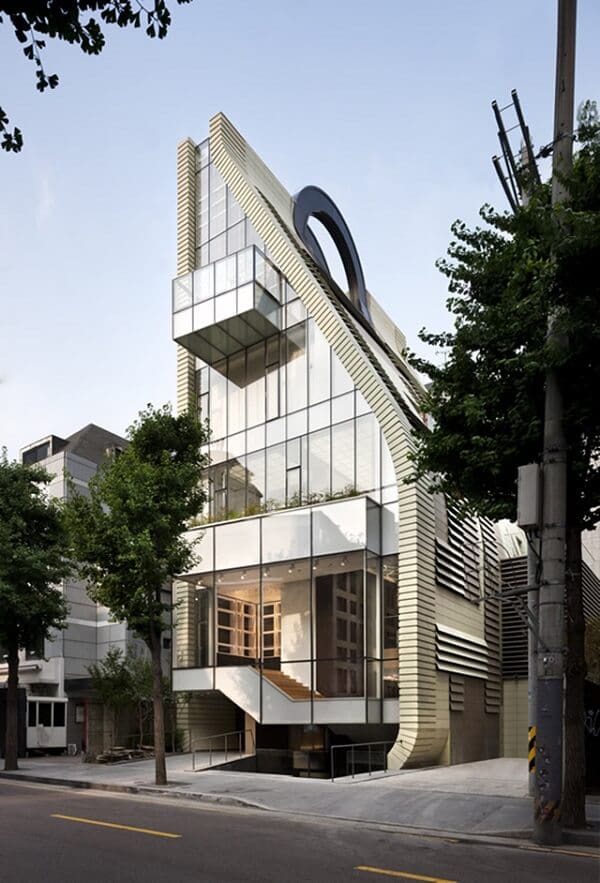
    Could you believe that handbags remains over time the number one women accessory that nowadays has its very own museum?! Here’s the  proof: Simone Handbag Museum, a place which isn’t only dedicated to conserve and display a unique and stunning collection of handbags, but also showcase a fashionable work of architecture. The museum is located in Gangnam, one of the most fashionable neighborhoods in Seoul, South Korea, and since its opening in July 2012, it draws tourists and visitors attention firstly by it’s unusual building shape which looks like a purse itself, with huge loop handles on top to honor handbags, some of the most fashion  details worn worldwide.

    Museum-dedicated-to-handbags

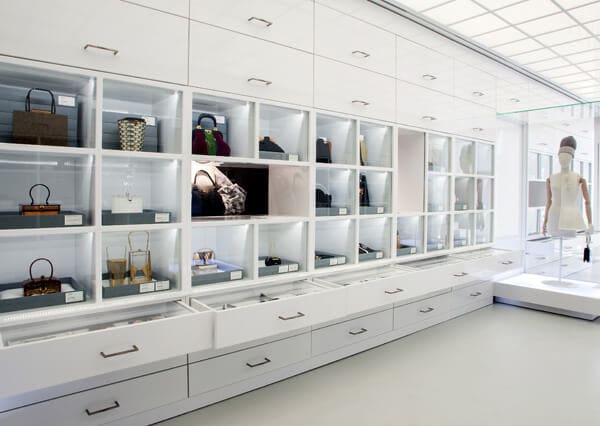
    The plans for this five-story building called Bagstage of Simone Handbag Museum was designed by Korean architects UAD and Charlie Smith Design and features an all-glass façade and contemporary interiors that are home for an amazing collection consisting of more than 300 historical handbags dating from the 15th century to the present day, a shop selling bag materials, a designer studio for up-and-coming Korean who can work rent-free and a flagship store. Divided into two halves ( Twentieth Century and Contemporary and Historic), the museum is the initiative of Kenny Park, CEO of Simone Acc. Collection Ltd., which is a passionate handbag producer for some of the largest fashion houses in the world, while the impressive collection was assembled by renowned curator of fashion history exhibitions Judith Clark, Professor of Fashion and Museology at the London College of Fashion.

    Simone-Handbag-Museum-in-Seoul

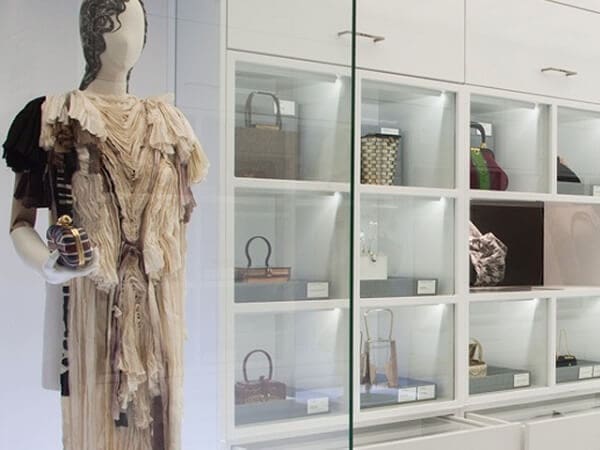
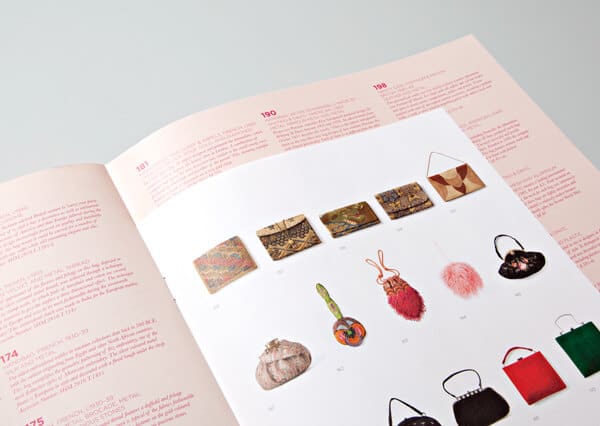
    It took two years to organize it in what is today: a permanent, quite detailed handbags collection with European origin most of them and some contemporary ones from the United States, including  exquisitely crafted reticules and “sweetmeat” bags, gunmetal mesh purses from the late 19th century and recent creations like an Alexander McQueen clutch printed with the Union Jack. Bespoke maniquins designed especially for Simone Handbag Museum display various handbags with different styles and a level of craftsmanship that barely survives in today’s handbags highlighting how they contributed to female identity over time.

    All find that handbags symbolize the emancipation of women, but few of us know that handbags were initially used before for carrying smelling herbs and after that money. So, it’s very interesting to see how things changed since than regarding their use, size, techniques and materials they are crafted. Recent pieces and trends from the 1900s could be found at the ground floor, whilst the upper level exhibits bags from earlier years. Dedicated DIY workshops are constantly held to give young designers the possibility to create their own bag and use that specific tools needed to design a purse, and after that sell their works in an area made for exclusively for them.

    So, ladies, if your next trip is to Seoul, make sure you find some time to visit the Simone Handbag Museum. Besides a great fashion history lesson, a peek inside the retail store might give you the chance to leave with a purse in case you’ve entered without one.

    Mureum-interior-details


    Museum-handbags-exhibition

    Permanent-display-of-handbags

    Special-museum-collection

    Photos © UAD and Charlie Smith Design

  • Impressive Holiday Home with Futuristic Architecture

    Impressive Holiday Home with Futuristic Architecture

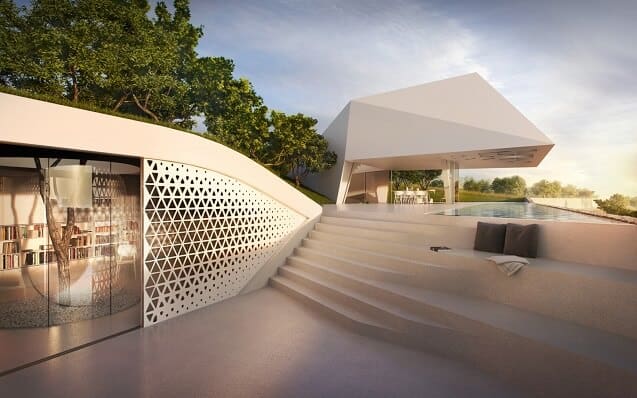
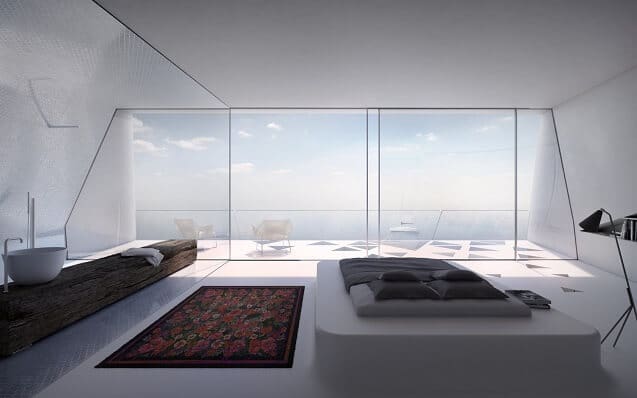
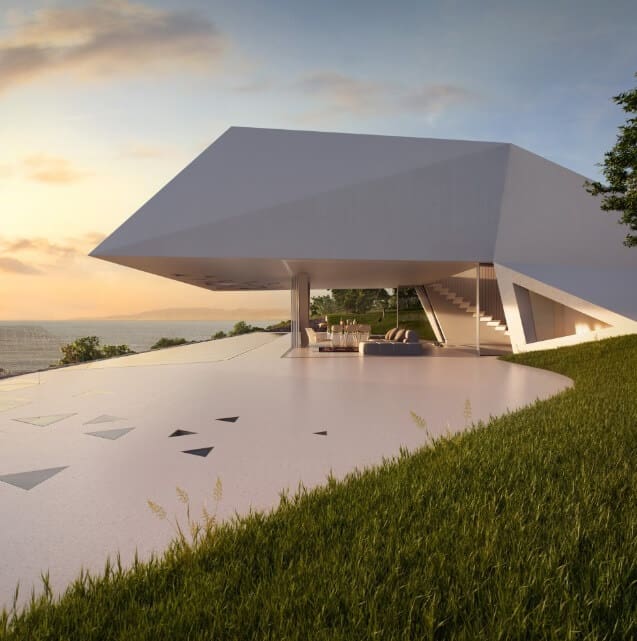
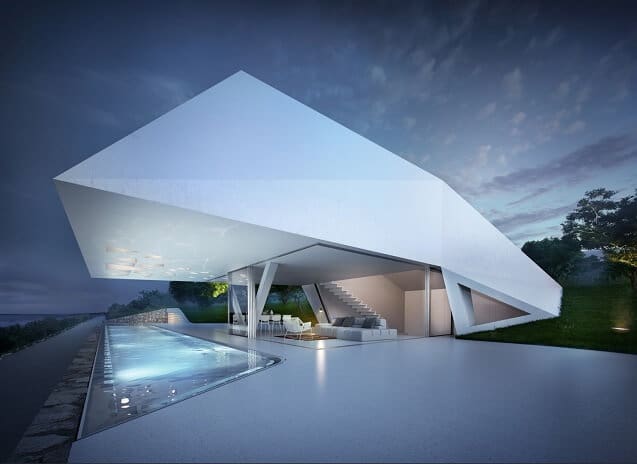
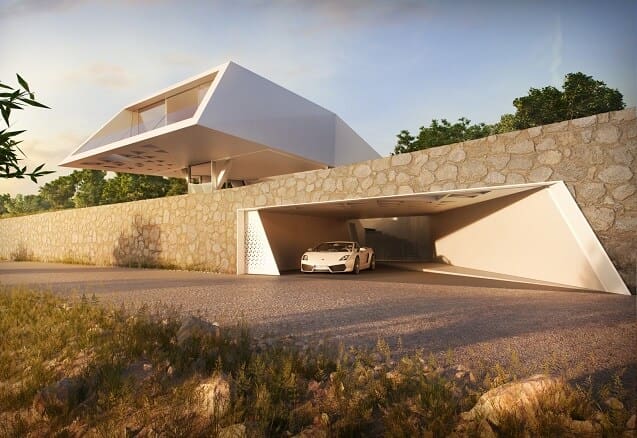
    Villa F is an impressive single-family holiday home with a futuristic architecture and a privileged location in Rhodes, Greece. Responsible for this amazing project is the Hamburg-based Architecture and Research Studio Hornung and Jacobi Architecture, whose purpose is to get excellent detailing, highest possible quality and the creation of an integrated strategy involving the individual needs of the user, regardless of the budget. Stunning in its sculptural qualities, from far away the 220qm residence looks rather like a spaceship ready to take off  than a holiday retreat, featuring unexpected angles of sight and volumes.

    Guest-house

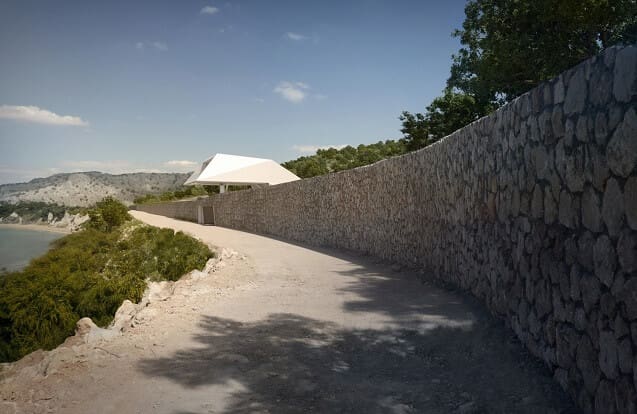
    Villa F appears as a strong architectural form with a bent and faceted rectangular prism design developed directly from the outstanding characteristics and qualities of the site. Following the site contours, it’s located three meters above a curving coastal road limited on one side by a natural stone wall and on the other side by the Mediterranean Sea. To ensure from the beginning a high level of privacy, the architects preserved the pre-existing part of the stone wall and equally continued it. Both the exterior and the interior is original and eye-catching, one can enjoy spectacular views of the deep blue-colored Mediterranean Sea while taking advantage of the best modern living conditions.

    A partially covered swimming pool and a separate area for quests embedded in the given topography draw attention when you come closer.  A good indoor-outdoor connection was achieved by opening up the living and dining area towards  the terrace, the garden and the infinity pool. Immense glass windows step aside and create a great entertaining  and relaxing space. Its ultimate sleek, modern design with minimalist and elegant details turns this home into a tasteful and inspiring oasis of relaxation.

    Bedroom-with-breathtaking-view

    Spectacular-retreat-in-Rhodes

    Villa-F-in-Greece

    Villa-F-in-Greece-01

    Rhodes-coastal-road

    Photos ©  Hornung and Jacobi Architecture


    Project details:

    Project: Villa F
    Collaborators: Peter Thomas Hornung, Elsa Katharina Jacobi, Jan Escher
    Location: Rhodes, Greece
    Year: 2011-undisclosed
    Type: residential
    Size: 220qm


  • Great Maya World Museum of Mérida in Mexico

    Great Maya World Museum of Mérida in Mexico

    Receiving recently the CIDI Latin American design award as “Emblematic work of 2013” in the Culture category, the Great Maya World Museum of Mérida in Mexico (El Gran Museo del Mundo Maya) is a noticeable cultural project, which aims to preserve and promote the region’s cultural heritage. Starting from the idea that “a building without meaning is a simple construction”, GRUPO ARQUIDECTURE (formerly 4A Arquitectos) designed El Gran Museo del Mundo Maya, whose design concept is inspired by the interesting Mayan culture. Highlights not only the prehispanic architecture of the region, but also their cosmogony, its expressive, highly dramatic overall design  symbolizes the sacred tree of the cosmic vision of  Mayan culture -“La Ceiba”. As the focal point of the composition, La Ceiba and the sacred tree connects the world with the underworld and the sky and the shadow as ineffable value in a sun-scorched land but refreshed by the breeze.

    Contemporary-architecture-in-Mexico

    Thus, the exterior of the building showcases a visually striking design featuring an abstract metal framework that seems woven across the façade, which reminds us of Beijing National Stadium. Its Ceiba tree -inspired shape raises seeking for natural air and light using passive systems to achieve energy benefits and environmental comfort. Designed as a living museum that aims to captivate and inspire love for new knowledge that makes you return again,  El Gran Museo del Mundo Maya makes you curious to investigate the Mayan culture and its origins. The building is structured in order to integrate all the required areas and the program needs for the various functional activities.

    Museum collections, transit cellars, research and study áreas of the great archaeological acquisition and a 260 parking spaces area are all located at the “Ceiba’s roots” level.  Life and daily activities take place at the “Ceiba’s trunk” level, underneath its shade, the sacred tree being related to the infinite where its branches spread up to the sky and human transcendence. Here is the the main lobby, personal belongins kept area, ticket offices, public relations office, childcare center, restaurant with terrace, souvenir shop and a terrace bar, as well as a 2,000 m2 of permanent exhibition rooms and 600 m2 for travelling exhibitions. A high-definition large format cinema with performing arts facilites for various artistic and cultural activities, a multi-purpose hall, and also the executive and administrative offices are to be found inside the “Ceiba’s frond”. Note that the sustainability is an integral part of this project, GRUPO ARQUIDECTURE creating a comprehensive work  that takes all environment, social and economic aspects in consideration.

    Contemporary-Museum-in-Mexico

    Multimedia- show

    Courtyard-showroom

    General-lobby

    Inside-Museum-in Yucatan

    Museum-exhibitions

    Museum-exhibitions-01

    Photos © David Cervera, Rocío Rojo, Alessandra Ortíz


    Project details:

    Architects: 4A Arquitectos
    Location: Mérida, Yucatán, Mexico
    Design Team: Ricardo Combaluzier, Enrique Duarte, William Ramírez, Josefina Rivas
    Collaborators: Luis De La Rosa, Alma Villicaña, Carlos Guardián, Mariana Farfán, Julio Rosas, Aída Ordóñez, Fabián Rosas, Ricardo Combaluzier
    Year: 2010
    Area: 22,600 sqm


  • Zaha Hadid Architects’ New Arts and Culture Centre Project in China

    Zaha Hadid Architects’ New Arts and Culture Centre Project in China

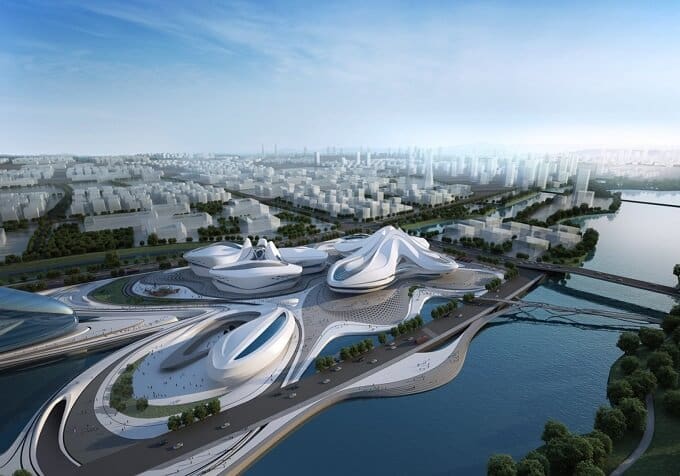
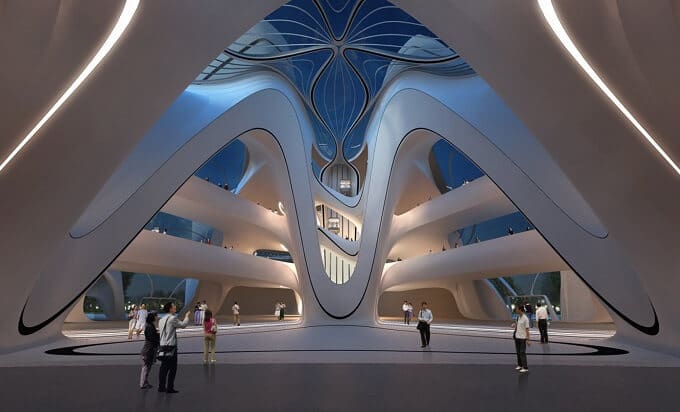
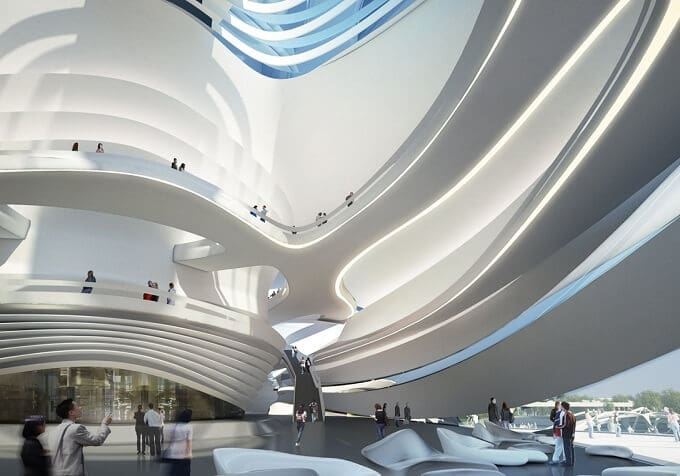
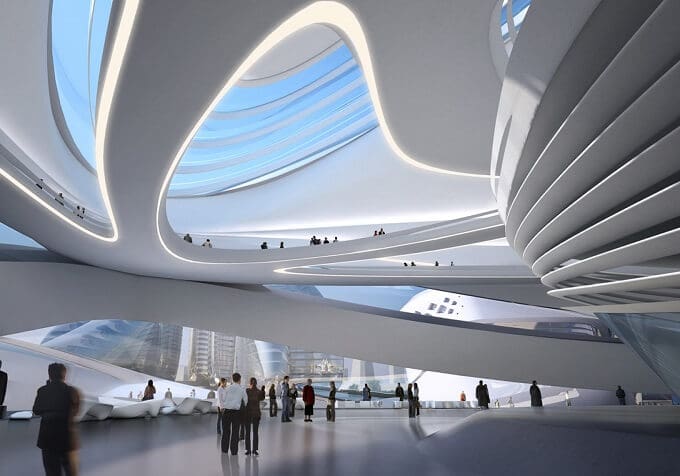
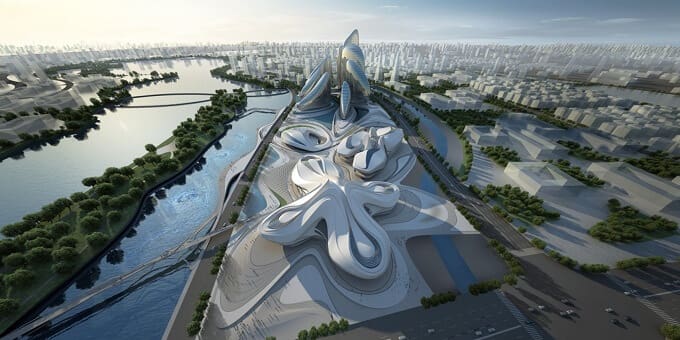
    Internationally known and award-winning architecture firm Zaha Hadid Architects  impresses us every time with stunning projects they design all over the world in their unique and innovative manner based on over thirty years of revolutionary research. This time we wanted to show you their new, amazing arts and culture centre project in the Chinese city of Changsa, which is currently under construction after their proposal has been selected as the winning one. Just looking at the renderings and the images speak for themselves: innovative, elegant, integrating values of functionality and introducing a unique, futuristic architecture, the Changsha Meixihu International Culture & Arts Centre will certainly become, after completion, the new cultural and civic landmark for the city of Changsha as well as a global cultural destination.

    Cultural-project-in-China

    The Changsha Meixihu International Culture & Arts Centre will encompass a series of nodes and civic institutions such as a Grand Theatre, a Contemporary Art Museum, a Small Theatre (Multipurpose Hall) and other supporting facilities, uniquely defined and separate, each one having its own distinctive character, but acting like a huge cultural complex that work beautifully in synchronicity with their surroundings.     The focal point of this project is the Grand Theatre with a capacity of 1800 of seats, being the largest performance rendezvous in the city. When will be completed, it will have all the necessary functions in order to host performances at the highest standards: backstage logistics, rehearsal rooms, dressing and make-up rooms, wardrobe, administration, VIP hospitality, restaurant, bars, cloakrooms, lobbies, etc. On the other hand, the Small Theatre will have a maximum capacity of 500 seats and will be flexible enough to allow for various configurations.

    As the name suggests, Multipurpose Hall, it will be suitable for shows ranging from commercial events and banquets to fashion shows, music and small theatre productions; a venue that will share with its visitors restaurant facilities and retail areas in an open space connected with the basement level. The third attraction will be the Contemporary Art Museum showcasing an original “three fluid petals” architecture that connect the interior gallery spaces with the exterior in a truly seamless fashion. It features an external plaza with views to the  Meixi Lake Road acts as an expansive outdoor space for exhibitions, outdoor sculptures and different events.The unique site’s location will be infused with urban vitality by interconnecting them through plazas where visitors can walk and enjoy surroundings views, especially the Meixi Lake ones.

    Futuristic-design-project

    Inside-Centre

    Inside-Art-Centre

    Inside-Art-Centre-01

    Zaha-Hadid-Architects-design

    Photos render © Zaha Hadid Architects


    Project details:

    Architect: Zaha Hadid Architects
    Design: Zaha Hadid, Patrick Schumacher
    Project director: Woody Yao, Simon Yu
    Museum design: Tariq Khayyat, Kutbuddin Nadiadi, Diego Rossel, Gerry Cruz, Matteo Melioli, Xiaosheng Li, Yuxi Fu, Thomas Jensen, Matthew Johnson, Justin Kelly, Drew Merkle
    Status: Under construction
    Location: Changsha, China
    Area: 115,000 sq m


    Changsha Meixihu International Culture & Arts Centre

  • 8City-South Korea’s New Mega-City To Rival Dubai And Macau

    8City-South Korea’s New Mega-City To Rival Dubai And Macau

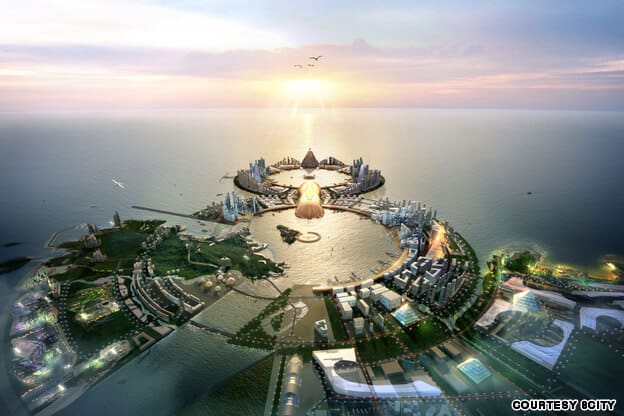
    8City is not the subject of the new Star Wars movies, but South Korea’s plans for a gigantic $280 billion mega-city complex on the islands of Yongyu-Muui, next to Incheon International Airport. Believe it or not, what now is just a small fishing village off South Korea’s western coast, in 20 years now it will be unrecognizable. Covering 80 square kilometers (about 31 square miles), the mammoth new tourism hub is said to be the most ambitious project since the Egyptian pyramids onwards.

    If the designers manage to complete this development until 2030 as they proposed, it would be the largest single architectural plans on the planet, which would dethrone the extravagant tourist mecca in the Middle East, Dubai, and would be three times bigger than the gambling heaven of Macau, a major tourism destination in China (which is approximately 28.2 square kilometers). As the vice chairman of EIGHTCITY Co., the developer of the project, said, “it will become the world’s top city that has the creativity of Dubai, convention centers and casinos of Las Vegas and Macau, as well as the shopping centers and financial hubs of Hong Kong and Singapore.” Impressive, isn’t it?

    8City-South-Korea-project

    According to mass media, Korea’s latest project will be the new hot spot tourist destinations  in the world, an all in one destination that will attract about 134 million tourists annually, taking into consideration that at the moment 5.7 million passengers pass through Incheon International Airport each year. This will create 930,000 new decent jobs in the services sector, providing a vibrant boost to the local economy. When it will be finished, it is expected that more than 350,000 people to reside in. Plans for the city include both leisure and travel facilities from luxury hotels, condominiums, shopping centres, casinos to theme parks, a water park, a 50,000-seat concert hall, a medical tourism-based “healing town” and a “hallyu town” introducing Korean entertainment, and even a Formula One racing track.

    8City-South-Korea-travel

    Symbolizing good fortune in Chinese culture, the number “8” is present both in the development’s name and architecture. The main landmarks of this mega-city will be the ‘Inner Circle’ – a “smart” tubular 14-kilometer building along the coast and the ‘Megastrip, which as 200 meters high, 880 meters wide and 3.3 kilometers long will be the world’s largest building. Housing facilities and tourist attractions, the Megastrip will have a gross surface area of 4.85 square kilometers, larger than Dubai International Airport’s Terminal 3 and also larger than the Boeing Everett Factory’s usable floor space.

    Due to its “astronomical” scale and enormous budget, there are of course some questions about its economic feasibility and the posibility to    come to fruition such a project. Incheon City officials announced the cost to be project to be around ₩300 trillion, or US$275 billion, the massive undertaking being expected to be financed by the city and both foreign and domestic investors. They say they have already attracted about $3.8 billion in investments. But that’s just only drop in the bucket considering the high ambitions and expectations.

    8City-Korea-investiment

    Photos © 8CITY

  • New Football Stadium of FC Bate in Belarus

    New Football Stadium of FC Bate in Belarus

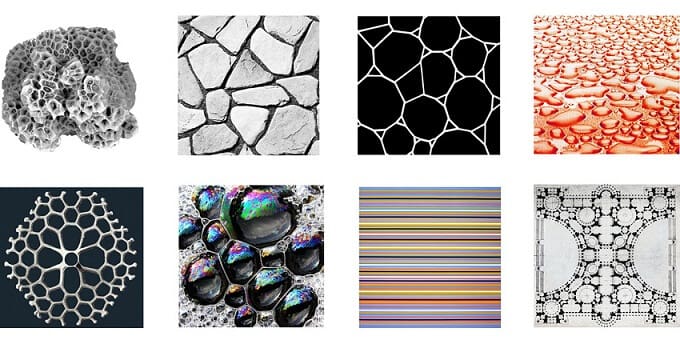
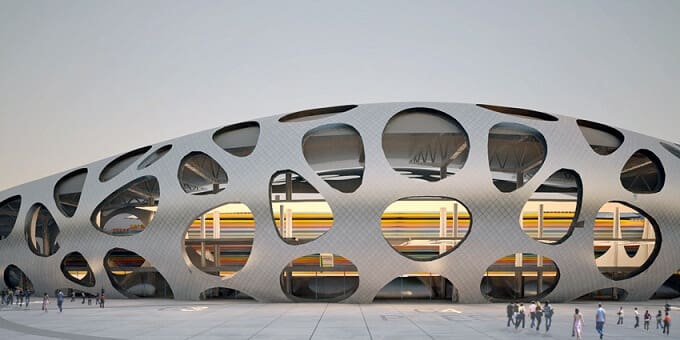
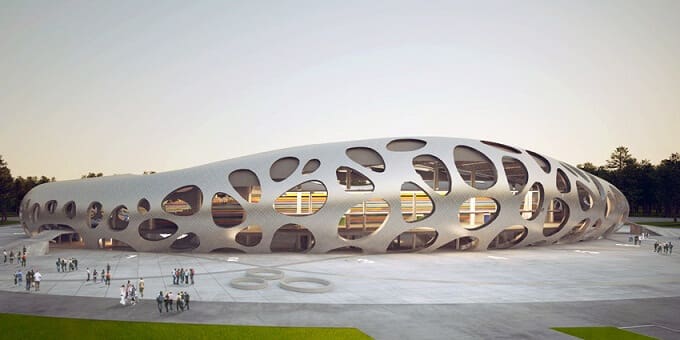
    With a poor infrastructure of football, Belarus seems to finally have a football stadium of international level, to fit for matches on group stages and playoffs of European cups in accordance with the criteria of UEFA. Currently under construction in the City of Borisov, Belarus, the new stadium of FC Bate is designed by the professional team from Ljubljana-based architect firm OFIS and as you can see from images, its impressive architecture will certainly become a dominant and powerful landmark.
    Stadium-structure-by-OFIS

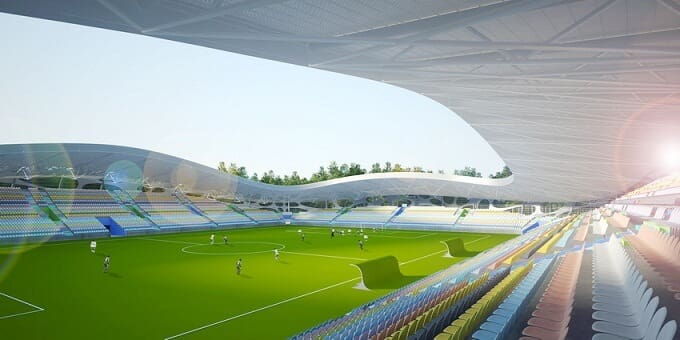
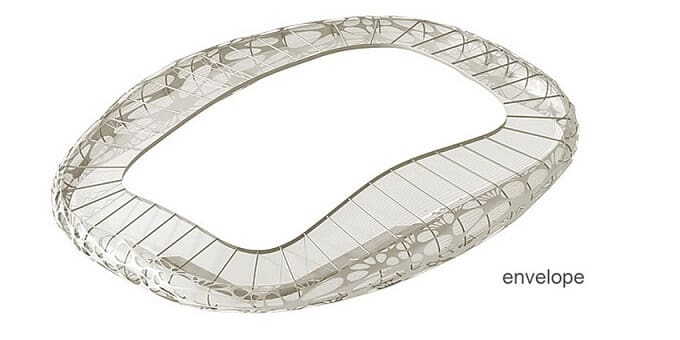
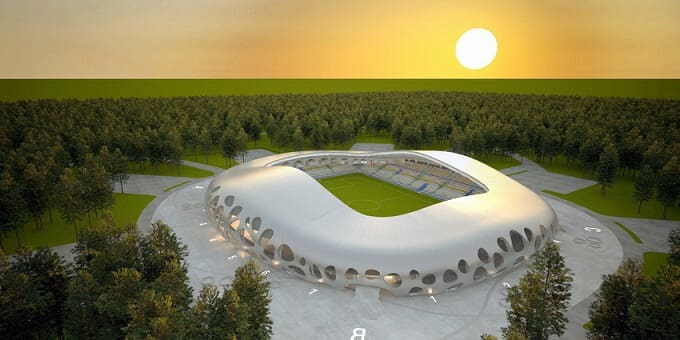
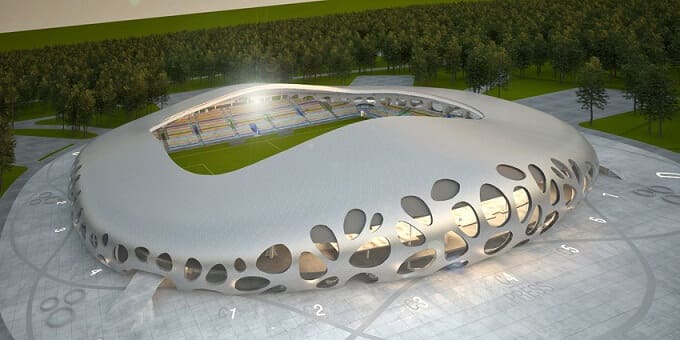
    Nestled in soft surrounding greenery, the stadium construction is made according with the existing intervention in the terrain and the natural advantages, maintaining the most of existing trees on the site. Thus, its approach is an environmental and used friendly one, where everyone has something to gain. With a total of 13, 000 seats, the new stadium of FC Bate has to be built as to obtain 4 stars according to UEFA categorization, have additional 3.000 m2 of public program and to also own external arrangements that provide separate access during matches and in everyday use, and quality traffic scheme. Its exterior architectural design have a distinctive modern character,  a unified rounded dome which give the feeling of a single enclosed object and, although it’s a middle size stadium, its structure looks quite impressive and very large.
    Stadium-project-in-Borisov

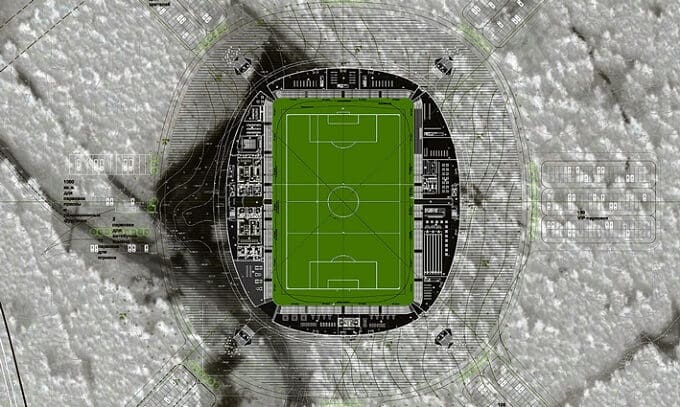
    Internally, the rounded arena will ensure an extroversive atmosphere and good acoustics during the games. It will have a N-S orientation playing surface with enough space for the installation of the cameras, photographers and advertising screens. The playground is surrounded by 17 rows along the long sides and of 27-28 rows along the short sides, with a east upper gallery for VIPs and west one for the press. Extra program and service facilities will occupy 4 floors under the west stand area, while under the east 3 floors.

    A naturally ventilated area, the foyer for visitors will have 4 accesses by stairway and will be found on the first floor level. Here visitors will have toilets, bars with drinks and snacks, a first-aid room and detention. There is a restaurant for VIPs and a bowling area in the eastern part of the stadium, whlist the southern part features gym and public fitness studios. The new stadium will include around 800 parking spaces and into the existinf forest area there will be parking pockets to be used for carting, skating, rollerblading, etc. So, what do you think about this stadium in Belarus?
    Stadium-project-by-OFIS

    Stadium-metal-structure

    Stadium-design-project-by-OFIS

    Modern-stadium-design
    Modern-stadium-design-02

    Modern-stadium-envelope

    Modern-stadium-design-plan
    Photos © OFIS


    Project details:

    Project team: Rok Oman, Spela Videcnik, Konstantine Bogoslavsky, Katja Aljaz, Janja Del Linz, Janez Martincic, Andrej Gregorič, Ana Kosi, Ieva Cicenaite, Grzegorz Ostrowski
    Client: PC Bate and Government of Belarus
    Location: Borisov, Belarus republic
    Date: 2009-2014
    Status: under construction
    Type: Football stadium with public program
    Budget: 20 mio EUR / football facilities, 30-35 mio EUR including public program and offices
    Area: 32,000 m2
    Max. Height: 24 m
    Seats: 12.896 seats for audience, 620 VIP seats, 100 Press seats, 800 Parking spaces
    Structure: metal, reinforced concrete
    Roof structure: Metal beams with metal aluminium cladding
    Exterior Finish: metal, polished concrete, glass walls