Category: Architecture

  • The Guardian Towers, Spectacular Architecture in Abu Dhabi

    The Guardian Towers, Spectacular Architecture in Abu Dhabi

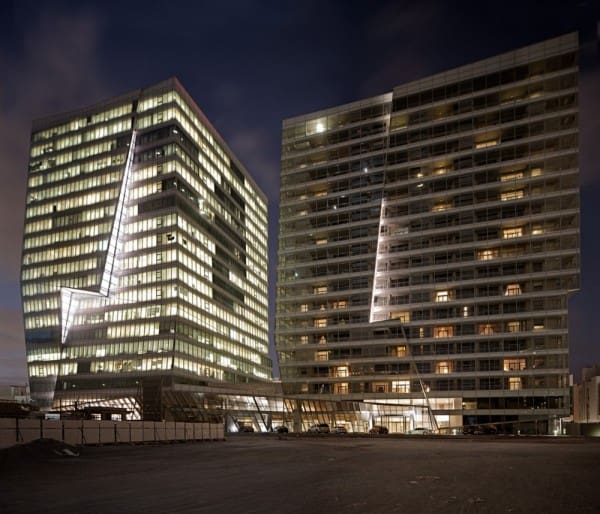
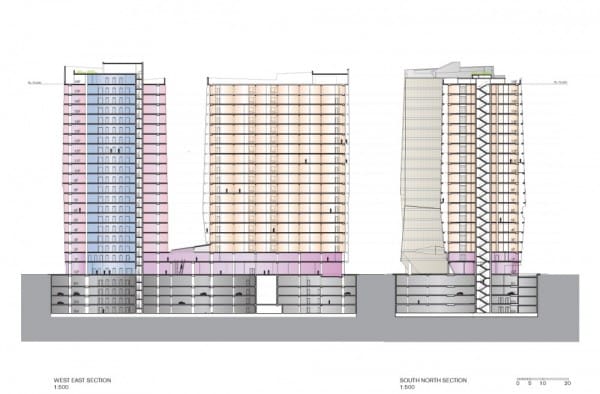
    The Guardian Towers are two amazing 19-storey towers located in Danet Au Dhabi, a luxurious complete community in the heart of Abu Dhabi city centre, the capital of the United Arab Emirates which never ends to impress us with its spectacular architecture. Envisioned in 2011 by one of the world’s most progressive architectural studios – LAB Architecture Studio in association with ERGA progress, the Guardian Towers are the example that confirm the rule.
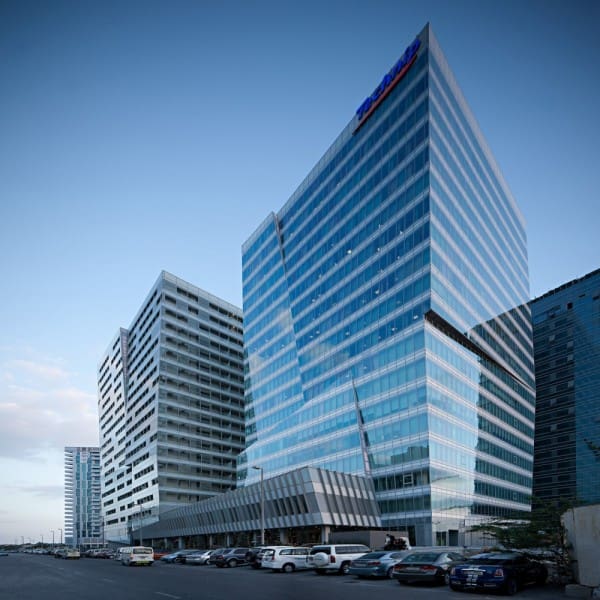
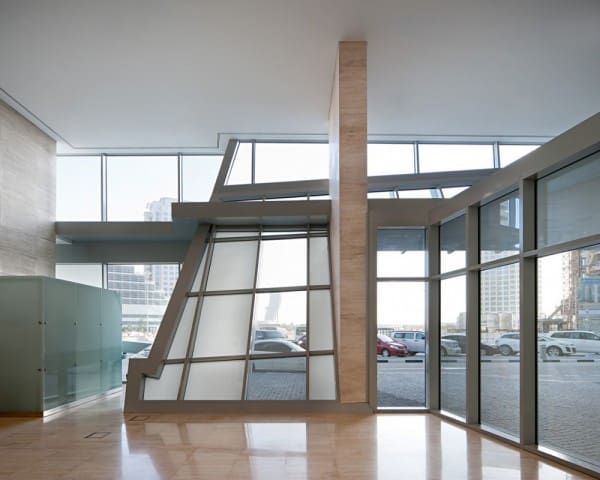
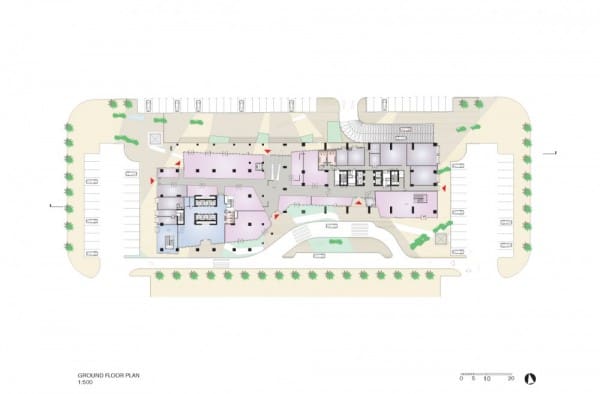
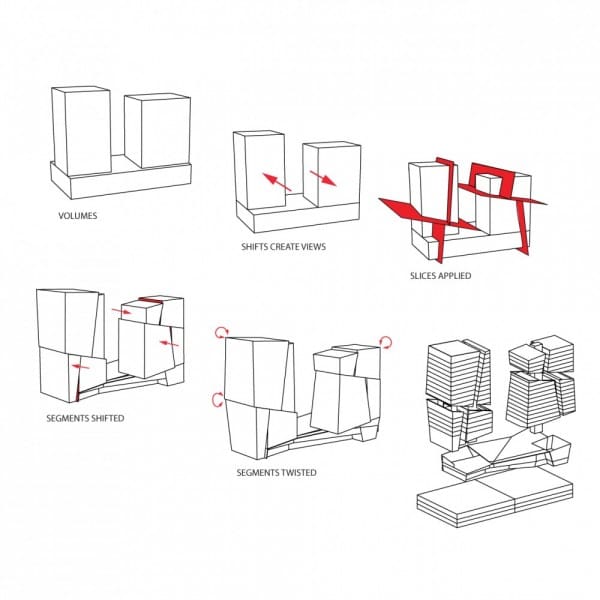
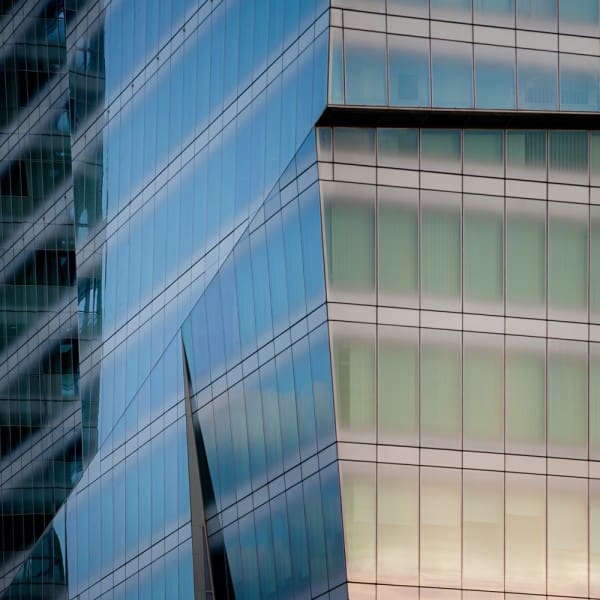
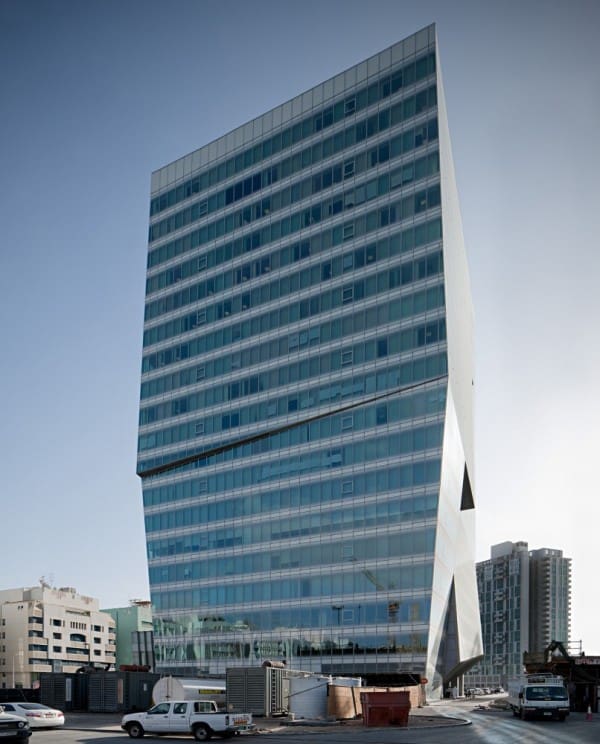
    Their exterior façade is shaped by a distinctive sliced and shifted geometry that look like some broken mirrors, giving the impression that at any moment they may fall. It’s dynamic and elegant in relation to the whole ensemble. The amazing mixed-use towers offer office spaces, residences, retail outlets and related services over 53,800 sqm. One of the two is residential and the other is a commercial office one, both being linked by a 2-level retail podium.

    Thought in every details, the double-skin facade hasn’t only an aesthetic role for the residential tower, but also a functional one that responds to the capricious weather climate of Abu Dhabi, protecting from direct solar penetration the recessed windows and balcony doors. All their five-star facilities and services are engineered for our peace of mind and assure us relaxing and great moments.
     

    Photos: © Javier Callejas Sevilla- source archdaily.com


    Project details:

    Location: Danet Abu Dhabi – Al Qudra, United Arab Emirates
    Architects: LAB Architecture Studio in association with ERGA Progress
    Design Team: Donald Bates, Oliver Hunt, Peter Davidson, Joseph Sawaya, Faris Hammady
    Project Year: 2011
    Project Area: 53,800 sqm
    Client: Guardian Real Estate

  • Olympic Shooting Venue by Magma Architecture

    Olympic Shooting Venue by Magma Architecture

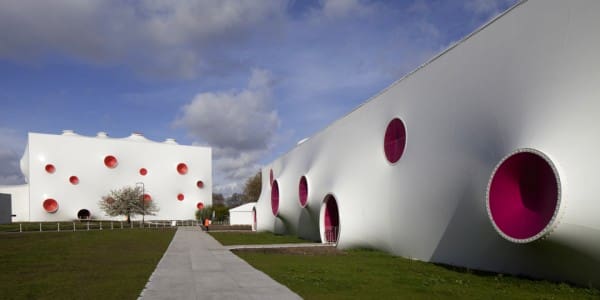
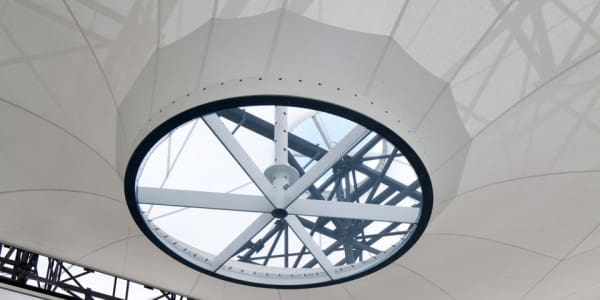
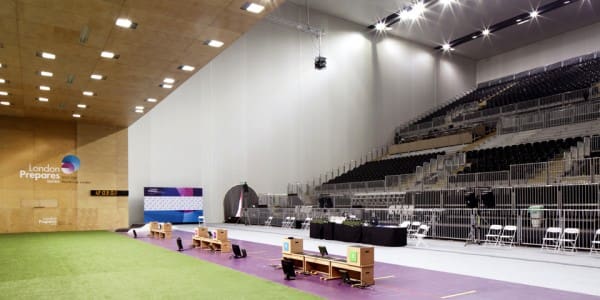
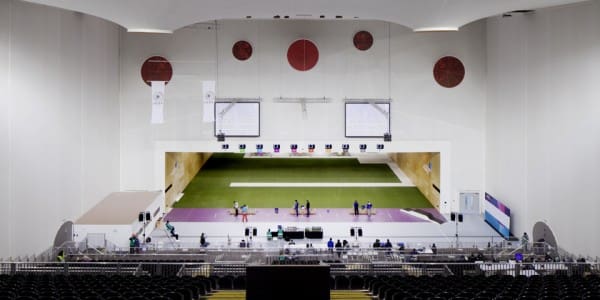
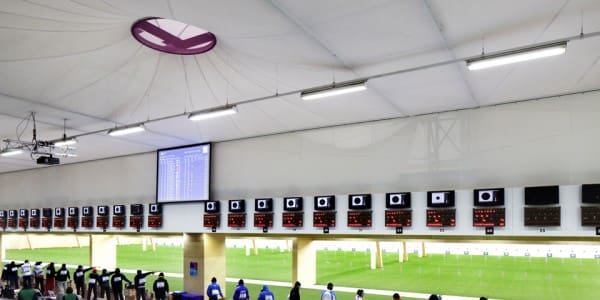
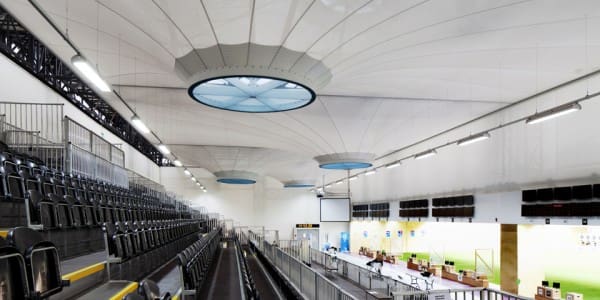
    Located in the southeast London district of Woolwich on the grounds of the historic Royal Artillery Barracks, the Olympic Shooting Venue hosts this year the Olympic and Paralympic Games at the London Olympic Games for summer. Innovatively designed by the German-based firm Magma Architecture, the pavilions are these days home for the shooting competitions where athletes will line up and aim weapons at targets 10, 25 and 50 meters away.

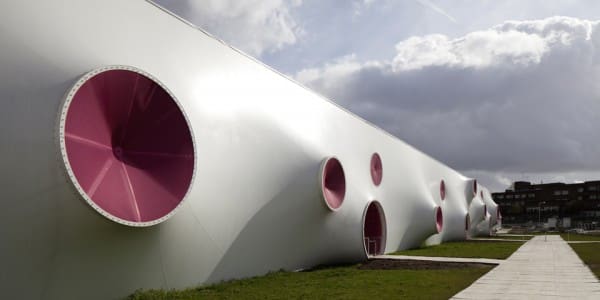
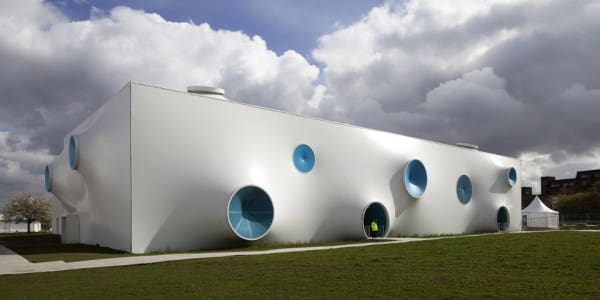
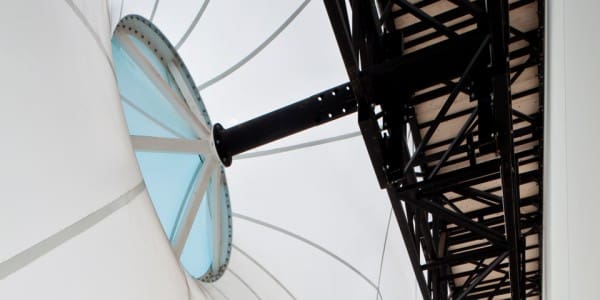
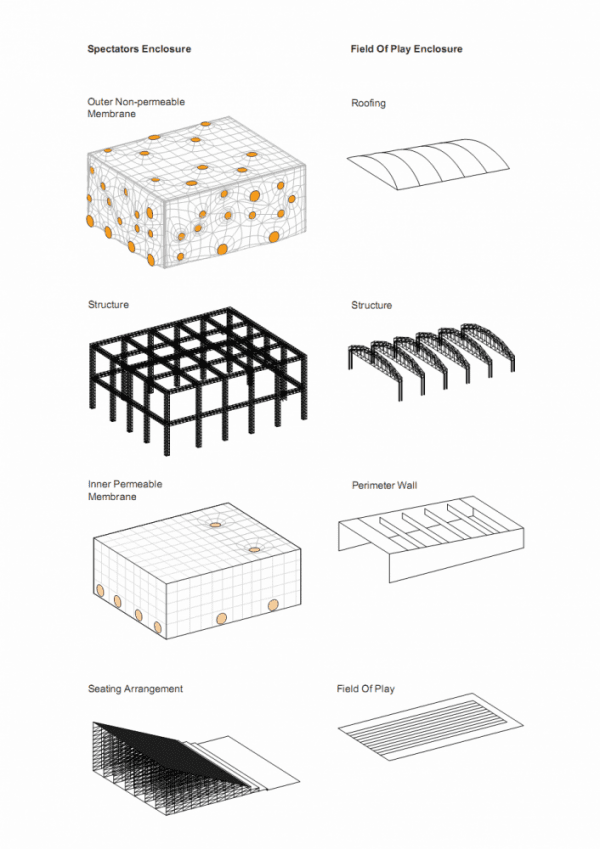
    The construction of the venue has taken almost one year to be made and the result is a dynamically curving space, a space that impresses by a truly unique appearance that is ment to evoke an experience of flow and precision inherent in the shooting sport. The three temporarily buildings occupy 18,000 square metres showcasing a façade covered in white phthalate-free PVC membrane with vibrantly colored dimples that seems to stand out from it, keeping the PVC skin held in tension in order not to flap around in the wind.
    These interesting openings has also another role, to provide natural ventilation and light, and to act as doorways at ground level. Due to the fact that the pavilions are mobile, immediately after the London Games they are dismantled and packed away to reuse them in future sporting events and the site will return to its original condition.


    Photos: J.L. Diehl, Magma Architecture.


    Project details:

    Architects: Magma Architecture
    Location: London, England
    Lead Consultant: Mott MacDonald
    Client: Olympic Delivery Authority
    Total Footprint: 14,305 sqm
    Total SeatingCapacity: 2,900
    Architectural Design Team: Martin Ostermann with Lena Kleinheinz, Hendrik Bohle, Susanne Welcker, Pablo Carballal, Niko Mahler, Philipp Mecke, Diana Drogan, Veljko Markovicz, Manuel Welsky


  • Amazing Unique Structure on Vancouver Skyline: Beach and Howe St

    Amazing Unique Structure on Vancouver Skyline: Beach and Howe St

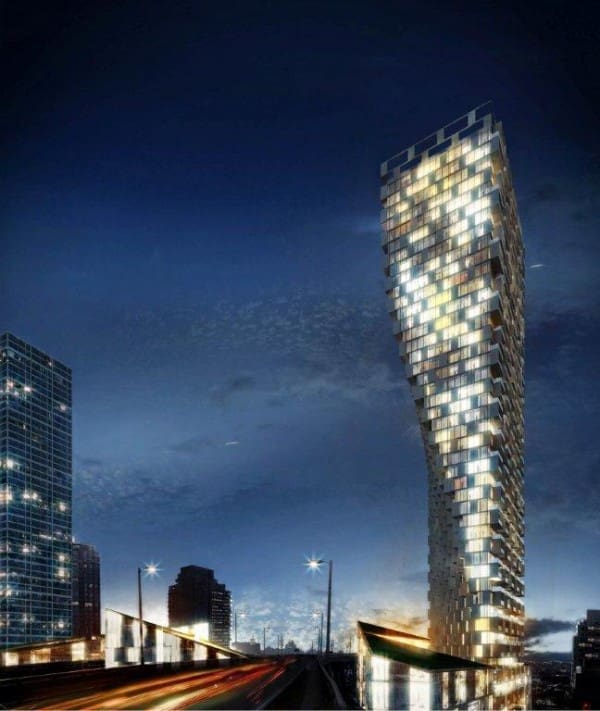
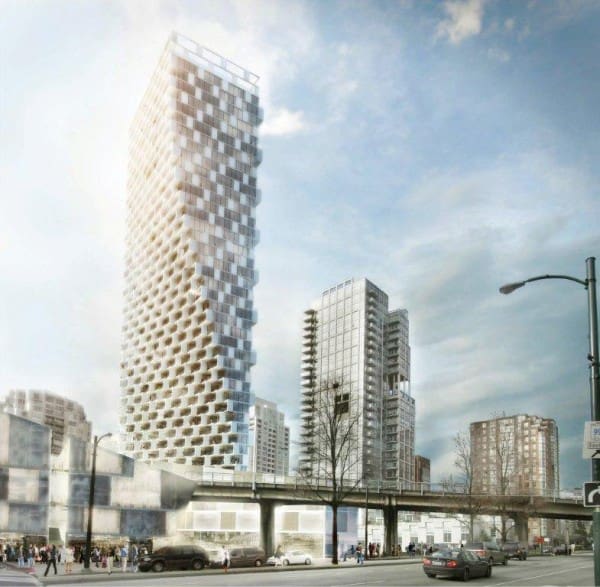
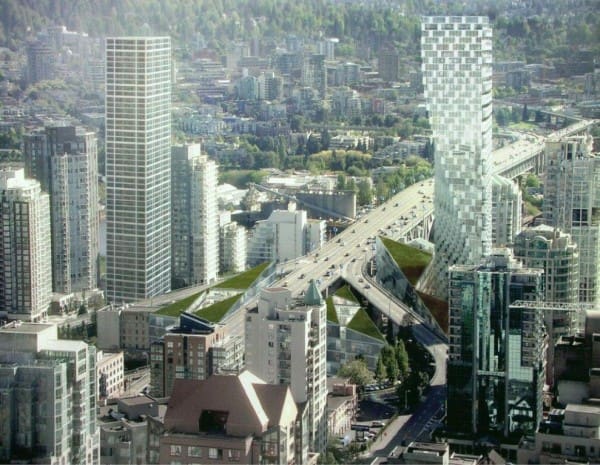
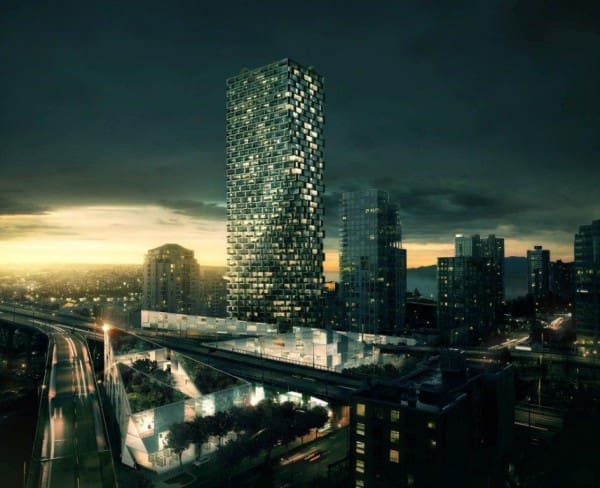
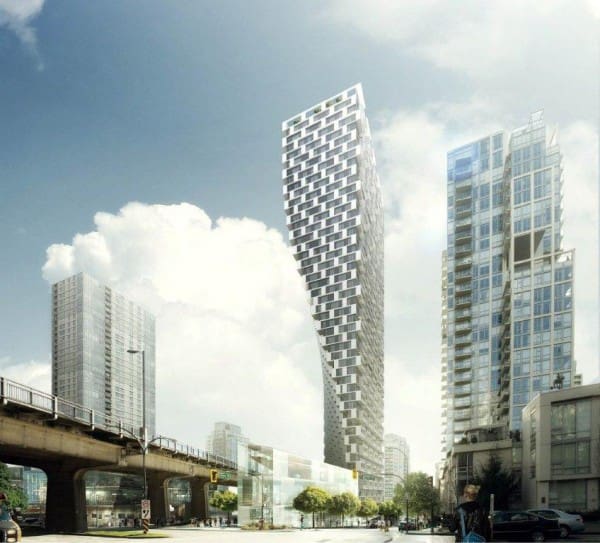
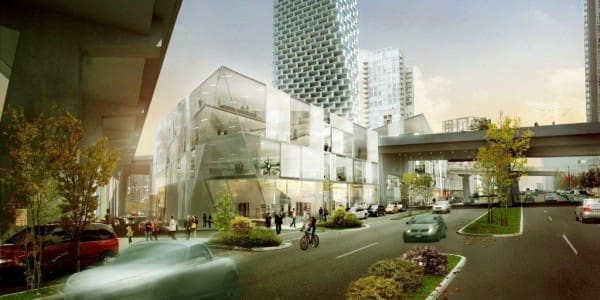
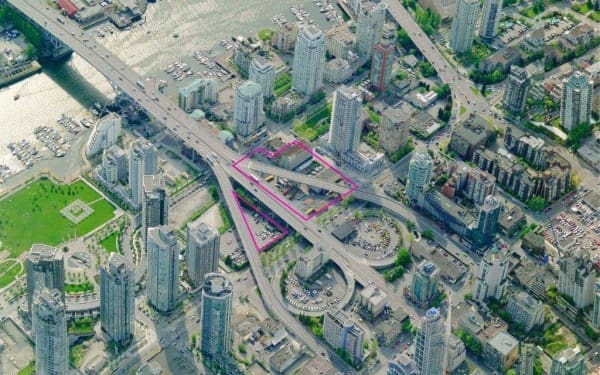
    This stunning unique structure entitled Beach and Howe St. after on the corner of Howe & Beach next to the Granville Street Bridge in downtown Vancouver will be one of the fourth tallest buildings of the city. The proposal to create such a daring and world class project belongs to BIG, a Copenhagen and New York based group of architects, designers, builders and thinkers operating within the fields of architecture, urbanism, research and development, which was commisioned by Canada’s premier real estate developer Westbank. The idea that contemporary life constantly evolves and changes underlies the careful analysis which leads to BIG’s architecture, so every project they do aims to respond those future needs.
    Beach and Howe St. is supposed to be 490-foot-tall, almost 350m shorter than famous Dubai’s 828-metre Burj Khalifato make a comparison. The mixed-use 49-story tower with 600 residential units will have a spectacular futuristic architecture, which will be a new building typology to the Vancouver skyline forming “a dramatic gateway to downtown Vancouver that speaks to the emerging creative economy in the city” as Ian Gillespie, President at Westbank, said. The project’s main objectives are to optimize the conditions for its inhabitants in the air as well as on the street level and to enrich both the neighborhood and the Vancouver city by making them more creative, sustainable and affordable.

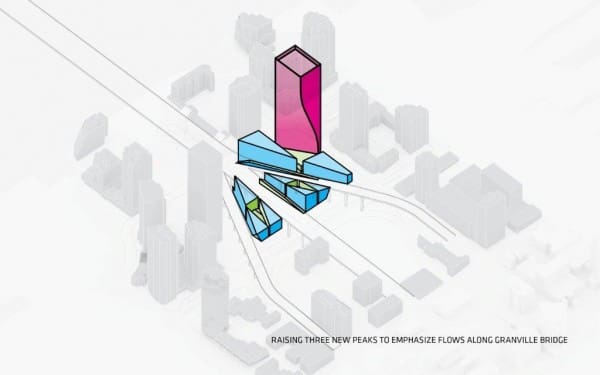
    Its silhouette which reveals a unique structure isn’t randomly designed in this manner. Besides the beauty of its appearance which changes from every angle resembling a curtain being drawn aside and welcoming people as they enter the city from the bridge, the tower shapes after the urban complex conditions aiming to increase pedestrian activity and street life. A mixed-use urban village with three triangular blocks that feature intimately-scaled spaces for working, shopping, and leisure composes the building’s podium. This additional space transform the space under the Granville Bridge into a dynamic and iconic neighborhood hub with a variety of open and covered outdoor sites. Its important to mention that the project is based on the sustainability concept and will strive for for LEED Gold Certification.

    Photos: © BIG.


    Project details:

    Name: Beach and Howe St.
    Client: Westbank Projects Corp.
    Location: Vancouver, Canada
    Size: 653,890 sf / 60,670 m2
    Collaborators: Dialog, Cobalt Engineering, Phillips Farevaag Smallenberg Urban Design, Buro Happold, Glotman Simpson, James KM Cheng Architects
    PARTNERS-IN-CHARGE: Bjarke Ingels, Thomas Christoffersen
    PROJECT LEADER: Agustin Perez-Torres
    TEAM: Julianne Gola, Marcella Martinez, Chris Malcolm, Karol Borkowski, Michael Taylor, Alina Tamosiunaite, David Brown, Tobias Hjortdal, Alexandra Gustafson


  • 7 Most Renowned Scottish Castles

    7 Most Renowned Scottish Castles

    As a mountainous country in the north of the island of Great Britain, Scotland is famous for many things as we’re sure many of you know that, but its marvelous medieval castles still remain at the top of our favourite list. Part of the country’s rich heritage, the Scottish castles fascinates thousands of visitors each year with their amazing architecture and long interesting histories, so no visit to Scotland would be complete without seeing at least one of them.

    The range of style, sizes and features offered by Scottish castles is unsurpassed if we think that there were constructed around 3000 castles over 900 years as historical records say, probably more than any other country in Europe. Dating from the late medieval era, most of them are built on hills along natural waterways, by important trade crossroads, and near precarious approaches on cliffs, featuring massive stone towers with high curtain walls.
    Their long and colorful histories are often told to be surrounded by pride, struggles, intriguing tales and secrets. Today,  Scottish castles are considered some of the most romantic destinations in Europe and perhaps in the world taking into consideration the breathtaking scenery where they are located.  Here you have a list which will take you round 7 amazing very popular examples, a true lesson in Scottish history and culture. We ensure your that the reality far surpasses the images.

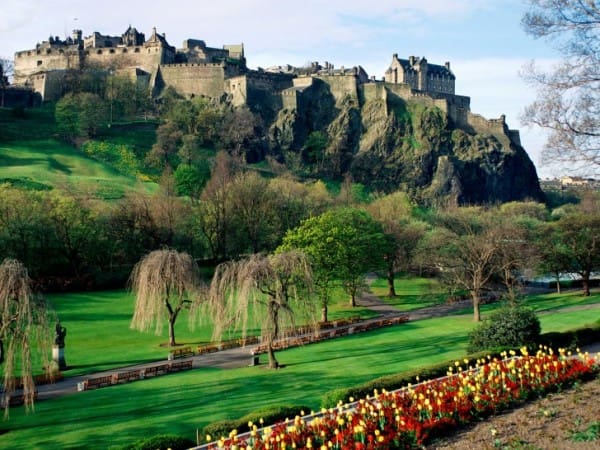
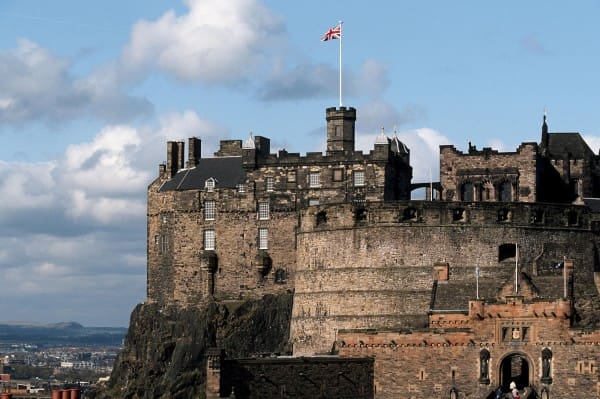
    Edinburgh Castle

    • Located in Edinburgh City Center, it’s the most accessible of Scotland’s castles (in terms of travel time) showcasing most fantastic views of Edinburgh
    • One of the most important fortresses in Scotland  which served as a royal residence
    • It had a turbulent history, being involved in many historical conflicts from 14th century to 1745
    • It hosts various events all year round to help visitors to discover its vast history
    • Things to see: Great Hall, The Crown Room, Mons Meg (one of the world’s oldest cannons), The National War Museum Scotland, One o’ clock Gun, Prisons of War exhibition, Royal Palace, Scottish National War Memorial, etc.


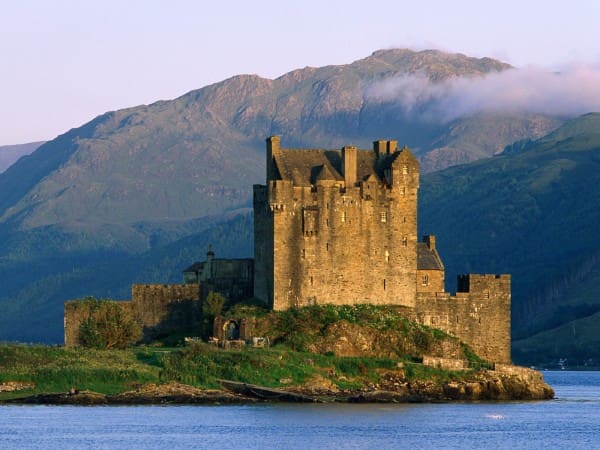
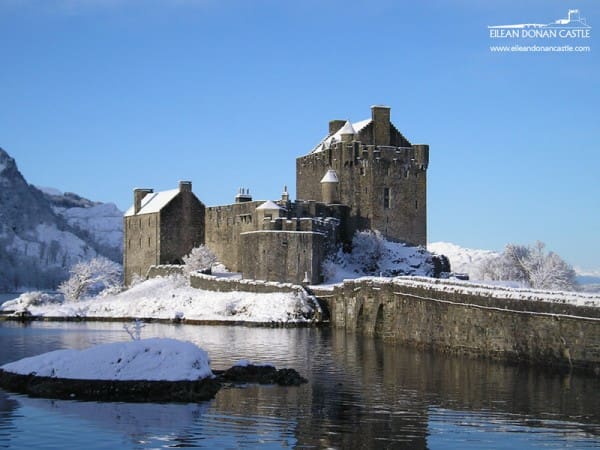
    Eilean Donan Castle

    •  Set on an small island with majestic scenery, the shores of Loch Duich, it’s one of the most beautiful and photographed castles in Scotland
    • Constructed in the mid of 13th century as a defence against Viking invaders, the castle have been built and re-built several times during centuries
    • Things to see: Banqueting Hall, exhibitions, recreated kitchens, a small museum


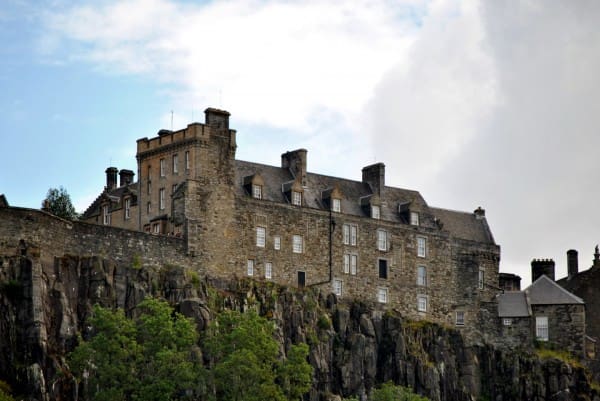
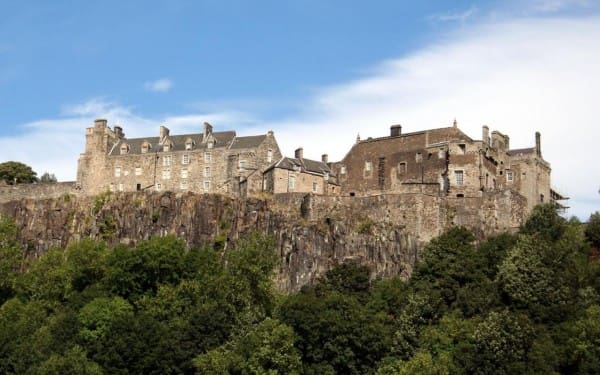
    Stirling Castle

    • Located on a high volcanic rock and is a magnificent fortress
    • It’s the most important Scottish castle in historical terms, a great symbol of Scottish independence
    • It played a prominent part in the conflict between England and Scotland in the 13th and 14th centurie; its most famous battle is undoubtedly the Battle of Bannockburn
    • It was the centre of art, culture and celebrity in the 16th century and once you got in, you step into a world of plots, passion, intrigue and high fashion of that times
    • It hosts also various events
    • Things to see: The Royal Palace, The Stirling Tapestries, The Chapel Royal, Regimental Museum, The Great Hall, The Palace Vaults, The Great Kitchens, Argyll’s Lodging, etc.


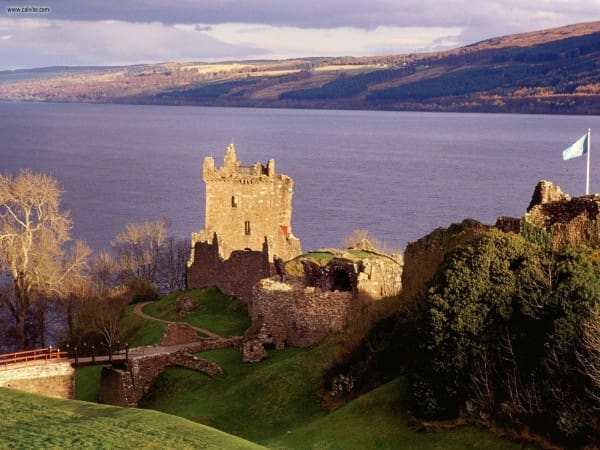
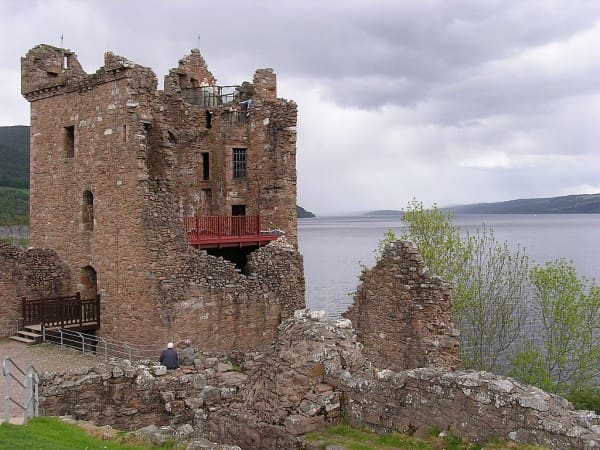
    Urquhart Castle

    • Located between Inverness and Fortwilliam, overlooking famous Loch Ness
    • Although now it is a ruin, the castle was one of Scotland’s largest castles and one of the grandest and most impressive fortresses in Scotland and extremely popular among tourists nowadays
    • It was held by noble families Durward, MacDonald and Grant and like many other castles, it has a bloody history from the 13th to 17th centuries
    • Things to see: an outstanding array of medieval artefacts, kitchens and Great Hall, Gatehouse, The Grant Tower, etc.


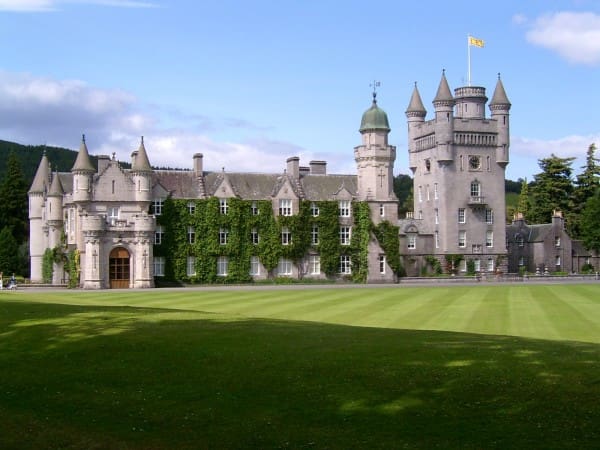
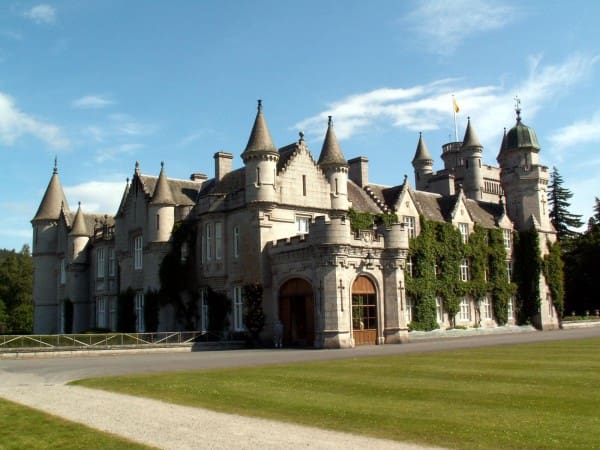
    Balmoral Castle

    • It’s a magnificent property relatively modern, built around 1854 for Queen Victoria and Prince Albert
    • It stands as a private home of the British Royal Family who visit it each autumn for around two months, as well as less formal visits throughout the year
    • Each year thousands of people visit the castle’s fine gardens and woods, being impressed by its splendid wildlife and architecture
    • Things to see: silver statues by Sir Joseph Edgar Boehm, Minton China and artefacts belonging to Kings and Queens throughout history, Art Exhibition, Carriage Hall Exhibition, Garden Cottage, etc.


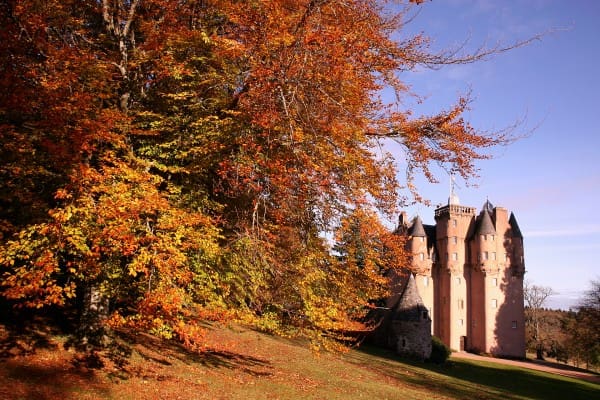
    Craigievar Castle

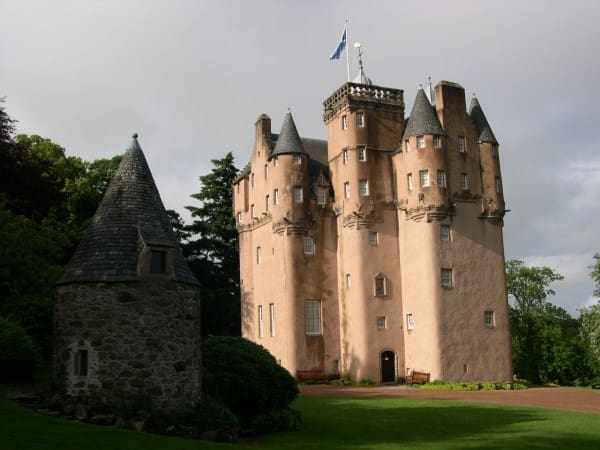
    • Among scenic rolling foothills of the Grampian Mountains, this fairytale-like castle is an example of the best of Scottish Baronial architecture
    • The castle is widely recognised as one of the best preserved and most authentic tower houses in Scotland
    • After a major conservation project, it’s opened to public again
    • Things to see: The Great Hall, a musicians gallery, a secret staircase connecting the high tower to the Great Hall, Queen’s Bedroom, servants’ quarters and of course several splendid plasterwork ceilings


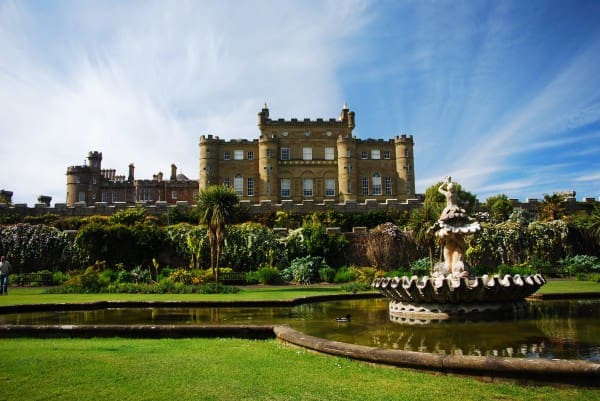
    Culzean Castle

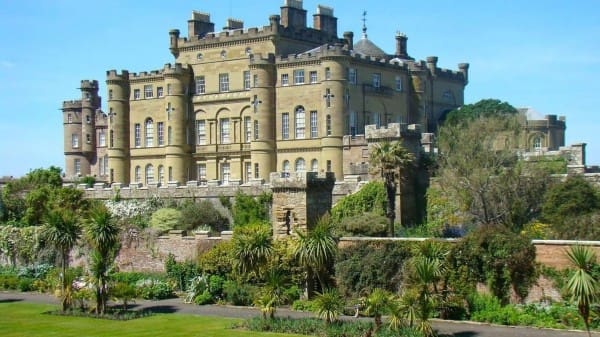
    • Originally dating from 1590, this unique castle is located on 600 acres of beautiful countryside with woodland walks, inviting sandy beaches, terraced gardens and charming follies,which create a romantic backdrop for modern events nowadays
    • From 1759, it was the principal seat for the Scotland’s oldest families- The Kennedy Family
    • During years, famous architects were commisioned to make improvements to the castle
    • It can be visited during summer
    • Things to see: The Library, The Dining Room The Oval Staircase, The Round Drawing Room, Lady Ailsa’s Boudoir, etc.


  • Contemporary Modern Architecture: The Bell Romero Houses in Sydney

    Contemporary Modern Architecture: The Bell Romero Houses in Sydney

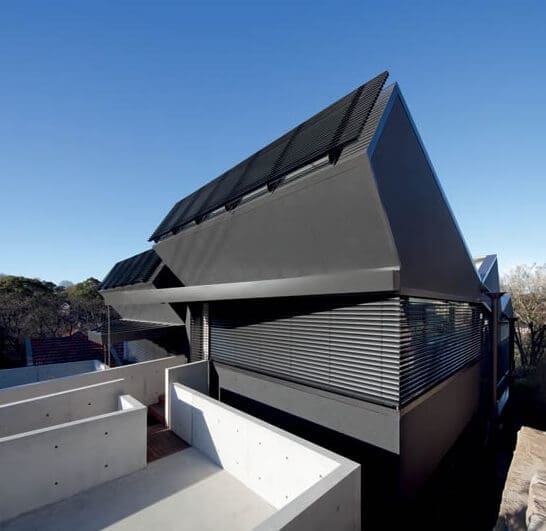
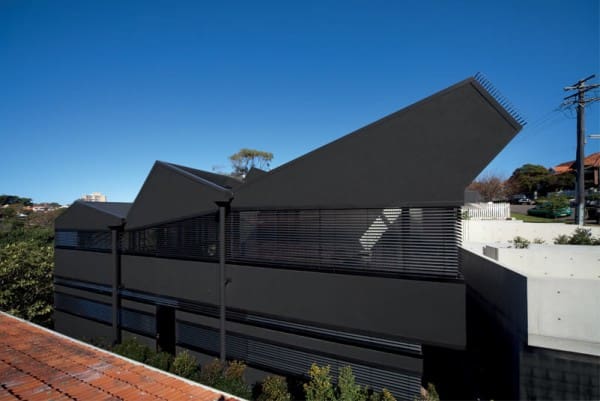
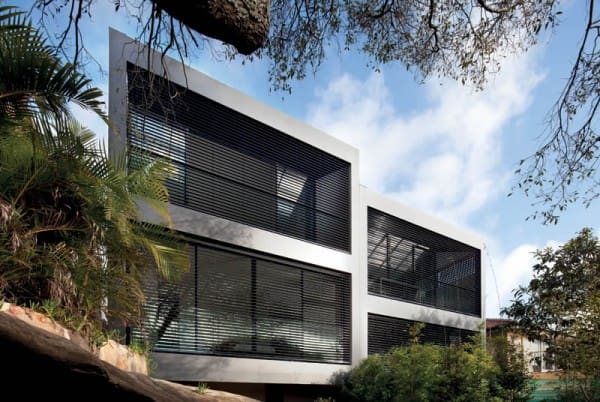
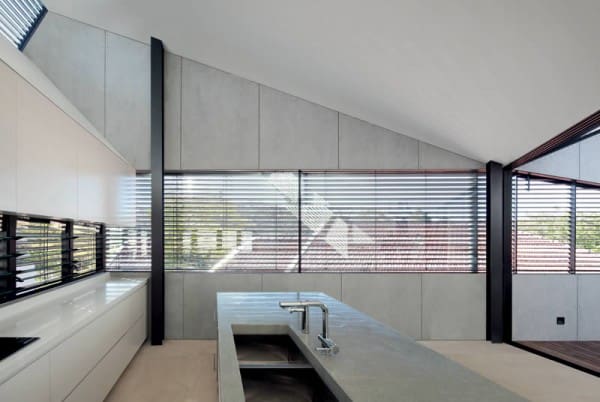
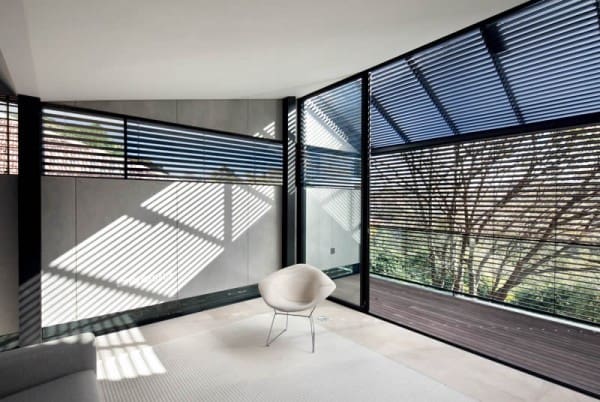
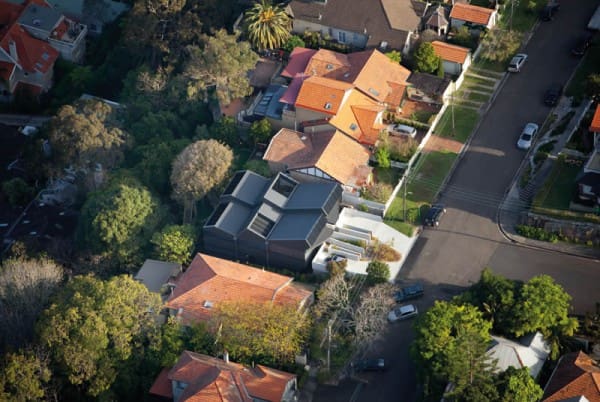
    These two mirrored dwellings located in a suburb of Sydney, Australia, strikes with their contemporary modern architecture displayed both outside and inside. Designed by the award winning practice based in Sydney Australia, Chenchow Little, who has developed a reputation for the quality of design and detailing through their residential work, the attached Bell Romero Houses are constructed according the site that slopes steeply away from the street frontage and although similar in their overall appearance, they distinguish by their levels which are offset in order to respond to this important characteristic of the site.

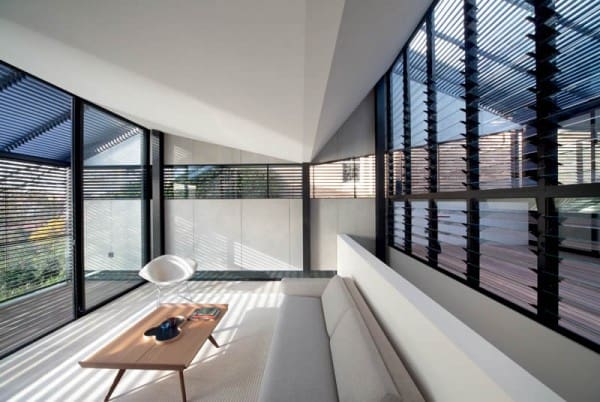
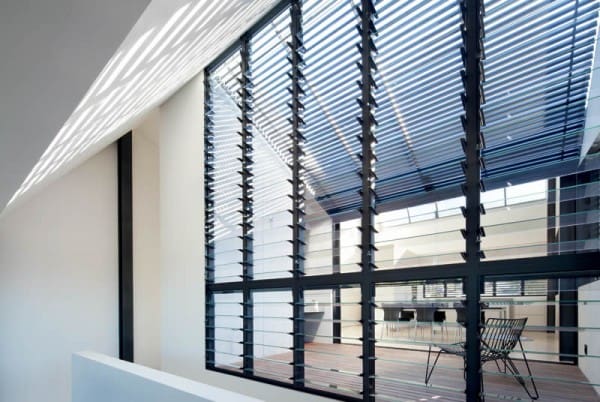
    To reflect the predominant roof type of the locality, the Bell Romero Houses’ roofs were designed as a series of gables. The ceiling of the top floor living spaces follows the pitch of the roof above, appearing as a series of undulating pitched planes and skylight shafts between the two sidewalls. The facades of the dwellings features solid and translucent horizontal banding which disguises the location of the split floor plates and windows on the building façade.  By adjusting the operable louvres and windows within the horizontal bands, the inhabitants can control solar access, ventilation, views and their privacy.

    The exterior contemporary modern architecture of the residence is complemented by minimalist decor which underlines the interior architecture. Walls are finished with stone and white paint, with black lines around the  rooms and the large windows highlighting the ceilings’ geometrical design which defines both internal living spaces and external terraces.

    Photos: © John Gollings.


    Project details:

    Date: Completed 2011
    Structural engineer: Bizurlis Associates Pty Ltd
    Hydraulic engineer: Whipps Wood Consulting
    Builder: Owner

  • The Shard Skyscraper, Europe’s Tallest Building Unveiled in London

    The Shard Skyscraper, Europe’s Tallest Building Unveiled in London

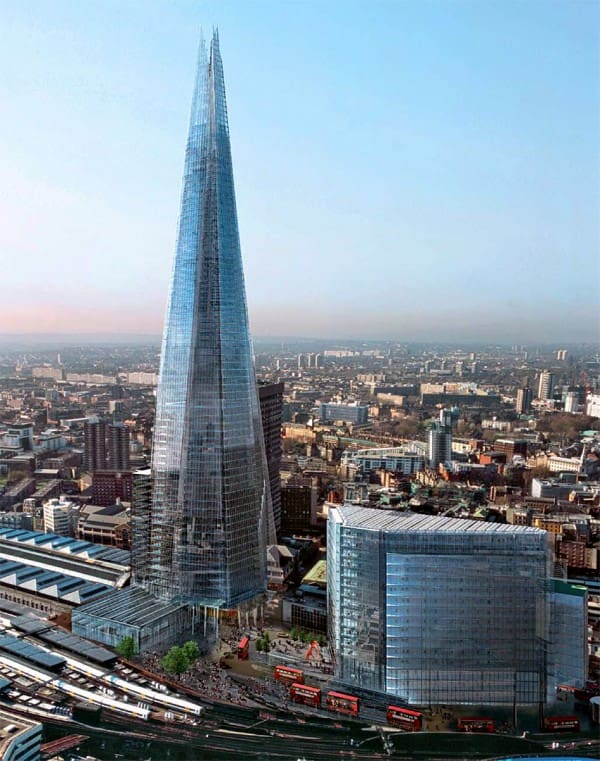
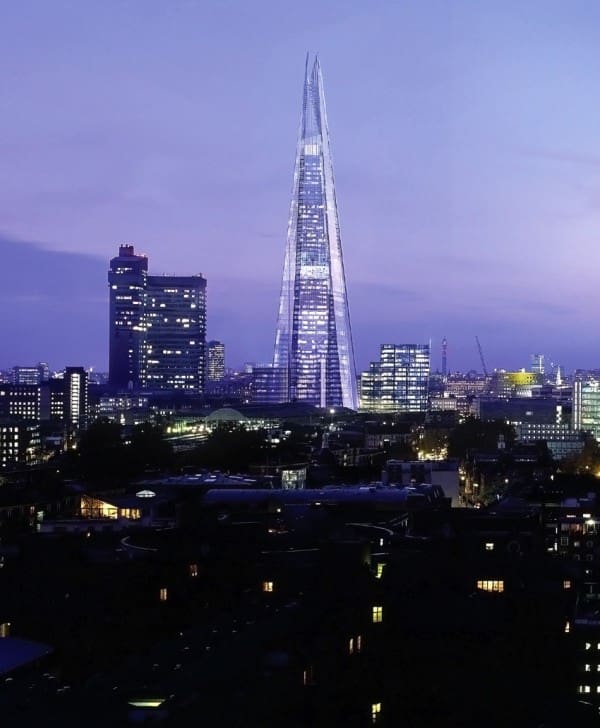
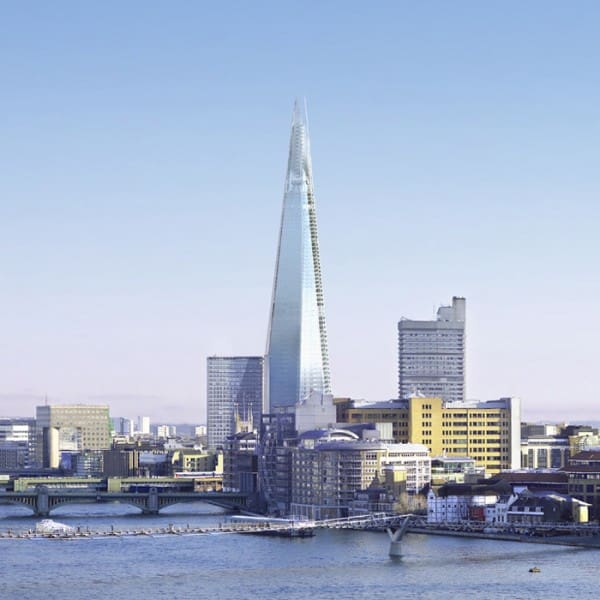
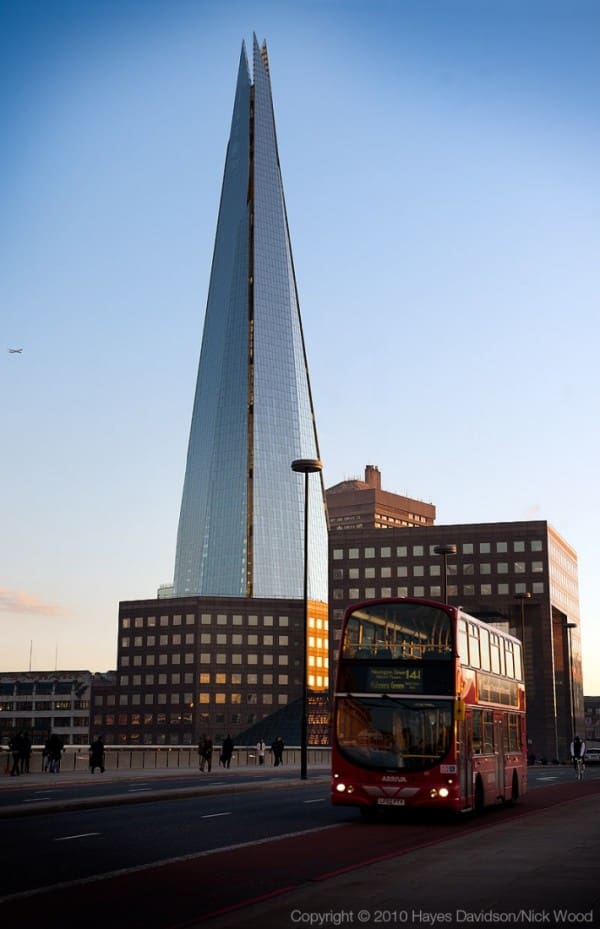
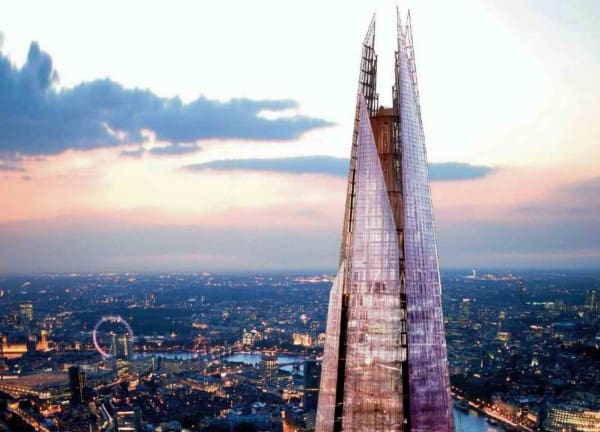
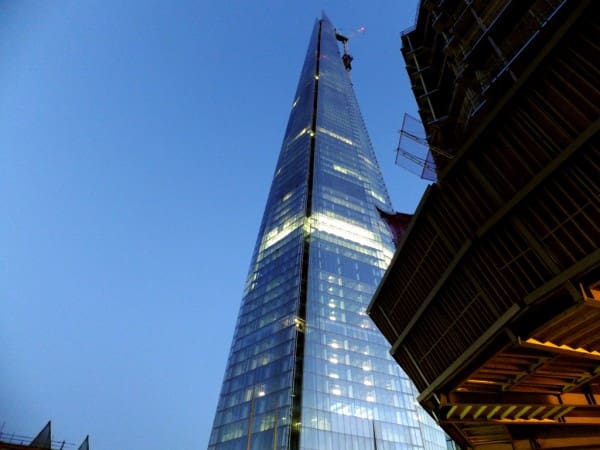
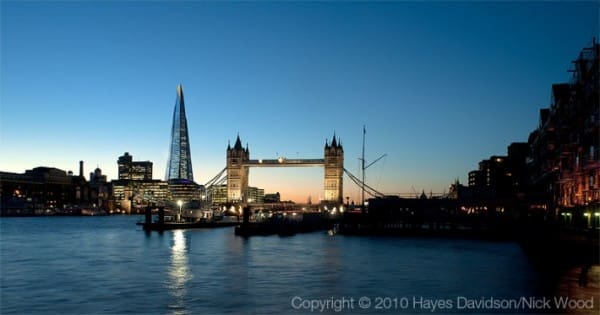
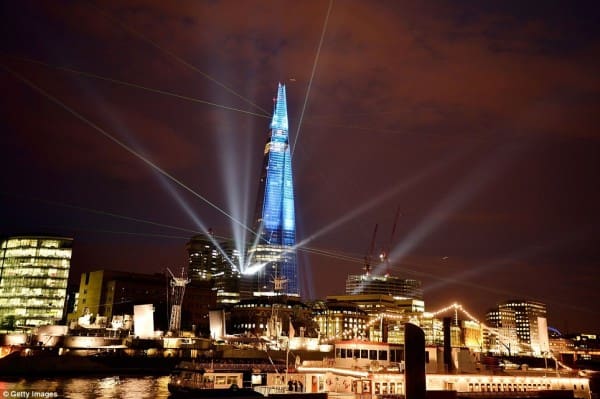
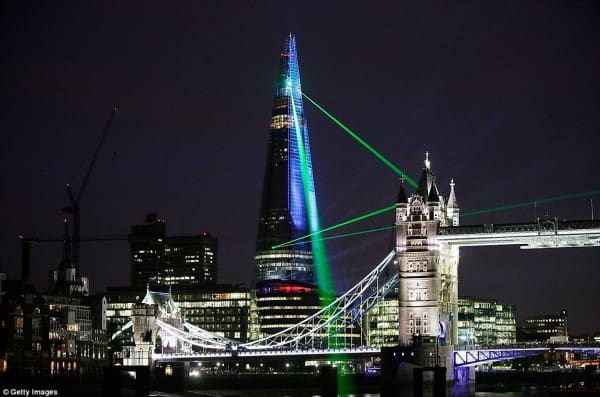
    Londoners have recently enjoyed a dazzling sound and light show over the London night sky that marked the Shard Skyscraper’ grand opening ceremony. Visible from several miles away, lasers celebrate the completion of the incredible 95-storey glass-and-steel structure who became the tallest building in Europe in this moment.

    The irregular pyramid-shaped skyscraper clad entirely in glass was opened by Hamad bin Jassem al-Thani, the Qatari Prime Minister, whose country funded the $708-million building, and Prince Andrew, the Queen’s son. Called by the London Mayor “a quite astonishing piece of architecture”, the Shard tower is 309,6 meters (1016ft high) which means is half-a-kilometre shorter than Dubai’s 828-metre Burj Khalifa and almost 300m shorter than Tokyo SkyTree.

    Designed by Italian architect Renzo Piano, the exceptional new building was completed after three years and will surely become a true landmark in United Kingdom and in Europe too. Its futuristic silhouette stands out for 11,000 glass panels covering the area of eight football pitches. It features 72 habitable floors, with a viewing gallery and open-air observation deck ( the UK’s highest) – on the 72nd floor, at a height of 245 metres (804 ft) offering 360-degree panoramas of the city. The Shard skyscraper includes apartments, offices, restaurants and a luxurious five-star hotel, making them the highest residential properties in Britain for 12,000 people. Enjoy some amazing photos and don’t forget to share with us your opinion.


    Project details:

    Architect: Renzo Piano
    Location: London, Southwark
    Height: 1,012 feet (308 m)
    Opened: June 2012
    Construction started: 2003
    Owners: QInvest, Qatari Islamic Bank, Barwa Real Estate, QNB Group

  • London 2012: The New Olympic Aquatics Centre

    London 2012: The New Olympic Aquatics Centre

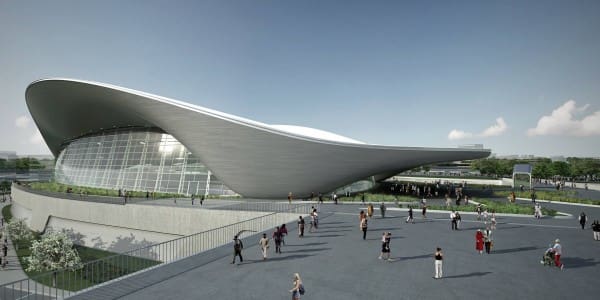
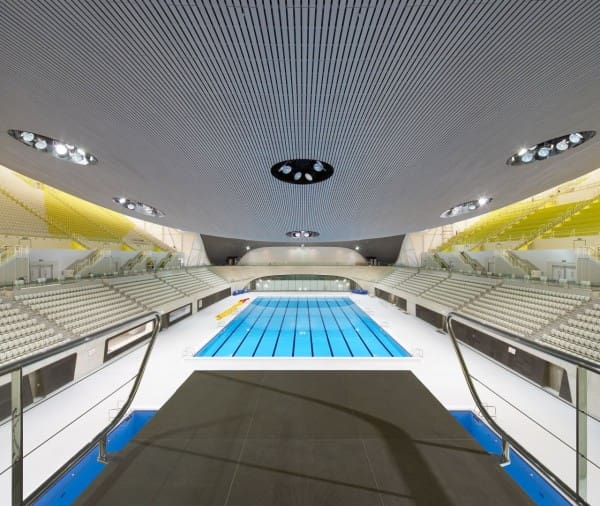
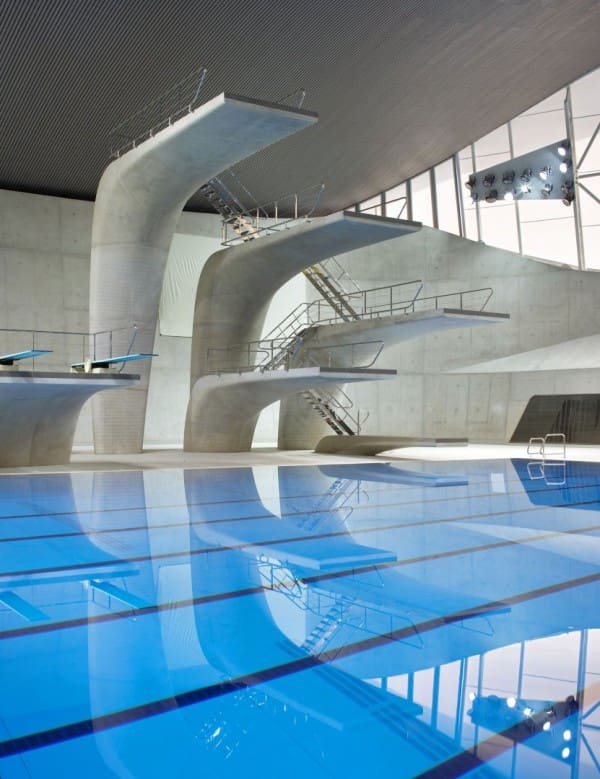
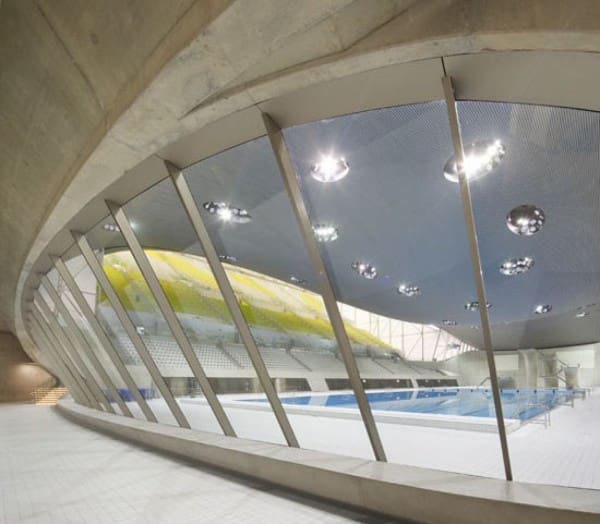
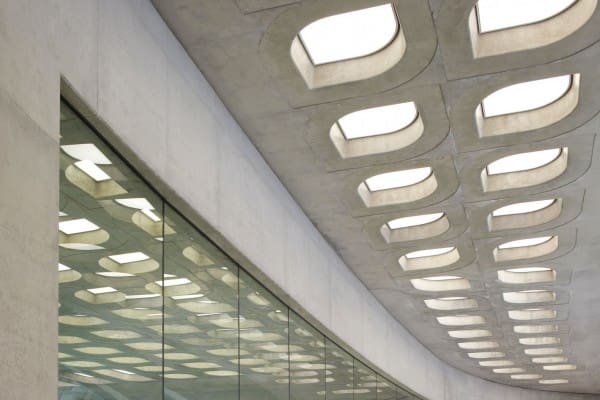
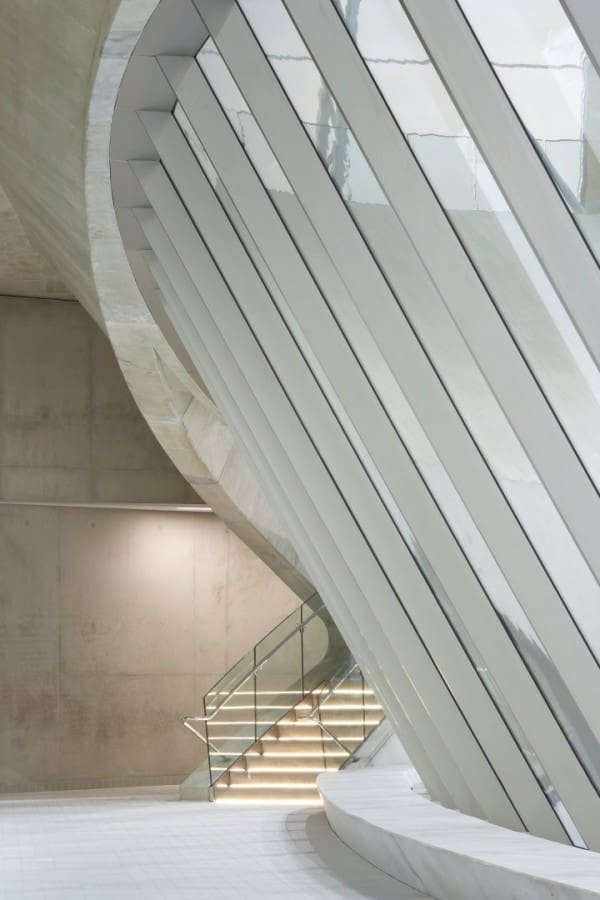
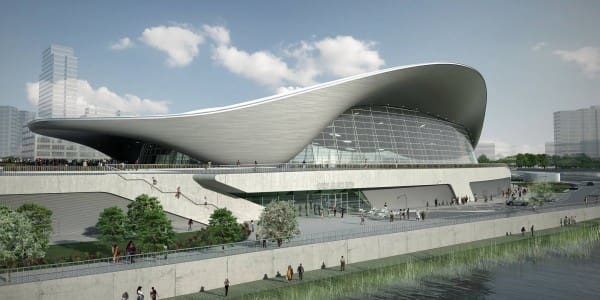
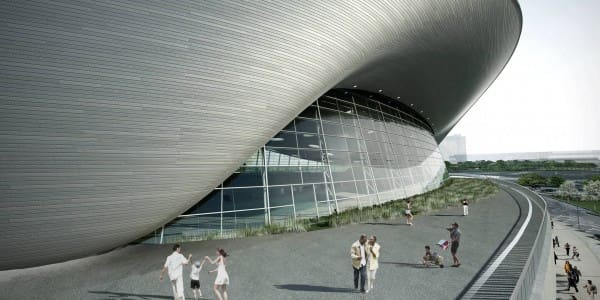
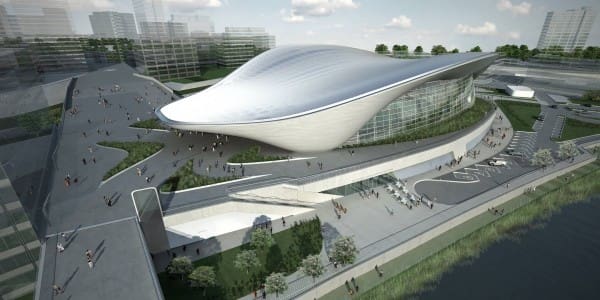
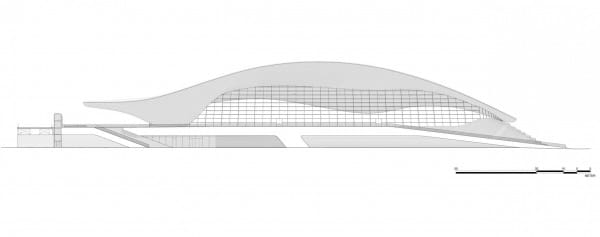
    One of the key projects of the London 2012 Olympic Games is Olympic Aquatics Centre, another flagship project signed by British award winning architect Zaha Hadid. Finished the year before the Olympic Games, in 2011, the Aquatic Centre is a stunning construction that lives up to everyone’s expectations and is ready to welcome the world’s athletes.

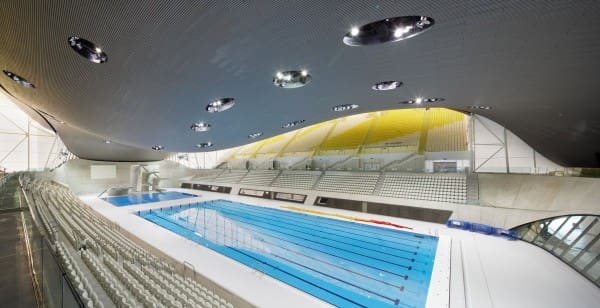
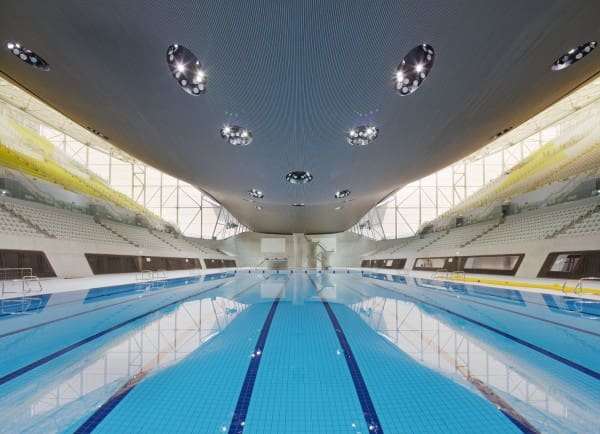
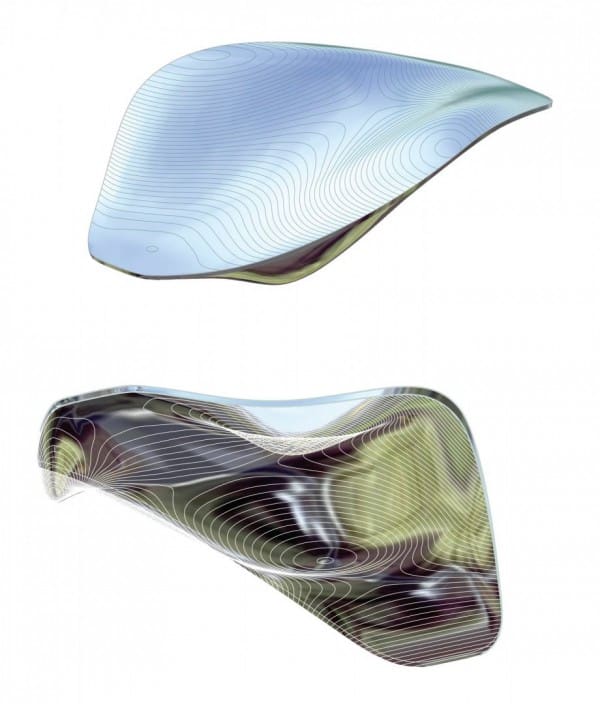
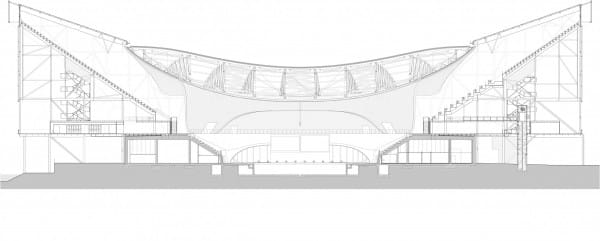
    Its imposing appearance with distinctive architecture gives the impression of an organic creation due to its perfect harmony between the whole ensemble and every detail in part. It impresses by the exterior inspired by the fluid geometry of water in motion which seems taken from a SF movie, as well as the ultra modern interior. The curved roof sweeps up from the ground as a wave, being the dominant element of the entire building. It measures at 160m long and up to 80 m wide. The only elements of support are two concrete pillars 54 meters away on one side, and a wall, all concrete, on the opposite side.

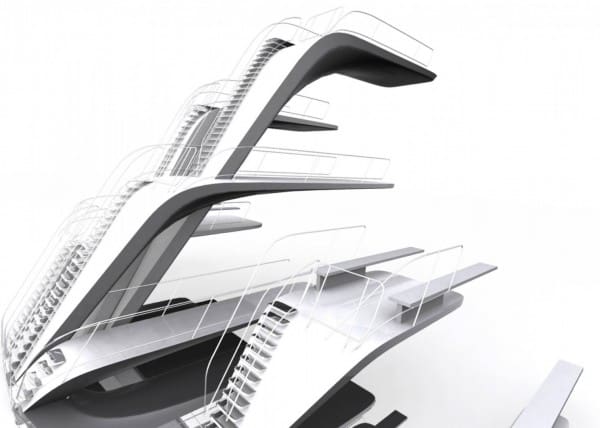
    During the Olympics, many people will be traveling to London for the Olympic Games.  When visiting London, the first thing you will look for is a place to stay. When choosing your hotel, you should consider staying near the aquatic center.  The Aquatic Center will be the gateway for most travelers who are fortunate enough to travel to London for the opening ceremonies and festivities of the Olympic Games.   The Aquatic center is sandwiched between a canal and railway construction.  The center links  to the rest of the Olympic park by a single bridge crossing over the train tracks to the Stratford area and the rest water sports facilities in the surrounding areas. Located in the south of the Olympic Park, the Olympic Aquatics Center will be used for swimming, diving and synchronized swimming 2012 Summer Olympics events.  It host an 50m warm-up pool for the competitors, 50m competition pool, 25m diving pool. The three pools are sealed with 180,000 tiles and hold a total of 10 million liters of water

    During the games the venue will have a capacity of 17,500. The two temporary “wings” will be removed post-games reducing the capacity to a regular 2,500, with an additional 1,000 seats available for major events.


    Photos: © Hufton + Crow, Zaha Hadid Architects.

    Project details:

    Architect: Zaha Hadid Architects
    Location: South-east corner of the Olympic Park , London, United Kingdom
    Construction time: 2005-2011
    Stage: Built
    Capacity: 17,500
    Sport: Diving, Swimming, Synchronised Swimming, Modern Pentathlon
    Cost: £268m

  • Gas Station by Atelier SAD

    Gas Station by Atelier SAD

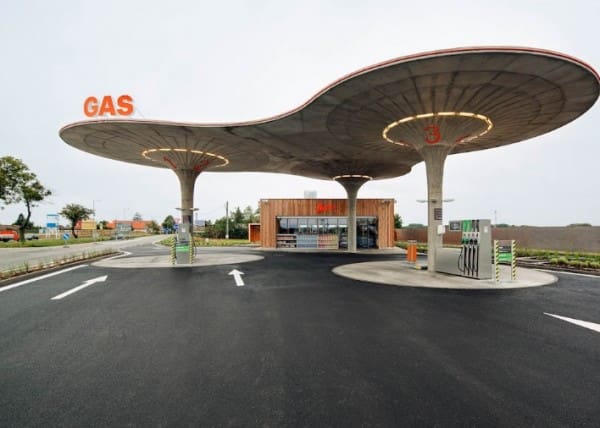
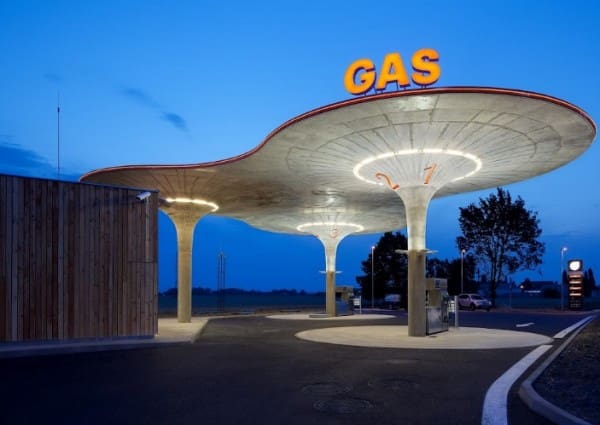
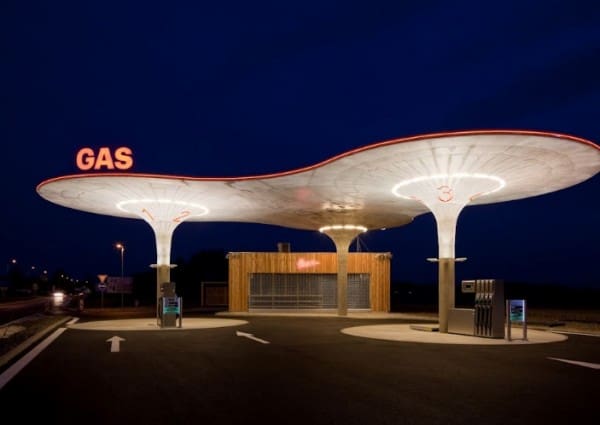
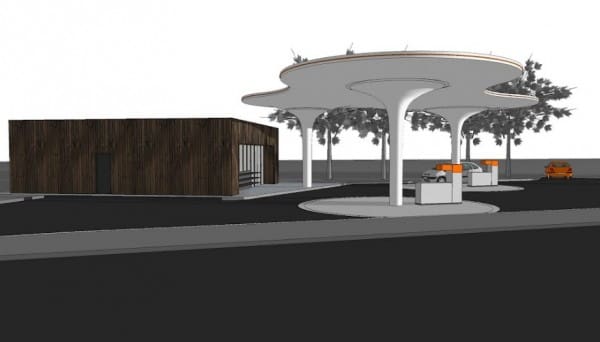
    Atelier SAD completed in 2011 a re-moderrnization project for a gas station in their own unique way. Located in the Slovakian city of Galanta, the gas station is displaying an unusual and fanciful architectural design, which certainly draws anyone’s attention especially during night. The gas station area with over 3,000 square meters stands out due to its three funnel – shaped columns that support a melded trio of curvy horizontal discs which resembles like massive mushrooms or as an alien object.

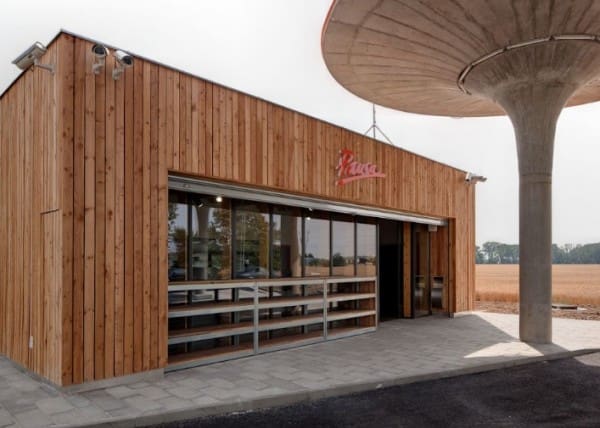
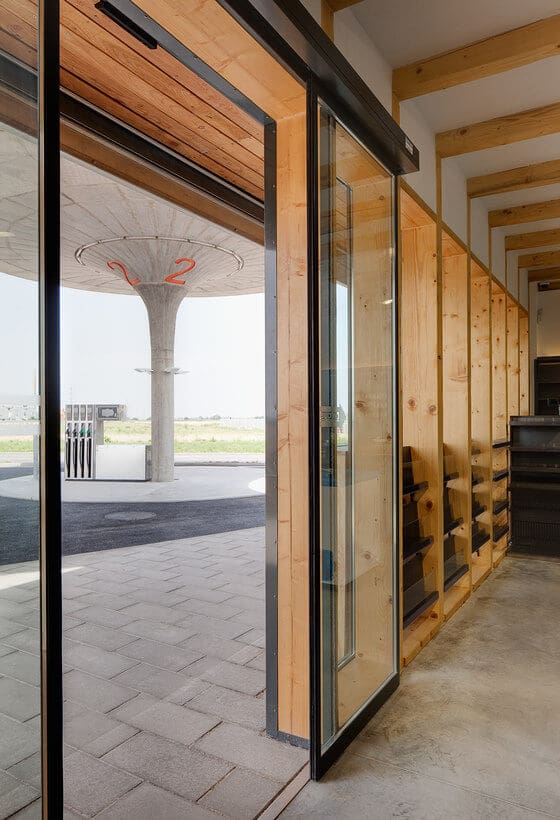
    Glowing neon lamps lit from the ceiling surfaces where columns meet discs, conturing the indicated spaces for vehicles to pause for the gas pumps. Unusual inspiration for a gas station we must say, because you don’t see everyday such a design, but in fact a modernist and inspiring concrete structure contrasting beautifully with the wooden cubic kiosk appearance.

    Photos: © Tomáš Souček.


    Project details:

    Architects: Atelier SAD
    Location: Matúškova cesta 887, Galanta, Slovakia
    Design Team: MgA. Adam Jirkal & MgA. Jerry Koza & Ing. Tomáš Kalhous & Koen Huyghe & Ing. Arch. Vít Markvart & Dušan Sinetar
    Collaborators: Pro Global
    Project Management: C-Partners
    Area: 3,322 sqm
    Completion: 2011