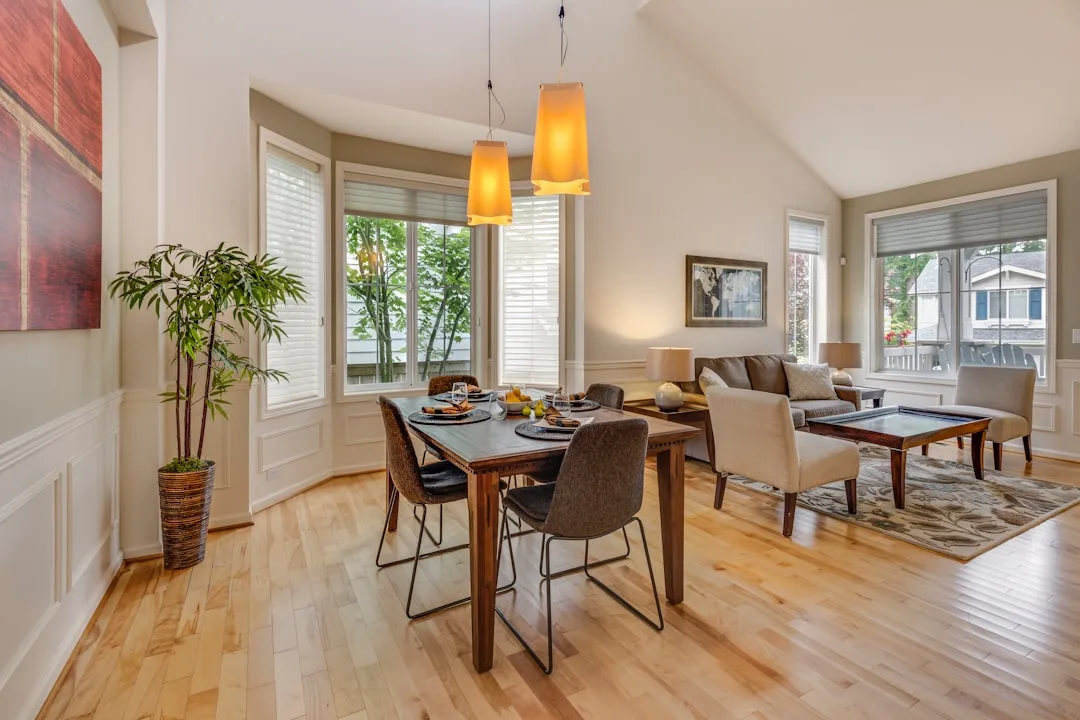
The formal dining room is disappearing from floor plans — but the need to eat together somewhere that feels intentional has not gone anywhere. If you’re figuring out how to create a dining room without a dedicated space, the challenge is a design problem first and a furniture problem second, and most advice on the subject treats furniture shopping as a substitute for actual design thinking. That gap is what I spent eleven years watching clients fall into: they’d buy a table, shove it near a window, call it done, and wonder why the space never felt like anything. What nobody told them was that creating a dining room without a dedicated space requires you to solve for territory, light, and visual separation before you ever open a browser tab. Most articles never get past the store.
Quick Answer
The formal dining room is disappearing from floor plans — but the need to eat together somewhere that feels intentional has not gone anywhere, and most advice on the subject treats furniture shopping as a substitute for actual design thinking.
What Homeowners Are Doing Instead of a Formal Dining Room
In This Article
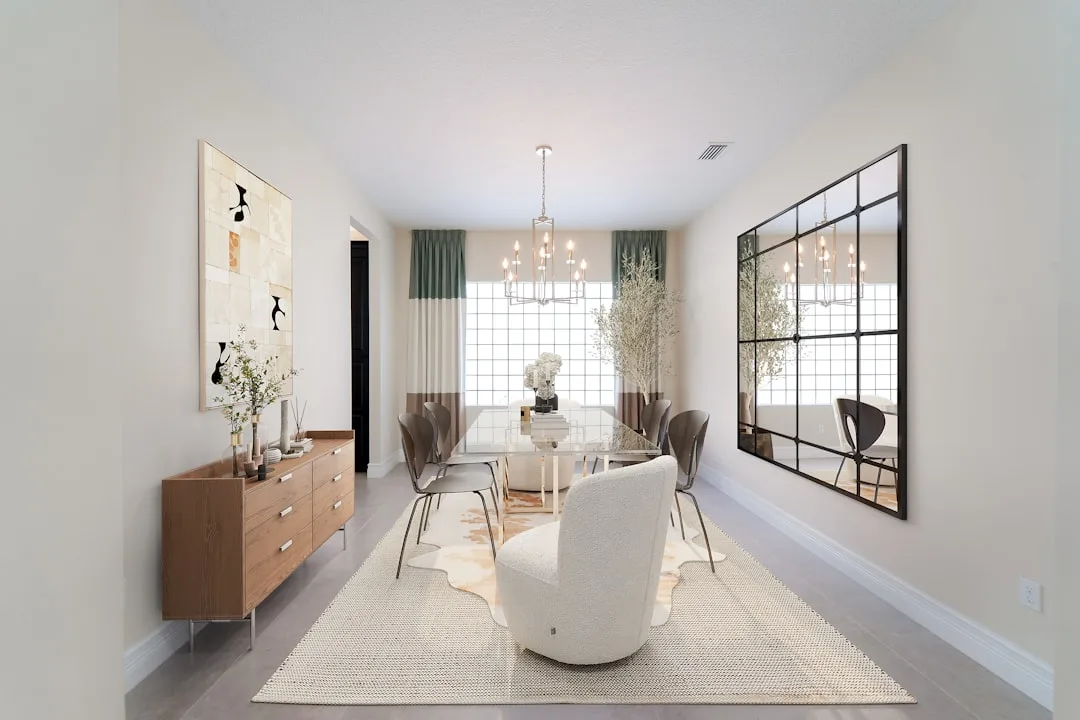
Separate dining rooms made sense when kitchens were service spaces hidden from guests and floor plans were organized around formality. Neither of those things describes how most people live now. Open-plan layouts have made the kitchen, living, and eating zones bleed into one continuous space — and in homes under 2,500 square feet, the National Association of Realtors has tracked a steady decline in formal dining rooms as a listed feature over the past decade, with kitchen-living combinations now the dominant configuration in new construction. This isn’t a design trend. It’s a structural shift.
What’s filling the gap is more varied than most articles let on:
- Kitchen islands with seating — the most common solution, especially in renovated kitchens where the island does triple duty as prep surface, casual dining spot, and social gathering point
- Breakfast nooks — a banquette-and-table setup tucked into a corner or bay window, often more charming and more functional than the dining rooms they replaced
- Living room dining zones — a table positioned at the edge of the seating area, delineated by a rug and a pendant, functioning as a separate zone without a single wall
- Flex rooms — a home office or guest room that converts to a dining space for hosting, usually around a round table that reads as either setting depending on what’s on it
The emotional case for all of these is simple. Eating together matters more than the room you eat in. The ritual — the sitting down, the shared surface, the deliberate pause from whatever else the day was — survives the loss of a dedicated space just fine. What it doesn’t survive is a setup that feels improvised, afterthought-ish, like the dining area is apologizing for existing. That’s the real problem to solve.
One thing worth understanding: the clients who made these alternative setups work best weren’t the ones who found the cleverest furniture. They were the ones who committed to the zone as seriously as they would have committed to a room. That meant choosing a pendant light that anchored the ceiling above the table, laying a rug that defined the floor plane beneath it, and treating the wall nearest to the dining area as worthy of considered art or storage — not a leftover surface. The zone earned its status through those decisions, not through walls.
Your takeaway: Stop mourning the room and start designing the zone. The function is fully available to you — it just requires more intentional setup than a dedicated room would.
Is Skipping a Dedicated Dining Room Actually a Good Idea?
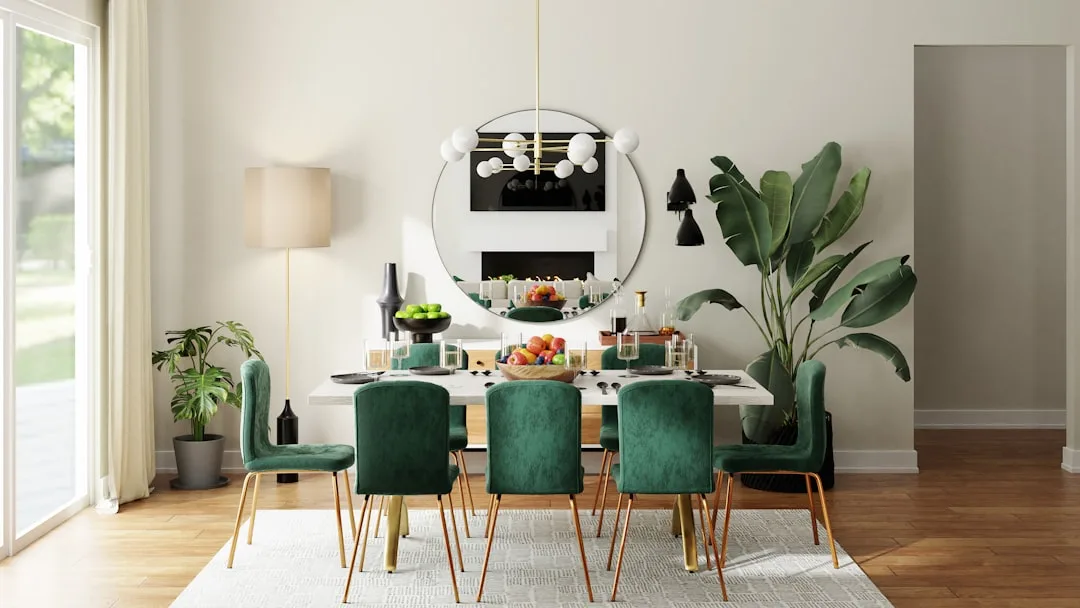
Honest answer: it depends on who’s living in the space, and most articles refuse to say so. I’ve worked with couples in 900-square-foot apartments who had more meaningful meals than clients in 3,000-square-foot houses with full formal dining rooms. I’ve also worked with families of five who tried to make a kitchen island work for dinner and were quietly miserable within six months.
Separate dining rooms have real advantages that nobody admits to. The acoustic separation — just the fact of having walls — makes conversation during dinner quieter and more focused. There’s a visual boundary that signals the meal is happening, which matters more than people expect when you have kids who need that transition. And for anyone who hosts frequently, the ability to close off a kitchen disaster while guests sit in a composed room is genuinely useful.
Here’s the balanced picture:
Who does fine without a dedicated dining room:
- Singles and couples eating casually most nights
- Households where the kitchen island is already the social center of gravity
- Anyone who hosts informally — the kind of dinner where the host is part of the room, not sequestered in it
Who should push for a defined dining space, even a modest one:
- Families with school-age children — defined mealtimes with defined locations track with research on family cohesion in ways that matter
- Frequent entertainers who care about the mood of a formal dinner
- Anyone whose kitchen is small, loud, or visually chaotic — eating near it without a buffer is punishing
The satisfaction gap during formal entertaining usually traces back to one specific failure: the dining zone never got treated as psychologically separate from the rest of the room. Guests could see the dirty pots. The television was in their peripheral vision. The lighting level was the same as the living area, which means it was either too bright for dinner or too dim for the kitchen. These are solvable problems — but they require being honest about them upfront rather than discovering them the night of your first dinner party.
Your takeaway: If you host more than six formal dinners a year, fight for a defined zone with real visual separation. If you don’t, put that energy into making your casual setup feel intentional instead.
The Minimum Square Footage a Dining Setup Actually Requires
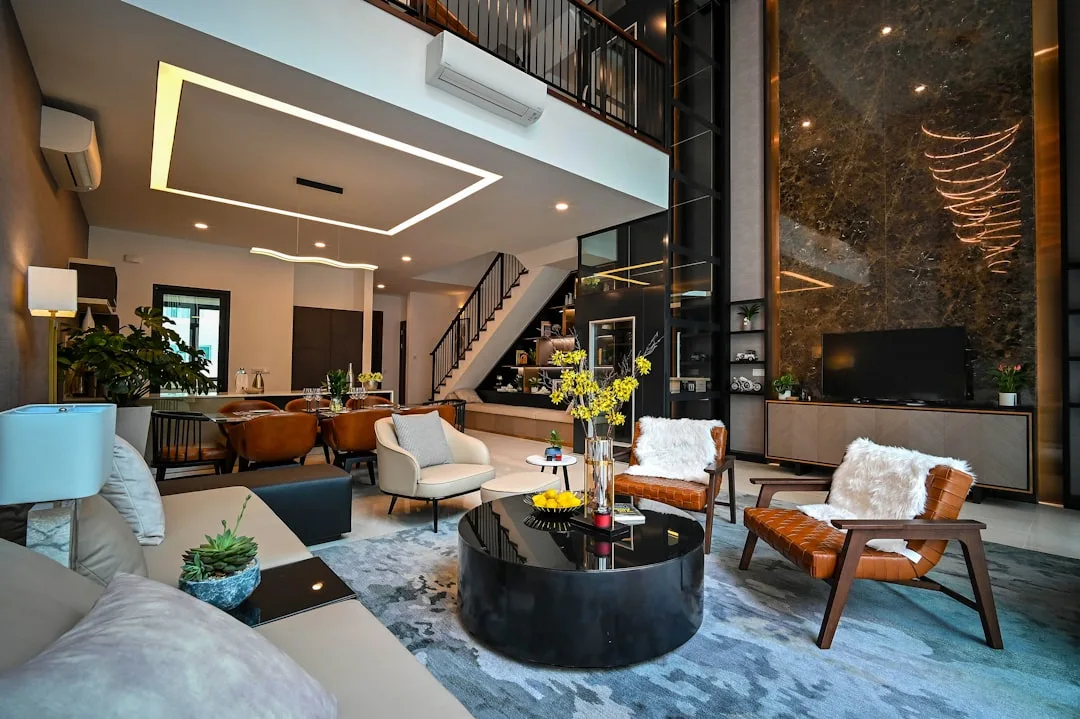
Most people are wrong about this — and they’re wrong in the direction that causes them to give up before they’ve started. The picture in their head is a traditional rectangular table, four chairs, and a buffer zone around the whole thing that adds up to something impossible. That picture is wrong because it assumes a furniture format that doesn’t fit the problem.
Here are the actual numbers:
The National Kitchen and Bath Association recommends a minimum of 36 inches of clearance between the edge of a dining table and any wall or obstruction — that’s enough for someone to pull a chair out and stand up without hitting anything. That number applies on every open side of the table.
Working backward from that:
- Table for four, rectangular format: You need roughly 10 feet by 10 feet of floor area, including the chair pull-out zone on all sides. That’s more than most people have available in a secondary zone.
- Table for four, round format: A 48-inch diameter table with 36-inch clearance on all sides fits in a 10-foot by 10-foot zone, same as rectangular — but rounds seat that footprint more efficiently because there are no corners wasting space
- Table for two: A small bistro table or a 30-inch square drops the requirement to as little as 6 feet by 6 feet with clearance. Two stools at a bar-height counter can go even smaller.
The thing most people miss is that the 36-inch rule only applies to open sides. If one side of your table is against a wall, or built into a banquette, you eliminate that clearance zone entirely on that side. A four-person table with a banquette on one side and chairs on the other can fit in a 7-foot by 9-foot footprint. That’s a hallway. That’s a weird corner. That’s a space you probably already have.
There’s another number people overlook: ceiling height. A pendant light hung above a dining table should sit 30 to 34 inches above the tabletop in a standard 8-foot ceiling room, and can drop lower — 28 inches — in rooms with higher ceilings. Getting that number wrong is one of the most common reasons a dining zone fails to read as a zone. Too high, and the pendant becomes a ceiling fixture that relates to the room, not the table. At the right height, it pulls everything underneath it into a unified moment.
Also worth knowing: the standard dining table height is 30 inches, and standard dining chairs seat at 17 to 19 inches, leaving a comfortable 11 to 13 inches of thigh clearance. Counter-height tables (36 inches) need counter-height stools (24 to 26 inches). Bar-height surfaces (42 inches) need bar stools (28 to 30 inches). These numbers matter because mismatched heights are one of the most common — and most uncomfortable — mistakes in dining zones that were assembled from mismatched sources.
Your takeaway: Measure what you actually have, then figure out which table format fits those measurements. In most cases, a banquette or wall-anchored setup will unlock square footage you assumed wasn’t there.
The Four Design Moves That Make a Zone Feel Like a Room
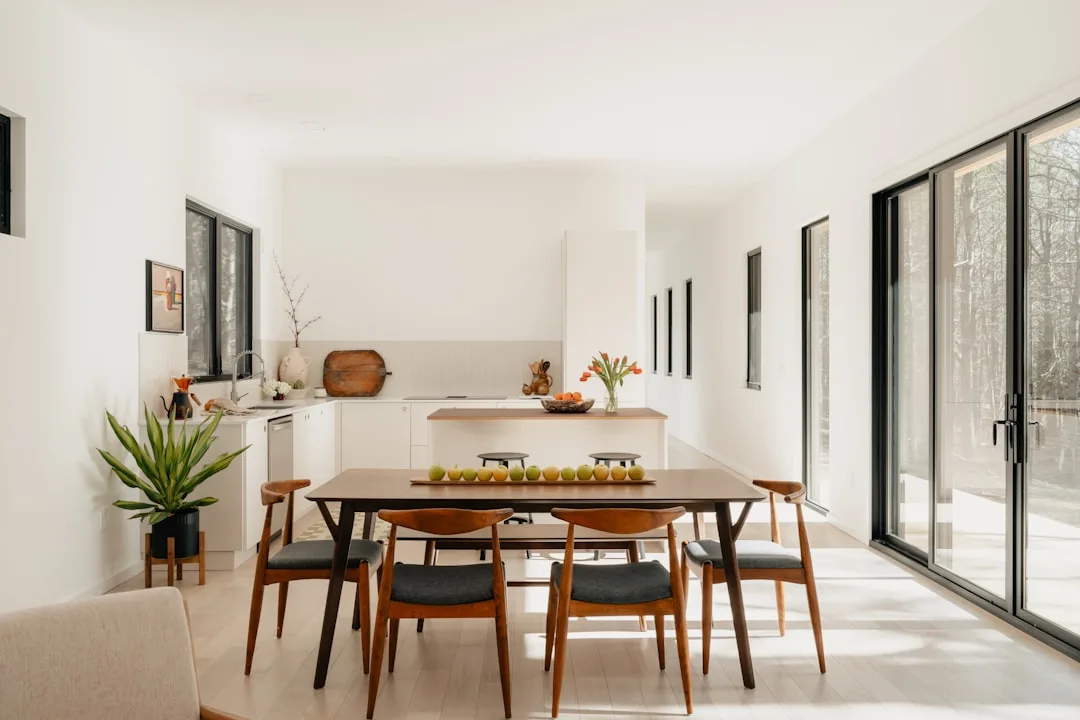
This is the part most articles skip entirely, which is why so many dining zones feel unfinished even after the furniture arrives. A room has boundaries, a focal point, a light logic, and a surface hierarchy. A zone can have all four of those things without a single wall.
1. Define the floor plane.
A rug underneath the dining table is not decorative — it’s territorial. It tells the eye where the dining zone begins and ends, separating it from the hardwood or tile that flows through the rest of the open plan. The rug needs to be large enough that all chair legs sit on it even when pulled out — typically at least 8 by 10 feet for a four-person table. The most common mistake is going too small and ending up with a rug that the chairs are constantly riding off of. That looks worse than no rug.
2. Anchor the ceiling.
A pendant light hung directly above the table does two things simultaneously: it provides task lighting at the right height for seeing food and faces, and it creates a ceiling-level marker that matches the floor-level marker of the rug. Together, those two planes frame a volume of space that reads as a zone even with no walls. The pendant doesn’t need to be expensive. It needs to be the right scale — typically 12 to 20 inches narrower than the table width on each side — and hung at the right height.
3. Create a visual back.
In a dedicated dining room, the walls handle this. In an open zone, you need to manufacture a visual back for the space — something that stops the eye and gives the zone a sense of enclosure on at least one side. This can be a large piece of art, a built-in shelving unit styled with intention, a large mirror that reflects the table and expands the space, or a partial wall like a half-height bookcase or open shelving unit that divides without fully enclosing. Without a visual back, the zone floats unresolved in the open plan.
4. Control the light separately.
The biggest mistake in open-plan dining is running the dining zone off the same lighting circuit as the living or kitchen area. Dining needs dimmer control. A pendant on a dimmer switch transforms the mood of a meal in a way that no furniture purchase can match. If you’re renting and can’t rewire, a plug-in pendant or a table lamp placed near the dining area can approximate the same effect. The point is that the light level at the table needs to be independently controllable from the rest of the space.
Your takeaway: Furniture is the last step, not the first. Solve for floor, ceiling, back wall, and light — then buy the table.
How to Style the Zone So It Reads as Intentional Year-Round
Getting the zone to feel right on the night you finish it is one challenge. Keeping it feeling right when it’s not in use — when it becomes a homework station, a mail dump, or a visual void — is a different problem entirely, and one that most guides never address.
The table surface matters even when no one is eating at it. A bowl, a candle, a small stack of books, a plant — something that occupies the center of the table and makes it look chosen rather than waiting. This isn’t about styling for Instagram. It’s about the table reading as a table rather than a flat surface looking for a purpose.
Chair selection affects the year-round feel more than people expect. Upholstered chairs read as permanent and considered. Wooden chairs with a strong silhouette do too. Metal folding chairs or plastic chairs without visual weight make a dining zone feel provisional regardless of how intentional everything else is. If budget is the constraint, two upholstered host chairs at the ends of the table with simpler side chairs is a hierarchy that reads as deliberate.
Storage near the dining zone is underrated. A sideboard, a narrow console, or even a small bar cart within the visual footprint of the zone keeps dining-related objects — napkins, candles, serving pieces — from migrating to other parts of the house. That containment is part of what makes the zone read as its own territory.
Frequently Asked Questions
Can you create a real dining room without a dedicated space in a studio apartment?
Yes, but it requires accepting that the dining area will share its footprint with another function. The most effective approach in a studio is a round table that can serve as both a dining surface and a work surface, positioned near a window for natural light, with a pendant overhead to signal its dining role at night. Keep the chair count honest — two chairs that are always at the table reads better than four chairs that are usually stacked or pushed aside. A small sideboard nearby contains the dining-specific objects and helps the zone hold its identity even when the table is being used for something else.
What’s the minimum size table that still feels like a proper dining table?
A 36-inch round or a 30-by-48-inch rectangle are the practical minimums for two people eating comfortably with plates, glasses, and serving pieces on the table simultaneously. Anything smaller starts to feel like a café table, which is fine if that’s the aesthetic you’re after, but it changes the experience of the meal. For four people, a 48-inch round or a 36-by-60-inch rectangle are the minimums before someone is negotiating elbow space.
How do you separate a dining zone from a living room without building a wall?
The most reliable method is layering two or three zone-defining elements rather than relying on any single one. A rug under the dining table creates a floor-level boundary. A pendant above the table creates a ceiling-level anchor. A piece of furniture — a sofa facing away from the dining area, a bookcase oriented perpendicular to both zones, a console table serving as a room divider — creates a physical edge between the zones. Using two or three of these simultaneously creates a perceived separation that’s surprisingly convincing even in a fully open floor plan.
Does a dining room without a dedicated space work for formal entertaining?
It can, with one important condition: the zone needs to be visually separable from the kitchen during the meal. That usually means the lighting design has to do significant work — dimming the dining zone pendant while keeping the kitchen brighter actually reverses the visual hierarchy and pulls guest attention toward the table rather than the mess behind you. A folding screen or a large plant positioned between the kitchen and dining area can also help. The honest answer is that an open-plan dining room without a dedicated space will never fully replicate the contained, kitchen-hidden experience of a formal dining room — but for most hosts, getting 80% of that experience is more than good enough.
Should the dining table match the kitchen cabinetry or the living room furniture?
Neither, specifically — but it should share a material or finish reference with whichever space it’s closer to. In a kitchen-adjacent dining zone, a table that echoes the tone of the cabinet wood or the countertop material will read as connected to the kitchen without being a set. In a living-room-adjacent zone, a table that shares a metal finish or a wood tone with the coffee table or shelving creates visual coherence. The mistake is buying a dining table in complete isolation from the surrounding finishes, which is why so many dining zones feel like they were placed rather than designed.