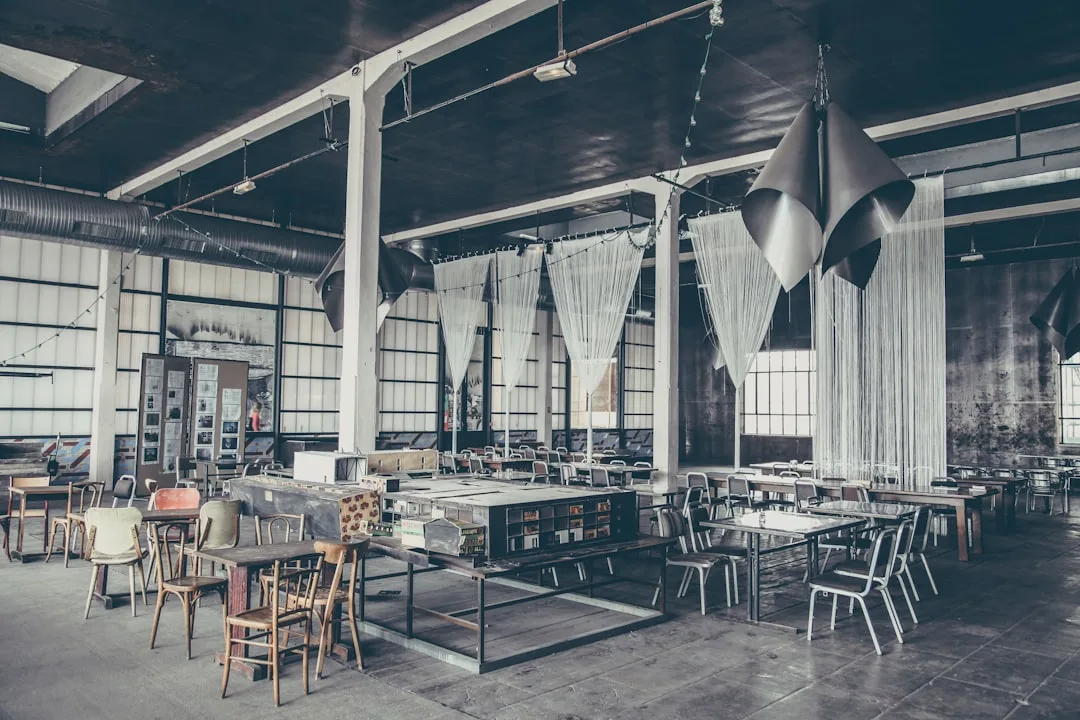
The most common complaint about industrial decor isn’t that it looks bad in photos — it’s that people move in, look around, and realize they’ve accidentally decorated a parking garage.
Quick Answer
The most common complaint about industrial decor isn’t that it looks bad in photos — it’s that people move in, look around, and realize they’ve accidentally decorated a parking garage.
It happens constantly. Someone falls in love with a loft on Instagram, buys the Edison bulbs, paints a wall dark gray, sources a reclaimed wood coffee table, and then wonders why the room feels like it’s one forklift away from shipping crates. The materials are right. The vibe is completely wrong.
The difference between an industrial space that feels magnetizing and one that feels bleak isn’t a matter of taste. It’s a matter of understanding what industrial interior decor is actually trying to do — and then executing it with more intention than the mood board required.
What Industrial Interior Decor Actually Means (Beyond the Warehouse Cliché)
In This Article
- What Industrial Interior Decor Actually Means (Beyond the Warehouse Cliché)
- Is Industrial Decor Still in Style — Or Has It Peaked?
- The Tension Problem: Why Most Industrial Rooms Feel Like a Hardware Store
- The 3-5-7 Rule Applied to Industrial Spaces (Most Decorators Get This Wrong)
- Signature Materials That Define the Look — And How to Use Them Without Overdoing It
- Room-by-Room Pitfalls: Where Industrial Decor Works and Where It Fights You
- Budget Realities: Where to Spend, Where to Fake It, and What’s Never Worth the Cost
- Mixing Industrial With Other Styles: The Combinations That Actually Work
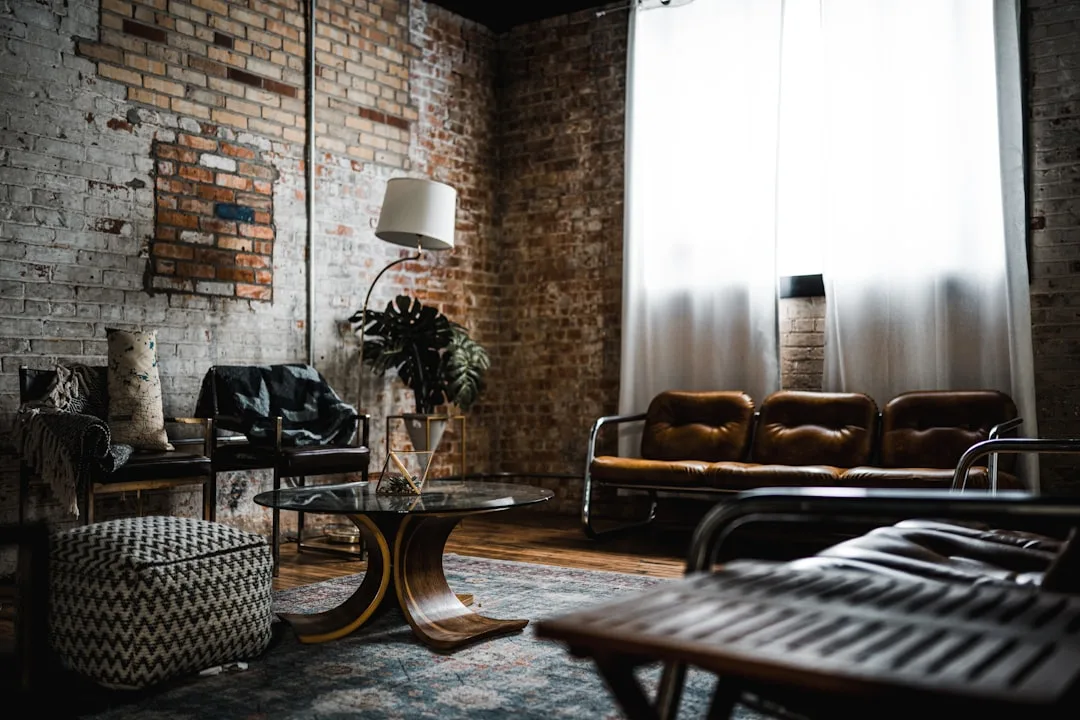
Here’s what most articles miss: industrial design isn’t primarily about materials. It’s about emotional honesty. The style says — openly, without apology — this is how this space is built, and we’re not hiding it.
That’s the psychological core. Pipes stay visible. Beams stay exposed. Concrete doesn’t get covered with drywall. There’s something deeply satisfying about a space that shows its own construction, the same way a well-made watch with a visible movement feels more trustworthy than one with a blank face.
The naming confusion is real but harmless. “Urban industrial,” “factory chic,” “raw loft aesthetic,” “warehouse style” — these are all describing the same family of design. The terms shift depending on whether you’re reading a UK design publication, a US real estate listing, or a furniture brand’s product description. Don’t overthink it.
What’s worth understanding is how industrial differs from styles it brushes up against:
- Brutalism uses raw materials (primarily concrete) as an architectural statement of mass and power. Industrial is warmer and more domestic — brutalism doesn’t care if you’re comfortable.
- Minimalism achieves emptiness through restraint. Industrial achieves character through honesty. A minimalist room hides its infrastructure; an industrial room celebrates it.
- Minimalism removes; industrial reveals.
Industrial interior design originated in the 1960s and 1970s when SoHo artists in New York began converting abandoned manufacturing lofts into live-work spaces. They kept the exposed brick and structural steel not as a stylistic choice but because they couldn’t afford to cover it. By the 2010s, that accidental aesthetic had become one of the most searched home decor styles globally — proof that what started as economic necessity landed on something psychologically resonant.
People are drawn to spaces that show their bones because it signals authenticity. In a design culture saturated with surfaces that hide everything, a room that says here’s exactly what I am reads as refreshingly honest.
Actionable takeaway: Before you buy a single piece, ask yourself what your space is genuinely made of. Industrial works best when it’s responsive to real architecture — a room with original brick or timber already has the foundation. Working with what’s there beats applying industrial as a costume over a room that has no structural story to tell.
Is Industrial Decor Still in Style — Or Has It Peaked?
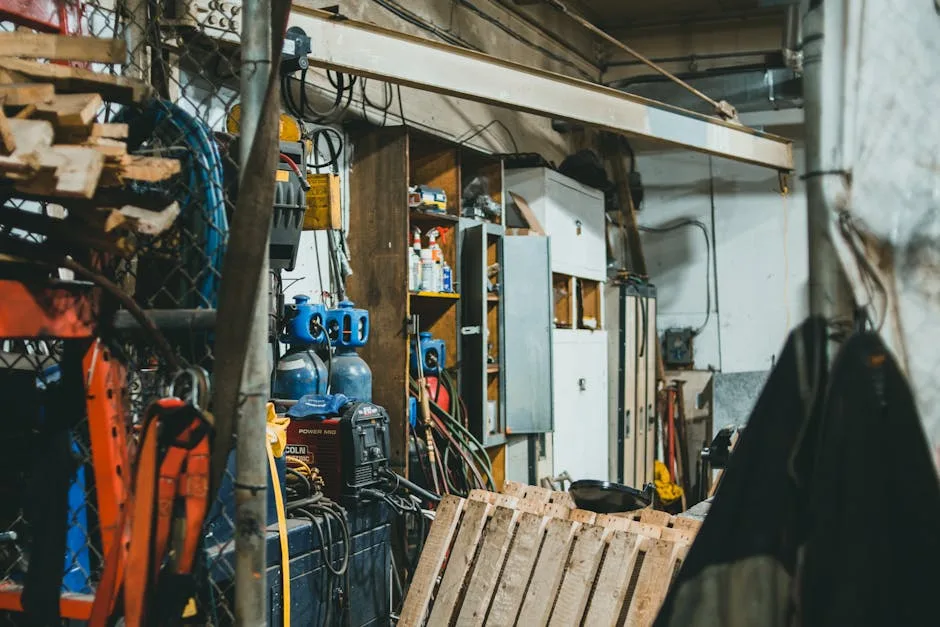
Let’s be honest about what happened. Between 2012 and 2018, exposed brick and Edison bulbs became the avocado toast of interior design — so ubiquitous they stopped meaning anything. Every coffee shop, co-working space, and newly renovated rental apartment had the same black metal shelving, the same bare filament bulbs, the same reclaimed wood bar top. The aesthetic got flattened by overuse.
But “overused” and “over” aren’t the same thing.
Google Trends data shows that searches for “industrial home decor” have remained consistently high since 2014, with renewed spikes in 2021–2023 — a pattern that suggests the aesthetic has crossed from trend into established style category, the same trajectory that Scandinavian design followed in the previous decade.
What’s actually happening is a split. The version of industrial that peaked was the surface-level version — slap some Edison bulbs on exposed brick, done. That iteration is tired. What’s growing is something designers are calling “refined industrial” or “warm industrial”: the same structural honesty, but softened by organic materials, better lighting design, and a genuine understanding of contrast.
Here’s a quick read on what’s aging versus what’s holding:
Fading fast:
- Bare filament Edison bulbs as a primary light source
- Distressed wood accent walls as the main design move
- All-black rooms with zero warmth (looks great in a showroom, punishing to live in)
- Matching industrial “sets” that feel like a theme rather than a room
Still strong:
- Black steel-framed windows and doors — they’ve become an architectural standard
- Exposed concrete floors with radiant heating
- Mix of metals within the same space (aged brass, matte black, raw iron)
- Factory-style pendant lighting over kitchen islands and dining tables
Good design principles outlast trends because they’re rooted in something real. Industrial works when it’s authentic to the architecture and the people living in it — not when it’s applied because a certain look was popular in 2016.
Actionable takeaway: If you’re worried about the style feeling dated, focus on the “warm industrial” direction — more leather, more linen, more aged brass hardware alongside matte black. That version has real longevity because it doesn’t rely on any single signature element that can go stale.
The Tension Problem: Why Most Industrial Rooms Feel Like a Hardware Store
The single most common execution failure in industrial decor is doubling down on hard materials instead of creating contrast with them.
Someone decides they love the industrial look. They install concrete floors. They add a metal dining table. They choose a steel pendant light, a metal-framed mirror, and then frame their prints in black metal frames. Every individual choice is defensible. Together, they’ve created a room with the warmth of a municipal building.
The warmth equation is simple: every cold element needs a counterweight. Interior designers who work with industrial spaces consistently cite contrast and material balance — not material selection alone — as the defining factor between rooms that feel inviting versus rooms that feel institutional. This isn’t subjective taste; it’s how human perception of spaces actually works.
A room with concrete floors comes alive when you add a large wool rug in a warm neutral — something like a 9×12 Natural area rug from Beni Ourain or a chunky loop from a brand like Armadillo. A metal-framed sofa needs deep linen cushions in off-white or warm terracotta, not more metal and dark leather. An exposed brick wall benefits from trailing greenery — a pothos or a string of pearls — not another industrial element competing for attention.
Lighting is the most underused lever in industrial spaces. Most people treat it as a finishing touch rather than a structural element. Here’s what experienced designers actually do:
- Ambient lighting (overhead, diffused) prevents the cave effect that dark industrial materials accelerate
- Task lighting (articulated wall sconces, under-cabinet strips) adds utility and warmth at eye level where you actually notice it
- Accent lighting (directional spots, LED strips inside open shelving) creates depth and pulls warm tones out of wood and brick
The other concept worth naming is intentional imperfection. Industrial spaces should look lived-in, not unkempt. The difference is curation: a vintage factory stool with a worn leather seat, deliberately placed, reads as considered. A pile of unread mail on the same stool reads as clutter. Same material, opposite effect.
Actionable takeaway: Do a material audit of your room. Count every hard, cold surface — concrete, metal, glass. For every two cold elements, you should have at least one soft counterweight — textiles, wood, leather, plants. If your ratio is off, start with a rug and a throw. They’re the fastest, cheapest way to shift a room’s temperature.
The 3-5-7 Rule Applied to Industrial Spaces (Most Decorators Get This Wrong)
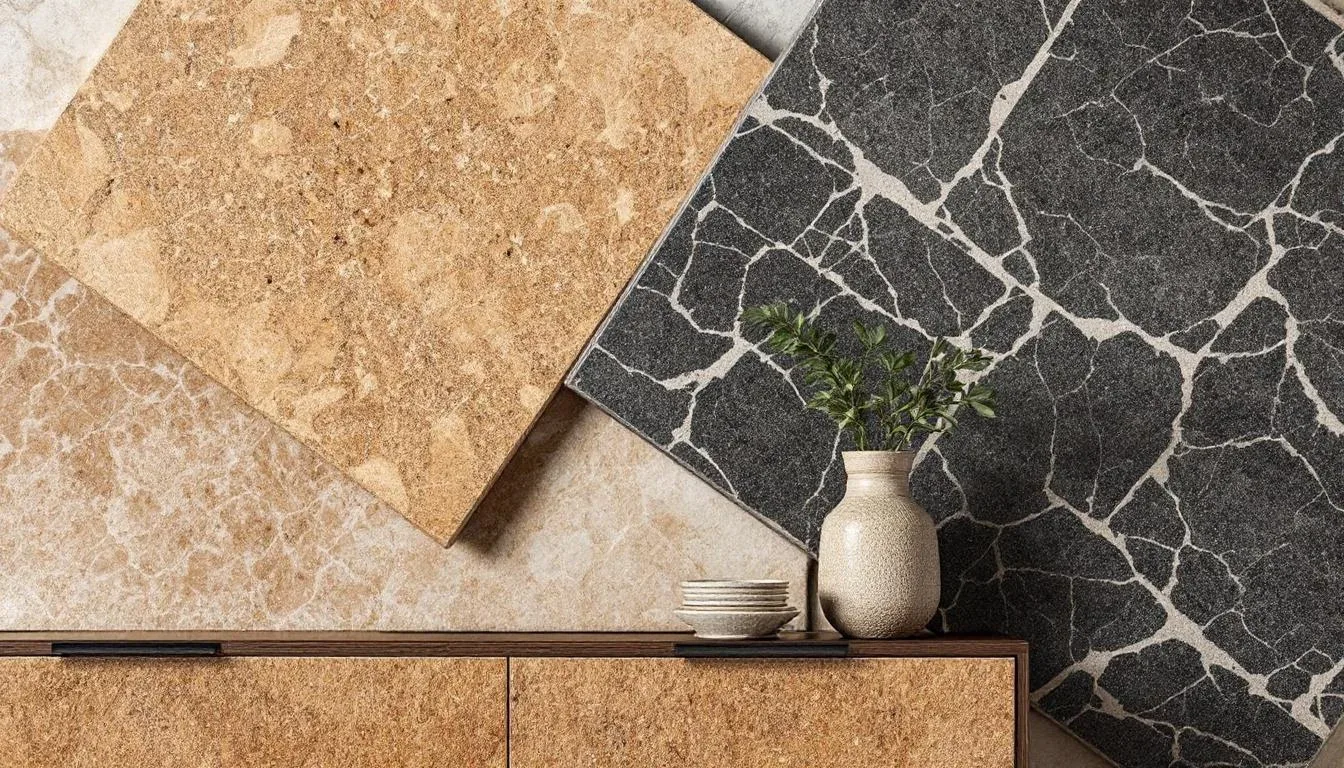
The 3-5-7 rule is one of those decorating principles that gets mentioned everywhere and explained almost nowhere. Here’s the actual concept: group decorative objects in odd numbers — 3, 5, or 7 — varying them in height, texture, and visual weight. Even-numbered groupings feel static because the eye balances them symmetrically and moves on. Odd groupings create a visual tension that keeps the eye traveling, which is why they read as more dynamic and interesting.
This is rooted in the Gestalt principle of proximity — the human eye finds odd-numbered groupings more compelling than even pairings because it can’t resolve them into a simple symmetric pattern. The slight visual “unresolvedness” keeps your attention engaged.
In industrial spaces, this rule matters more than it does in most other styles — because the architecture is already doing visual work. Exposed beams, raw brick, visible ductwork: the bones of an industrial room are loud. Decorative objects have to be arranged with enough intention that they read as deliberate rather than haphazard.
Here’s how this looks in practice:
Industrial kitchen shelf vignette (group of 3):
A tall ceramic vessel in matte white, a medium cast-iron canister, and a small bundle of dried herbs. Three objects, three heights, three textures — but all within the same earthy-neutral palette so it reads as a collection rather than a random assembly.
Loft entryway console (group of 5):
A tall architectural vase (60cm), a framed industrial-style print at medium height, a short stack of two or three books, a small sculptural object (aged brass or stone), and a trailing plant in a minimal pot. Five elements. The plant handles the height variation on the low end; the vase anchors the tall end.
Factory-style living room mantel (group of 7):
Harder to execute but powerful. Mix found objects — vintage factory clock, glass apothecary jars, raw concrete bookends, candles at staggered heights, a framed architectural photograph. Seven pieces in one composition is ambitious; the key is keeping the palette tight so the grouping reads as cohesive.
When to break the rule: Large-scale industrial spaces with ceiling heights above 12 feet can handle deliberate repetition — a row of five identical pendants over a long dining table, a series of matching factory canisters along an open shelf. Repetition at scale creates intentional rhythm rather than monotony. The rule matters most in intimate groupings, not architectural-scale arrangements.
Actionable takeaway: Pick one shelf or surface in your space right now and rearrange it into a group of three or five. Remove everything that doesn’t contribute to the grouping. Vary the heights by at least 30%. This single change makes more visual difference than most people expect.
Signature Materials That Define the Look — And How to Use Them Without Overdoing It
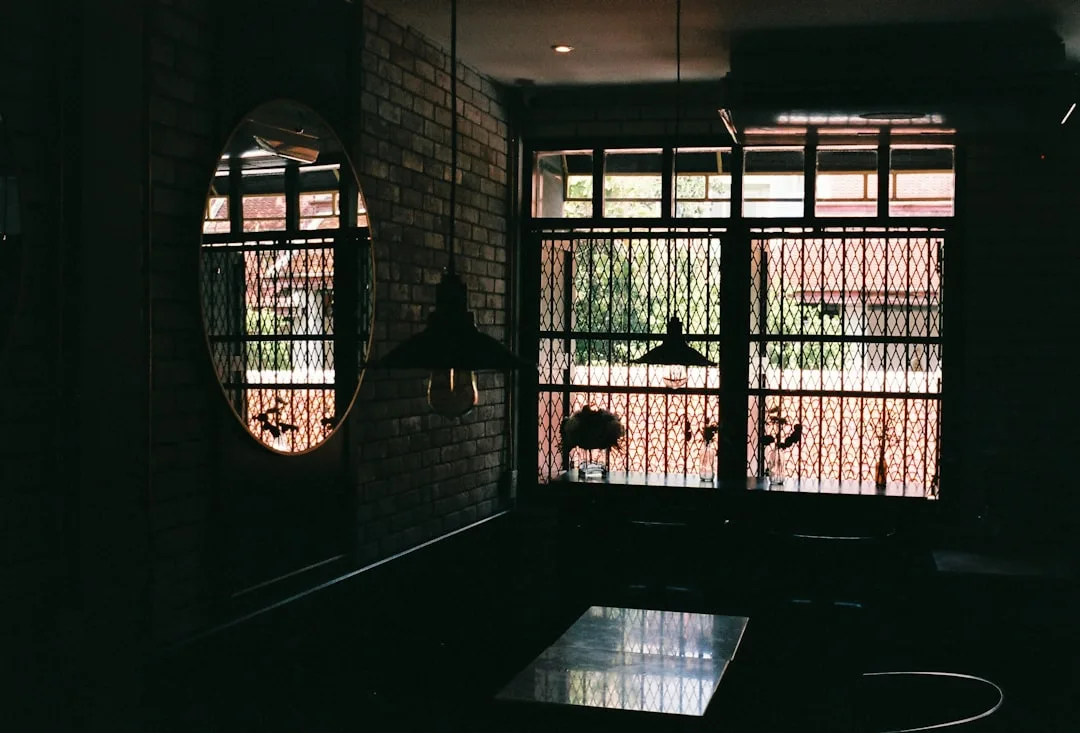
Every industrial decor article gives you the material list. None of them tell you how much is too much. Here’s the actual guidance:
Exposed brick: Treat it as a focal point, not wallpaper. One wall maximum in most domestic rooms — full-room brick overwhelms everything else and turns every piece of furniture into an accent. If you don’t have real brick, faux brick panels (Regency, Orac Decor) have improved dramatically and are appropriate for low-traffic feature walls. Brick-effect tiles are genuinely convincing in bathrooms and kitchens. The tell with fake brick is always the scale — real brick is 73mm x 215mm in the UK standard; if the proportions are off, experienced eyes notice.
Raw and reclaimed wood: Grain direction matters more than people realize. Horizontal planks on a wall visually widen a space; vertical planks add height. Finish level changes the entire feel — truly raw wood (unsealed) develops a beautiful patina but marks easily; lightly oiled (Osmo Polyx at a low sheen level) is the practical sweet spot for most surfaces. Heavily stained reclaimed wood loses its character; the point of reclaimed material is the history in the surface, not a uniform dark tone.
Steel and iron: Black steel is significantly more versatile than silver or chrome in industrial spaces. Powder-coated matte black reads as intentional; polished chrome reads as generic bathroom fixture. Use steel structurally (shelving brackets, table frames, stair railings) before you use it decoratively — if the structural steel is right, the decorative details follow naturally.
Concrete: The maintenance reality that design content routinely ignores: unsealed concrete floors are porous and stain permanently from wine, oil, and acidic liquids. Concrete countertops require sealing every one to two years and still develop hairline cracks over time. They’re beautiful and worth it if you know what you’re signing up for. Concrete-effect porcelain tile (Atlas Concorde, Vives) solves the maintenance problem with 90% of the visual result.
The overlooked materials:
- Aged leather — develops character over years; worth buying quality once
- Canvas and linen — softens metal and concrete without undermining the industrial feel
- Matte globe bulbs — these have replaced bare filament as the considered choice; same warmth, less visual aggression
The global reclaimed lumber market was valued at over $45 billion in 2022, driven substantially by interior design demand for authentic aged materials — which tells you something about how real the appetite for genuine character is.
Actionable takeaway: Before adding another industrial material, ask which existing element is serving as its warmth counterweight. If you can’t identify one, add the counterweight before adding the material.
Room-by-Room Pitfalls: Where Industrial Decor Works and Where It Fights You
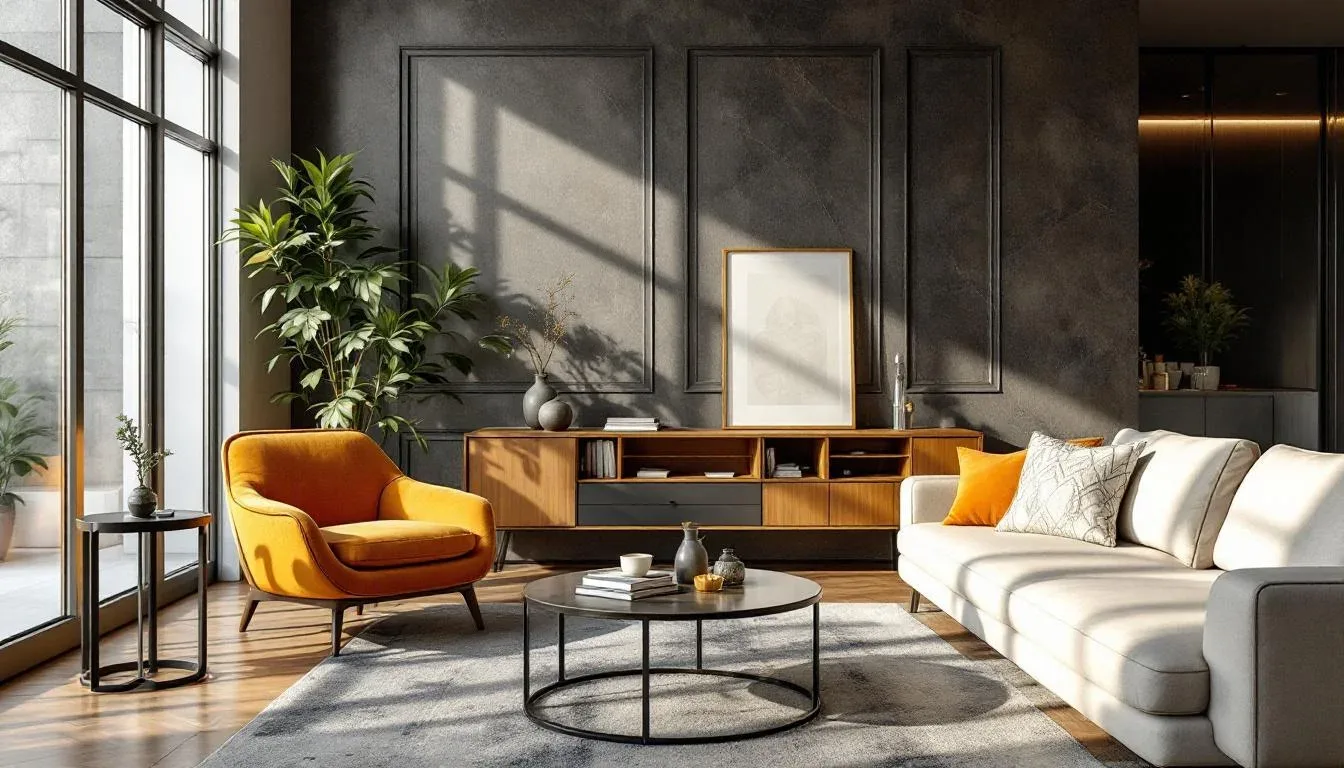
Not every room takes to industrial equally. Here’s an honest room-by-room assessment:
Living rooms — Industrial’s strongest territory. High ceilings amplify the style’s scale and drama. Low-ceiling living rooms (under 2.4m / 8 feet) require real restraint: lighter floors, strategic uplighting, and avoiding dark feature walls that compress the space further. The style handles large-format furniture well — deep sofas, oversized coffee tables, substantial rugs.
Kitchens — Open shelving and metal hardware translate beautifully. Professional-grade appliances (Smeg, Bertazzoni) align with the aesthetic and earn their premium cost here. The cautionary note: all-concrete kitchens photograph stunningly and live in them less so. Cold countertops, hard acoustics, and the unforgiving maintenance reality of raw concrete make the fully committed industrial kitchen a significant lifestyle choice.
Bedrooms — The hardest room to execute. Sleep psychology is real: rooms with hard, cold materials and high contrast produce measurably higher cortical arousal, which is the opposite of what a bedroom needs. Warm industrial is non-negotiable in the bedroom. Softer lighting (warm-toned bulbs at 2700K or below), layered textiles (linen duvet, cotton throw, wool cushions), and wood-heavy furniture choices are what separate a bedroom that photographs well from one you actually want to sleep in.
Bathrooms — Industrial bathrooms age poorly. Hard water on exposed iron fixtures causes rust staining within months without proper sealing and regular maintenance. Black matte fixtures (Crosswater, Vado) handle humidity better than raw iron. Concrete surfaces in showers require professional sealing and still need reapplication every 18 months. Industrial bathrooms are a maintenance commitment; go in with open eyes.
Home offices — Genuinely well-suited, and this is underappreciated. The utilitarian aesthetic aligns naturally with productivity psychology. Industrial handles technology, monitors, and cable management more gracefully than almost any other style — cables and hardware read as intentional rather than intrusive. A steel-framed desk, task lighting, and open shelving create a workspace that feels serious without feeling oppressive.
Biophilic design research consistently shows that humans have measurably lower stress responses in spaces that include natural materials — which explains exactly why pure industrial rooms, heavy on metal and concrete, often feel mentally fatiguing without organic counterbalances.
Actionable takeaway: Identify which room you’re working on and check it against this list before committing to materials. The bedroom requires a different approach than the living room; treating them identically is one of the most common industrial decor mistakes.
Budget Realities: Where to Spend, Where to Fake It, and What’s Never Worth the Cost
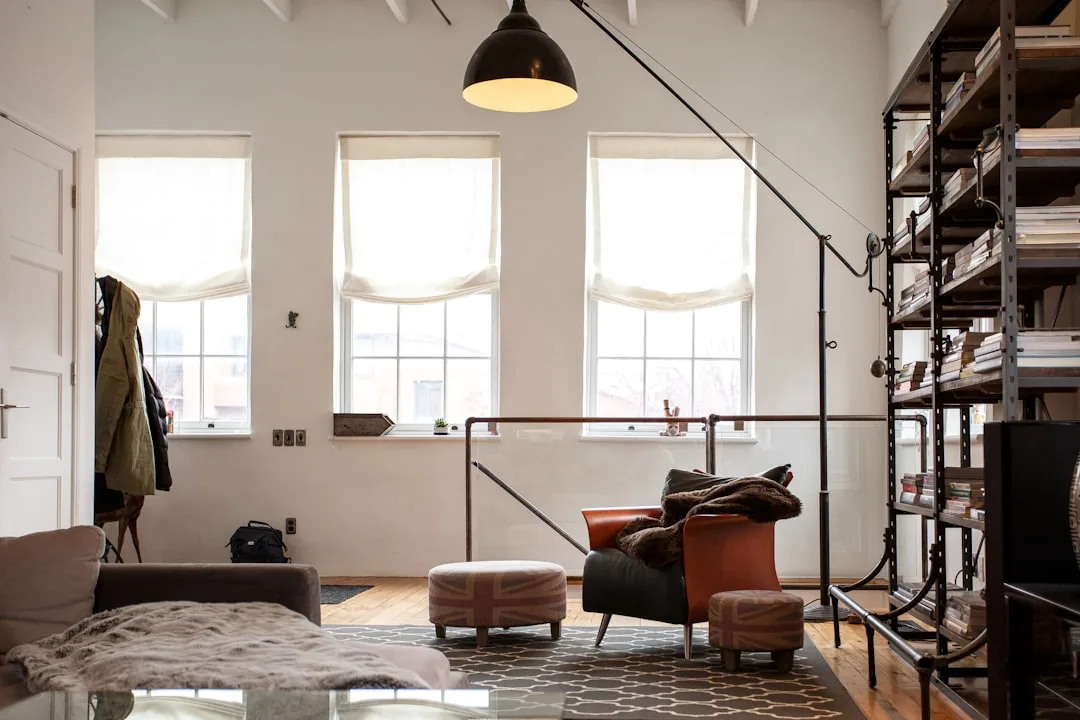
Industrial decor has a unique budget profile: some elements are worth genuine investment, others have convincing affordable alternatives, and some cheap shortcuts announce themselves immediately.
Where to spend properly:
Lighting is the highest-leverage budget decision in an industrial space. Lighting is estimated to account for up to 40% of a room’s perceived style — making fixture selection disproportionately impactful relative to its cost. A well-chosen pendant over a kitchen island (Tom Dixon Beat, Flos IC Lights, or even the reliable middle-ground options from Industville) elevates everything around it. A cheap pressed-metal pendant with visible seams does the opposite. This is not the place to cut costs.
One genuinely solid piece of reclaimed or solid-wood furniture is also worth the investment — a real dining table, a proper bookcase, a quality leather sofa. Everything else can be budgeted around it.
Where it’s safe to spend less:
- Open shelving brackets — industrial pipe shelving hardware from brands like Holford & Grove or even Amazon’s own-brand versions is widely available and largely indistinguishable at distance
- Curtain rods — pipe-style rods are the same aesthetic at a fraction of specialist prices
- Decorative accessories — vintage industrial objects (factory gauges, old glass bottles, worn leather goods) are found cheaply at car boot sales, markets, and thrift stores
Faux finishes that actually work:
- Concrete-effect paint and microcement plaster (Rockcote, Bauwerk Colour) — convincing on walls and smaller surfaces
- Porcelain tile with concrete patterning — genuinely excellent for floors
- Quality vinyl plank flooring with concrete patterning — appropriate for rentals and lower-traffic areas
What’s never worth the cost:
Cheap metal furniture. A thin-gauge metal shelf unit that dents when you brush past it, scratches at the first encounter with a moving box, and oxidizes unevenly within a year doesn’t just look bad — it undermines every quality piece around it. Metal furniture has a floor price worth respecting. Brands like String, Hay, and Muuto hit a mid-range that holds up. Going below that threshold is a false economy.
Actionable takeaway: Set your lighting budget first, before anything else. If you’re working with £2,000 or $2,500 for a full room refresh, put £600–800 of that toward one or two real pendant or wall fixtures. The visual return outperforms almost any other single purchase.
Mixing Industrial With Other Styles: The Combinations That Actually Work
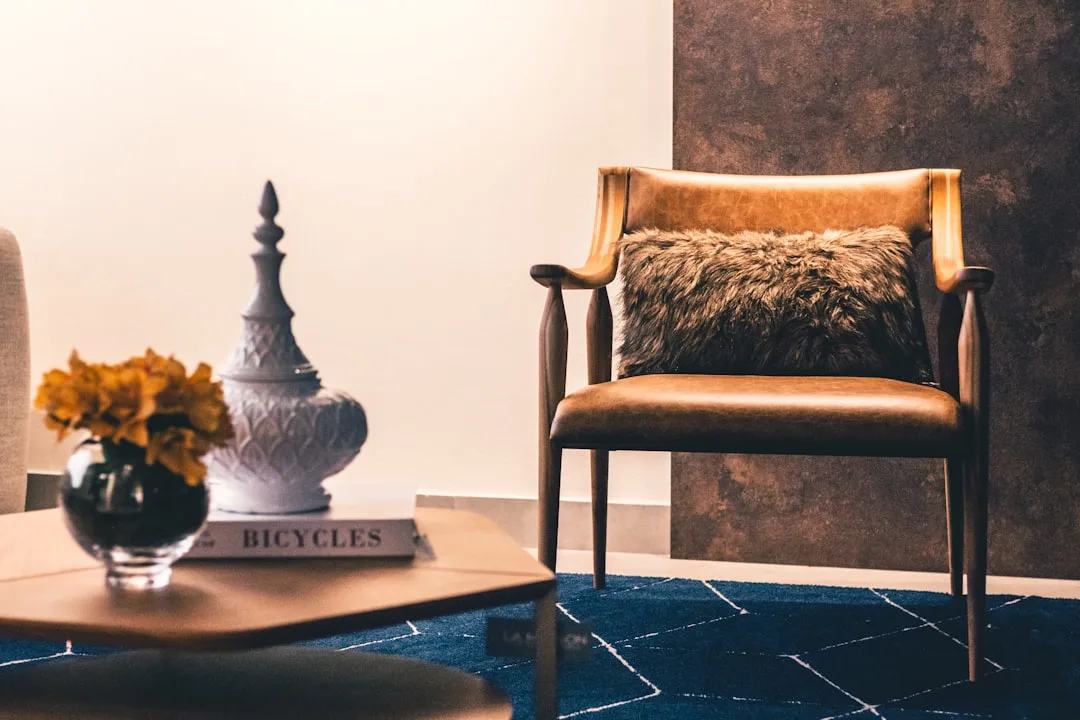
Almost nobody decorates in a single pure style. Most homes are layered — industrial as a dominant tone with other influences folded in, or industrial used as an accent within a primarily different aesthetic. Here’s an honest account of which combinations work:
Industrial + Scandinavian (Scandi-industrial): The most successful pairing. Both styles share a commitment to functional honesty, minimal ornamentation, and respect for materials. Where industrial can feel heavy, Scandinavian design adds light — pale wood tones (ash, birch), white walls, clean-lined textiles. The result is a space that feels considered rather than raw. The combination appears consistently in the work of designers like Norm Architects and throughout Copenhagen’s best residential interiors.
Industrial + Bohemian: High-risk, high-reward. Layered textiles, global objects, and the maximalist warmth of bohemian style can genuinely humanize a hard industrial space. But the failure mode is chaos — two competing aesthetics both demanding attention with no resolution. The rule for making it work: keep the structural industrial elements (floors, frames, lighting) and let the bohemian layer exist entirely in the softgoods — rugs, cushions, wall hangings, plants. Don’t mix the two languages in the same object.
Industrial + Mid-century modern: Natural overlap in the shared appreciation for honest materials and visible structure. MCM’s love of walnut, clean hardware, and functional form complements industrial nicely. Where they clash is tonal: mid-century carries a certain optimism — the world of tomorrow — that industrial’s rougher, more realist aesthetic doesn’t share. Mixing them works best when you let the mid-century pieces be the “furniture” layer and let industrial handle the architectural elements.
What industrial fights with:
- Maximalist traditional — the ornamental excess of French provincial or English country has no common ground with industrial’s utilitarian restraint
- Cottagecore — philosophically incompatible; one celebrates rural softness, the other celebrates urban structure
- Heavily ornamental styles generally — the more decorative carving, gilding, and surface ornamentation present, the more aggressively industrial rawness contradicts it
For nervous decorators — the transitional approach: One industrial anchor piece in an otherwise non-industrial room works surprisingly well as an entry point. A black steel-framed mirror in a traditional living room. A factory-style pendant over a rustic kitchen island. A reclaimed wood shelf unit against a white wall. These single introductions test your appetite for the aesthetic without requiring a full commitment. Mixed-style interiors — often called “eclectic” — are consistently among the most popular home design searches, reflecting the way most people actually decorate: by adding interesting pieces, not by executing a single coherent theme.
Actionable takeaway: If you’re not sure how much industrial you want, start with the lighting. A single matte black pendant or industrial-style wall sconce is the lowest-commitment, highest-impact introduction to the style. If it feels right after a month, you have your answer.
Frequently Asked Questions
What is the 3-5-7 rule in decorating?
The 3-5-7 rule is a decorating principle that recommends grouping objects in odd numbers — specifically three, five, or seven items — and varying them in height, texture, and visual weight. The reason odd numbers work better than even ones is rooted in Gestalt psychology: the human eye automatically tries to balance even-numbered groupings into symmetric pairs, resolves them quickly, and moves on. Odd groupings can’t be resolved symmetrically, so the eye keeps moving across the arrangement, creating a sense of visual interest and dynamism. In practical terms: a shelf vignette of three objects at different heights will almost always look more intentional and lively than two objects of the same height placed on either side of a third. In industrial spaces specifically, where the architecture itself is visually loud, this principle becomes more important — decorative arrangements need enough internal intention to read as curated rather than accidental.
What is industrial style of interior design?
Industrial interior design is a style that deliberately exposes a building’s structural and mechanical elements — pipes, beams, ductwork, brickwork, concrete — rather than covering them with conventional finishes. Its defining characteristic isn’t a specific material list but an attitude of utilitarian honesty: the space shows how it’s made. Emotionally, this translates to spaces that feel authentic, unpretentious, and grounded. The style originated practically in 1960s and 1970s New York, when artists converted SoHo’s abandoned manufacturing lofts into live-work spaces and kept the raw infrastructure out of necessity. What they discovered was that exposed construction, when approached with some design intentionality, created spaces with a character that finished, polished interiors couldn’t replicate. The best industrial spaces balance raw architectural elements (concrete floors, steel beams) with warmth through textiles, aged wood, and considered lighting.
What is industrial style interior design called?
Industrial interior design goes by several names that all describe the same core aesthetic. You’ll see it referred to as “urban industrial,” “factory chic,” “raw loft aesthetic,” “warehouse style,” or “loft living style” depending on where you’re reading. More recent iterations are called “warm industrial” or “refined industrial” — these terms specifically describe the evolved version of the style that incorporates more organic materials and softer elements to counter the coldness of raw metal and concrete. All of these terms describe the same family of design principles: visible structure, utilitarian materials, honest construction, and a preference for rawness over polish. The variations in naming reflect regional publishing conventions and marketing preferences more than actual design differences.
Is industrial decor still in style?
Yes, but the version of it that’s still genuinely relevant has evolved significantly from the peak-trend iteration. The surface-level version — Edison bulbs, exposed brick, distressed wood, everything in matching dark gray — became ubiquitous enough between 2012 and 2018 that it lost its distinctiveness. That version feels dated. What hasn’t dated is the underlying design intelligence: the honesty of exposed materials, the drama of structural steel, the warmth that comes from combining raw elements with natural textiles and considered lighting. Google Trends data confirms that searches for industrial home decor have stayed consistently high since 2014 with renewed spikes through 2021–2023, which is the pattern of a style that’s matured into a permanent aesthetic category rather than cycling out. Black steel-framed windows and doors, factory-style pendant lighting, and mixed-metal approaches remain strong. Matching industrial “theme” rooms with every element from the same catalog are the part that’s genuinely over.
The best place to start isn’t with a mood board or a shopping list. It’s with one surface in your home — a shelf, a console table, a kitchen counter — that you rearrange right now using the contrast principle: one cold element, one warm counterweight, odd numbers, varied heights. If it looks better than it did before, you understand what industrial decor is actually trying to achieve. Everything else follows from there.
What is the 3-5-7 rule in decorating?
The 3-5-7 rule is a decorating principle that recommends grouping objects in odd numbers — specifically three, five, or seven items — and varying them in height, texture, and visual weight. The reason odd numbers work better than even ones is rooted in Gestalt psychology: the human eye automatically tries to balance even-numbered groupings into symmetric pairs, resolves them quickly, and moves on. Odd groupings can’t be resolved symmetrically, so the eye keeps moving across the arrangement, creating a sense of visual interest and dynamism. In practical terms: a shelf vignette of three objects at different heights will almost always look more intentional and lively than two objects of the same height placed on either side of a third. In industrial spaces specifically, where the architecture itself is visually loud, this principle becomes more important — decorative arrangements need enough internal intention to read as curated rather than accidental.
What is industrial style of interior design?
Industrial interior design is a style that deliberately exposes a building’s structural and mechanical elements — pipes, beams, ductwork, brickwork, concrete — rather than covering them with conventional finishes. Its defining characteristic isn’t a specific material list but an attitude of utilitarian honesty: the space shows how it’s made. Emotionally, this translates to spaces that feel authentic, unpretentious, and grounded. The style originated practically in 1960s and 1970s New York, when artists converted SoHo’s abandoned manufacturing lofts into live-work spaces and kept the raw infrastructure out of necessity. What they discovered was that exposed construction, when approached with some design intentionality, created spaces with a character that finished, polished interiors couldn’t replicate. The best industrial spaces balance raw architectural elements (concrete floors, steel beams) with warmth through textiles, aged wood, and considered lighting.
What is industrial style interior design called?
Industrial interior design goes by several names that all describe the same core aesthetic. You’ll see it referred to as “urban industrial,” “factory chic,” “raw loft aesthetic,” “warehouse style,” or “loft living style” depending on where you’re reading. More recent iterations are called “warm industrial” or “refined industrial” — these terms specifically describe the evolved version of the style that incorporates more organic materials and softer elements to counter the coldness of raw metal and concrete. All of these terms describe the same family of design principles: visible structure, utilitarian materials, honest construction, and a preference for rawness over polish. The variations in naming reflect regional publishing conventions and marketing preferences more than actual design differences.
Is industrial decor still in style?
Yes, but the version of it that’s still genuinely relevant has evolved significantly from the peak-trend iteration. The surface-level version — Edison bulbs, exposed brick, distressed wood, everything in matching dark gray — became ubiquitous enough between 2012 and 2018 that it lost its distinctiveness. That version feels dated. What hasn’t dated is the underlying design intelligence: the honesty of exposed materials, the drama of structural steel, the warmth that comes from combining raw elements with natural textiles and considered lighting. Google Trends data confirms that searches for industrial home decor have stayed consistently high since 2014 with renewed spikes through 2021–2023, which is the pattern of a style that’s matured into a permanent aesthetic category rather than cycling out. Black steel-framed windows and doors, factory-style pendant lighting, and mixed-metal approaches remain strong. Matching industrial “theme” rooms with every element from the same catalog are the part that’s genuinely over.