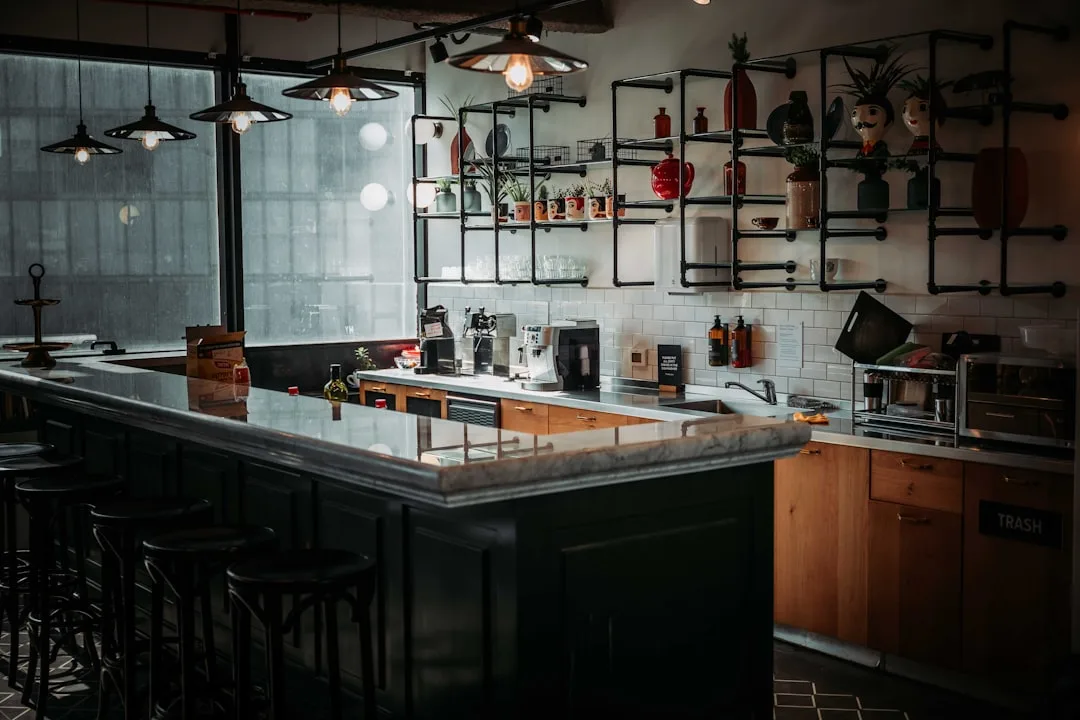
The exposed brick in your living room might be the single most dishonest thing in your home — and if it came on a peel-and-stick roll, it’s also quietly making the entire room look cheap.
Quick Answer
The exposed brick in your living room might be the single most dishonest thing in your home — and if it came on a peel-and-stick roll, it’s also quietly making the entire room look cheap.
Here’s the deeper problem: most people who attempt industrial interior design aren’t decorating — they’re costuming. They’re applying the surface signals of a style without understanding the philosophy underneath it. The result is a room that looks like a Pinterest board printout: recognizable, technically complete, and somehow entirely lifeless.
Industrial design done right is one of the most satisfying, livable aesthetics in residential spaces. Done wrong, it’s an unfinished basement with better lighting. The difference is smaller than you think — and it starts with understanding what the style is actually asking you to do.
What Is Industrial Design in Interior Spaces — And Why Most People Get It Wrong
In This Article
- What Is Industrial Design in Interior Spaces — And Why Most People Get It Wrong
- The Contrast Principle: Why Raw Materials Fail Without Soft Counterweights
- What Makes a Home Look Cheap — And How Industrial Style Gets Blamed for It
- What Design Style Is Jonathan Adler — And What It Teaches Us About Breaking Industrial Rules
- What Makes a Home Look Outdated — And the Industrial Elements That Age Fastest
- Room-Specific Realities: Where Industrial Thrives and Where It Quietly Fails
- How to Shop Industrial Without Buying the Whole Catalog
Industrial interior design isn’t about making your apartment look like a converted factory. That’s the most common misunderstanding, and it’s responsible for a lot of cold, uncomfortable rooms.
The real philosophy behind industrial design is material honesty. It’s about letting structural and functional materials — concrete, steel, raw wood, glass — serve simultaneously as finish materials. No concealment, no applied decoration over the top of things that already look good on their own. A poured concrete floor doesn’t need tile. A steel I-beam doesn’t need a casing. That’s the point.
Where most DIYers go wrong is treating industrial as an additive checklist. They source the pipe shelving, hang the Edison pendants, stick up the brick panels, and wonder why the room feels like a stage set. The issue is that they added industrial signals on top of a conventional room rather than letting structural elements speak for themselves.
The reason comes down to a fundamental misread of the aesthetic:
- Industrial design is defined by what you remove, not what you add — concealment, applied molding, decorative casing, and ornamental hardware all work against it
- Authenticity isn’t optional here — faux brick panels and plastic pipe fixtures don’t just look cheap; they actively contradict the style’s core value of material honesty
- The line between industrial and unfinished is entirely about intentionality — two identical concrete walls read completely differently depending on what surrounds them
A raw concrete wall next to a $3,000 boucle sectional and a hand-thrown ceramic lamp reads as sophisticated restraint. The same wall next to a particle board shelving unit and a floor lamp from a discount chain reads as a renovation that ran out of budget. Same wall. Entirely different room.
Actionable takeaway: Before buying anything, audit your room by asking one question — am I hiding something that should be visible, or am I faking something that isn’t there? Industrial design rewards the first, punishes the second.
The Contrast Principle: Why Raw Materials Fail Without Soft Counterweights
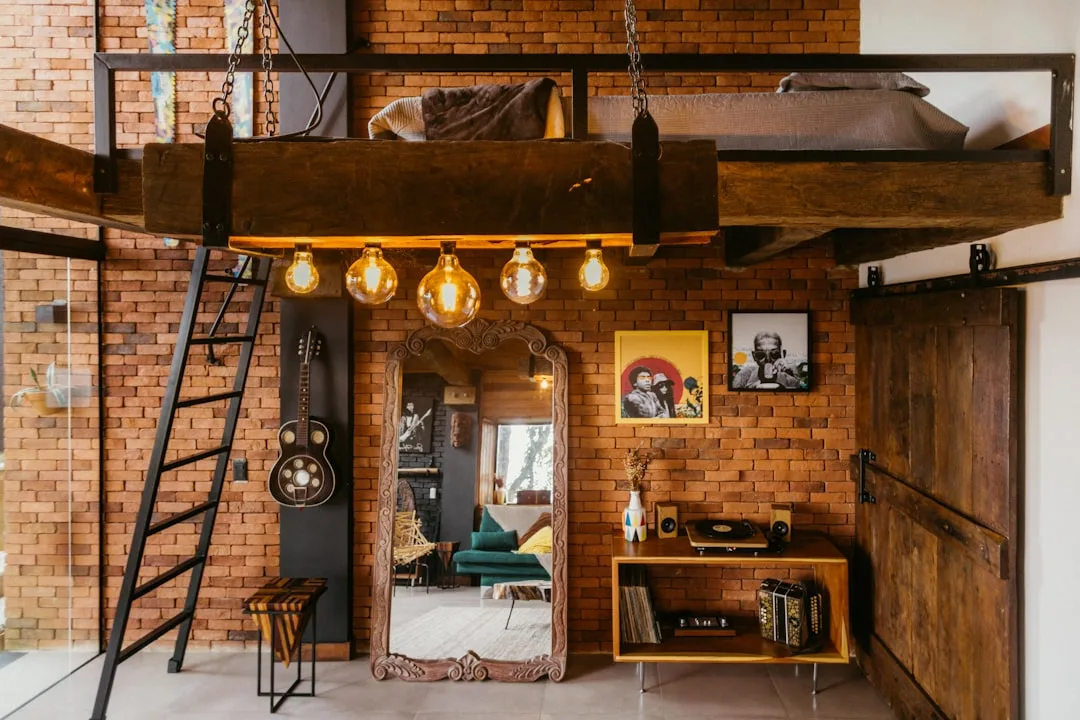
The single most important concept in industrial interior design doesn’t appear in most guides, which is exactly why so many industrial rooms feel like places you want to leave rather than stay. Every hard surface requires a deliberate tactile counterpoint.
A concrete floor without a substantial wool or jute rug isn’t edgy minimalism — it’s acoustically punishing and visually monotonous. An exposed steel ceiling without warm fabric draping somewhere in the room doesn’t feel honest and raw; it feels like a loading dock. The contrast between rough and refined, hard and soft, isn’t a compromise of the industrial aesthetic. It’s what makes the aesthetic work at all.
Think of it this way: the raw materials create the bones. The soft elements make those bones worth living with.
The 60/30/10 rule applies to industrial spaces, but it needs reinterpreting. Roughly 60% of your visual field should be the raw structural materials — concrete, brick, steel, reclaimed wood. About 30% should be soft furnishings that provide tactile warmth — wool, worn leather, linen, velvet. The remaining 10% is where you introduce deliberate warmth accents: warm-toned ceramics, aged brass hardware, a single piece of art with depth and color.
Lighting is your most powerful softening tool, and Edison bulbs alone aren’t doing enough. The research matters here: studies from the Lighting Research Center at Rensselaer Polytechnic Institute demonstrate that color temperature has a measurable, independent effect on perceived room warmth — meaning a 2700K warm white bulb will make a grey concrete room feel genuinely warmer, regardless of what color you’ve painted the walls or how many throws you’ve layered on the sofa. This is not a subjective preference. It’s how the eye processes light.
Specific soft counterweights that work in industrial spaces:
- Oversized wool or jute rugs — minimum 8×10 feet in a standard living room; anything smaller reads as a bath mat on a football field
- Worn leather seating — not sleek modern leather, but leather that already shows character or will develop it quickly; a Restoration Hardware Maxwell sofa in Italian leather or a vintage Chesterfield both work
- Linen curtains to ceiling height — even in a room with no natural light worth framing, floor-to-ceiling linen panels add vertical softness that concrete and steel desperately need
- Plant life — not as decoration but as a functional design tool; a fiddle-leaf fig in a terracotta pot or a trailing pothos on a steel shelving unit breaks the visual monotony of hard surfaces without compromising the aesthetic in any way
Actionable takeaway: Walk your room and identify every hard surface. For each one, name the soft counterpoint within 6 feet of it. If you can’t name one, that’s your next purchase — not another metal fixture.
What Makes a Home Look Cheap — And How Industrial Style Gets Blamed for It
Industrial design gets blamed for a lot of cheap-looking rooms it didn’t actually create. The real culprit is almost always a set of specific shortcuts that signal effort without investment. A 2023 Architectural Digest survey found that “cheap-looking materials” and “poor lighting” were the two most cited reasons homeowners said a space felt unfinished — outranking layout problems and color choices combined. Both of those failure modes show up in industrial spaces at a disproportionate rate.
The biggest cheap signals in industrial rooms are specific and avoidable:
- Pipe shelving kits from big-box stores — the black iron pipe wall shelf available at every Home Depot and Target for under $60 has been installed in so many apartments that it no longer reads as intentional industrial design; it reads as a decorating trend from 2015 that the homeowner hasn’t revisited
- Peel-and-stick faux brick — the color is wrong (too uniform), the depth is wrong (completely flat), and the edges where panels meet are always visible under certain light; it’s a material that signals “I wanted this look but didn’t want to pay for it”
- Mass-produced Edison pendant clusters — three cage pendants in a row over a kitchen island, purchased as a set from Wayfair, now appear in so many homes that they’ve lost all visual specificity
The matching metal finish problem is subtler but equally damaging. Real industrial spaces have mismatched hardware accumulated over decades — cast iron next to brushed steel next to galvanized zinc. When every fixture, curtain rod, shelf bracket, and cabinet pull matches perfectly in matte black, the room doesn’t look curated; it looks like someone bought the “industrial accessories” tab from a single retailer’s website. Which, often, they did.
Rug sizing is the single fastest cheap fix available. A thin, undersized rug on a concrete or hardwood floor — the 5×7 in a 15×20 living room — communicates “afterthought” immediately. Sizing up to an 9×12 or going wall-to-wall creates grounding that no amount of expensive furniture can substitute.
One more trap: overusing black as an industrial neutral. True industrial palettes are warm, not cold. Aged buildings accumulate rust, tobacco browns, terracotta, and warm brass — not uniform matte black. Rooms painted entirely in flat black with black fixtures and black shelving look more like a moody teenage bedroom than an authentic industrial space.
Actionable takeaway: Do a “set audit.” If more than two items in your room came from the same retailer’s industrial collection, remove one and replace it with something sourced from an estate sale or salvage yard.
What Design Style Is Jonathan Adler — And What It Teaches Us About Breaking Industrial Rules
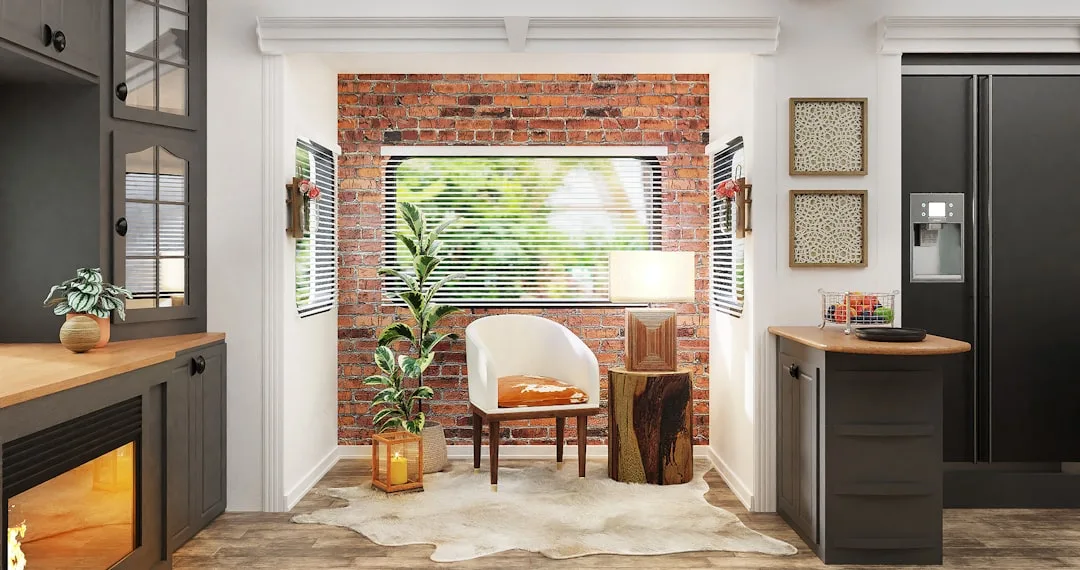
Jonathan Adler describes his aesthetic as “modernist sensibility with a wink” — and that framing is more useful to industrial decorators than it might seem at first.
Adler’s style is best summarized as “happy chic”: bold saturated color, graphic pattern, sculptural ceramics with irreverent humor, and an explicit rejection of decorating anxiety. His firm designed the Parker Palm Springs hotel in a palette of sunshine yellow, coral, and turquoise — about as far from industrial grey as you can travel. His pottery features phrases like “stop being so f*ing reasonable.” His philosophy is direct: minimalism is a bummer.
He is the most useful foil in design precisely because his principles expose what industrial rooms frequently lack — levity.
A room built entirely on material honesty, structural integrity, and restrained palette can become oppressive if it never winks at itself. The most successful industrial spaces borrow one Adler-esque element without adopting his full vocabulary:
- A sculptural lamp with an unexpected silhouette — something handmade in glazed ceramic rather than another steel-armed task light
- One textile with genuine graphic energy — a Moroccan wedding blanket, a bold kilim, or even a single pillow in a saturated mustard or rust that breaks the grey-brown monotony
- An object with obvious personality — a vintage industrial sign, a piece of folk art, anything that signals a human being with a sense of humor lives here
The hybrid styles that absorb this lesson best are industrial-bohemian (which naturally layers textiles and plants against raw materials), industrial-Japandi (which brings Japanese wabi-sabi acceptance of imperfection alongside Scandinavian warmth), and what’s increasingly called industrial-maximalist — which sounds contradictory but works when the maximalism is applied through objects and art rather than through additional structural clutter.
The underlying principle from Adler’s approach: serious material choices need moments of levity to feel livable. A room that takes itself completely seriously becomes a museum. One unexpected, slightly playful element keeps a space human.
Actionable takeaway: Find one object in your industrial room that makes you smile slightly. If you can’t find one, that’s what you’re missing — not another reclaimed wood element.
What Makes a Home Look Outdated — And the Industrial Elements That Age Fastest
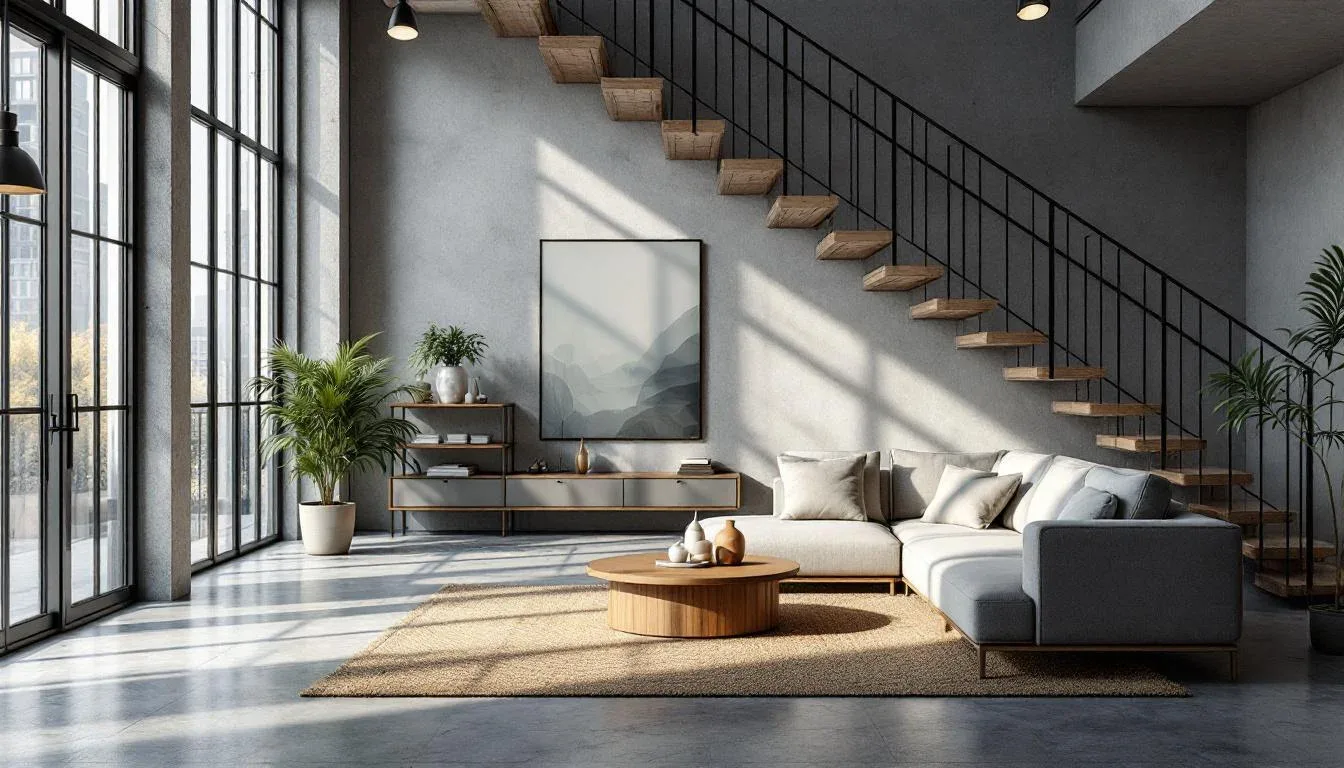
Some elements of industrial design are timeless because they’re grounded in real materials with real history. Others are trend-dressed versions of the style that have already peaked — and living with them now means living with a room that announces its vintage in an unflattering way.
The Edison bulb is the clearest example. Google Trends data shows that searches for “Edison bulb decor” peaked in 2016 and have declined steadily since. Meanwhile, searches for “aged brass fixtures” and “japandi industrial” have increased year-over-year since 2021. The exposed filament bulb hasn’t disappeared — it’s just no longer read as a design choice. It’s read as a room that was decorated during the Obama administration and hasn’t been touched since.
Other industrial elements that are aging out fast:
- Open shelving with visible black iron plumbing pipe — when every independent coffee shop within 10 miles has the same configuration, it’s moved from design statement to background noise
- Subway tile with dark charcoal grout — this combination was genuinely fresh in 2012 in kitchen and bathroom applications; it’s now so ubiquitous in “industrial-inspired” spaces that experienced designers are treating it the way they treat popcorn ceilings
- Manufactured “barnwood” vinyl flooring — the texture is wrong, the wear pattern is wrong, and it signals the same thing that faux brick signals: someone wanted the look without the material
What actually ages well is consistent: authentic reclaimed wood that shows genuine wear history, handmade ceramic vessels with visible maker’s marks, quality leather goods that develop real patina, and unlacquered brass hardware that oxidizes naturally over years.
The test worth applying to every industrial purchase is simple. Would this material or object plausibly exist in an actual pre-1950s industrial building? Cast iron? Yes. Aged oak? Yes. Matte black powder-coated pipe from a hardware kit? No — that finish didn’t exist. Vinyl plank flooring printed with a distressed pattern? Obviously not.
Treat trend-driven industrial elements as accessories, not foundations. The structural elements of your room — flooring, walls, major furniture — should pass the pre-1950s test. Your trend acknowledgment budget belongs in throw pillows and small objects that can be swapped in three years without renovating.
Actionable takeaway: Identify the one element in your room most likely to have peaked in 2016. You don’t have to remove it today — but name it, and plan for what comes after.
Room-Specific Realities: Where Industrial Thrives and Where It Quietly Fails
Industrial design isn’t equally hospitable in every room. Understanding where the aesthetic naturally succeeds — and where it demands the most mitigation work — will save you significant money and frustration.
According to a National Association of Home Builders survey, the kitchen and primary bedroom are the two rooms that most influence homebuyer purchase decisions. They’re also the two rooms where industrial design most often either shines brilliantly or fails completely.
Living rooms are the easiest entry point. The room is large enough to absorb hard surfaces when they’re properly counterweighted, and furniture variety gives you natural opportunities to layer soft against hard. Anchor with an oversized rug — a 9×12 minimum in a standard 16×20 living room — and orient your seating around it. A sectional in warm caramel leather or oatmeal boucle against a concrete or exposed brick wall is close to a guaranteed success.
Kitchens are where industrial most often earns its credibility or loses it entirely. The rule here: at least one element must be genuinely functional, not decorative. A commercial-style 36-inch range that actually gets used, a deep utility sink with an unlacquered brass faucet, real butcher block that shows knife marks — these anchor the kitchen in authentic industrial logic. A kitchen where the “industrial” elements are purely visual (faux concrete contact paper, decorative pipe under an island) reads as costume almost immediately.
Bedrooms are the hardest room in the house for industrial design. Concrete and exposed steel near a sleep environment create two problems: acoustics (hard surfaces amplify every sound) and psychological coldness that disrupts rest. Mitigation requires the heaviest investment in the style: linen or velvet bedding in warm tones, a substantial wool rug that extends at least 18 inches on three sides of the bed, warm wood elements in the furniture, and lighting strictly in the 2700K range. Without all of these, a bedroom with industrial bones feels like sleeping in a parking structure.
Bathrooms are where industrial most often tips into looking cheap. Exposed pipe that doesn’t actually function as plumbing — the decorative copper pipe run along a bathroom wall — reads as costume immediately because anyone who knows plumbing can see it’s not doing anything. Focus instead on material authenticity: a raw concrete basin sink, an unlacquered brass or black iron faucet that will actually develop patina, large-format concrete tile that serves a functional purpose. Let the materials speak; don’t add props.
Home offices are industrial design’s most natural home. Task lighting, metal shelving, utilitarian furniture — the functional requirements of a productive workspace align almost perfectly with industrial’s material vocabulary. A vintage industrial drafting table, a Tolix-style metal chair, a steel shelving unit holding actual books and actual work materials: this is industrial design doing exactly what it’s supposed to do.
Actionable takeaway: Identify which room in your home you’re planning to take industrial and ask whether it’s a natural or a difficult fit. If it’s a bedroom, double your soft-layer budget before you start.
How to Shop Industrial Without Buying the Whole Catalog
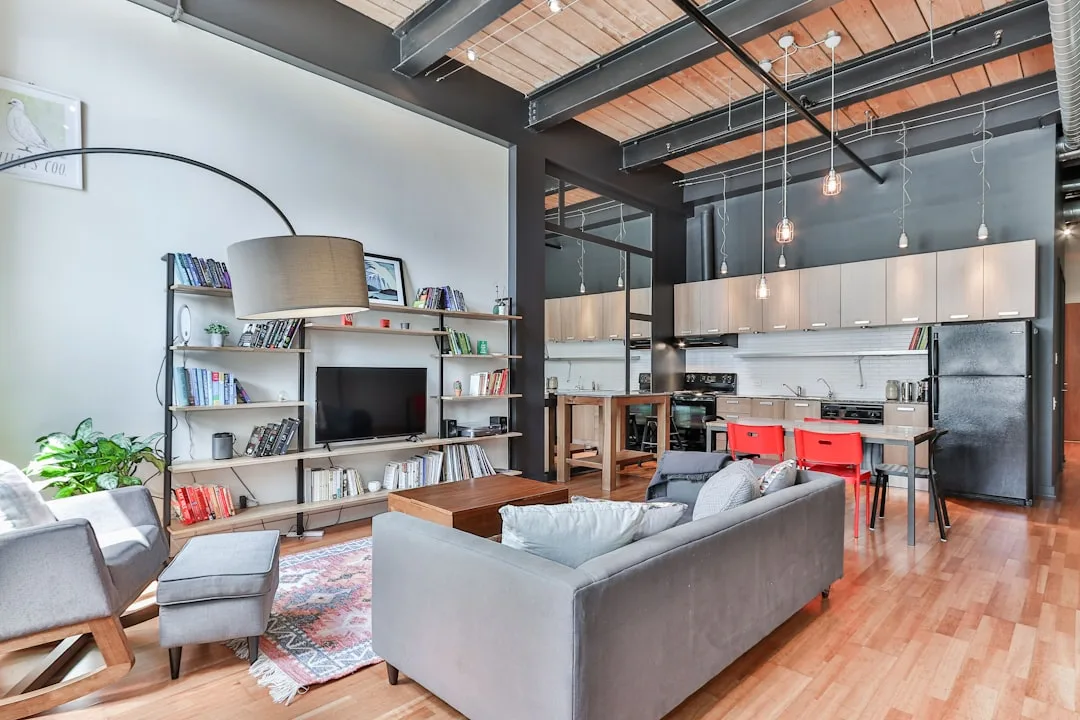
The fastest way to make an industrial room look like a showroom rather than a home is to shop for it all at once from a single retailer’s curated collection. Every piece will be the right age, the right finish, the right level of distress — which means none of it will feel real.
Real industrial spaces accumulate over time. The sourcing hierarchy for authentic results follows a clear logic:
- Salvage yards and estate sales first — these are where genuinely aged industrial materials live: factory carts with real wheel wear, steel shelving with authentic surface rust, reclaimed wood with actual nail holes and weathering
- Independent makers second — ceramicists, furniture makers, and metal fabricators who work in industrial materials with handmade quality; found through local craft fairs, Etsy’s verified seller tier, and regional maker directories
- Vintage retailers third — platforms like Chairish and 1stDibs, which reported increased traffic from buyers specifically searching industrial and mid-century categories as the secondhand and vintage furniture market reached $46 billion in the US in 2023
- Mass retail last, and sparingly — for items where authenticity is less critical and function dominates
Spend on lighting, save on brackets. Lighting anchors an industrial room more than any other element — a single quality pendant in aged brass or hand-blown glass does more work than a shelf full of well-sourced small objects. Shelf brackets, on the other hand, are genuinely commodity items where mass retail performs adequately.
How to identify genuine vintage industrial pieces versus reproduction:
- Weight — real cast iron and genuine reclaimed wood are substantially heavier than reproduction versions
- Construction marks — look for hand-filing, inconsistent welds, and non-standardized dimensions that indicate pre-industrial manufacturing
- Patina consistency — authentic aging is random and uneven; reproduction “distressing” follows a pattern that becomes recognizable once you’ve seen a few examples
- Hardware type — slotted screws (not Phillips head) indicate pre-1930s manufacture; square-head bolts suggest early 20th century or earlier
The one mass-market industrial item genuinely worth buying: a quality metal-framed bed or shelving unit with completely simple lines — the Pottery Barn Tivoli shelf or the IKEA IVAR system both work because their simplicity doesn’t compete with authentic pieces. They’re neutral enough to disappear into the room rather than announcing themselves.
Actionable takeaway: Before your next industrial purchase, spend 30 minutes on Chairish or your nearest estate sale platform. The price difference between reproduction and vintage is often smaller than you expect, and the quality difference is always larger.
Frequently Asked Questions About Industrial Interior Design
Is industrial interior design still popular in 2025?
Industrial interior design remains consistently relevant, though the aesthetic is maturing. Pure “warehouse loft” styling has softened into hybrid approaches — industrial-Japandi and industrial-bohemian are among the fastest-growing search terms in the category. The raw materials that define industrial (concrete, steel, reclaimed wood) haven’t dated; the trend-driven accessories layered on top of them have. Anchoring a room in authentic materials means it won’t feel passé.
What colors work best with industrial interiors?
Industrial palettes are warmer than most people expect. The most successful color combinations center on warm neutrals — raw linen, aged cream, tobacco brown, terracotta — with structural greys and blacks as supporting tones rather than dominant ones. Aged brass, rust orange, and forest green function well as accent colors. Avoid cool-toned whites and pure blacks used broadly; they push industrial toward cold rather than honest.
Can industrial design work in small apartments?
Yes, but with specific adjustments. In spaces under 600 square feet, limit exposed structural materials to one feature wall or the ceiling rather than all surfaces simultaneously. Use warm 2700K lighting throughout and invest in at least one substantial rug — a 6×9 in a small living room — to define zones. Vertical steel shelving maximizes storage while reinforcing the aesthetic. The key is restraint: one strong industrial element executed well outperforms five competing ones in a small space.
How do I make industrial feel warmer and more livable?
Three interventions produce the fastest results: switch all bulbs to 2700K warm white (measurably changes perceived warmth independent of other changes), add one large-format textile in a warm tone (a wool throw, a jute rug, linen curtains), and introduce at least one living plant. A 6-foot fiddle-leaf fig in a terracotta pot next to a concrete wall is not a cliché — it’s a contrast that genuinely works and costs under $100. These three changes cost under $400 total and transform the atmosphere of a room faster than any structural change.
What is industrial design in interior spaces?
Industrial interior design is an approach that uses structural and functional materials — exposed concrete, raw steel, reclaimed wood, unfinished brick — as finished decorative surfaces rather than concealing them. It originates from the conversion of warehouses and factories into living spaces and is defined by material honesty: showing what things are made of rather than covering it up. The aesthetic only succeeds when hard materials are deliberately counterbalanced with soft furnishings, warm lighting in the 2700K range, and textural contrast.
What items make your house look cheap?
The items most reliably signaling low investment in a home are: peel-and-stick faux brick or stone panels, undersized rugs on large floors, matching metal finishes throughout a room (which reads as catalog shopping rather than curation), exposed-pipe shelving kits from big-box retailers with no patina or weight, and poor lighting — specifically cool-toned overhead lighting that flattens surfaces and drains warmth from any material. In industrial spaces specifically, any material that mimics an authentic surface without having its physical properties (weight, aging, texture) undermines the entire aesthetic premise.
What design style is Jonathan Adler?
Jonathan Adler’s style is most accurately described as “happy chic” — a blend of modernist furniture forms, bold saturated color, graphic pattern, and sculptural ceramics marked by irreverent wit. He’s trained as a potter, and handmade ceramic objects with personality and humor run through his work consistently. His design philosophy explicitly rejects minimalism as joyless, which positions his work as the most useful creative foil to industrial design’s material restraint. Borrowing one element of his approach — a sculptural lamp, a saturated accent, an object with personality — prevents industrial rooms from becoming oppressive.
What makes a home look outdated?
The fastest-aging design choices in any style share a common trait: they were adopted widely as trends rather than chosen for material integrity. In homes broadly, these include matching furniture sets purchased as a unit, cool-toned grey paint applied wall-to-wall, and light fixtures selected for trend-relevance rather than light quality. In industrial spaces specifically, the most dated elements are Edison bulb pendant clusters (peaked 2016), dark-grout subway tile in kitchens and baths (now ubiquitous), and exposed black iron pipe shelving without authentic patina. Materials that don’t date — genuine reclaimed wood, unlacquered brass, handmade ceramics, quality leather — share one quality: they age into something better rather than into something tired.
What is industrial design in interior spaces?
Some elements of industrial design are timeless because they’re grounded in real materials with real history. Others are trend-dressed versions of the style that have already peaked — and living with them now means living with a room that announces its vintage in an unflattering way.
What items make your house look cheap?
The Edison bulb is the clearest example. Google Trends data shows that searches for “Edison bulb decor” peaked in 2016 and have declined steadily since. Meanwhile, searches for “aged brass fixtures” and “japandi industrial” have increased year-over-year since 2021. The exposed filament bulb hasn’t disappeared — it’s just no longer read as a design choice. It’s read as a room that was decorated during the Obama administration and hasn’t been touched since.
What design style is Jonathan Adler?
Other industrial elements that are aging out fast:
What makes a home look outdated?
What actually ages well is consistent: authentic reclaimed wood that shows genuine wear history, handmade ceramic vessels with visible maker’s marks, quality leather goods that develop real patina, and unlacquered brass hardware that oxidizes naturally over years.