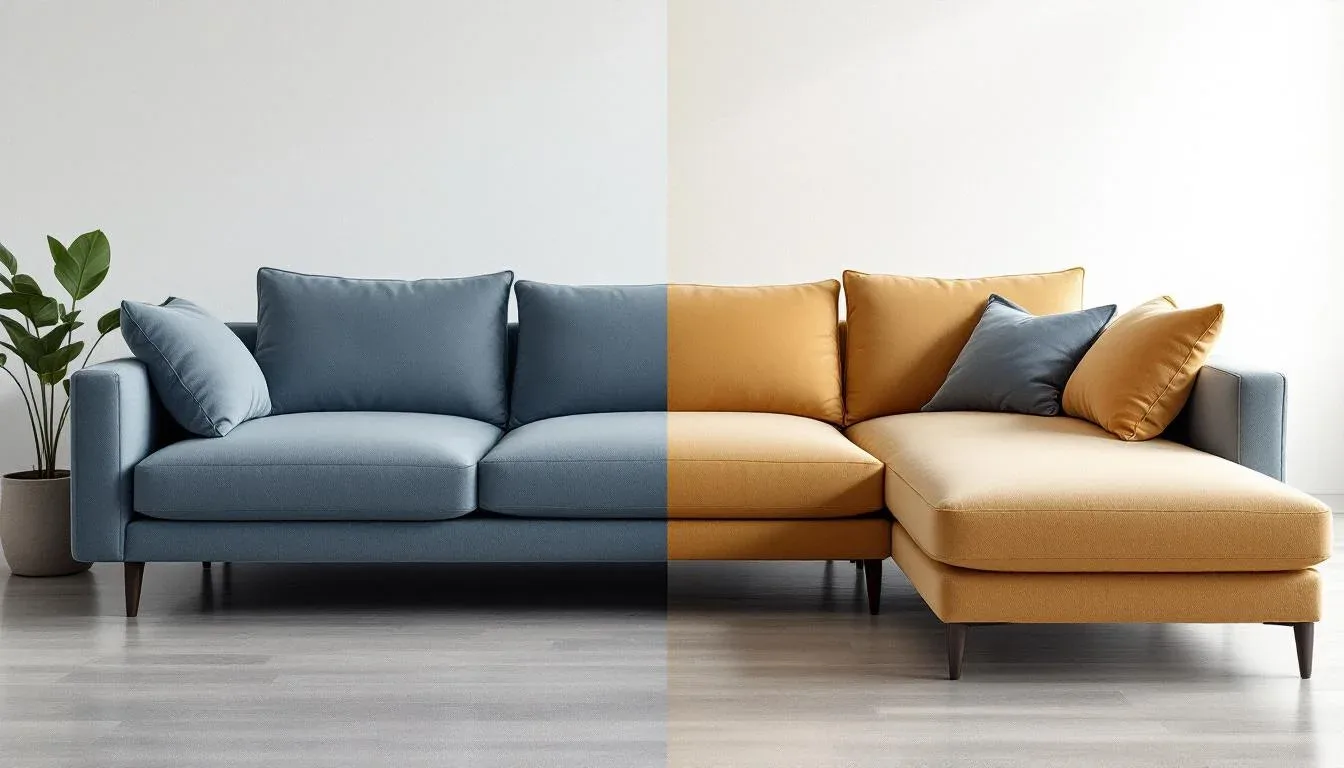
The sofa you choose will shape how your household moves, rests, and feels at home for the next decade — yet most buyers make the decision in under 20 minutes based on showroom appearance alone. When you’re weighing an l shaped sofa vs standard sofa, that gap between how long we live with furniture and how little time we spend choosing it explains most of the regret I watched accumulate over eleven years of working with clients in Chicago and New York apartments. People optimized for looks. Then they spent years navigating around a sofa that was wrong for their life.
Quick Answer
The sofa you choose will shape how your household moves, rests, and feels at home for the next decade — yet most buyers make the decision in under 20 minutes based on showroom appearance alone.
This isn’t about L-shaped versus standard in the abstract. It’s about your specific habits, your household, your floor plan, and what you actually do on a sofa at 9 p.m. on a Tuesday. That’s where this decision lives.
The Real Difference Between an L-Shaped Sofa and a Standard Sofa
In This Article
- The Real Difference Between an L-Shaped Sofa and a Standard Sofa
- Which Sofa Is Actually Better — L-Shape or Normal?
- The Disadvantages of L-Shaped Sofas That Showrooms Won’t Mention
- How Room Size and Shape Should Drive Your Decision
- What Your Household Actually Needs to Know Before Deciding
- The Disadvantages of Standard Sofas That Are Worth Naming
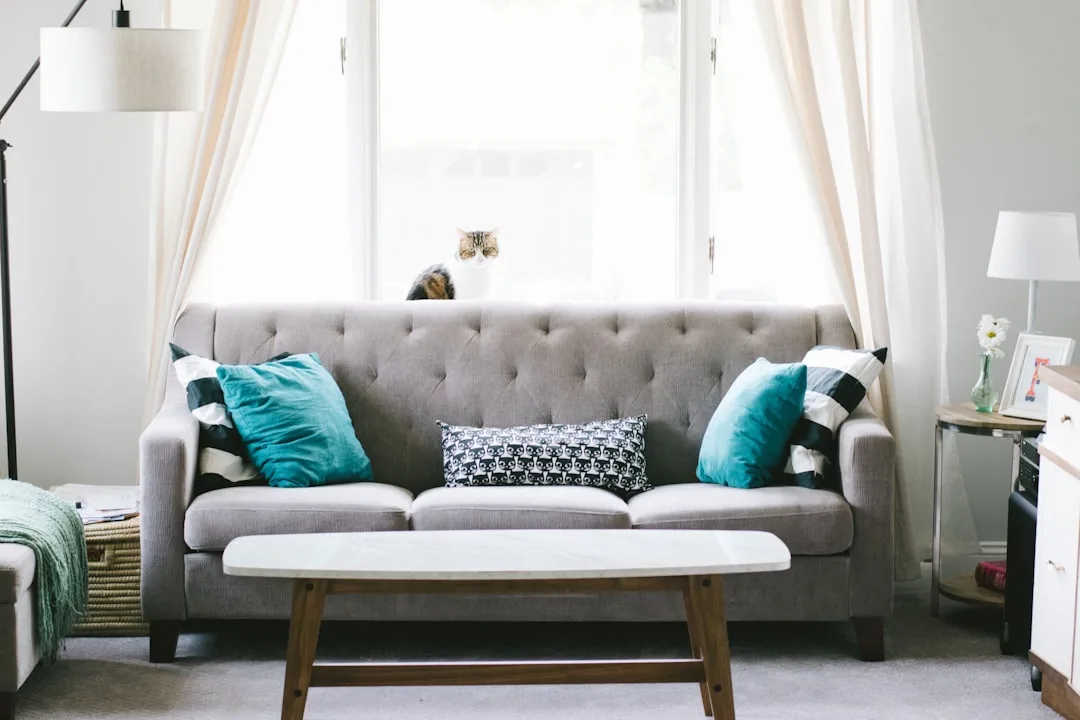
Most descriptions of this comparison start and end with corner optimization — the L-sofa fits snugly into a corner, the standard sofa goes against a wall. That framing is almost useless in practice. The meaningful difference is about how each sofa shape structures human behavior inside a room.
A standard sofa presents a single linear seating plane. Everyone faces the same direction. Conversation requires turning toward each other. The arrangement is inherently directional — which also makes it inherently flexible, because you can push a standard sofa against almost any wall. Styling the coffee table in front of it works best with a trayscaping approach, face it almost any direction, and reorient the entire room’s social geometry on a weekend afternoon without hiring anyone.
An L-shaped sofa — also called a corner sofa or sectional — does something fundamentally different. The perpendicular arm extension creates an enclosed seating zone, a kind of contained social territory. People face inward and toward each other naturally. That’s genuinely good for households that use their living room as a gathering place. But it comes with a cost: the sofa becomes an anchor point, not a movable piece. The room is organized around it, not the other way around.
Construction matters here in ways showrooms rarely explain. Standard sofas are typically built as a single unit — one frame, consistent cushion quality throughout. L-sofas are almost always modular or sectional by design, meaning the frame has multiple joints, cushion quality can vary between sections, and the weakest point in construction is usually that corner junction where the two arms meet. I’ve seen that joint fail on a $2,200 sofa within three years of normal family use.
Sectional and corner sofas now account for over 40% of all sofa sales in the US — yet return rates for this category run disproportionately higher than standard sofas, largely because of fit and layout miscalculations made at point of purchase. The sofa looked right in the showroom. It strangled the room at home.
Actionable takeaway: Before you decide on shape, write down three things you actually do on your sofa — not what you intend to do, what you actually do. The answer to that question matters more than any room measurement.
It’s worth noting that broader interior design trends are shifting in a direction that affects sofa choice. According to the 2026 U.S. Houzz Emerging Summer Trends Report, rounded silhouettes and curved forms are gaining significant momentum across U.S. homes — searches for “curved peninsulas and islands” are up 61%, while soft, fluid geometry is increasingly replacing rigid, angular lines in interior spaces. This broader shift toward softer forms in home design — from architectural details to furniture choices — suggests that curved sofa profiles are increasingly aligned with where interior design is heading.
Which Sofa Is Actually Better — L-Shape or Normal?
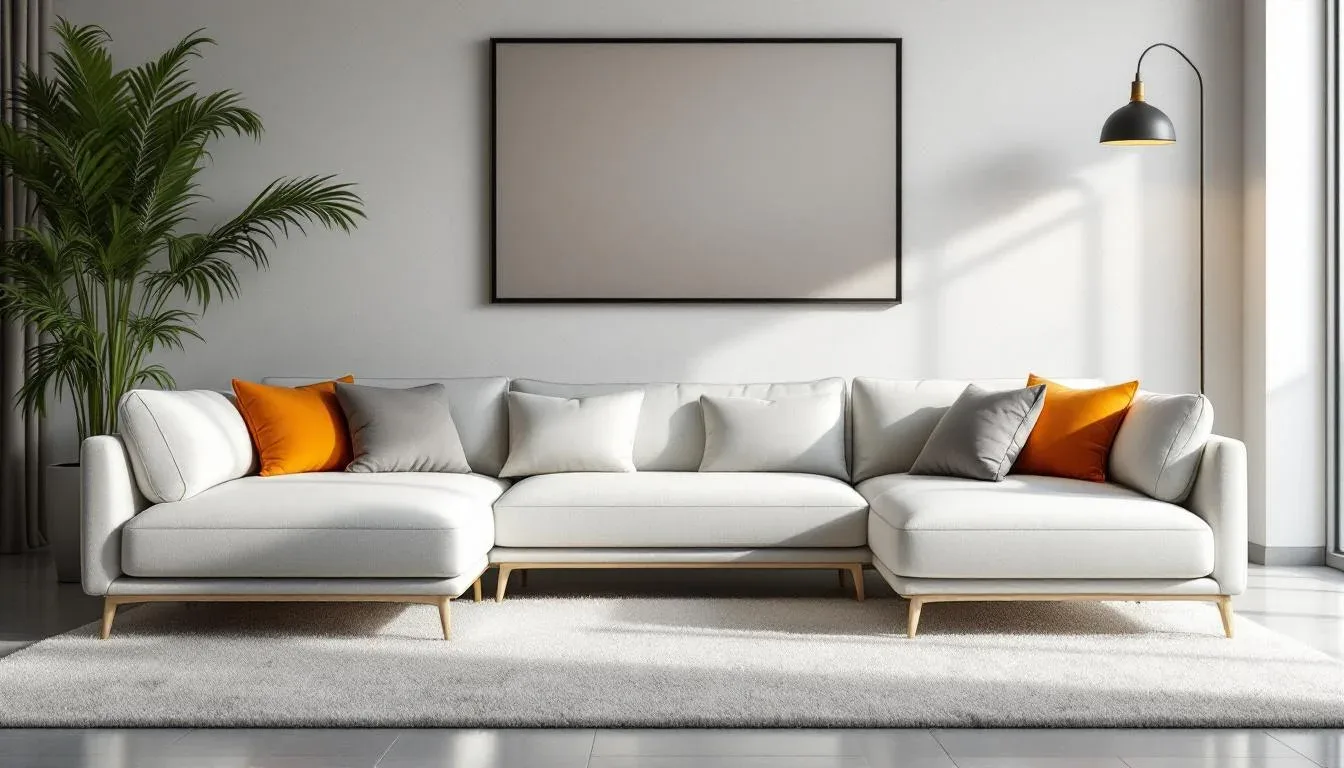
Neither. That answer frustrates people, but the question itself is the problem — it treats sofa shapes as universally ranked when the right answer depends entirely on three variables: how many people regularly use the sofa, how the room is trafficked, and whether the sofa needs to pull double duty.
For households with three or more regular users, an L-sofa almost always wins on pure functionality. There’s enough surface area for everyone to have a legitimate, comfortable seat. Open-plan layouts benefit from an L-sofa’s ability to act as a spatial anchor — it defines the living zone without walls. And if your household’s primary sofa activity is horizontal (kids sprawled across cushions, adults half-asleep during a third episode of something), the L-sofa’s extended chaise accommodates that in a way a standard sofa simply can’t.
Standard sofas win in a different set of circumstances:
- Rooms that change layout seasonally or frequently — a standard sofa can be repositioned; an L-sofa cannot without reconceiving the entire room
- Apartments with narrow entryways, tight stairwells, or low-clearance elevators — delivery logistics alone can disqualify an L-sofa before aesthetics even enter the conversation
- Curated multi-piece arrangements — a standard sofa paired with a well-chosen armchair and ottoman creates more visual interest and flexibility than a single dominant L-shape
- Renters who relocate — standard sofas move between apartments more easily, and resale value holds more consistently across a wider range of floor plans
Here’s the variable nobody mentions in any of the comparison articles I’ve read: the relationship between your sofa and your light sources. An L-sofa locks your sight lines in two directions simultaneously. If your TV is on one wall and your windows are on an adjacent wall, you will spend years either squinting into afternoon glare or sitting at an angle that creates neck strain. A standard sofa, repositioned slightly, can solve that in an afternoon. An L-sofa cannot.
Living room layout dissatisfaction consistently ranks among the top reasons homeowners undertake redesigns within two years of a major furniture purchase — and sofa choice is frequently cited as the primary regret. The pattern isn’t that people chose the wrong sofa shape. It’s that they chose based on appearance and ignored how they actually live.
Actionable takeaway: Answer this honestly before you buy: does your living room layout need to change, or is it fixed? If you can’t answer with confidence, buy the standard sofa.
The Disadvantages of L-Shaped Sofas That Showrooms Won’t Mention
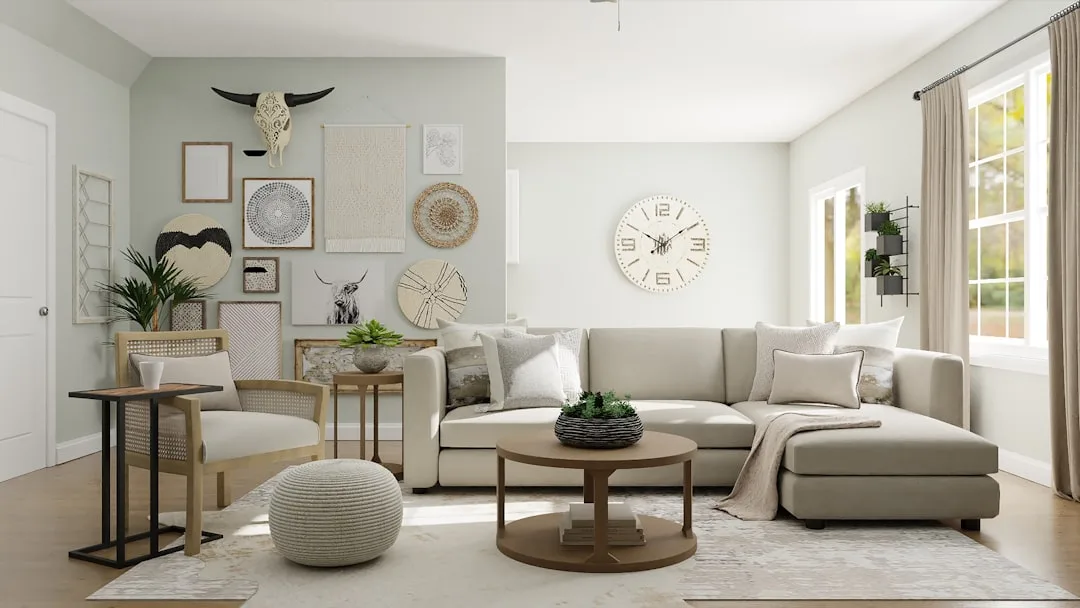
I want to be clear that I don’t have anything against L-sofas — I’ve specified them dozens of times for clients and owned one myself. But there’s a version of this conversation that only happens after the purchase, and it’s worth having before.
The corner dead zone is the most consistently underestimated problem. The inner corner seat — the junction point where the two arms meet — is almost never comfortable for an adult sitting upright. The angle forces an awkward twist of the hips, or the seat simply becomes a cushion depository. In every L-sofa household I’ve ever worked in, the corner either goes unused or collects throw pillows, remote controls, and charging cables. You’re paying for square footage that you won’t sit on.
Delivery is the other conversation that somehow doesn’t happen at point of sale. L-sofas frequently cannot be delivered in one piece through standard doorways, which run 32–36 inches in most residential buildings. Disassembly fees, blanket-wrap services, and in genuine worst cases, crane delivery through upper-floor windows — these costs range from $150–$400 in additional logistics fees in urban markets, and that’s before you factor in the wear on frame joints that disassembly and reassembly introduces. Ask the retailer, in writing, exactly how your specific sofa will enter your specific building before you sign anything.
Cleaning and maintenance access is the third problem nobody raises. The corner section of an L-sofa is structurally difficult to flip, rotate, or access underneath. Standard sofa cushions are typically reversible and interchangeable, which distributes wear evenly over years of use. On an L-sofa, the chaise cushion and corner cushion wear independently and cannot swap with the main sofa cushions — meaning those sections age at different rates, and you can’t normalize the wear pattern the way you can with a standard sofa.
Room proportion is the final trap. An L-sofa reads as furniture scaled to the room it’s in — a large L in a small room doesn’t look cozy, it looks like a piece of furniture that won the argument. Standard sofas, particularly three-seaters in the 84–90 inch range, work across a far wider range of room proportions without visually dominating them.
Actionable takeaway: Before committing to an L-sofa, measure your doorways, stairwells, and elevator interior — not just your room. Then sit in the corner seat of the floor model for five full minutes and decide honestly whether you’d spend an evening there.
How Room Size and Shape Should Drive Your Decision
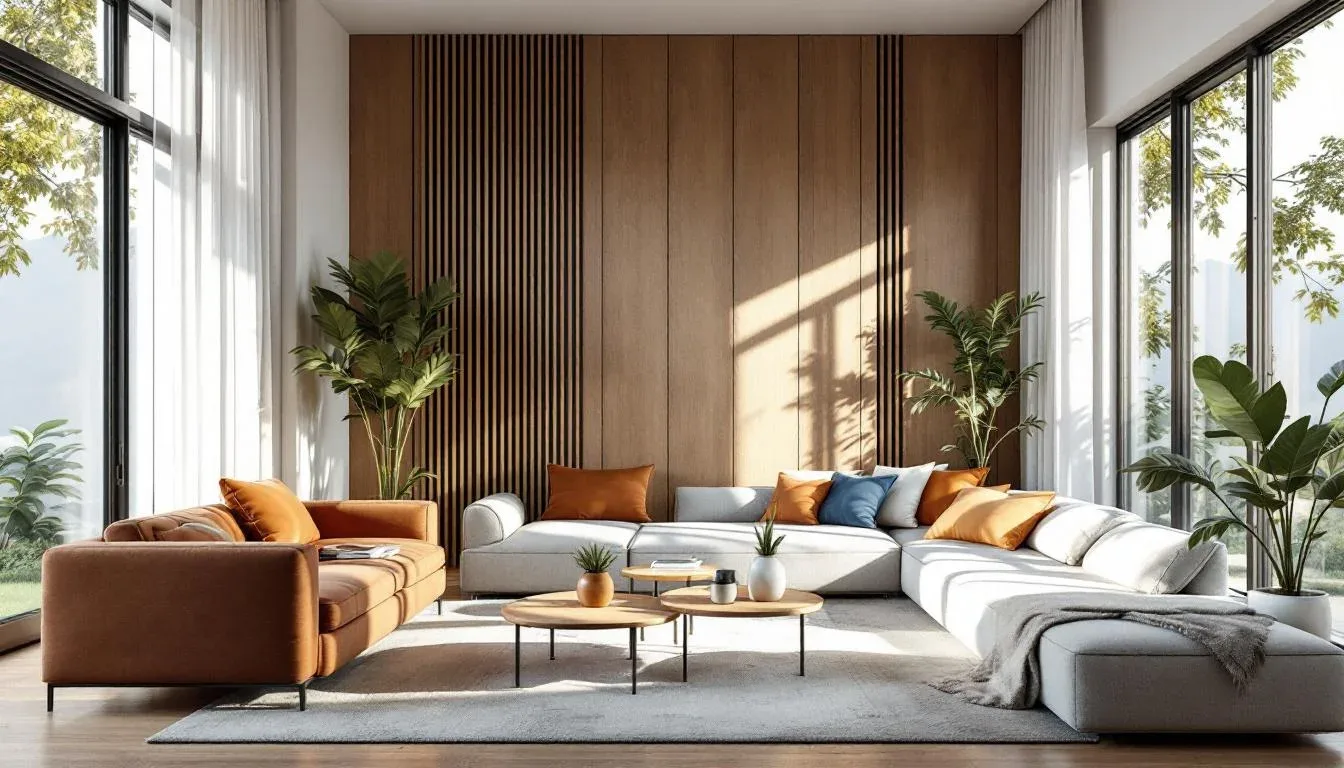
The l shaped sofa vs standard sofa decision becomes considerably more straightforward once you treat your floor plan as a constraint rather than a backdrop.
Rooms under 180 square feet almost always function better with a standard sofa. The math is simple: an L-sofa in a small room consumes so much floor area that the remaining circulation space feels pinched regardless of how good the layout looks on paper. You need a minimum of 30–36 inches of clearance between the sofa’s front edge and any facing surface — a coffee table, TV stand, or opposite wall. L-sofas in compact rooms routinely violate that clearance on at least one axis.
Rooms between 200–350 square feet are where the l shaped sofa vs standard sofa question gets genuinely interesting. In this range, the decision hinges almost entirely on the room’s shape rather than its size. A long rectangular room — think a classic apartment living room that’s twice as long as it is wide — typically accommodates a standard sofa better. The L-sofa’s two-directional footprint fights the room’s geometry rather than working with it. A square or near-square room of 200–350 square feet, by contrast, is where an L-sofa earns its footprint: the corner placement feels intentional rather than forced, and the sofa’s two arms help define the space rather than crowd it.
Rooms over 350 square feet, particularly open-plan spaces where the living area flows into a dining zone or kitchen, are where L-sofas genuinely excel. The sofa’s mass is proportional, and its ability to function as a room divider — creating a visual boundary between zones without a wall — solves a problem that standard sofas handle poorly. A single standard sofa in a large open-plan room frequently reads as insufficient, requiring additional seating pieces to compensate. An L-sofa anchors the space on its own.
Ceiling height matters too, and almost no one accounts for it. High ceilings (above 9 feet) make furniture look smaller — a large L-sofa that would overwhelm a standard room reads as proportionate under 10-foot ceilings. Low ceilings (below 8 feet) have the opposite effect, and the visual mass of an L-sofa can feel oppressive in a room where the ceiling already creates compression.
Actionable takeaway: Draw your room to scale on graph paper — not a digital tool, actual paper — and cut out a scaled representation of the sofa you’re considering. Move it around. The constraints become obvious in a way that showroom visualization never replicates.
What Your Household Actually Needs to Know Before Deciding
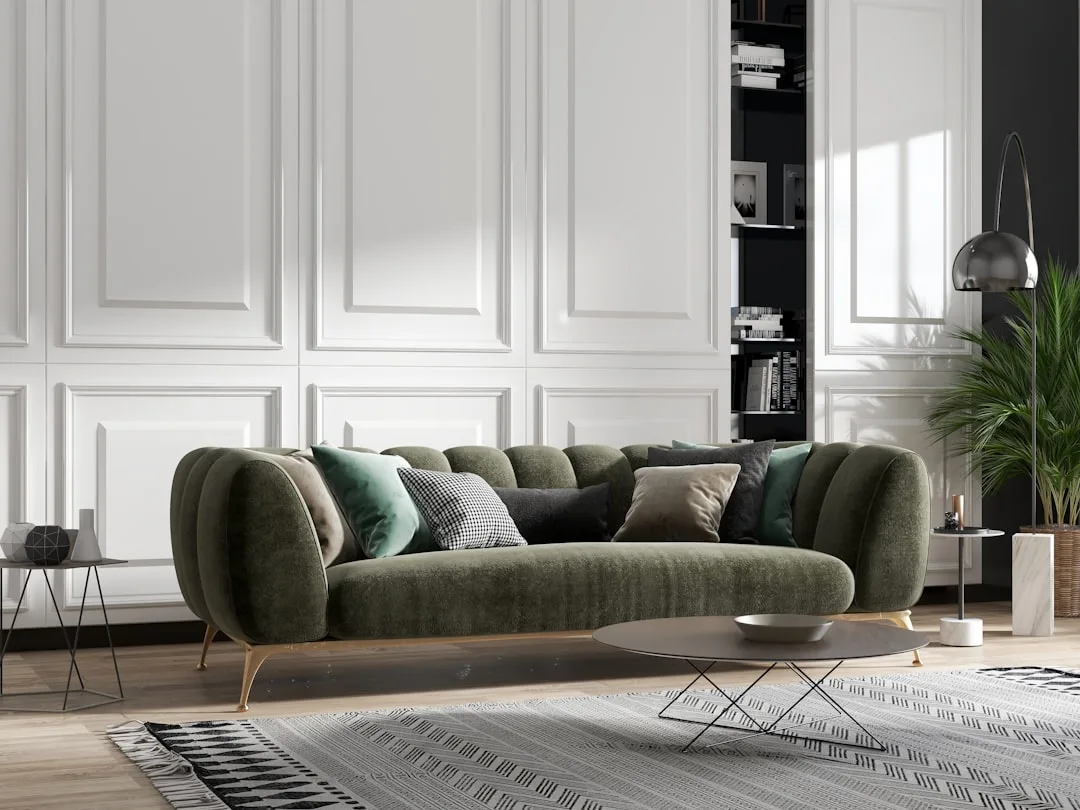
The functional case for each sofa shape comes down to a small set of household-specific realities that are almost never discussed at point of sale.
If you have young children, the L-sofa’s extended surface area is practically useful — there is room for the entire household to pile onto one piece of furniture, which matters more than it sounds at 7 a.m. on a Saturday. But the corner joint, as noted above, is a structural vulnerability under the kind of use children deliver. Budget for a sofa with a hardwood frame and reinforced corner bracing, or accept that a less expensive L-sofa will show wear at that junction within three to four years.
If you host regularly, the L-sofa’s ability to seat four to six people comfortably on a single piece without auxiliary seating is a genuine advantage. But consider: do your guests tend to face each other and talk, or do they tend to face a screen? The L-sofa optimizes for conversation by creating an inward-facing social zone. If your hosting is primarily movie nights or watch parties, that geometry creates sight-line problems for people seated on the chaise arm — they’re at the wrong angle relative to the screen.
If you work from home and your sofa doubles as a secondary workspace, the standard sofa wins clearly. The linear seating surface is easier to configure for laptop use, and the standard sofa’s arms are typically at a height that works with a lap desk. L-sofa chaise sections are designed for horizontal relaxation — they’re too low and too reclined for sustained seated work.
If you have a dog, particularly a large one, the L-sofa’s extended surface becomes a permanent dog bed that crowds out human occupants. I’ve walked into countless households where the entire chaise section has been ceded to one 70-pound animal. If that’s the actual reality of how your household operates, account for it in your space planning rather than discovering it after the fact.
Actionable takeaway: Think about the person in your household who uses the sofa most differently from everyone else — the one whose habits don’t match the household average. Design for that person, because they’re the one who will expose the sofa’s limitations fastest.
The Disadvantages of Standard Sofas That Are Worth Naming

Balance requires this section. Standard sofas have real limitations that tend to get minimized in conversations that treat them as the safe, sensible default.
Seating capacity is the obvious one. A standard three-seater sofa seats three adults comfortably. In practice, with armrests occupied and people unwilling to sit at the middle seat (which is always the least desirable), you’re looking at two comfortable seats and one that requires social negotiation. For a household of four, that math produces a daily low-grade friction.
The absence of a dedicated horizontal surface is the limitation that surprises people who move from an L-sofa back to a standard. The chaise extension on an L-sofa enables genuine full-body horizontal rest in a way that a standard sofa — even with an ottoman — doesn’t quite replicate. Ottomans move, don’t match the seat height precisely, and require deliberate arrangement every time. The chaise simply exists.
Standard sofas can read as insufficient in larger rooms, as noted above. In an open-plan space over 300 square feet, a single standard sofa often looks like an afterthought — a piece of furniture that arrived but didn’t commit. Solving that requires additional pieces (an armchair, a loveseat, a chaise), which adds cost and complexity that a single L-sofa sidesteps.
The visual interest of a standard sofa depends heavily on what surrounds it. An L-sofa is architecturally interesting on its own — its shape does visual work. A standard sofa in isolation reads as a rectangle. This isn’t a flaw exactly, but it means the standard sofa requires more intentional styling — rugs, side tables, throw placement — to feel designed rather than merely present.
Frequently Asked Questions
Is an L-shaped sofa worth it for a small living room?
Usually not, but it depends on the room’s shape more than its size. In a square room of 150–180 square feet, a compact L-sofa (think 90 inches on the long side) can work if the corner placement is intentional and you maintain at least 30 inches of clearance in front. In a narrow rectangular room under 150 square feet, an L-sofa almost always creates more problems than it solves — the two-directional footprint fights the room’s geometry, and you’ll spend years walking around it.
Can I put an L-shaped sofa in the middle of a room?
Yes, and it’s sometimes the right call in large open-plan spaces. A floating L-sofa with its back to the room’s traffic flow can define a living zone without walls. The practical requirement is that the sofa’s back is finished — many L-sofas have exposed, unfinished backs that look fine against a wall and look unresolved in the middle of a room. Check this before you buy.
How do I know which direction the L should face?
The chaise extension should face the side of the room with the most open floor space, not the side with the TV or the window. The most common mistake is placing the chaise toward the TV wall — it feels intuitive because you want to lie down and watch, but it blocks circulation and visually compresses the room. Face the chaise toward the open space, orient the sofa back toward the TV, and the layout works significantly better.
Do L-shaped sofas hold their resale value?
Generally less well than standard sofas. The resale market for L-sofas is constrained by the fact that they’re sized and configured for specific room layouts — a left-hand chaise sofa is unsellable to someone whose room requires a right-hand chaise, and the buyer’s floor plan has to accommodate the full footprint. Standard sofas fit more spaces and therefore attract more buyers. If you relocate frequently or treat furniture as an asset you’ll eventually sell, the standard sofa is the more economically rational choice.
What’s the most important measurement to take before buying an L-shaped sofa?
Your doorways and stairwells, not your room. Most people measure the room carefully and forget entirely about how the sofa will enter the building. The critical measurement is the narrowest point in the delivery path — typically a hallway turn, a stairwell landing, or an elevator interior — not the doorframe itself. Bring those measurements to the retailer and ask explicitly whether your specific sofa can be delivered without disassembly. Get the answer in writing.