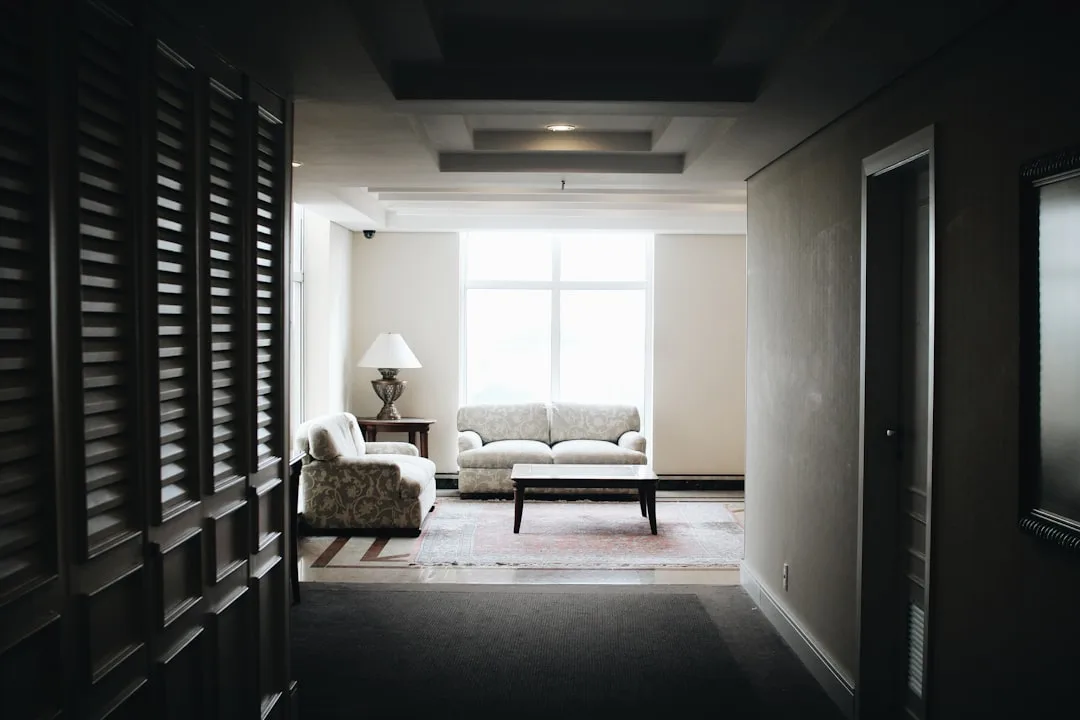
The furniture arrangement that feels most logical in a long narrow room — everything pushed neatly against the walls — is the exact configuration that makes it feel like a hallway. If you’re working through a long narrow living room furniture arrangement problem, the instinct to hug the walls is almost universal, and almost universally wrong. I’ve watched clients do this instinctively, and I’ve done it myself on rushed jobs early in my career. You clear the center, you create this clean open lane down the middle, and then you stand at the entrance and feel inexplicably depressed about the space. The floor plan looks organized on paper. The room feels like a corridor you’re expected to walk through rather than live in.
Quick Answer
The furniture arrangement that feels most logical in a long narrow room — everything pushed neatly against the walls — is the exact configuration that makes it feel like a hallway.
What makes this problem stubborn is that the fix isn’t obvious. More furniture doesn’t help. Less furniture usually doesn’t either. The issue isn’t what you own — it’s how sightlines are moving through the space, and that’s a different problem entirely.
Why Long Narrow Rooms Feel Wrong (And What’s Actually Causing It)
In This Article
- Why Long Narrow Rooms Feel Wrong (And What’s Actually Causing It)
- The Zone-First Framework: Plan Before You Place a Single Piece
- Furniture Arrangements That Actually Break the Tunnel (With Specific Configurations)
- The Furniture Pieces That Do the Most Work in Narrow Rooms
- What to Do With the Walls You’ve Now Pulled Furniture Away From
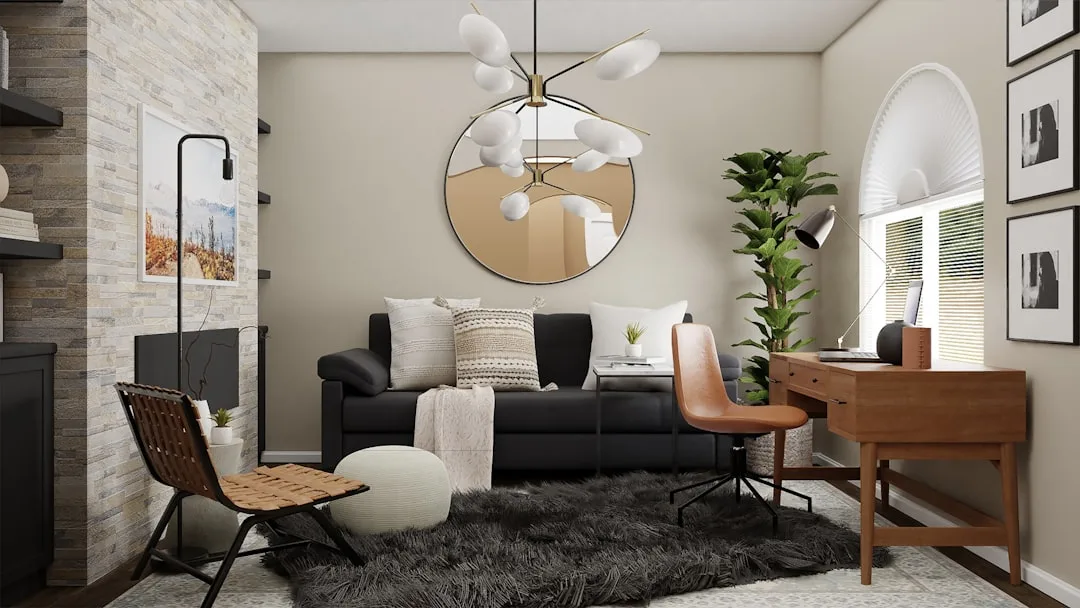
Most people who come to me frustrated with a narrow room have already tried the obvious things. They’ve edited down their furniture. They’ve experimented with paint colors. They’ve added plants — which, as someone who once watched a client spend $400 on fiddle leaf figs that changed absolutely nothing about her 10×22 front room, I can tell you is rarely the actual answer. The real culprit is almost always uninterrupted sightlines, and it operates completely independently of how much furniture you have or how carefully you’ve curated it.
Here’s what’s happening structurally: when a room’s length-to-width ratio exceeds roughly 1.7:1, your eye registers the long dimension as the dominant one. The average North American living room runs about 12×18 feet — manageable. But row-house and apartment living rooms frequently fall between 10×20 and 10×24 feet, and at that ratio, the brain starts reading the space as a passageway rather than a destination. Nothing about the furniture triggers this. The architecture does.
When you push everything to the walls, you make this worse. Not better. The long walls become defined, parallel tracks — and the eye runs straight down them to the far end of the room like it’s following train rails. This is what designers mean by the tunnel effect, and the mechanism isn’t mysterious. Unbroken visual lines accelerate perception of length.
The difference between a room that feels like a bowling alley and one that feels like a cozy galley — and some galley-style rooms feel genuinely warm and intentional — is zone interruption. Not square footage. Not paint color. Interruption. Something has to break that sightline laterally, forcing the eye to pause, recalibrate, and register distinct areas rather than a single continuous shaft of space.
Most decorating advice gets this backwards. Articles tell you to hug the walls to “open up the center” without acknowledging that the open center is exactly what activates tunnel perception. A wide, unbroken floor lane down the middle of the room is not a design asset. It’s the problem.
Common mistakes people make before solving this problem:
- Pushing every piece of furniture flush against the long walls
- Adding more decorative items (plants, art, accessories) without addressing sightlines
- Choosing lighter or brighter paint colors expecting it to change the room’s proportions
- Removing furniture to “open up” a room that already has too much open floor lane
- Arranging seating in a single row along one wall, creating a waiting-room effect
Takeaway: Before moving a single piece of furniture, identify where your sightlines are traveling uninterrupted. That path — not the size of your sofa — is what needs to be disrupted.
The Zone-First Framework: Plan Before You Place a Single Piece
Here is where I’ll lose some readers who just want a quick tip. But I’ve seen too many people rearrange furniture four times because they skipped this step. Every time. Including me — I rearranged a client’s 10×22 Brooklyn apartment living room twice before I stopped and drew the zone map I should have drawn before I ever touched the sectional.
Before you move anything, decide how many activity zones you actually need. Not how many would be nice. How many you genuinely use. Most narrow living rooms support two zones comfortably: a conversation or media zone and a secondary zone for reading, a desk, or a defined lounge corner. Trying to squeeze three full zones into a 10×20 room is possible, but it requires aggressive traffic-flow planning that most people underestimate.
Treat each zone as its own mini-room. That means each zone needs:
- An anchor piece (sofa, loveseat, pair of chairs, or desk)
- A defined circulation path — the route someone would take to enter and exit the zone without stepping around furniture
- A boundary — which can be a rug edge, the back of a sofa facing away, a low bookcase, or a console table
- A light source — overhead lighting covers a zone functionally, but a floor lamp or table lamp at zone level makes it feel intentional and inhabited
- A secondary surface — a side table, ottoman tray, or small shelf where someone sitting in that zone can set a drink or a book
The circulation numbers matter here and most people don’t know them: interior designers work with a minimum 36-inch clearance for primary traffic paths — the route between the entrance and the rest of the apartment, for instance — and 18 to 24 inches between a sofa and a coffee table for comfortable seated reach. These measurements have to be baked into the zone plan before you select or place furniture, not worked around afterward.
Key clearance measurements to plan around:
- 36 inches minimum for primary traffic paths (entrance to exit routes)
- 18–24 inches between sofa and coffee table for comfortable reach
- 30–36 inches needed to pull a chair away from a desk without hitting the wall
- 12–18 inches between the edge of a rug and the nearest wall, to avoid the “floating carpet” effect that shrinks the perceived zone
- 48 inches minimum clearance in front of a TV for a comfortable viewing distance in a narrow room
A free tool like RoomSketcher lets you drop in dimensions and test zone layouts without lifting anything heavier than a laptop. Sketch your room’s footprint, mark the doors and windows, and block out zone areas as rectangles before you assign any specific furniture to them. This one step — which takes about twenty minutes — eliminates the exhausting cycle of rearranging by feel.
Takeaway: Map your zones on paper or in a tool before touching furniture. Two zones with clear anchors, paths, and boundaries will always outperform three zones that were improvised.
Furniture Arrangements That Actually Break the Tunnel (With Specific Configurations)
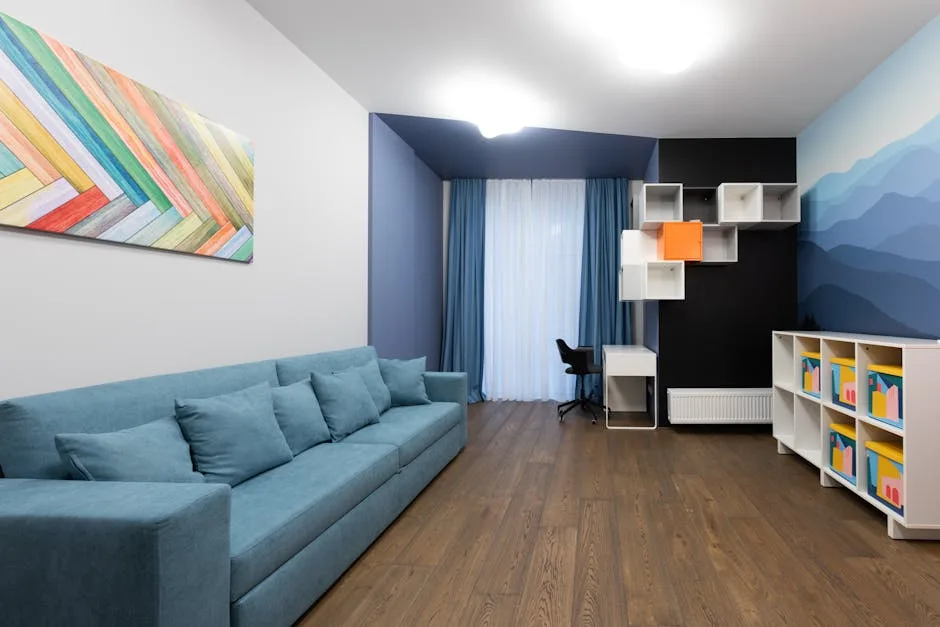
Vague advice — “angle your furniture,” “create conversation areas” — is useless without a picture of what that actually looks like in a 10×20 room. These are the four configurations I return to repeatedly in any successful long narrow living room furniture arrangement, named so you can think about them as distinct options rather than a blur of suggestions.
The Crosswise Anchor is the single highest-impact move available in a stretched room. Orient the main sofa perpendicular to the long wall — meaning the sofa’s length runs across the width of the room, not along it. This one change immediately creates a lateral interruption that the eye has to stop and register. It also makes conversation with someone on the other side of a coffee table feel natural rather than like a theater row. It’s counterintuitive because it “uses up” the width, and people resist it. Every client who’s let me do it has thanked me.
What makes the Crosswise Anchor work:
- The sofa back becomes a visual wall that stops the eye mid-room
- It forces the creation of two distinct halves of the room, even without a physical divider
- It positions conversation seating across from each other (facing the sofa, not beside it), which feels social rather than linear
- A rug anchoring the grouping reinforces the zone boundary without adding visual weight
The Back-to-Back Split works beautifully when you genuinely need two distinct zones. Two seating groupings face away from each other, separated by a console table or low credenza that acts as their shared spine. Each grouping has its back to the other — one facing a TV or window, one facing a reading wall or a secondary light source. The console serves as a room divider while remaining visually light. This is not the same as two sofas facing each other; the back-to-back orientation is what creates zone separation.
What makes the Back-to-Back Split work:
- The console or credenza down the center spine gives each zone a defined rear boundary
- Each zone feels psychologically enclosed without being physically walled off
- Lamps placed on the console illuminate both zones independently, reinforcing that they are separate spaces
- It works especially well when one end of the room has a TV and the other has a window, giving each zone a natural focal point
The L-Offset applies specifically to rooms with an open plan or doorway at one end. A sofa and a perpendicular loveseat or pair of chairs form an L-shape anchored toward one end of the room, leaving the other end free for a different function — a dining area, home office, or entry buffer. The L itself acts as the sightline break. The key is that the open end of the L faces the room’s interior, not the entrance, so the first thing you see walking in is the side or back of the seating rather than a direct shot to the far wall.
What makes the L-Offset work:
- The perpendicular arm of the L cuts across the room’s width, creating the lateral interruption without a physical divider
- It leaves one end of the room intentionally open for secondary uses without making the space feel half-finished
- Angling the corner of the L slightly (5–10 degrees off the wall) softens the geometry and makes the grouping feel less institutional
- A single large rug under both pieces unifies them as one zone despite the right angle
The Floating Island is the configuration most people resist most strongly, and the one that most consistently solves a long narrow living room furniture arrangement problem in rooms with a strong center. All major seating is pulled away from every wall — typically by 18 to 24 inches — and grouped in the room’s middle third. A sofa, two chairs, and a coffee table form a compact conversation island with nothing touching the perimeter. The walls become a circulation path. The center becomes the destination.
What makes the Floating Island work:
- Wall-to-furniture gaps at the perimeter read as intentional breathing room rather than awkward empty space, especially when filled with a slim console or floor lamp
- The center grouping draws the eye down and in, toward the furniture, rather than along the walls toward the far end
- It works best in rooms at least 11 feet wide — in a 10-foot room, the clearances get tight and must be measured precisely before committing
- Rugs are non-negotiable here: without a rug anchoring the island, the floating arrangement looks accidental
The Furniture Pieces That Do the Most Work in Narrow Rooms
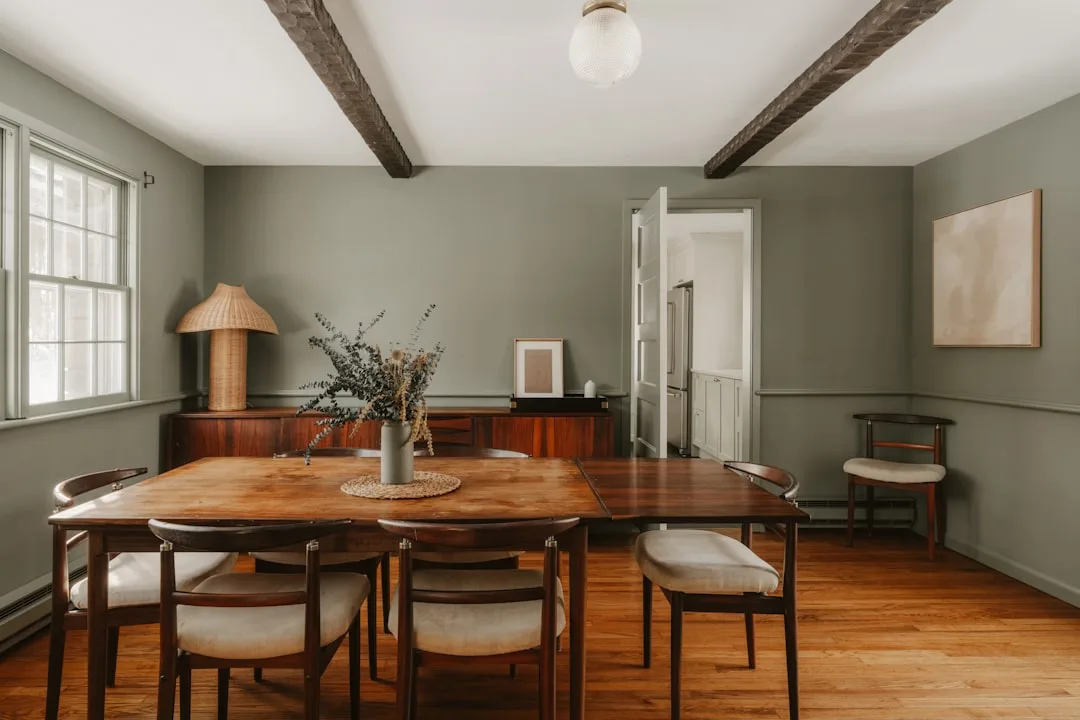
Not every piece of furniture performs equally well in a stretched space. Some pieces solve multiple problems at once. Others look right in a showroom and create problems the moment they enter a narrow room.
Pieces that earn their place:
- Sofas with exposed legs — visual weight sits higher off the floor, which makes the floor plane feel larger and the room feel less compressed
- Consoles and low credenzas — function as zone dividers without the visual mass of a bookcase or wall unit; ideally 28–34 inches tall, which is below sightline level when seated
- Loveseats instead of three-seat sofas — in rooms under 11 feet wide, a loveseat (typically 58–65 inches) leaves enough clearance for a chair opposite it; a full sofa (84–90 inches) often doesn’t
- Nesting tables instead of a single coffee table — can be separated to serve two zones independently, then recombined; eliminates the problem of one large table dominating the narrow floor plane
- Open-back shelving — when a room divider is needed, an open bookcase at 48–60 inches tall divides zones without blocking light or creating a wall; sight lines pass through it while the physical boundary remains clear
Pieces that tend to cause problems:
- Sectionals in rooms under 12 feet wide — the L-shape of most sectionals requires significant clearance on the open end; in narrow rooms, the sectional frequently ends up blocking traffic paths or sitting awkwardly close to an opposite wall
- Oversized coffee tables — a coffee table wider than half the sofa’s length typically creates a cramped feel in narrow rooms; the 18–24 inch clearance between sofa and table shrinks fast
- Matching three-piece suites — sofa plus two matching armchairs arranged symmetrically along a long wall is the exact configuration that creates the waiting-room effect; if you own the set, separate the chairs from the sofa rather than grouping them together
- Tall entertainment units — anything above 60 inches on a long wall emphasizes the wall’s length and draws the eye along it; low media consoles (under 24 inches) do the opposite
What to Do With the Walls You’ve Now Pulled Furniture Away From
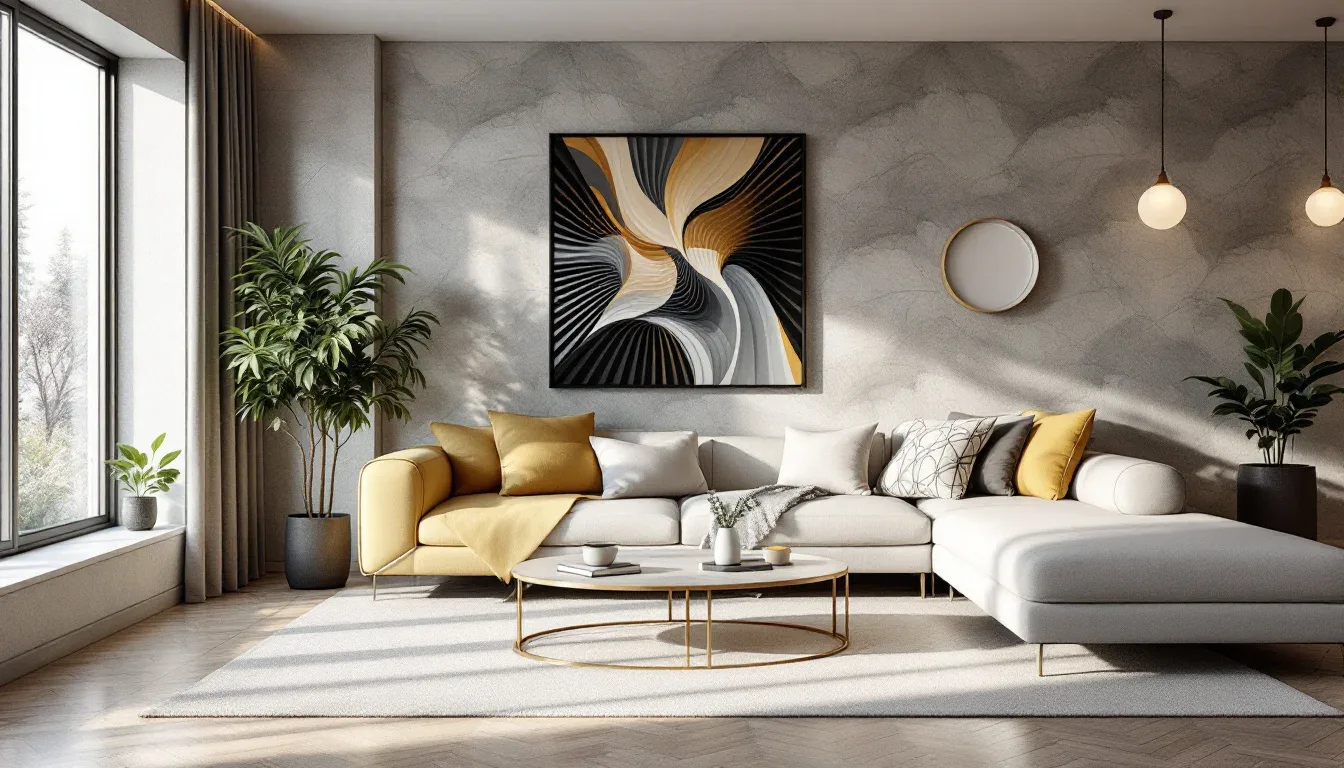
Pulling furniture off the walls creates gaps that feel awkward until you address them deliberately. The gap behind a floating sofa — typically 18–24 inches — is the one that most people can’t make peace with. Here’s how to handle it without pushing the sofa back.
Behind the sofa:
A slim console table (10–14 inches deep) placed flush against the sofa’s back turns the gap into a functional surface. Height should match or slightly exceed the sofa back — typically 28–34 inches. This also gives you a place for lamps, which can backlight the seating group and make the zone feel warm rather than exposed.
Along the long walls (now emptied):
- A single piece of vertical art at the midpoint of a long wall stops the eye laterally and breaks the wall’s perceived length
- A floor lamp in a corner where furniture has been pulled away fills the visual gap without adding furniture mass
- Built-in or freestanding shelving on a short end wall (not the long wall) adds storage while directing attention toward the end of the room rather than along its length
The short walls:
The two short walls at each end of a narrow room are underused assets. A large piece of art, a mirror, or a built-in on the far short wall gives the eye a destination — it stops the tunnel effect by creating something worth looking at rather than looking past. A mirror on the short end wall is a reliable move, but only if it reflects something worth reflecting; a mirror facing the entrance that reflects the front door and a coat rack isn’t doing the room any favors.
FAQ
Q: Can I use a sectional in a long narrow living room?
It’s possible, but the room needs to be at least 12 feet wide and the sectional has to be sized carefully. Most standard sectionals are 100–110 inches on their long side, which in a 10-foot room leaves almost no clearance for the traffic path opposite. If the room is 12 feet or wider, a smaller sectional (under 95 inches total) placed with the chaise end toward one short wall — not along the long wall — can work. The chaise becomes the crosswise element that breaks the tunnel. In rooms under 12 feet wide, a sofa-and-loveseat combination almost always produces a better long narrow living room furniture arrangement than a sectional.
Q: Should I use one large rug or two smaller rugs in a narrow room?
Two rugs — one per zone — almost always outperforms one large rug in a narrow space. A single large rug that runs the length of the room emphasizes its length the same way an unbroken floor lane does. Two rugs, each anchoring its own zone, visually divide the room into two shorter spaces. Each rug should be large enough that the front legs of all seating in that zone rest on it — a rug that only sits under a coffee table with all furniture floating around it undermines the zone definition entirely.
Q: How do I handle a narrow living room that’s also open to a dining area?
The open-plan narrow room is its own sub-problem. The key is to treat the boundary between the living and dining areas as a deliberate zone division rather than an ambiguous middle ground. A sofa with its back facing the dining area — rather than a side wall — defines the living zone’s edge. A console or low credenza at that same line reinforces it. The rug under the living zone seating should stop well before the dining area, leaving a clear visual gap between the two zones. Floating the dining table away from the wall (if the room allows it) mirrors the principle that applies to the living zone: pulled away from the wall, it reads as a destination rather than as overflow.
Q: What’s the minimum width where a long narrow living room furniture arrangement with floating furniture actually works?
Ten feet is the practical floor for floating furniture, and even then it requires precise measurement. In a 10-foot room: a sofa 84 inches wide leaves 12 inches on each side to the wall, which is enough to walk but tight. A loveseat at 65 inches leaves 17.5 inches on each side — more workable. If you float the sofa 18 inches from the wall behind it, the 10-foot width means the sofa front is now roughly 54 inches from the opposite wall — enough for a coffee table and a chair opposite, but only if the chair is a slipper chair or similar compact form. Anything narrower than 10 feet should treat the wall-hugging sofa as fixed and focus all the arrangement energy on the perpendicular and secondary pieces instead.
Q: Does furniture color and finish matter for narrow rooms, or is that a myth?
It matters, but less than arrangement does, and it’s the last thing to address — not the first. Light-colored, low-profile furniture does reduce visual mass, which helps in a narrow room. Furniture with exposed legs reads as lighter than furniture with skirted or solid bases. But none of that compensates for an arrangement that sends the eye down the tunnel. The correct sequence is: fix the arrangement first, then evaluate whether the furniture’s visual weight is still causing problems. Most people who think they need a new sofa in a lighter fabric actually need their existing sofa rotated 90 degrees.