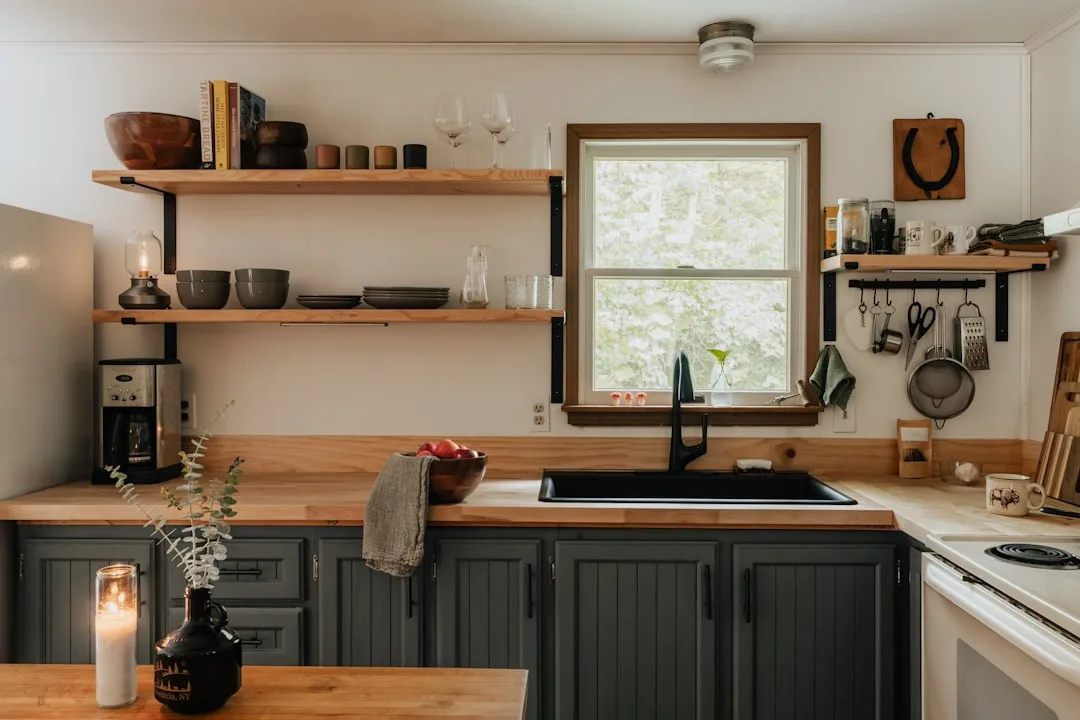
The average galley kitchen is 8 feet wide — just 2 feet narrower than the minimum width most architects recommend for an open-plan layout, which means the difference between a corridor and a showpiece is often a single wall, a sightline decision, or a lighting layer you haven’t tried yet. If you’ve been searching for galley kitchen open up ideas that actually work in real homes, the answer usually isn’t a full gut renovation — it’s a series of smaller, sequenced decisions that most renovation content never walks you through completely. Most of the clients I worked with in Chicago and New York assumed their galley kitchen was a fixed problem — something to tolerate until they could afford a full gut renovation. What I kept discovering, over and over, was that the corridor itself wasn’t the issue. The issue was everything surrounding it: the walls that closed it off, the lighting that flattened it, the flooring that stopped abruptly at the boundary like a bureaucratic line on a map.
Quick Answer
The average galley kitchen is 8 feet wide — just 2 feet narrower than the minimum width most architects recommend for an open-plan layout, which means the difference between a corridor and a showpiece is often a single wall, a sightline decision, or a lighting layer you haven’t tried yet.
This article isn’t about aesthetics. It’s about how a galley kitchen actually functions — and how to change the way it reads spatially without necessarily touching a single structural element, unless you should. Both paths are here.
How to Make a Galley Kitchen More Open (Without Gutting the Whole Room)
In This Article
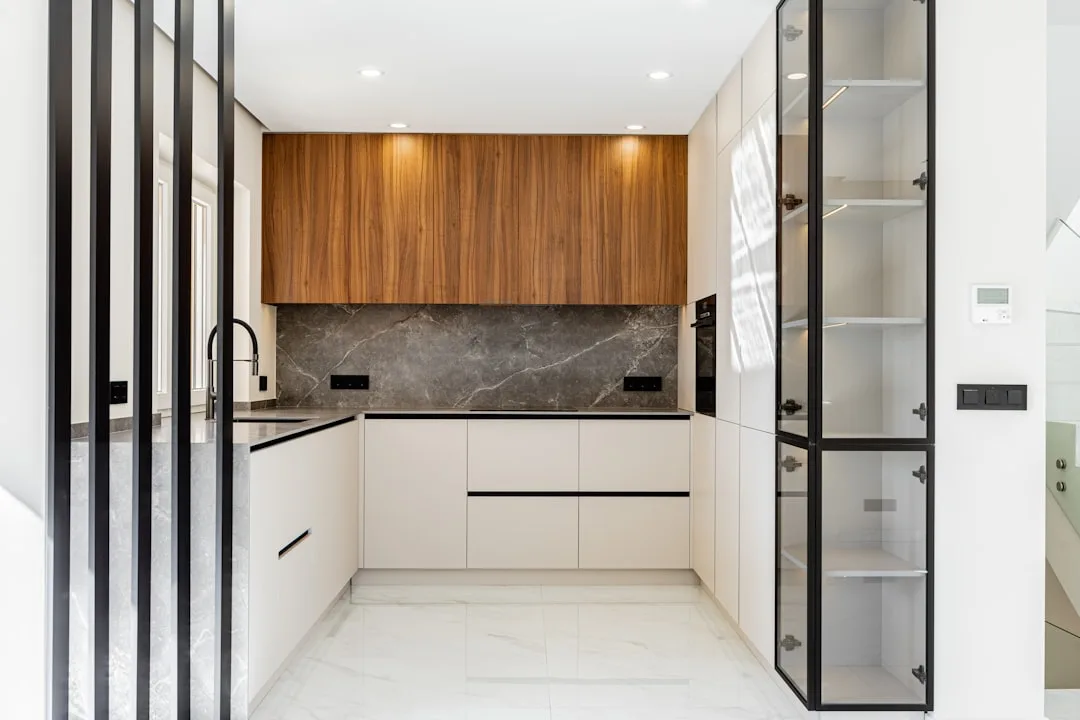
Before anyone picks up a sledgehammer, there’s a decision that has to happen first — and most renovation content skips it entirely because it requires actual knowledge rather than enthusiasm. The most important thing you can do before any opening project is determine whether the wall you want to remove is load-bearing. Everything else follows from that answer.
A load-bearing wall carries the structural weight of the floors or roof above it. In a galley kitchen, these walls typically run perpendicular to the floor joists, sit above a beam or bearing point in the basement or crawl space, and often occupy a central position in the home rather than an exterior edge. A non-load-bearing wall — a partition wall — exists only to divide space. Pull it down and nothing shifts. Pull down a load-bearing wall without a beam to replace it, and you have a different kind of problem entirely.
The cost difference is significant and worth knowing before you fall in love with a plan. Removing a non-load-bearing wall in a galley kitchen averages $1,200–$3,000, which covers demo, patching, and finishing. Removing a load-bearing wall with a structural beam runs $3,500–$10,000+ depending on the span length — that’s HomeAdvisor 2024 data, and in dense urban markets like Chicago or Brooklyn, you can add 20–30% on top.
If full removal feels premature — financially or structurally — a half-wall or pass-through opening is the middle-ground most people overlook. A pass-through cutout in a non-load-bearing wall typically costs 60–70% less than full removal and accomplishes most of the sightline work. It frames the adjacent room rather than merging with it, which can actually be more elegant than blowing everything open.
Sightlines, not square footage, are what make a space feel open or closed. A galley kitchen with a clear line of sight to a dining table twenty feet away reads as open even if the kitchen itself is narrow. And ceiling height plays into this too — a dropped ceiling at 8 feet compresses a corridor; the same galley with vaulted or raised ceilings at 10 feet suddenly reads as intentional, designed, even desirable.
Non-Structural Galley Kitchen Open Up Ideas Worth Trying First
Before committing to any demo work, run through this checklist. These are the moves that regularly produce the biggest perceptual shift for the least cost:
- Remove upper cabinet doors on one or both runs — open shelving breaks the visual mass and lets light move through the space
- Extend flooring continuously from the galley into the adjacent room — abrupt flooring transitions are one of the strongest spatial dividers, and eliminating them costs far less than a wall removal
- Add a mirrored or reflective backsplash on the wall opposite your primary window — reflected light reads as depth
- Swap a solid entry door for a glass-panel version — if your galley has a door at either end, replacing it with a glazed door instantly lengthens the sightline without any structural work
- Raise your pendant or under-cabinet lighting — lighting installed too low visually caps a narrow space; raising it by even 4–6 inches opens the perceived ceiling
- Paint the ceiling the same color as the walls — counterintuitively, eliminating the ceiling/wall boundary makes the room feel taller, not more boxed-in
- Remove the valance above the window if one exists — valances eat 6–10 inches of perceived ceiling height and are almost never load-bearing contributors to anything
These aren’t consolation prizes for people who can’t afford structural work. Several of my Chicago clients implemented this list before deciding they didn’t need the wall removed at all.
Takeaway: Before you spend a dollar, walk to the end of your galley and look outward. If a wall stops your eye, identify whether it’s load-bearing. That single answer determines your entire budget range.
The 3×4 Kitchen Rule Explained — And Why Galley Layouts Break It

Most people have never heard of the 3×4 rule, which is exactly why it’s worth understanding — because it explains something counterintuitive about why galley kitchens actually work well, and why opening them up requires care rather than just enthusiasm.
The 3×4 rule comes from NKBA (National Kitchen and Bath Association) guidelines and refers to the classic kitchen work triangle: the path between your sink, stove, and refrigerator. Each leg of that triangle should be no shorter than 3 feet and no longer than 4 feet — hence 3×4. The NKBA guideline states the total triangle perimeter should fall between 13 and 26 feet. A galley kitchen compresses this into a linear run of 8–14 feet, which technically breaks the triangle concept entirely, because there is no triangle. It’s a straight line.
Here’s what the rule-followers miss: professional kitchen designers — the ones working restaurant prep kitchens and serious home cook spaces — often prefer the galley’s single-corridor workflow precisely because the triangle doesn’t apply. Everything is within arm’s reach. You pivot and step instead of crossing open floor. Solo cooks in well-designed galleys are often faster and more efficient than they’d be in a sprawling open kitchen. I’ve had clients move from a 14-foot galley to a 200-square-foot open kitchen and complain, six months later, that everything felt too far away.
The problem with opening up a galley isn’t that the 3×4 principle breaks — it’s that you must protect the core work zone while expanding toward living or dining space. The mistake I see most often is people removing the wall that sits between the galley and the dining room without thinking about what that wall was anchoring. In several older Chicago two-flats, that wall held the only dedicated pantry storage in the entire kitchen. Once it came down, the open layout looked great in photos and functioned terribly on a Tuesday night when someone was trying to find the olive oil.
When you protect the work zone, you’re protecting a strip of roughly 8 to 10 linear feet that contains your sink, range, and primary prep surface. Everything outside that zone — the end walls, the transition area into the dining or living space — is negotiable. The galley kitchen open up ideas that actually hold up over years of daily use are the ones that expand outward from that anchor, not through it. A well-placed peninsula at the open end, for example, can define the kitchen boundary without enclosing it, give you 4–6 additional linear feet of counter, and create a casual seating spot that pulls people into the space without putting them in the cook’s way.
One more thing the 3×4 rule doesn’t account for: two-cook households. If you regularly cook with a partner, the galley’s single corridor becomes a problem no amount of opening up will fully solve — unless the opening creates a true bypass. A pass-through wide enough for someone to hand off a dish (minimum 18 inches clear) or a layout that allows one person to access the refrigerator from the dining side without entering the work corridor entirely are design moves worth planning around from the start.
What Happens to Ventilation and Lighting When You Open a Galley
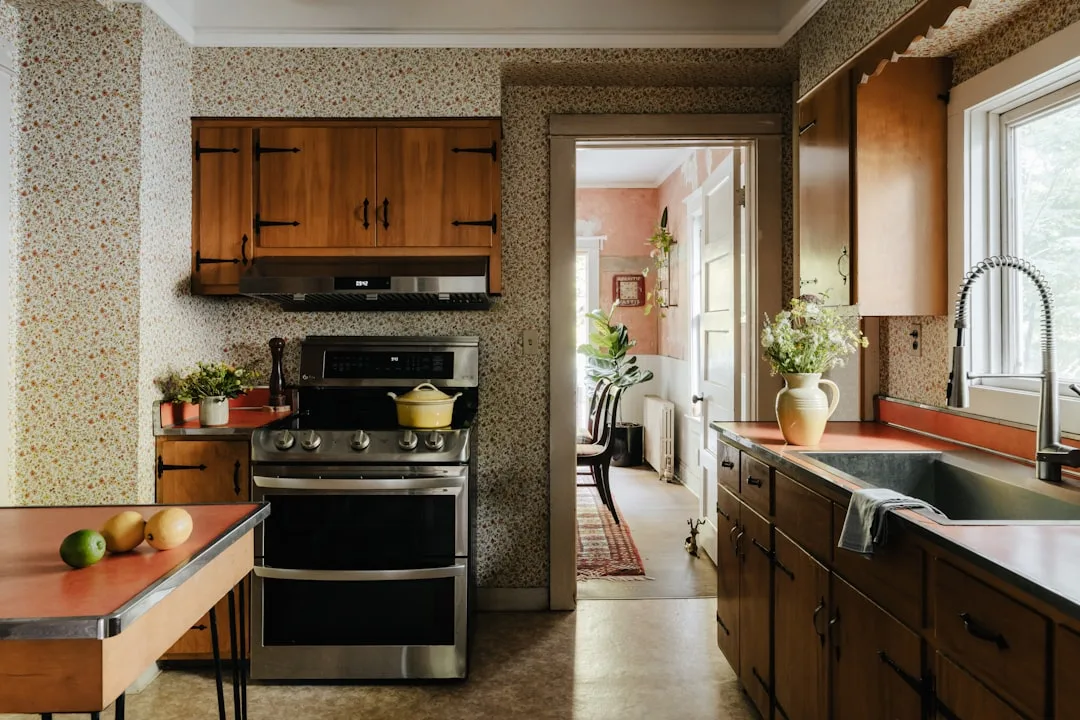
This section doesn’t get enough coverage in most galley kitchen open up ideas guides, and it’s responsible for a significant share of the post-renovation regret I’ve seen. When you remove a wall between a galley kitchen and a living or dining space, you’re not just changing sightlines — you’re changing how air, smoke, steam, and light move through the combined space.
Ventilation first. A galley kitchen with walls on both sides naturally contains cooking odors within a defined zone. Remove one wall and those odors now migrate freely into your living area. If your current range hood is sized for a 100-square-foot enclosed kitchen, it’s likely undersized for the merged space. The general rule is 100 CFM (cubic feet per minute) per linear foot of range for residential cooking — but when you open a galley into a larger adjacent room, you often need to size up by 20–30% to compensate for the reduced containment. A recirculating hood that was acceptable in a closed galley is rarely sufficient once the space opens up. If you’re doing any structural work as part of the opening project, this is the time to run proper ductwork to the exterior rather than patch the problem later.
Lighting second. An enclosed galley can be adequately lit with two or three ceiling fixtures and some under-cabinet strips. Open that same galley into a 300-square-foot combined living-dining-kitchen space and you suddenly have a lighting design problem, not just a fixture swap. The kitchen zone needs task lighting intense enough to prep safely; the dining zone needs something warmer and dimmer; and the visual transition between the two has to feel intentional rather than arbitrary. Layered lighting — separate circuits for the kitchen work zone, the transition zone, and the living area — is the professional approach. It’s also more expensive to wire after the fact than during a renovation. If walls are already open for structural work, run the additional circuits then. The marginal cost is small compared to opening finished walls later.
FAQ: Galley Kitchen Open Up Ideas
Q: How much does it typically cost to open up a galley kitchen?
The range is wide because the variables are significant. For non-structural changes — flooring continuity, lighting, cabinet modifications, pass-through openings — most homeowners spend between $2,000 and $8,000 depending on materials and market. For structural wall removal with a beam, budget $5,000 to $15,000 once you factor in electrical rerouting, HVAC adjustments, patching, and finishing. In high-cost urban markets, those numbers can run 25–40% higher. The most accurate number comes from a structural engineer’s assessment and two or three contractor quotes, not a renovation website estimate.
Q: Can I open up a galley kitchen without removing any walls at all?
Yes, and for many galley kitchens it’s the right call. The non-structural galley kitchen open up ideas in this article — continuous flooring, reflective surfaces, glass-panel doors, lighting adjustments, upper cabinet modifications — can shift the way a space reads substantially without a single permit or structural change. The key is addressing sightlines and light simultaneously rather than tackling them as separate projects.
Q: How do I know if the wall in my galley kitchen is load-bearing?
The most reliable method is hiring a structural engineer for a consultation, which typically costs $300–$700 and is worth every dollar before any demo work begins. As a starting point: walls that run perpendicular to your floor joists, sit above a beam or foundation wall in the basement, or land in the center of the house rather than along an exterior edge are more likely to be load-bearing. But “more likely” is not a building permit, and a visual assessment is not a structural assessment. Get the professional opinion before you commit.
Q: Will opening up my galley kitchen hurt its resale value?
In most markets, a thoughtfully opened galley that connects to a dining or living area adds resale value because buyers respond to open-plan layouts. The caveat is execution quality — a poorly finished wall removal with unmatched flooring, mismatched ceiling heights, or visible patch work can read as amateur renovation and trigger inspection concerns. If you’re opening the kitchen with resale in mind, the finishing work matters as much as the structural decision. Continuous flooring, consistent ceiling treatment, and proper lighting design are what separate a renovation that photographs well from one that sells well.
Q: What’s the minimum width a galley kitchen needs to be functional after opening one side?
NKBA recommends a minimum of 42 inches of clear floor space in a single-cook galley and 48 inches for a two-cook household. Those measurements apply to the work corridor itself — the space between your two cabinet runs — not the total room width. If opening one wall or removing upper cabinets on one side reduces your clear floor space below those minimums, the layout will feel more cramped in daily use even if it photographs as more open. The goal is a galley that functions better after the change, not just one that reads differently in a listing photo.
Q: How much does it typically cost to open up a galley kitchen?
The range is wide because the variables are significant. For non-structural changes — flooring continuity, lighting, cabinet modifications, pass-through openings — most homeowners spend between $2,000 and $8,000 depending on materials and market. For structural wall removal with a beam, budget $5,000 to $15,000 once you factor in electrical rerouting, HVAC adjustments, patching, and finishing. In high-cost urban markets, those numbers can run 25–40% higher. The most accurate number comes from a structural engineer’s assessment and two or three contractor quotes, not a renovation website estimate.
Q: Can I open up a galley kitchen without removing any walls at all?
Yes, and for many galley kitchens it’s the right call. The non-structural galley kitchen open up ideas in this article — continuous flooring, reflective surfaces, glass-panel doors, lighting adjustments, upper cabinet modifications — can shift the way a space reads substantially without a single permit or structural change. The key is addressing sightlines and light simultaneously rather than tackling them as separate projects.
Q: How do I know if the wall in my galley kitchen is load-bearing?
The most reliable method is hiring a structural engineer for a consultation, which typically costs $300–$700 and is worth every dollar before any demo work begins. As a starting point: walls that run perpendicular to your floor joists, sit above a beam or foundation wall in the basement, or land in the center of the house rather than along an exterior edge are more likely to be load-bearing. But “more likely” is not a building permit, and a visual assessment is not a structural assessment. Get the professional opinion before you commit.
Q: Will opening up my galley kitchen hurt its resale value?
In most markets, a thoughtfully opened galley that connects to a dining or living area adds resale value because buyers respond to open-plan layouts. The caveat is execution quality — a poorly finished wall removal with unmatched flooring, mismatched ceiling heights, or visible patch work can read as amateur renovation and trigger inspection concerns. If you’re opening the kitchen with resale in mind, the finishing work matters as much as the structural decision. Continuous flooring, consistent ceiling treatment, and proper lighting design are what separate a renovation that photographs well from one that sells well.
Q: What’s the minimum width a galley kitchen needs to be functional after opening one side?
NKBA recommends a minimum of 42 inches of clear floor space in a single-cook galley and 48 inches for a two-cook household. Those measurements apply to the work corridor itself — the space between your two cabinet runs — not the total room width. If opening one wall or removing upper cabinets on one side reduces your clear floor space below those minimums, the layout will feel more cramped in daily use even if it photographs as more open. The goal is a galley that functions better after the change, not just one that reads differently in a listing photo.