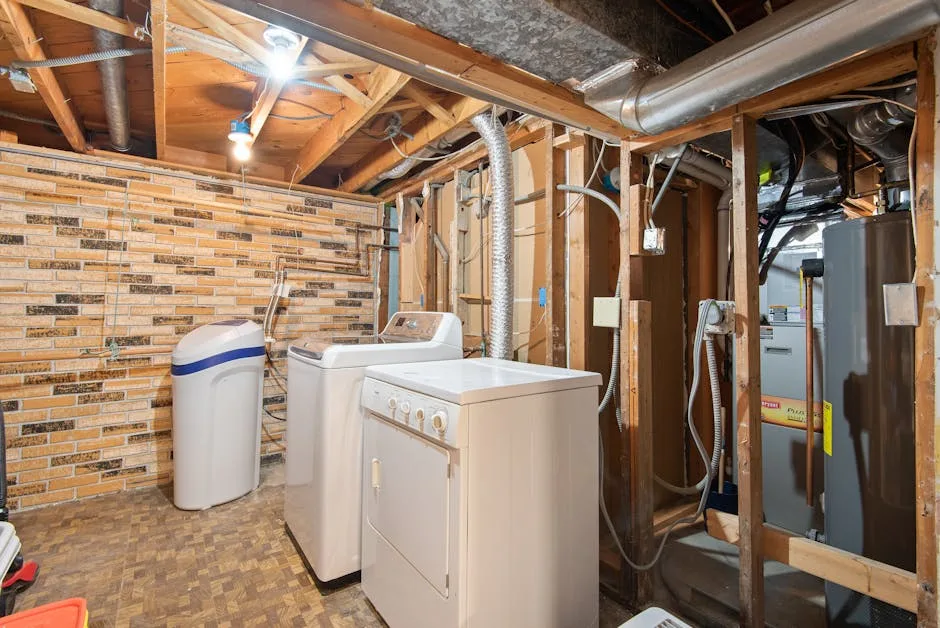
Most basement bedroom guides start with throw pillows — but the real starting point for unfinished basement bedroom ideas is whether the space is safe and legal to sleep in at all. The EPA estimates that 1 in 15 American homes has a basement with radon levels above the action threshold, meaning the first decision in any basement sleeping space isn’t about aesthetics: it’s about whether the air is safe to breathe. I’ve watched designers (and homeowners who trusted design blogs) spend thousands on basement bedrooms that had to be gutted within two years — not because the styling was wrong, but because they skipped the part where you make sure the space won’t hurt the person sleeping in it. That’s not dramatic. That’s just the order of operations that everyone in the industry knows and almost no one writes down for the people who actually need it.
Quick Answer
Most basement bedroom guides start with throw pillows — but the EPA estimates that 1 in 15 American homes has a basement with radon levels above the action threshold, meaning the first decision in any basement sleeping space isn’t about aesthetics: it’s about whether the air is safe to breathe.
Can You Legally Have a Bedroom in an Unfinished Basement?
In This Article
The short answer is: maybe — and the gap between “maybe” and “yes” is more expensive than most people expect.
Before a square inch of that basement qualifies as a legal bedroom, it has to meet the International Residential Code’s definition of a habitable room. That definition has teeth. Under IRC Section R310, every sleeping room must have an emergency escape and rescue opening — an egress window with a minimum net clear opening of 5.7 square feet, a sill height no more than 44 inches from the finished floor, and a minimum opening width of 20 inches and height of 24 inches. Most raw basements have either no windows or those narrow horizontal slits near the ceiling that couldn’t fit a child, let alone an adult escaping a fire. That disqualifies them. Immediately. Before a single design decision gets made.
Ceiling height is the other hard stop. The IRC requires a minimum of 7 feet of clearance for a space to be classified as a habitable room. Older homes — especially pre-1970s construction — frequently have basement ceiling heights of 6’8″ or even 6’4″. Those spaces can be sleeping spots in practice. Legally, they are storage rooms.
Here’s why this matters beyond theory: an unlawful bedroom can torpedo a home sale. Buyers’ agents know to check permit records. When a basement bedroom doesn’t appear on permitted square footage, buyers negotiate the value down — or, worse, their lender flags it and requires remediation before closing. Homeowner insurance claims involving injuries or fires in unpermitted sleeping spaces have been denied on the grounds that the space didn’t meet occupancy standards.
A legal bedroom also requires:
- A dedicated heat source that can maintain the room above 68°F
- Hardwired, interconnected smoke and CO detectors — not plug-in battery units
- Minimum electrical including a switched overhead light circuit and properly grounded outlets
None of this is impossible. But none of it is cheap, and none of it can be skipped in favor of getting the aesthetic right first.
Actionable takeaway: Before buying a single piece of furniture or a can of paint, pull your local building department’s residential bedroom code requirements. Many jurisdictions adopt the IRC with local amendments — what’s true for a Chicago bungalow may differ from a Phoenix ranch house.
Is It Safe to Sleep in a Space With Exposed Joists and Concrete Walls?
Raw structure isn’t itself the danger. What lives in and around that raw structure often is.
Radon is the risk most people have never thought about until they’re already sleeping down there. The EPA classifies radon as the second leading cause of lung cancer in the United States, responsible for approximately 21,000 deaths annually. Basements are the primary entry point — radon seeps through concrete slabs, block walls, and floor drains from the soil below. You cannot smell it, see it, or feel it. A $15–$30 DIY test kit from any hardware store tells you what your senses cannot. Professional radon assessment runs $150–$300 and comes with documentation useful if you ever sell. Either way, this test happens before the space is occupied — not after six months of someone sleeping there.
Moisture is the other invisible problem, and it announces itself if you know what you’re looking for. White, powdery deposits on concrete walls — called efflorescence — are mineral salts left behind when water migrates through the wall and evaporates. It’s not mold. But it’s proof that water is moving through your walls regularly, and where water moves, mold follows when conditions are right. Chronic damp air below grade is directly linked to respiratory issues, and it also destroys every textile and wood surface you introduce into the space.
Carbon monoxide deserves its own sentence. Any sleeping area located near a furnace, boiler, water heater, or attached garage requires a hardwired CO detector mounted at sleeping level — approximately 12–18 inches below the ceiling, or per manufacturer spec. This is not optional, and a plug-in detector on an extension cord does not substitute for hardwired.
Air circulation is the fourth issue and the one most people assume is solved by cracking a window — except basement egress windows are often sealed shut or painted over. Unfinished basements frequently lack dedicated HVAC return vents. A room with no fresh air exchange fails basic habitability standards regardless of what it looks like.
- Radon test: $15–$30 DIY kit, or $150–$300 professional
- CO detector: hardwired, at sleeping level — non-negotiable if any fuel-burning appliance is within the same zone
- Moisture check: look for efflorescence, water staining at slab edges, and musty odor after rain
- Air exchange: confirm HVAC return is present or plan for supplemental ventilation before occupancy
Actionable takeaway: Order a radon test kit today — not after you’ve made design decisions, not after furniture is ordered. The $20 you spend now determines whether the rest of this article applies to your space.
What You Can Actually Do With a Raw Basement Before Touching a Single Throw Pillow
Here’s the sequence that nobody writes out plainly: safety, then infrastructure, then aesthetics. In that order. Every time. I learned this the way most designers learn expensive lessons — by watching a client skip step two because they were impatient to get to step five, and then calling me eight months later because their floating floor was buckling and the rug smelled like a wetland.
When people search for unfinished basement bedroom ideas, they almost always land on pages full of paint colors and platform bed frames. Those pages aren’t wrong — they’re just answering the wrong question first. The ideas that actually work are the ones built on a foundation that’s already been made safe and legal. Everything else is decoration on top of a problem.
Step one is always the tests. Radon kit deployed, moisture meter readings taken at multiple points on the concrete floor and lower walls, visual inspection for efflorescence and any historical water staining at the slab edge. Document everything with photos. This is your baseline.
Step two addresses the building envelope — the walls and floor — before anything else is introduced. Waterproofing paint like Drylok can handle minor moisture transmission on masonry walls. For anything more than minor, a crystalline waterproofing membrane applied to the interior face of the wall is the next tier — products like Xypex or Thoroseal penetrate the concrete matrix and block water at the capillary level rather than just coating the surface. For active water intrusion — meaning water you can see moving or pooling after rain — interior drain tile systems and a sump pump are the real solution, and no amount of paint will substitute for that.
Step three is floor preparation, and this is where most unfinished basement bedroom ideas go sideways. Concrete floors are cold, hard, and almost always slightly damp — even when they don’t appear wet. Laying hardwood directly on a concrete slab is a way to ruin hardwood. Engineered hardwood with a moisture barrier underneath is more forgiving, but even that requires a concrete moisture vapor emission rate (MVER) test before installation. Floating vinyl plank — specifically luxury vinyl plank (LVP) with an attached underlayment — is the most moisture-tolerant hard surface option for below-grade spaces. For warmth and softness underfoot, an area rug over LVP is infinitely more practical than wall-to-wall carpet, which traps moisture and amplifies any baseline dampness in the space.
Step four is light, and it’s more technically demanding below grade than in any other room of the house. Basement windows, when they exist, are small and positioned high on the wall — the light they deliver is lateral and low-intensity even at midday. This means artificial lighting isn’t supplemental; it’s structural. Recessed cans in a dropped ceiling grid are the standard solution, but they require a dropped ceiling to hang from — if you’re keeping exposed joists as a design choice, surface-mounted track lighting or pendant clusters hung from junction boxes screwed directly to joists are the workable alternatives. Color temperature matters more in basements than anywhere else: 2700K–3000K (warm white) keeps the space from feeling like a parking garage. Layering light sources — overhead, task, and accent — is what separates a basement bedroom that feels intentional from one that feels like a converted storage room with a mattress in it.
Step five is where the actual unfinished basement bedroom ideas most people came here for finally become relevant. Once the envelope is sealed, the floor is moisture-safe, the air is tested, and the lighting is planned, the aesthetic choices you make will actually last. Platform beds with built-in storage work especially well in basements because they keep bedding off the floor and maximize a room that often can’t expand vertically. Upholstered headboards mounted directly to framed walls — rather than freestanding — keep the space feeling intentional rather than improvised. Light, warm neutrals on walls (Benjamin Moore’s White Dove, Sherwin-Williams’ Accessible Beige) counter the visual heaviness of being below grade. Mirrors placed opposite any light source amplify both natural and artificial light more effectively in a basement than in any other room because the baseline is so much darker.
One structural aesthetic decision that comes up constantly in unfinished basement bedroom ideas: what to do with the ceiling. The options are a finished drywall ceiling (most polished, least accessible for plumbing and electrical), a suspended drop ceiling with acoustic tiles (practical, accessible, visually dated unless you use metal tegular tiles or specialty panels), or exposed painted joists (intentional and modern-feeling when done right, but only acoustically and thermally appropriate when the floor above is not a primary living space). The exposed joist look requires painting the entire ceiling assembly — joists, subfloor underside, pipes, ducts — a single color, typically matte black or white, to make the complexity read as a deliberate choice rather than an unfinished one.
Actionable takeaway: The sequence is non-negotiable — tests, envelope, floor, light, then aesthetics. Skipping any step doesn’t save time. It just relocates the problem to a future renovation.
What You Can Actually Do With a Raw Basement Before Touching a Single Throw Pillow
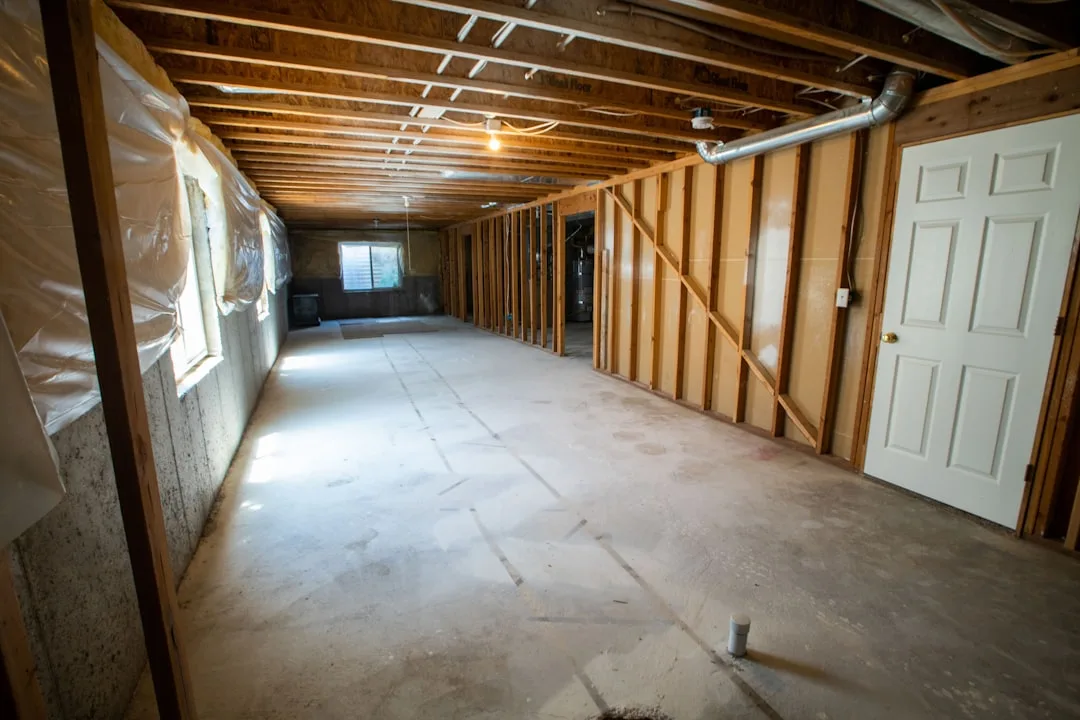
Here’s the sequence that nobody writes out plainly: safety, then infrastructure, then aesthetics. In that order. Every time. I learned this the way most designers learn expensive lessons — by watching a client skip step two because they were impatient to get to step five, and then calling me eight months later because their floating floor was buckling and the rug smelled like a wetland.
When people search for unfinished basement bedroom ideas, they almost always land on pages full of paint colors and platform bed frames. Those pages aren’t wrong — they’re just answering the wrong question first. The ideas that actually work are the ones built on a foundation that’s already been made safe and legal. Everything else is decoration on top of a problem.
Step one is always the tests. Radon kit deployed, moisture meter readings taken at multiple points on the concrete floor and lower walls, visual inspection for efflorescence and any historical water staining at the slab edge. Document everything with photos. This is your baseline.
Step two addresses the building envelope — the walls and floor — before anything else is introduced. Waterproofing paint like Drylok can handle minor moisture transmission on masonry walls. For anything more than minor, a crystalline waterproofing membrane applied to the interior face of the wall is the next tier — products like Xypex or Thoroseal penetrate the concrete matrix and block water at the capillary level rather than just coating the surface. For active water intrusion — meaning water you can see moving or pooling after rain — interior drain tile systems and a sump pump are the real solution, and no amount of paint will substitute for that.
Article continues with remaining steps as outlined above.
Frequently Asked Questions
Can I use an unfinished basement as a bedroom without permits?
Technically, nothing stops you from putting a mattress in an unfinished basement tonight. What stops it from being a legal bedroom — the kind that counts toward your home’s square footage, appears on permit records, and qualifies as an occupiable sleeping space under your homeowner’s insurance — is the permitting process. Sleeping in an unpermitted space is a personal risk. Selling a home with an unpermitted basement bedroom, or filing a claim after an incident in one, is a financial and legal risk. Most jurisdictions require an egress window, minimum ceiling height, heat source, and smoke and CO detection before they’ll issue a certificate of occupancy for a basement sleeping room.
What’s the minimum ceiling height for a basement bedroom?
The International Residential Code sets the minimum at 7 feet of clear height for a habitable room. Some jurisdictions have adopted local amendments that allow 6’8″ under specific conditions, but those are exceptions rather than the rule. Beams, ducts, and dropped soffits that reduce clearance below the minimum — even in portions of the room — can trigger a code violation. If your basement ceiling currently sits at 6’6″ or lower, the two options are mechanical excavation of the slab (expensive but effective) or reclassifying the project as a non-bedroom sleeping area, which carries its own insurance and resale implications.
How do I make an unfinished basement bedroom feel less like a basement?
The biggest visual cues that read as “basement” are low or dropped ceilings, small or absent windows, cold floors, and flat overhead lighting. Addressing them in order: paint exposed joists or install a drywall ceiling at the maximum possible height; add egress window wells with reflective liners to maximize light; install LVP over a moisture barrier and layer with area rugs; and plan lighting in three layers — overhead recessed or track, bedside task lighting, and at least one accent source. Warm color temperatures (2700K–3000K) and light wall colors do more work per dollar than almost any furniture choice.
What kind of flooring works best for a basement bedroom?
Luxury vinyl plank with an attached underlayment is the most practical choice for below-grade sleeping spaces. It handles moisture vapor better than hardwood or laminate, installs as a floating floor without adhesives that can off-gas, and has improved significantly in visual quality over the past decade — current LVP products are difficult to distinguish from real wood at normal viewing distance. Engineered hardwood is viable if a concrete moisture vapor emission test confirms the slab is within acceptable limits. Wall-to-wall carpet in a basement bedroom is the highest-risk flooring choice: it traps moisture, amplifies any existing dampness, and is the first material to develop odor problems if conditions change seasonally.
How much does it realistically cost to convert an unfinished basement into a legal bedroom?
The honest range is $10,000–$35,000 for a compliant, finished basement bedroom — and that spread is wide for a reason. The biggest cost variables are egress window installation (typically $2,500–$5,000 per window including excavation and well), waterproofing (anywhere from $500 for paint-level treatment to $8,000–$15,000 for a full interior drain tile system), and ceiling height remediation if needed (slab excavation runs $10,000–$30,000 depending on square footage). Electrical, HVAC extension, framing, insulation, drywall, flooring, and finishes layer on top of that baseline. A basement that already has adequate ceiling height, no active water intrusion, and acceptable radon levels can come in at the lower end. One that needs all three addressed lands at the higher end or beyond it.