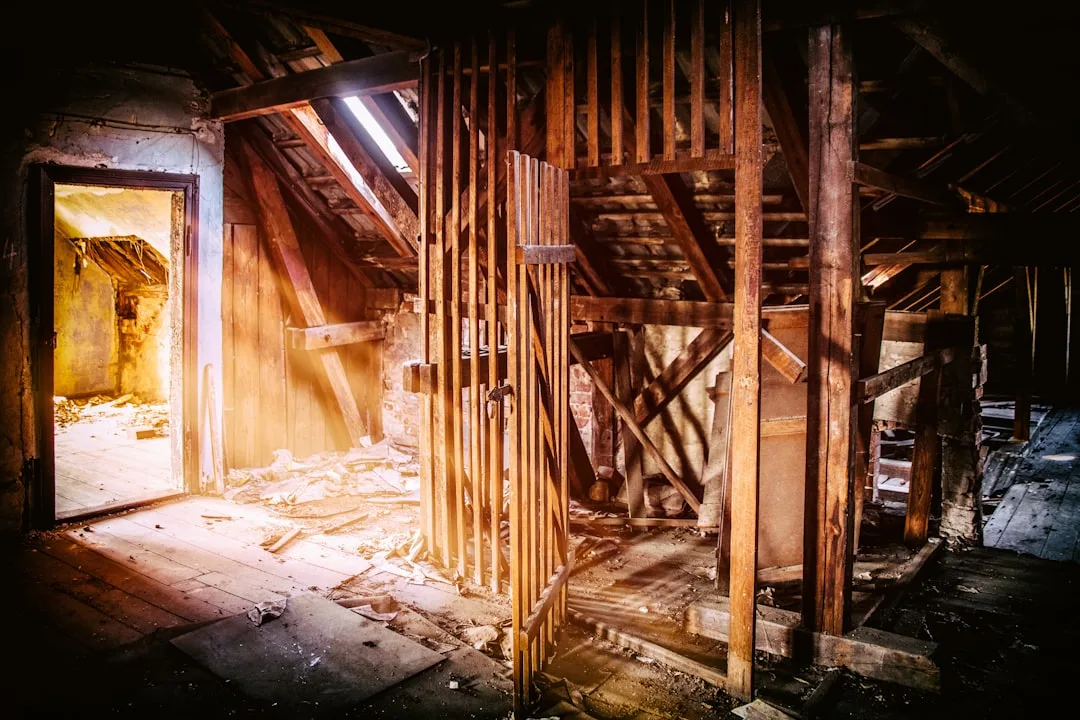
The average attic bedroom renovation costs $47,000 — but most homeowners who go over budget hit the same three surprises that no design blog bothered to mention before demolition began. They found knob-and-tube wiring that a building inspector won’t pass. They discovered their floor joists were sized for storage, not sleeping. They learned their HVAC system couldn’t reach the third floor without a full duct redesign. None of those problems are unusual. Every one of them is predictable — which means every one of them could have changed the budget before the first wall came down.
Quick Answer
The average attic conversion costs $47,000 — but most homeowners who go over budget hit the same three surprises that no design blog bothered to mention before demolition began.
This is what I kept seeing across eleven years of residential work in Chicago and New York: clients who had done their research, watched the renovation shows, printed the Pinterest boards, and still walked into demolition day blind to the structural and mechanical realities sitting above their second-floor ceilings. This article exists to fix that.
Why Most Attic Conversions Go Over Budget Before Demolition Even Starts
In This Article
- Why Most Attic Conversions Go Over Budget Before Demolition Even Starts
- The 7 and 7 Rule Explained — and Why Your Attic Might Already Fail It
- The Permit and Inspection Reality That Contractors Don’t Volunteer
- Designing Around Sloped Walls Instead of Fighting Them
- Mechanical Systems: What Actually Keeps an Attic Bedroom Comfortable Year-Round
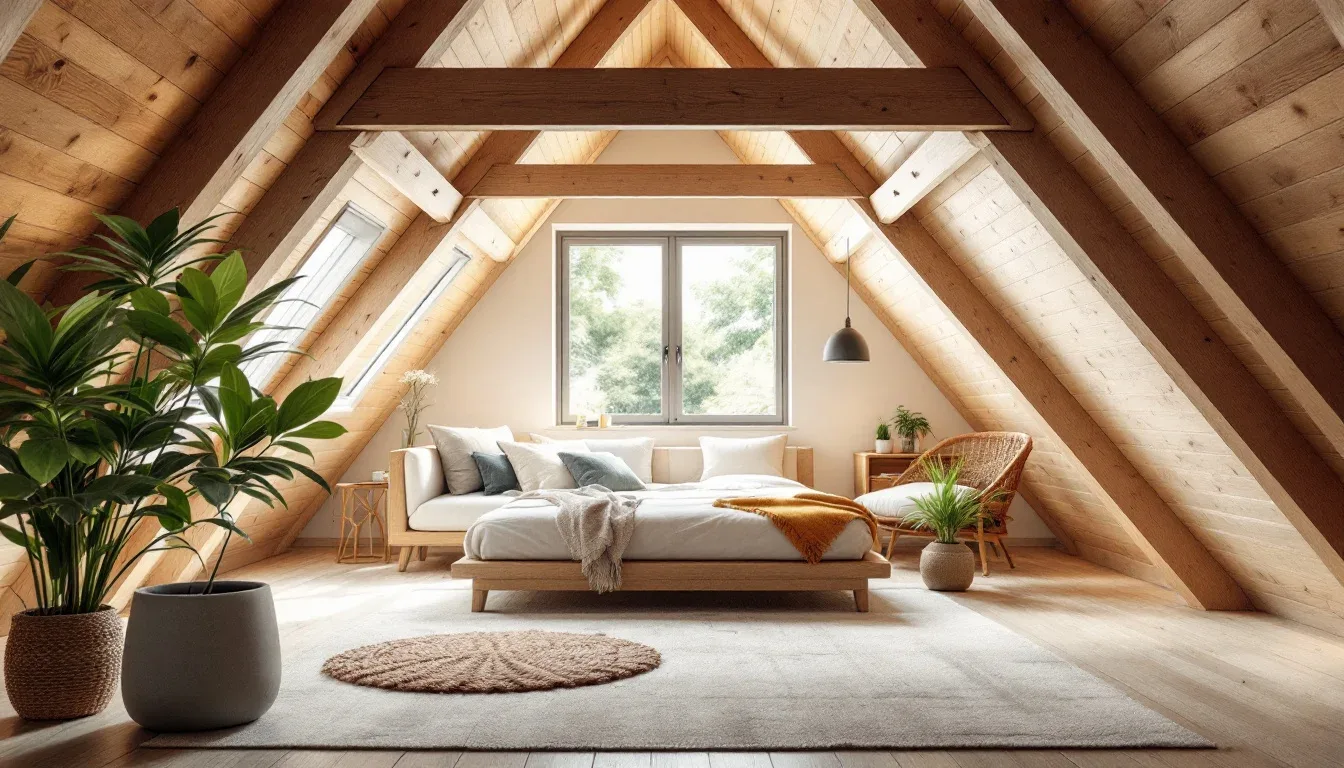
Attic renovation cost estimates float in a range so wide — $20,000 to $95,000 — that the number is almost useless without context. What actually separates a $22,000 project from a $90,000 one isn’t finish quality or square footage alone. It’s which layers of the building you have to touch to make the space legally habitable.
The three cost tiers break down like this:
- Structural-only ($20,000–$35,000): You’re reinforcing floor joists, adding rigid insulation, and framing knee walls. No HVAC extension, no egress work, no plumbing. This tier assumes the space will become a home office, hobby room, or storage loft — not a bedroom.
- Livable-but-basic ($35,000–$60,000): You’re finishing the space as a functional room with drywall, flooring, lighting, and a mini-split for temperature control. Egress may be achieved through an existing window if geometry permits. Most mid-range attic bedrooms land here.
- Fully finished with HVAC and egress ($60,000–$95,000+): You’re extending ductwork or installing a zoned HVAC system, adding a dormer for egress or code-compliant headroom, and potentially adding a bathroom. This is the tier where most families trying to create a proper guest suite or primary bedroom end up — often with surprise.
Homeowners typically pay $100–$200 per square foot for attic bedroom renovation projects, and projects that require full egress window installation and HVAC extension average roughly 40% higher than those that don’t. That gap isn’t arbitrary. Each of those systems requires separate permits, separate contractors, and separate inspection timelines that stack against each other in ways no single-line estimate captures.
The variables that determine your tier aren’t aesthetic. They are:
- Floor joist load capacity — Attic joists are commonly 2×6 framing designed for 10 PSF (pounds per square foot) live load. Bedroom occupancy requires 30 PSF minimum under IRC. Sister joists or full replacement add cost immediately.
- Existing stair access — A pull-down attic stair does not meet code for a habitable room in most jurisdictions. A proper staircase requires a floor opening, a structural header, and roughly 35–45 square feet of floor space below — space that your second floor has to give up.
- HVAC extension complexity — Trunk-and-branch duct systems rarely have reserve capacity for a third floor. The closer your attic is to the air handler, the worse, ironically, because the return-air path is almost always compromised at that height.
Then there are the hidden discovery costs — things that only surface when demo reveals what’s actually inside the roof assembly. Knob-and-tube wiring is the most common and most expensive surprise. Inadequate insulation R-values (many pre-1980 homes have R-11 or less in the roof cavity when R-49 is current code) are the second. Substandard roof sheathing — particularly 3/8-inch boards on older homes — may not support the fastener loads required for new roofing, skylights, or dormers.
Actionable takeaway: Before you talk to a general contractor, hire a structural engineer for a $400–$800 attic assessment. They will tell you which tier you’re actually in — and that number will be more accurate than any ballpark a contractor gives you over the phone.
The 7 and 7 Rule Explained — and Why Your Attic Might Already Fail It
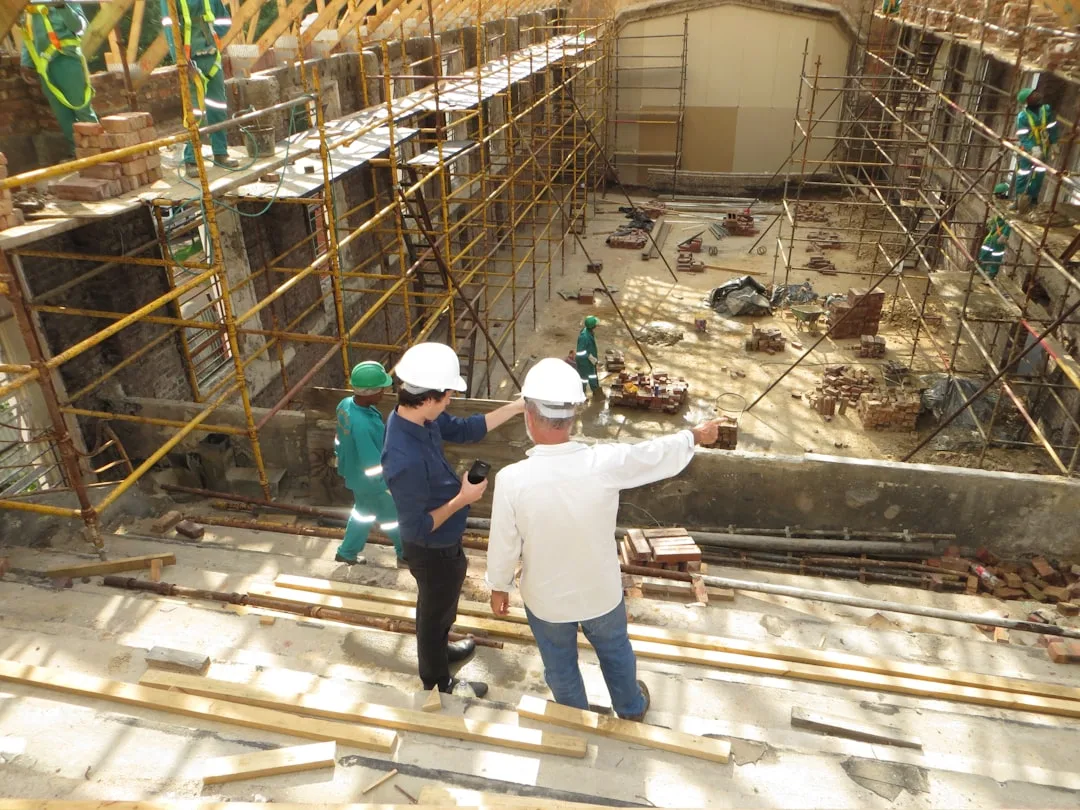
Here is the rule, plainly: under the International Residential Code, a space qualifies as habitable — meaning it can legally be used and advertised as a bedroom — only if it has a minimum ceiling height of 7 feet over at least 7 feet of floor width. That 7×7 area doesn’t have to span the entire room. It has to exist somewhere in the room, forming a usable core zone where a person can stand and move without ducking.
Most design content mentions this rule in a single sentence. What it doesn’t explain is how to actually measure your space against it — and where people get it wrong.
How to measure correctly:
- Stand at the tallest point of your attic, directly under the ridge. Measure straight down to the subfloor. That’s your peak height.
- From that peak, measure 3.5 feet horizontally in both directions (toward each exterior wall). Where the ceiling drops to exactly 7 feet, stop. That’s the outer boundary of your compliant floor zone.
- The distance between those two outer points is your usable floor width. If it’s less than 7 feet, you fail the rule.
- Knee walls — the short vertical walls framed along the sloped ceiling perimeter — do not count toward the 7-foot width measurement if they’re under 7 feet tall. They are considered part of the sloped zone, not the habitable zone.
I’ve walked attics that looked perfectly usable from a standing position and measured out to only 5.5 feet of compliant width. The pitch of the roof was the culprit — a steeper pitch gives you more vertical height at the ridge but drops away faster, giving you less horizontal usable area. Shallow-pitched roofs do the opposite: comfortable headroom in the center, fine, but the compliant zone can be remarkably narrow.
What happens when you fail the rule:
- Raise the roofline: Structurally intensive, expensive ($30,000–$70,000), and rarely the right answer unless you’re already doing major exterior work.
- Add a shed dormer: The most cost-effective path to gaining compliant square footage. A shed dormer extends the roofline horizontally, raising the ceiling height over a portion of the attic floor. Dormers range from $2,500 for small gable dormers to $25,000 for large shed dormers — and shed dormers deliver more usable floor space per dollar than gable or eyebrow versions.
- Reclassify the space: If you can’t meet the 7×7 rule, the space becomes a loft, bonus room, or flex space. It cannot be listed as a bedroom for appraisal or real estate purposes. That matters more than most people realize — the difference between a three-bedroom and four-bedroom classification on an appraisal can affect resale value by $15,000–$40,000 depending on your market.
The Permit and Inspection Reality That Contractors Don’t Volunteer
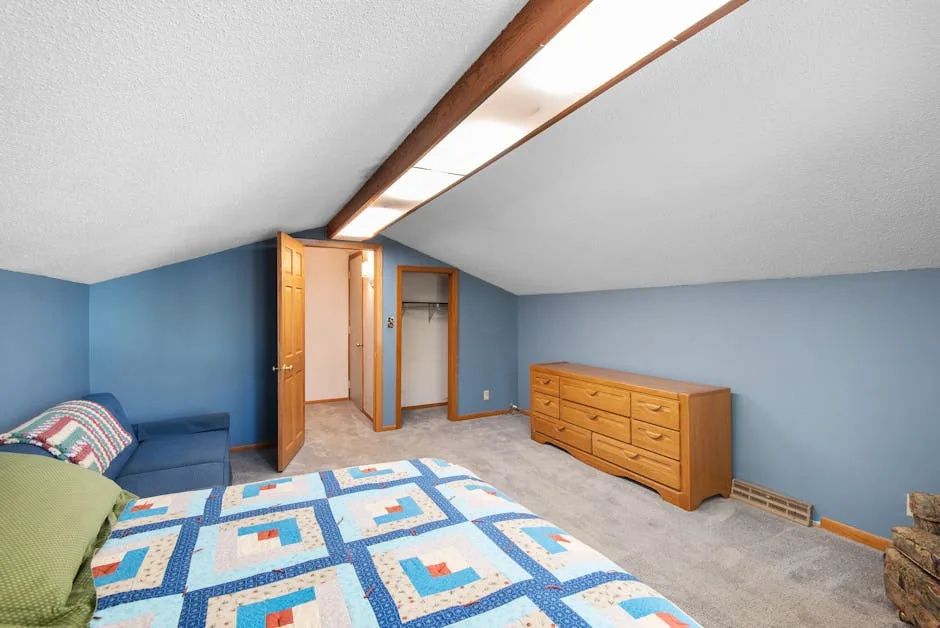
Every legitimate attic bedroom renovation requires permits. That sentence sounds obvious, but the number of homeowners who accept a contractor’s suggestion to “keep it simple and skip the permit process” is high enough that it deserves its own section.
Here’s what unpermitted attic conversions actually cost you:
During sale: A buyer’s home inspector will flag an unpermitted bedroom conversion. Their lender may require the space be either permitted retroactively or removed from the listing description. Retroactive permitting — where you pull a permit after work is complete — almost always requires opening walls to expose work that’s already been finished, re-inspecting, and potentially redoing work that didn’t meet code. The cost of retroactive permitting routinely exceeds the cost of the original permit by a factor of three or four.
During insurance claims: Homeowners insurance policies typically exclude damage to unpermitted structures or unpermitted additions. If a fire starts in an unpermitted attic bedroom conversion, the insurer has grounds to deny the claim on that portion of the house.
What the permit process actually involves for an attic bedroom renovation:
- Building permit: covers framing, structural modifications, insulation, drywall
- Electrical permit: required for any new circuits, panel upgrades, or wiring changes
- Mechanical permit: required if you’re extending HVAC or installing a mini-split system
- Plumbing permit: only if you’re adding a bathroom
In most mid-sized cities, the combined permit cost for a full attic bedroom renovation runs $800–$2,500. That’s a small number relative to the total project cost, and there is no scenario where skipping it works out better in the long run.
Inspection sequencing matters too. Framing inspections must happen before insulation goes in. Electrical rough-in inspections must happen before drywall closes the walls. Missing an inspection sequence means tearing open finished work — which is the single most avoidable cost escalation in any residential renovation. Build the inspection schedule into your project timeline before your contractor starts framing.
Designing Around Sloped Walls Instead of Fighting Them

Most attic bedroom renovation mistakes happen at the design stage, not the construction stage. Homeowners try to impose a standard rectangular room layout onto a space that physically can’t accommodate it — and then spend money on workarounds that a smarter initial layout would have avoided entirely.
Sloped walls are not a problem. They are a fixed constraint. Designing around a fixed constraint is faster and cheaper than trying to change it.
Built-in storage along the knee wall zone is the most effective use of the under-slope area. The space behind a knee wall — typically 3 to 5 feet of depth with a ceiling that slopes from roughly 4 feet down to zero — is useless as open floor space but excellent for built-in drawers, low bookshelves, or closet systems with angled hanging rods. Custom built-ins in this zone run $150–$300 per linear foot installed. That’s not cheap, but it recovers dead space and eliminates the need for freestanding furniture that would otherwise be crammed awkwardly against the slope.
Bed placement along the slope works better than most people expect. A standard bed frame is 25 inches tall at the mattress surface. A sleeping person is horizontal. If your knee wall is 48 inches tall and you position the headboard against the knee wall, you gain the full 7-foot compliant zone above the foot of the bed — which is where you actually need standing clearance. This layout reclaims roughly 30–40 square feet of floor space that a centered-room placement would waste.
Skylight placement changes everything about livability. An attic bedroom without natural light from above feels like a finished basement regardless of how well it’s decorated. A single 24×48-inch skylight costs $900–$2,200 installed and does more for the perceived size and comfort of the space than any lighting fixture. Position skylights over the 7-foot compliant zone — not over the sloped perimeter — so you’re adding light where you’re actually spending time in the room. Fixed skylights are cheaper and have fewer leak points than vented versions; if ventilation is your goal, the mini-split handles that better than a skylight anyway.
Flooring continuity matters more in attic bedrooms than in any other room. Because the geometry is broken up — knee walls, slopes, dormers, built-ins — the floor is the one horizontal element that reads as continuous. Interrupting it with transitions, changes in material, or misaligned planks makes the space feel smaller and more fragmented. Run a single material — engineered hardwood or luxury vinyl plank — wall to wall, including under the knee wall built-ins if you’re installing them, before the cabinetry goes in. The extra 40–60 square feet of flooring material costs less than the visual confusion of a patched or mismatched floor.
Mechanical Systems: What Actually Keeps an Attic Bedroom Comfortable Year-Round
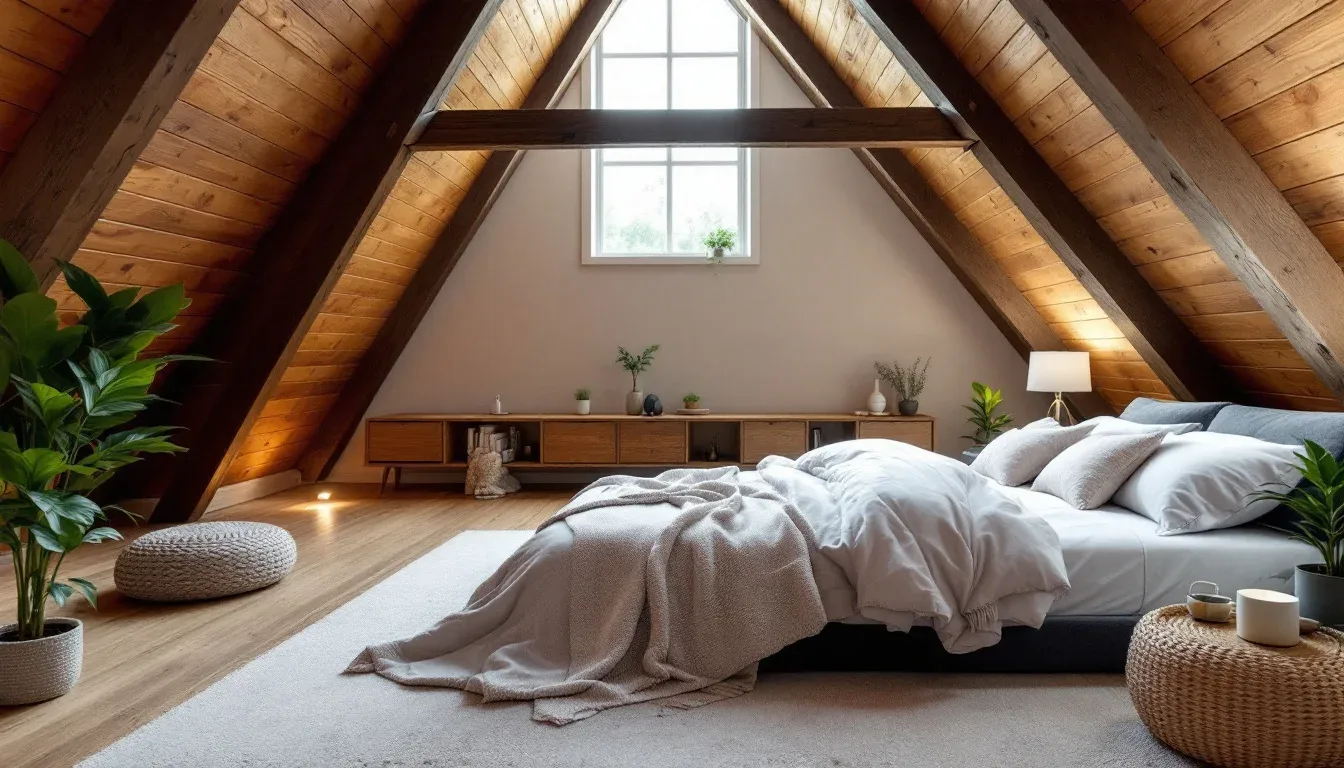
Temperature control is the most common source of long-term dissatisfaction in attic bedroom renovations. Homeowners who spend $50,000 on a beautiful space and then discover it’s 90°F in July and 55°F in January are not rare. The problem is almost always rooted in decisions made before the finish work began.
Insulation is the foundation, not the HVAC system. An attic bedroom renovation that installs a powerful mini-split but uses inadequate insulation will run that mini-split constantly and still fail to maintain comfortable temperatures during temperature extremes. Current IRC code requires R-49 in roof assemblies in most climate zones. Many contractors will install R-30 because it’s cheaper and easier to frame — and it will cost you in utility bills and comfort for the life of the space.
The most effective insulation strategy for an attic bedroom renovation uses two layers:
- Closed-cell spray foam on the underside of the roof deck: 2–3 inches provides an air barrier and roughly R-14 per inch. It also prevents the moisture infiltration that causes rot and mold in roof assemblies.
- Rigid mineral wool or polyiso boards between and over the rafters: brings the total assembly to R-49 or better without requiring excessively deep rafter cavities.
This combination runs $3–$6 per square foot installed, which is more than batt insulation alone. It is consistently worth the cost difference.
Mini-split systems vs. extending central HVAC: The right answer depends on your existing system’s capacity, not on cost alone. If your air handler has reserve capacity — defined as unused tonnage relative to your current conditioned square footage — extending ductwork is cheaper upfront ($2,000–$5,000) and eliminates a separate piece of equipment to maintain. If your system is running at or near capacity, adding the attic load will degrade performance throughout the house. A $150 Manual J load calculation from an HVAC engineer will tell you which situation you’re in before you commit to either path.
Mini-split systems for attic bedroom use typically run $2,500–$5,000 installed for a single-zone unit. They are more efficient than extended duct systems in most configurations, provide independent temperature control, and handle dehumidification better — which matters in an attic space where moisture management is a year-round concern.
Frequently Asked Questions About Attic Bedroom Renovation
How do I know if my attic can be converted into a bedroom without a full structural overhaul?
The two factors that determine this most quickly are floor joist sizing and roof pitch. If your attic has 2×8 or larger floor joists, they can likely be sistered to meet the 30 PSF live load requirement for bedroom occupancy without full replacement — a meaningful cost difference. If your roof pitch is 7-in-12 or steeper, you have a better chance of meeting the 7×7 headroom rule without a dormer addition. A structural engineer can confirm both in a single site visit. Don’t rely on a contractor’s eyeball estimate for either of these — the decisions that follow are too expensive to base on a guess.
What is the difference between an attic bedroom and an attic loft for real estate purposes?
A bedroom, for appraisal and MLS listing purposes, must meet three conditions in most jurisdictions: it must have a minimum square footage (typically 70–80 square feet), it must meet the 7×7 headroom rule, and it must have a code-compliant egress window or door. A space that fails any one of these conditions cannot be listed as a bedroom. Lofts, bonus rooms, and flex spaces have no standard definition in residential appraisal — they add value, but less predictably and usually less per square foot than a classified bedroom. If you’re converting an attic specifically to add bedroom count for resale, confirm the egress and headroom requirements with your local building department before you design the space.
How long does an attic bedroom renovation typically take from permit to certificate of occupancy?
A straightforward attic bedroom renovation — no dormer, no bathroom, mini-split for HVAC — typically runs 8–14 weeks from permit approval to final inspection in most markets. Add 3–5 weeks for a shed dormer. Add another 4–6 weeks if you’re adding a full bathroom with plumbing rough-in. Permit approval timelines vary widely by municipality: some jurisdictions turn around residential permits in two weeks, others take ten. Build that variability into your schedule, especially if you’re coordinating the attic conversion with a school year, a family event, or a planned home listing.
Can I do any part of an attic bedroom renovation myself to reduce costs?
Yes, but the scope of legitimate DIY work is narrower than most homeowners expect. Demolition, painting, finish trim, and flooring installation are reasonable DIY tasks that save real money. Framing, electrical, plumbing, and HVAC work all require licensed contractors in most jurisdictions for permitted work — and attempting those systems yourself, then having an inspector flag the work, typically costs more in remediation than the contractor fee would have been. The highest-value DIY contribution in an attic bedroom renovation is project management: coordinating inspection scheduling, material deliveries, and subcontractor sequencing can save $3,000–$8,000 compared to paying a general contractor to manage those logistics.
Does adding an attic bedroom increase property taxes?
In most jurisdictions, yes — adding habitable square footage triggers a reassessment. The magnitude varies considerably. In high-value urban markets, converting an unfinished attic to a legal bedroom can increase the assessed value by $40,000–$80,000, which translates to a few hundred dollars per year in additional property tax depending on your local rate. That’s not a reason to avoid the renovation, but it’s a carrying cost worth factoring into your long-term return-on-investment calculation. Contact your local assessor’s office before breaking ground — some jurisdictions have homestead exemptions or phased reassessment timelines that affect when and how the increase takes effect.
How do I know if my attic can be converted into a bedroom without a full structural overhaul?
The two factors that determine this most quickly are floor joist sizing and roof pitch. If your attic has 2×8 or larger floor joists, they can likely be sistered to meet the 30 PSF live load requirement for bedroom occupancy without full replacement — a meaningful cost difference. If your roof pitch is 7-in-12 or steeper, you have a better chance of meeting the 7×7 headroom rule without a dormer addition. A structural engineer can confirm both in a single site visit. Don’t rely on a contractor’s eyeball estimate for either of these — the decisions that follow are too expensive to base on a guess.
What is the difference between an attic bedroom and an attic loft for real estate purposes?
A bedroom, for appraisal and MLS listing purposes, must meet three conditions in most jurisdictions: it must have a minimum square footage (typically 70–80 square feet), it must meet the 7×7 headroom rule, and it must have a code-compliant egress window or door. A space that fails any one of these conditions cannot be listed as a bedroom. Lofts, bonus rooms, and flex spaces have no standard definition in residential appraisal — they add value, but less predictably and usually less per square foot than a classified bedroom. If you’re converting an attic specifically to add bedroom count for resale, confirm the egress and headroom requirements with your local building department before you design the space.
How long does an attic bedroom renovation typically take from permit to certificate of occupancy?
A straightforward attic bedroom renovation — no dormer, no bathroom, mini-split for HVAC — typically runs 8–14 weeks from permit approval to final inspection in most markets. Add 3–5 weeks for a shed dormer. Add another 4–6 weeks if you’re adding a full bathroom with plumbing rough-in. Permit approval timelines vary widely by municipality: some jurisdictions turn around residential permits in two weeks, others take ten. Build that variability into your schedule, especially if you’re coordinating the attic conversion with a school year, a family event, or a planned home listing.
Can I do any part of an attic bedroom renovation myself to reduce costs?
Yes, but the scope of legitimate DIY work is narrower than most homeowners expect. Demolition, painting, finish trim, and flooring installation are reasonable DIY tasks that save real money. Framing, electrical, plumbing, and HVAC work all require licensed contractors in most jurisdictions for permitted work — and attempting those systems yourself, then having an inspector flag the work, typically costs more in remediation than the contractor fee would have been. The highest-value DIY contribution in an attic bedroom renovation is project management: coordinating inspection scheduling, material deliveries, and subcontractor sequencing can save $3,000–$8,000 compared to paying a general contractor to manage those logistics.
Does adding an attic bedroom increase property taxes?
In most jurisdictions, yes — adding habitable square footage triggers a reassessment. The magnitude varies considerably. In high-value urban markets, converting an unfinished attic to a legal bedroom can increase the assessed value by $40,000–$80,000, which translates to a few hundred dollars per year in additional property tax depending on your local rate. That’s not a reason to avoid the renovation, but it’s a carrying cost worth factoring into your long-term return-on-investment calculation. Contact your local assessor’s office before breaking ground — some jurisdictions have homestead exemptions or phased reassessment timelines that affect when and how the increase takes effect.