
The cost of turning an attic into a bedroom hits differently when you’re standing inside the finished space than when you’re reading the estimate. An unpermitted attic bedroom can void your homeowner’s insurance, block your home sale, and still cost you $40,000 to build — and most homeowners don’t find out until it’s too late. The attic conversion industry is full of optimistic estimates and tidy cost breakdowns that make this project look approachable. What those breakdowns skip — consistently, almost universally — is the compounding effect of hidden costs, failed inspections, and structural surprises that turn a $35,000 project into a $60,000 one by the time the inspector signs off.
Quick Answer
An unpermitted attic bedroom can void your homeowner’s insurance, block your home sale, and still cost you $40,000 to build — and most homeowners don’t find out until it’s too late.
This isn’t a guide written from a spreadsheet. It’s written from eleven years of watching homeowners — and occasionally contractors — make expensive assumptions about attic space that should have been interrogated months earlier.
What Does It Really Cost to Turn an Attic Into a Bedroom?
In This Article
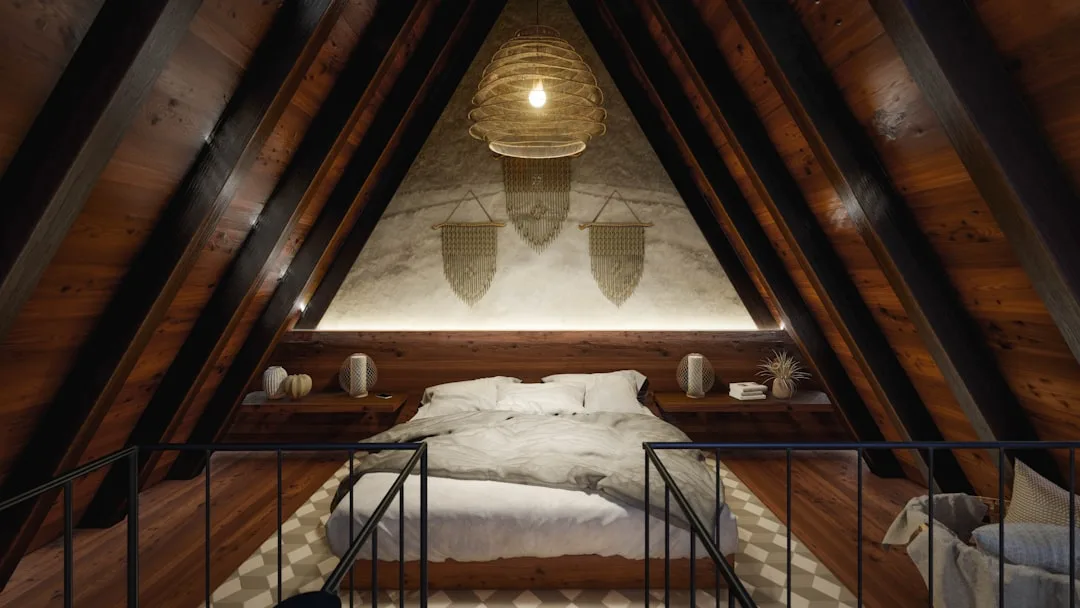
Most homeowners searching for attic conversion costs are hoping to see a low number they can hold onto. The real answer is less satisfying: the national range runs from $20,000 to $95,000, with most homeowners in mid-range markets landing between $35,000 and $55,000 for a fully functional, code-compliant bedroom. That midpoint number assumes you have a structurally sound attic, reasonable access to HVAC routing, and nothing catastrophic hiding in the floor joists.
Understanding the full cost of turning an attic into a bedroom means looking past the finish work. A “basic finishing job” — drywall, flooring, and a couple of recessed lights — sounds like the budget version, but it’s only achievable if the structural and mechanical groundwork is already there. In most attics, it isn’t. The moment you add egress, structural reinforcement, a staircase, and a dedicated HVAC solution, you’re no longer doing a finishing job. You’re doing a conversion.
Older homes change the math significantly. Pre-1980 construction typically adds 20–30% to the base cost because outdated framing, knob-and-tube wiring remnants, and compressed insulation all need to be addressed before any finish work begins. I once scoped a 1958 bungalow attic in Wicker Park — clean, dry, no visible damage — and the structural and electrical remediation alone came in at $18,000 before a single sheet of drywall was ordered.
Labor is the variable most homeowners underestimate. Depending on your region, it accounts for 40–60% of the total project cost. That means in a $50,000 conversion, up to $30,000 is labor — and that number moves faster than material costs when timelines slip or additional work gets discovered mid-project.
Here’s how the cost spectrum breaks down by project scope:
- Basic finish-out (drywall, flooring, lighting — structure already compliant): $20,000–$35,000
- Mid-range conversion (egress window, HVAC mini-split, new staircase, full finish): $35,000–$55,000
- Full structural conversion (joist reinforcement, dormer addition, custom staircase, full MEP): $55,000–$95,000+
And here’s what drives a project from one tier to the next — factors that are easy to overlook until you’re already committed to a contractor:
- Headroom clearance: IRC code requires a minimum 7 feet 6 inches of ceiling height over at least 50% of the finished floor area. Attics that fall short require either a dormer addition or structural raising of the roofline — both expensive paths.
- Roof framing type: Stick-framed roofs (common pre-1980) are far easier to convert than engineered truss systems. Trusses carry roof loads through a web of interconnected members; cutting them for living space requires an engineered redesign and temporary shoring that adds $4,000–$12,000 to the project before finish work begins.
- Existing access: A pull-down stair is not a code-compliant attic bedroom staircase. If there’s no permanent stair in place, that’s a guaranteed cost line item regardless of what else the attic needs.
- Electrical service location: The farther your attic is from the main panel, the longer the home run for circuits — and the higher the electrical cost. Three-story homes in particular can see electrical costs 30–40% higher than equivalent work in a two-story house simply due to wire length and routing complexity.
Actionable takeaway: Before you request any contractor bids, identify which tier your attic realistically falls into. If you don’t know your current joist sizing, headroom clearance, and HVAC capacity, you don’t yet have enough information to evaluate any estimate you receive.
The Hidden Costs That Blow Most Attic Bedroom Budgets
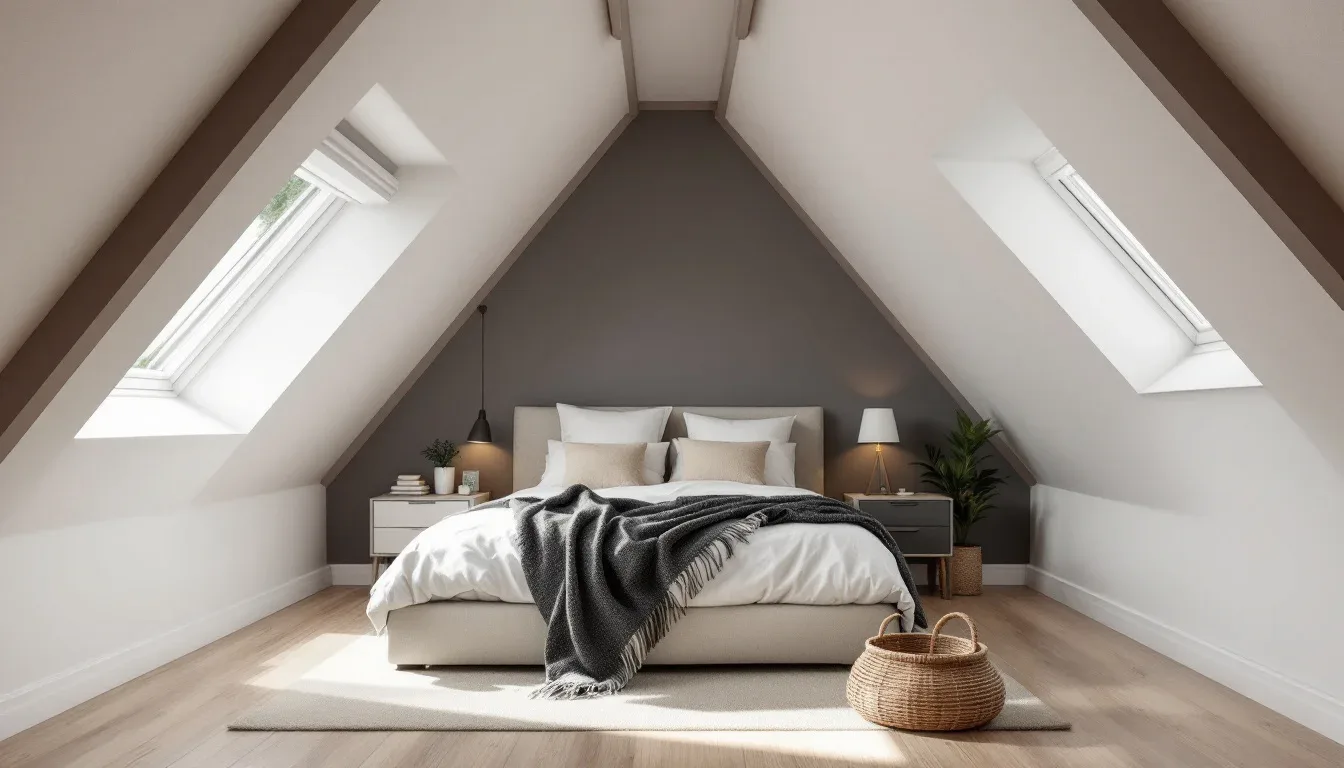
Here’s where the optimistic estimates fall apart. Every line-item breakdown I’ve ever seen from a big renovation site lists the obvious categories — insulation, drywall, flooring — and stops there. What they don’t account for are the costs that don’t appear until the contractor is already inside your attic with a flashlight.
Floor joist reinforcement is the most common budget surprise. Attic floors are typically framed for storage loads, not the 40 pounds per square foot live load required for a habitable bedroom. When those joists are 2x6s — which they often are in homes built before 1990 — they need to be sistered or fully replaced. That work runs $3,000 to $10,000 depending on span length and access complexity. It is not optional. It is not something you can defer to a second phase.
Thermal bridging is the one nobody talks about until there’s mold. Inadequate insulation planning — specifically, the failure to address rafter cavities and thermal breaks — leads to condensation that takes 18 to 24 months to show up as visible damage. Spray foam insulation costs more upfront at $1.50 to $4.50 per square foot installed, but it seals the thermal envelope in a way that batt insulation between rafters simply cannot. I’ve seen “finished” attic bedrooms that required gut remediation within three years because the insulation plan was wrong from day one.
The staircase has a spatial cost that never shows up in cost estimates. A code-compliant staircase needs a minimum 36-inch width, a proper headroom clearance of 6 feet 8 inches, and a landing at top and bottom. Finding the square footage for that staircase — inside your attic and in the room below — is a real design problem. You may lose a closet. You may lose a corner of a bedroom. That trade-off has value, and it belongs in your decision calculus even if no contractor puts a dollar sign on it.
Other hidden costs worth building into your contingency budget:
- Permit re-inspection fees: Failed inspections on egress window dimensions or headroom compliance add $150–$400 per re-inspection, plus the cost of whatever correction triggered the failure
- Mini-split installation: When extending existing ductwork isn’t feasible — and it often isn’t, especially in homes with near-capacity HVAC systems — a mini-split unit runs $1,500 to $5,000 installed, depending on BTU rating and whether you need a multi-zone head unit
- Electrical panel upgrade: If your panel is under 150 amps and the attic adds meaningful load, an upgrade may be required before the inspector signs off — typically $1,500 to $3,500
- Dormer addition: When headroom is the limiting factor, a shed or gable dormer is often the only structural solution. Dormers run $15,000–$35,000 depending on size and roofline complexity — and they push the project into a different permit category in many jurisdictions
- Fire egress window: Code requires a window with a minimum 5.7 square feet of clear opening, a sill no higher than 44 inches from the floor, and minimum dimensions of 20 inches wide by 24 inches tall. If your existing attic windows don’t meet that spec, new window installation in a roof plane costs $800–$2,500 per opening, not counting any framing modifications
- Soundproofing between floors: Often overlooked entirely, but an attic bedroom directly above a main living area will transmit every footstep without proper decoupling. Adding acoustic insulation and resilient underlayment to the floor assembly costs $1,200–$3,500 depending on square footage and assembly type
- Structural engineering fees: Any time joists are modified, trusses are cut, or a dormer is added, you need a stamped structural drawing. Engineering fees typically run $800–$2,500 and are non-negotiable with a code-enforcement inspector who takes their job seriously
Actionable takeaway: Add a 20% contingency line to any attic conversion budget before you sign a contract. Not 10%. In eleven years, I watched maybe twice where an attic project came in under estimate. The contingency isn’t pessimism — it’s just accurate.
Is It Worth Turning an Attic Into a Bedroom?
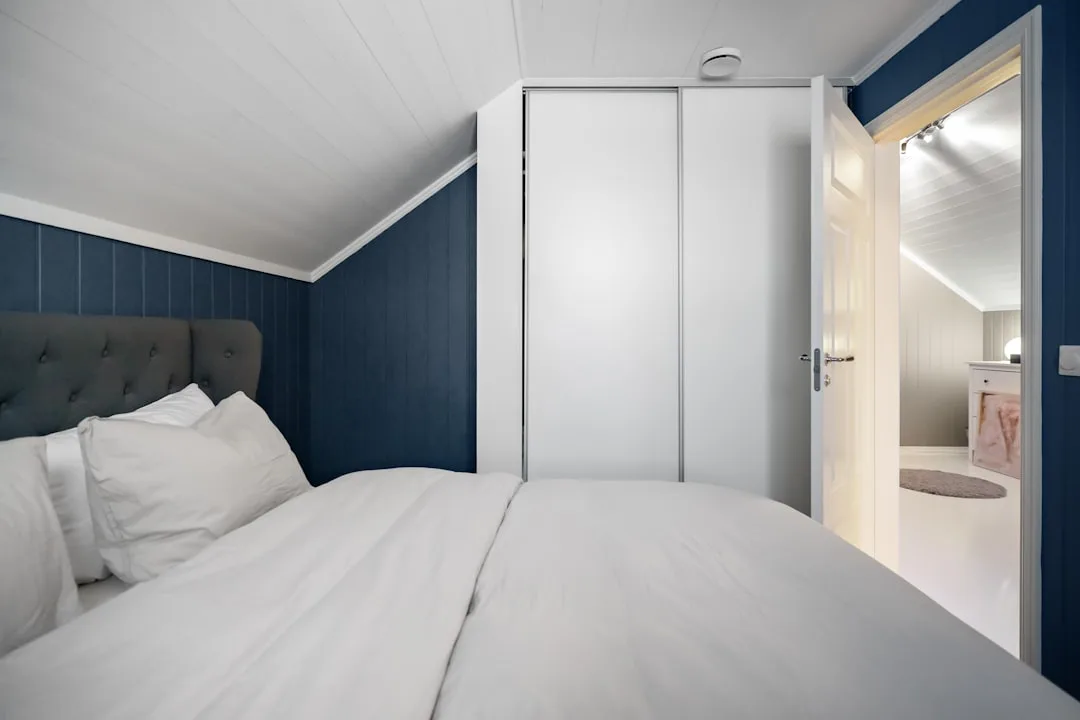
The financial case is real, but it’s conditional. Attic conversions return an average of 56–78% of project cost at resale, according to Remodeling Magazine’s Cost vs. Value data — which puts it in the same tier as bathroom additions and well above what you’d recover from a kitchen remodel in most markets. In high-density urban areas where square footage is genuinely scarce, that ROI can push past 80%.
The word “bedroom” does specific work in real estate. A finished loft or bonus room adds appeal; a legally designated bedroom adds to the appraised square footage and changes how comparable sales are selected during appraisal. In practical terms, a code-compliant bedroom addition can increase appraised value by $15,000–$40,000 depending on your market, your home’s existing bedroom count, and local demand. Going from two bedrooms to three is a bigger jump than going from four to five — the scarcity of that third bedroom in certain price brackets has genuine market leverage.
The non-financial case matters too, and it’s worth being honest about it. If you’re doing this project because you have a teenager who needs privacy, a parent moving in, or a home office situation that’s unsustainable, the value isn’t purely on the balance sheet. But that doesn’t mean the budget discipline changes. An over-budget conversion that strains your finances for three years isn’t a good outcome regardless of the ROI percentage.
Here’s a clear-eyed checklist for deciding whether the project makes sense for your specific situation:
- Your attic has adequate headroom (at least 7’6″ over 50% of the floor area, or you’re willing to budget for a dormer)
- Your home is in a market where bedroom count affects value — check comparable sales for 2BR vs. 3BR pricing in your zip code before assuming
- You plan to stay at least 5–7 years — conversion costs are hard to fully recover on a short timeline unless you’re in an appreciating market
- You have the contingency budget in place — converting an attic on a fixed budget with no flex room is a high-stress project that often ends with half-finished work
- You’ve confirmed zoning and permit requirements — some municipalities have height restrictions, historic district rules, or dormer restrictions that make legal attic conversions impossible without variance approval
- Your contractor has specific attic conversion experience — general remodelers frequently underbid attic work because they’ve never dealt with the HVAC and structural complexity specific to this project type
The projects I’ve seen go well share one characteristic: the homeowner did their structural and permit homework before getting excited about paint colors. The projects I’ve seen go badly almost always started with a contractor who came in low and a homeowner who didn’t ask why.
How to Vet Contractors for an Attic Bedroom Conversion
The contractor selection process for an attic conversion is different from hiring for a bathroom remodel or kitchen update. The scope complexity is higher, the permit risk is real, and the number of subcontractors involved — structural, HVAC, electrical, finish — means coordination failure is a genuine cost risk.
When interviewing contractors, the questions that separate experienced attic converters from general remodelers are specific:
- “How do you handle truss framing if we discover the attic is truss-built?” A contractor who has never dealt with engineered trusses will either blank on this or give you a vague answer about “working around them.” The right answer involves a structural engineer and temporary shoring.
- “What HVAC solution do you typically recommend for attic conversions in this climate?” If the answer is “we’ll extend your existing ductwork,” ask follow-up questions. Extending ductwork into an attic conversion works in maybe 30% of cases. A contractor who defaults to that answer without assessing your existing system capacity is setting up a future problem.
- “Can you show me a permit history on a recent attic conversion you completed?” Any contractor who balks at this question or can’t produce a closed permit is a risk you don’t need to take.
- “Who pulls the permits — you or the homeowner?” The right answer is the contractor. Homeowner-pulled permits shift liability in ways that aren’t always obvious and can complicate insurance claims during construction.
Beyond the interview, get at least three bids and compare them at the line-item level, not the total. A $38,000 bid and a $52,000 bid are not necessarily describing the same scope. Look specifically at whether structural engineering, egress, HVAC, and electrical panel capacity are explicitly included or excluded. The bids that look cheapest are often the ones with the most “allowances” — placeholder numbers that expand when the real scope becomes clear mid-project.
Frequently Asked Questions
How much does it cost to turn an attic into a bedroom in a typical suburban home?
For a mid-range suburban home built after 1980 with an accessible attic and functional HVAC capacity, the realistic cost of turning an attic into a bedroom runs $35,000–$55,000. That range assumes you need a new staircase, egress window, insulation upgrade, and basic electrical work but don’t have major structural surprises. Older homes, truss-framed roofs, or attics requiring dormers push costs toward $60,000–$95,000+.
Do I need a permit to convert my attic into a bedroom?
Yes, in virtually every U.S. jurisdiction. Converting an attic to habitable space triggers building, electrical, mechanical, and sometimes structural permits. Working without permits creates real problems: your homeowner’s insurance may not cover incidents in an unpermitted room, you’ll likely be required to disclose the unpermitted work during sale, and buyers’ lenders sometimes require unpermitted space to be remediated before closing. The permit process is not optional paperwork — it’s what makes the room legally a bedroom.
What is the minimum headroom required for an attic bedroom?
IRC code requires a minimum ceiling height of 7 feet 6 inches over at least 50% of the finished floor area, with no portion of the occupied floor area having a ceiling height below 5 feet counting toward the minimum. In practice, this means the flat, usable center section of your attic needs to hit 7’6″. Attics that fall short require a dormer addition or are not legally convertible to bedroom space without one.
What’s the difference between an attic bedroom and an attic loft or bonus room?
Legally, a bedroom must meet specific IRC requirements: minimum square footage (typically 70 square feet), minimum ceiling height, a code-compliant egress window, a smoke detector, and in most jurisdictions, access via a permanent staircase rather than a pull-down ladder. A “loft” or “bonus room” designation doesn’t require all of those conditions, but it also doesn’t count as a bedroom in an appraisal or MLS listing. If your goal is to add appraised value and increase your official bedroom count, cutting corners on the bedroom designation is a false economy.
How long does an attic bedroom conversion typically take?
From permit approval to final inspection, a mid-range attic conversion runs 6–12 weeks for the construction phase. Add 4–8 weeks for permit processing before that, and you’re looking at a 3–5 month timeline from contract signing to move-in under normal conditions. Projects that hit structural surprises, failed inspections, or HVAC complications can stretch to 6–8 months. If a contractor promises you a 3-week turnaround on a full conversion, ask very specific questions about what they’re skipping.