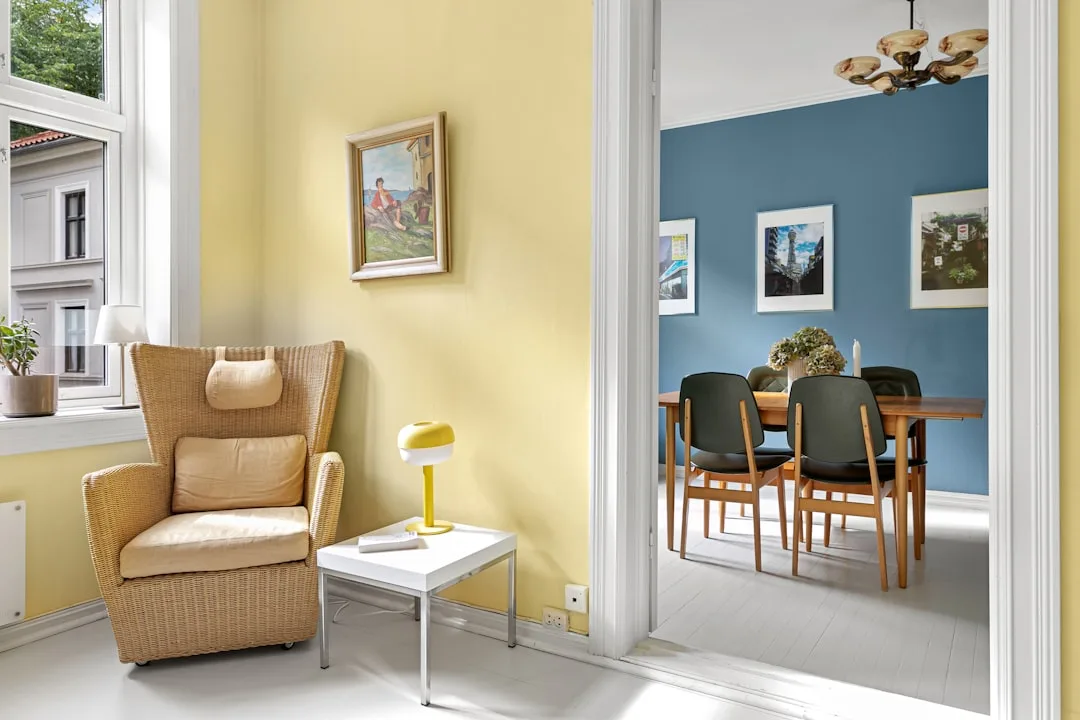
The room hasn’t changed — but after repainting in a color every guide called “light and airy,” it feels smaller than before, and there’s a measurable reason why: light reflectance value, undertone, and finish were all working against each other. If you’ve ever tried to find paint colors that make rooms look bigger and ended up with something that did the opposite, you already know this problem firsthand. I watched this happen to a client in Wicker Park whose 14×16 bedroom became genuinely unlivable after she followed a popular blog’s advice and painted it a “crisp, expansive white” that turned greenish-gray under her north-facing windows. She called me panicked. The paint wasn’t wrong — the advice was.
Quick Answer
The room hasn’t changed — but after repainting in a color every guide called ‘light and airy,’ it feels smaller than before, and there’s a measurable reason why: light reflectance value, undertone, and finish were all working against each other.
Most content about paint colors that make rooms look bigger treats the problem as a shopping question when it’s actually a physics question. Get the physics right first, and the color choice becomes almost obvious.
What Paint Color Actually Makes a Room Appear Larger — And Why Most Guides Get It Wrong
In This Article
- What Paint Color Actually Makes a Room Appear Larger — And Why Most Guides Get It Wrong
- Which Walls You Should Actually Paint to Make a Room Look Bigger
- Do Warm or Cool Colors Make a Room Look Bigger? The Honest Answer
- Specific Paint Colors That Make Rooms Look Bigger (With the Numbers, Not Just the Names)
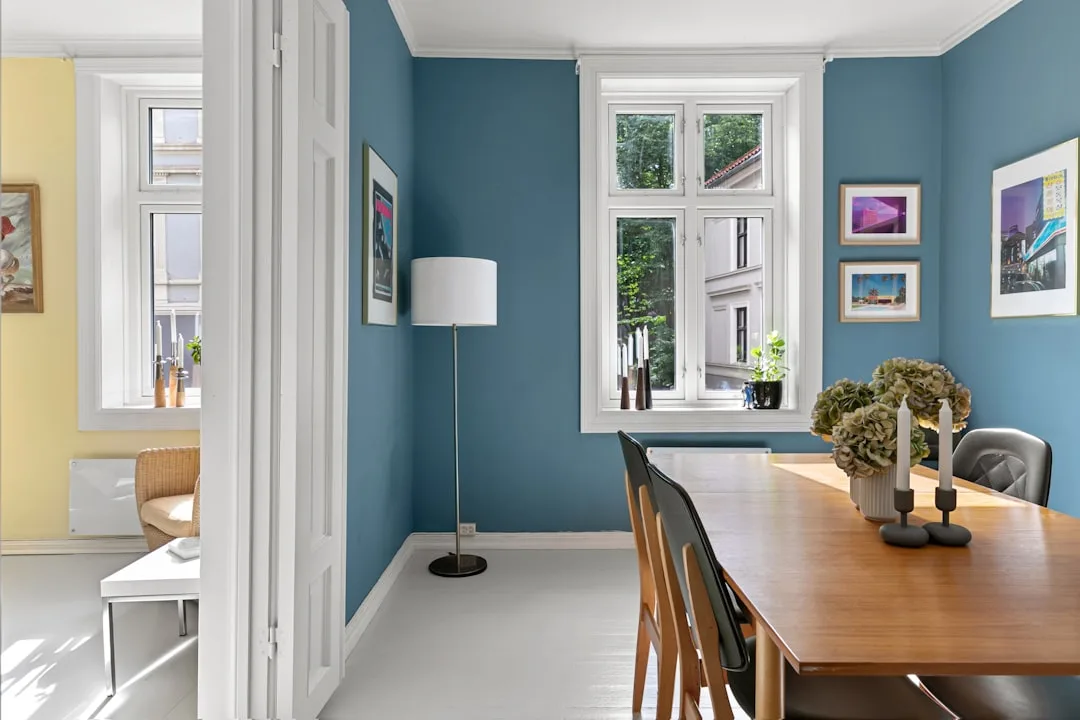
Paint advice on the internet has converged on one answer: go light, go white, go airy. And then it stops. That‘s like telling someone to “eat less” and calling it a nutrition plan — technically not wrong, but missing every mechanism that actually matters.
The real metric is Light Reflectance Value (LRV) — a number on a scale of 0 to 100 that measures exactly how much light a paint color bounces back into a room. Zero is pure black, absorbs everything. One hundred is a theoretical perfect white that reflects every photon, which doesn’t exist in commercial paint. What does exist: Benjamin Moore’s Chantilly Lace (OC-65), which scores an LRV of 92.2 — one of the highest of any commercially available white and one of the reasons it keeps appearing on designers’ short lists for tight spaces.
Colors with LRV above 70 measurably increase perceived room size. That’s the threshold to hold in your head. But here’s where guides fail their readers: two colors can both score above 70 and behave completely differently on your walls, because undertone interacts with your specific light source in ways that no swatch can predict.
Warm undertones in whites — the faint yellows and pinks in many off-whites — can actually make walls feel closer in north-facing rooms. North light is already cool and slightly blue. Drop a warm white into that environment and the undertone fights the light source, creating a muddy, compressed visual quality that makes the room feel enclosed. The same color in a south-facing room with warm afternoon sun? Luminous. Expansive. Exactly what the label promised.
The mistake I kept seeing — in rental apartments, in gut-renovated condos, in expensive brownstone parlors — was choosing a color that looked open on a 2×3 inch swatch held under fluorescent store lighting, then wondering why the room felt wrong six days later. Swatches are almost useless without context.
- LRV above 70: minimum threshold for spatial expansion
- LRV above 85: strong spatial expansion — best for rooms under 150 sq ft
- LRV below 55: the color is working against you in small rooms, regardless of how pale it looks in photos
Actionable takeaway: Before you pull a color name from any list — including this one — look up its LRV. Paint manufacturers publish this on every color chip page. If it’s not above 65, ask yourself whether the room can compensate with strong natural light. If the answer is no, keep looking.
Which Walls You Should Actually Paint to Make a Room Look Bigger
Here’s the question nobody gives a straight answer to, probably because the straight answer requires knowing your room’s specific shape, which is inconvenient for a listicle. I’ll do it anyway.
Removing the visual “lid” is the highest-impact move most people never make. Painting the ceiling the same color as the walls — or one shade lighter — eliminates the horizontal line where wall ends and ceiling begins. That line is doing enormous psychological damage in low-ceilinged rooms. Your eye reads it as a boundary, and boundaries make spaces feel contained. When you dissolve the boundary with color, the room reads as taller than it measures.
In a narrow room — a galley kitchen, a railroad bedroom, a shotgun hallway — the conventional instinct is to paint the far wall light to “push it back.” But painting the far wall in a slightly deeper tone of the same hue actually draws the eye forward, which makes the room read as longer. The eye wants to travel toward contrast. Give it something to travel toward, and the journey registers as distance. This contradicts what most guides say, and I’ve tested it enough times to trust it.
For square rooms — the hardest shape to make feel interesting — painting two opposing walls in a tone that’s 10–15% deeper than the other two creates implied depth. The room stops reading as a box. It starts reading as a space with dimension. It’s a minor optical lie, and it works.
One technique that the National Kitchen and Bath Association cites as one of the top five space-expanding approaches in kitchen remodels under 150 square feet: the monochromatic wall-to-trim treatment — painting walls and baseboards the same color, same formula, similar finish. Most people paint trim bright white regardless of wall color, and those bright trim lines act like a grid overlay on the room, fragmenting the eye’s path and shrinking perceived space. Eliminate the contrast, and the room expands.
Dark ceilings deserve a mention because they’re counterintuitive in a useful way. A dark ceiling does compress perceived height — optically by something close to 20% in the pattern I’ve observed. In an eight-foot-ceiling apartment, that’s a problem. In a room with twelve-foot ceilings, it’s a solution. The compression makes the proportions feel more human and livable rather than barn-like.
- Low ceilings: paint ceiling same color as walls or 5–10 LRV points lighter
- Narrow rooms: slightly deeper tone on the far wall — not lighter
- Square rooms: two opposing walls in a deeper shade to create implied dimension
- Trim and baseboards: match to walls if spatial expansion is the primary goal
Actionable takeaway: Decide on your room’s primary spatial problem — low ceiling, narrow width, boxy feel — before you choose a color. The wall treatment strategy changes based on shape, and choosing color before strategy is backwards.
Do Warm or Cool Colors Make a Room Look Bigger? The Honest Answer
Cool colors recede. Warm colors advance. This is real. But the design internet has turned a context-dependent optical principle into an absolute rule, and that’s where it starts hurting people.
The real answer is: match your undertone to your dominant light source. Cool colors — soft blue-grays, pale sages, quiet greiges with blue bases — visually recede because the eye reads cooler tones as farther away, associating them with sky and open space. In a room with strong natural daylight, especially north or east light, this works exactly as advertised. The wall feels like it’s stepping back. The room breathes.
But drop that same cool blue-gray into a south-facing room flooded with warm afternoon light, and the color starts fighting the light. The wall doesn’t recede — it reads as a correction, a suppression of the room’s natural warmth, and the result is visual tension rather than expansion. The room feels neither warm nor cool. It feels off.
Warm colors — creamy whites, soft taupes, pale blush tones — tend to work better in south and west-facing rooms where the light is already warm and golden. The color amplifies the light source rather than fighting it. The walls seem to glow, and a glowing wall reads as farther away than a flat, fighting one.
What nobody says clearly enough: finish matters as much as color temperature. A flat or matte finish absorbs light and reduces glare — which is why it can actually make a color look more saturated and, in some cases, heavier on the wall. An eggshell finish bounces light softly and evenly, which is why most designers default to eggshell for walls in small rooms. Semi-gloss on walls is a different tool — it creates reflectivity that can expand a space visually, but it also picks up every imperfection in the drywall and amplifies it. In a well-prepped room with good bones, semi-gloss on walls can be genuinely expansive. In a rental with textured ceilings and uneven plaster, it will make the walls look worse while making the room look larger. Know which problem you’re solving.
- North/east light rooms: lean cool — soft blue-grays, pale blue-greens, true whites with no warm undertone
- South/west light rooms: lean warm — creamy whites, greige, pale blush tones with yellow or pink bases
- Mixed light rooms: true neutrals — greiges and soft whites with balanced undertones that don’t commit either direction
- Finish for small rooms: eggshell as the default; flat for ceilings; semi-gloss only on well-prepped surfaces
Actionable takeaway: Test your shortlisted colors at 12×12 inches on the actual wall, at three different times of day — morning, midday, and evening with artificial light on. The color you see at noon is not the color you’ll live with most.
Specific Paint Colors That Make Rooms Look Bigger (With the Numbers, Not Just the Names)
This is the list most guides lead with. I’ve buried it intentionally, because a color name without context is almost useless — but now that you have the context, here’s what actually performs.
Benjamin Moore Chantilly Lace (OC-65) — LRV 92.2. The benchmark high-reflectance white. No discernible undertone in most light conditions, which is rare and valuable. Works in north and south-facing rooms because there’s nothing to fight the light source. The go-to when you want pure spatial expansion and have any doubt about undertones.
Sherwin-Williams Alabaster (SW 7008) — LRV 82. A warm white with a faint yellow undertone that reads as clean rather than yellow in most light. Best in south and west-facing rooms. In north light, it can go slightly beige in a way that flattens the room. High performer in living rooms and bedrooms with warm artificial lighting.
Benjamin Moore Simply White (OC-17) — LRV 89.5. Slightly warmer than Chantilly Lace, slightly cooler than Alabaster. A middle-ground white that handles mixed light conditions better than either extreme. One of the more forgiving choices for rooms that shift dramatically between natural and artificial light.
Farrow & Ball Elephant’s Breath (No. 229) — LRV approximately 54. This is on the list because it appears constantly on “make rooms look bigger” round-ups, and it shouldn’t. An LRV of 54 means it’s actively working against spatial expansion in small rooms. It’s a beautiful color in the right context — a large study, a bedroom where intimacy matters more than perceived size — but it does not make rooms look bigger. Including it here as a specific warning.
Sherwin-Williams Repose Gray (SW 7015) — LRV 60. Same warning as Elephant’s Breath. Below the 65 threshold. Works beautifully in large, well-lit spaces where a warm gray reads as grounded rather than heavy. In small rooms, it closes things down regardless of how “light” it looks in photographs. The photography problem is real: colors photograph several LRV points lighter than they appear in person.
Benjamin Moore White Dove (OC-17) — LRV 85.4. Warm white, slightly creamier than Simply White, with excellent performance in rooms that get significant artificial light in the evenings. Works well in spaces where you want warmth without sacrificing perceived openness.
The pattern across genuinely effective paint colors that make rooms look bigger: LRV above 80, undertone matched to light source, finish in eggshell. That’s the formula. The specific color name matters less than those three variables aligning correctly.
FAQ
What is the single best paint color to make a small room look bigger?
There’s no universal single answer, but Benjamin Moore Chantilly Lace (OC-65) comes closest to a context-independent solution. Its LRV of 92.2 is among the highest commercially available, and its lack of a strong undertone means it doesn’t fight most light sources. That said, “best” depends on your room’s orientation, your light source, and what you’re optimizing for. A color with no undertone in a warm south-facing room can read as cold. Test before you commit.
Does painting the ceiling the same color as the walls actually work?
Yes, and it’s one of the highest-impact changes available in a low-ceiling room. The visual boundary between wall and ceiling is doing significant psychological work — your eye reads it as a hard stop, and hard stops make spaces feel contained. Eliminate the contrast and the room reads as taller. Use the same formula as the walls or mix the ceiling color at 50% of the wall formula for a slightly lighter version that maintains the blended effect.
Is it true that dark colors always make rooms feel smaller?
Not always. Dark colors compress perceived volume — which is a problem in a small room where the ceiling already feels low, but a solution in a large room with disproportionately high ceilings. A dark ceiling in a twelve-foot room brings proportions down to something more human and livable. Dark walls in a large, well-lit space can read as dramatic and intimate rather than cramped. The rule only holds in rooms that are already small.
Why did my “light and airy” white paint make my room feel smaller?
Almost certainly an undertone and light source mismatch. Warm whites in north-facing rooms turn muddy because north light is already cool and blue — the warm undertone fights the light rather than amplifying it. Alternatively, the LRV may have been lower than expected (many off-whites sit in the 70–78 range, which is functional but not high-performing), or the finish may have been flat, which absorbs light rather than bouncing it. Look up the specific LRV of the color you used and compare it to the 80+ threshold. That’s usually where the answer is.
Does paint finish affect how big a room looks?
Significantly. Flat and matte finishes absorb light, which can make colors appear slightly more saturated and, in small rooms, heavier. Eggshell reflects light softly and evenly, which is why it’s the standard recommendation for walls in rooms where spatial expansion is the goal. Semi-gloss creates strong reflectivity that can genuinely expand a space visually, but it also reads every wall imperfection clearly — so it’s only a real option in well-prepped rooms. For ceilings, flat is almost always correct because even slight sheen on a ceiling draws the eye upward and makes the ceiling feel more prominent, which is the opposite of what you want.
What is the single best paint color to make a small room look bigger?
There’s no universal single answer, but Benjamin Moore Chantilly Lace (OC-65) comes closest to a context-independent solution. Its LRV of 92.2 is among the highest commercially available, and its lack of a strong undertone means it doesn’t fight most light sources. That said, “best” depends on your room’s orientation, your light source, and what you’re optimizing for. A color with no undertone in a warm south-facing room can read as cold. Test before you commit.
Does painting the ceiling the same color as the walls actually work?
Yes, and it’s one of the highest-impact changes available in a low-ceiling room. The visual boundary between wall and ceiling is doing significant psychological work — your eye reads it as a hard stop, and hard stops make spaces feel contained. Eliminate the contrast and the room reads as taller. Use the same formula as the walls or mix the ceiling color at 50% of the wall formula for a slightly lighter version that maintains the blended effect.
Is it true that dark colors always make rooms feel smaller?
Not always. Dark colors compress perceived volume — which is a problem in a small room where the ceiling already feels low, but a solution in a large room with disproportionately high ceilings. A dark ceiling in a twelve-foot room brings proportions down to something more human and livable. Dark walls in a large, well-lit space can read as dramatic and intimate rather than cramped. The rule only holds in rooms that are already small.
Why did my “light and airy” white paint make my room feel smaller?
Almost certainly an undertone and light source mismatch. Warm whites in north-facing rooms turn muddy because north light is already cool and blue — the warm undertone fights the light rather than amplifying it. Alternatively, the LRV may have been lower than expected (many off-whites sit in the 70–78 range, which is functional but not high-performing), or the finish may have been flat, which absorbs light rather than bouncing it. Look up the specific LRV of the color you used and compare it to the 80+ threshold. That’s usually where the answer is.
Does paint finish affect how big a room looks?
Significantly. Flat and matte finishes absorb light, which can make colors appear slightly more saturated and, in small rooms, heavier. Eggshell reflects light softly and evenly, which is why it’s the standard recommendation for walls in rooms where spatial expansion is the goal. Semi-gloss creates strong reflectivity that can genuinely expand a space visually, but it also reads every wall imperfection clearly — so it’s only a real option in well-prepped rooms. For ceilings, flat is almost always correct because even slight sheen on a ceiling draws the eye upward and makes the ceiling feel more prominent, which is the opposite of what you want.